ELECTRONIC TELEPATHY –
FUTURE OF COMMUNICATION
THROUGH WEARABLE
WHAT IS TELEPATHY
• Telepathy is one of the most powerful psychic
abilities. It is known as mind to mind
communication, which are feelings exchanged
between a sender and a receiver.
WHY DO WE NEED ELECTRONIC
TELEPATHY?
• The fastness of communication is limited to
how fast we type in our phone and how fast
we speak to express our view. Electronic
telepathy will overcome all these because
human can thing 25 words per second, and all
these information can be communicated with
a blink of an eye.
HISTORY OF ELECTRONIC TELEPATHY
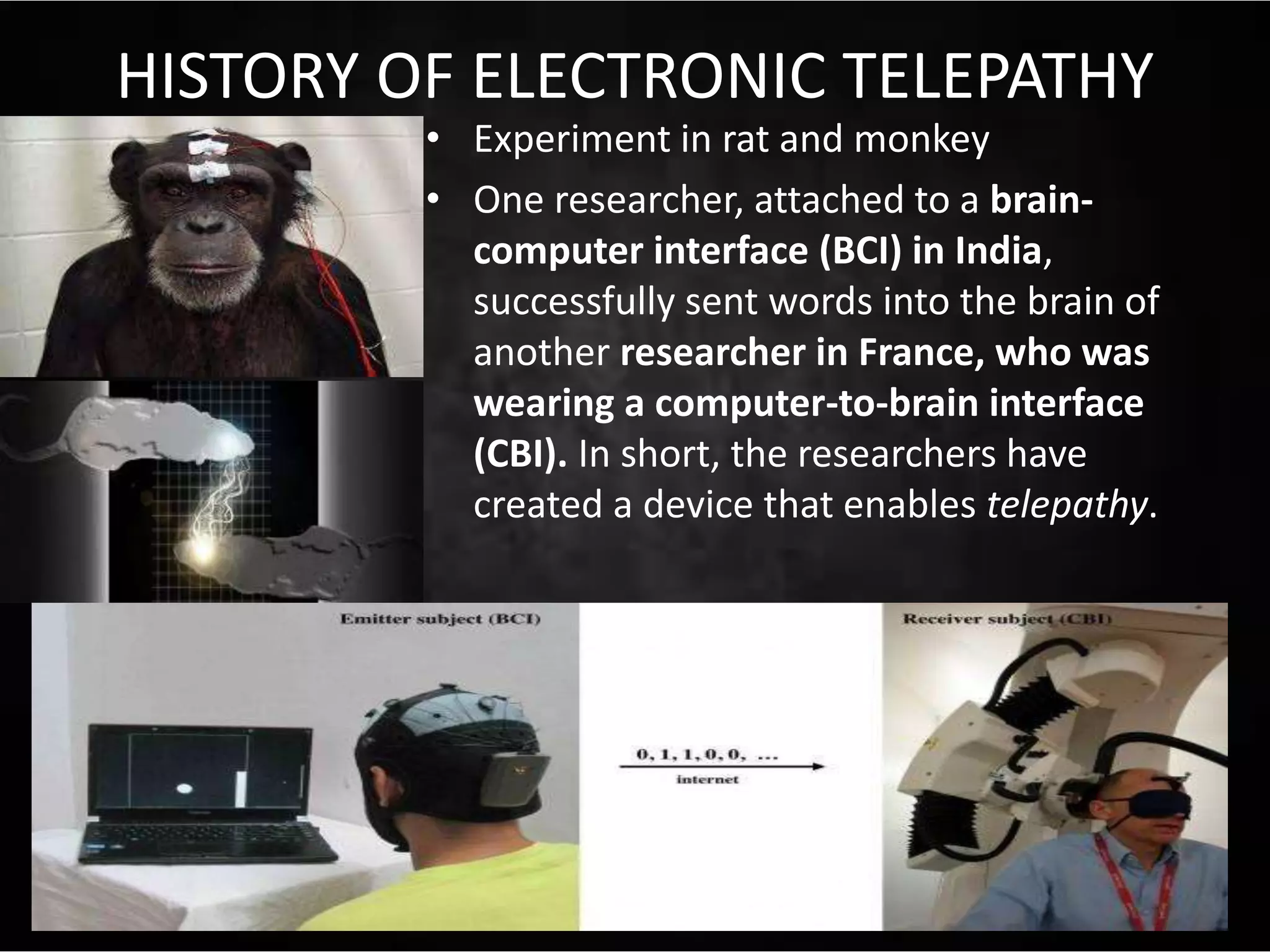
• Experiment in rat and monkey
• One researcher, attached to a brain-
computer interface (BCI) in India,
successfully sent words into the brain of
another researcher in France, who was
wearing a computer-to-brain interface
(CBI). In short, the researchers have
created a device that enables telepathy.
HOW IT WORKED?
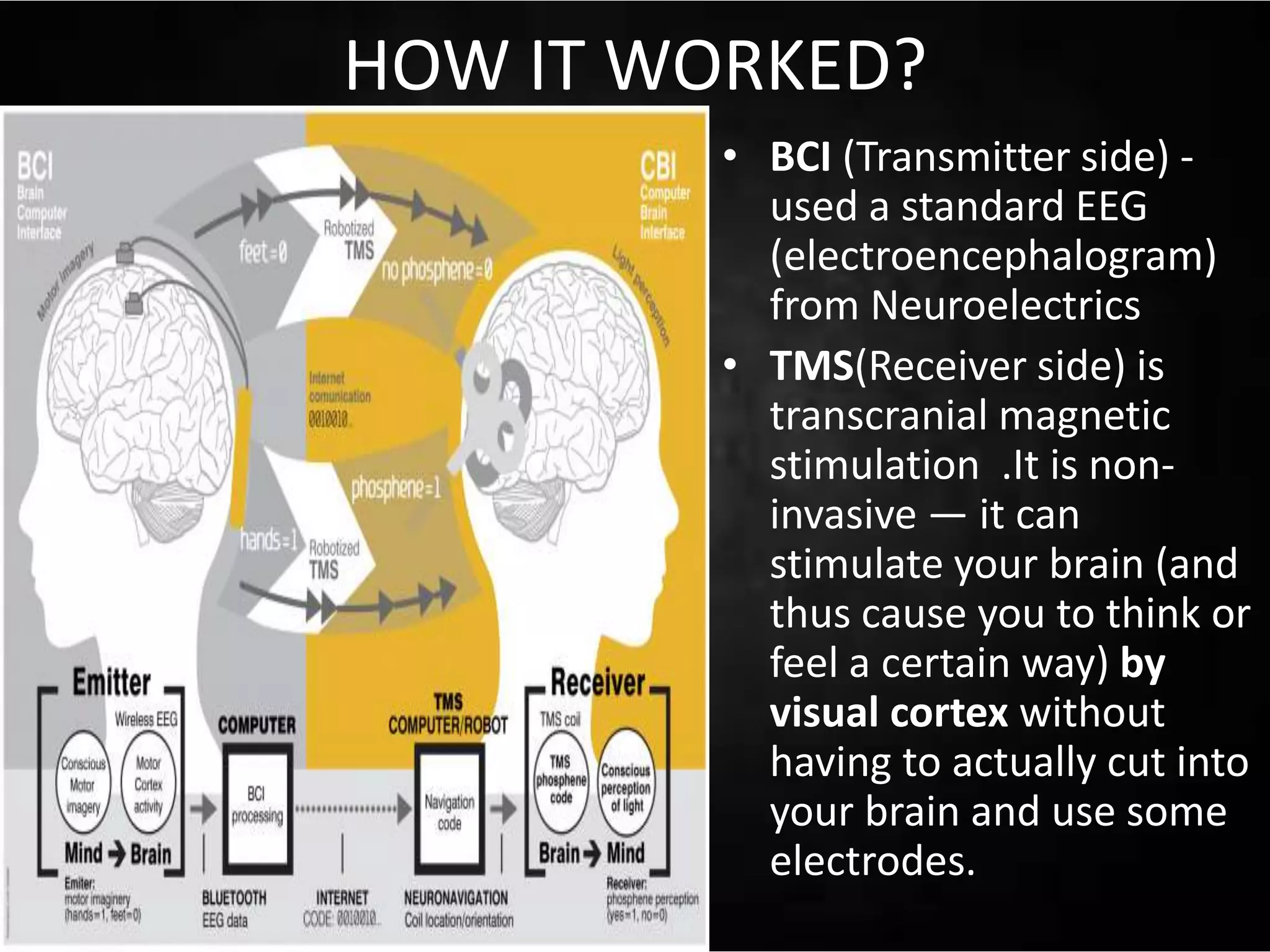
• BCI (Transmitter side) -
used a standard EEG
(electroencephalogram)
from Neuroelectrics
• TMS(Receiver side) is
transcranial magnetic
stimulation .It is non-
invasive — it can
stimulate your brain (and
thus cause you to think or
feel a certain way) by
visual cortex without
having to actually cut into
your brain and use some
electrodes.
CHALLENCHES IN BCI UNIT
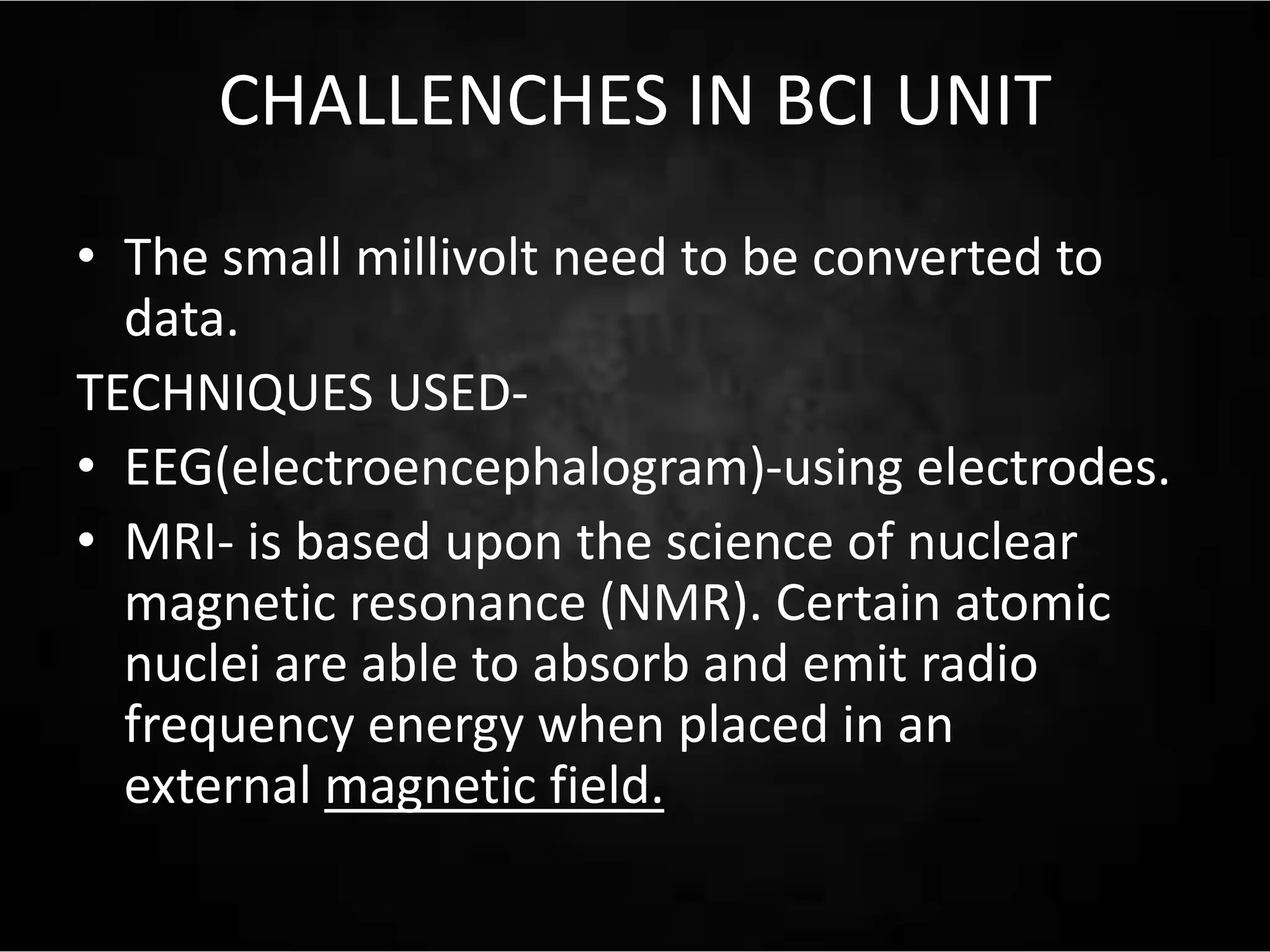
• The small millivolt need to be converted to
data.
TECHNIQUES USED-
• EEG(electroencephalogram)-using electrodes.
• MRI- is based upon the science of nuclear
magnetic resonance (NMR). Certain atomic
nuclei are able to absorb and emit radio
frequency energy when placed in an
external magnetic field.
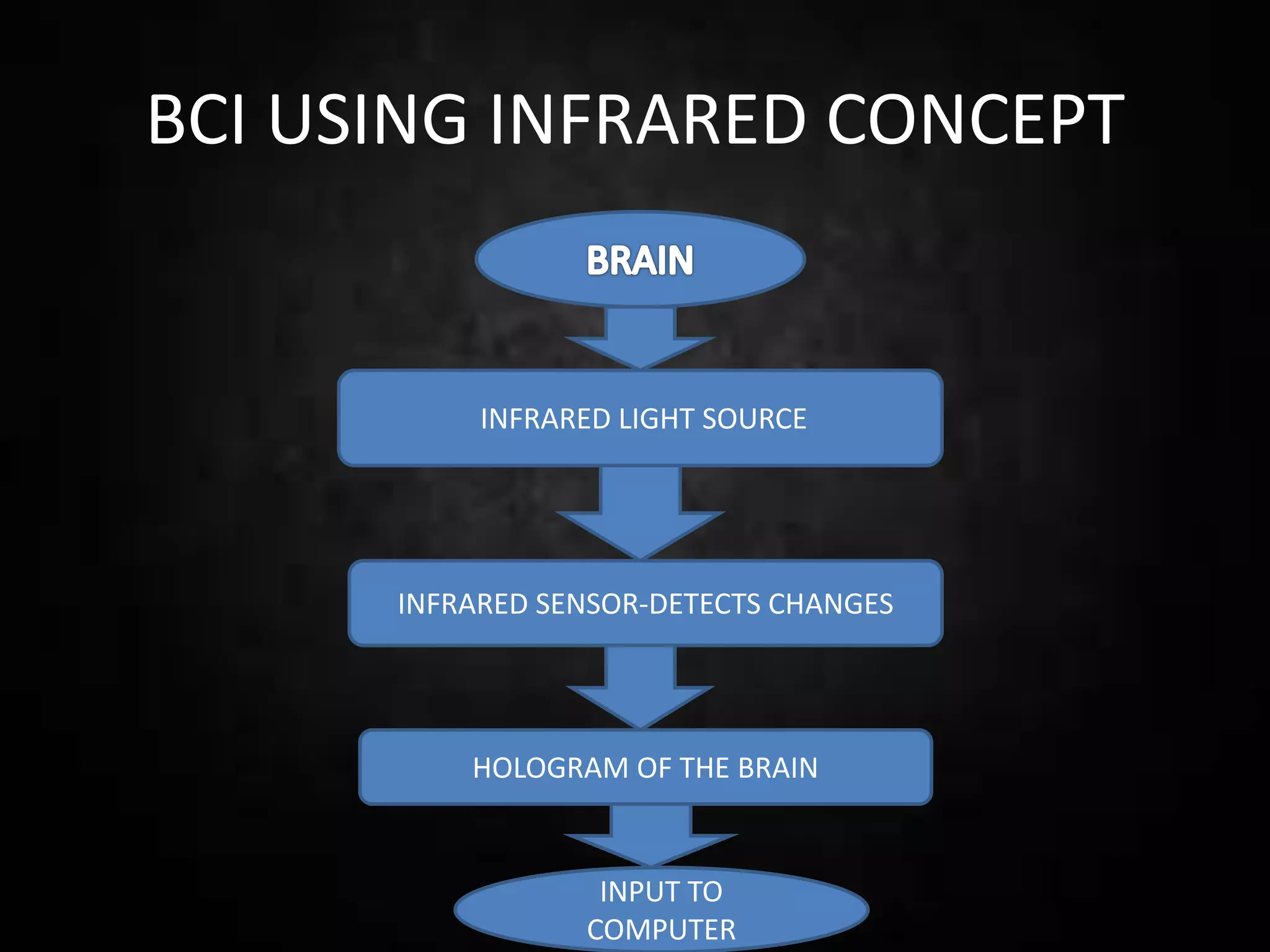
BCI USING INFRARED CONCEPT
INFRARED LIGHT SOURCE
INFRARED SENSOR-DETECTS CHANGES
HOLOGRAM OF THE BRAIN
INPUT TO
COMPUTER
NEAR INFRARED-AN ALTERNATIVE
METHOD
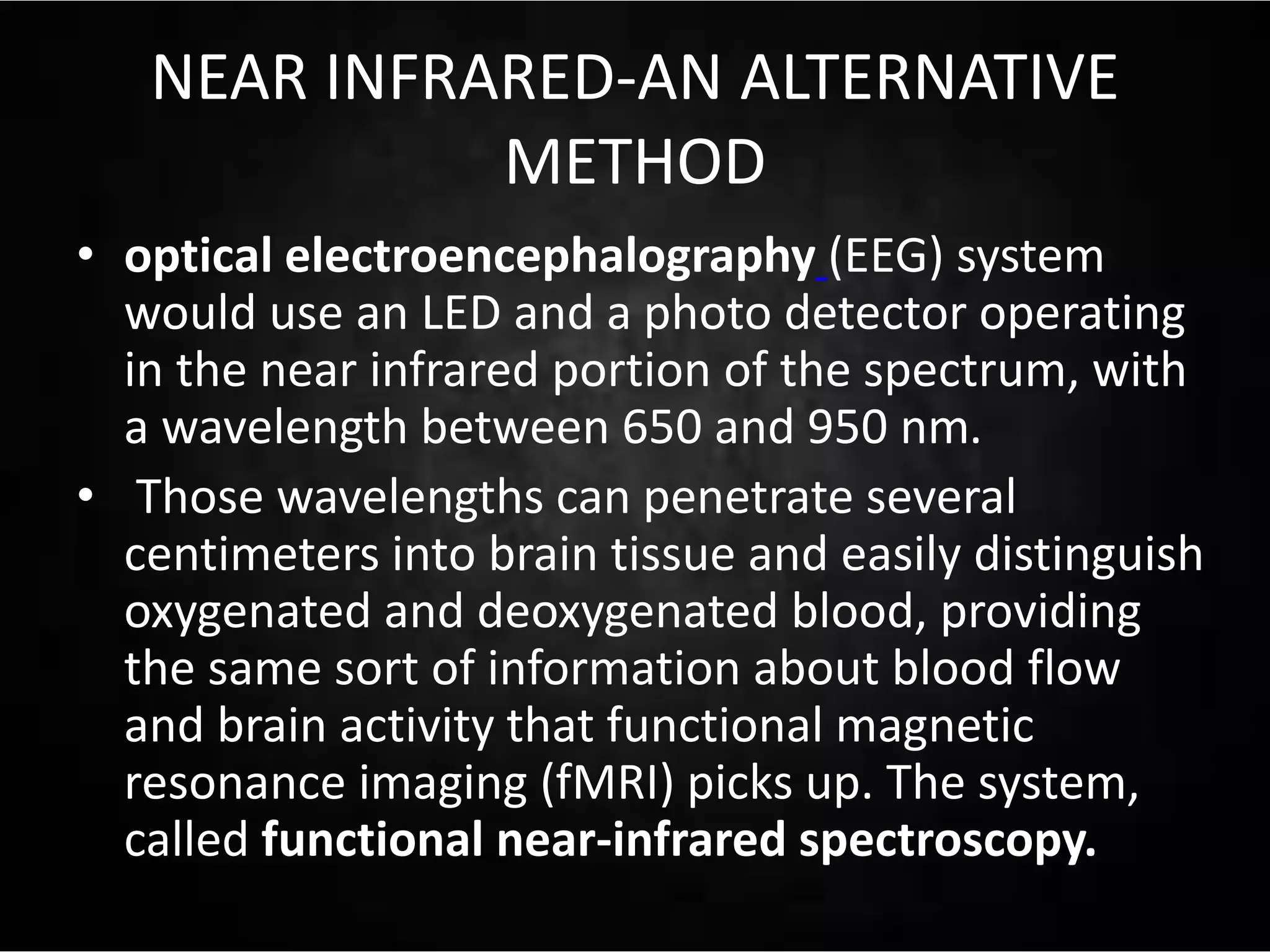
• optical electroencephalography (EEG) system
would use an LED and a photo detector operating
in the near infrared portion of the spectrum, with
a wavelength between 650 and 950 nm.
• Those wavelengths can penetrate several
centimeters into brain tissue and easily distinguish
oxygenated and deoxygenated blood, providing
the same sort of information about blood flow
and brain activity that functional magnetic
resonance imaging (fMRI) picks up. The system,
called functional near-infrared spectroscopy.
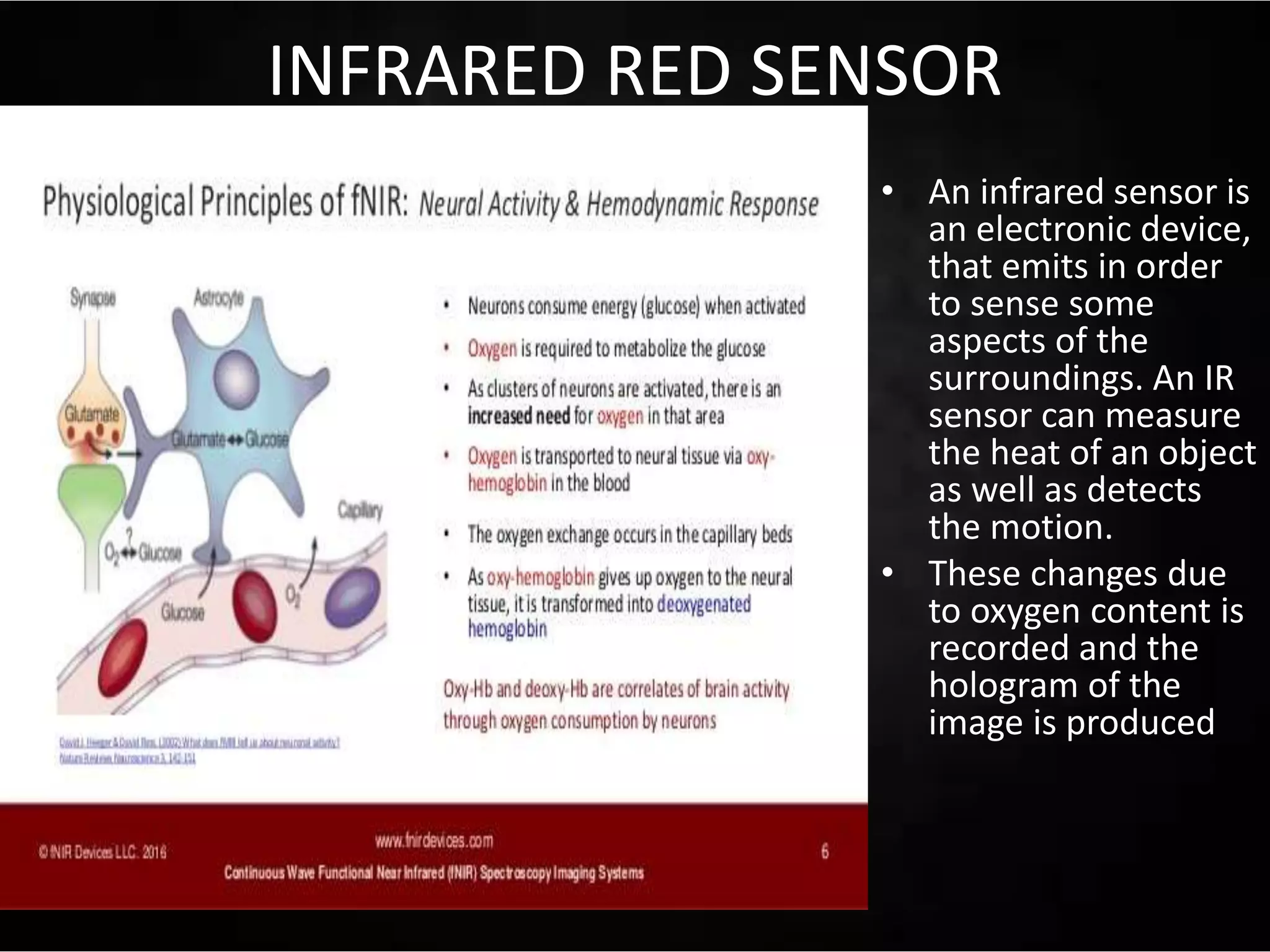
INFRARED RED SENSOR
• An infrared sensor is
an electronic device,
that emits in order
to sense some
aspects of the
surroundings. An IR
sensor can measure
the heat of an object
as well as detects
the motion.
• These changes due
to oxygen content is
recorded and the
hologram of the
image is produced
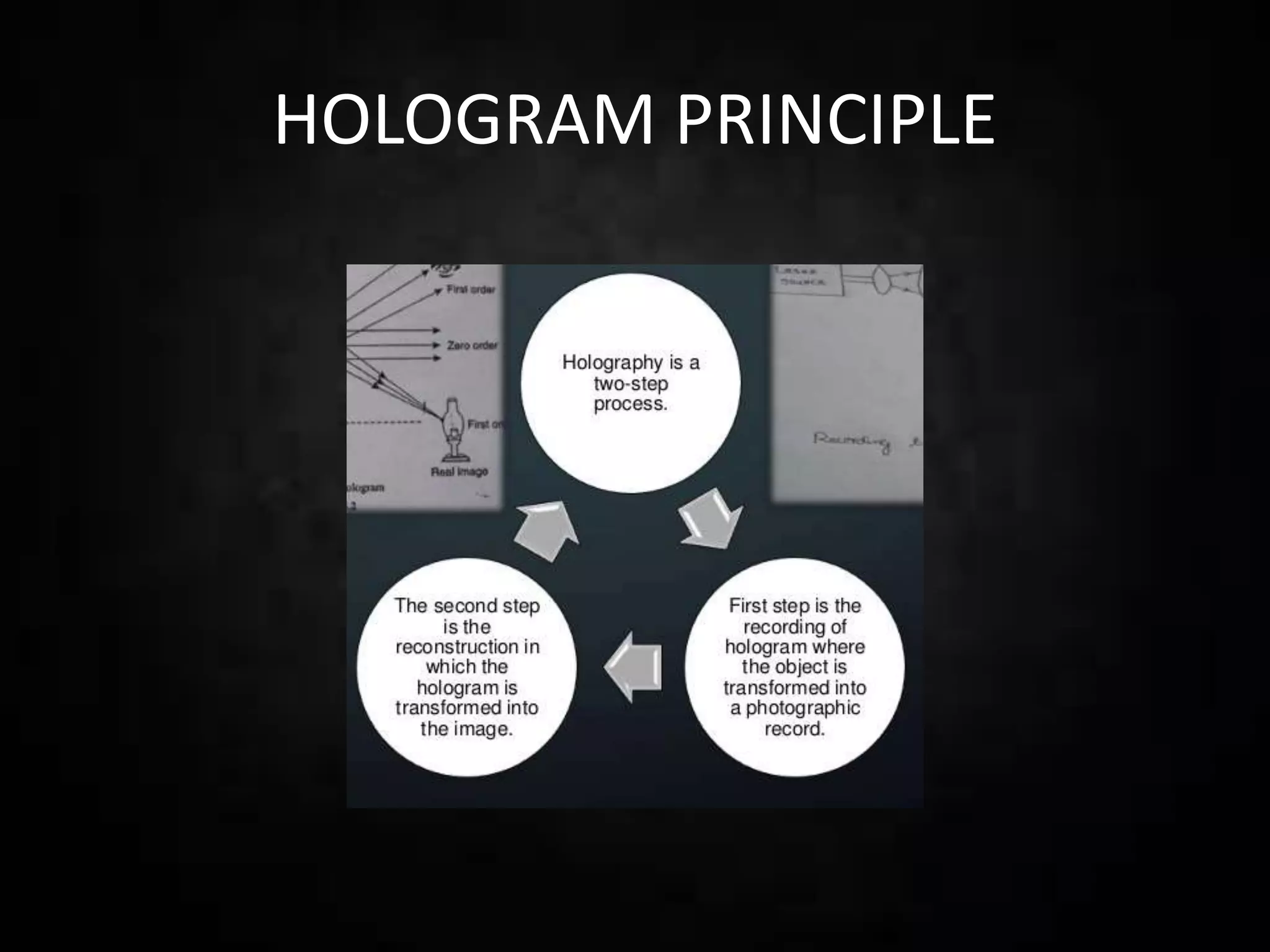
HOLOGRAM PRINCIPLE
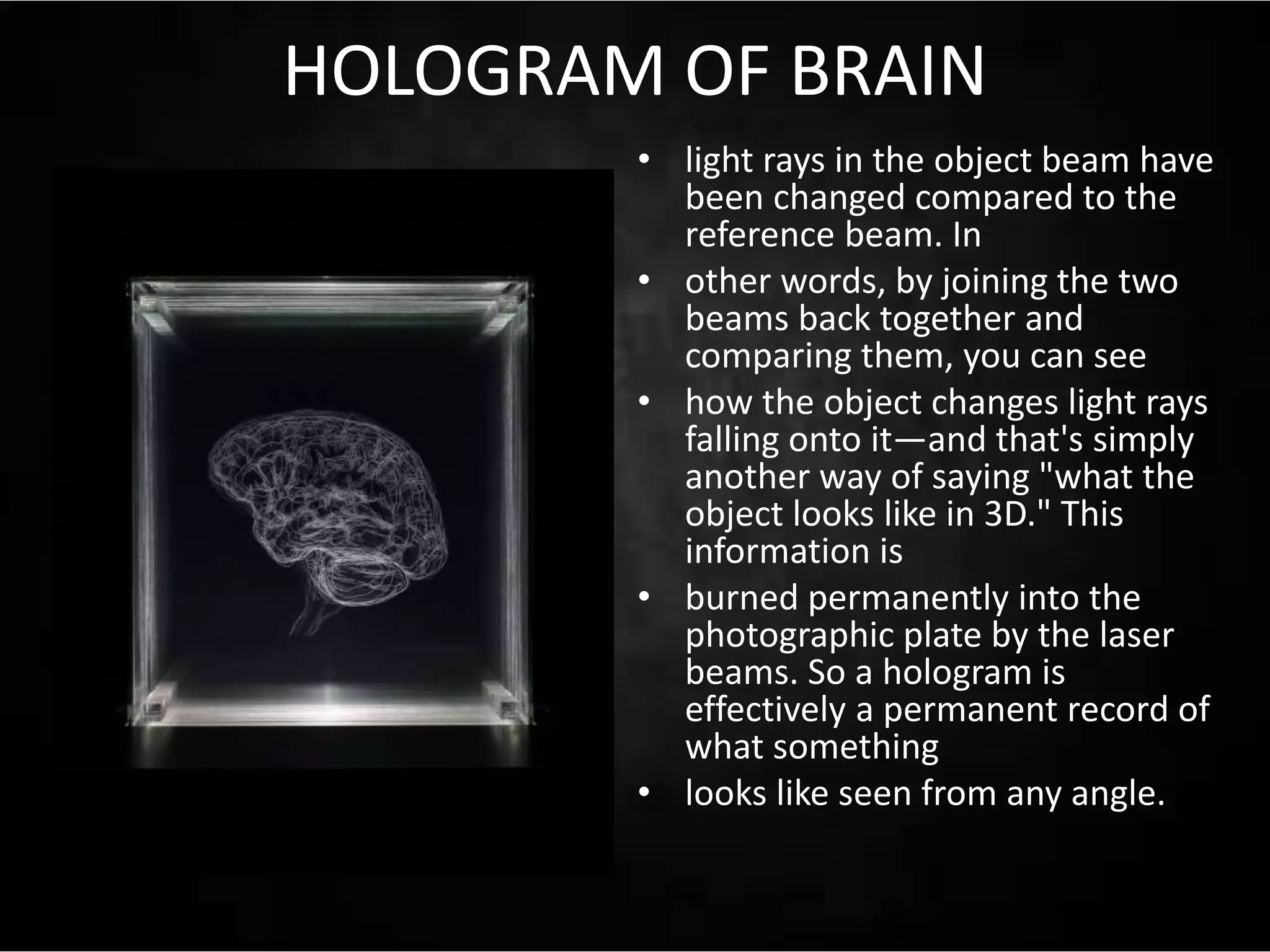
HOLOGRAM OF BRAIN
• light rays in the object beam have
been changed compared to the
reference beam. In
• other words, by joining the two
beams back together and
comparing them, you can see
• how the object changes light rays
falling onto it—and that's simply
another way of saying "what the
object looks like in 3D." This
information is
• burned permanently into the
photographic plate by the laser
beams. So a hologram is
effectively a permanent record of
what something
• looks like seen from any angle.
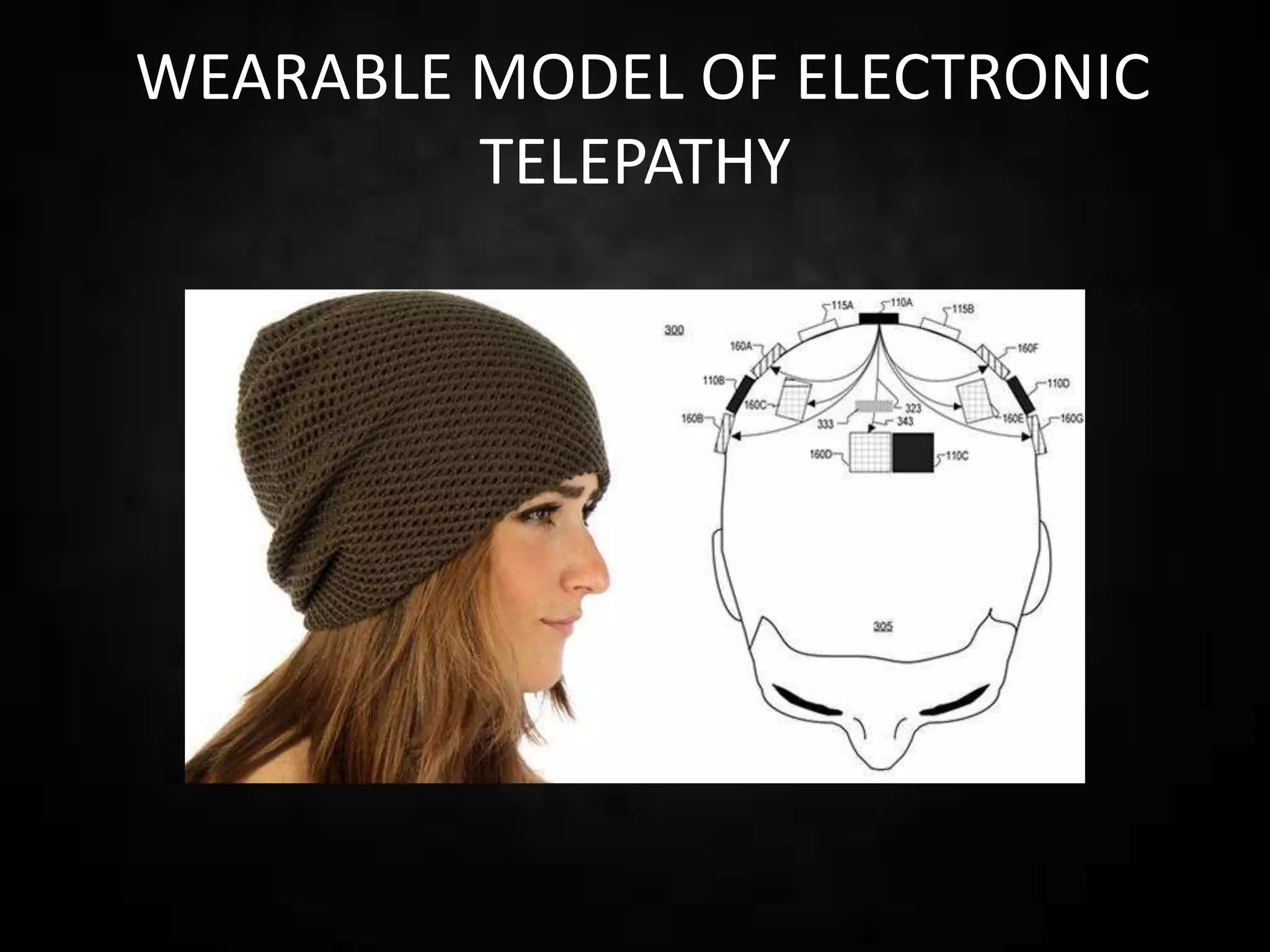
WEARABLE MODEL OF ELECTRONIC
TELEPATHY
ADVANTAGES DISADVANTAGES
• High speed
communication.
• Affordable prize
• Portable, easy to use.
• Diagnosis of disease is
done at earlier stage.
• Uplift the standard of
living.
• Filtration of unwanted
thoughts is difficult.
• Network is not secured
always.
CONCLUSION
• Therefore using wearable electronic telepathy
our thoughts can be send to the intended
receiver with high resolution in the blink of an
eye.
• Because of its fastness and simplicity,
ELECTRONIC TELEPATHY GOING TO BE A NEXT
GENERATION OF COMMUNICATION.
THANK YOU

Introduction to Electronic telepathy

  • 1.
    ELECTRONIC TELEPATHY – FUTUREOF COMMUNICATION THROUGH WEARABLE
  • 2.
    WHAT IS TELEPATHY •Telepathy is one of the most powerful psychic abilities. It is known as mind to mind communication, which are feelings exchanged between a sender and a receiver.
  • 3.
    WHY DO WENEED ELECTRONIC TELEPATHY? • The fastness of communication is limited to how fast we type in our phone and how fast we speak to express our view. Electronic telepathy will overcome all these because human can thing 25 words per second, and all these information can be communicated with a blink of an eye.
  • 4.
    HISTORY OF ELECTRONICTELEPATHY • Experiment in rat and monkey • One researcher, attached to a brain- computer interface (BCI) in India, successfully sent words into the brain of another researcher in France, who was wearing a computer-to-brain interface (CBI). In short, the researchers have created a device that enables telepathy.
  • 5.
    HOW IT WORKED? •BCI (Transmitter side) - used a standard EEG (electroencephalogram) from Neuroelectrics • TMS(Receiver side) is transcranial magnetic stimulation .It is non- invasive — it can stimulate your brain (and thus cause you to think or feel a certain way) by visual cortex without having to actually cut into your brain and use some electrodes.
  • 6.
    CHALLENCHES IN BCIUNIT • The small millivolt need to be converted to data. TECHNIQUES USED- • EEG(electroencephalogram)-using electrodes. • MRI- is based upon the science of nuclear magnetic resonance (NMR). Certain atomic nuclei are able to absorb and emit radio frequency energy when placed in an external magnetic field.
  • 7.
    BCI USING INFRAREDCONCEPT INFRARED LIGHT SOURCE INFRARED SENSOR-DETECTS CHANGES HOLOGRAM OF THE BRAIN INPUT TO COMPUTER
  • 8.
    NEAR INFRARED-AN ALTERNATIVE METHOD •optical electroencephalography (EEG) system would use an LED and a photo detector operating in the near infrared portion of the spectrum, with a wavelength between 650 and 950 nm. • Those wavelengths can penetrate several centimeters into brain tissue and easily distinguish oxygenated and deoxygenated blood, providing the same sort of information about blood flow and brain activity that functional magnetic resonance imaging (fMRI) picks up. The system, called functional near-infrared spectroscopy.
  • 9.
    INFRARED RED SENSOR •An infrared sensor is an electronic device, that emits in order to sense some aspects of the surroundings. An IR sensor can measure the heat of an object as well as detects the motion. • These changes due to oxygen content is recorded and the hologram of the image is produced
  • 10.
  • 11.
    HOLOGRAM OF BRAIN •light rays in the object beam have been changed compared to the reference beam. In • other words, by joining the two beams back together and comparing them, you can see • how the object changes light rays falling onto it—and that's simply another way of saying "what the object looks like in 3D." This information is • burned permanently into the photographic plate by the laser beams. So a hologram is effectively a permanent record of what something • looks like seen from any angle.
  • 12.
    WEARABLE MODEL OFELECTRONIC TELEPATHY
  • 13.
    ADVANTAGES DISADVANTAGES • Highspeed communication. • Affordable prize • Portable, easy to use. • Diagnosis of disease is done at earlier stage. • Uplift the standard of living. • Filtration of unwanted thoughts is difficult. • Network is not secured always.
  • 14.
    CONCLUSION • Therefore usingwearable electronic telepathy our thoughts can be send to the intended receiver with high resolution in the blink of an eye. • Because of its fastness and simplicity, ELECTRONIC TELEPATHY GOING TO BE A NEXT GENERATION OF COMMUNICATION.
  • 15.