BARTENDING NCII
BAR
BAR
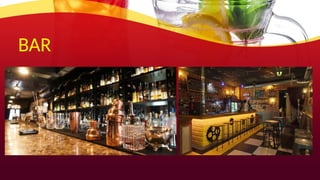
• A bar is a long raised narrow table or bench
designed for dispensing beer or other alcoholic
drinks.
• a counter across which alcoholic drinks or
refreshments are served.
BARTENDER
BARTENDER
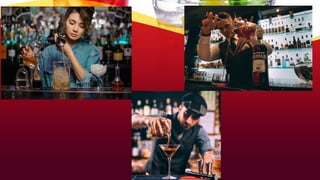
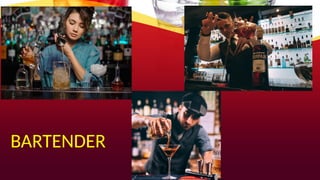
• A bartender is someone who serves
beverages behind a licensed bar to paying
customers. A bartender can also be called a
BARKEEP, BARMAN or a BARMAID.
Bartenders are found in bars, pubs, taverns,
nightclubs and other such places.
BARTENDER
• The bartender mixes and serves
drinks, a bartender is making contain
alcohol, such as beer, wine, liquor,
and cocktails.
BARTENDING
It is the art of mixing wines and spirits,
drinks, preparation, beverage, service
and good customer relations.
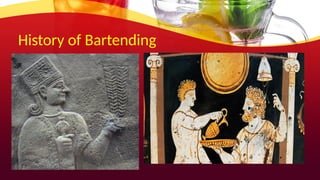
History of Bartending
Bartending
• is an ancient practice that can trace its roots back
to the Greek and Roman eras. When you hire a
bartender to serve at your next party, he or she will
rely on centuries of traditions in order to craft the
perfect cocktails for your guests. The history of
bartending can shed some light on the important
role that bartenders play in our society.
Bartending
in Early History
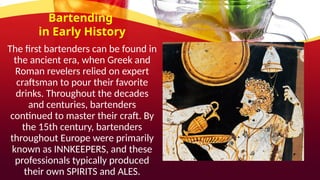
The first bartenders can be found in
the ancient era, when Greek and
Roman revelers relied on expert
craftsman to pour their favorite
drinks. Throughout the decades
and centuries, bartenders
continued to master their craft. By
the 15th century, bartenders
throughout Europe were primarily
known as INNKEEPERS, and these
professionals typically produced
their own SPIRITS and ALES.
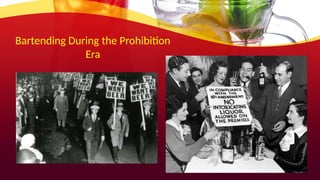
Bartending During the Prohibition
Era
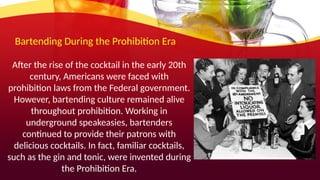
Bartending During the Prohibition Era
After the rise of the cocktail in the early 20th
century, Americans were faced with
prohibition laws from the Federal government.
However, bartending culture remained alive
throughout prohibition. Working in
underground speakeasies, bartenders
continued to provide their patrons with
delicious cocktails. In fact, familiar cocktails,
such as the gin and tonic, were invented during
the Prohibition Era.
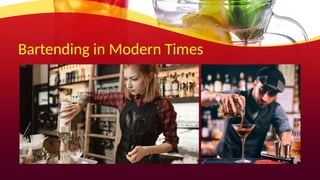
Bartending in Modern Times
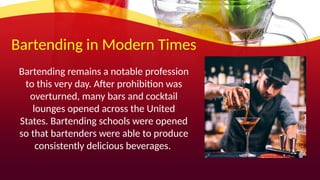
Bartending remains a notable profession
to this very day. After prohibition was
overturned, many bars and cocktail
lounges opened across the United
States. Bartending schools were opened
so that bartenders were able to produce
consistently delicious beverages.
Why do you think
More info in history of bartending
• https://www.youtube.com/watch?v=q24qQuIKMwc

introduction to bartending in modern world

  • 1.
  • 3.
  • 4.
    BAR • A baris a long raised narrow table or bench designed for dispensing beer or other alcoholic drinks. • a counter across which alcoholic drinks or refreshments are served.
  • 6.
  • 7.
    BARTENDER • A bartenderis someone who serves beverages behind a licensed bar to paying customers. A bartender can also be called a BARKEEP, BARMAN or a BARMAID. Bartenders are found in bars, pubs, taverns, nightclubs and other such places.
  • 8.
    BARTENDER • The bartendermixes and serves drinks, a bartender is making contain alcohol, such as beer, wine, liquor, and cocktails.
  • 9.
    BARTENDING It is theart of mixing wines and spirits, drinks, preparation, beverage, service and good customer relations.
  • 10.
  • 11.
    Bartending • is anancient practice that can trace its roots back to the Greek and Roman eras. When you hire a bartender to serve at your next party, he or she will rely on centuries of traditions in order to craft the perfect cocktails for your guests. The history of bartending can shed some light on the important role that bartenders play in our society.
  • 12.
    Bartending in Early History Thefirst bartenders can be found in the ancient era, when Greek and Roman revelers relied on expert craftsman to pour their favorite drinks. Throughout the decades and centuries, bartenders continued to master their craft. By the 15th century, bartenders throughout Europe were primarily known as INNKEEPERS, and these professionals typically produced their own SPIRITS and ALES.
  • 13.
    Bartending During theProhibition Era
  • 14.
    Bartending During theProhibition Era After the rise of the cocktail in the early 20th century, Americans were faced with prohibition laws from the Federal government. However, bartending culture remained alive throughout prohibition. Working in underground speakeasies, bartenders continued to provide their patrons with delicious cocktails. In fact, familiar cocktails, such as the gin and tonic, were invented during the Prohibition Era.
  • 15.
  • 16.
    Bartending in ModernTimes Bartending remains a notable profession to this very day. After prohibition was overturned, many bars and cocktail lounges opened across the United States. Bartending schools were opened so that bartenders were able to produce consistently delicious beverages.
  • 17.
  • 18.
    More info inhistory of bartending • https://www.youtube.com/watch?v=q24qQuIKMwc

Editor's Notes

  • #2 Ask the question why it is called bar
  • #3 The word "bar" comes from the physical structure of early drinking establishments. Originally, a bar was a long, raised, narrow table or bench designed for dispensing beer or other alcoholic drinks.
  • #4 They were originally chest high, and a bar, often brass, ran the length of the table, just above floor height, for customers to rest a foot on, which gave the table its name.
  • #12 Spirit The term “spirit” refers to a certain distilled beverage that has no added sugar and that has at least 20% alcohol by volume, or ABV. Once alcohol is distilled, it becomes a spirit. Ale is a type of beer brewed using a warm fermentation method, resulting in a sweet, full-bodied and fruity taste.
  • #14 Speakeasies were secret establishments where alcohol was illegally sold to patrons during the Prohibition. In places now depicted as full of glamour and glitz, speakeasy patrons defied the law to enjoy drinking, cavorting, and other activities in secret. Pre-Prohibition The bartending profession traveled over to the New World from Western Europe. The Pioneer Inn and Tavern Law was passed by the United States Congress in 1832, allowing inns and saloons to serve alcohol to patriots not leasing a room. Prohibition In 1919, mostly under pressure from the temperance movement and its political allies, the United States ratified the 18th Amendment in which the manufacture, transportation and sale of alcohol was prohibited. This put a temporary halt to the bartending profession. End of Prohibition When a majority of states ratified the 21st Amendment to repeal Prohibition in 1933, bartenders were able to go back to work.