21st Century
Skills
Sneha.D
21st-century skills are a set of abilities and
competencies that are essential for success in
today's rapidly changing, technology-driven world.
- Significance: These skills are crucial for personal
and professional development, enabling individuals
to navigate and thrive in a complex, interconnected
global environment.
Introductio
n
1. Literacy Skills (IMT):
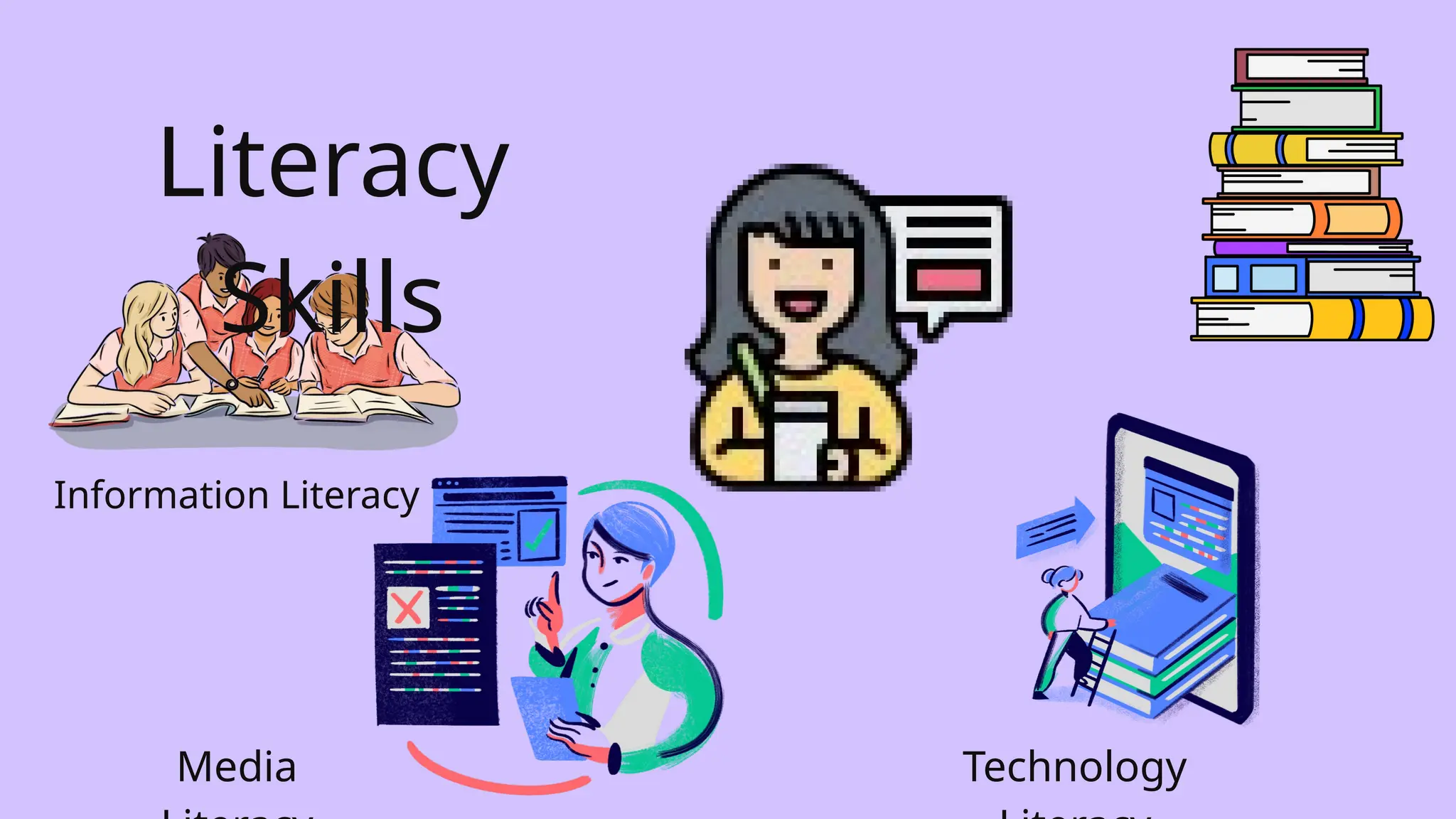
- Information Literacy
- Media Literacy
- Technology Literacy
2. Learning Skills (The 4 Cs):
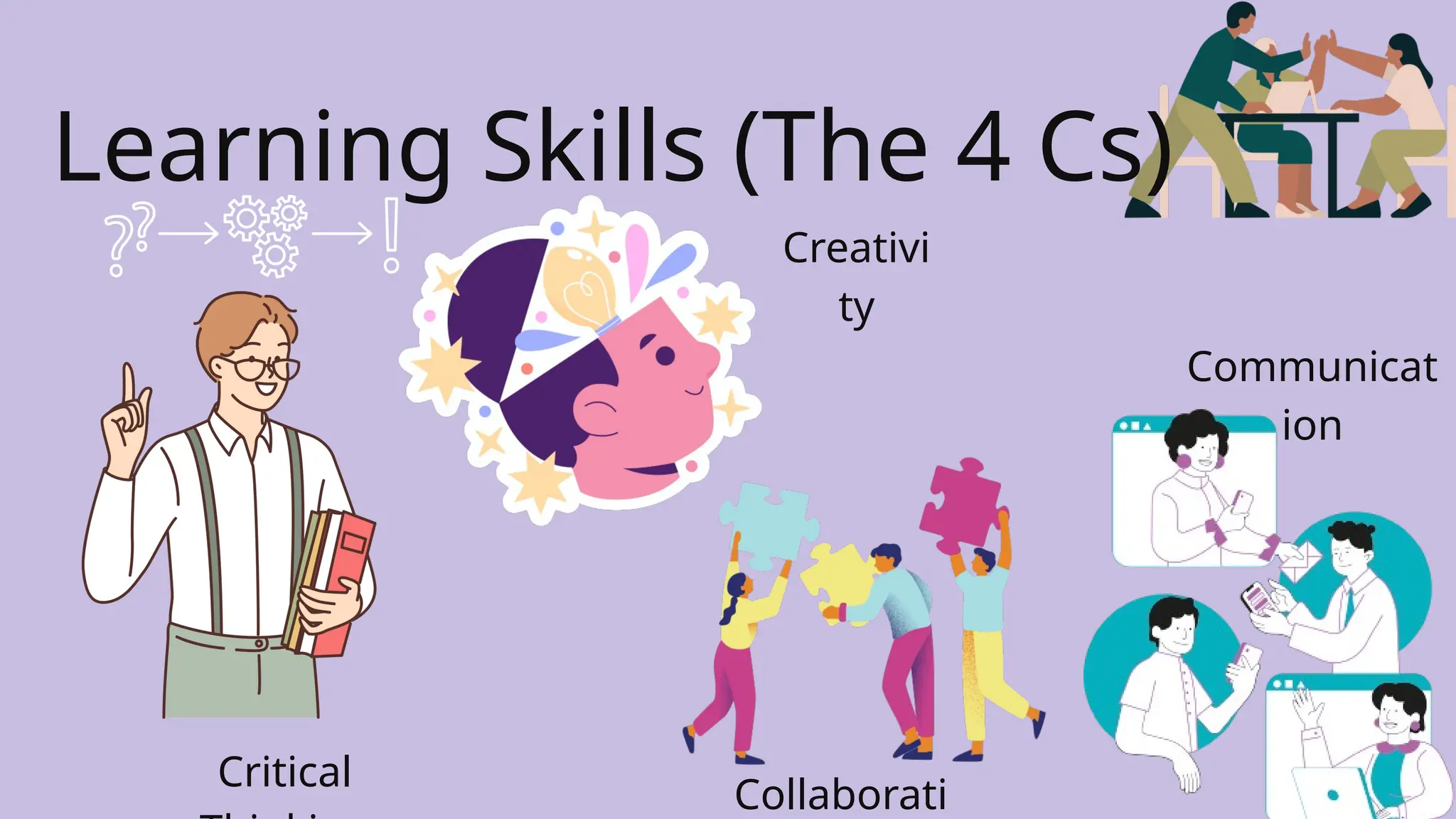
- Critical Thinking
- Creativity
- Collaboration
- Communication
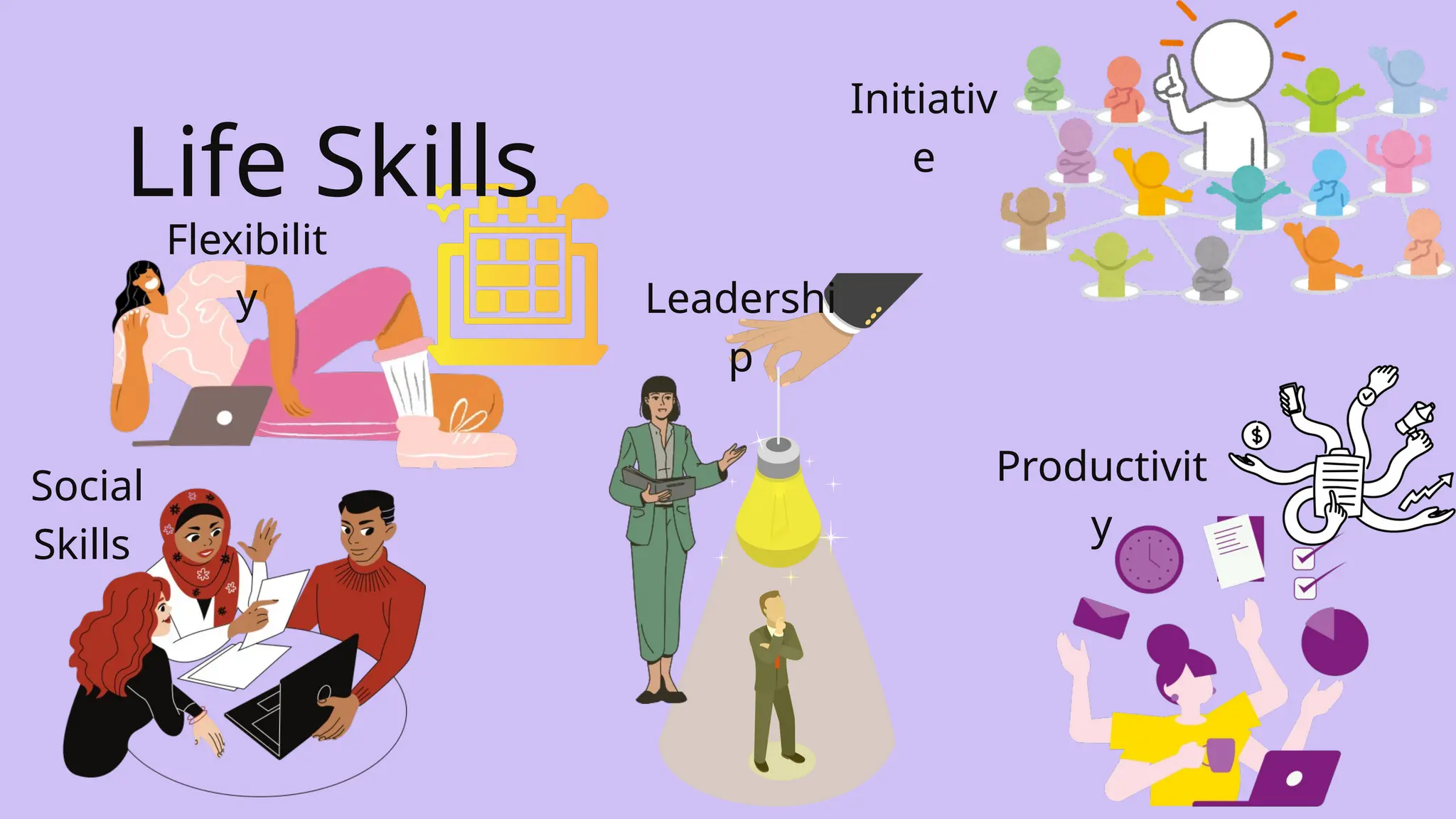
3. Life Skills (FLIPS):
- Flexibility
- Leadership
- Initiative
- Productivity
- Social Skills
Three Main
Categories:
Importance of 21st Century
Skills
- Adaptability: Equip individuals to adapt to new challenges and
opportunities.
- Problem-Solving: Enhance the ability to think critically and solve complex
problems.
- Innovation: Foster creativity and innovation, which are essential for
advancement in any field.
- Collaboration: Encourage effective teamwork and communication, vital
in diverse and multicultural environments.
- Lifelong Learning: Promote continuous learning and personal growth in
an ever-evolving world.
- Literacy skills encompass the ability to understand, analyze, and
effectively use information, media, and technology.
- They are essential for navigating the vast amount of information and
media we encounter daily.
Literacy
Skills
Literacy
Skills
Information Literacy
Media Technology
- Learning skills are crucial for critical thinking, creativity, collaboration,
and communication.
- They enable individuals to effectively solve problems, innovate, work
with others, and express ideas.
Learning Skills (The 4 Cs)
Critical
Creativi
ty
Collaborati
Communicat
ion
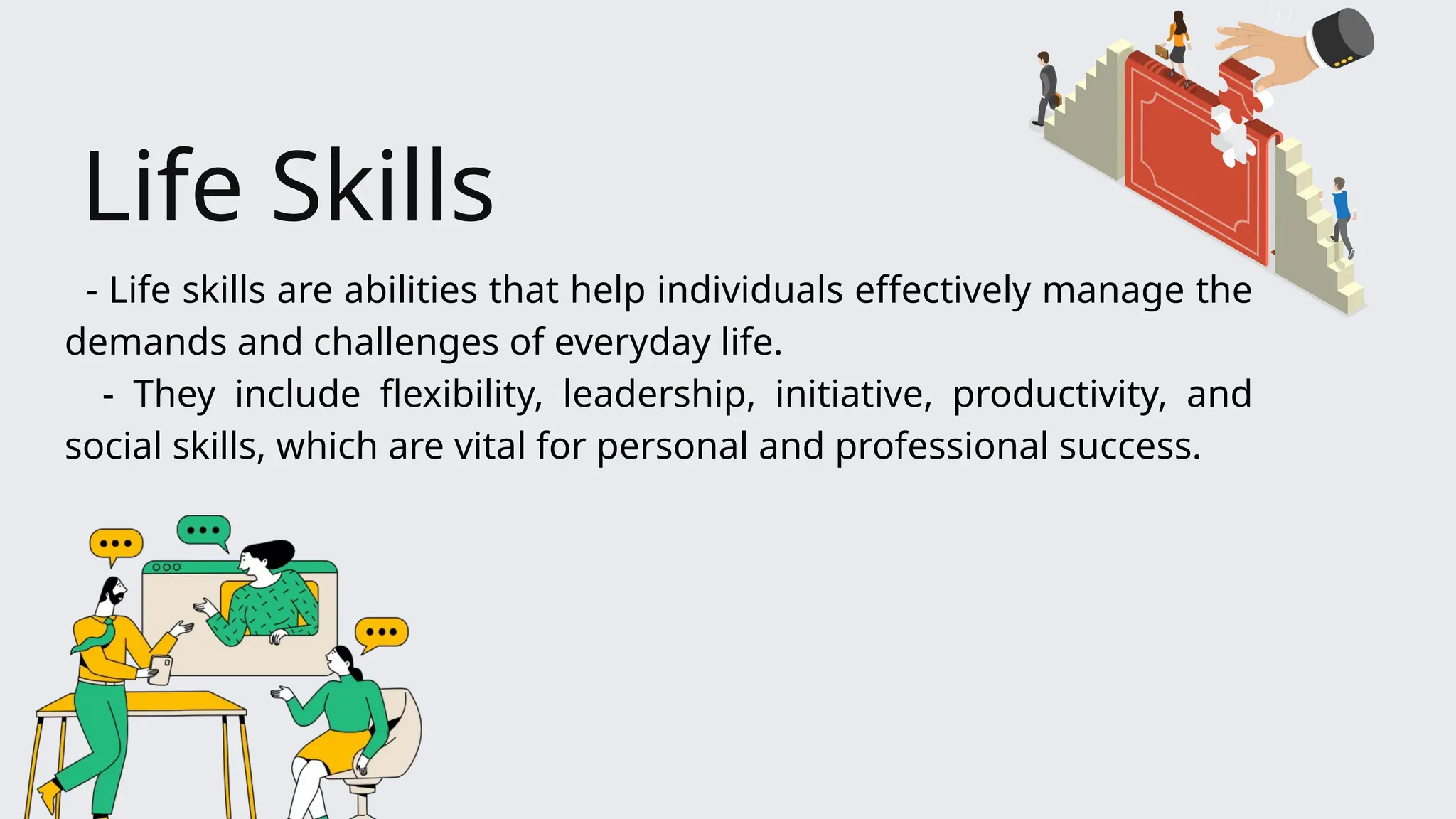
- Life skills are abilities that help individuals effectively manage the
demands and challenges of everyday life.
- They include flexibility, leadership, initiative, productivity, and
social skills, which are vital for personal and professional success.
Life Skills
Life Skills
Flexibilit
y Leadershi
p
Initiativ
e
Productivit
y
Social
Skills
Conclusio
n
- Personal Growth: Developing these skills contributes to
personal growth and self-confidence.
- Professional Advancement: They are highly valued in the
workplace and can lead to career advancement and
opportunities.
- Global Citizenship: These skills foster a better understanding of
global issues and promote responsible citizenship.
- The world is constantly changing, and possessing these 21st-
century skills ensures that individuals are prepared to meet the
demands of the future.
- By cultivating these skills, we can contribute to a more
innovative, collaborative, and adaptive society.
Introduction to 21st Century Skills.-ppt

Introduction to 21st Century Skills.-ppt

  • 1.
  • 2.
    21st-century skills area set of abilities and competencies that are essential for success in today's rapidly changing, technology-driven world. - Significance: These skills are crucial for personal and professional development, enabling individuals to navigate and thrive in a complex, interconnected global environment. Introductio n
  • 3.
    1. Literacy Skills(IMT): - Information Literacy - Media Literacy - Technology Literacy 2. Learning Skills (The 4 Cs): - Critical Thinking - Creativity - Collaboration - Communication 3. Life Skills (FLIPS): - Flexibility - Leadership - Initiative - Productivity - Social Skills Three Main Categories:
  • 4.
    Importance of 21stCentury Skills - Adaptability: Equip individuals to adapt to new challenges and opportunities. - Problem-Solving: Enhance the ability to think critically and solve complex problems. - Innovation: Foster creativity and innovation, which are essential for advancement in any field. - Collaboration: Encourage effective teamwork and communication, vital in diverse and multicultural environments. - Lifelong Learning: Promote continuous learning and personal growth in an ever-evolving world.
  • 5.
    - Literacy skillsencompass the ability to understand, analyze, and effectively use information, media, and technology. - They are essential for navigating the vast amount of information and media we encounter daily. Literacy Skills
  • 6.
  • 7.
    - Learning skillsare crucial for critical thinking, creativity, collaboration, and communication. - They enable individuals to effectively solve problems, innovate, work with others, and express ideas. Learning Skills (The 4 Cs)
  • 8.
    Learning Skills (The4 Cs) Critical Creativi ty Collaborati Communicat ion
  • 9.
    - Life skillsare abilities that help individuals effectively manage the demands and challenges of everyday life. - They include flexibility, leadership, initiative, productivity, and social skills, which are vital for personal and professional success. Life Skills
  • 10.
  • 11.
    Conclusio n - Personal Growth:Developing these skills contributes to personal growth and self-confidence. - Professional Advancement: They are highly valued in the workplace and can lead to career advancement and opportunities. - Global Citizenship: These skills foster a better understanding of global issues and promote responsible citizenship. - The world is constantly changing, and possessing these 21st- century skills ensures that individuals are prepared to meet the demands of the future. - By cultivating these skills, we can contribute to a more innovative, collaborative, and adaptive society.