Welcome
A Research Primer
for
Graduate Students
The University of Kansas Summer 2015
Edwards Campus
Dissertation Research Blog http://dissertationresearch.blogspot.com
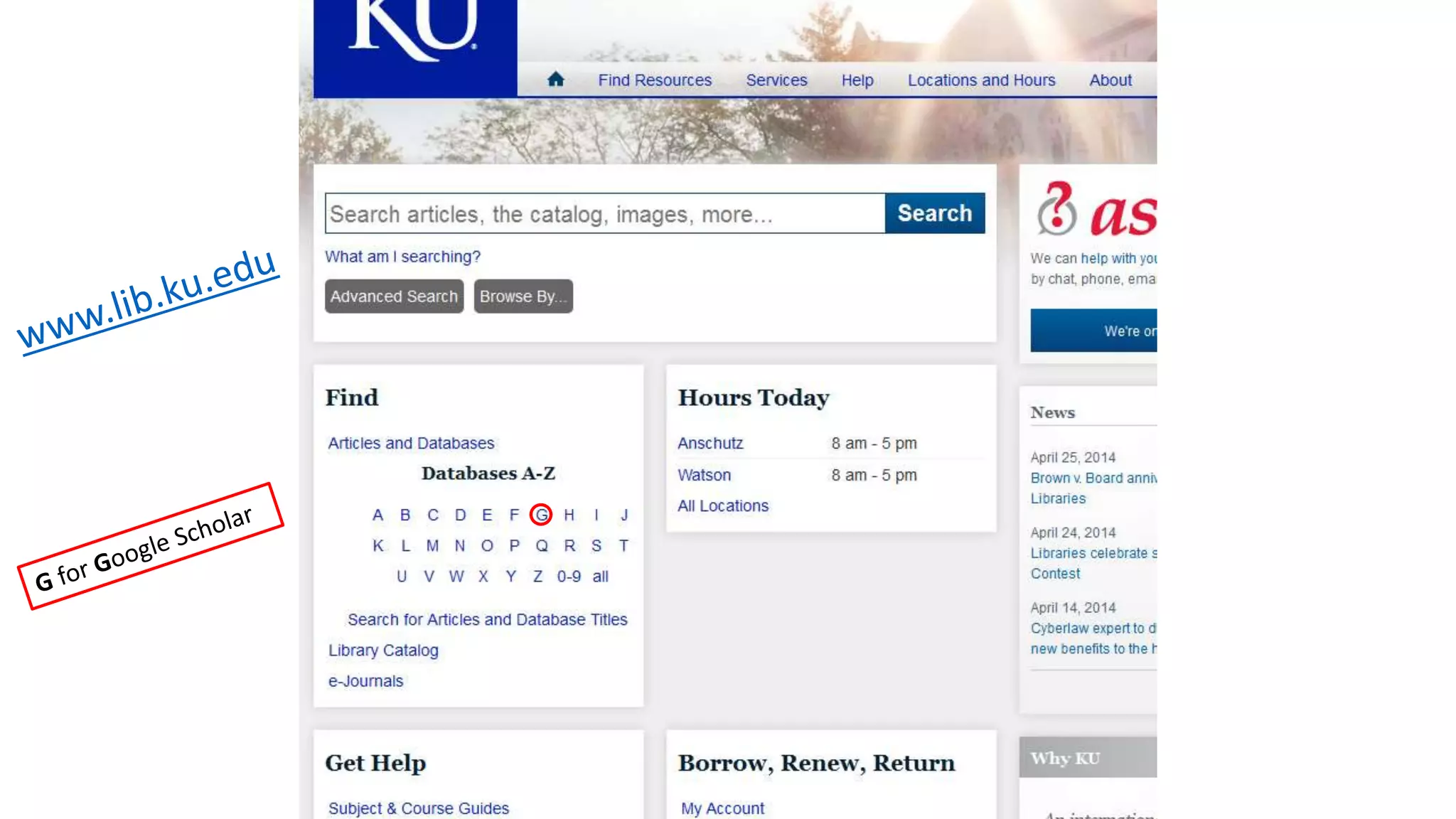
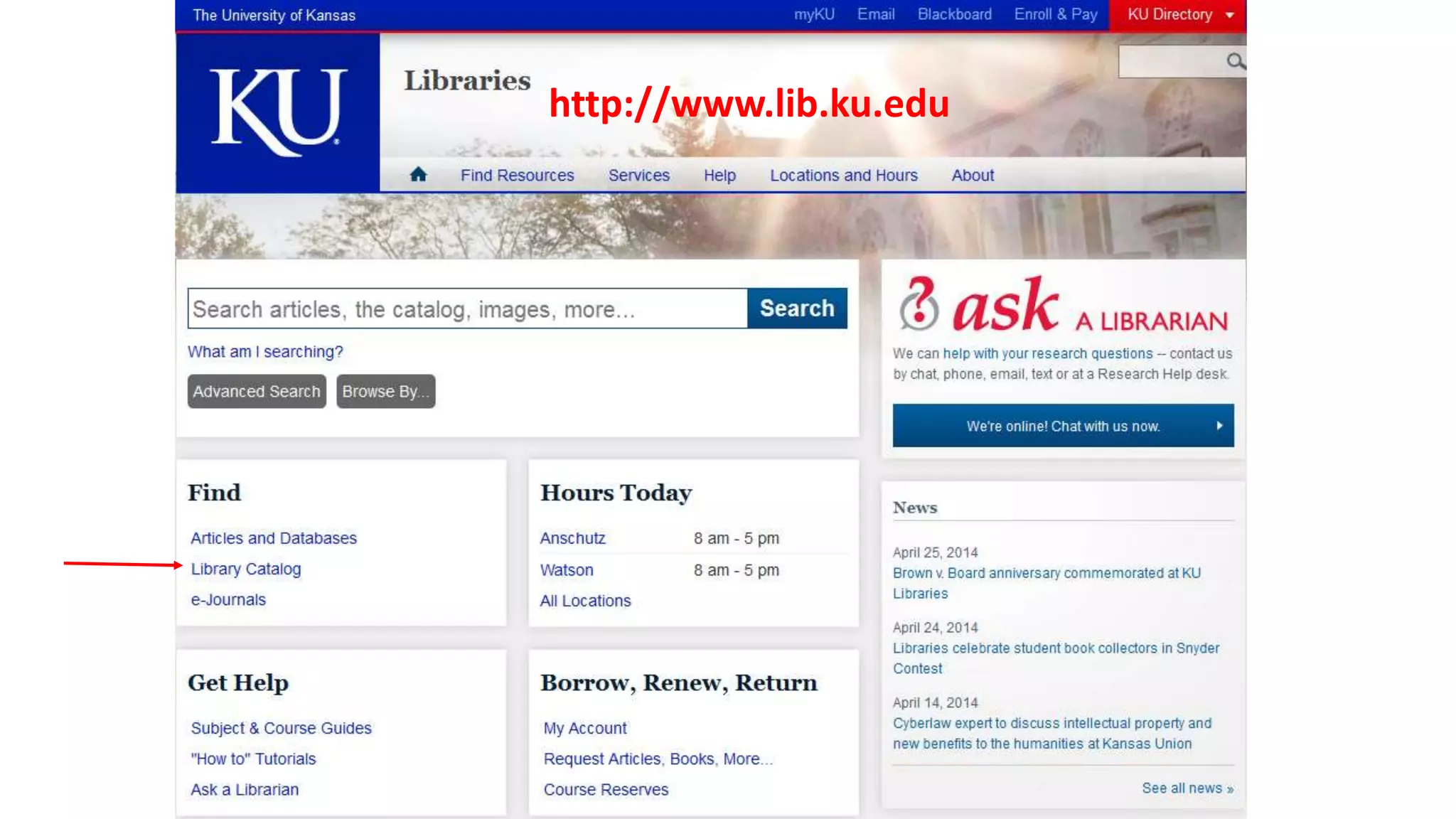
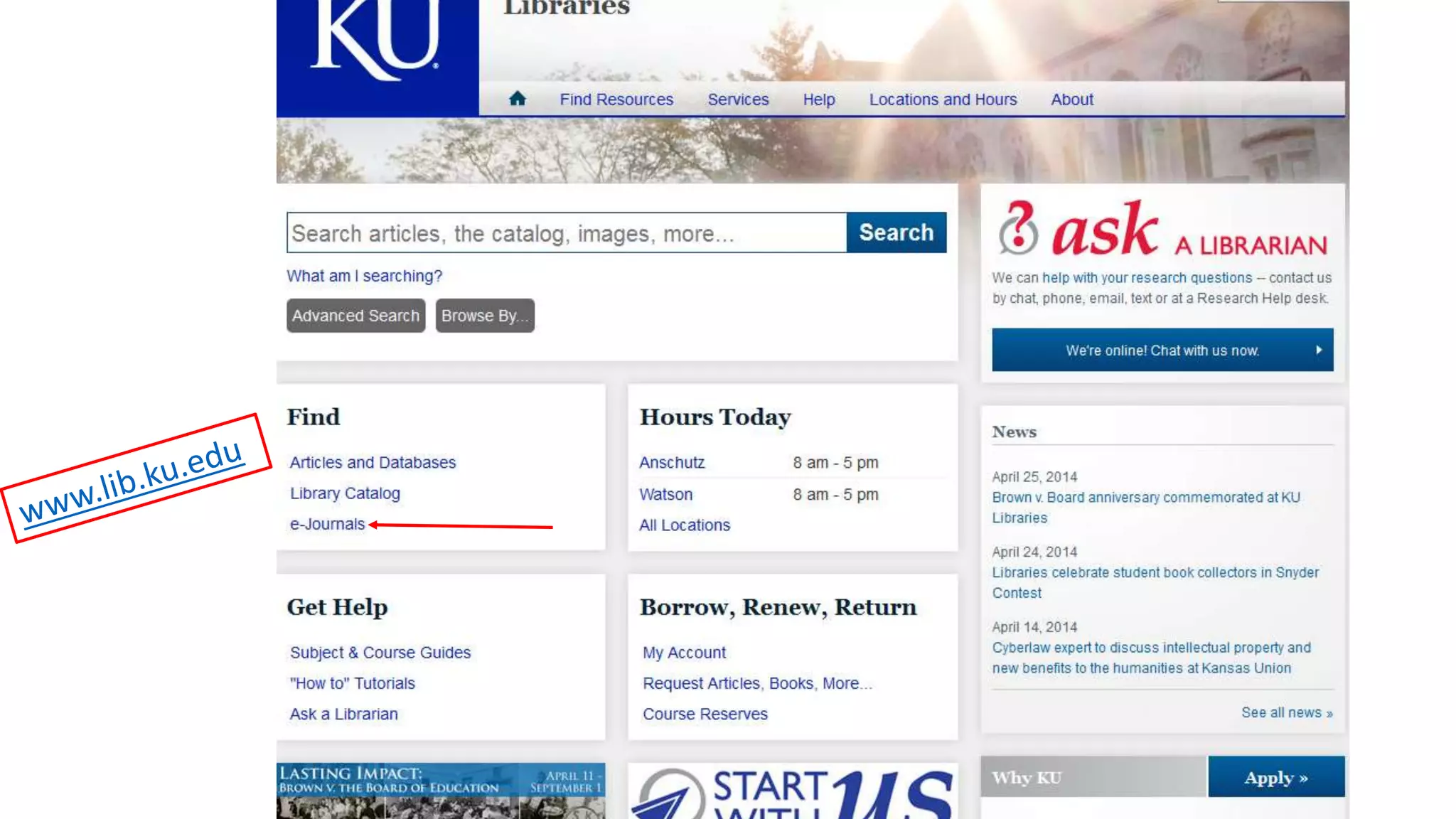
Library Home Page http://www.lib.ku.edu
Where’s the stuff: http://www.lib.ku.edu
Databases / Peer-review journals / Articles
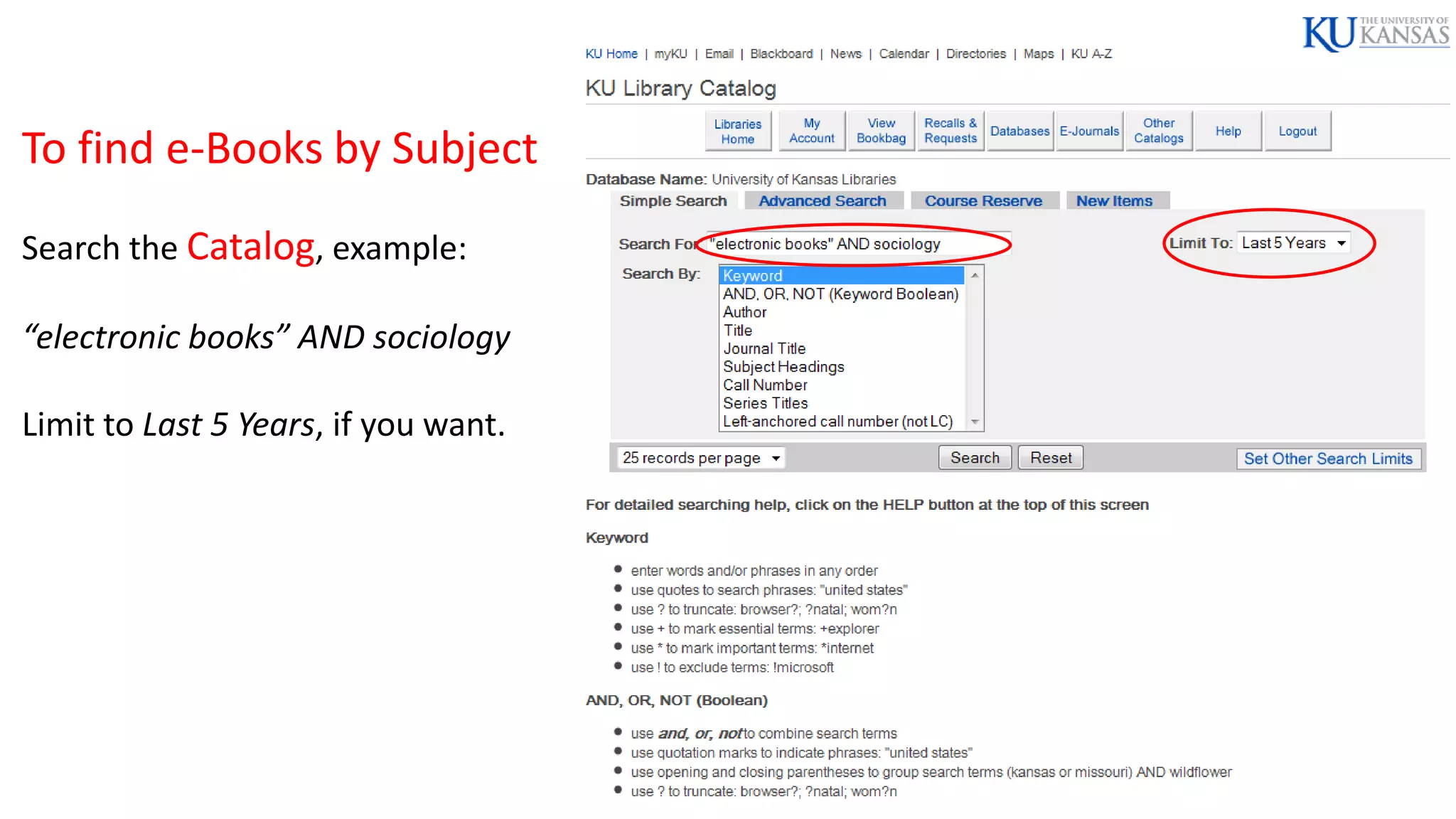
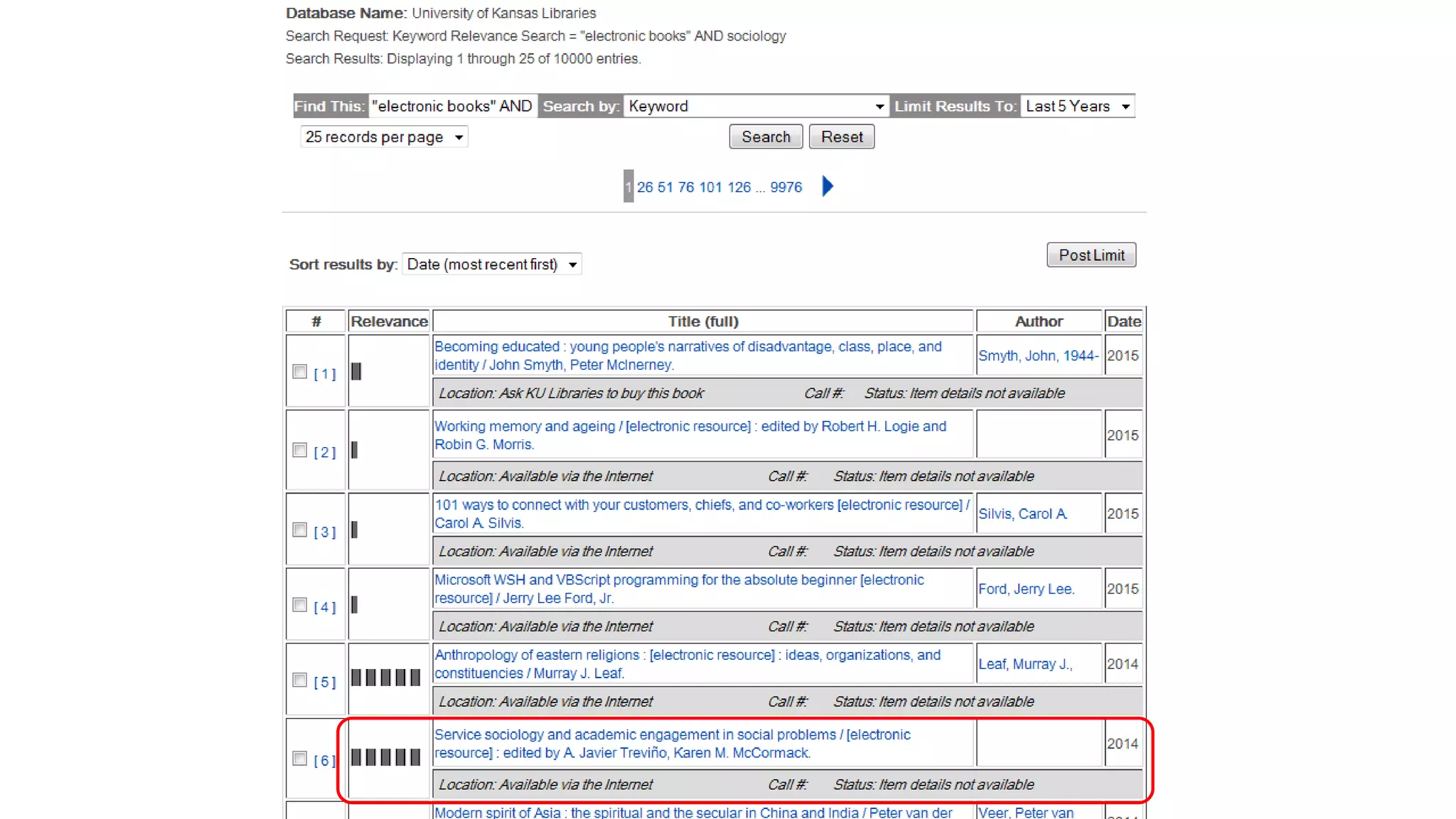
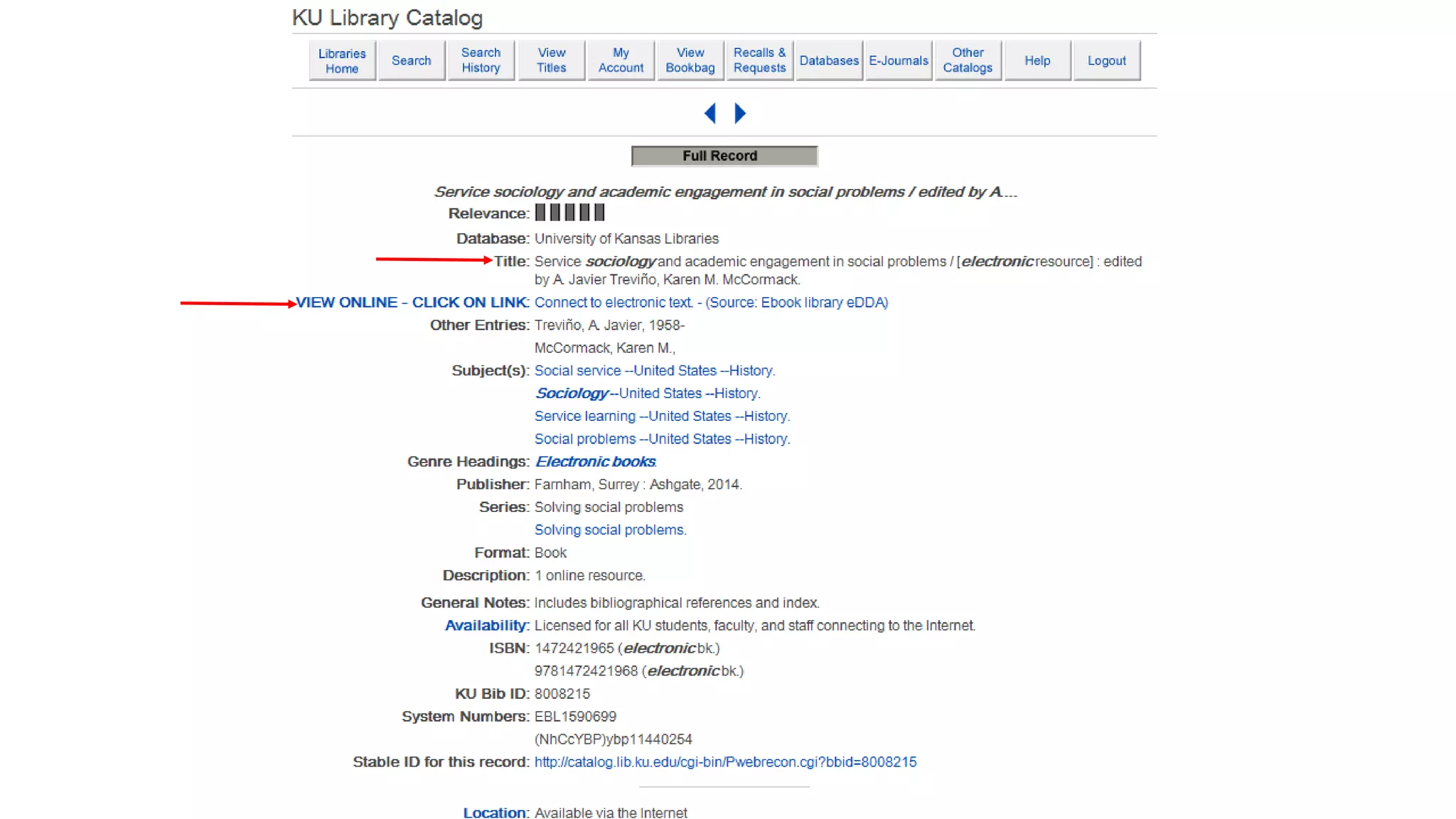
Library Catalog / Books / e-Books
e-Journals / by subject or title words
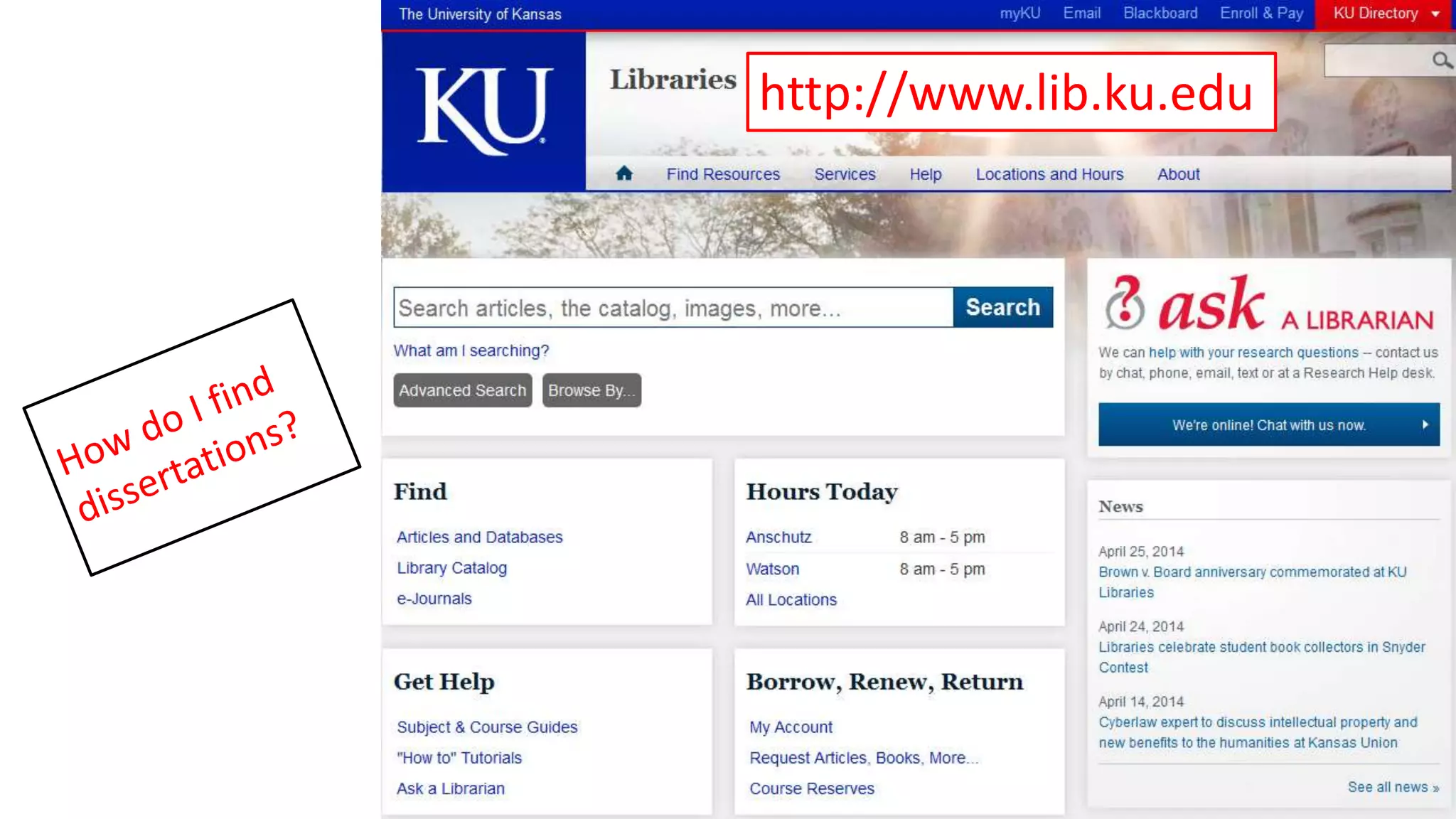
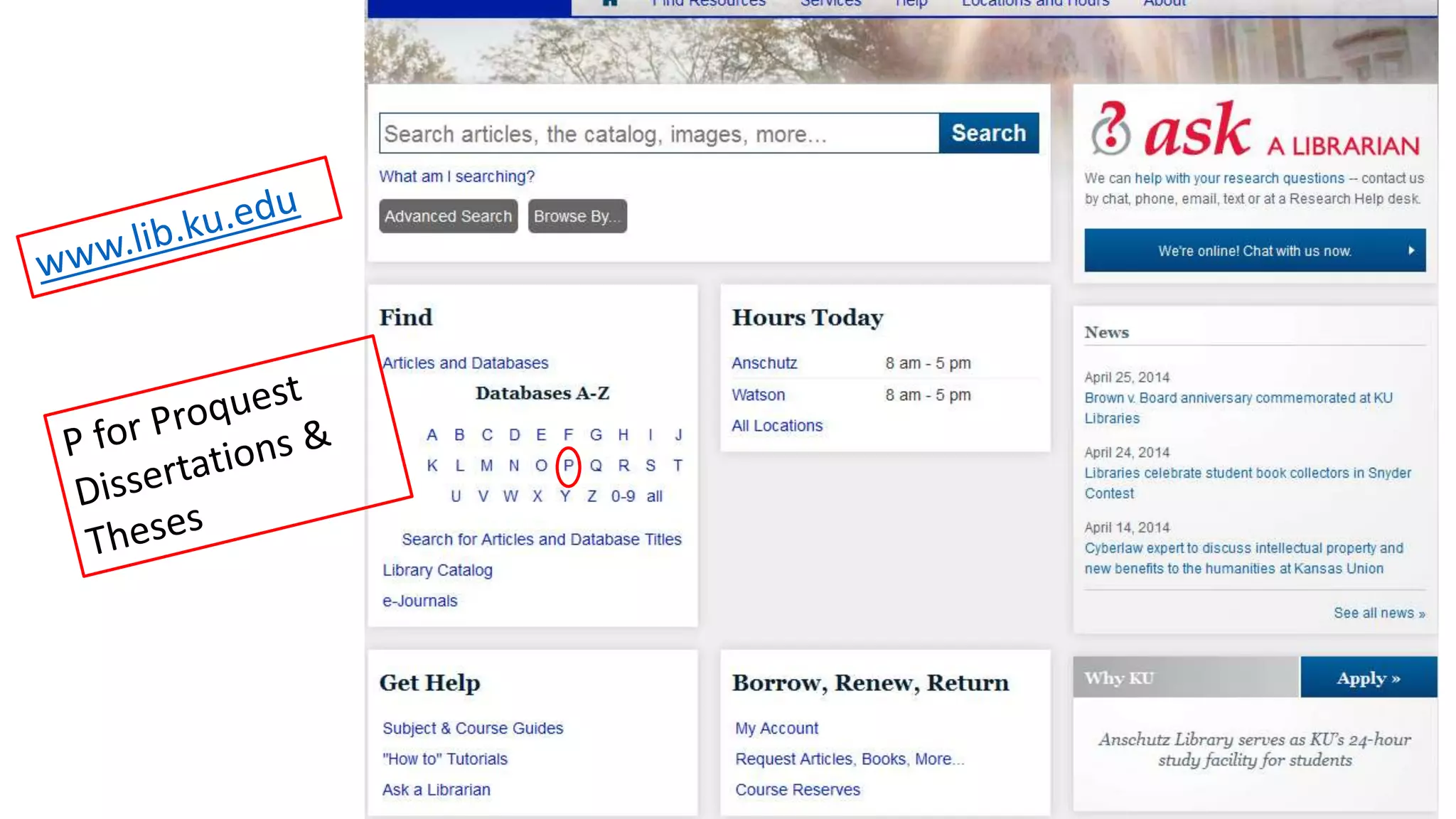
Dissertations / World-wide or KU authored
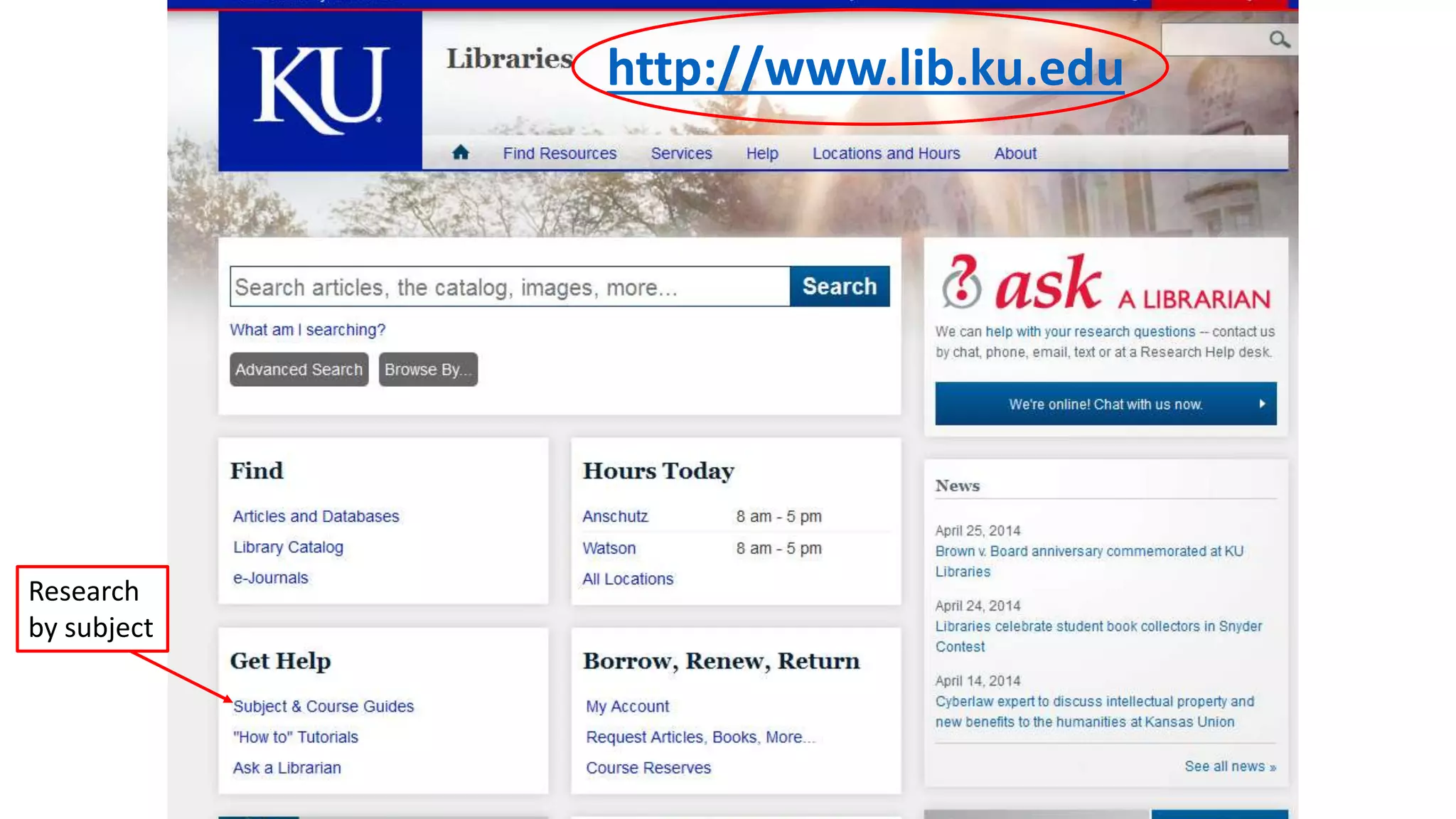
Subject and Course Guides
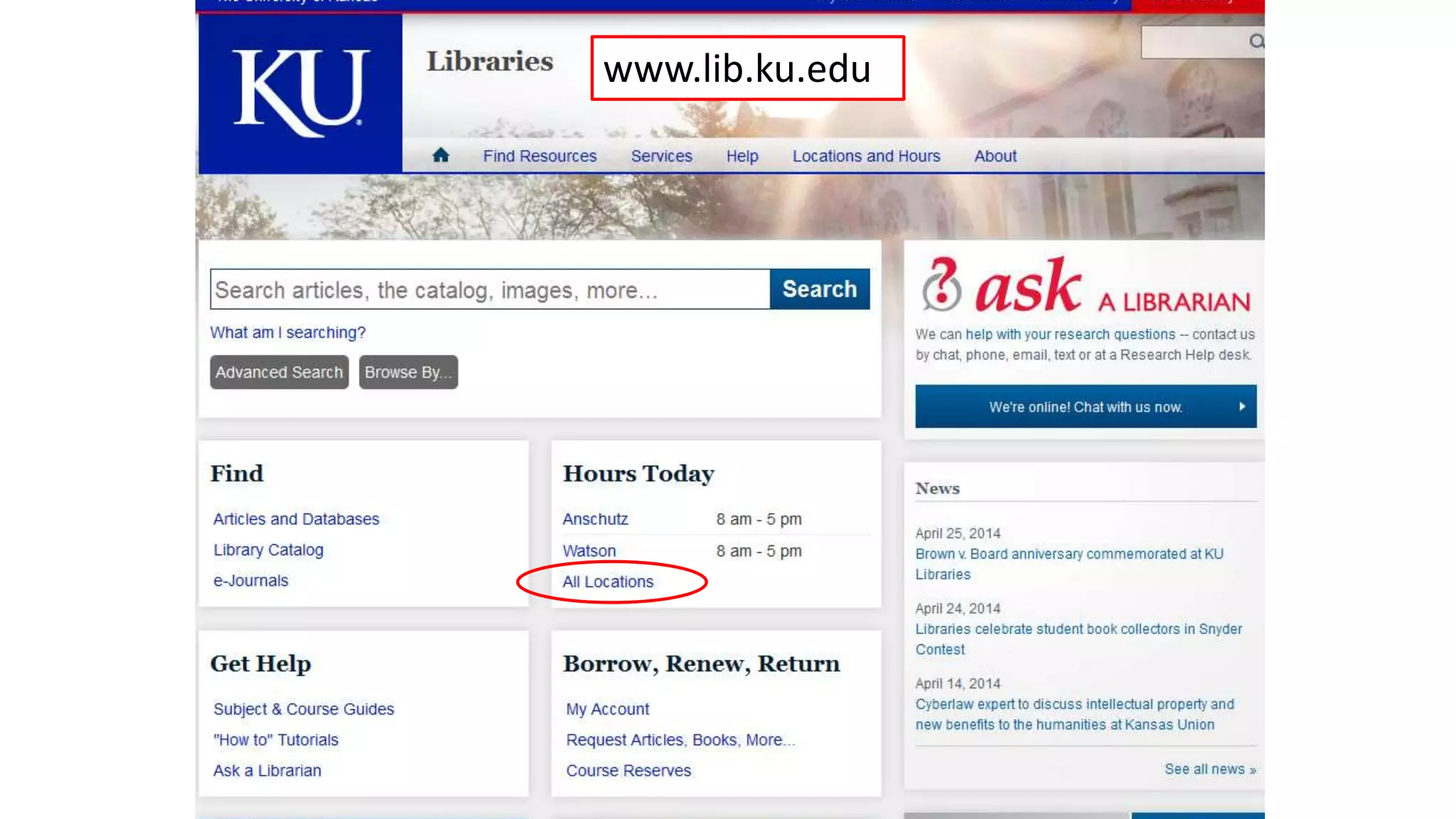
Libraries Homepage
http://www.lib.ku.edu
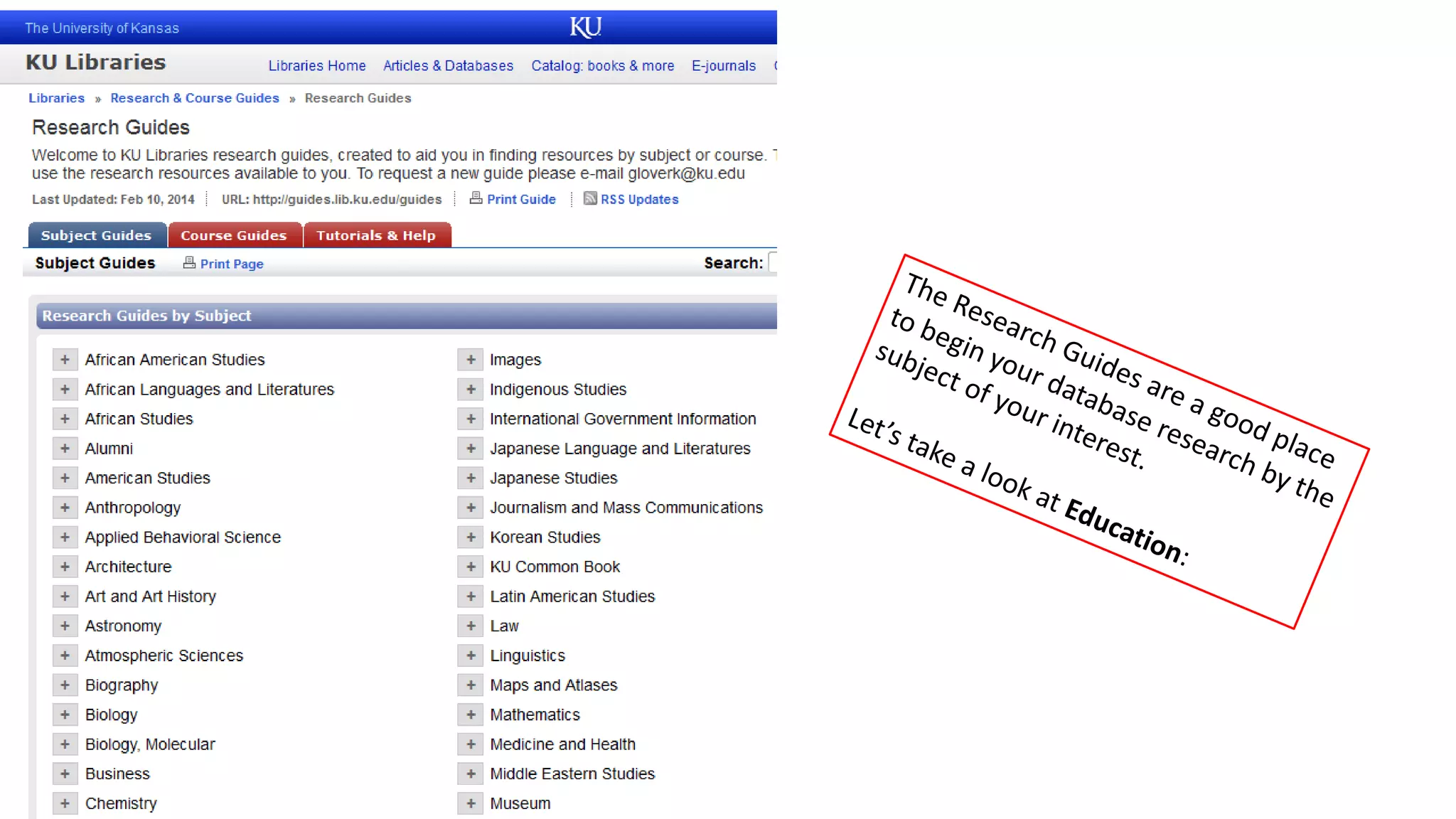
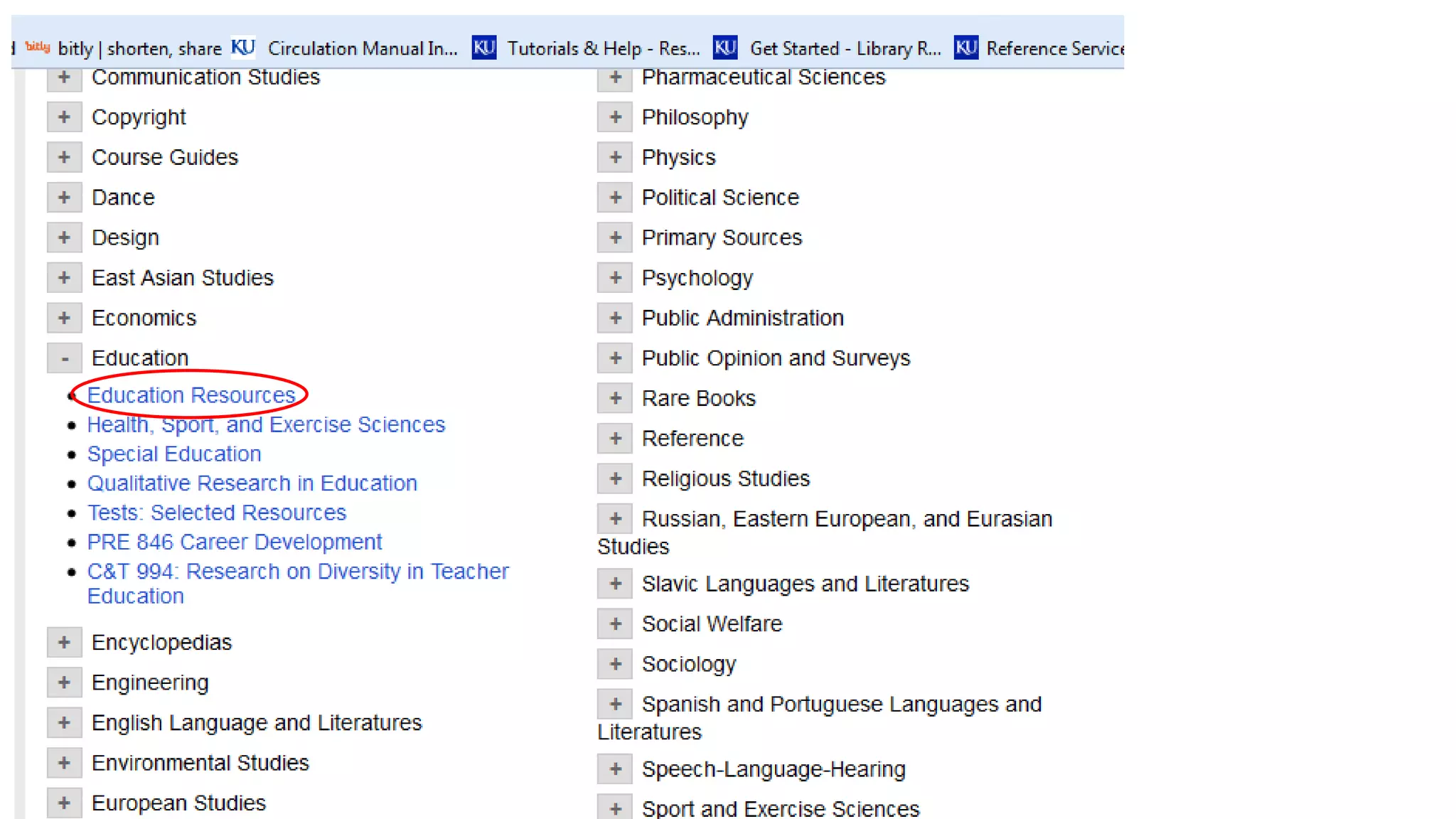
Research
by Subject
& Course
Guides
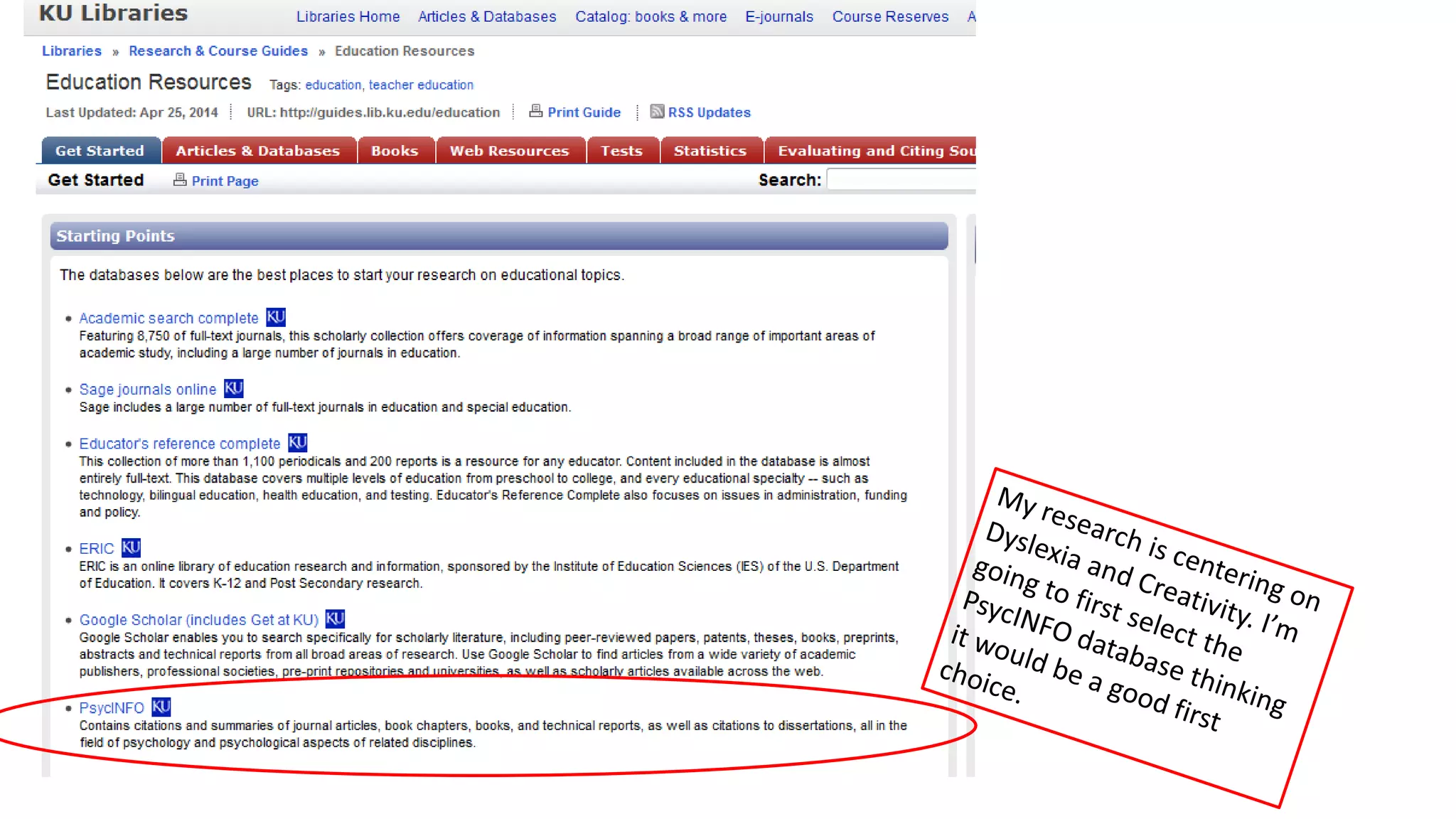
Notice the tabs
to choose from:
Get Started,
Articles and
Databases,
Books, Web
Resources, Tests,
Statistics,
Evaluating and
Citing
When using the
databases from
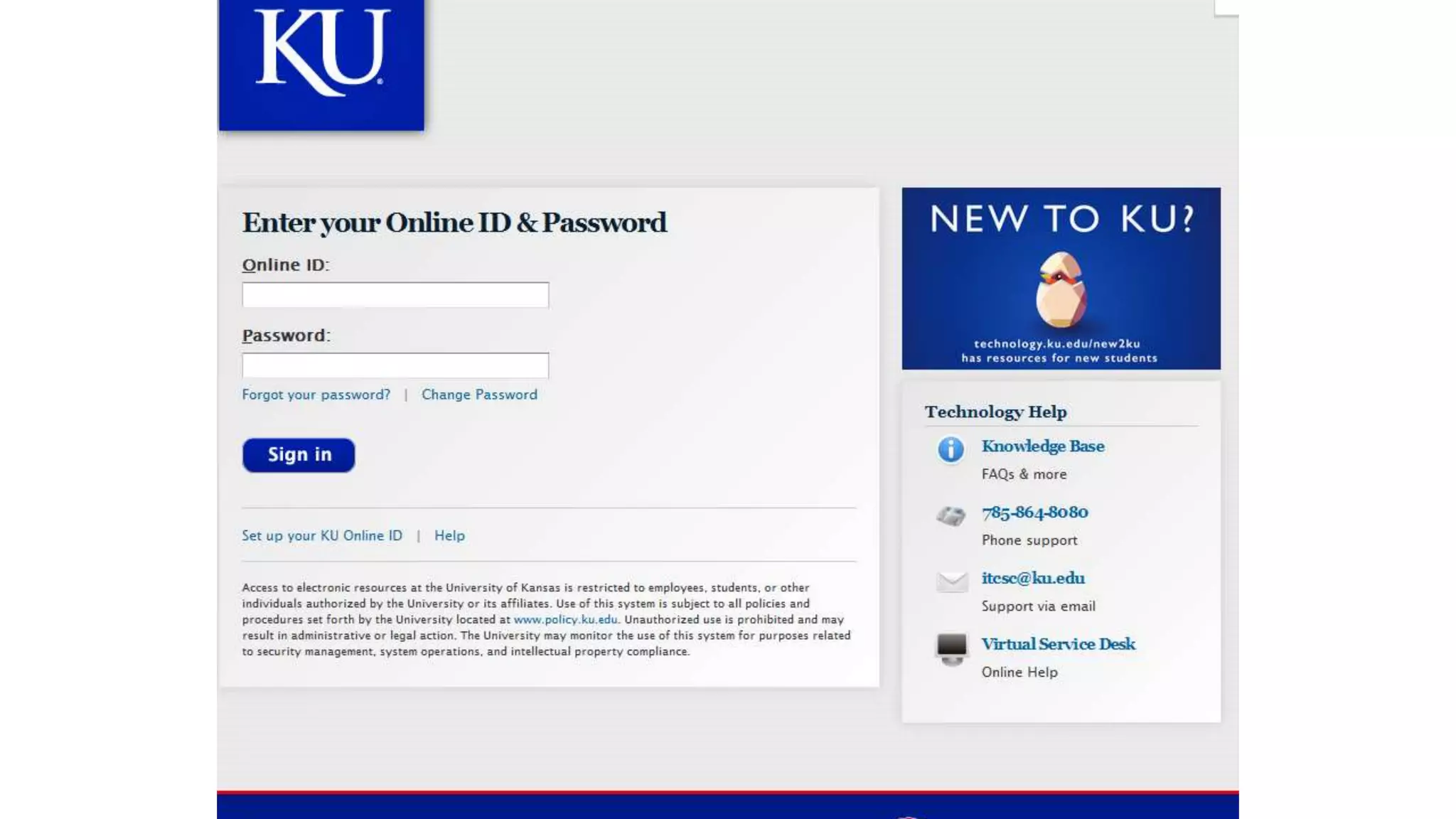
off campus, you
will be ask to
sign in with your
KU ID and
Password
PsycINFO
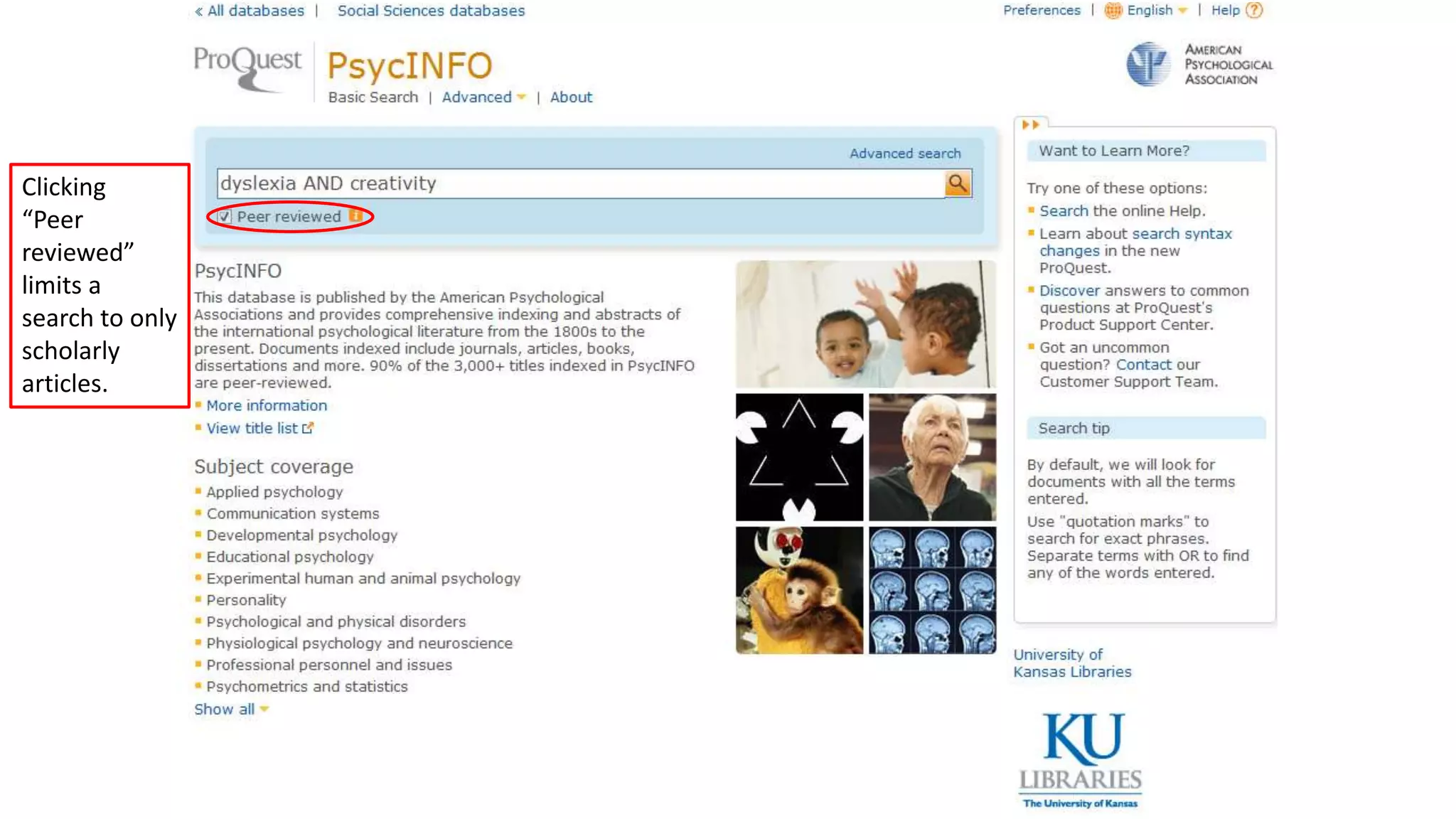
Clicking
“Peer
reviewed”
limits a
search to
only
scholarly
articles.
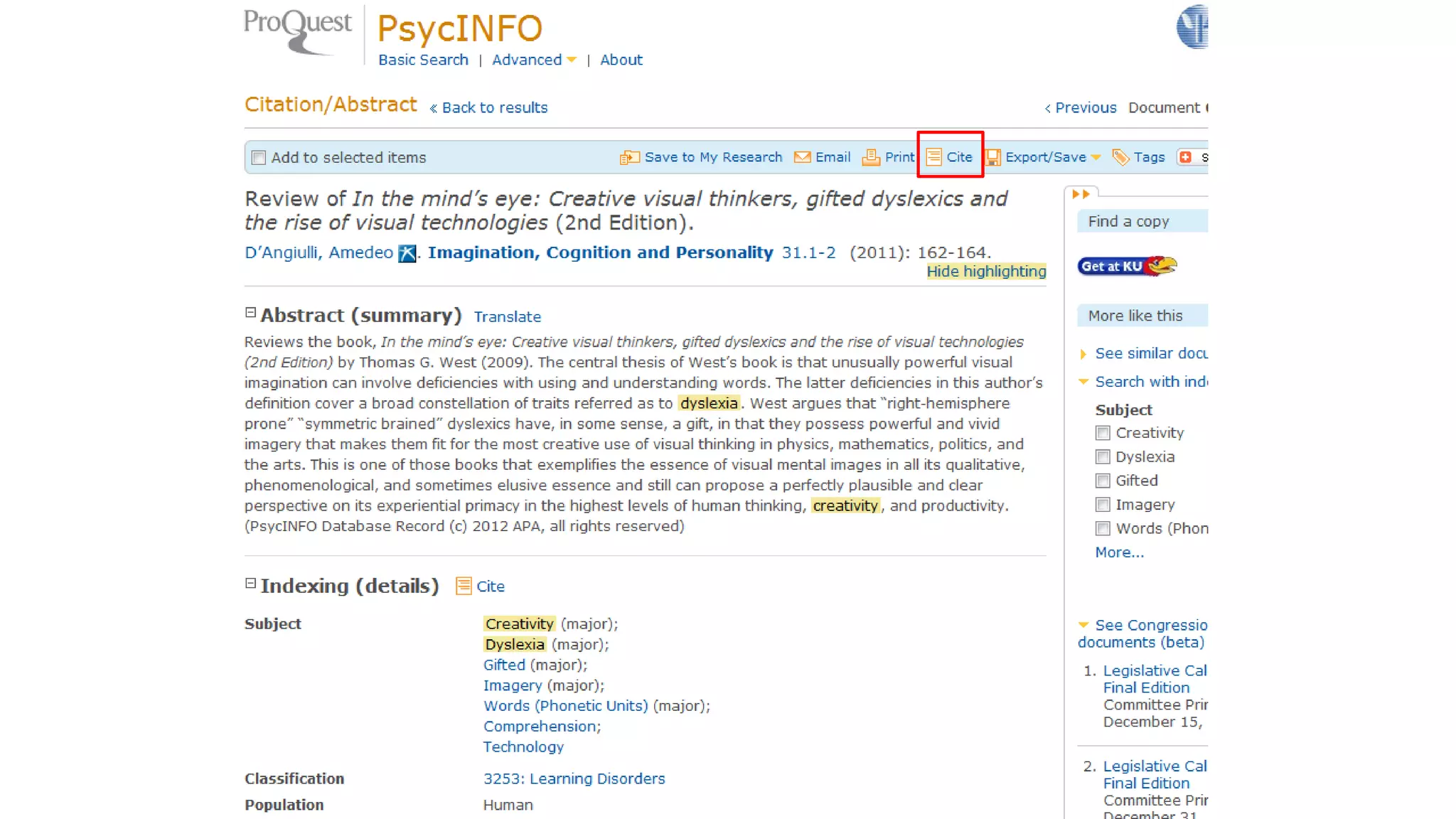
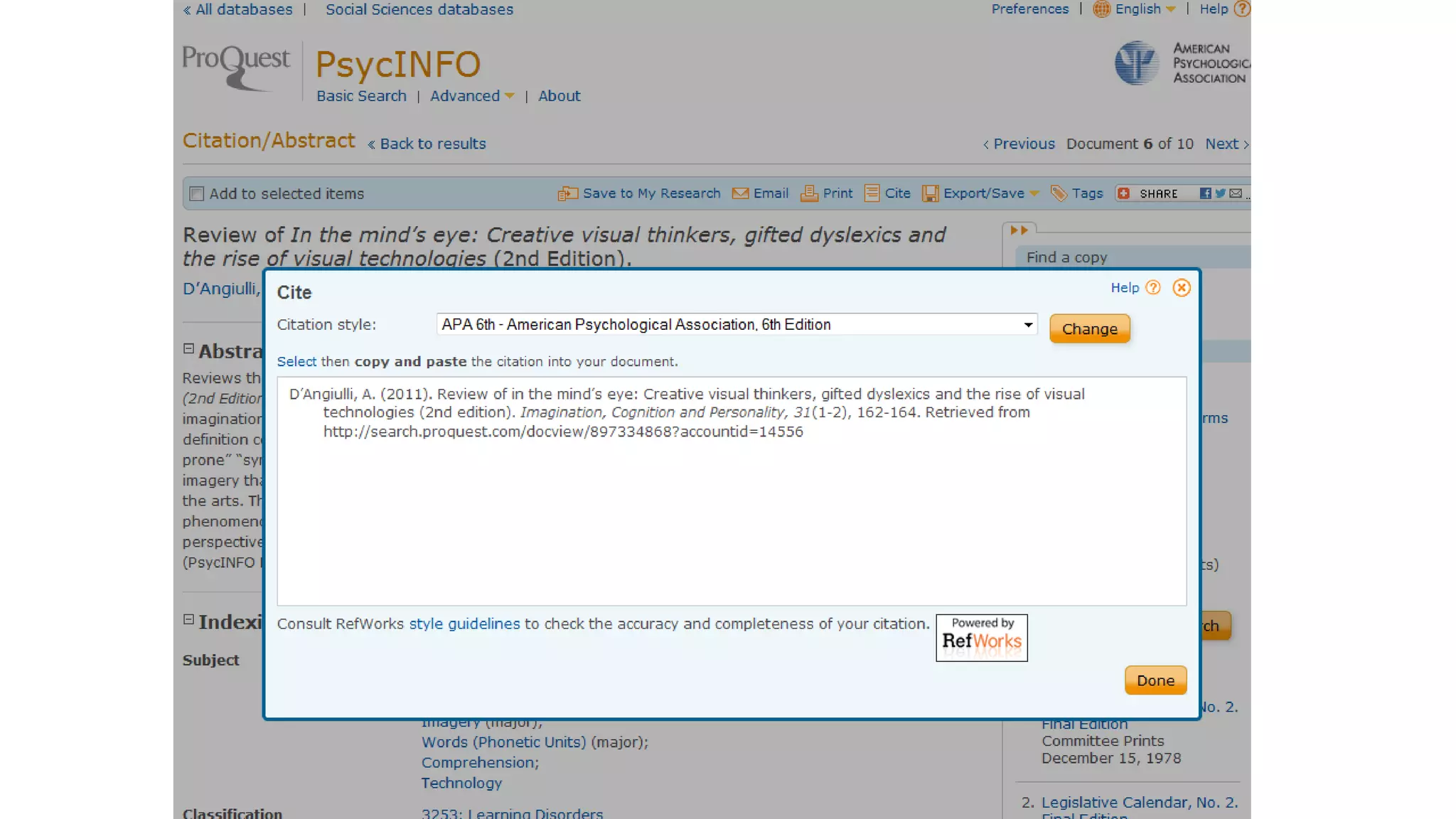
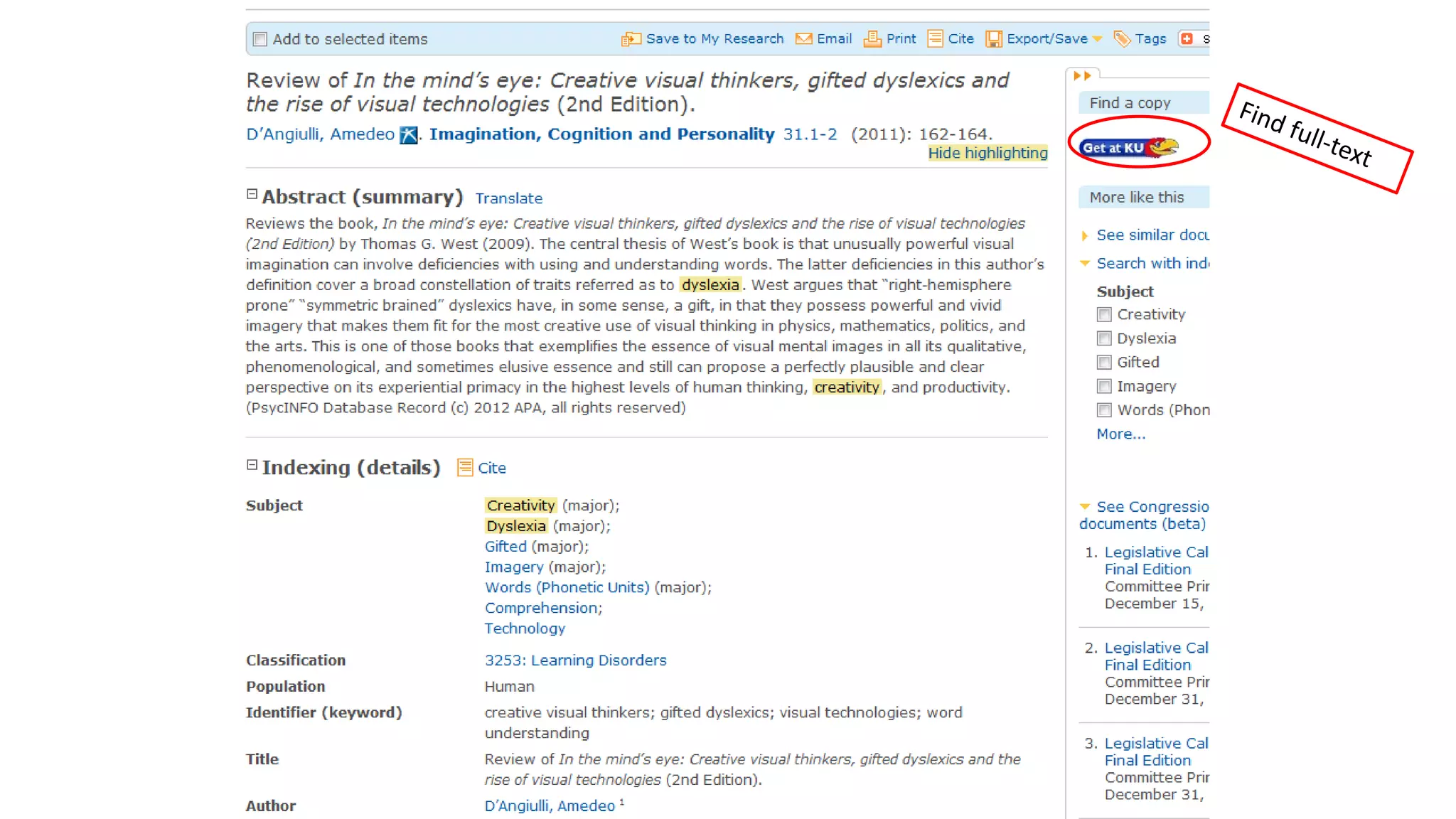
I want to cite this
review, now.
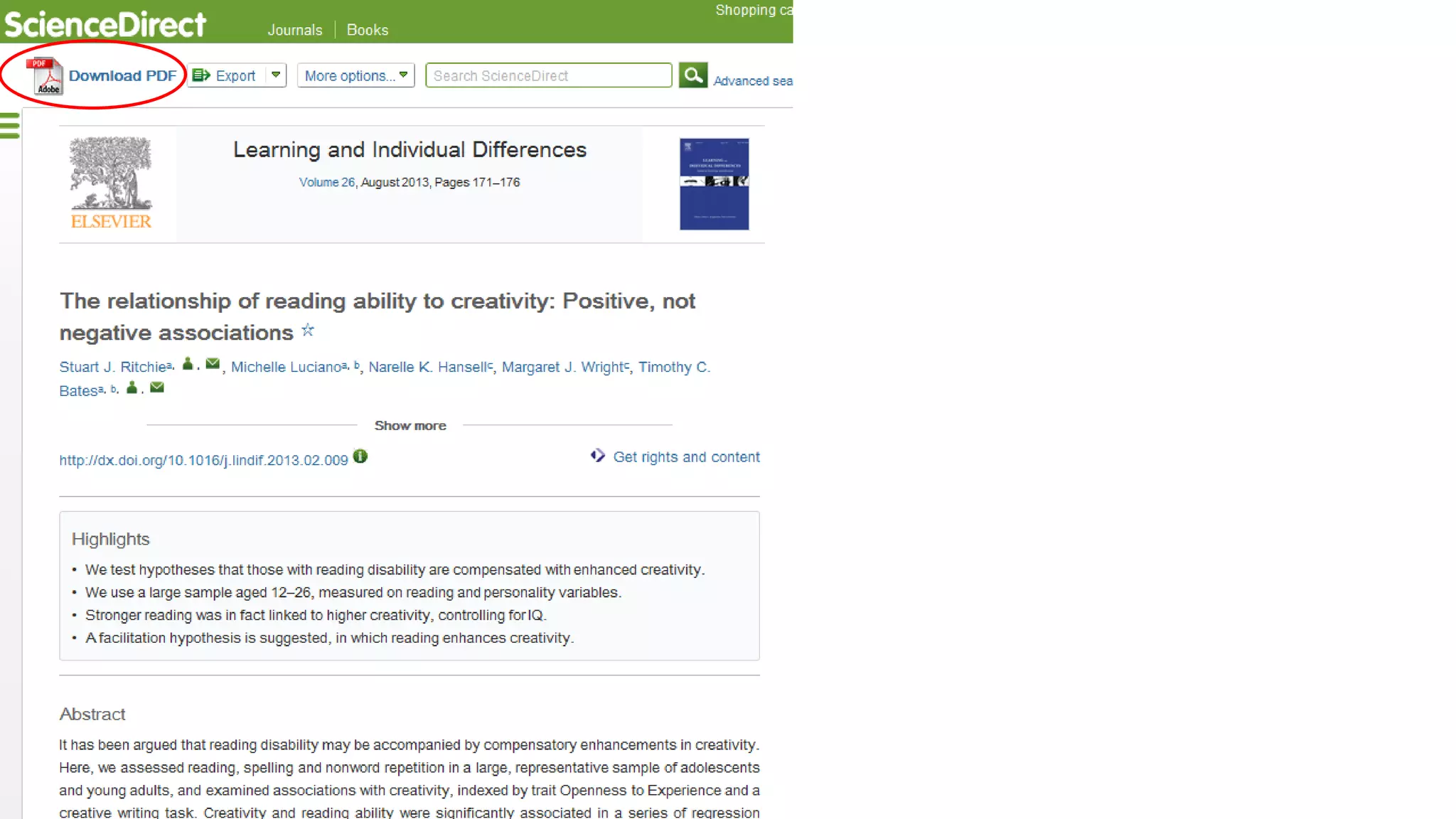
Can I get full text of this review?
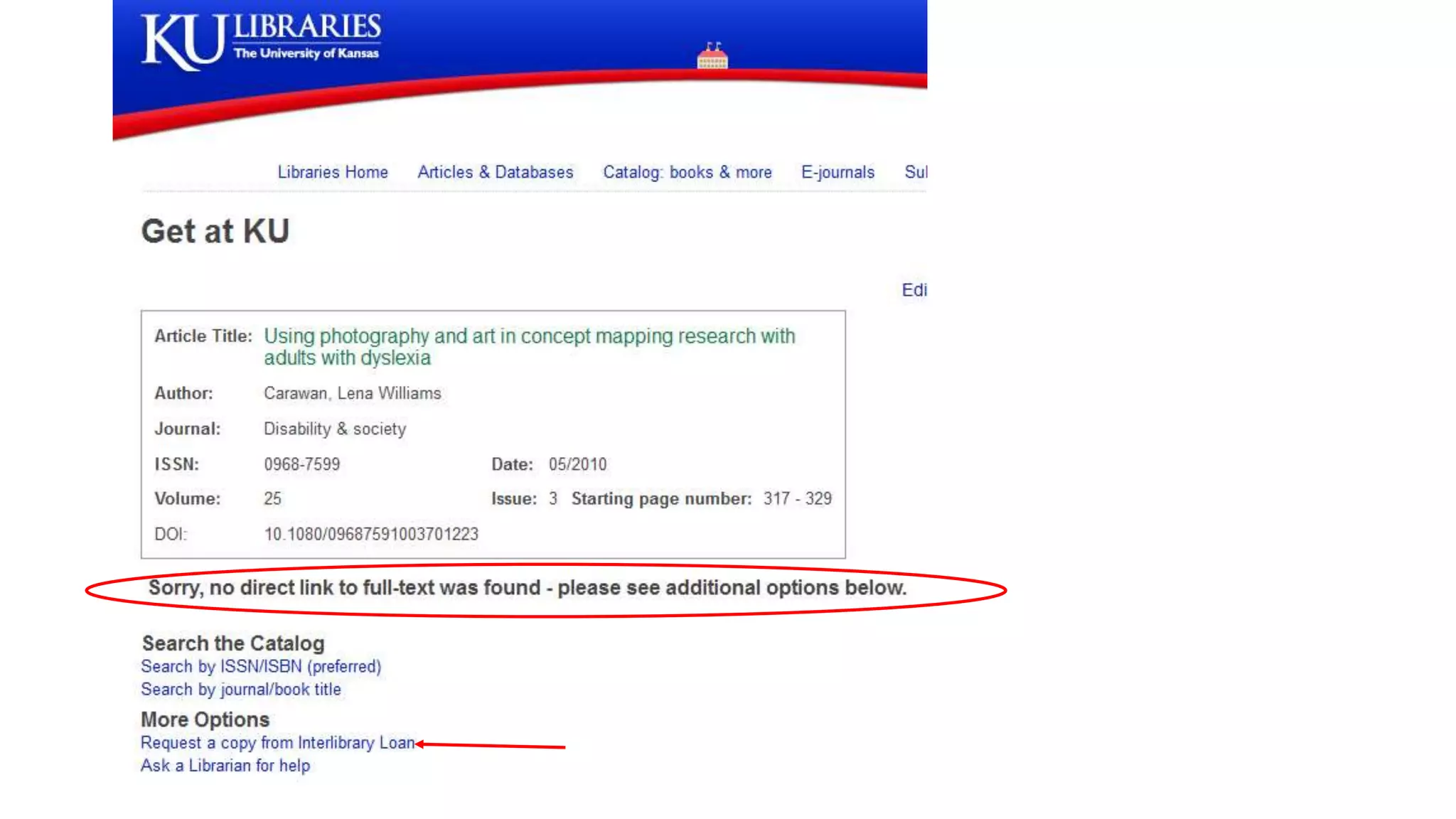
Get at KU
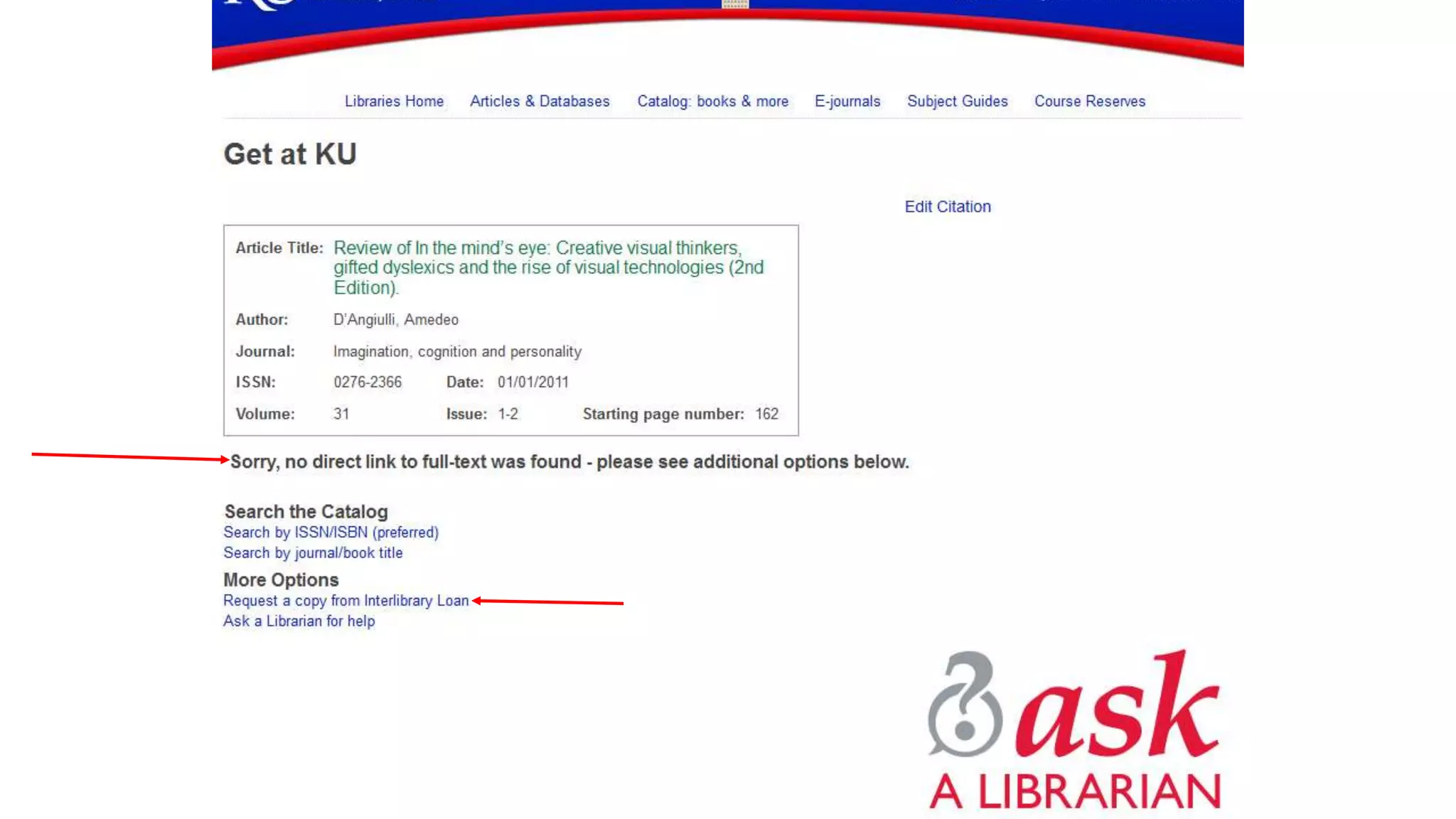
What if no full text of
an article is found?
Request a copy
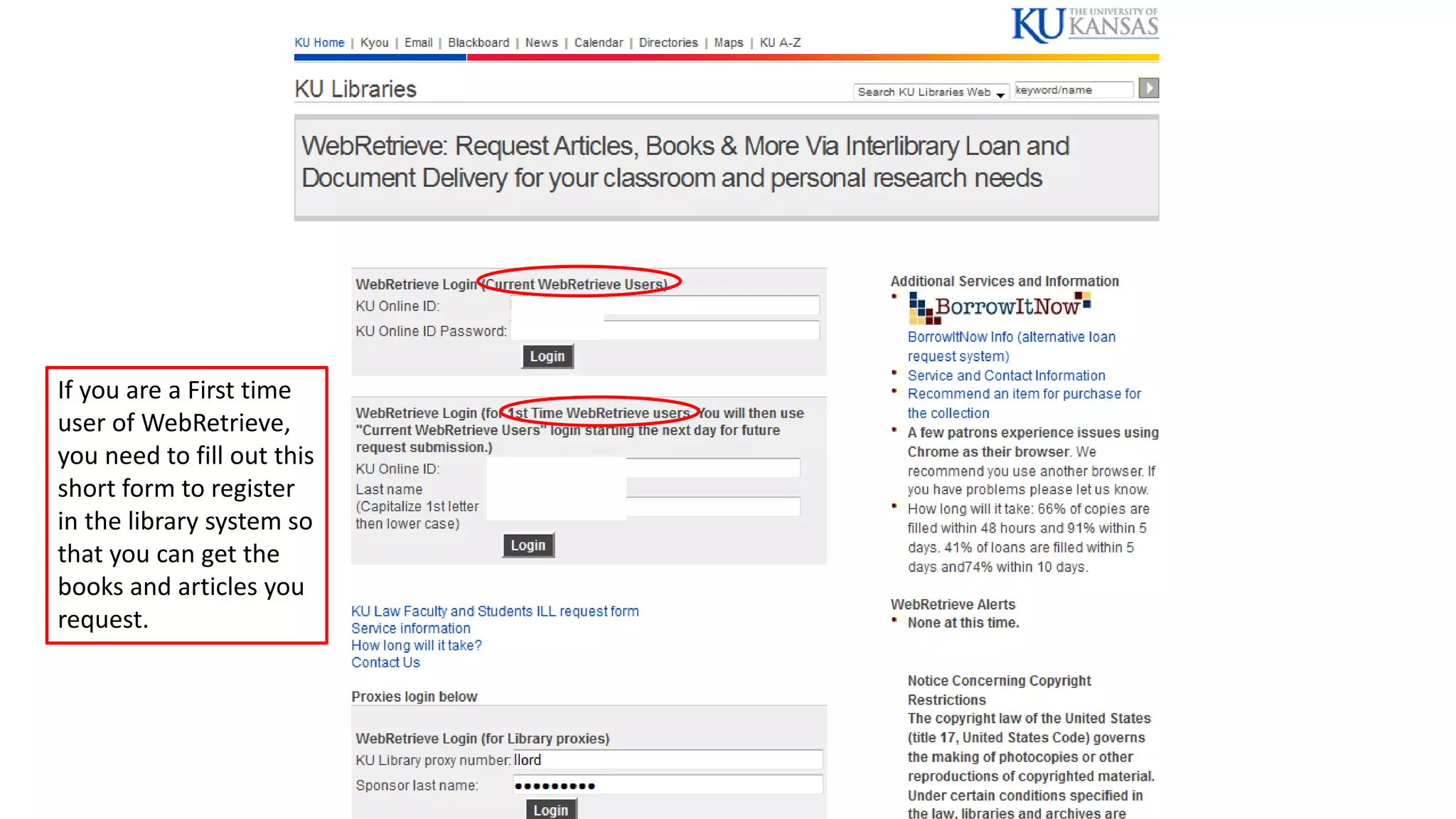
If you are a First
time user of
WebRetrieve,
you need to fill
out this short
form (KU ID and
last name) to
register in the
library system so
that you can get
the books and
articles you
request.
This is my info
If it’s your 1st time you have no info
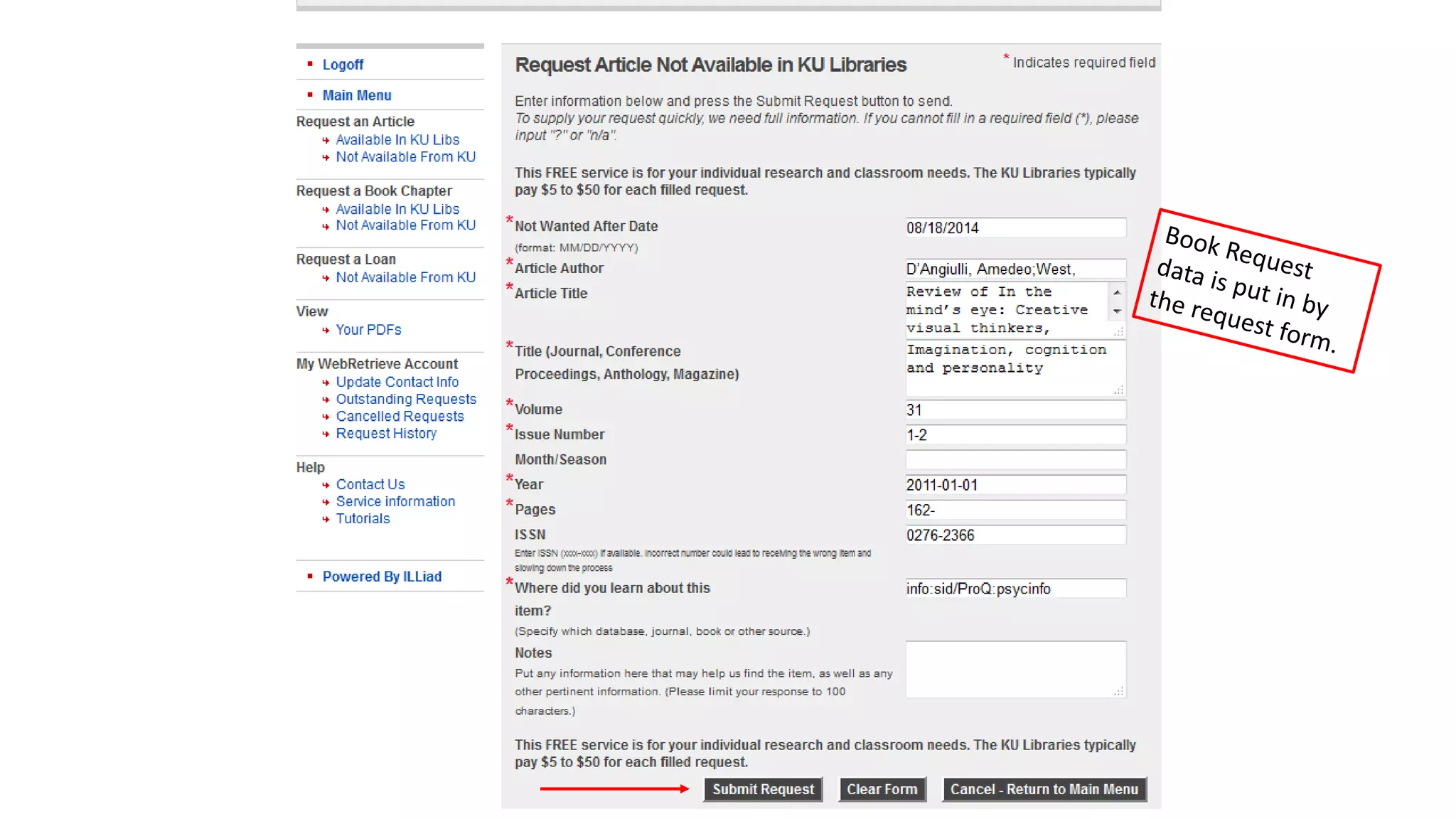
What happens next?
The Libraries will first check KU’s journal collection (print and
electronic). If the article cannot be found then the Libraries
request the article from other academic libraries. When KU
receives the article it will be in PDF format and you will be sent
an email with a link to the article you requested.
How long will that take?
Usually, about 2-3 days.
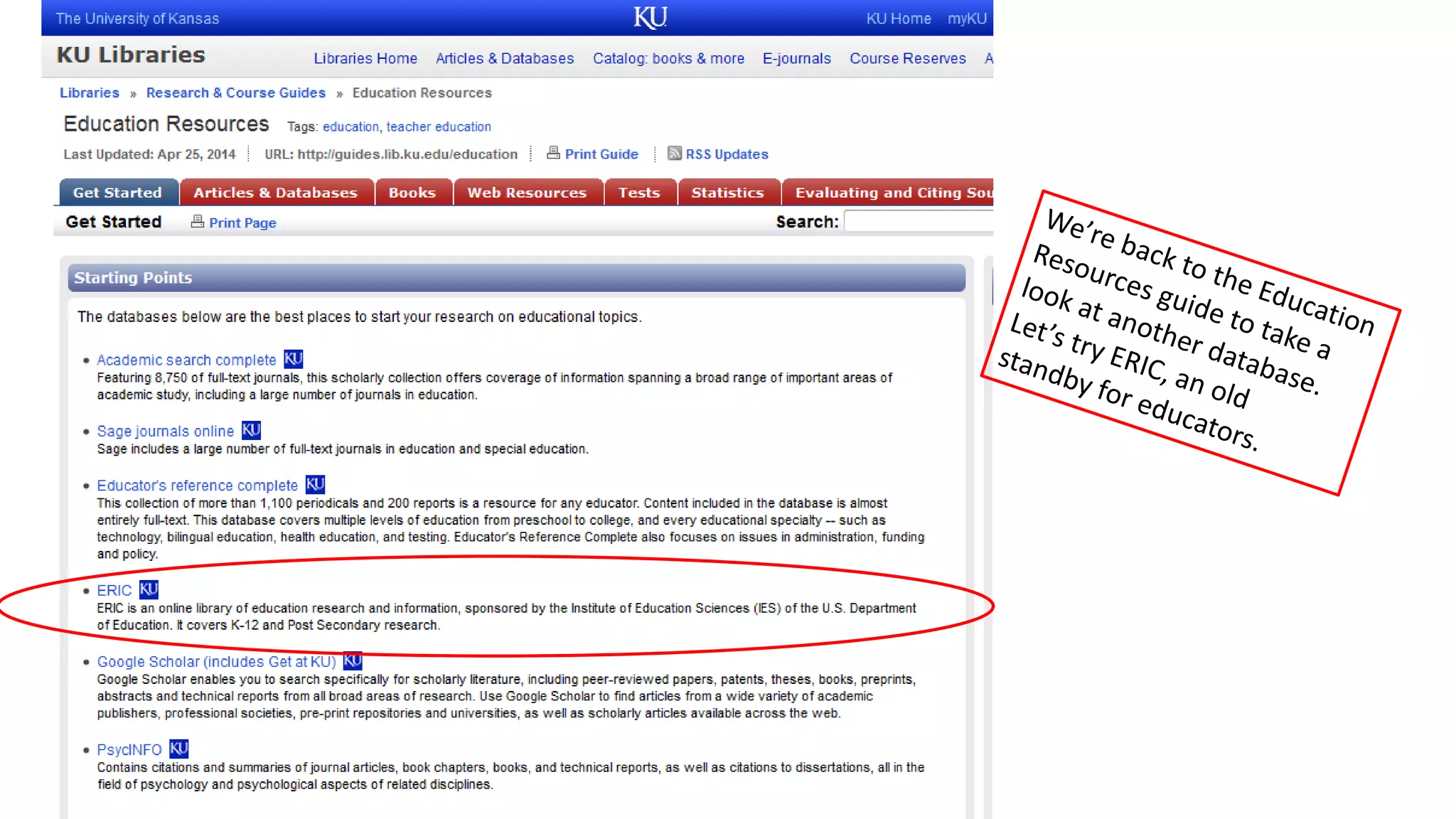
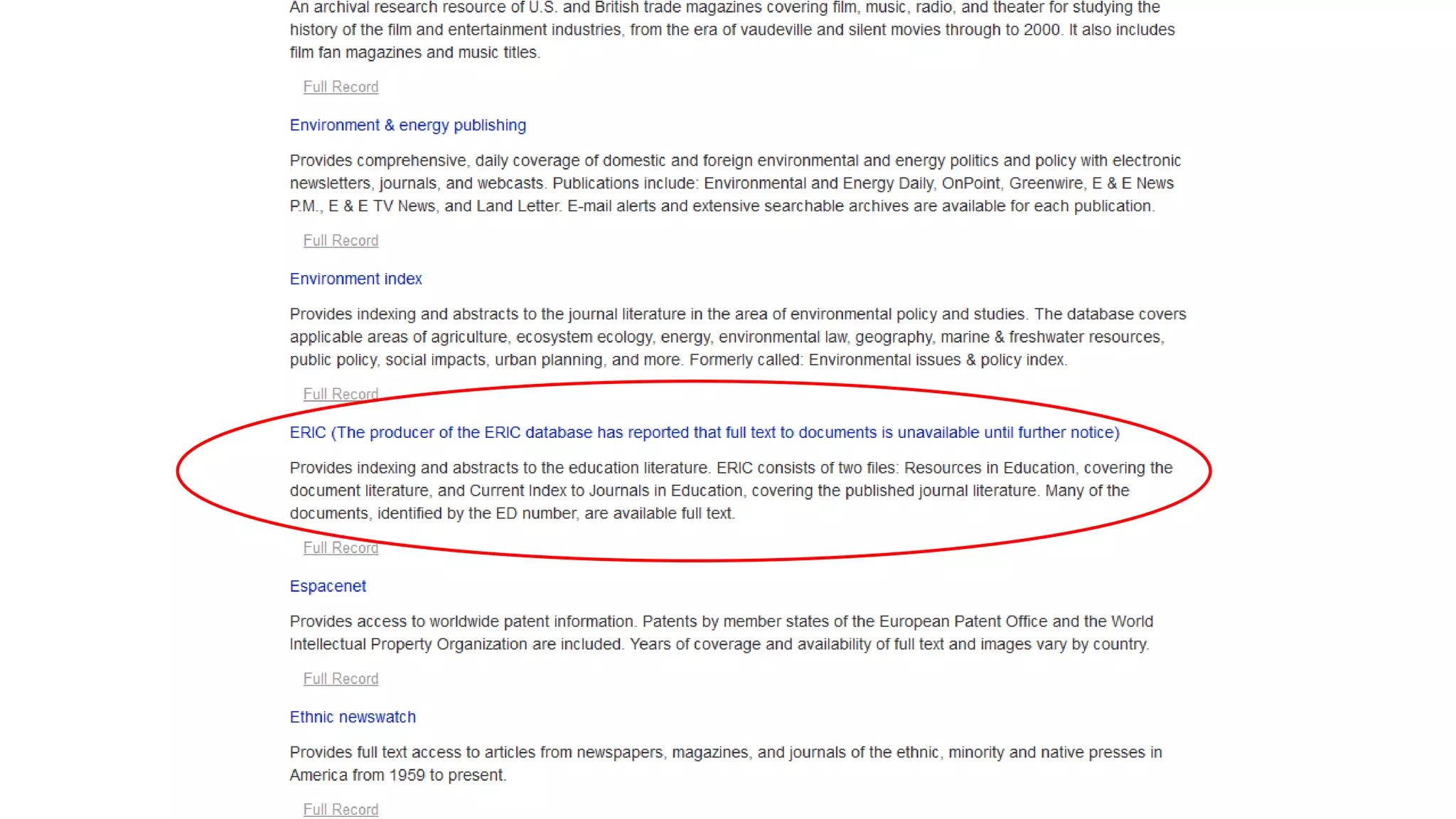
Searching another database: ERIC
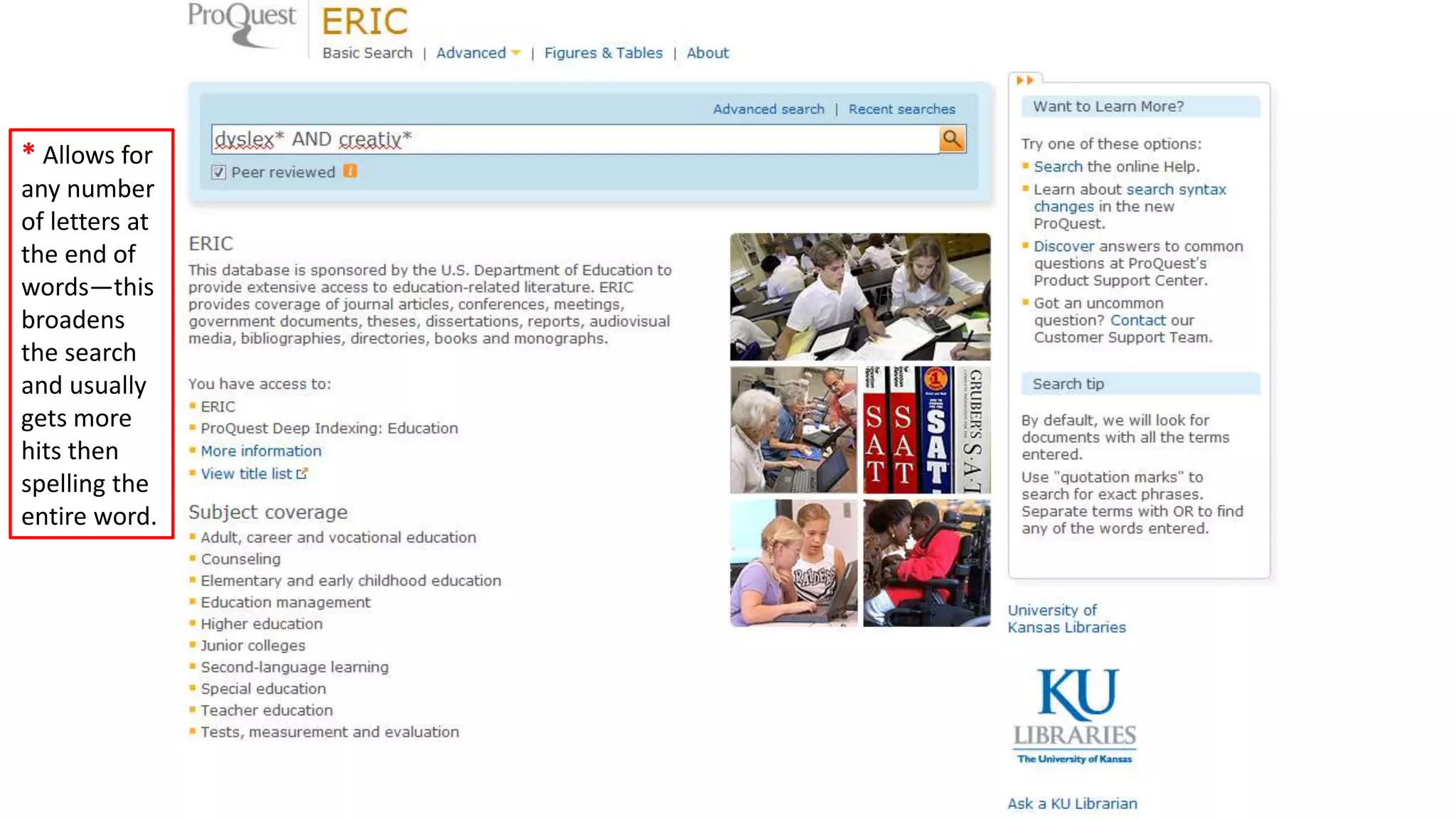
* allows for any number
of letters at the end of a
word—this broadens the
search and usually gets
more hits then spelling
the entire word.
AND means that both
terms will be in the same
article.
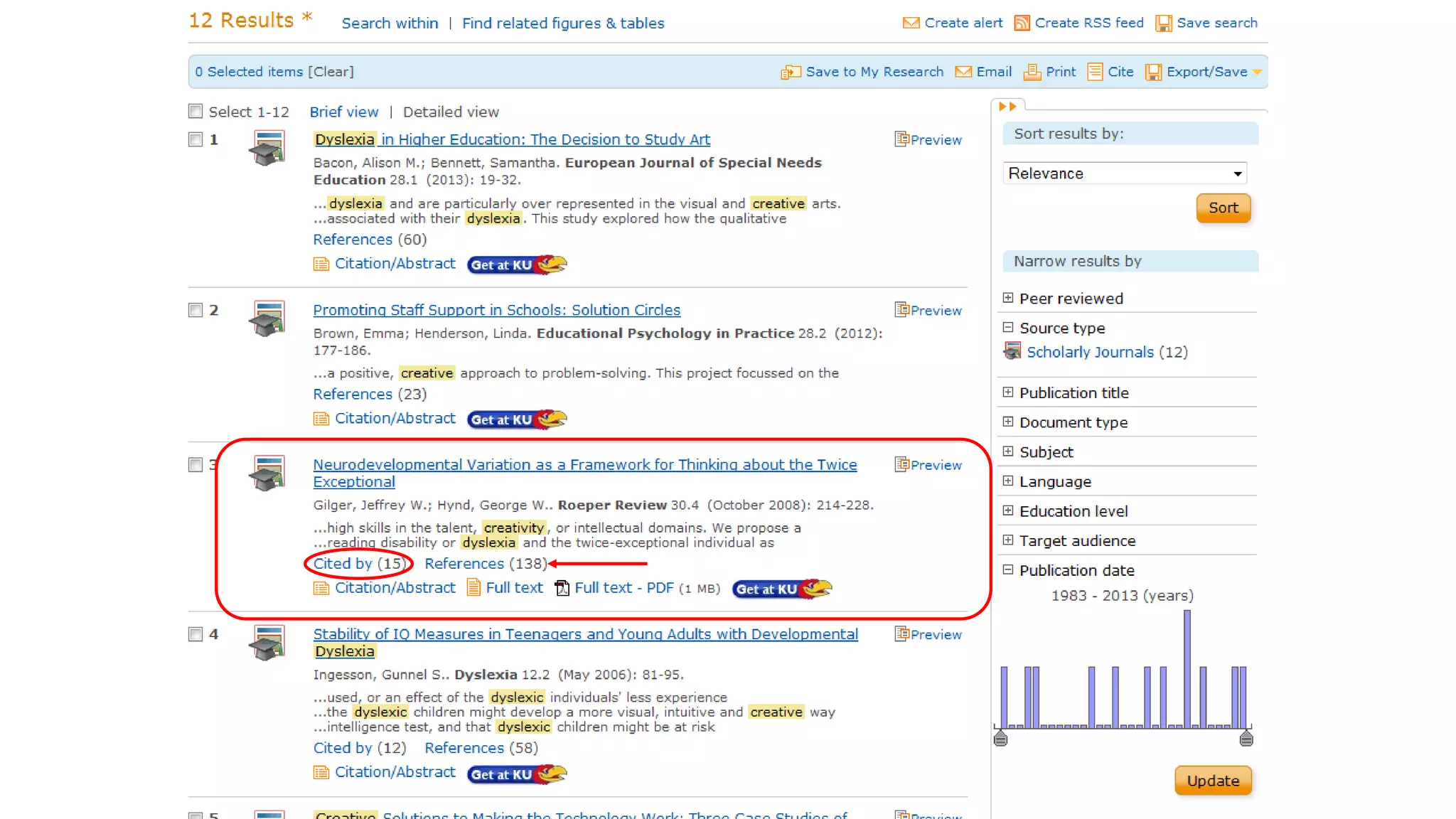
Cited by 21
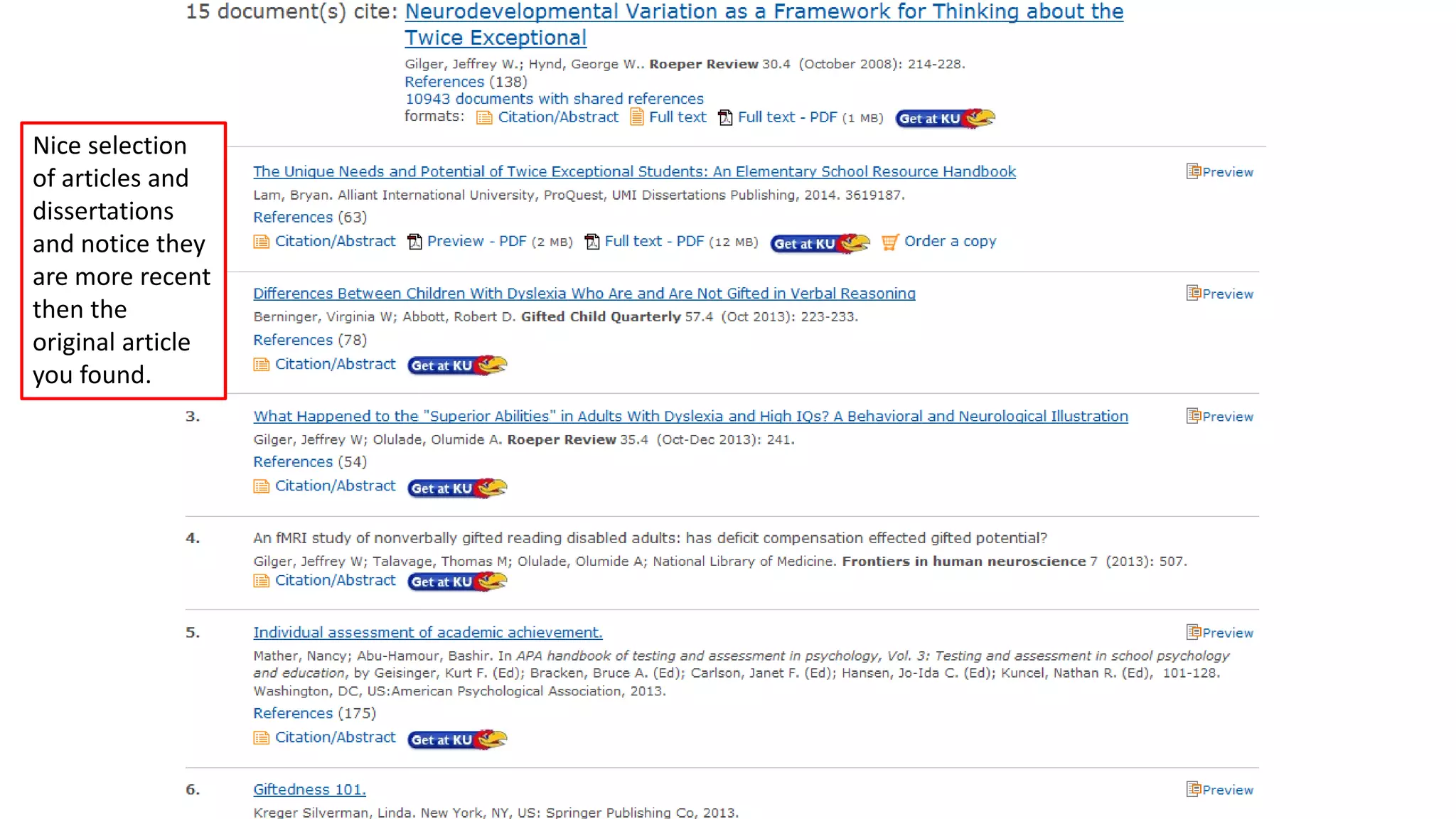
Of course
articles
are more
recent
than the
original
article.
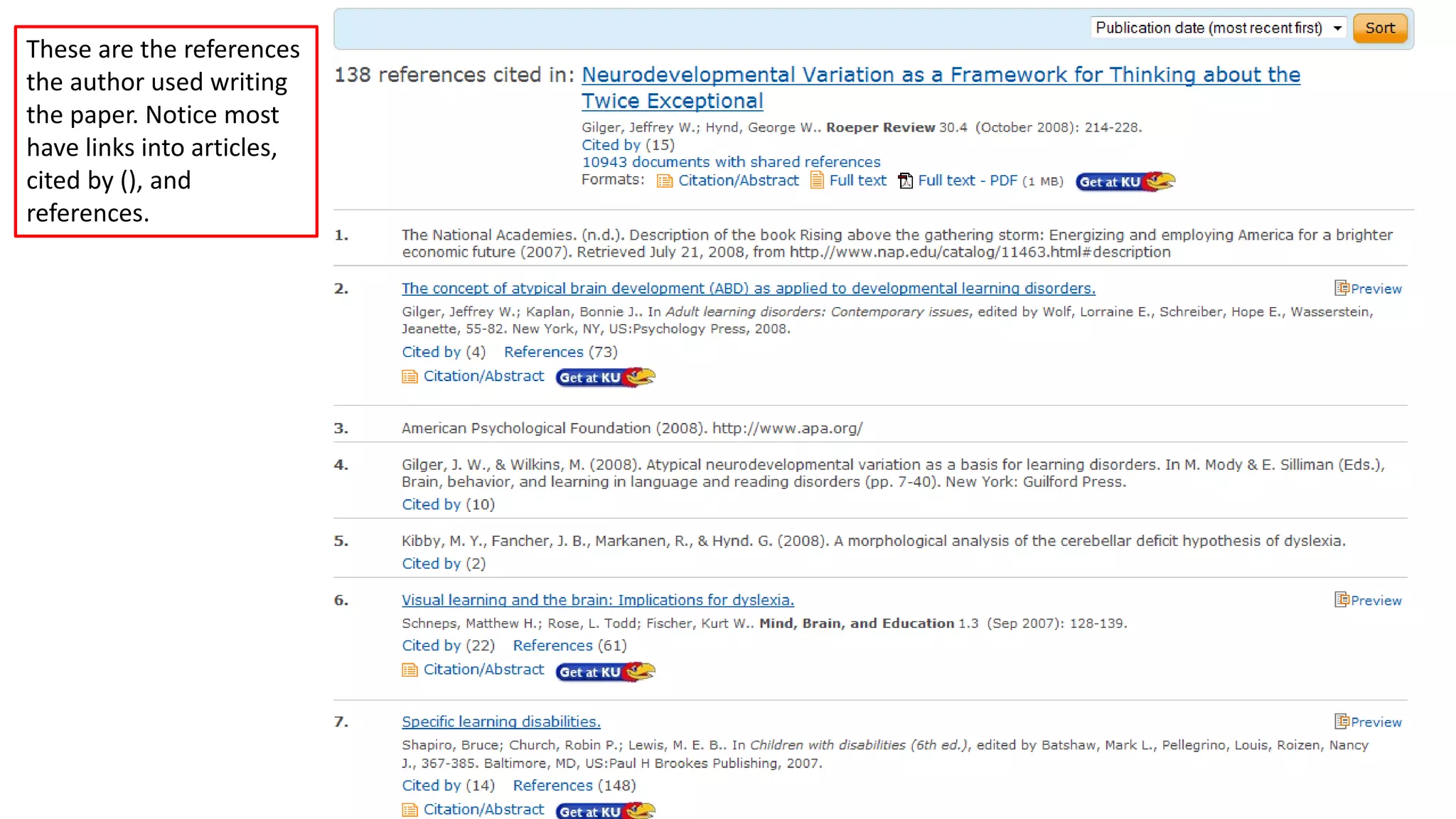
Remember that the original article,
Neurodevelopmental Variation as a
Framework for Thinking about the Twice
Exceptional, was found on the ERIC database
using the search terms: “dyslex*” AND
creativ*” and had 138 references that the
author of the article used to write the article
along with his original research---Here are
some of those references:
Notice most have
links into articles,
cited by, and
references. Of
course they are
older in date than
the original article.
Find one good article and you will
have a collaboration of authors,
observations, research and
results.
(21 cited by and 138 references)
Databases for Dissertations
Most of the databases have dissertations included in the
collections they manage. Here are 2 specific databases that
cover only dissertations and theses:
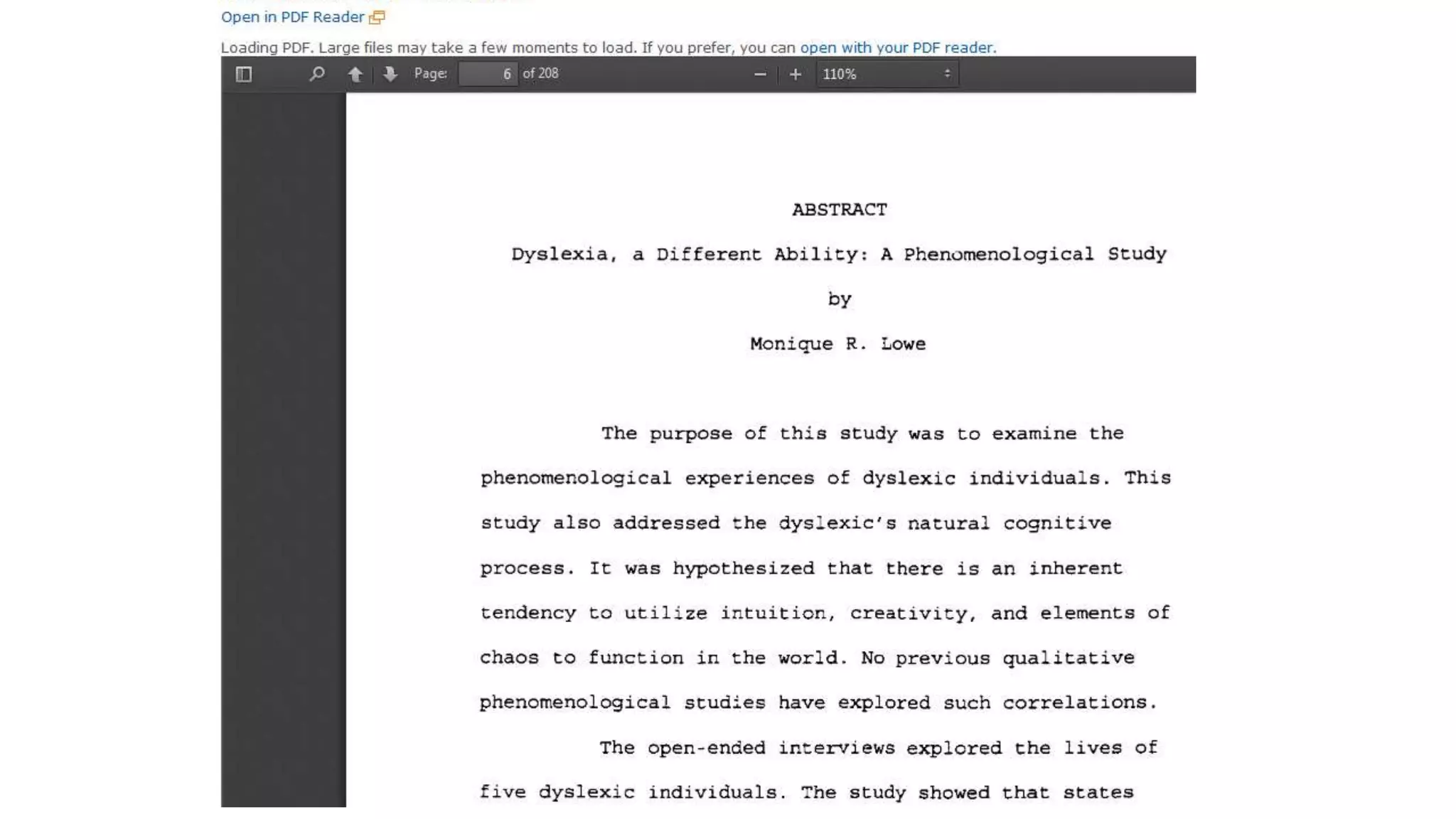
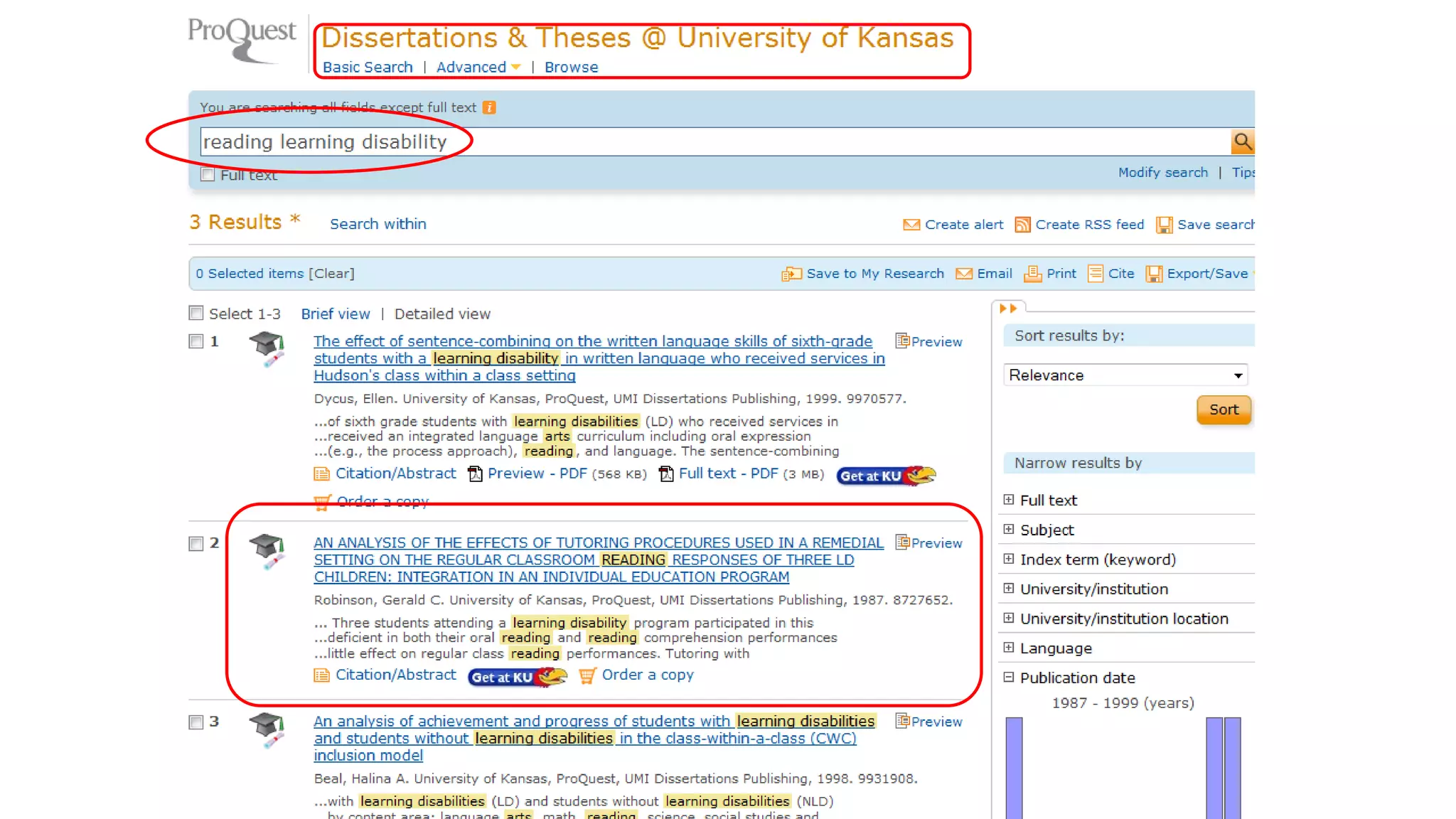
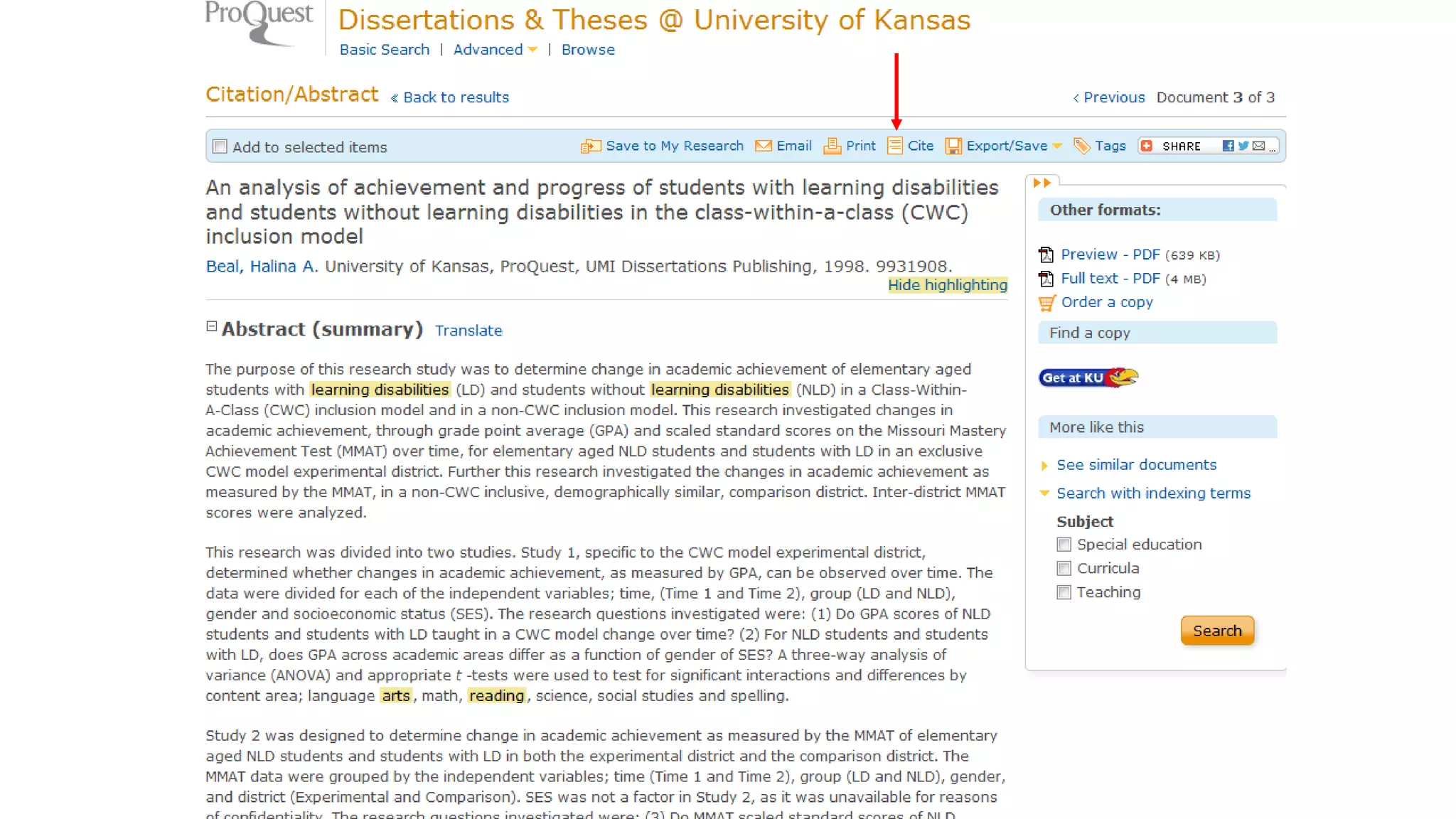
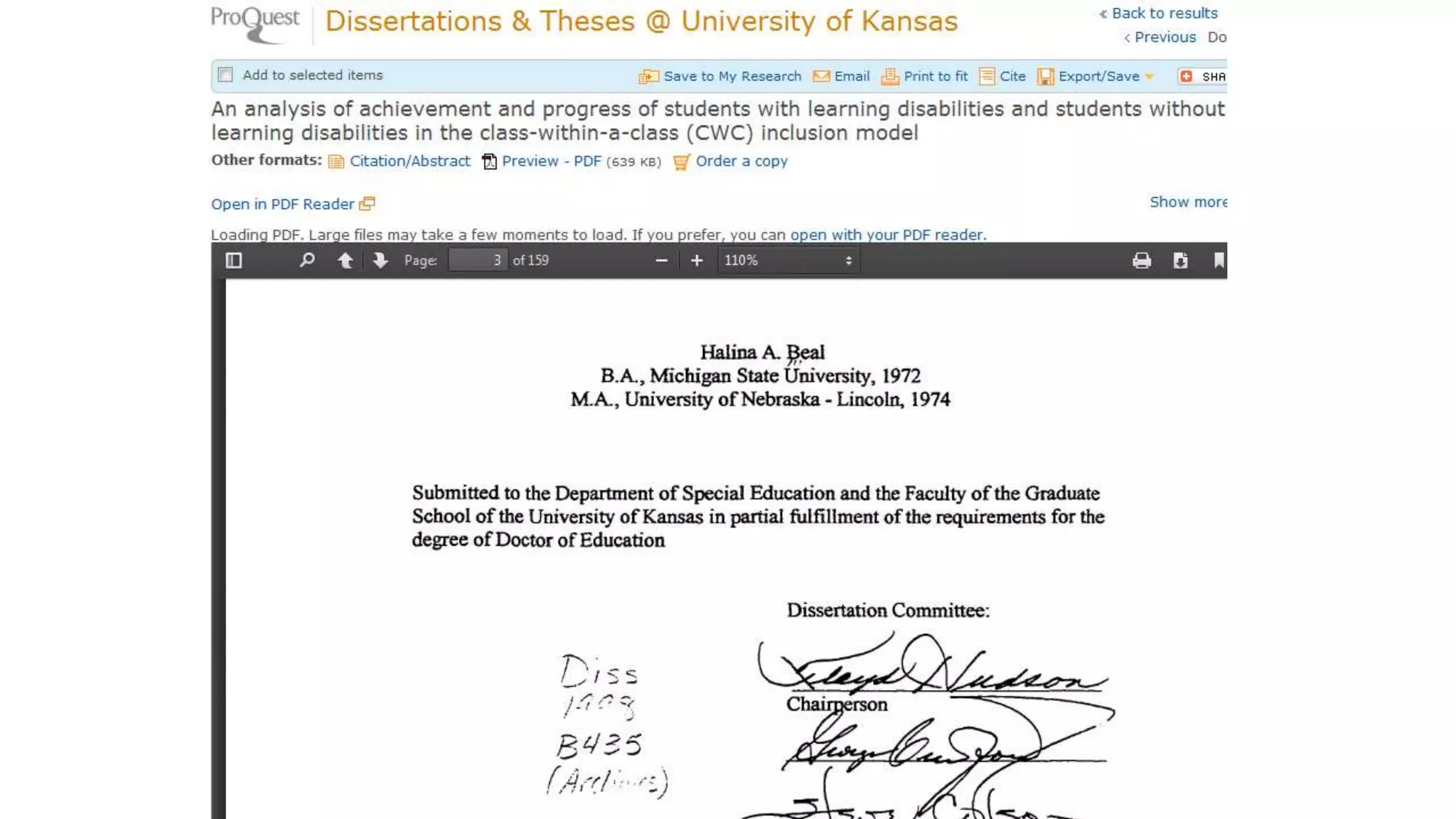
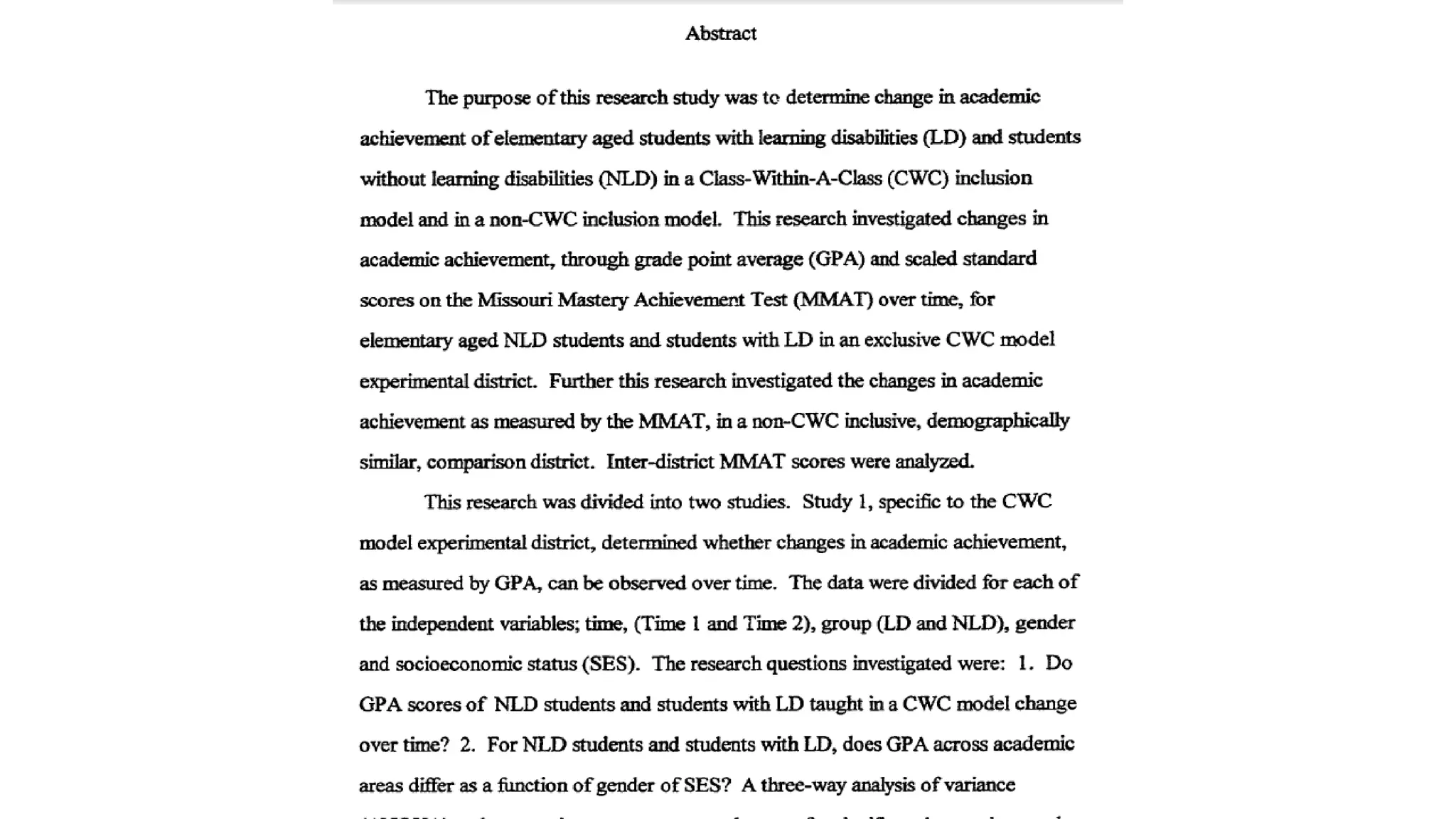
1. Dissertations & Theses @ University of Kansas
Contains citations and abstracts of dissertations and theses submitted by the University of
Kansas and published in UMI's Dissertations Abstracts database, and full text of KU
dissertations published after 1996 and KU theses published after 2005.
2. ProQuest dissertations & theses
Provides online access to over 2 million dissertations and master's theses, many of which are
available in full text for immediate downloading. Citations are available for dissertations
dating from 1861 and full text online from 1997 for over 1,000 schools submitting to the
ProQuest UMI database. More than 55,000 new citations are added to the database every
year.
http://www.lib.ku.edu
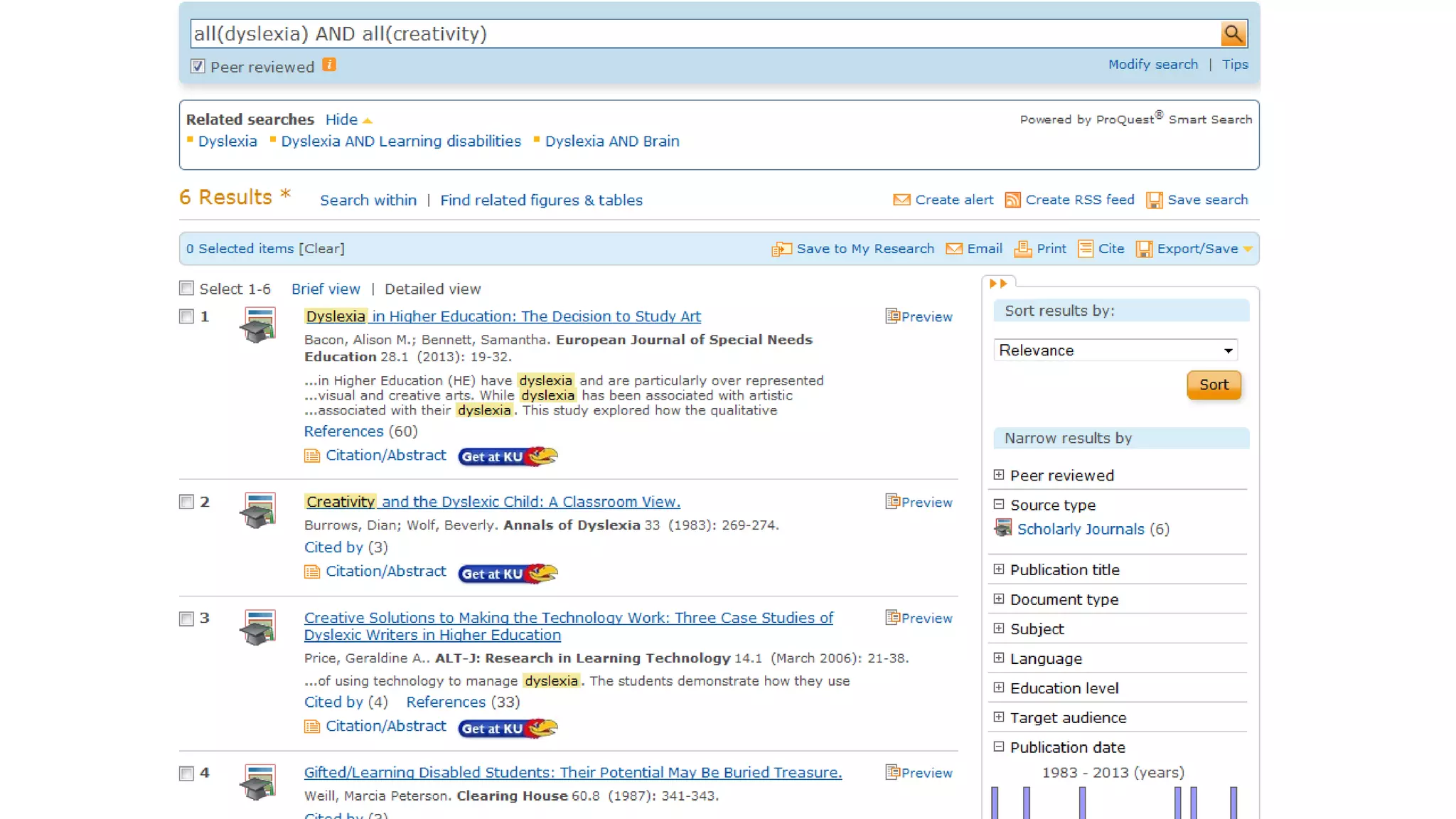
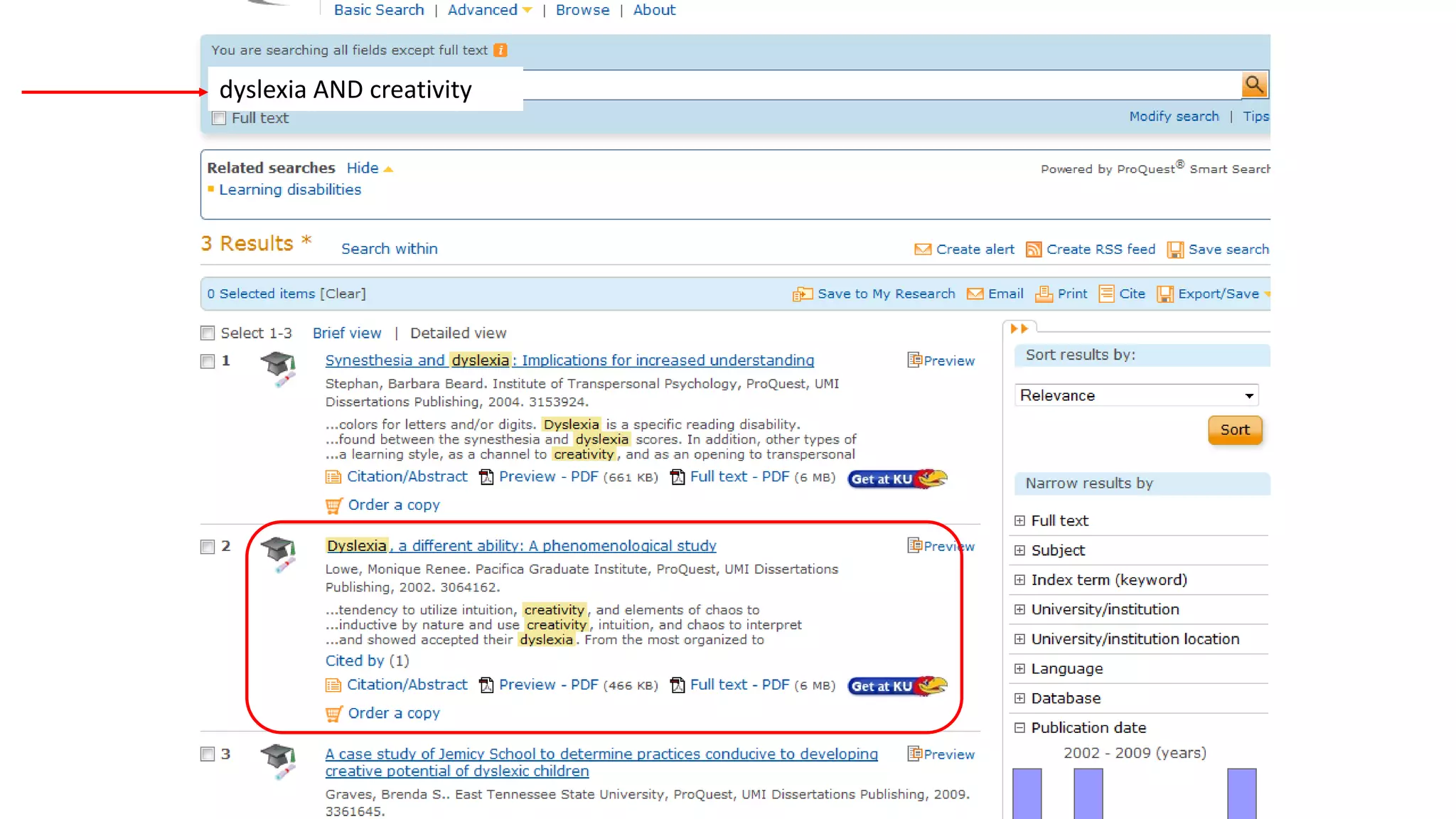
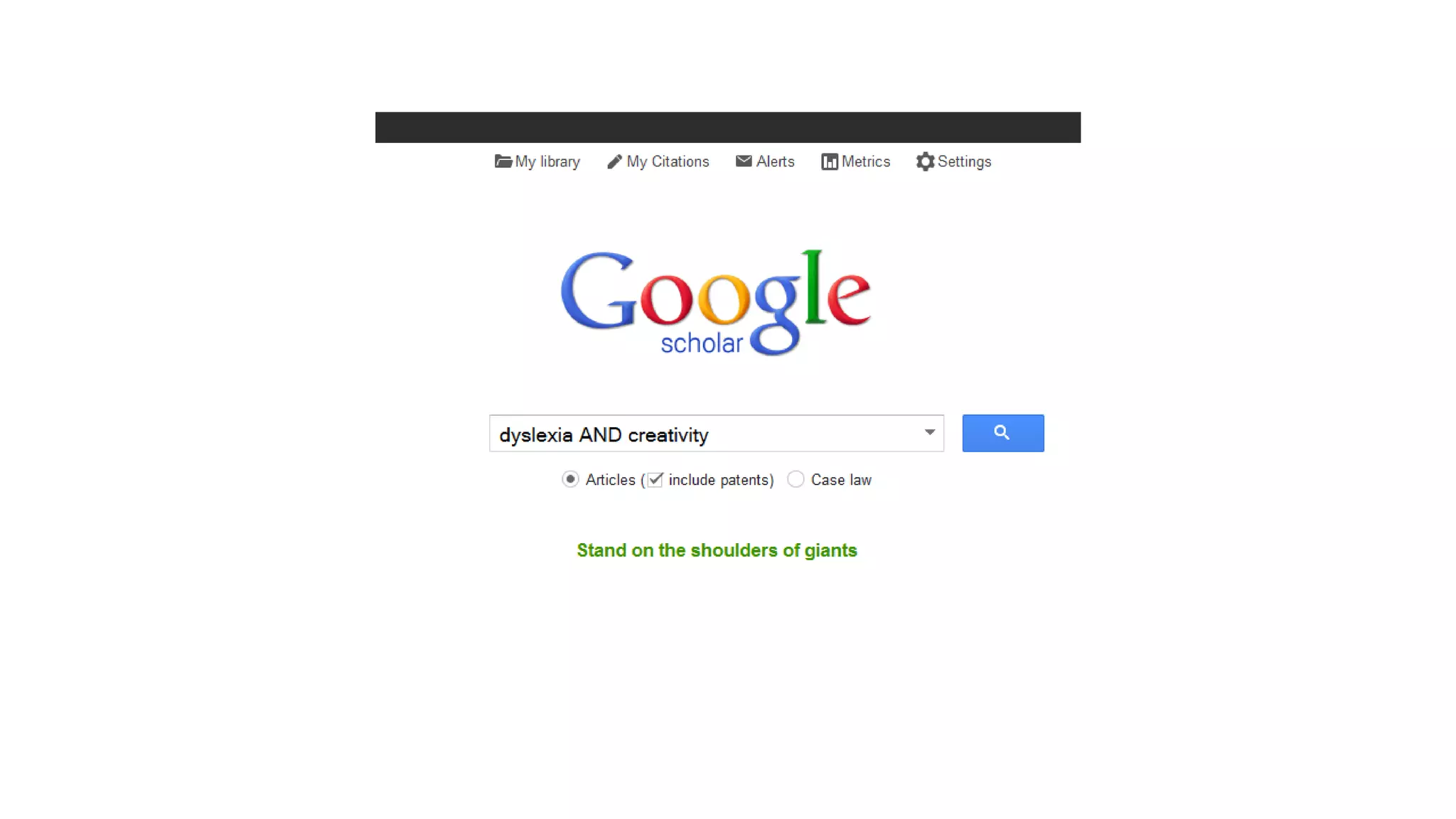
dyslexia AND creativity
Dissertations & Theses from the
University of Kansas
1. Libraries Homepage
http://lib.ku.edu
2. Articles and Databases
3.
I had to
change my
search terms
because
there were
no “dyslexia
and
creativity”
articles to be
found.
Remain
flexible in
your search
method.
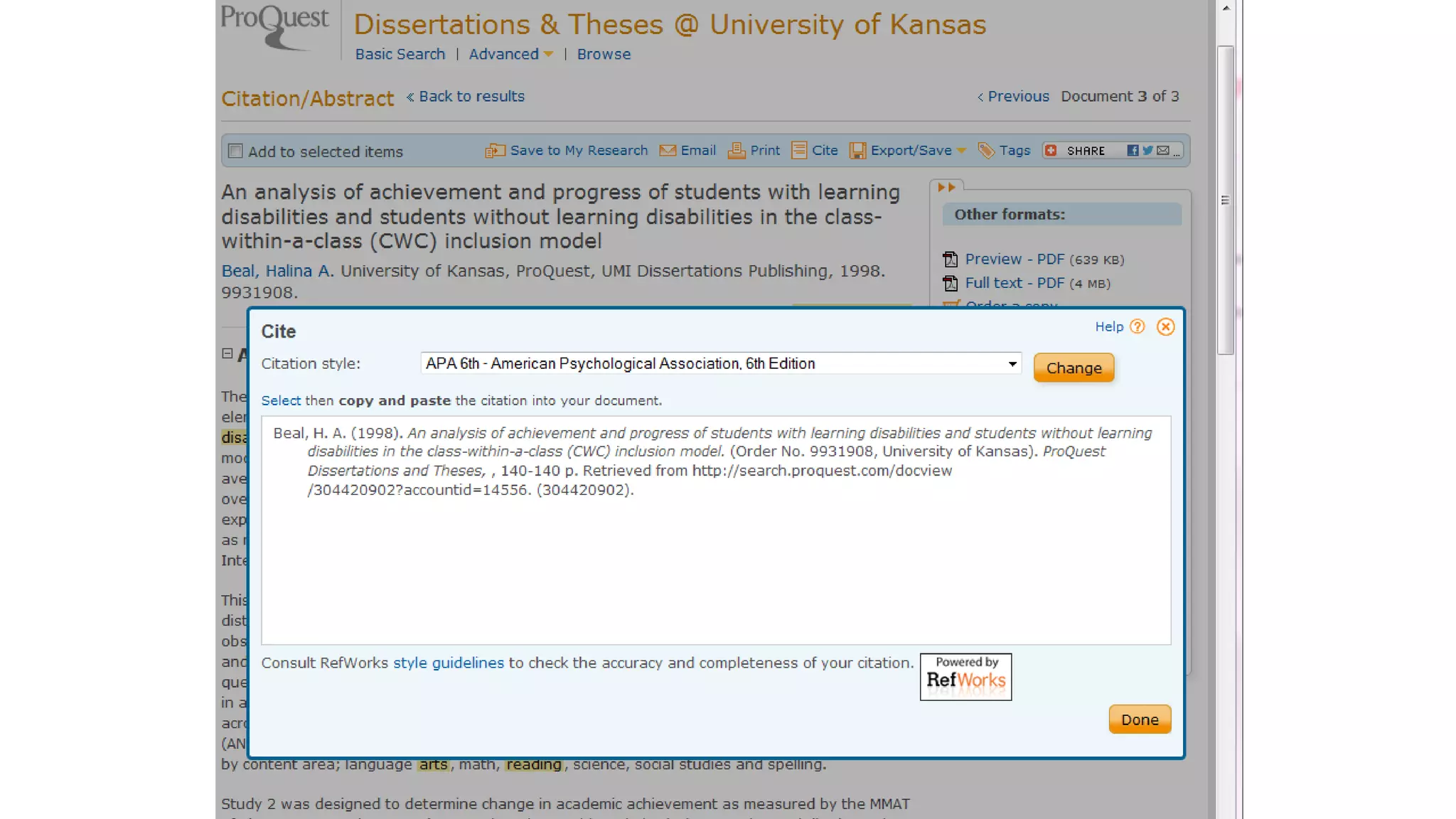
How to cite a
dissertation
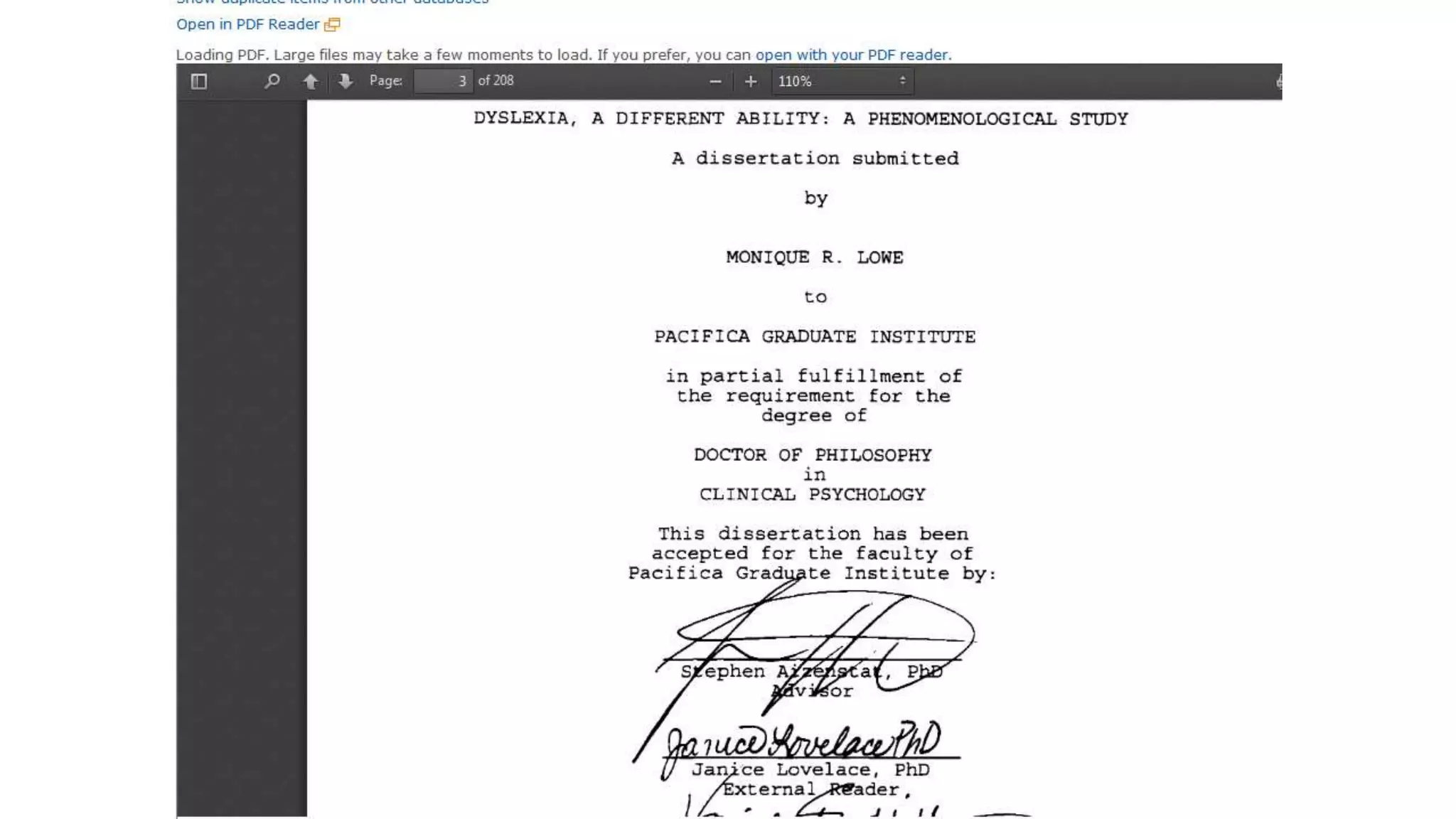
found online?
Another Database:
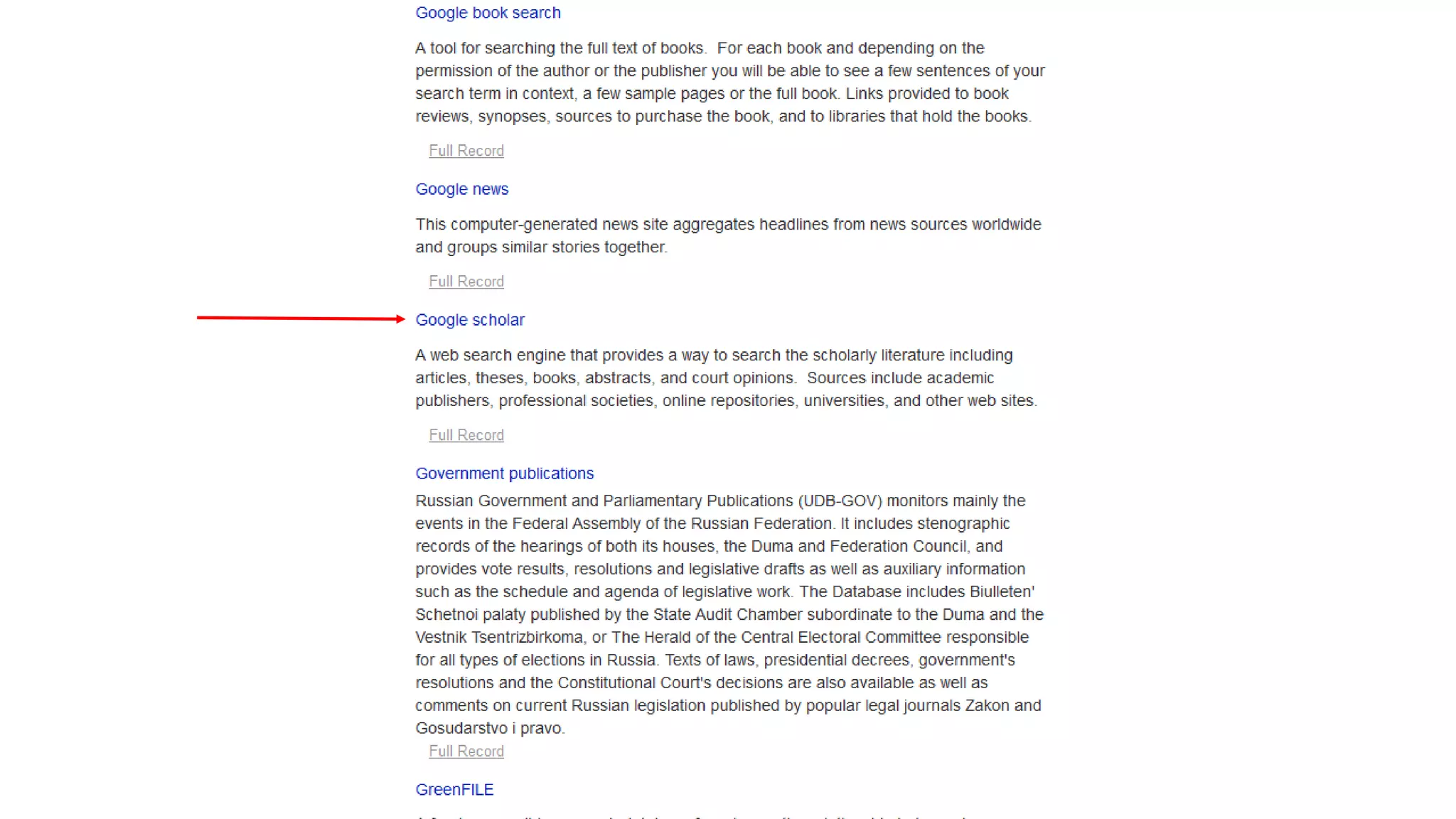
Google Scholar?
Back to the
Libraries
Homepage:
lib.ku.edu
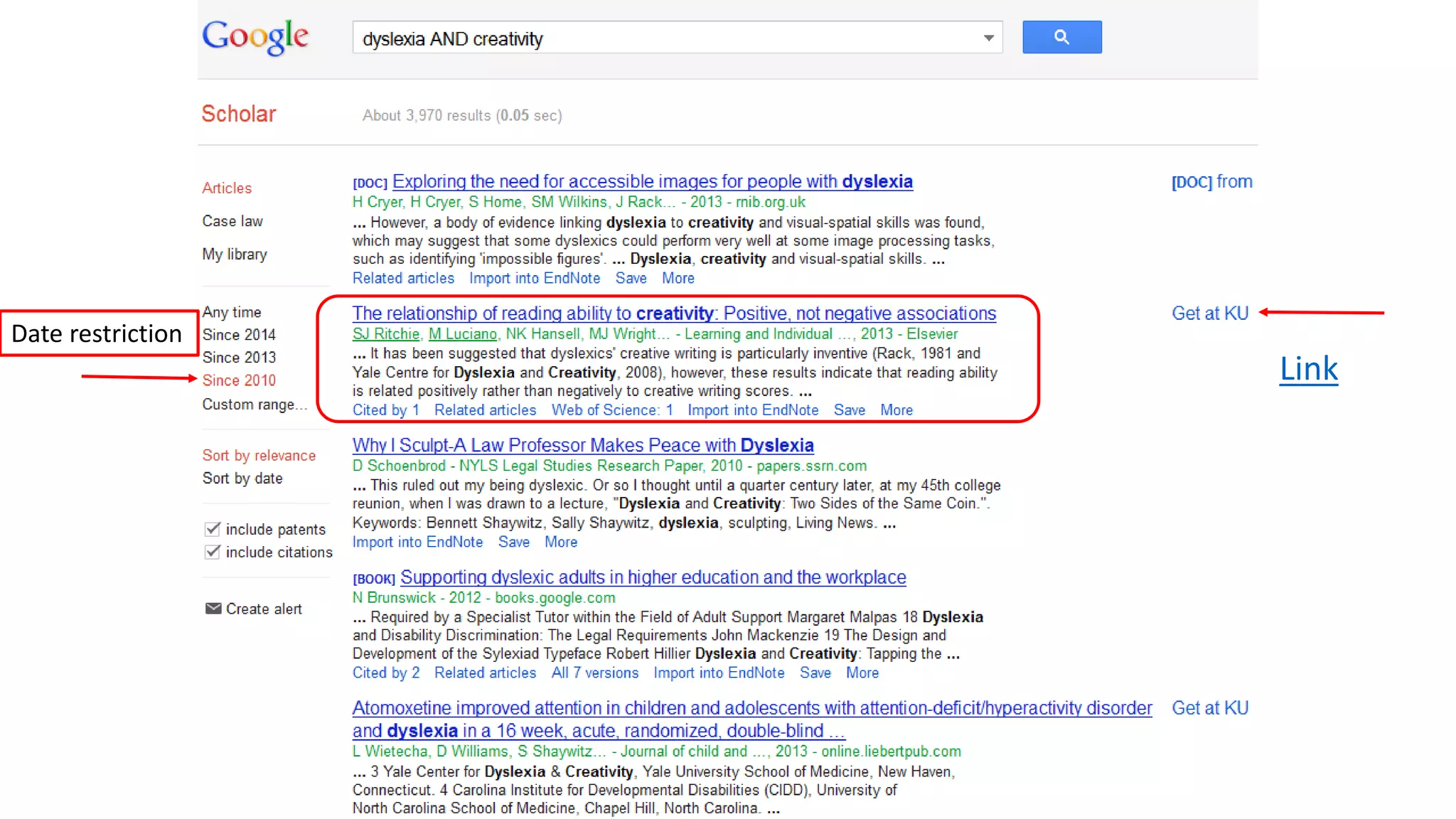
Link
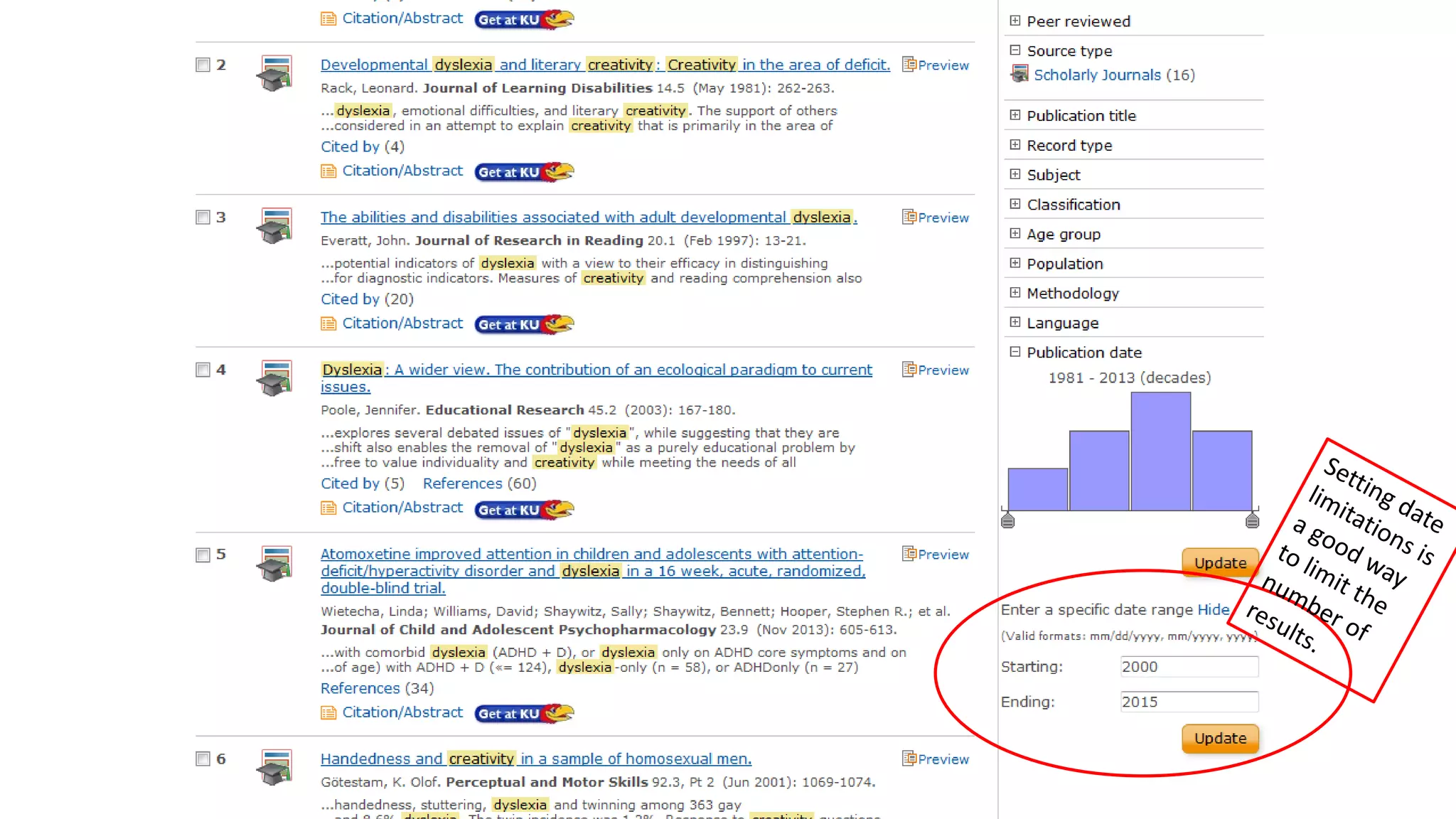
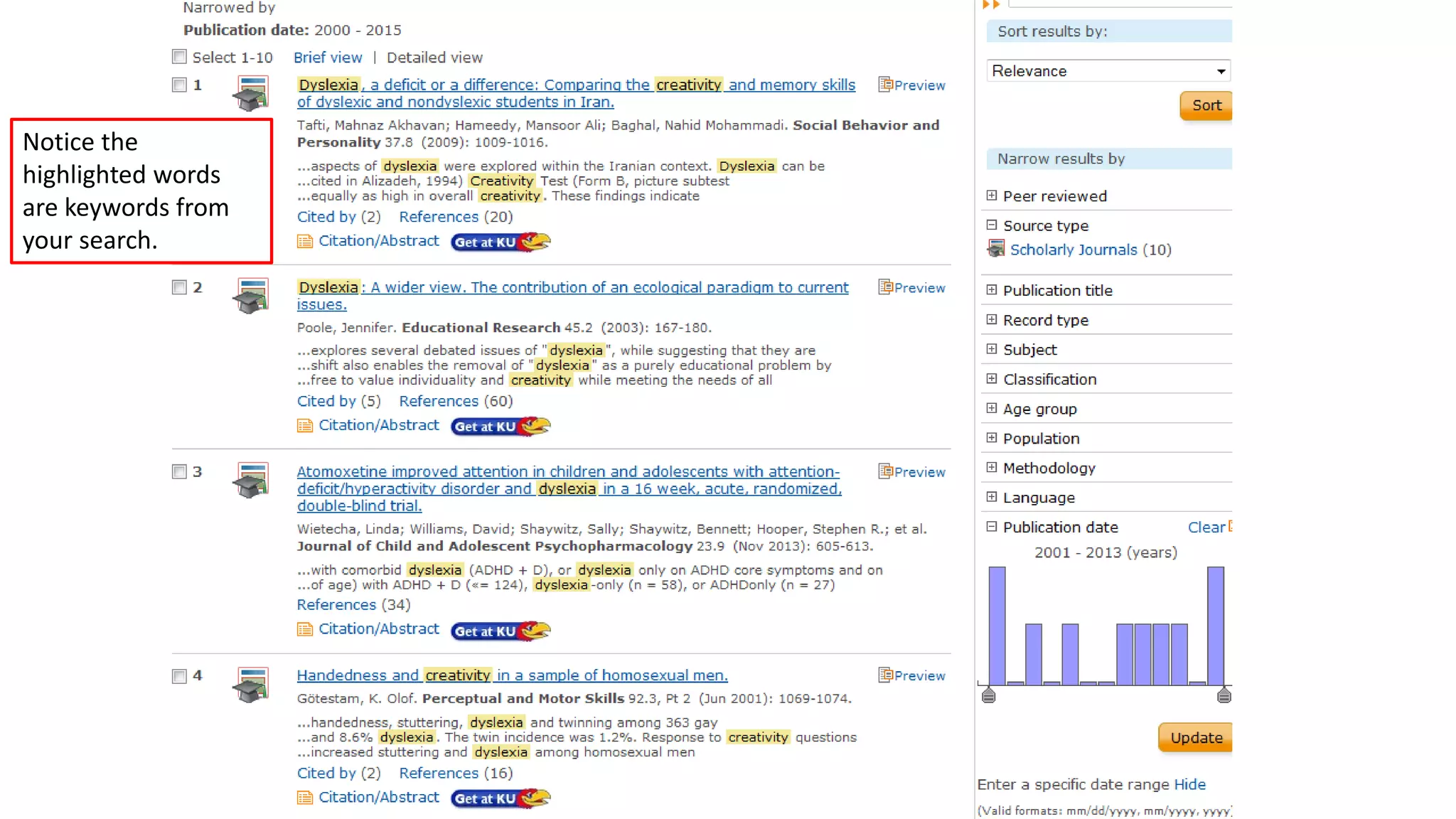
Date restriction
Education Databases by Subject
Back to the
Libraries
Homepage:
lib.ku.edu
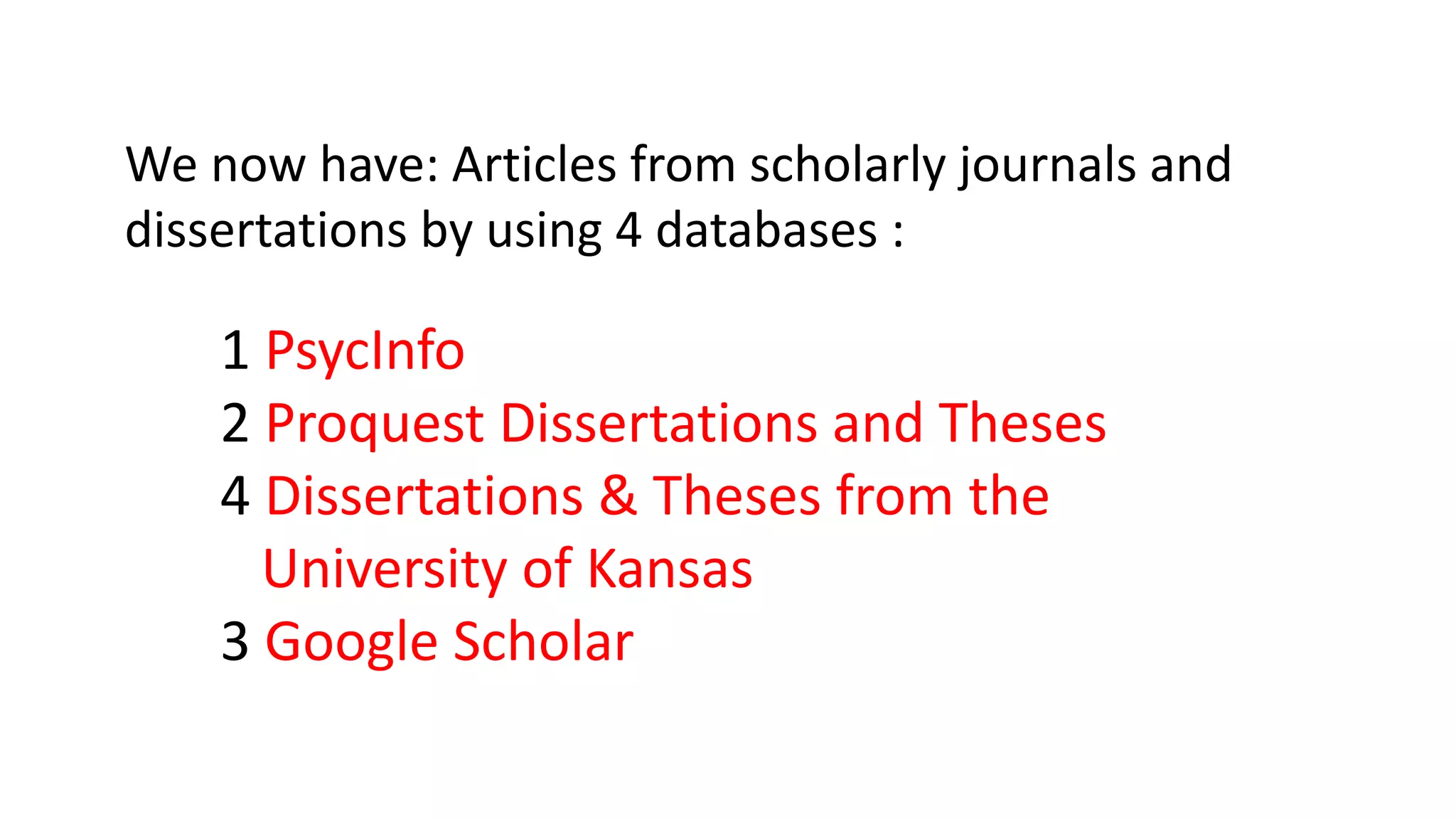
We now have: Articles from scholarly journals and
dissertations by using 5 databases :
1 PsycInfo
2 ERIC
3 Proquest Dissertations and Theses
4 Dissertations & Theses from the
University of Kansas
5 Google Scholar
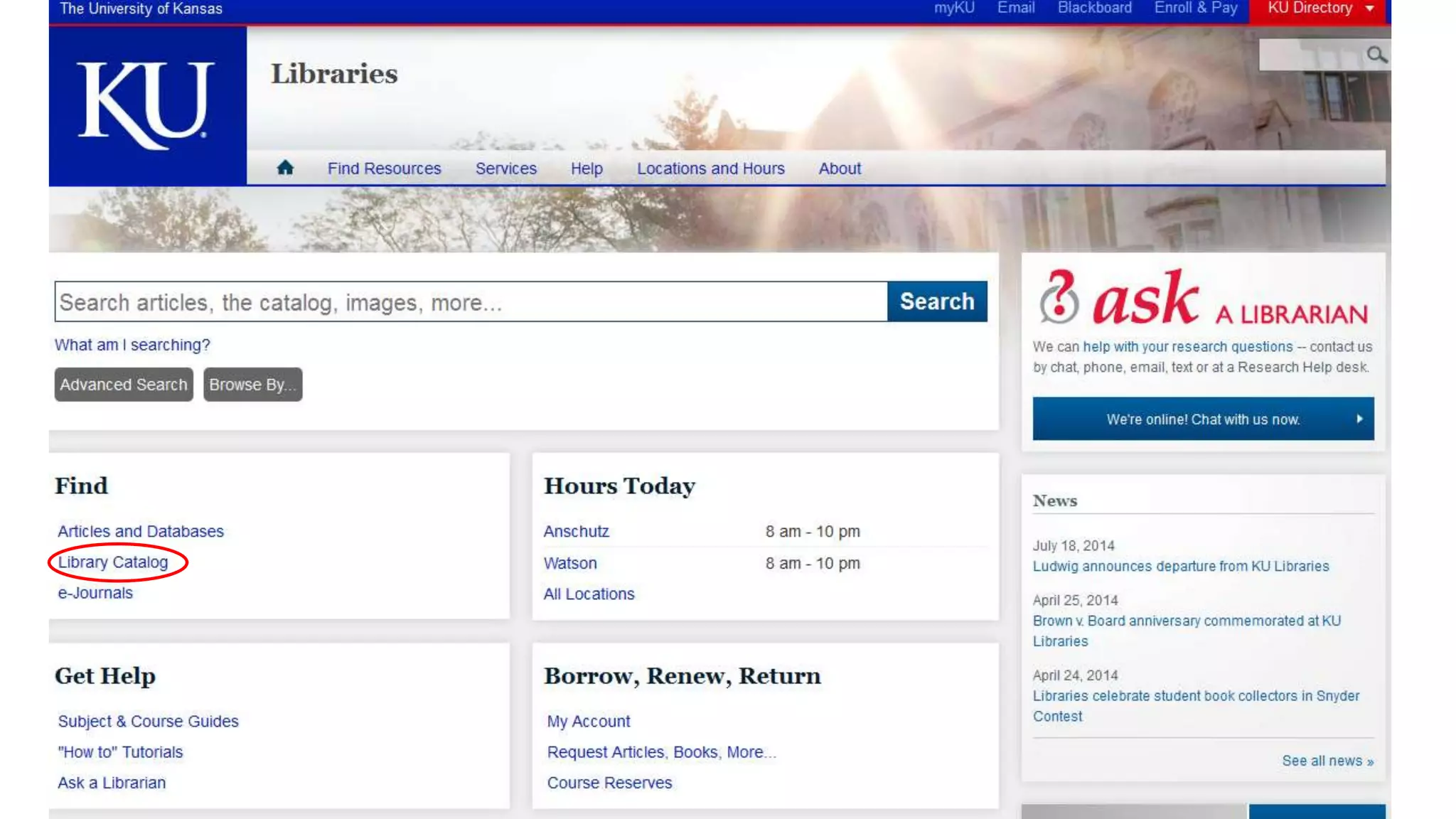
Where are the Books?
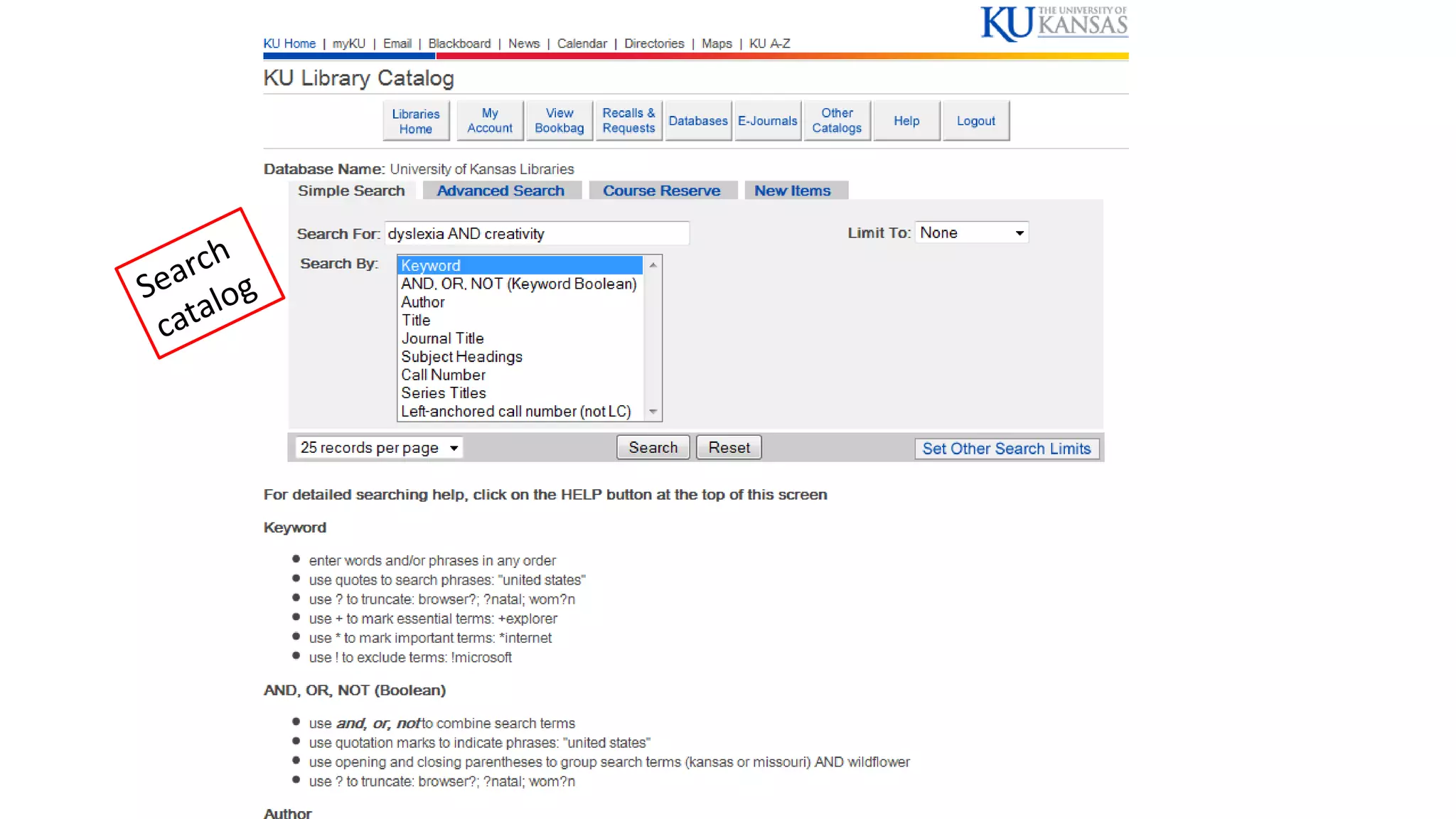
Books are found in the Library Catalog
http://www.lib.ku.edu
How to order a book
from the
Lawrence campus
Not the
review but
the actual
book.
Don’t forget to limit
by date.
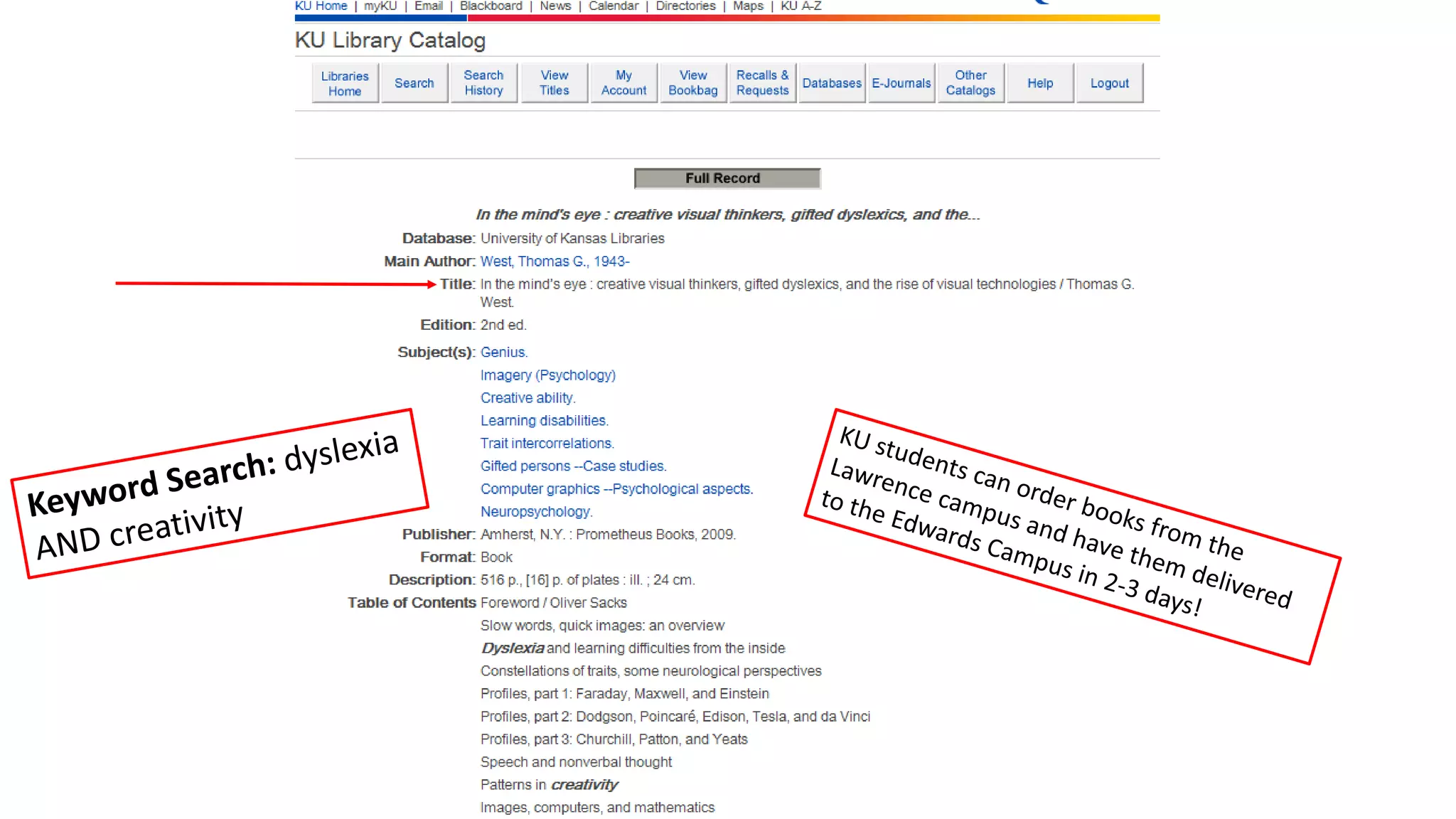
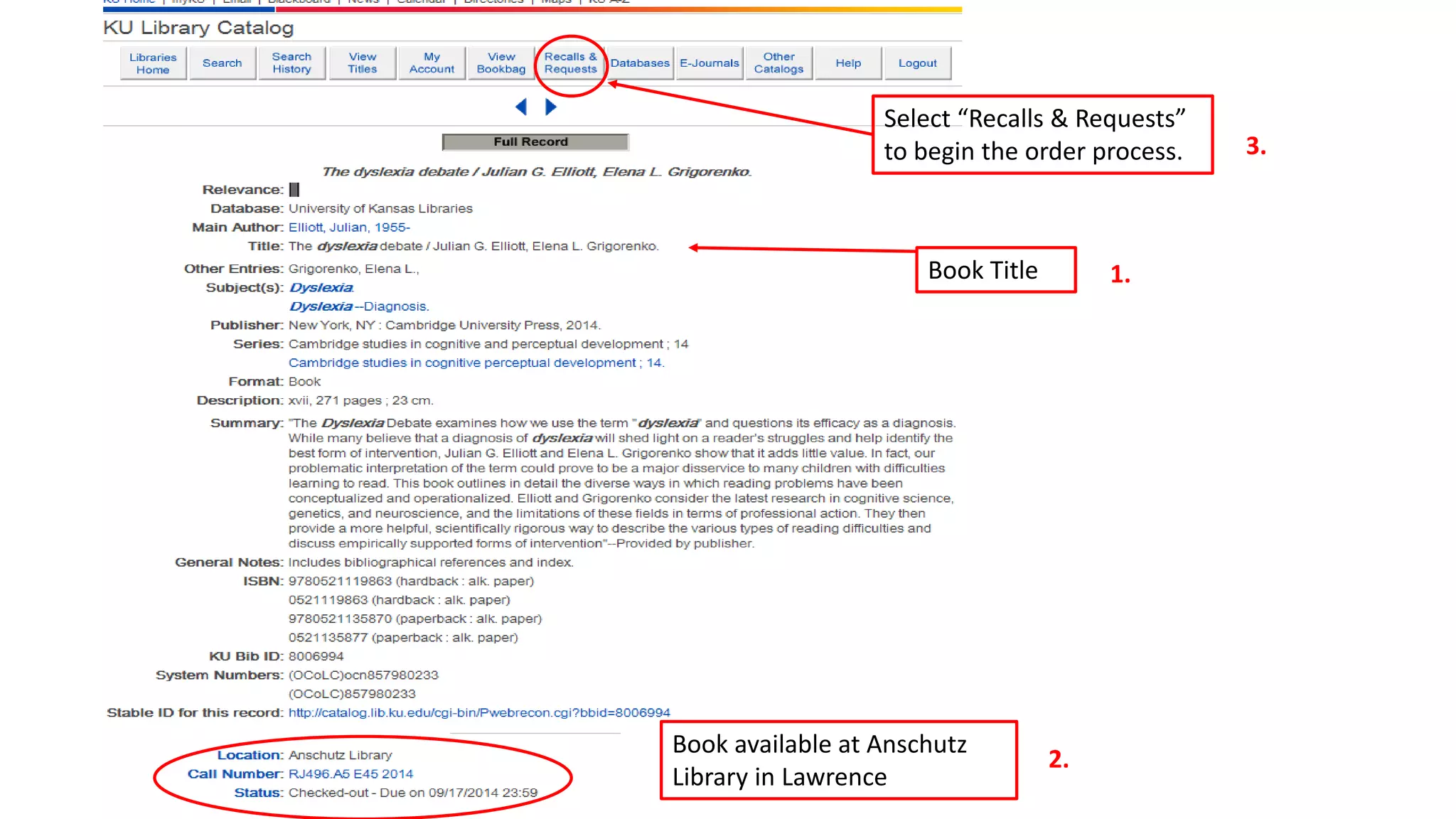
This is the catalog
record of the book
we want sent from
the Lawrence
Campus Libraries to
the Edwards
Campus. Select
“Recalls &
Requests” from the
top bar of
selections.
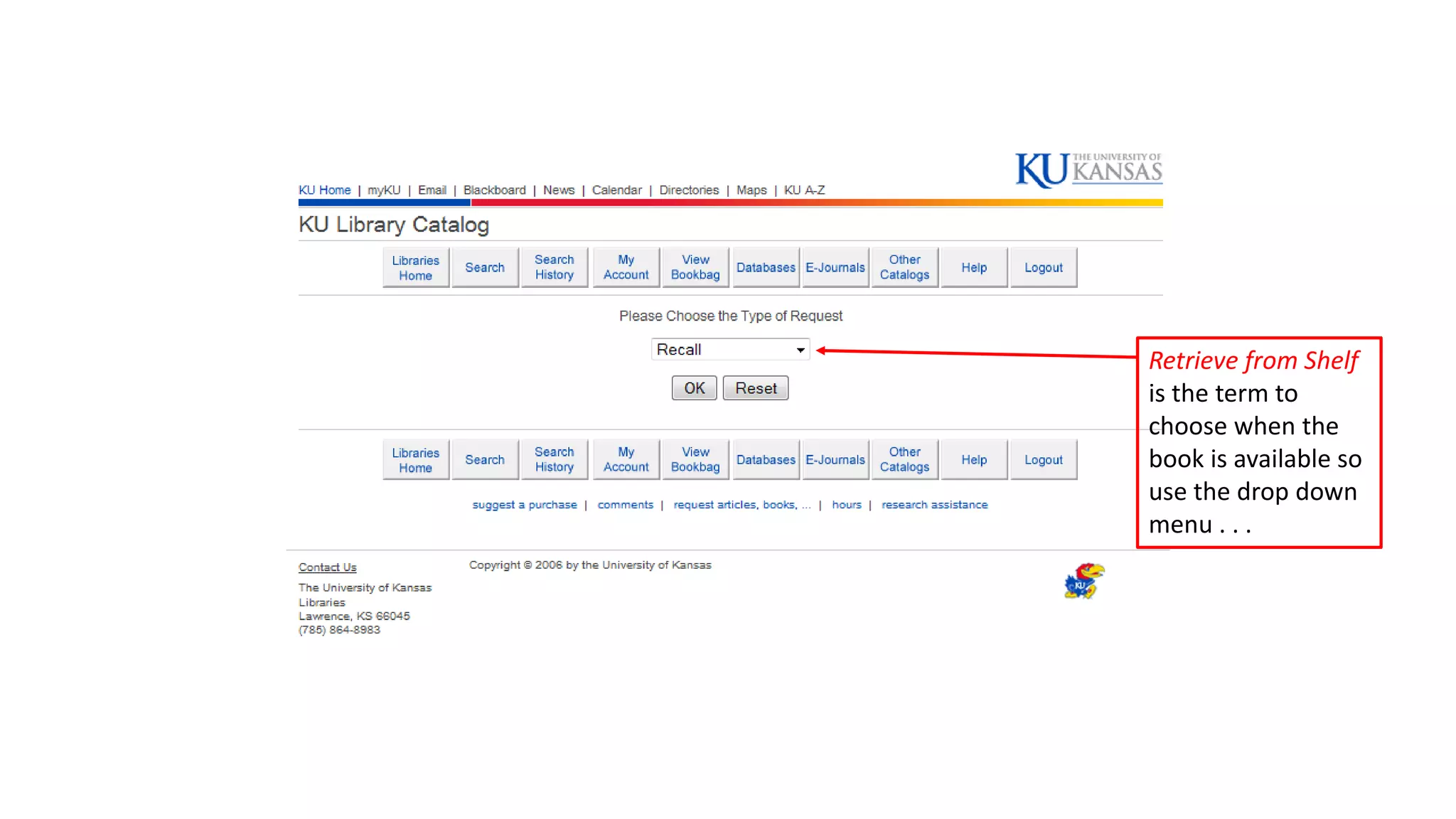
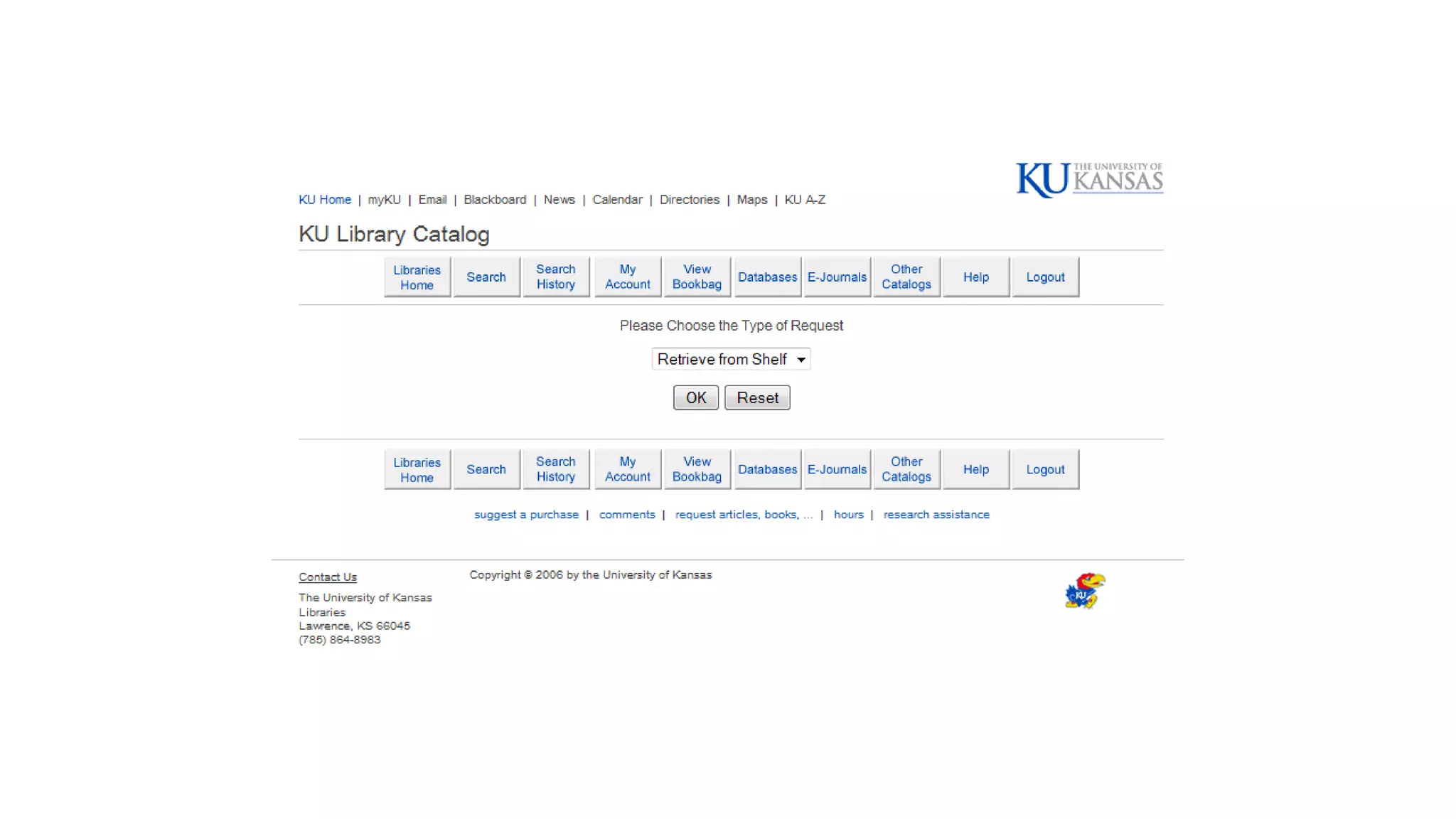
“Retrieve from
Shelf” is the
option to
select from the
drop-down
menu on the
“Request and
Retrieve” page.
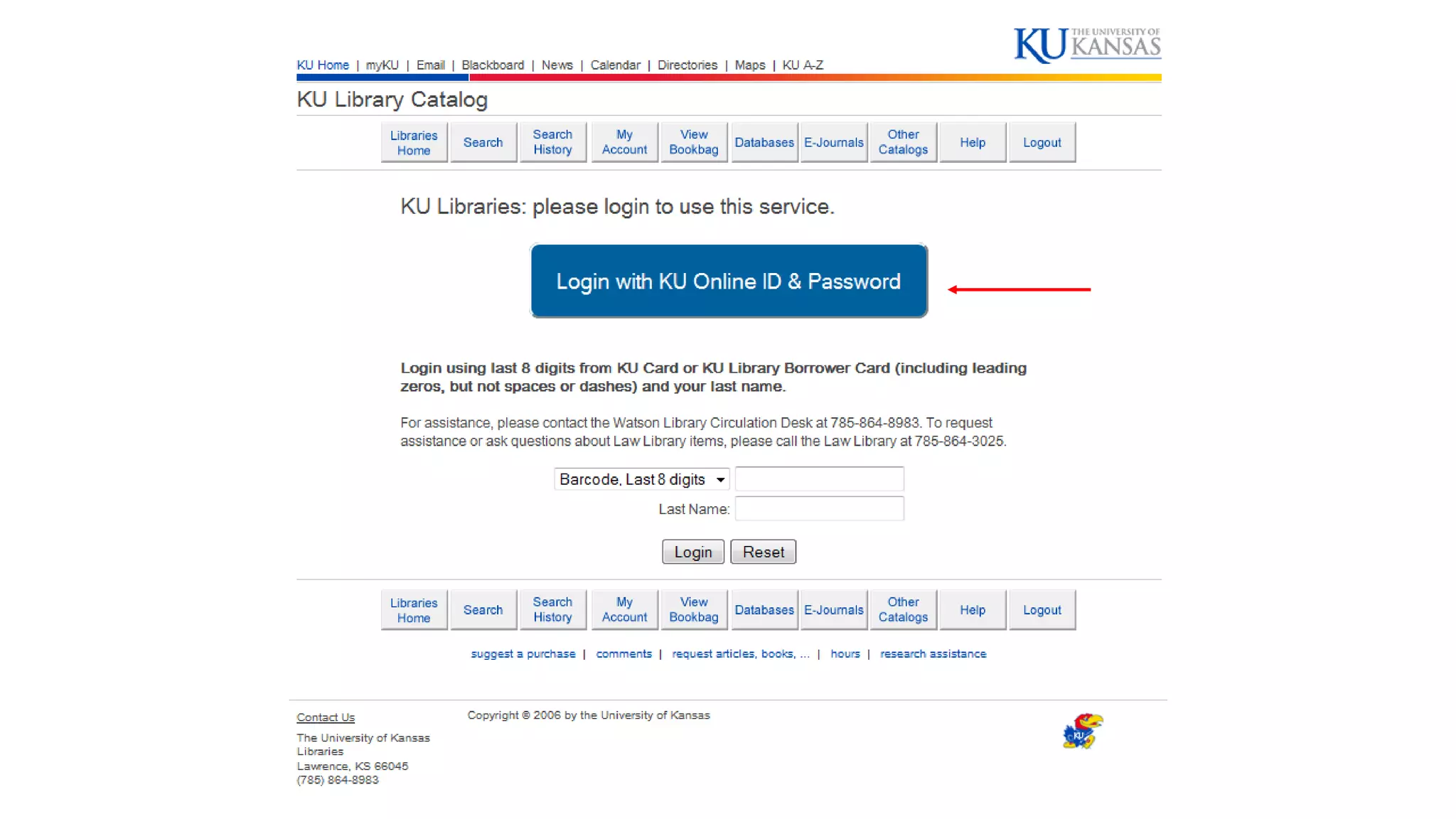
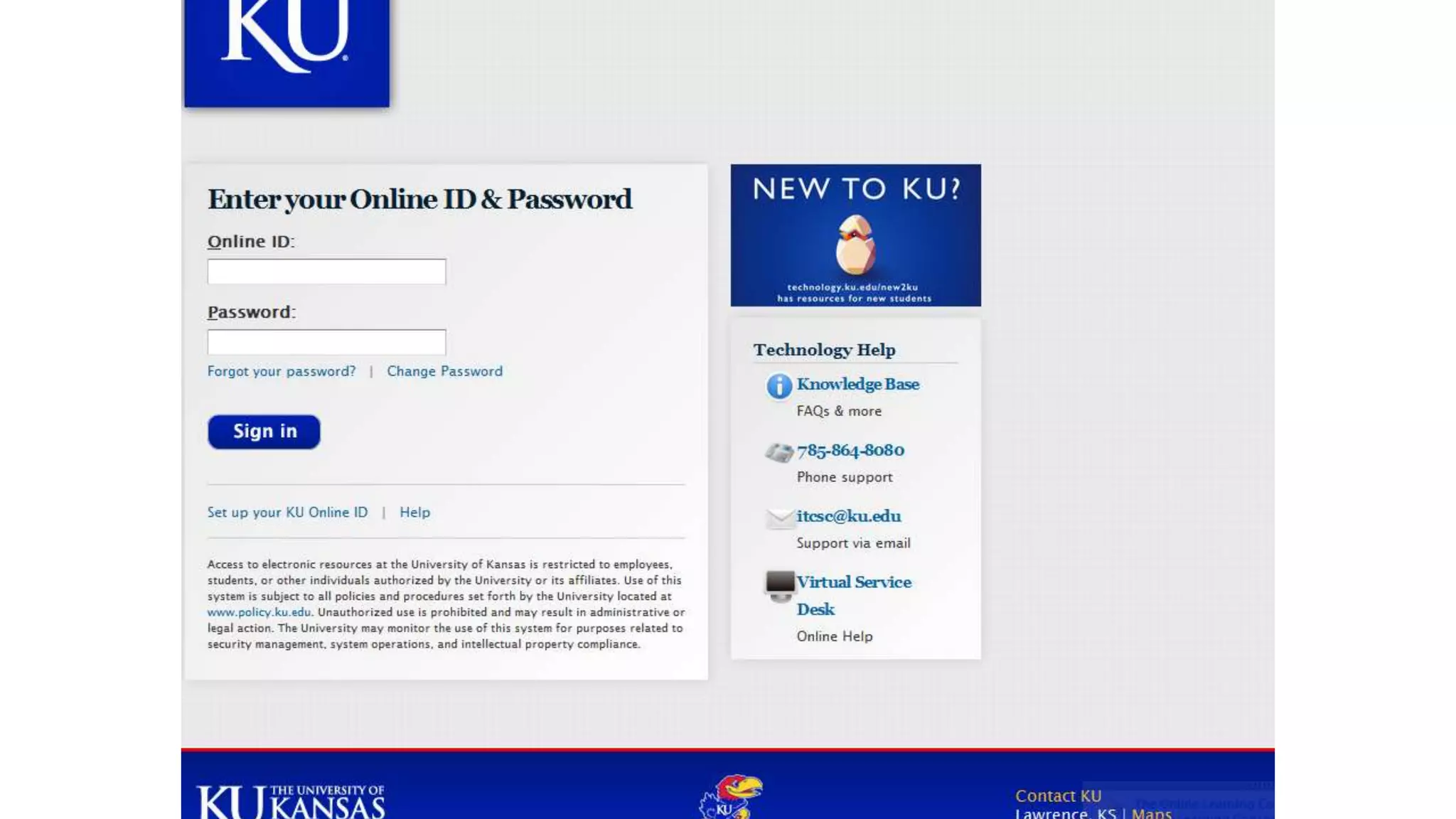
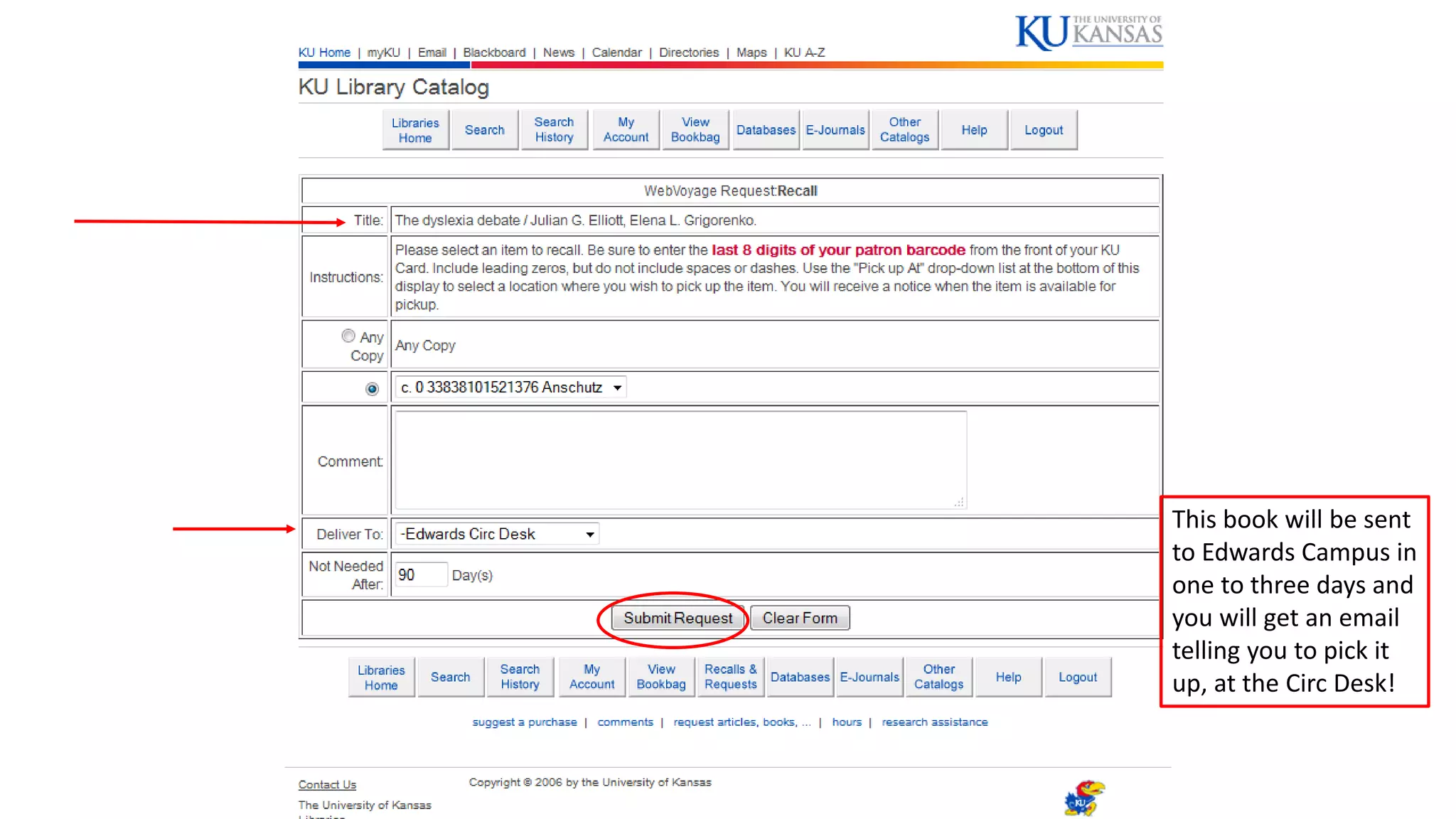
Book request
made and you’ll
get the book here,
on the Edwards
Campus, in 2-4
days.
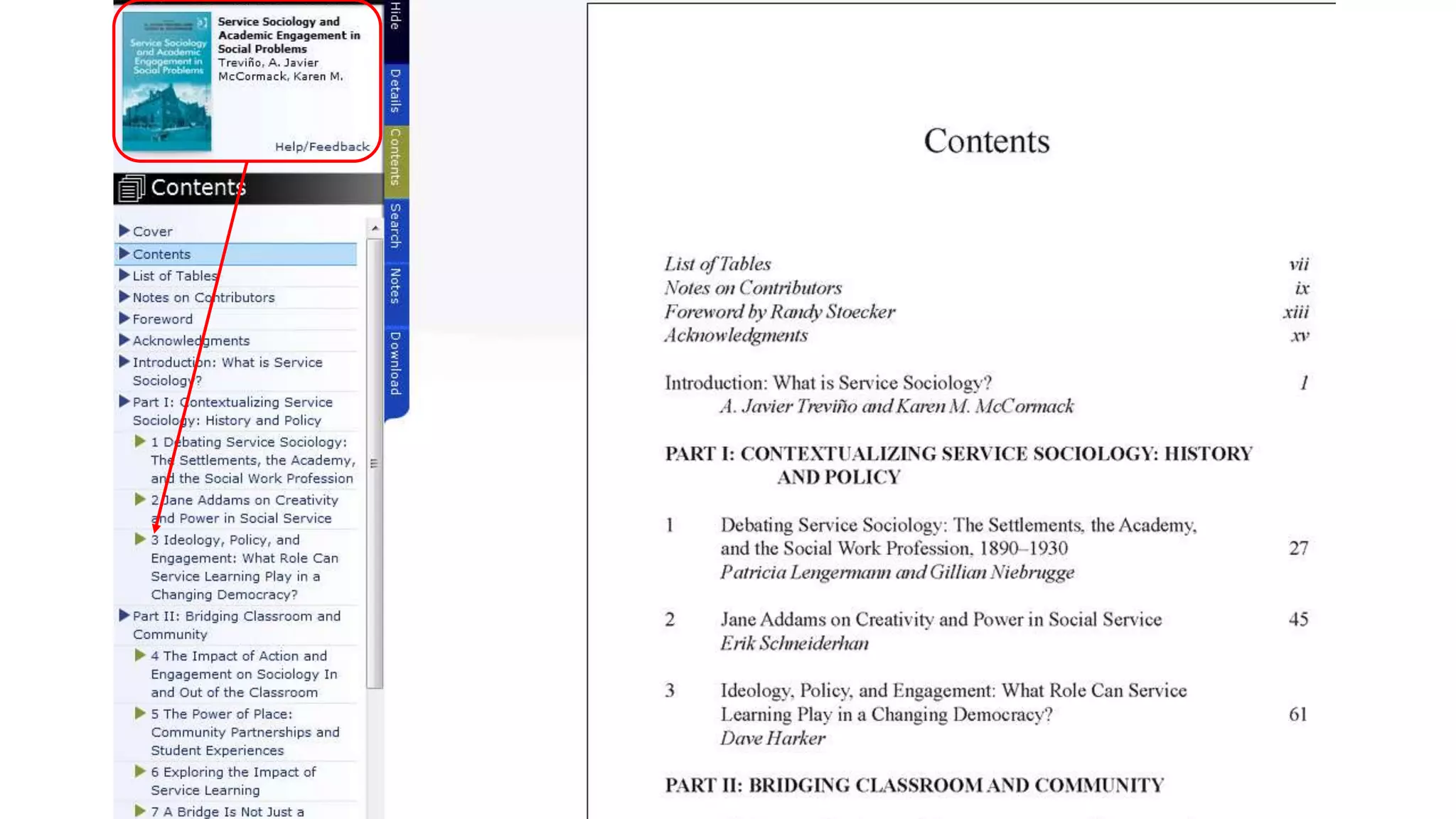
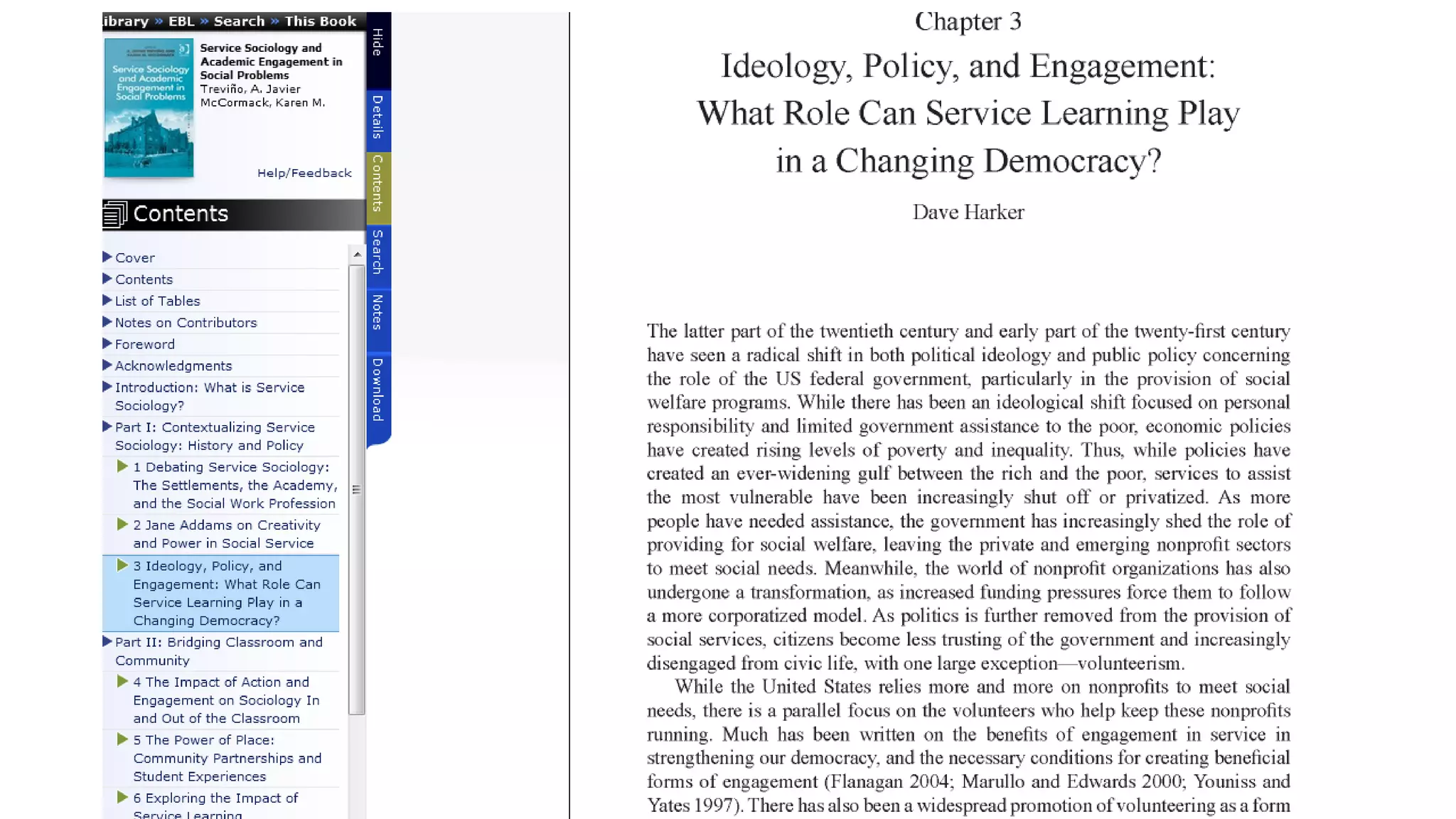
Does the library have E-Books?
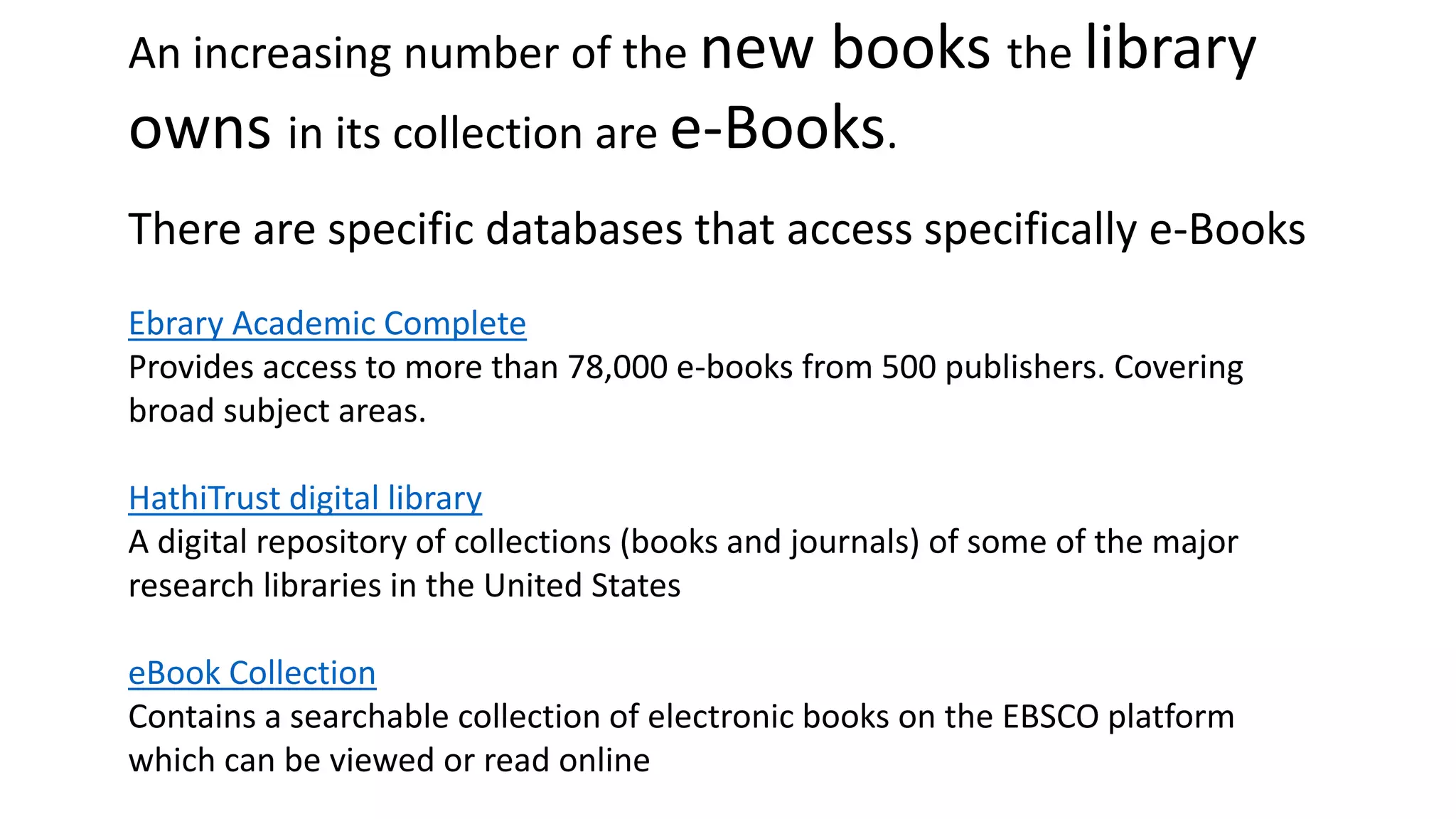
An increasing number of the new books the library owns
are e-Books.
There are databases that access specifically e-Books
Ebrary Academic Complete
Provides access to more than 78,000 e-books from 500 publishers. Covering
broad subject areas.
HathiTrust digital library
A digital repository of collections (books and journals) of some of the major
research libraries in the United States
eBook Collection
Contains a searchable collection of electronic books on the EBSCO platform
which can be viewed or read online
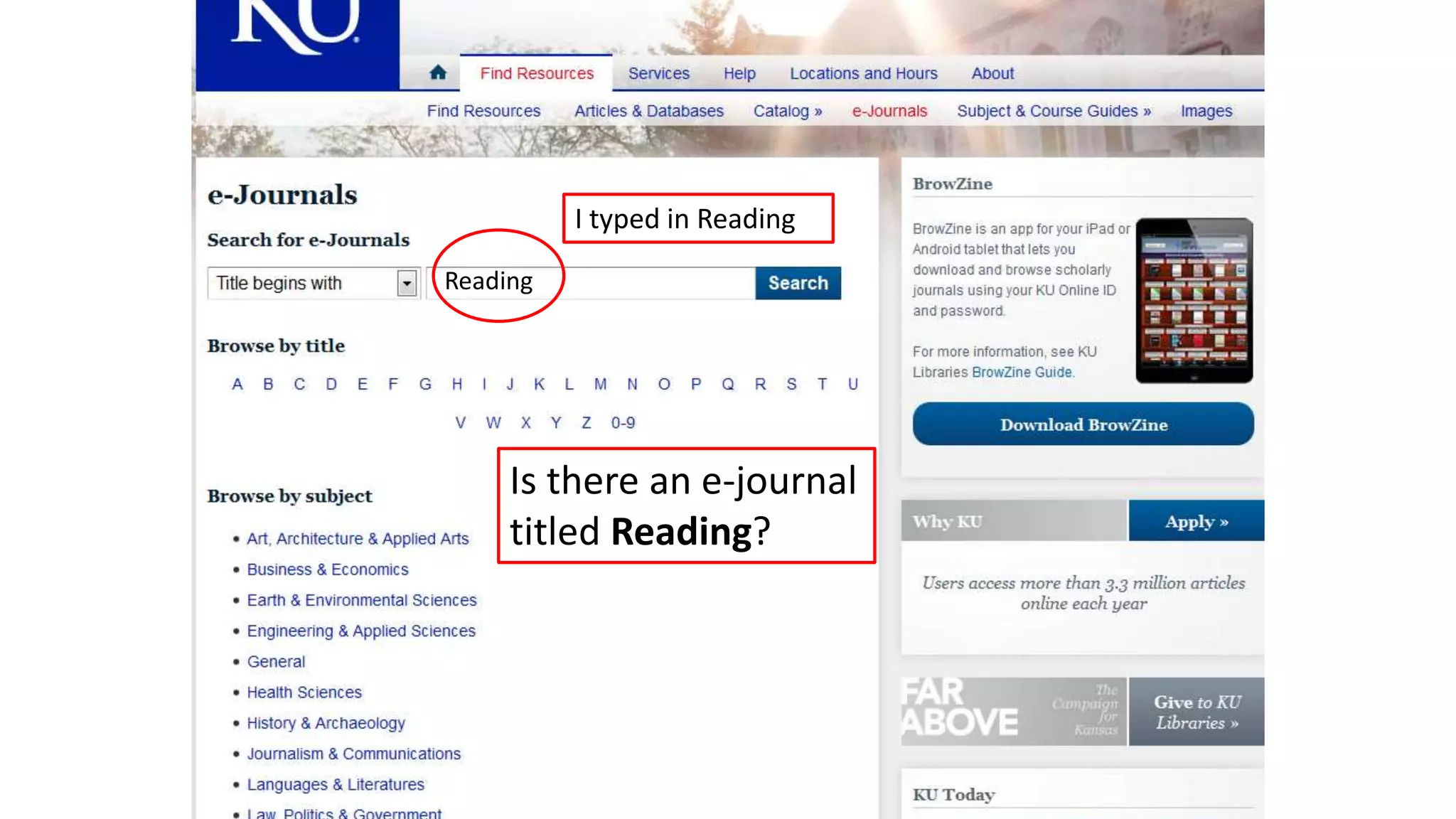
Does the library have E-Journals?
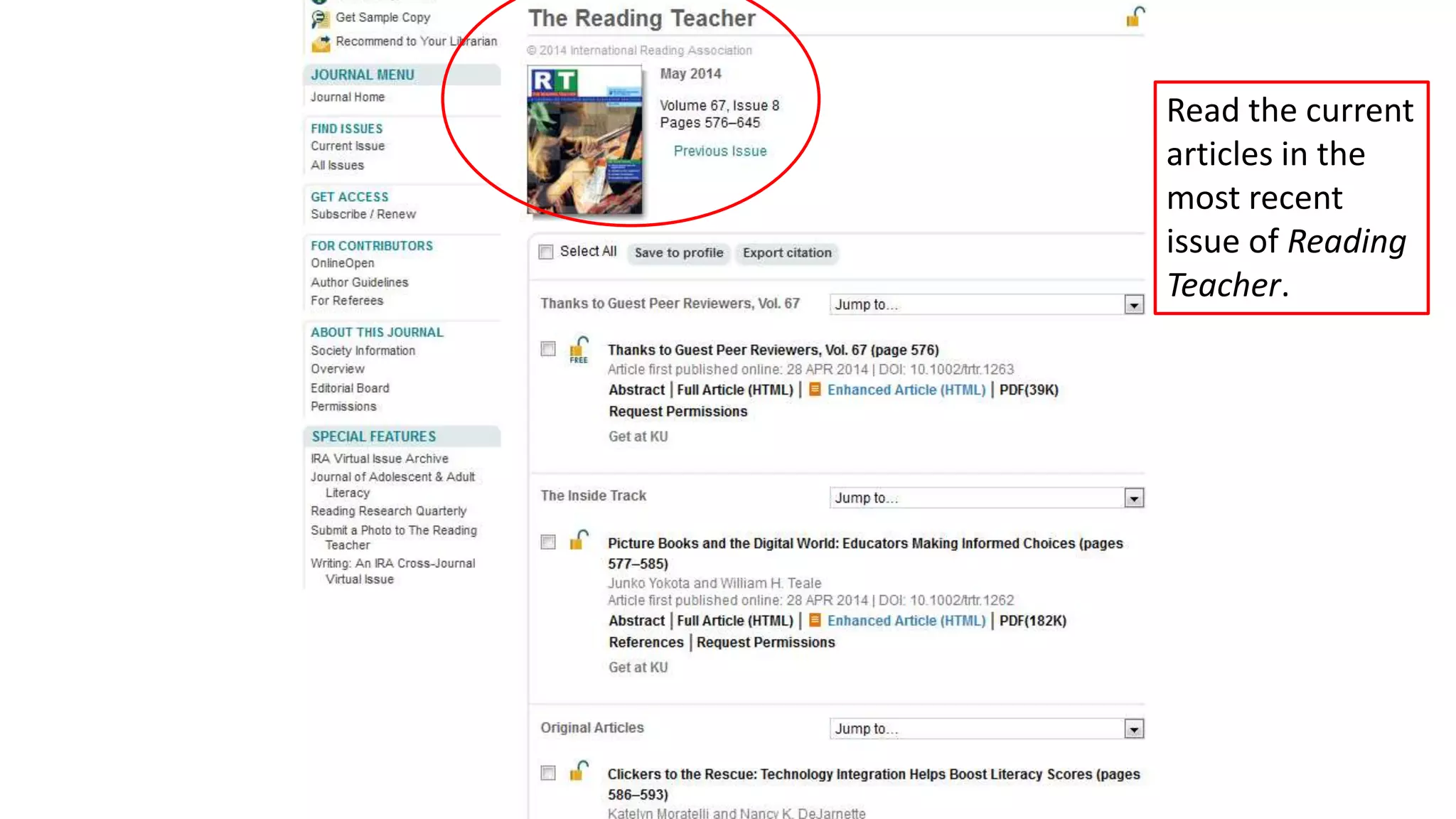
Reading
I’m looking for an
e-journal titled
Reading (and
something)
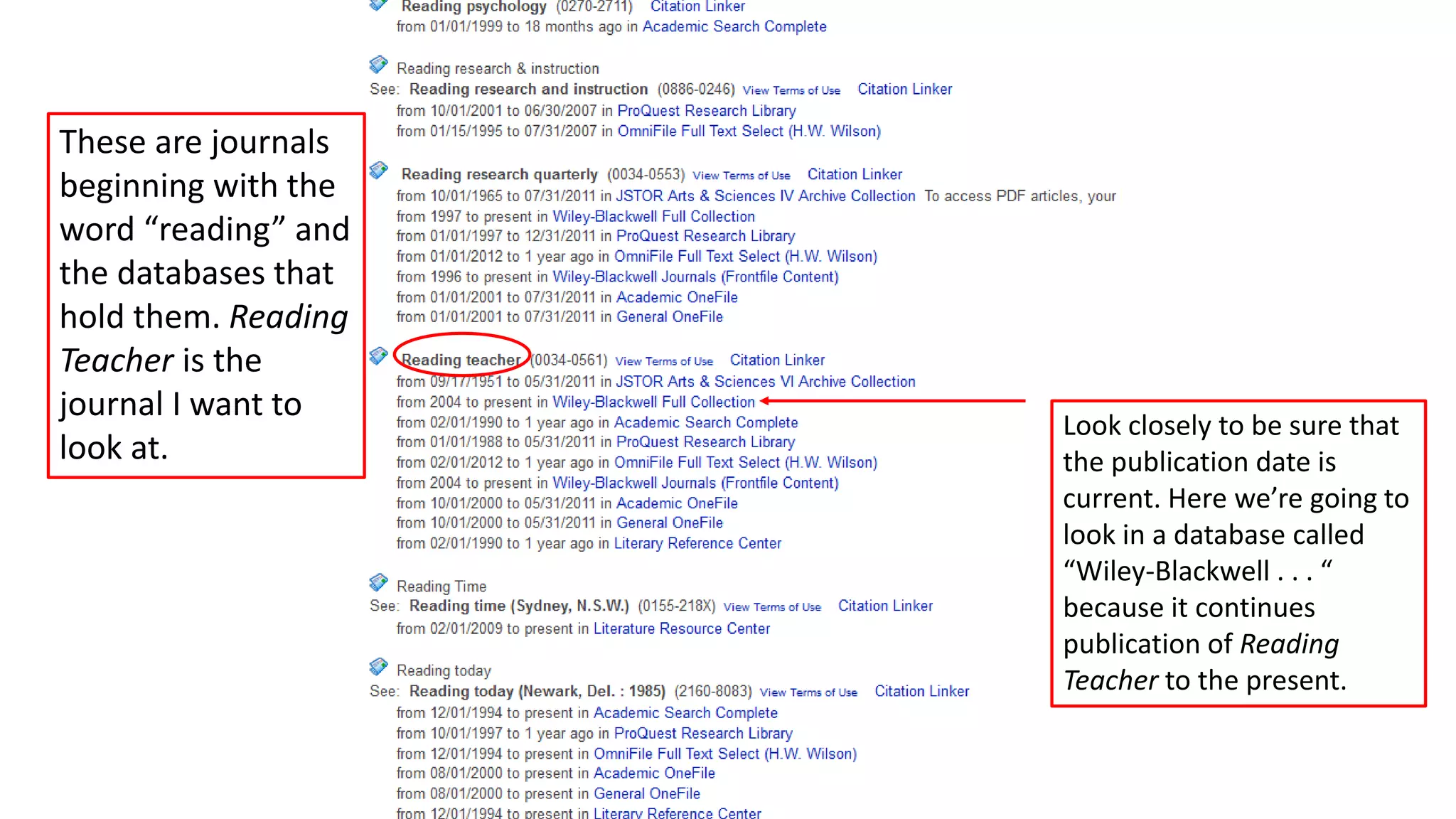
These are journals
beginning with the
word “reading” and
the databases that
hold them. Reading
Teacher is the
journal I want to
look at.
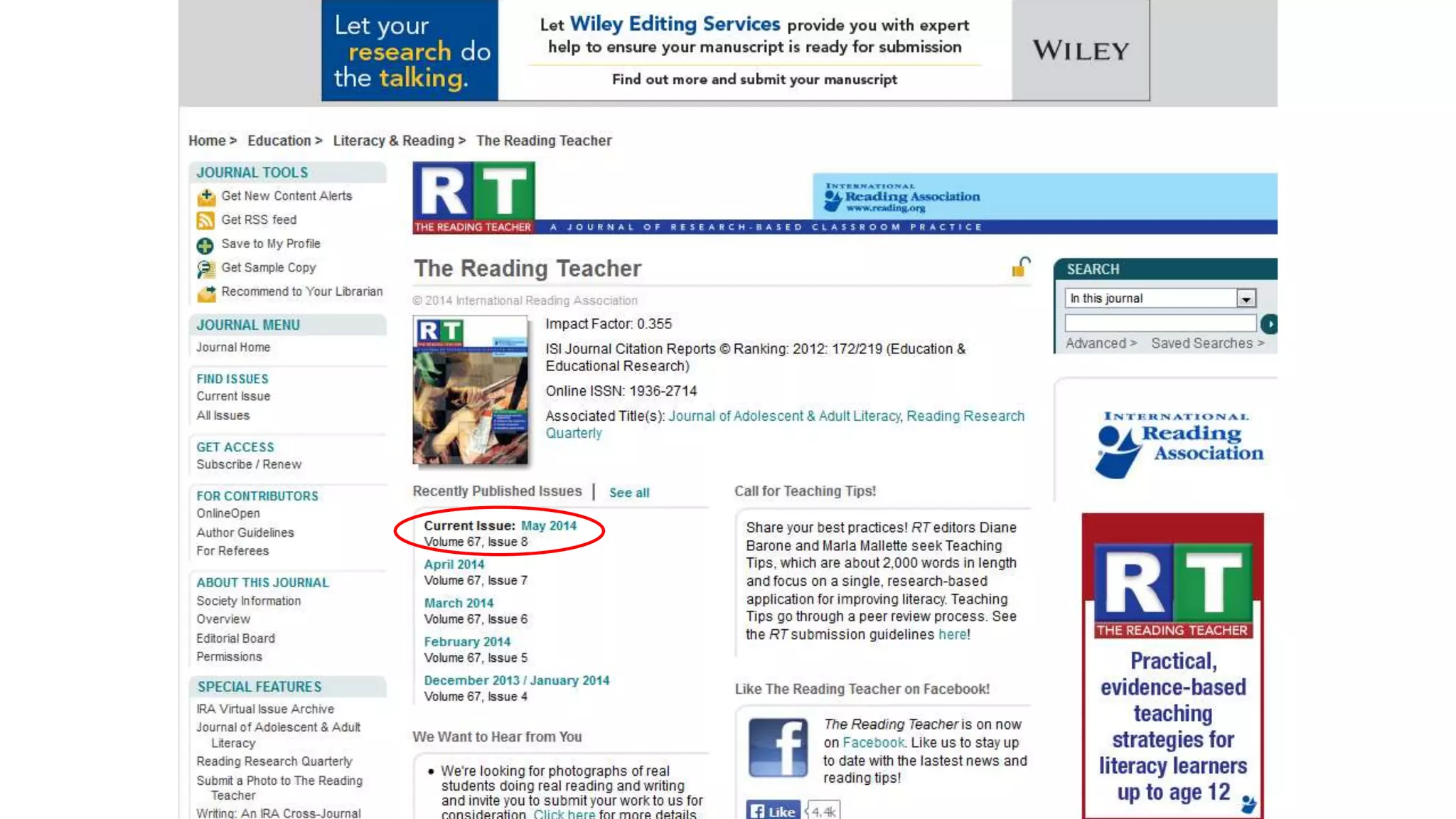
Look closely to be sure
that the publication
date is current. Here
we’re going to look in a
database called “Wiley-
Blackwell . . . “ because
it continues publication
of Reading Teacher to
the present time.
Questions?
http://www.lib.ku.edu

Research Primer for Graduate Students

  • 1.
    Welcome A Research Primer for GraduateStudents The University of Kansas Summer 2015 Edwards Campus
  • 2.
    Dissertation Research Bloghttp://dissertationresearch.blogspot.com Library Home Page http://www.lib.ku.edu
  • 3.
    Where’s the stuff:http://www.lib.ku.edu Databases / Peer-review journals / Articles Library Catalog / Books / e-Books e-Journals / by subject or title words Dissertations / World-wide or KU authored Subject and Course Guides
  • 4.
  • 5.
  • 8.
    Notice the tabs tochoose from: Get Started, Articles and Databases, Books, Web Resources, Tests, Statistics, Evaluating and Citing
  • 9.
    When using the databasesfrom off campus, you will be ask to sign in with your KU ID and Password
  • 10.
  • 11.
  • 14.
    I want tocite this review, now.
  • 16.
    Can I getfull text of this review? Get at KU
  • 18.
    What if nofull text of an article is found? Request a copy
  • 19.
    If you area First time user of WebRetrieve, you need to fill out this short form (KU ID and last name) to register in the library system so that you can get the books and articles you request. This is my info If it’s your 1st time you have no info
  • 21.
    What happens next? TheLibraries will first check KU’s journal collection (print and electronic). If the article cannot be found then the Libraries request the article from other academic libraries. When KU receives the article it will be in PDF format and you will be sent an email with a link to the article you requested. How long will that take? Usually, about 2-3 days.
  • 22.
  • 24.
    * allows forany number of letters at the end of a word—this broadens the search and usually gets more hits then spelling the entire word. AND means that both terms will be in the same article.
  • 26.
  • 27.
  • 30.
    Remember that theoriginal article, Neurodevelopmental Variation as a Framework for Thinking about the Twice Exceptional, was found on the ERIC database using the search terms: “dyslex*” AND creativ*” and had 138 references that the author of the article used to write the article along with his original research---Here are some of those references:
  • 31.
    Notice most have linksinto articles, cited by, and references. Of course they are older in date than the original article.
  • 32.
    Find one goodarticle and you will have a collaboration of authors, observations, research and results. (21 cited by and 138 references)
  • 33.
  • 34.
    Most of thedatabases have dissertations included in the collections they manage. Here are 2 specific databases that cover only dissertations and theses: 1. Dissertations & Theses @ University of Kansas Contains citations and abstracts of dissertations and theses submitted by the University of Kansas and published in UMI's Dissertations Abstracts database, and full text of KU dissertations published after 1996 and KU theses published after 2005. 2. ProQuest dissertations & theses Provides online access to over 2 million dissertations and master's theses, many of which are available in full text for immediate downloading. Citations are available for dissertations dating from 1861 and full text online from 1997 for over 1,000 schools submitting to the ProQuest UMI database. More than 55,000 new citations are added to the database every year.
  • 35.
  • 37.
  • 40.
    Dissertations & Thesesfrom the University of Kansas 1. Libraries Homepage http://lib.ku.edu 2. Articles and Databases 3.
  • 41.
    I had to changemy search terms because there were no “dyslexia and creativity” articles to be found. Remain flexible in your search method.
  • 43.
    How to citea dissertation found online?
  • 47.
  • 48.
  • 52.
  • 54.
  • 55.
  • 58.
    We now have:Articles from scholarly journals and dissertations by using 5 databases : 1 PsycInfo 2 ERIC 3 Proquest Dissertations and Theses 4 Dissertations & Theses from the University of Kansas 5 Google Scholar
  • 59.
    Where are theBooks? Books are found in the Library Catalog
  • 60.
  • 61.
    How to ordera book from the Lawrence campus
  • 62.
    Not the review but theactual book. Don’t forget to limit by date.
  • 63.
    This is thecatalog record of the book we want sent from the Lawrence Campus Libraries to the Edwards Campus. Select “Recalls & Requests” from the top bar of selections.
  • 66.
    “Retrieve from Shelf” isthe option to select from the drop-down menu on the “Request and Retrieve” page.
  • 67.
    Book request made andyou’ll get the book here, on the Edwards Campus, in 2-4 days.
  • 68.
    Does the libraryhave E-Books?
  • 76.
    An increasing numberof the new books the library owns are e-Books. There are databases that access specifically e-Books Ebrary Academic Complete Provides access to more than 78,000 e-books from 500 publishers. Covering broad subject areas. HathiTrust digital library A digital repository of collections (books and journals) of some of the major research libraries in the United States eBook Collection Contains a searchable collection of electronic books on the EBSCO platform which can be viewed or read online
  • 77.
    Does the libraryhave E-Journals?
  • 79.
    Reading I’m looking foran e-journal titled Reading (and something)
  • 80.
    These are journals beginningwith the word “reading” and the databases that hold them. Reading Teacher is the journal I want to look at. Look closely to be sure that the publication date is current. Here we’re going to look in a database called “Wiley- Blackwell . . . “ because it continues publication of Reading Teacher to the present time.
  • 83.
  • 84.