Introducing DevOps
Principles
Welcome to the introduction of DevOps principles and their significant
impact on our organization's future success.
By Abdul rehaman Mohammed
Welcome and Introduction
Welcoming All Participants
All participants will be greeted warmly and
acknowledged.
Purpose of the Meeting
An introduction to the purpose and future
implications for the organization.
Current State Assessment
1 Reviewing Processes
Evaluating current development and operations processes thoroughly.
2 Identifying Pain Points
Pinpointing bottlenecks, inefficiencies, and areas needing improvement.
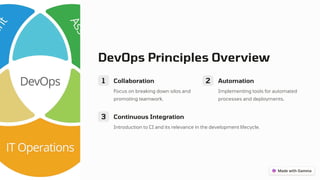
DevOps Principles Overview
1 Collaboration
Focus on breaking down silos and
promoting teamwork.
2 Automation
Implementing tools for automated
processes and deployments.
3 Continuous Integration
Introduction to CI and its relevance in the development lifecycle.
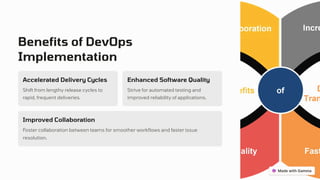
Benefits of DevOps
Implementation
Accelerated Delivery Cycles
Shift from lengthy release cycles to
rapid, frequent deliveries.
Enhanced Software Quality
Strive for automated testing and
improved reliability of applications.
Improved Collaboration
Foster collaboration between teams for smoother workflows and faster issue
resolution.
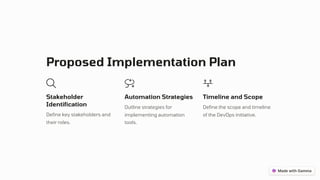
Proposed Implementation Plan
Stakeholder
Identification
Define key stakeholders and
their roles.
Automation Strategies
Outline strategies for
implementing automation
tools.
Timeline and Scope
Define the scope and timeline
of the DevOps initiative.
Call to Action for DevOps
1
Embracing DevOps Culture
Encourage the whole team to embrace the new DevOps culture.
2
Active Participation
Urge active participation and support from all team members.
Closing Remarks
Summarize Key Points
Express Gratitude to Participants
Problem Statement & DevOps
Solution
Problem Statement
Discussion on the drawbacks of current
processes.
DevOps Solution
Highlighting the transformative impact of
DevOps practices.
Upskilling and Investment in Training
1 Team Upskilling
Investing in training and upskilling for team members.

Introducing-DevOps-Principles methodologies.pdf

  • 1.
    Introducing DevOps Principles Welcome tothe introduction of DevOps principles and their significant impact on our organization's future success. By Abdul rehaman Mohammed
  • 2.
    Welcome and Introduction WelcomingAll Participants All participants will be greeted warmly and acknowledged. Purpose of the Meeting An introduction to the purpose and future implications for the organization.
  • 3.
    Current State Assessment 1Reviewing Processes Evaluating current development and operations processes thoroughly. 2 Identifying Pain Points Pinpointing bottlenecks, inefficiencies, and areas needing improvement.
  • 4.
    DevOps Principles Overview 1Collaboration Focus on breaking down silos and promoting teamwork. 2 Automation Implementing tools for automated processes and deployments. 3 Continuous Integration Introduction to CI and its relevance in the development lifecycle.
  • 5.
    Benefits of DevOps Implementation AcceleratedDelivery Cycles Shift from lengthy release cycles to rapid, frequent deliveries. Enhanced Software Quality Strive for automated testing and improved reliability of applications. Improved Collaboration Foster collaboration between teams for smoother workflows and faster issue resolution.
  • 6.
    Proposed Implementation Plan Stakeholder Identification Definekey stakeholders and their roles. Automation Strategies Outline strategies for implementing automation tools. Timeline and Scope Define the scope and timeline of the DevOps initiative.
  • 7.
    Call to Actionfor DevOps 1 Embracing DevOps Culture Encourage the whole team to embrace the new DevOps culture. 2 Active Participation Urge active participation and support from all team members.
  • 8.
    Closing Remarks Summarize KeyPoints Express Gratitude to Participants
  • 9.
    Problem Statement &DevOps Solution Problem Statement Discussion on the drawbacks of current processes. DevOps Solution Highlighting the transformative impact of DevOps practices.
  • 10.
    Upskilling and Investmentin Training 1 Team Upskilling Investing in training and upskilling for team members.