INTRODUCTION TO
MANAGEMENT
Chapter 1 Stephen P. Robbins
L E A R N I N G O U T L I N E
Follow this Learning Outline as you read and study this chapter.
Who Are Managers?
• Explain how manager differ from non-managerial
employees.
• Discuss how to classify managers in organizations.
What Is Management?
• Define management.
• Contrast efficiency and effectiveness.
• Explain why efficiency and effectiveness are important to
management.
L E A R N I N G O U T L I N E (cont’d)
Follow this Learning Outline as you read and study this chapter.
What Do Managers Do?
• Describe the four functions of management.
• Discuss the changes that are impacting managers’ jobs.
• Explain why customer service and innovation are
important to the manager’s job.
L E A R N I N G O U T L I N E (cont’d)
Follow this Learning Outline as you read and study this chapter.
What Is An Organization?
• Describe the characteristics of an organization.
• Explain how the concept of an organization is changing.
Why Study Management?
• Explain the universality of management concept.
• Discuss why an understanding of management is
important even if you don’t plan to be a manager.
• Describe the rewards and challenges of being a manager.
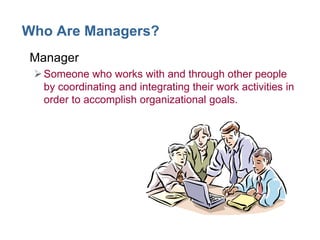
Who Are Managers?
• Manager
Someone who works with and through other people
by coordinating and integrating their work activities in
order to accomplish organizational goals.
Classifying Managers
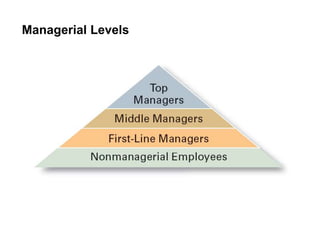
• First-line Managers
Are at the lowest level of management and manage
the work of non-managerial employees.
• Middle Managers
Manage the work of first-line managers.
• Top Managers
Are responsible for making organization-wide
decisions and establishing plans and goals that affect
the entire organization.
Managerial Levels
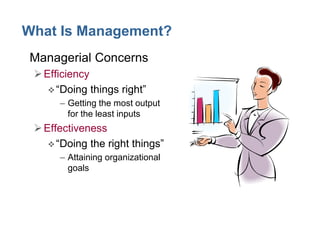
What Is Management?
• Managerial Concerns
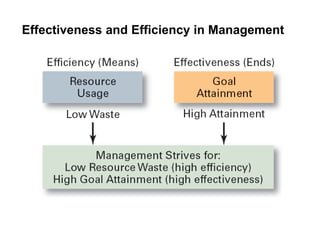
Efficiency
“Doing things right”
– Getting the most output
for the least inputs
Effectiveness
“Doing the right things”
– Attaining organizational
goals
Effectiveness and Efficiency in Management
What Do Managers Do?
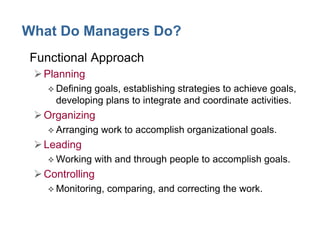
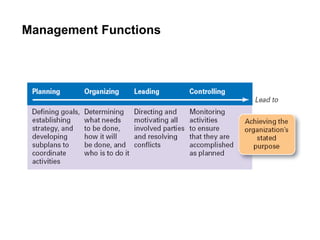
• Functional Approach
Planning
 Defining goals, establishing strategies to achieve goals,
developing plans to integrate and coordinate activities.
Organizing
 Arranging work to accomplish organizational goals.
Leading
 Working with and through people to accomplish goals.
Controlling
 Monitoring, comparing, and correcting the work.
Management Functions
What Do Managers Do? (cont’d)
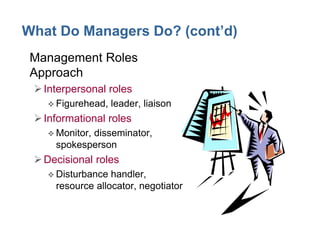
• Management Roles
Approach
Interpersonal roles
 Figurehead, leader, liaison
Informational roles
 Monitor, disseminator,
spokesperson
Decisional roles
 Disturbance handler,
resource allocator, negotiator
What Do Managers Do? (cont’d)
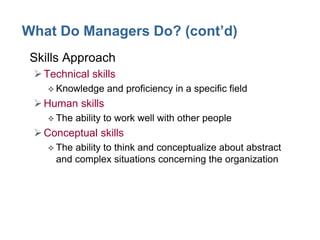
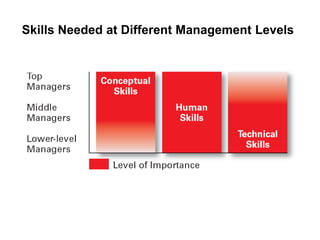
• Skills Approach
Technical skills
 Knowledge and proficiency in a specific field
Human skills
 The ability to work well with other people
Conceptual skills
 The ability to think and conceptualize about abstract
and complex situations concerning the organization
Skills Needed at Different Management Levels
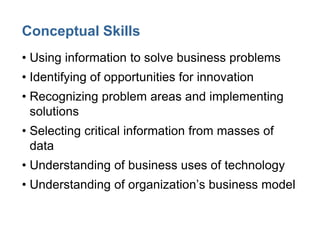
Conceptual Skills
• Using information to solve business problems
• Identifying of opportunities for innovation
• Recognizing problem areas and implementing
solutions
• Selecting critical information from masses of
data
• Understanding of business uses of technology
• Understanding of organization’s business model
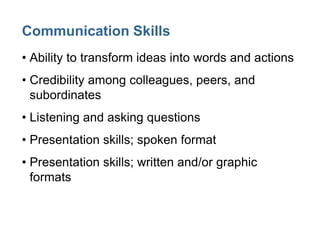
Communication Skills
• Ability to transform ideas into words and actions
• Credibility among colleagues, peers, and
subordinates
• Listening and asking questions
• Presentation skills; spoken format
• Presentation skills; written and/or graphic
formats
Effectiveness Skills
• Contributing to corporate mission/departmental
objectives
• Customer focus
• Multitasking: working at multiple tasks in parallel
• Negotiating skills
• Project management
• Reviewing operations and implementing
improvements
Effectiveness Skills (cont’d)
• Setting and maintaining performance standards
internally and externally
• Setting priorities for attention and activity
• Time management
Interpersonal Skills
• Coaching and mentoring skills
• Diversity skills: working with diverse people and
cultures
• Networking within the organization
• Networking outside the organization
• Working in teams; cooperation and commitment
How The Manager’s Job Is Changing
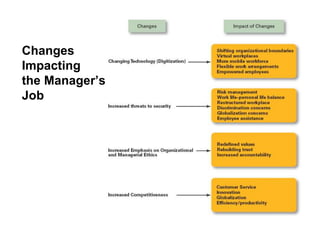
• The Increasing Importance of Customers
Customers: the reason that organizations exist
 Managing customer relationships is the responsibility of
all managers and employees.
 Consistent high quality customer service is essential for
survival.
• Innovation
Doing things differently, exploring new territory, and
taking risks
 Managers should encourage employees to be aware of
and act on opportunities for innovation.
Changes
Impacting
the Manager’s
Job
What Is An Organization?
• An Organization Defined
A deliberate arrangement of people to accomplish
some specific purpose
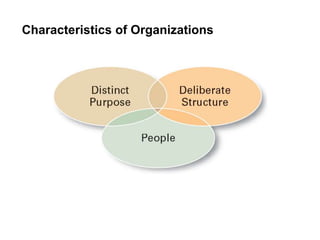
• Common Characteristics of Organizations
Have a distinct purpose (goal)
Composed of people
Have a deliberate structure
Characteristics of Organizations
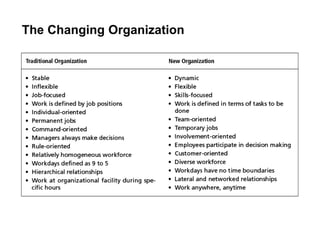
The Changing Organization
Why Study Management?
• The Value of Studying Management
The universality of management
 Good management is needed in all organizations.
The reality of work
 Employees either manage or are managed.
Rewards and challenges of being a manager
 Management offers challenging, exciting and creative
opportunities for meaningful and fulfilling work.
 Successful managers receive significant monetary
rewards for their efforts.
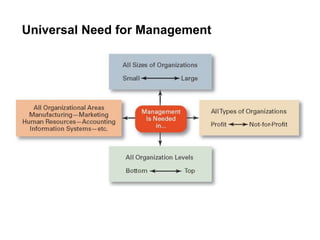
Universal Need for Management

Intro to Management

  • 1.
  • 2.
    L E AR N I N G O U T L I N E Follow this Learning Outline as you read and study this chapter. Who Are Managers? • Explain how manager differ from non-managerial employees. • Discuss how to classify managers in organizations. What Is Management? • Define management. • Contrast efficiency and effectiveness. • Explain why efficiency and effectiveness are important to management.
  • 3.
    L E AR N I N G O U T L I N E (cont’d) Follow this Learning Outline as you read and study this chapter. What Do Managers Do? • Describe the four functions of management. • Discuss the changes that are impacting managers’ jobs. • Explain why customer service and innovation are important to the manager’s job.
  • 4.
    L E AR N I N G O U T L I N E (cont’d) Follow this Learning Outline as you read and study this chapter. What Is An Organization? • Describe the characteristics of an organization. • Explain how the concept of an organization is changing. Why Study Management? • Explain the universality of management concept. • Discuss why an understanding of management is important even if you don’t plan to be a manager. • Describe the rewards and challenges of being a manager.
  • 5.
    Who Are Managers? •Manager Someone who works with and through other people by coordinating and integrating their work activities in order to accomplish organizational goals.
  • 6.
    Classifying Managers • First-lineManagers Are at the lowest level of management and manage the work of non-managerial employees. • Middle Managers Manage the work of first-line managers. • Top Managers Are responsible for making organization-wide decisions and establishing plans and goals that affect the entire organization.
  • 7.
  • 8.
    What Is Management? •Managerial Concerns Efficiency “Doing things right” – Getting the most output for the least inputs Effectiveness “Doing the right things” – Attaining organizational goals
  • 9.
  • 10.
    What Do ManagersDo? • Functional Approach Planning  Defining goals, establishing strategies to achieve goals, developing plans to integrate and coordinate activities. Organizing  Arranging work to accomplish organizational goals. Leading  Working with and through people to accomplish goals. Controlling  Monitoring, comparing, and correcting the work.
  • 11.
  • 12.
    What Do ManagersDo? (cont’d) • Management Roles Approach Interpersonal roles  Figurehead, leader, liaison Informational roles  Monitor, disseminator, spokesperson Decisional roles  Disturbance handler, resource allocator, negotiator
  • 13.
    What Do ManagersDo? (cont’d) • Skills Approach Technical skills  Knowledge and proficiency in a specific field Human skills  The ability to work well with other people Conceptual skills  The ability to think and conceptualize about abstract and complex situations concerning the organization
  • 14.
    Skills Needed atDifferent Management Levels
  • 15.
    Conceptual Skills • Usinginformation to solve business problems • Identifying of opportunities for innovation • Recognizing problem areas and implementing solutions • Selecting critical information from masses of data • Understanding of business uses of technology • Understanding of organization’s business model
  • 16.
    Communication Skills • Abilityto transform ideas into words and actions • Credibility among colleagues, peers, and subordinates • Listening and asking questions • Presentation skills; spoken format • Presentation skills; written and/or graphic formats
  • 17.
    Effectiveness Skills • Contributingto corporate mission/departmental objectives • Customer focus • Multitasking: working at multiple tasks in parallel • Negotiating skills • Project management • Reviewing operations and implementing improvements
  • 18.
    Effectiveness Skills (cont’d) •Setting and maintaining performance standards internally and externally • Setting priorities for attention and activity • Time management
  • 19.
    Interpersonal Skills • Coachingand mentoring skills • Diversity skills: working with diverse people and cultures • Networking within the organization • Networking outside the organization • Working in teams; cooperation and commitment
  • 20.
    How The Manager’sJob Is Changing • The Increasing Importance of Customers Customers: the reason that organizations exist  Managing customer relationships is the responsibility of all managers and employees.  Consistent high quality customer service is essential for survival. • Innovation Doing things differently, exploring new territory, and taking risks  Managers should encourage employees to be aware of and act on opportunities for innovation.
  • 21.
  • 22.
    What Is AnOrganization? • An Organization Defined A deliberate arrangement of people to accomplish some specific purpose • Common Characteristics of Organizations Have a distinct purpose (goal) Composed of people Have a deliberate structure
  • 23.
  • 24.
  • 25.
    Why Study Management? •The Value of Studying Management The universality of management  Good management is needed in all organizations. The reality of work  Employees either manage or are managed. Rewards and challenges of being a manager  Management offers challenging, exciting and creative opportunities for meaningful and fulfilling work.  Successful managers receive significant monetary rewards for their efforts.
  • 26.