Basic electricity concepts
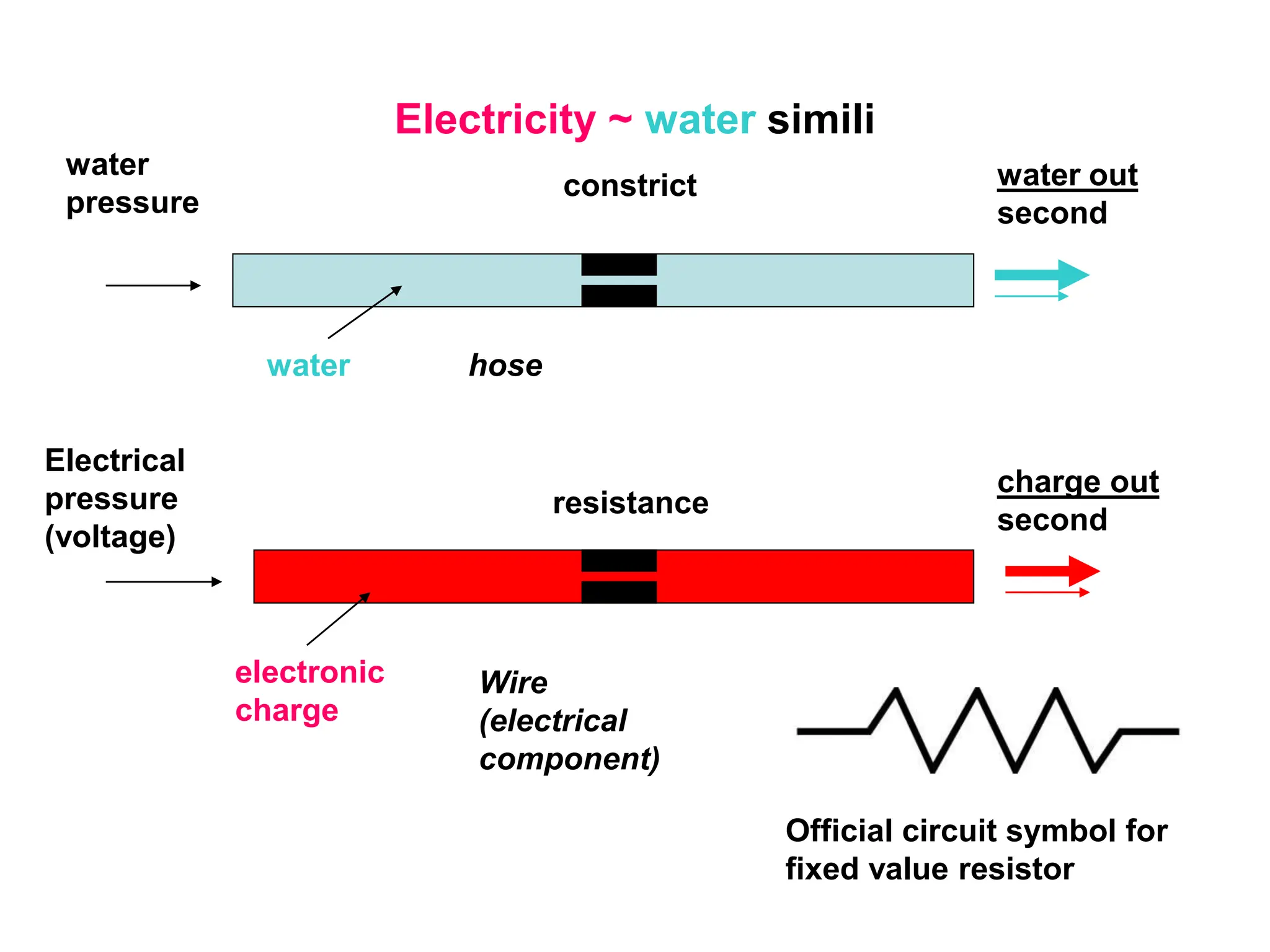
Electricity ~ water simili
water
pressure
water out
second
constrict
hose
water
Wire
(electrical
component)
Electrical
pressure
(voltage)
electronic
charge
charge out
second
resistance
Official circuit symbol for
fixed value resistor
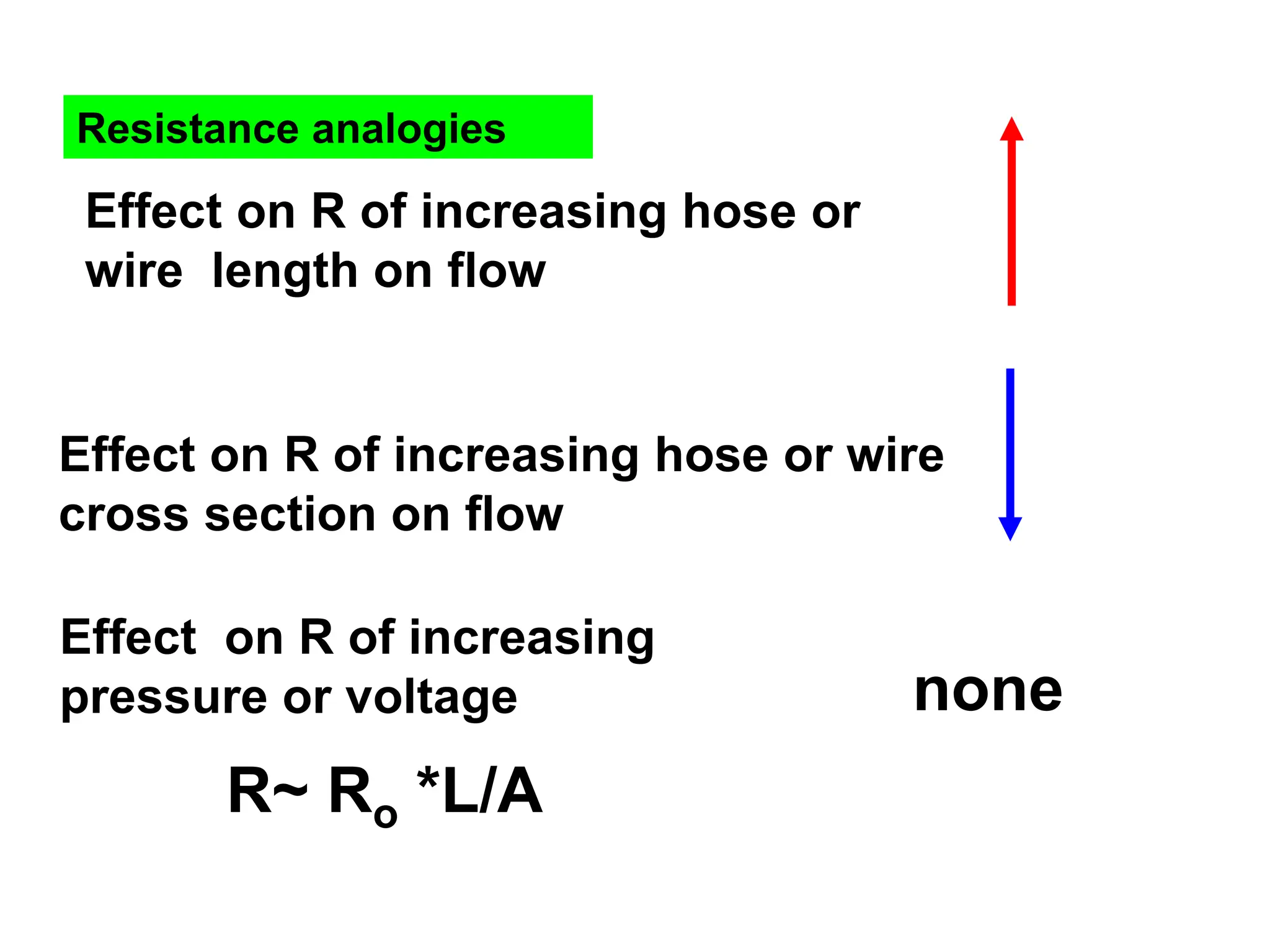
Effect on R of increasing hose or
wire length on flow
Effect on R of increasing hose or wire
cross section on flow
Effect on R of increasing
pressure or voltage
Resistance analogies
none
R~ Ro *L/A
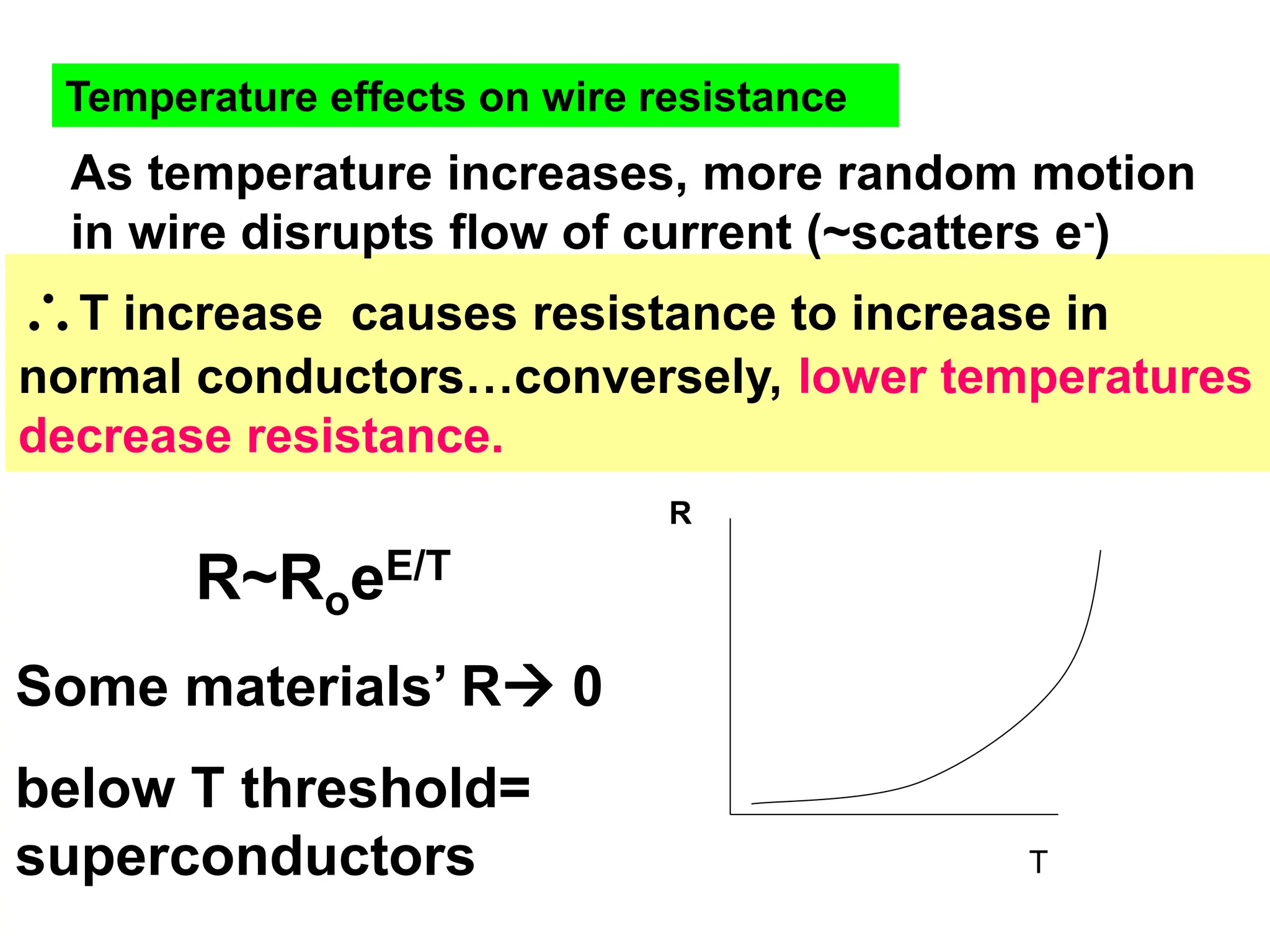
Temperature effects on wire resistance
R
T
R~RoeE/T
T increase causes resistance to increase in
normal conductors…conversely, lower temperatures
decrease resistance.
As temperature increases, more random motion
in wire disrupts flow of current (~scatters e-)
Some materials’ R 0
below T threshold=
superconductors
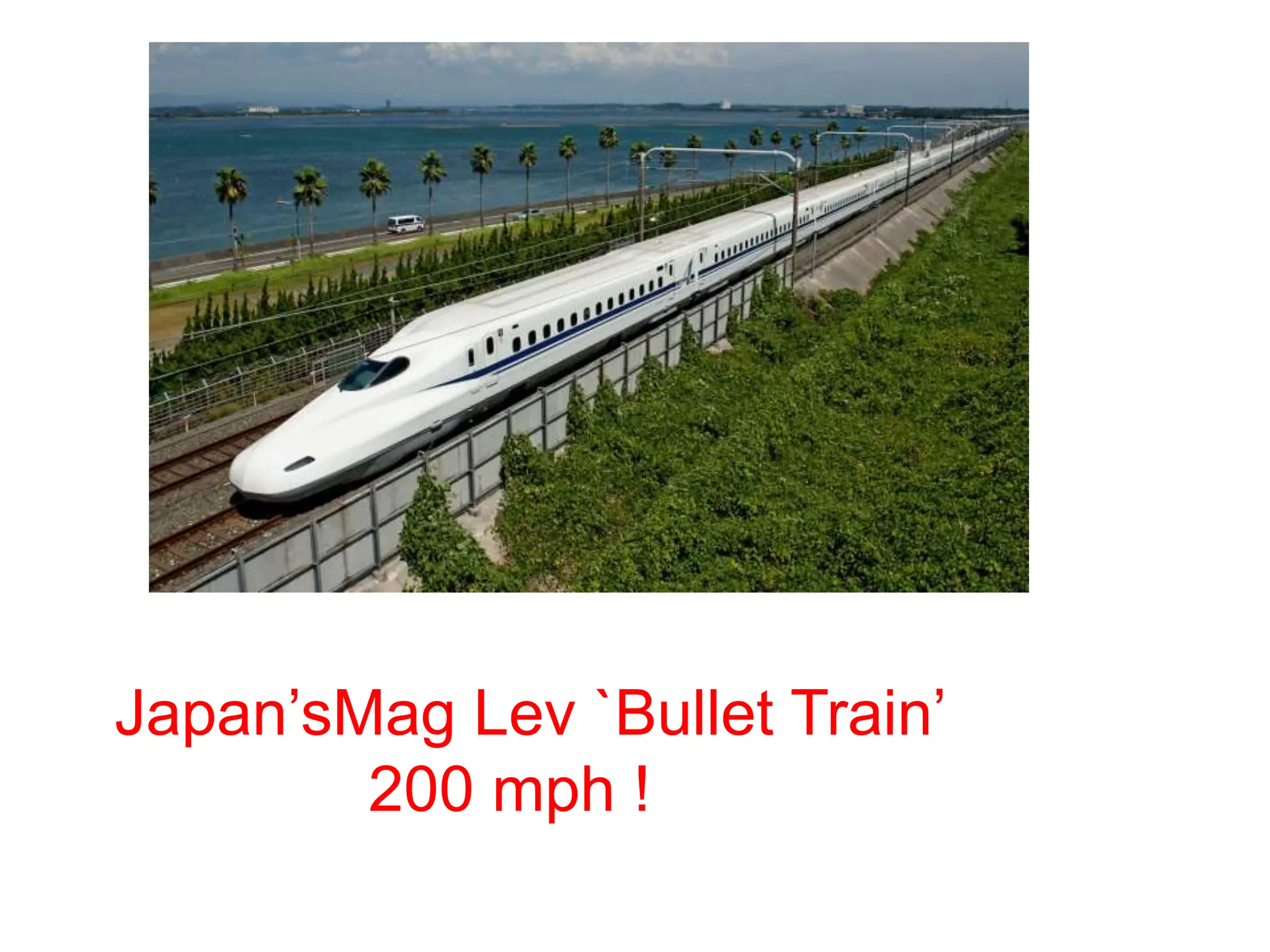
Japan’sMag Lev `Bullet Train’
200 mph !
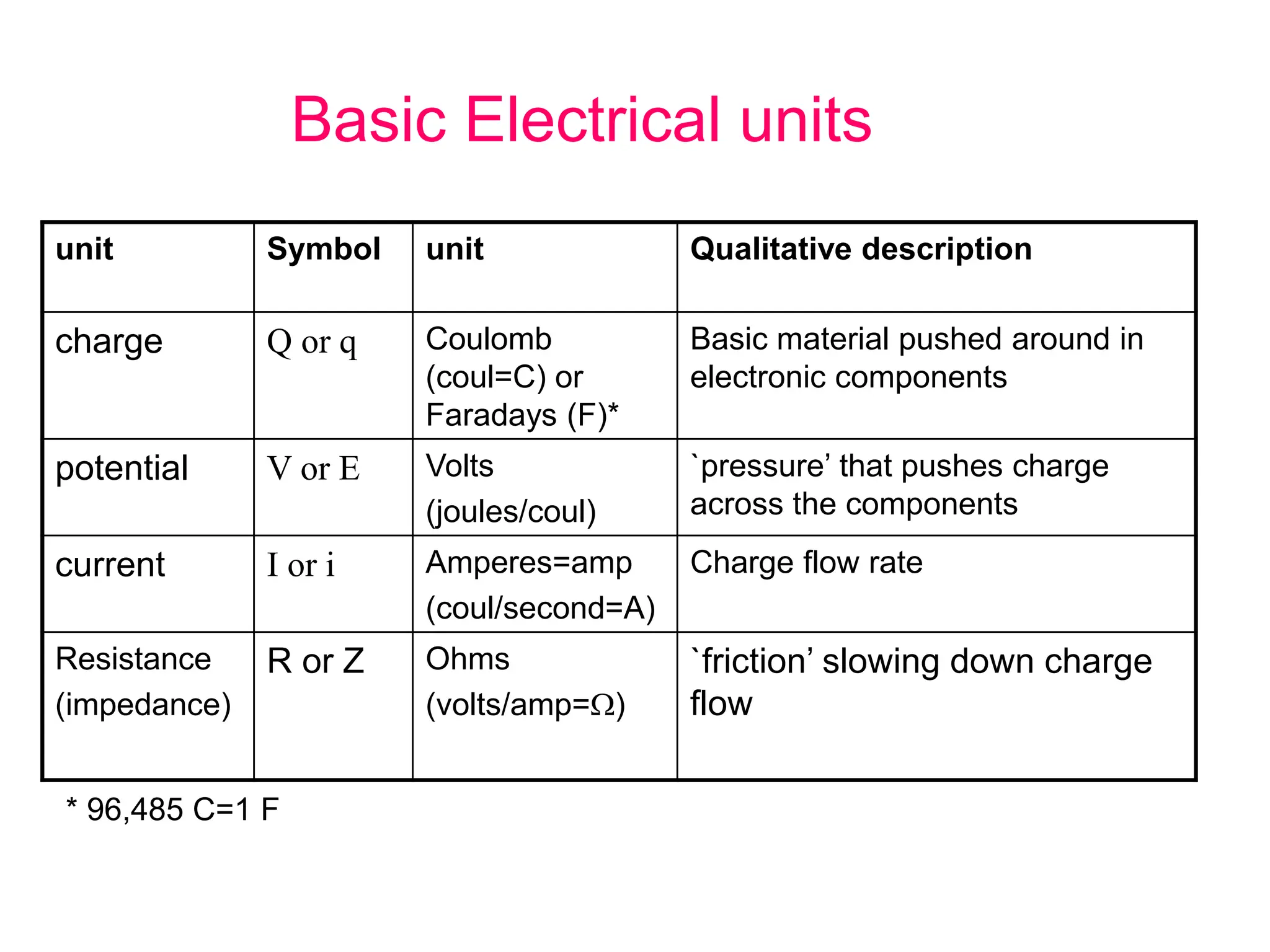
Basic Electrical units
unit Symbol unit Qualitative description
charge Q or q Coulomb
(coul=C) or
Faradays (F)*
Basic material pushed around in
electronic components
potential V or E Volts
(joules/coul)
`pressure’ that pushes charge
across the components
current I or i Amperes=amp
(coul/second=A)
Charge flow rate
Resistance
(impedance)
R or Z Ohms
(volts/amp=)
`friction’ slowing down charge
flow
* 96,485 C=1 F
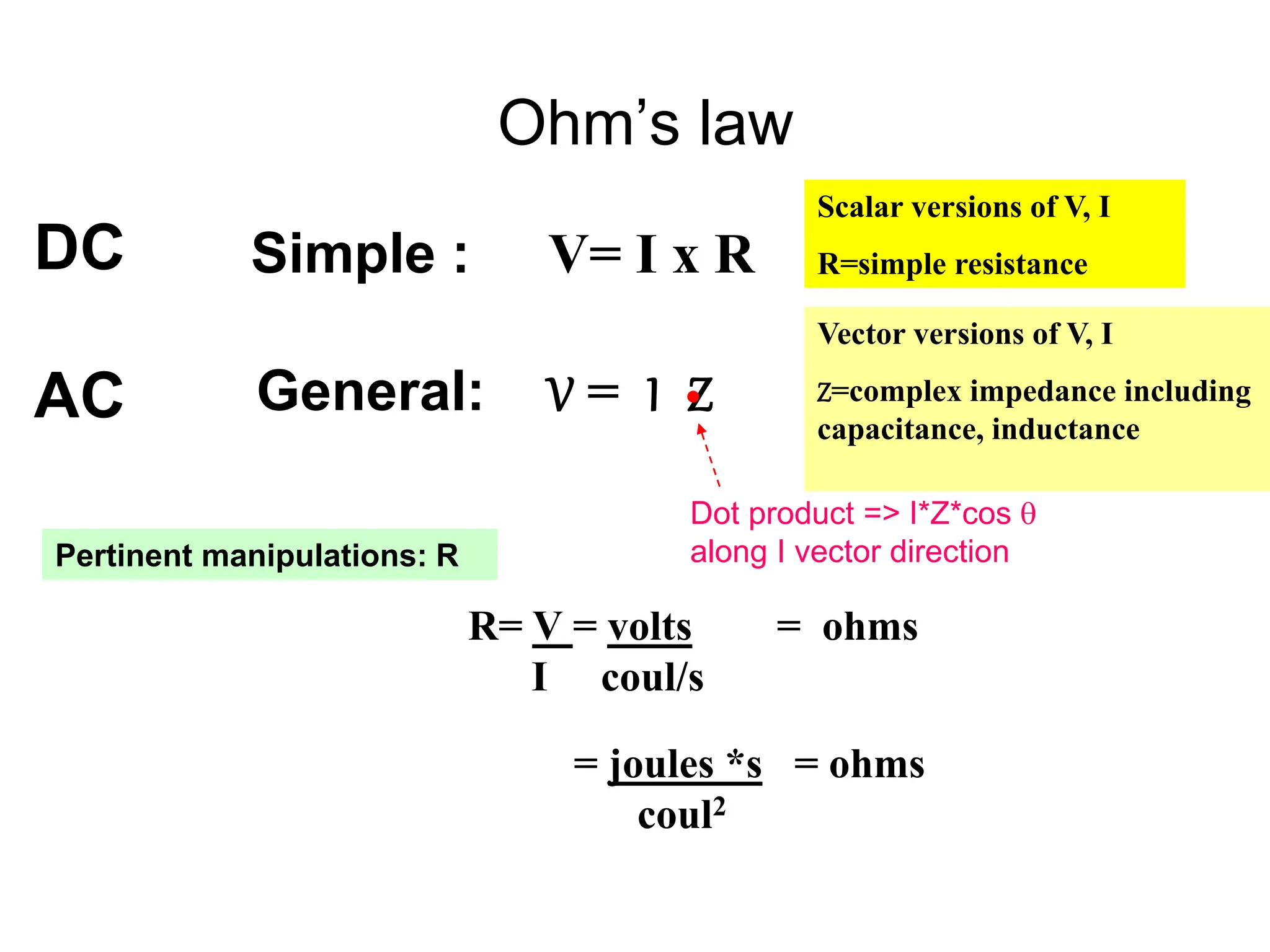
Ohm’s law
Simple : V= I x R
General: V = I Z
Dot product => I*Z*cos 
along I vector direction
Vector versions of V, I
Z=complex impedance including
capacitance, inductance
Pertinent manipulations: R
R= V = volts = ohms
I coul/s
Scalar versions of V, I
R=simple resistance
= joules *s = ohms
coul2
DC
AC
Power
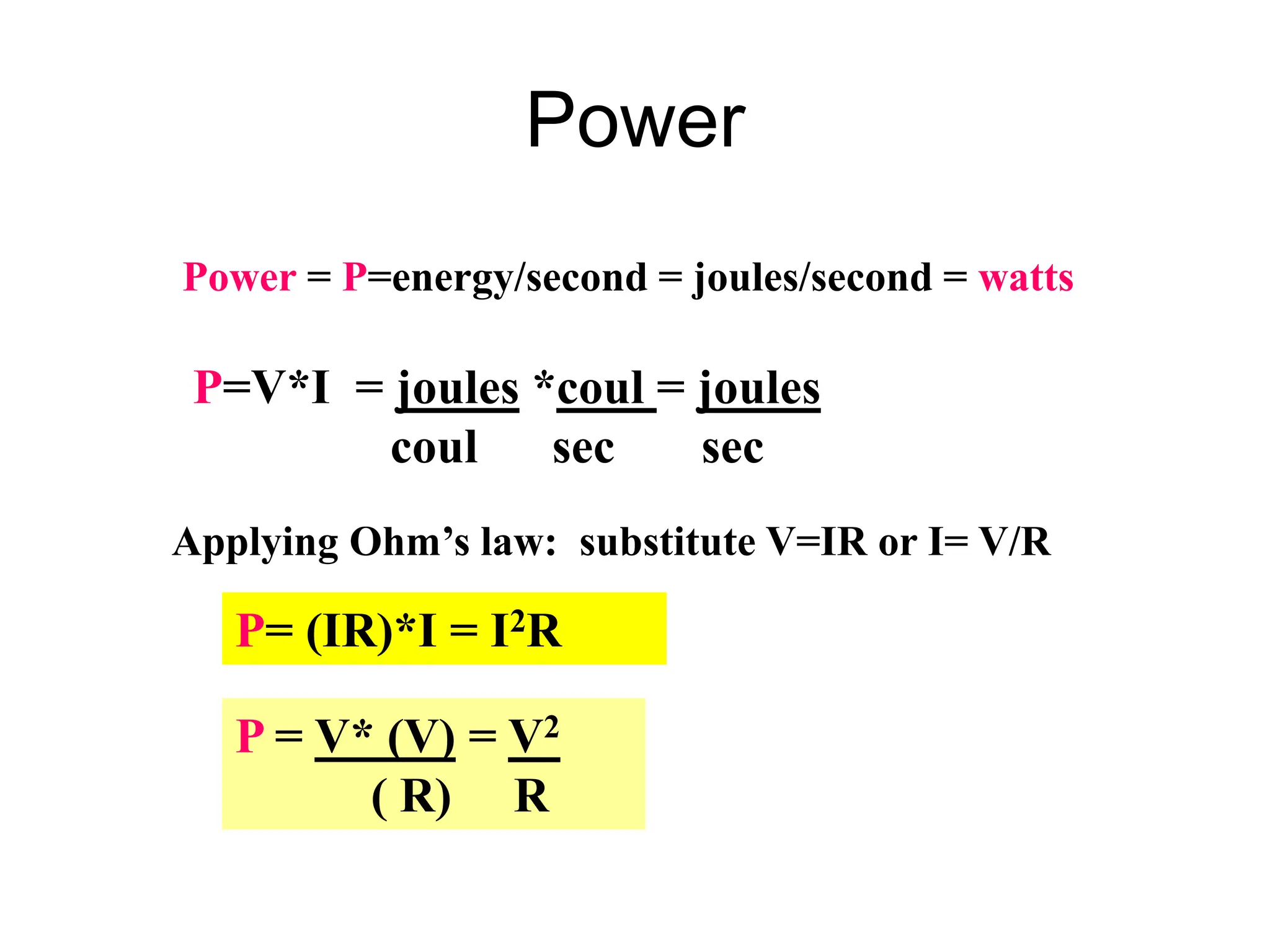
Power = P=energy/second = joules/second = watts
P=V*I = joules *coul = joules
coul sec sec
Applying Ohm’s law: substitute V=IR or I= V/R
P= (IR)*I = I2R
P = V* (V) = V2
( R) R
Kirchoff’s Voltage and Current Laws
(KVL and KCL)
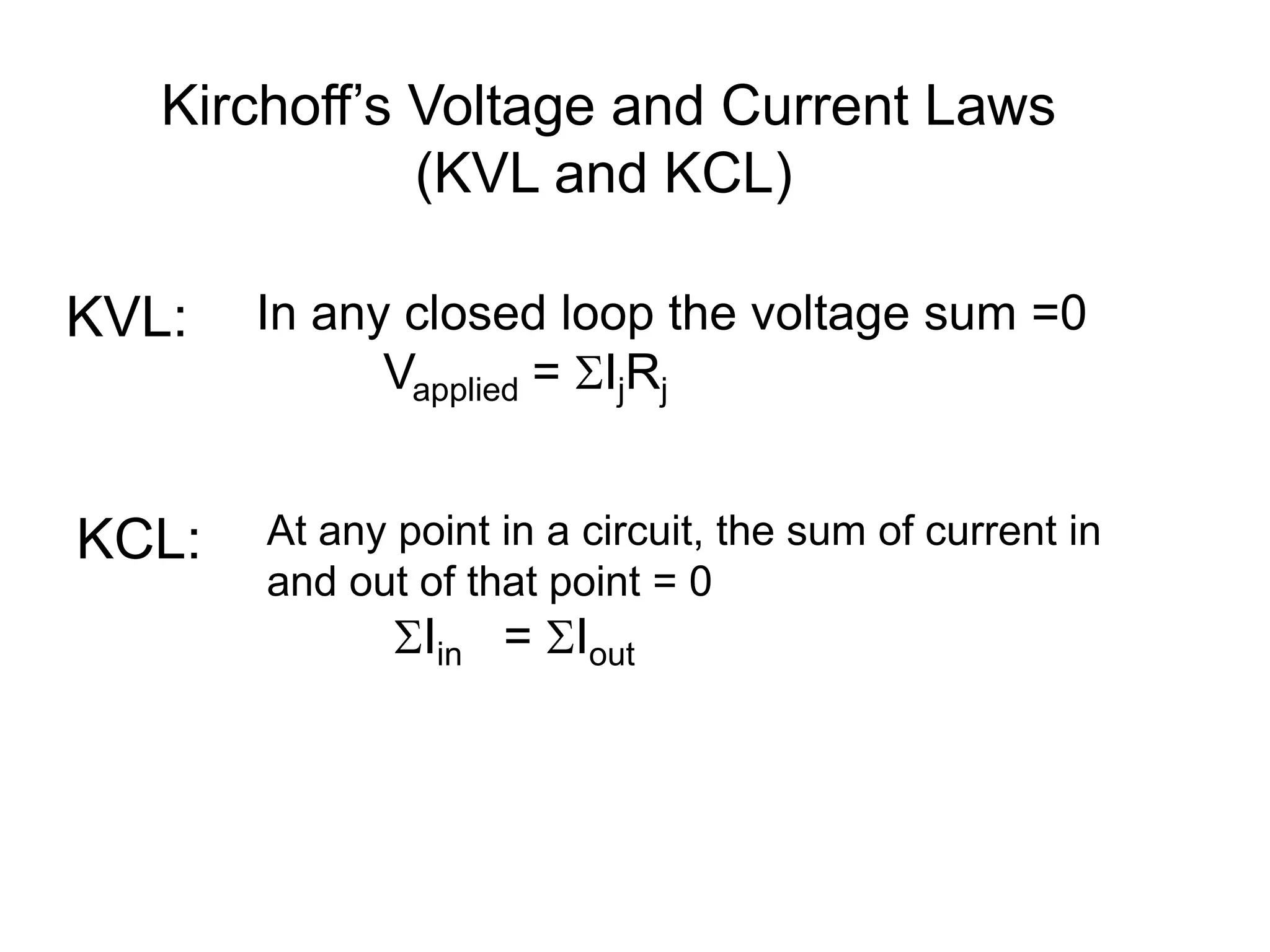
KVL: In any closed loop the voltage sum =0
Vapplied = IjRj
KCL: At any point in a circuit, the sum of current in
and out of that point = 0
Iin = Iout
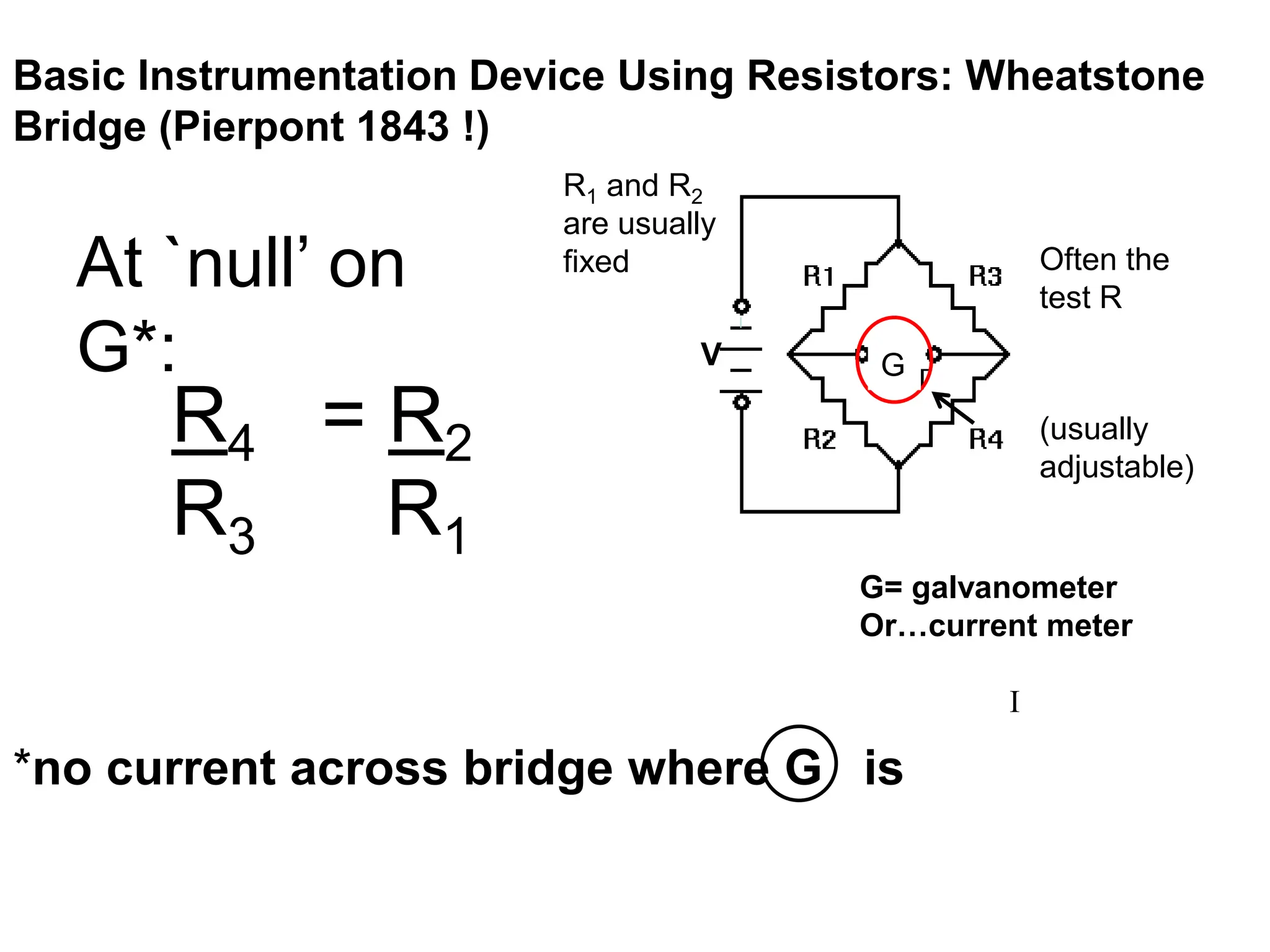
G
Basic Instrumentation Device Using Resistors: Wheatstone
Bridge (Pierpont 1843 !)
G= galvanometer
Or…current meter
I
(usually
adjustable)
Often the
test R
At `null’ on
G*:
R4 = R2
R3 R1
R1 and R2
are usually
fixed
*no current across bridge where G is
V
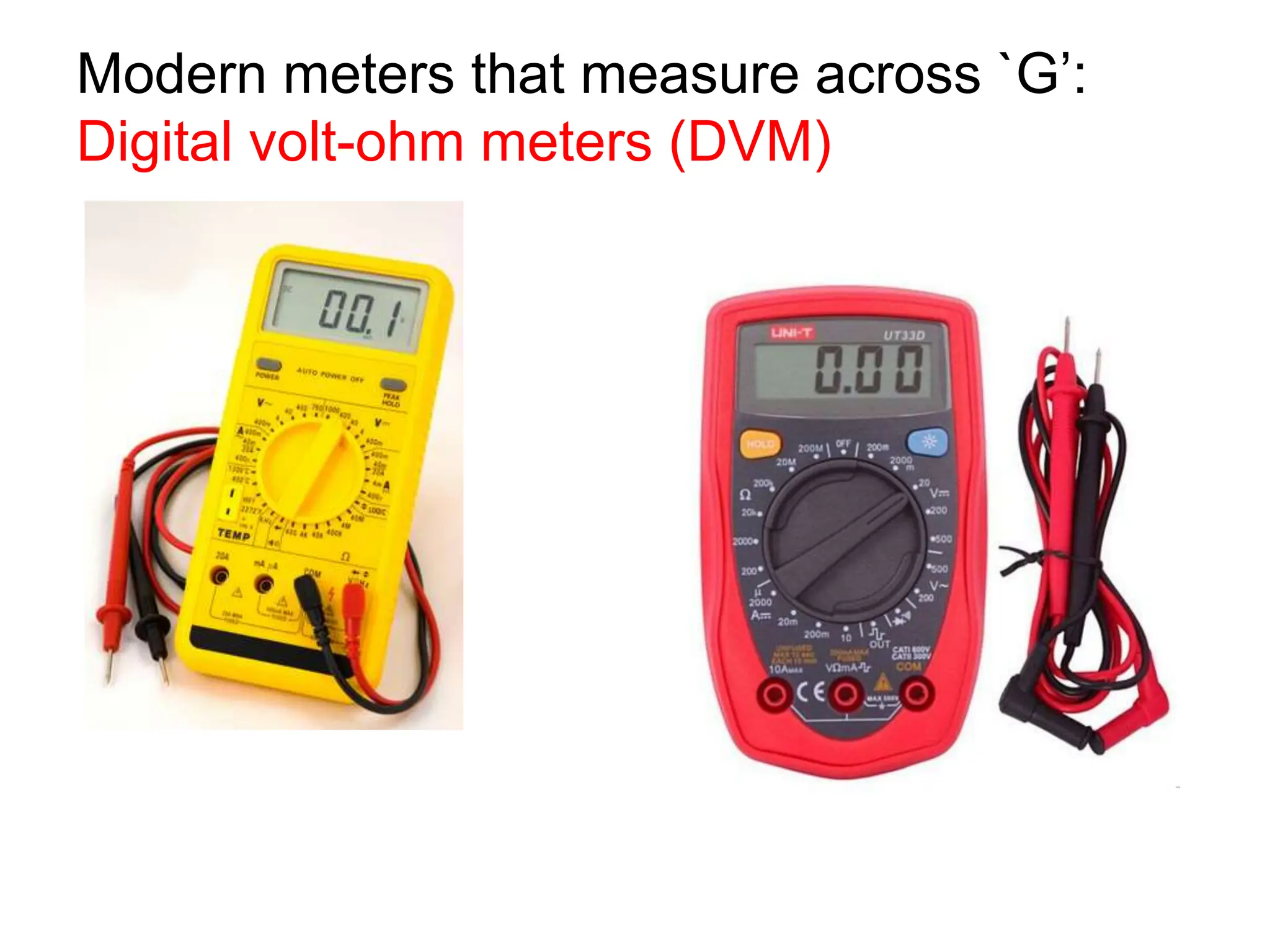
Modern meters that measure across `G’:
Digital volt-ohm meters (DVM)
Red probe here for
mA current (I)
Red probe here for
high (I) current (20
mA max)
Com= common=`ground’
Red probe here
for V (volts)
and  (ohms)
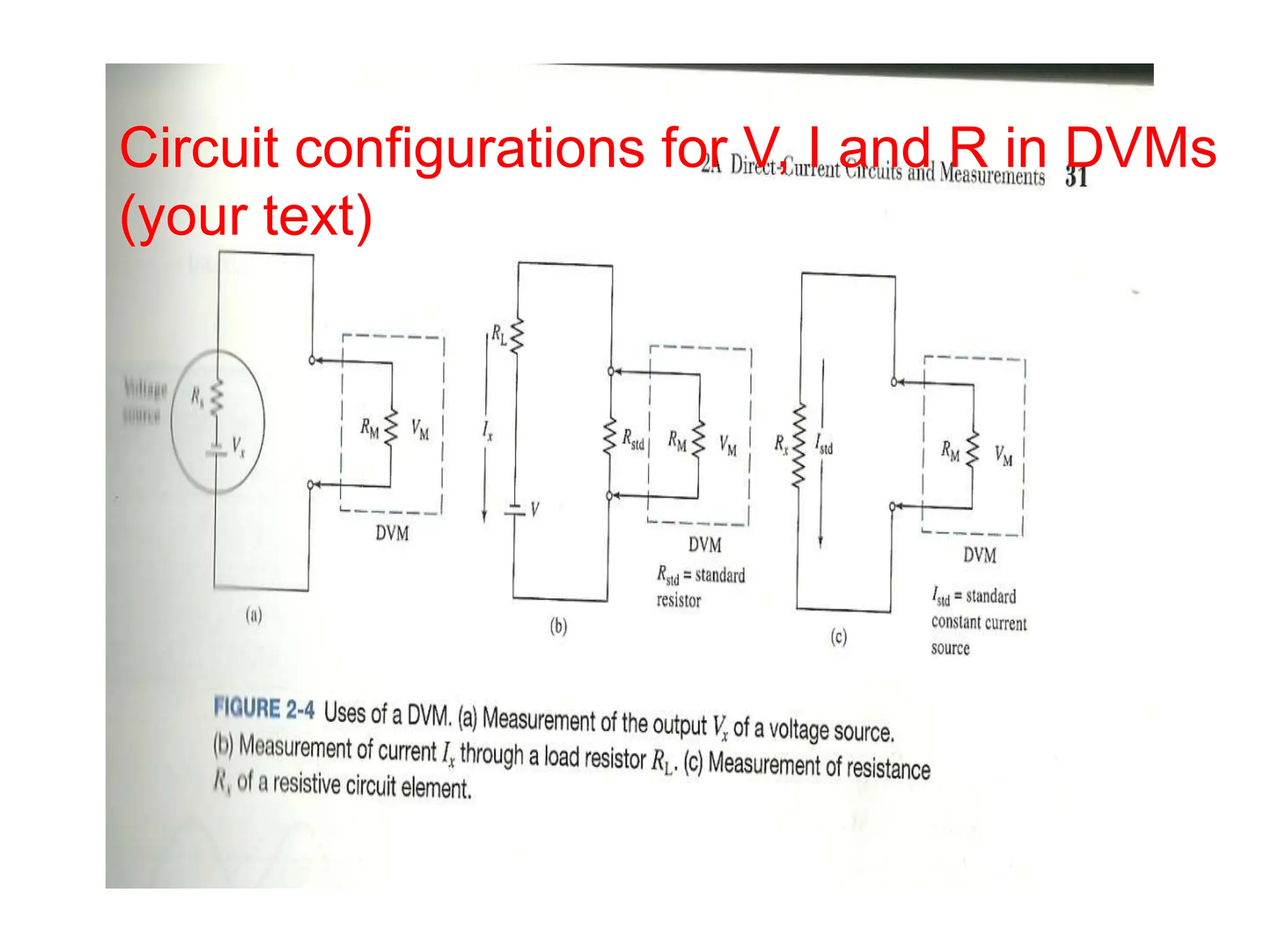
Circuit configurations for V, I and R in DVMs
(your text)
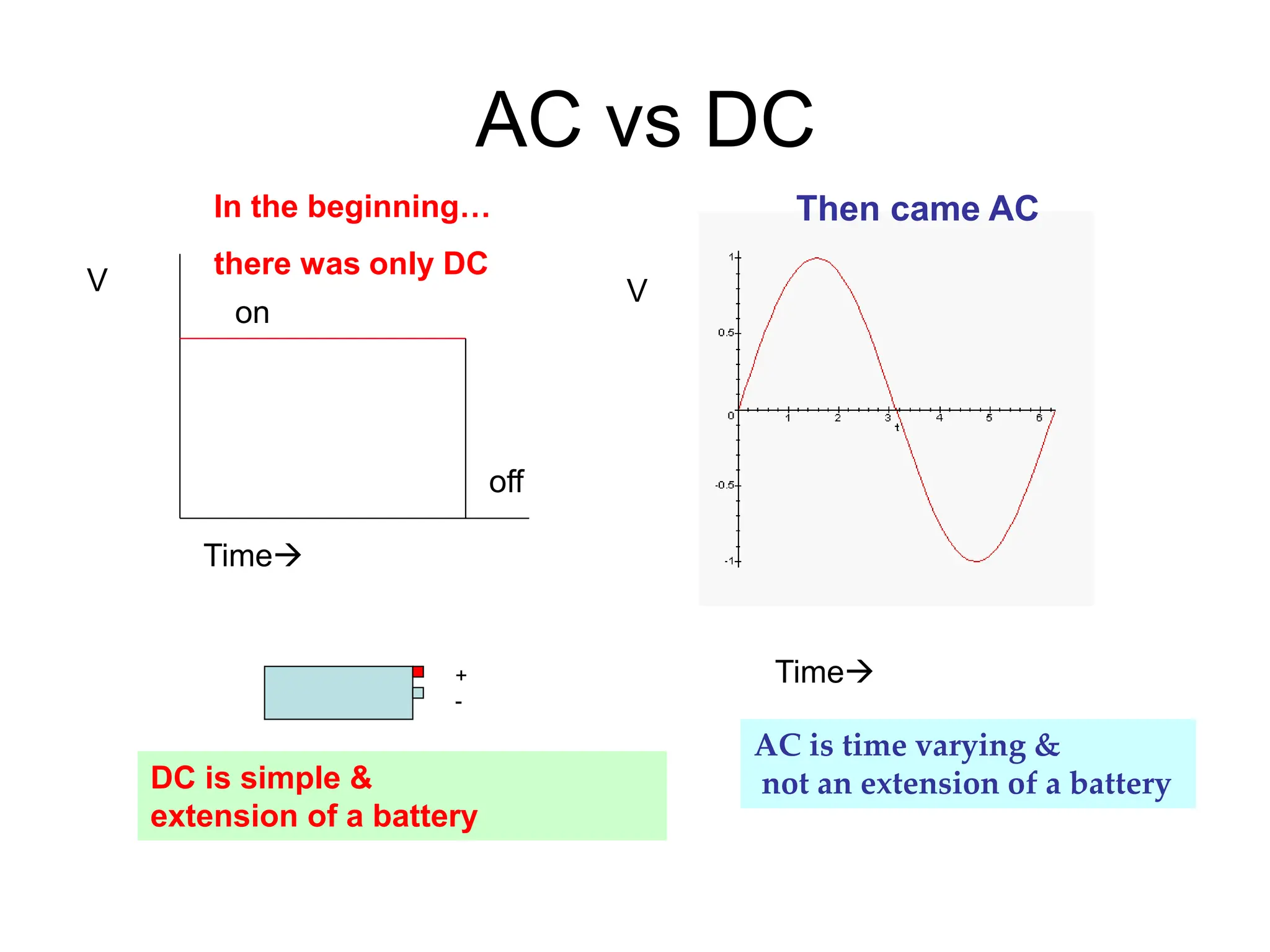
AC vs DC
V
DC is simple &
extension of a battery
Time
Time
AC is time varying &
not an extension of a battery
V
In the beginning…
there was only DC
Then came AC
on
off
+
-
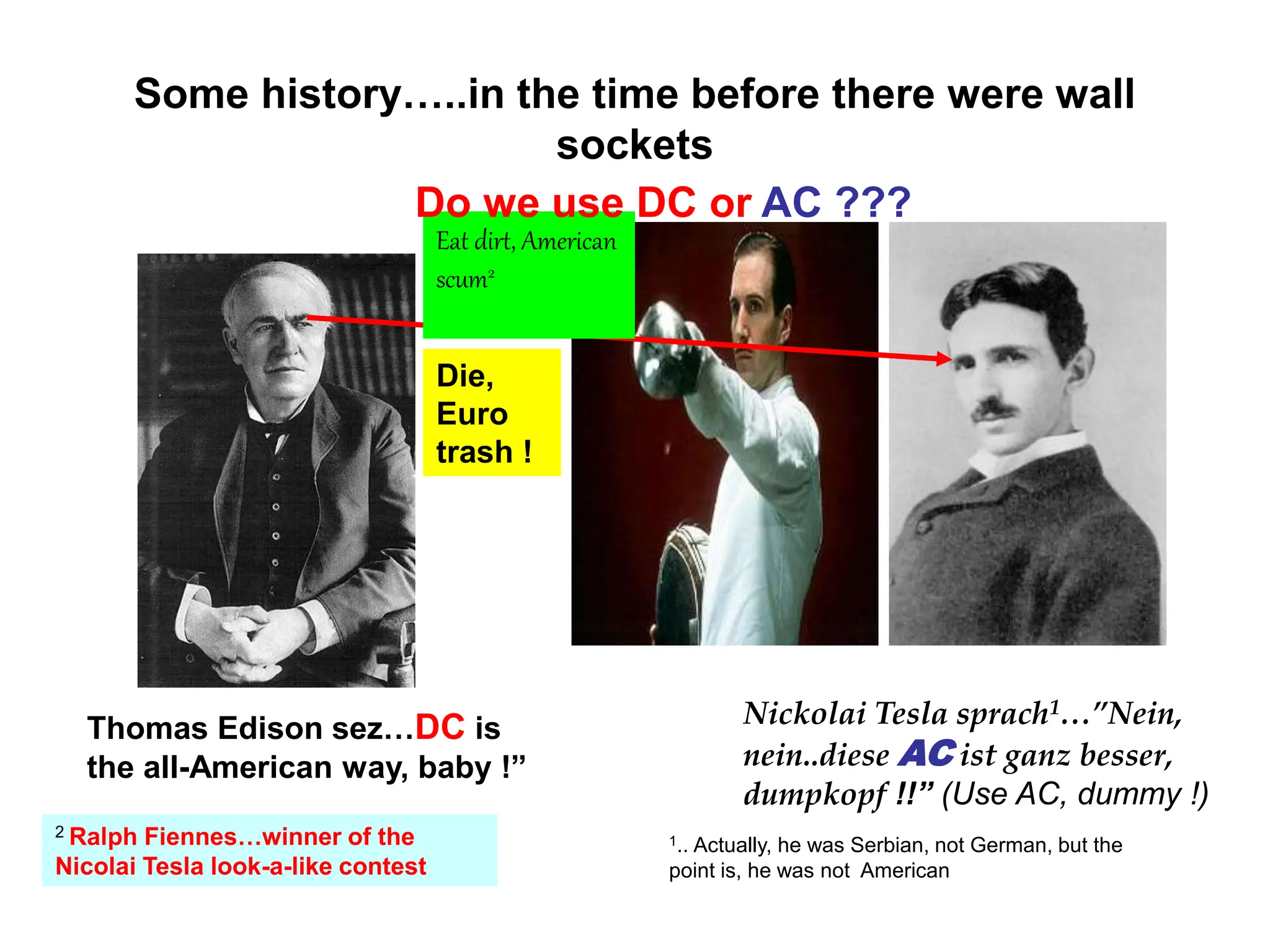
Some history…..in the time before there were wall
sockets
Thomas Edison sez…DC is
the all-American way, baby !”
Nickolai Tesla sprach1…”Nein,
nein..diese AC ist ganz besser,
dumpkopf !!” (Use AC, dummy !)
1.. Actually, he was Serbian, not German, but the
point is, he was not American
Die,
Euro
trash !
Eat dirt, American
scum2
2 Ralph Fiennes…winner of the
Nicolai Tesla look-a-like contest
Do we use DC or AC ???
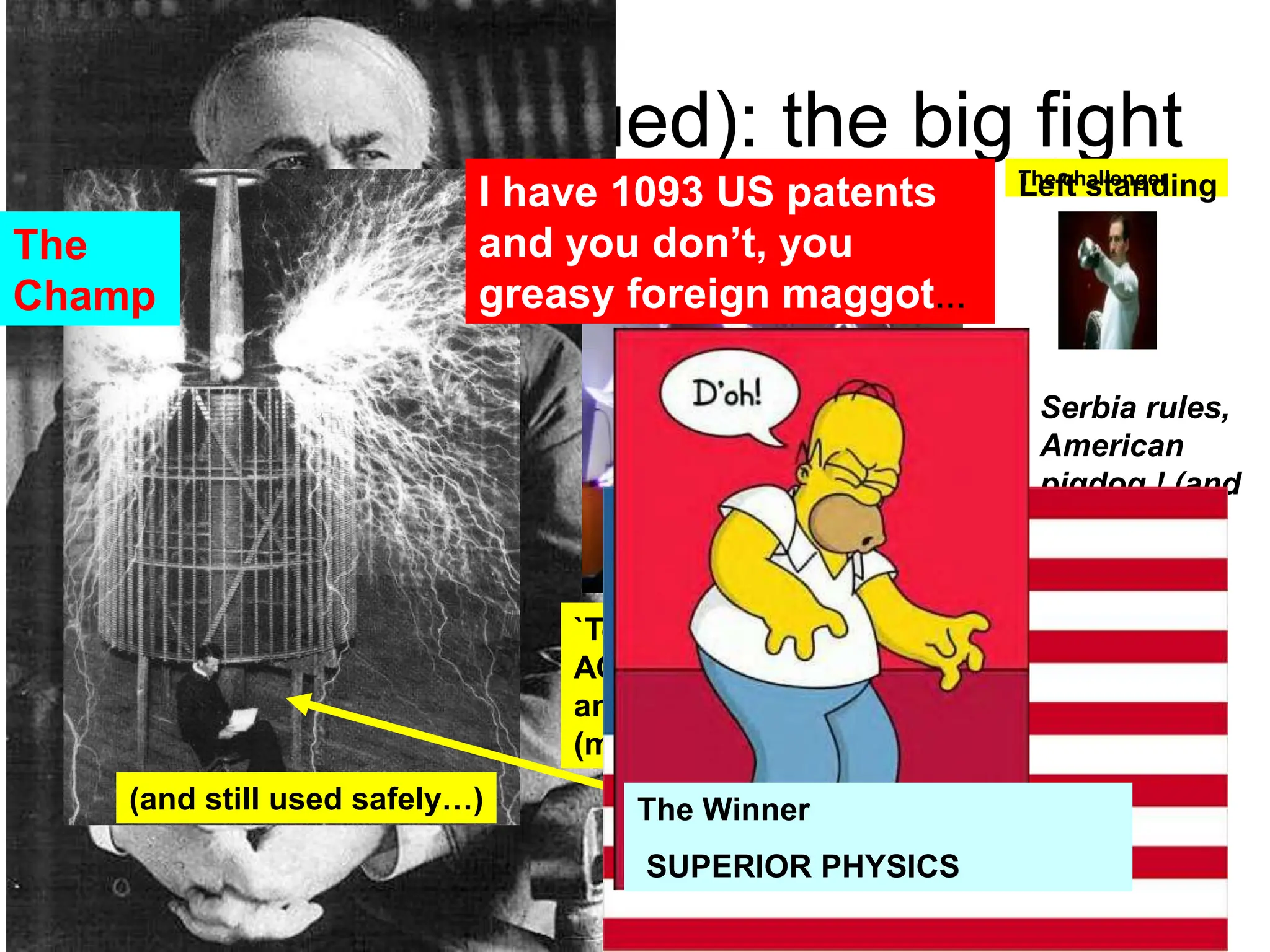
History (continued): the big fight
`Tesla coil demonstrates that
AC can be `transformed’ up
and down in V without
(much) loss….
(and still used safely…)
I have 1093 US patents
and you don’t, you
greasy foreign maggot…
Tesla showboating
the safety features
Serbia rules,
American
pigdog ! (and
I got 700
patents,
turkey)
The Winner
SUPERIOR PHYSICS
The challenger
The
Champ
Left standing
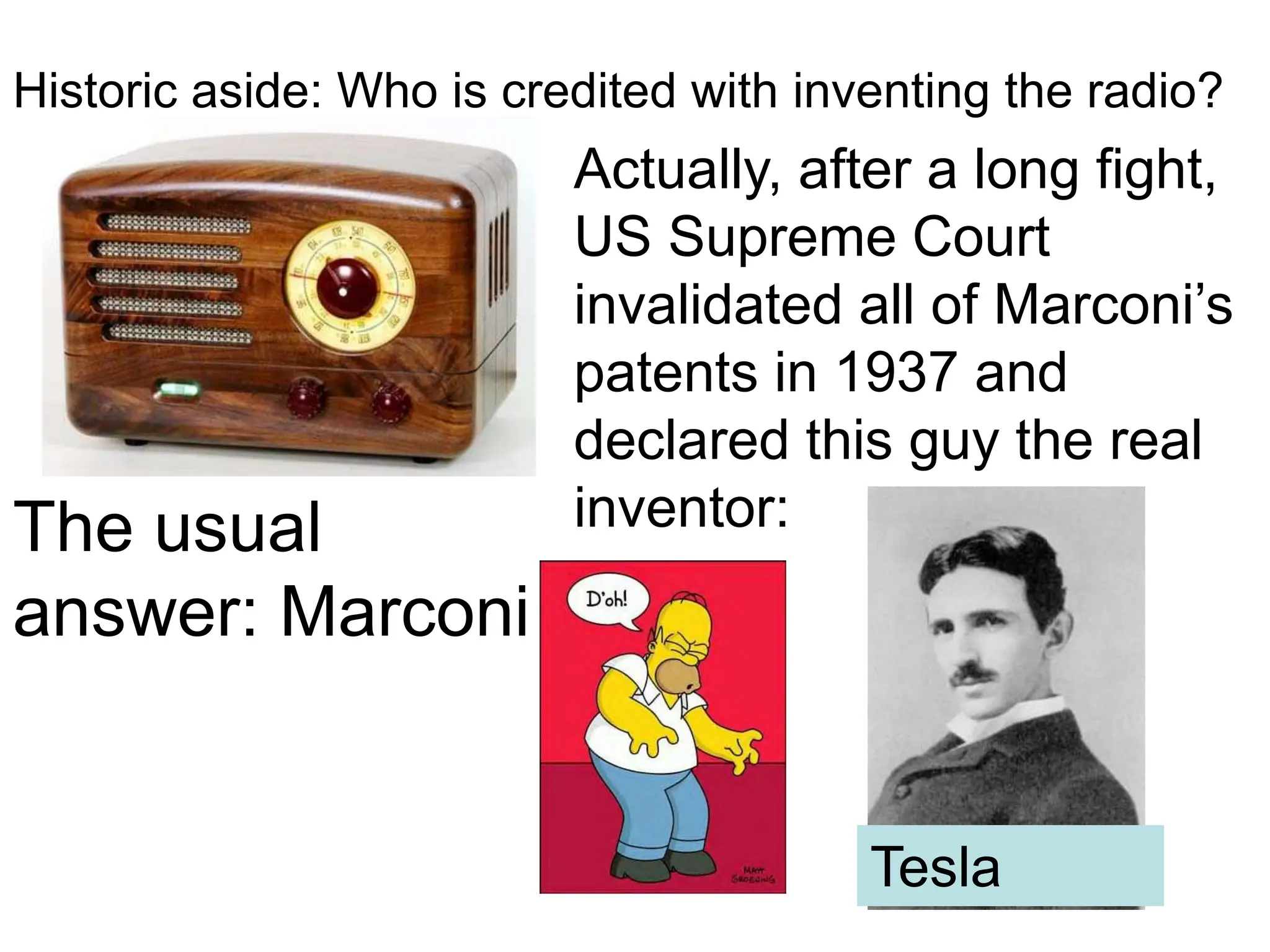
Historic aside: Who is credited with inventing the radio?
The usual
answer: Marconi
Actually, after a long fight,
US Supreme Court
invalidated all of Marconi’s
patents in 1937 and
declared this guy the real
inventor:
Tesla
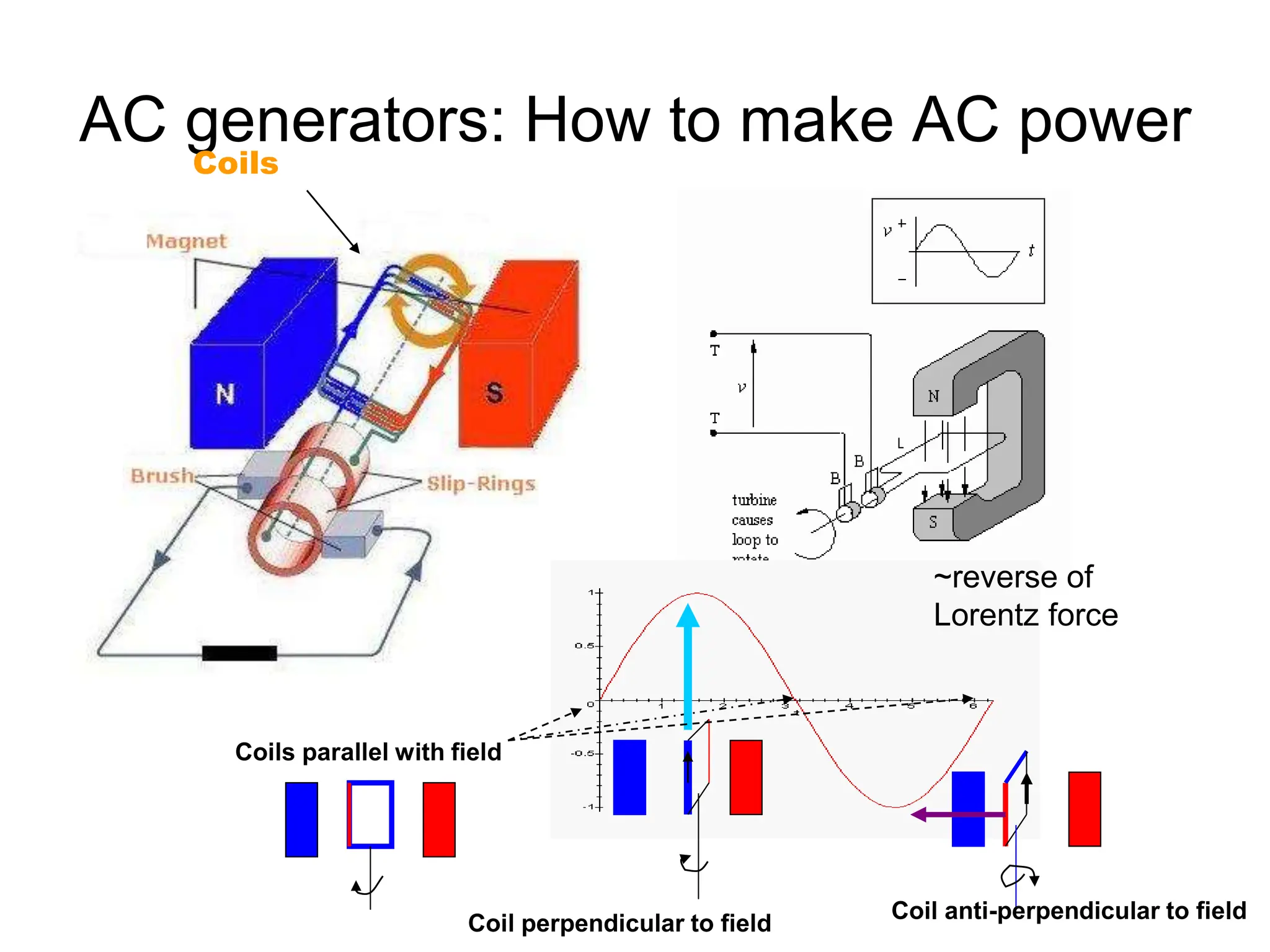
AC generators: How to make AC power
Coils
Coils parallel with field
~reverse of
Lorentz force
Coil anti-perpendicular to field
Coil perpendicular to field
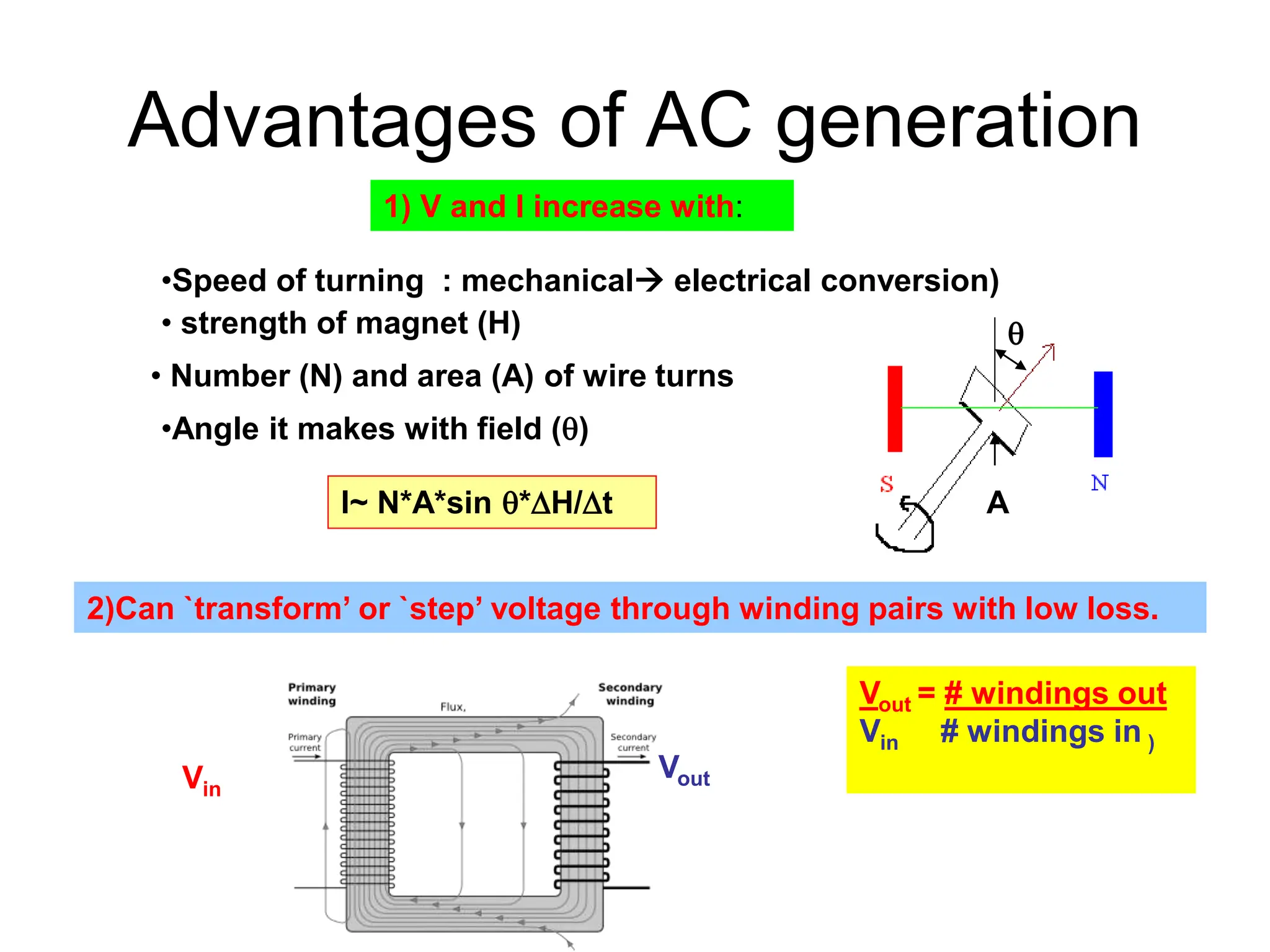
Advantages of AC generation
1) V and I increase with:
•Speed of turning : mechanical electrical conversion)
• strength of magnet (H)
• Number (N) and area (A) of wire turns
2)Can `transform’ or `step’ voltage through winding pairs with low loss.
Vin
Vout
Vout = # windings out
Vin # windings in )
I~ N*A*sin *H/t
•Angle it makes with field ()
A

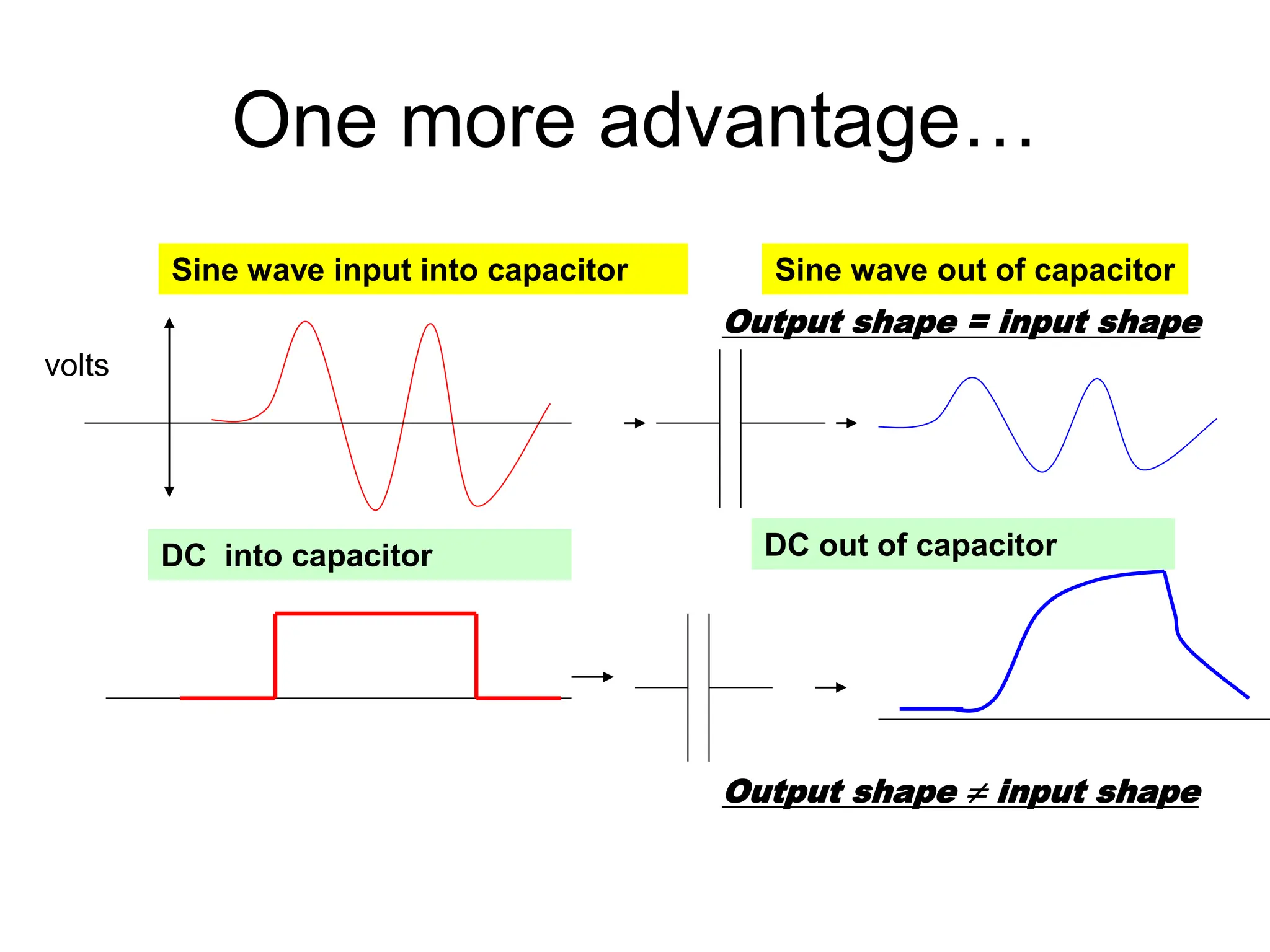
One more advantage…
Sine wave input into capacitor Sine wave out of capacitor
Output shape = input shape
DC into capacitor DC out of capacitor
Output shape  input shape
volts
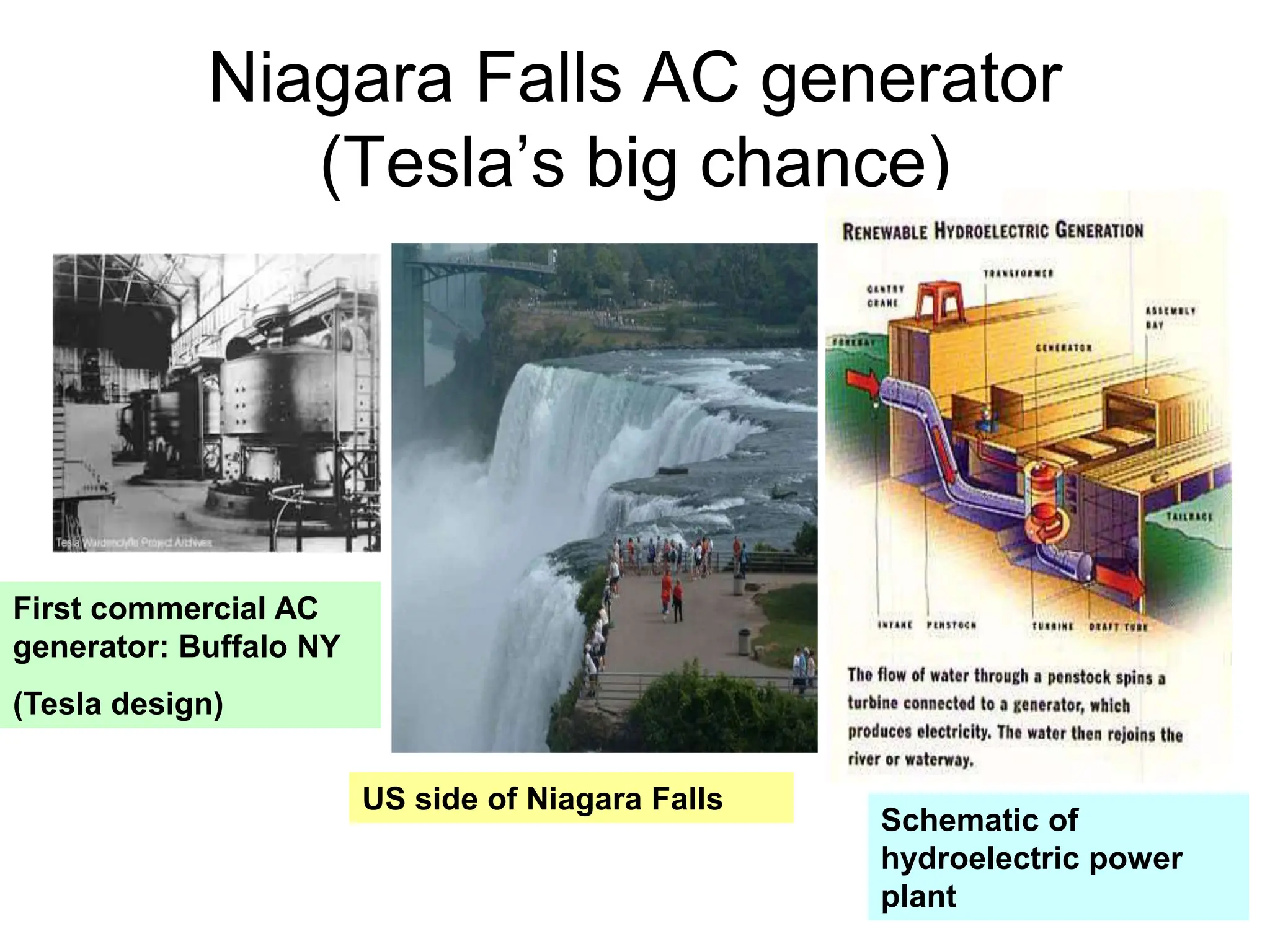
Niagara Falls AC generator
(Tesla’s big chance)
First commercial AC
generator: Buffalo NY
(Tesla design)
US side of Niagara Falls
Schematic of
hydroelectric power
plant
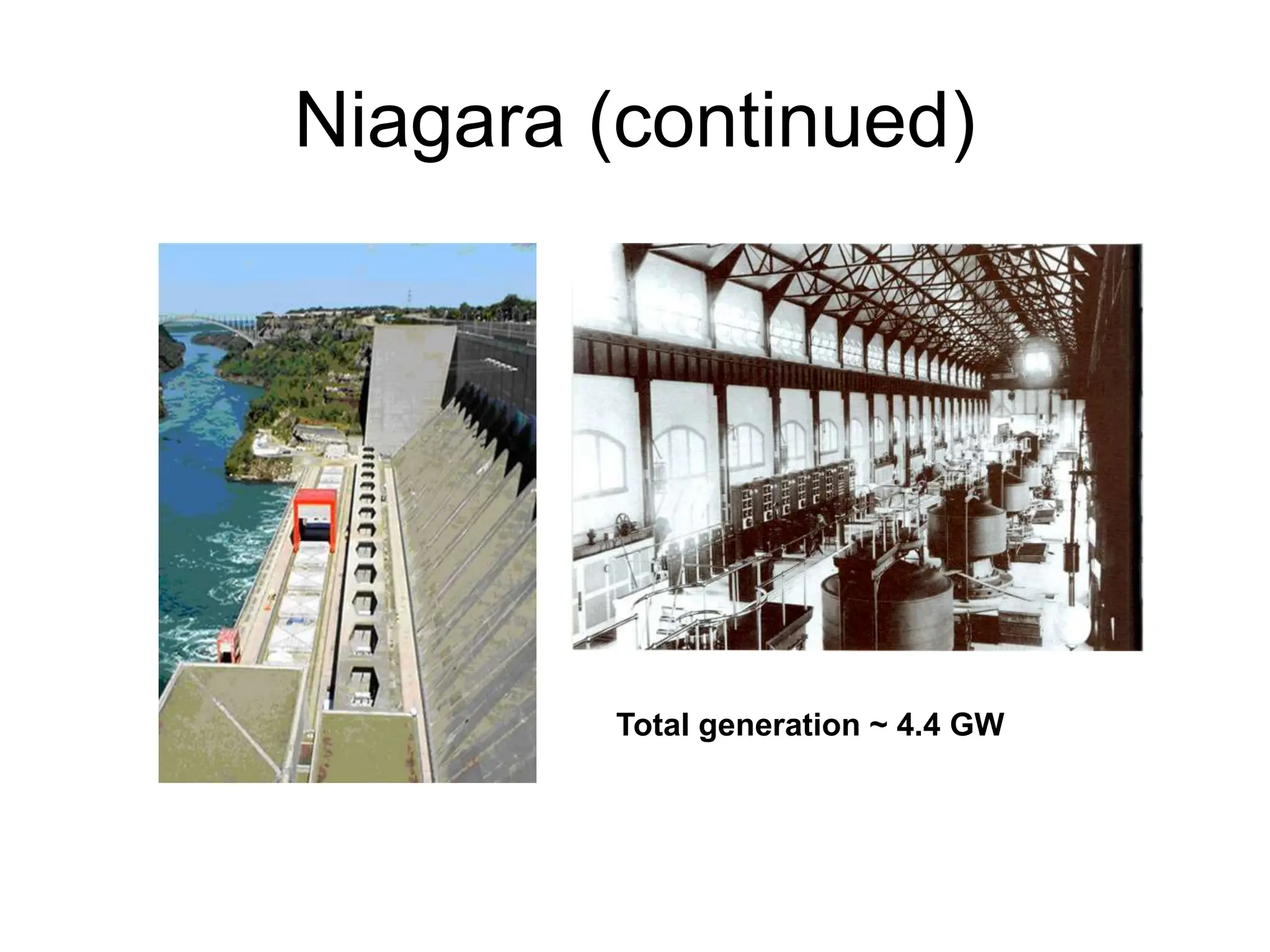
Niagara (continued)
Total generation ~ 4.4 GW
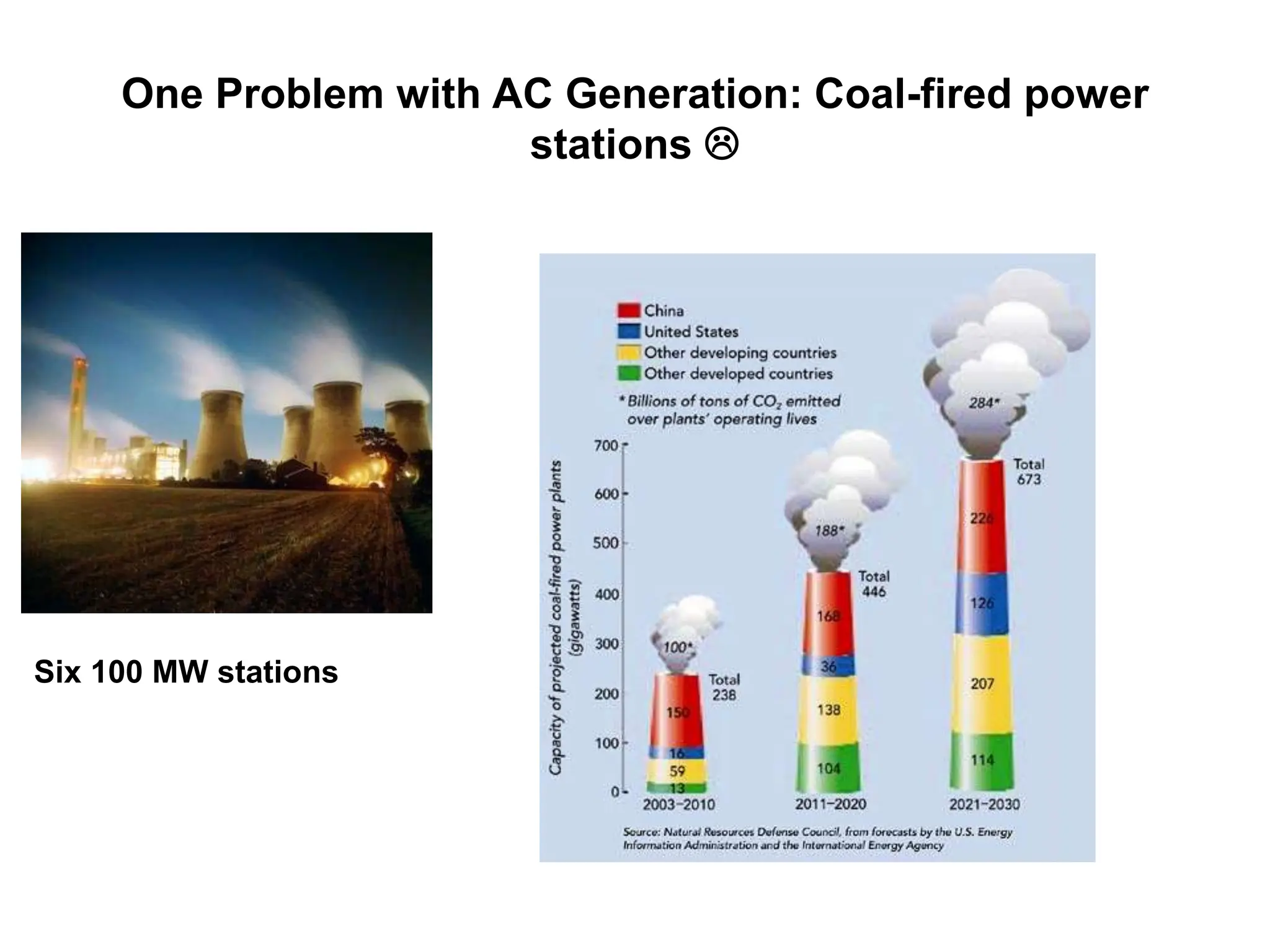
One Problem with AC Generation: Coal-fired power
stations 
Six 100 MW stations
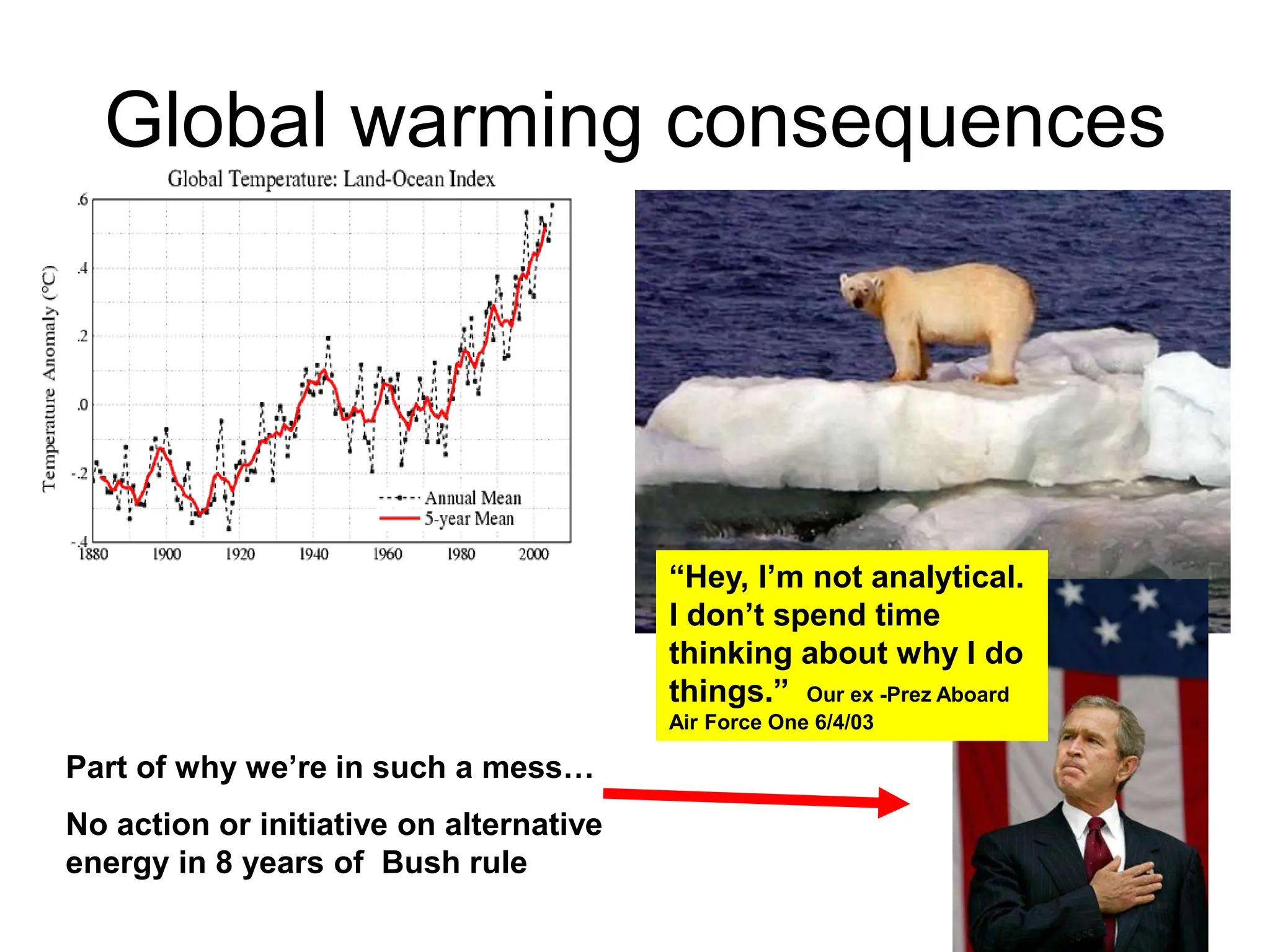
Global warming consequences
Part of why we’re in such a mess…
No action or initiative on alternative
energy in 8 years of Bush rule
“Hey, I’m not analytical.
I don’t spend time
thinking about why I do
things.” Our ex -Prez Aboard
Air Force One 6/4/03
And this guy is making it still worse

intro to electricity - Copy.ppt

  • 1.
  • 2.
    Electricity ~ watersimili water pressure water out second constrict hose water Wire (electrical component) Electrical pressure (voltage) electronic charge charge out second resistance Official circuit symbol for fixed value resistor
  • 3.
    Effect on Rof increasing hose or wire length on flow Effect on R of increasing hose or wire cross section on flow Effect on R of increasing pressure or voltage Resistance analogies none R~ Ro *L/A
  • 4.
    Temperature effects onwire resistance R T R~RoeE/T T increase causes resistance to increase in normal conductors…conversely, lower temperatures decrease resistance. As temperature increases, more random motion in wire disrupts flow of current (~scatters e-) Some materials’ R 0 below T threshold= superconductors
  • 6.
    Japan’sMag Lev `BulletTrain’ 200 mph !
  • 7.
    Basic Electrical units unitSymbol unit Qualitative description charge Q or q Coulomb (coul=C) or Faradays (F)* Basic material pushed around in electronic components potential V or E Volts (joules/coul) `pressure’ that pushes charge across the components current I or i Amperes=amp (coul/second=A) Charge flow rate Resistance (impedance) R or Z Ohms (volts/amp=) `friction’ slowing down charge flow * 96,485 C=1 F
  • 8.
    Ohm’s law Simple :V= I x R General: V = I Z Dot product => I*Z*cos  along I vector direction Vector versions of V, I Z=complex impedance including capacitance, inductance Pertinent manipulations: R R= V = volts = ohms I coul/s Scalar versions of V, I R=simple resistance = joules *s = ohms coul2 DC AC
  • 9.
    Power Power = P=energy/second= joules/second = watts P=V*I = joules *coul = joules coul sec sec Applying Ohm’s law: substitute V=IR or I= V/R P= (IR)*I = I2R P = V* (V) = V2 ( R) R
  • 10.
    Kirchoff’s Voltage andCurrent Laws (KVL and KCL) KVL: In any closed loop the voltage sum =0 Vapplied = IjRj KCL: At any point in a circuit, the sum of current in and out of that point = 0 Iin = Iout
  • 11.
    G Basic Instrumentation DeviceUsing Resistors: Wheatstone Bridge (Pierpont 1843 !) G= galvanometer Or…current meter I (usually adjustable) Often the test R At `null’ on G*: R4 = R2 R3 R1 R1 and R2 are usually fixed *no current across bridge where G is V
  • 12.
    Modern meters thatmeasure across `G’: Digital volt-ohm meters (DVM)
  • 13.
    Red probe herefor mA current (I) Red probe here for high (I) current (20 mA max) Com= common=`ground’ Red probe here for V (volts) and  (ohms)
  • 14.
    Circuit configurations forV, I and R in DVMs (your text)
  • 15.
    AC vs DC V DCis simple & extension of a battery Time Time AC is time varying & not an extension of a battery V In the beginning… there was only DC Then came AC on off + -
  • 16.
    Some history…..in thetime before there were wall sockets Thomas Edison sez…DC is the all-American way, baby !” Nickolai Tesla sprach1…”Nein, nein..diese AC ist ganz besser, dumpkopf !!” (Use AC, dummy !) 1.. Actually, he was Serbian, not German, but the point is, he was not American Die, Euro trash ! Eat dirt, American scum2 2 Ralph Fiennes…winner of the Nicolai Tesla look-a-like contest Do we use DC or AC ???
  • 17.
    History (continued): thebig fight `Tesla coil demonstrates that AC can be `transformed’ up and down in V without (much) loss…. (and still used safely…) I have 1093 US patents and you don’t, you greasy foreign maggot… Tesla showboating the safety features Serbia rules, American pigdog ! (and I got 700 patents, turkey) The Winner SUPERIOR PHYSICS The challenger The Champ Left standing
  • 18.
    Historic aside: Whois credited with inventing the radio? The usual answer: Marconi Actually, after a long fight, US Supreme Court invalidated all of Marconi’s patents in 1937 and declared this guy the real inventor: Tesla
  • 20.
    AC generators: Howto make AC power Coils Coils parallel with field ~reverse of Lorentz force Coil anti-perpendicular to field Coil perpendicular to field
  • 21.
    Advantages of ACgeneration 1) V and I increase with: •Speed of turning : mechanical electrical conversion) • strength of magnet (H) • Number (N) and area (A) of wire turns 2)Can `transform’ or `step’ voltage through winding pairs with low loss. Vin Vout Vout = # windings out Vin # windings in ) I~ N*A*sin *H/t •Angle it makes with field () A 
  • 22.
    One more advantage… Sinewave input into capacitor Sine wave out of capacitor Output shape = input shape DC into capacitor DC out of capacitor Output shape  input shape volts
  • 23.
    Niagara Falls ACgenerator (Tesla’s big chance) First commercial AC generator: Buffalo NY (Tesla design) US side of Niagara Falls Schematic of hydroelectric power plant
  • 24.
  • 25.
    One Problem withAC Generation: Coal-fired power stations  Six 100 MW stations
  • 26.
    Global warming consequences Partof why we’re in such a mess… No action or initiative on alternative energy in 8 years of Bush rule “Hey, I’m not analytical. I don’t spend time thinking about why I do things.” Our ex -Prez Aboard Air Force One 6/4/03
  • 27.
    And this guyis making it still worse