Intersectionality
Bien Eli Nillos, MD
•"There is no such thing as a single-
issue struggle because we do not live
single-issue lives." -Audre Lorde
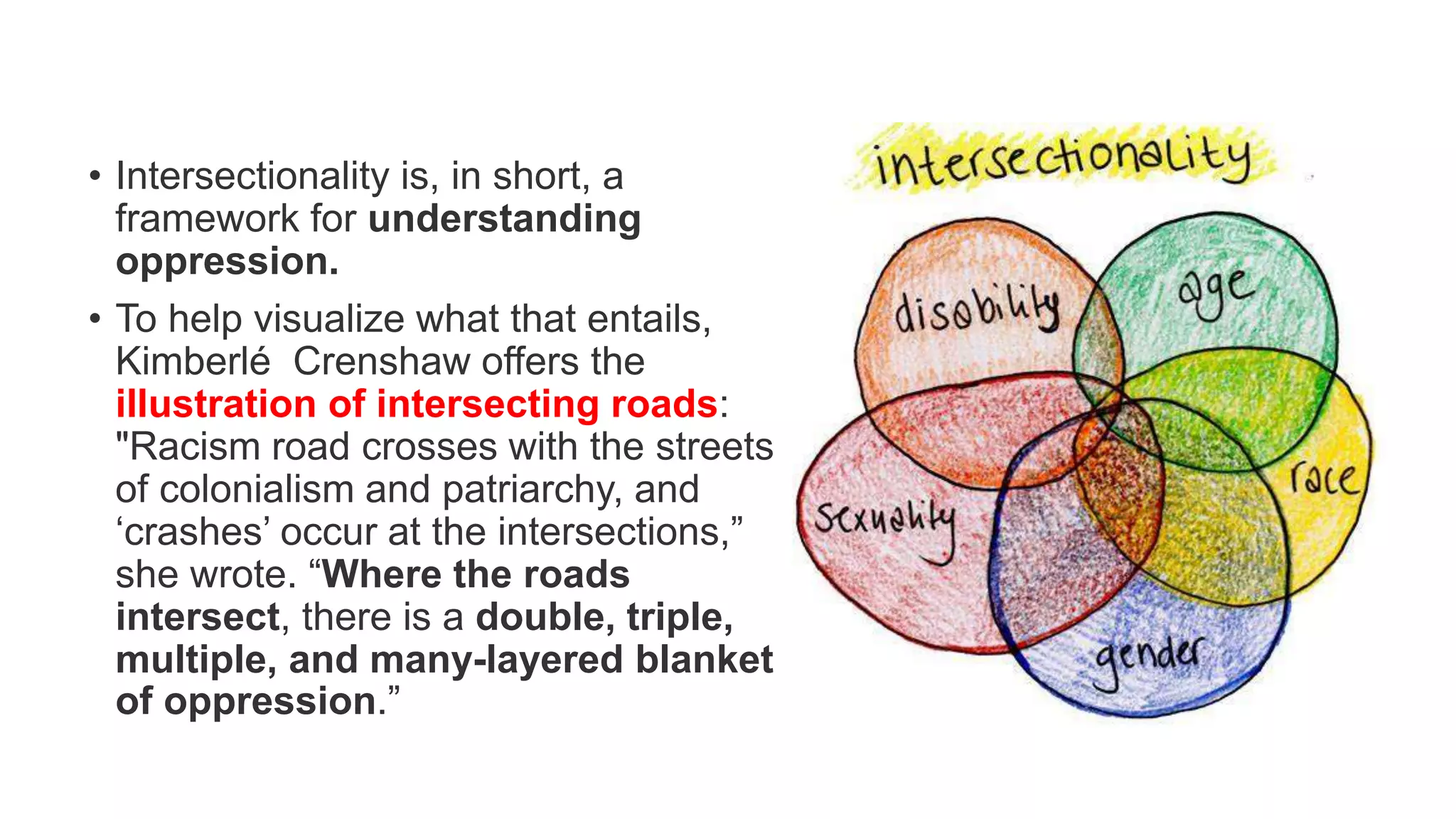
• Intersectionality is, in short, a
framework for understanding
oppression.
• To help visualize what that entails,
Kimberlé Crenshaw offers the
illustration of intersecting roads:
"Racism road crosses with the streets
of colonialism and patriarchy, and
‘crashes’ occur at the intersections,”
she wrote. “Where the roads
intersect, there is a double, triple,
multiple, and many-layered blanket
of oppression.”
Pay gap
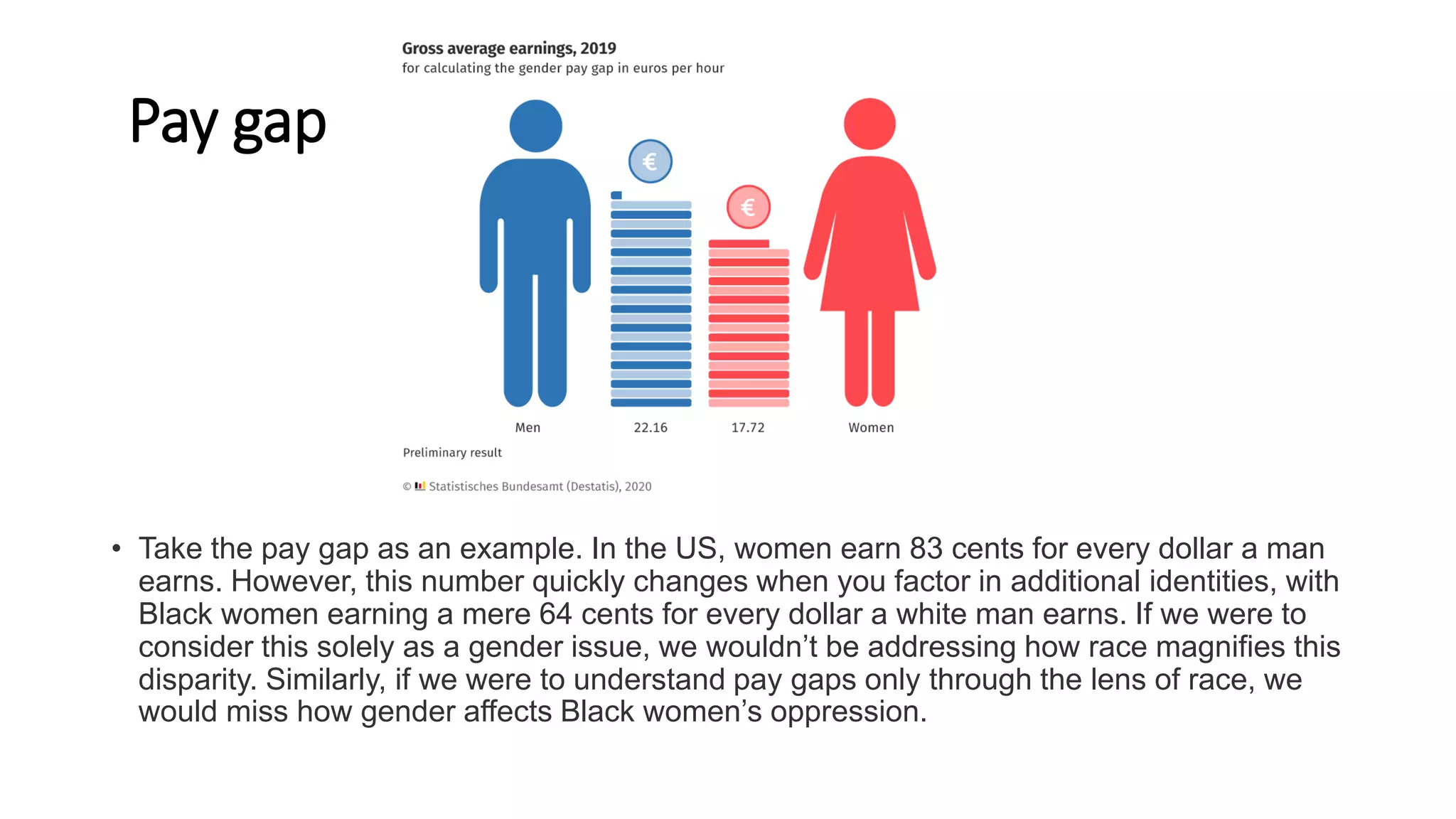
• Take the pay gap as an example. In the US, women earn 83 cents for every dollar a man
earns. However, this number quickly changes when you factor in additional identities, with
Black women earning a mere 64 cents for every dollar a white man earns. If we were to
consider this solely as a gender issue, we wouldn’t be addressing how race magnifies this
disparity. Similarly, if we were to understand pay gaps only through the lens of race, we
would miss how gender affects Black women’s oppression.
Summary:
• Intersectionality is how multiple identities interact to create
unique patterns of oppression.
• Originally coined by American scholar and lawyer Kimberle
Crenshaw, who drew inspiration from Black feminist movements
in the US, the term highlights how race, gender, class, and
other factors are interconnected.
• When it comes to fighting extreme poverty, intersectionality
means looking at how these factors fuel various issues,
ranging from health inequity to climate change and more.

Intersectionality.pptx

  • 1.
  • 2.
    •"There is nosuch thing as a single- issue struggle because we do not live single-issue lives." -Audre Lorde
  • 3.
    • Intersectionality is,in short, a framework for understanding oppression. • To help visualize what that entails, Kimberlé Crenshaw offers the illustration of intersecting roads: "Racism road crosses with the streets of colonialism and patriarchy, and ‘crashes’ occur at the intersections,” she wrote. “Where the roads intersect, there is a double, triple, multiple, and many-layered blanket of oppression.”
  • 4.
    Pay gap • Takethe pay gap as an example. In the US, women earn 83 cents for every dollar a man earns. However, this number quickly changes when you factor in additional identities, with Black women earning a mere 64 cents for every dollar a white man earns. If we were to consider this solely as a gender issue, we wouldn’t be addressing how race magnifies this disparity. Similarly, if we were to understand pay gaps only through the lens of race, we would miss how gender affects Black women’s oppression.
  • 5.
    Summary: • Intersectionality ishow multiple identities interact to create unique patterns of oppression. • Originally coined by American scholar and lawyer Kimberle Crenshaw, who drew inspiration from Black feminist movements in the US, the term highlights how race, gender, class, and other factors are interconnected. • When it comes to fighting extreme poverty, intersectionality means looking at how these factors fuel various issues, ranging from health inequity to climate change and more.