01
02
Foster a deeper understanding about our
environmental responsibility
Create positive options and conditions
for the environment to flourish and
thrive.
0
1
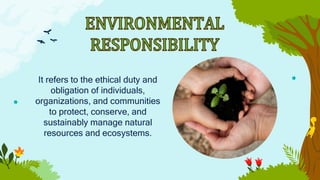
It refers to the ethical duty and
obligation of individuals,
organizations, and communities
to protect, conserve, and
sustainably manage natural
resources and ecosystems.
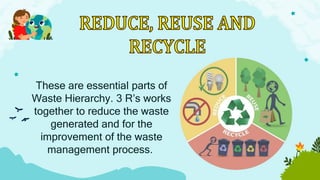
These are essential parts of
Waste Hierarchy. 3 R’s works
together to reduce the waste
generated and for the
improvement of the waste
management process.
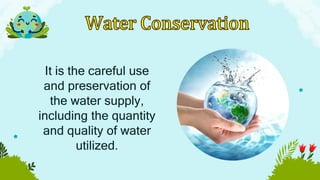
It is the careful use
and preservation of
the water supply,
including the quantity
and quality of water
utilized.
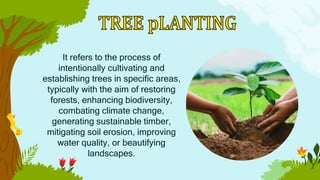
It refers to the process of
intentionally cultivating and
establishing trees in specific areas,
typically with the aim of restoring
forests, enhancing biodiversity,
combating climate change,
generating sustainable timber,
mitigating soil erosion, improving
water quality, or beautifying
landscapes.
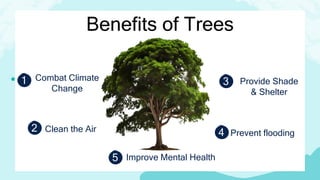
1 Combat Climate
Change
3 Provide Shade
& Shelter
2 Clean the Air 4 Prevent flooding
5 Improve Mental Health
Benefits of Trees
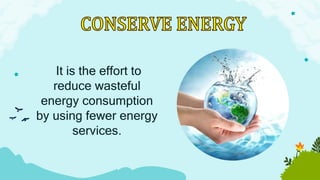
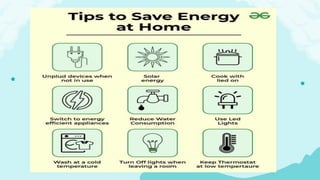
It is the effort to
reduce wasteful
energy consumption
by using fewer energy
services.
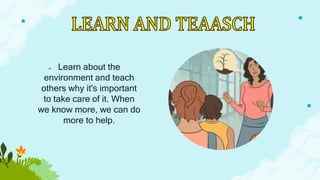
★ Learn about the
environment and teach
others why it's important
to take care of it. When
we know more, we can do
more to help.
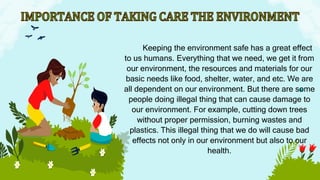
Keeping the environment safe has a great effect
to us humans. Everything that we need, we get it from
our environment, the resources and materials for our
basic needs like food, shelter, water, and etc. We are
all dependent on our environment. But there are some
people doing illegal thing that can cause damage to
our environment. For example, cutting down trees
without proper permission, burning wastes and
plastics. This illegal thing that we do will cause bad
effects not only in our environment but also to our
health.
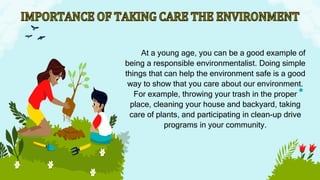
At a young age, you can be a good example of
being a responsible environmentalist. Doing simple
things that can help the environment safe is a good
way to show that you care about our environment.
For example, throwing your trash in the proper
place, cleaning your house and backyard, taking
care of plants, and participating in clean-up drive
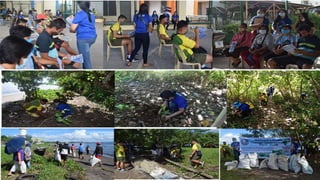
programs in your community.
international-mother-earth-day-creative.pptx

international-mother-earth-day-creative.pptx

  • 2.
    01 02 Foster a deeperunderstanding about our environmental responsibility Create positive options and conditions for the environment to flourish and thrive.
  • 4.
  • 5.
    It refers tothe ethical duty and obligation of individuals, organizations, and communities to protect, conserve, and sustainably manage natural resources and ecosystems.
  • 8.
    These are essentialparts of Waste Hierarchy. 3 R’s works together to reduce the waste generated and for the improvement of the waste management process.
  • 10.
    It is thecareful use and preservation of the water supply, including the quantity and quality of water utilized.
  • 12.
    It refers tothe process of intentionally cultivating and establishing trees in specific areas, typically with the aim of restoring forests, enhancing biodiversity, combating climate change, generating sustainable timber, mitigating soil erosion, improving water quality, or beautifying landscapes.
  • 13.
    1 Combat Climate Change 3Provide Shade & Shelter 2 Clean the Air 4 Prevent flooding 5 Improve Mental Health Benefits of Trees
  • 14.
    It is theeffort to reduce wasteful energy consumption by using fewer energy services.
  • 16.
    ★ Learn aboutthe environment and teach others why it's important to take care of it. When we know more, we can do more to help.
  • 18.
    Keeping the environmentsafe has a great effect to us humans. Everything that we need, we get it from our environment, the resources and materials for our basic needs like food, shelter, water, and etc. We are all dependent on our environment. But there are some people doing illegal thing that can cause damage to our environment. For example, cutting down trees without proper permission, burning wastes and plastics. This illegal thing that we do will cause bad effects not only in our environment but also to our health.
  • 19.
    At a youngage, you can be a good example of being a responsible environmentalist. Doing simple things that can help the environment safe is a good way to show that you care about our environment. For example, throwing your trash in the proper place, cleaning your house and backyard, taking care of plants, and participating in clean-up drive programs in your community.

Editor's Notes

  • #2 God created the world for us to live. The beauty of our nature provides us all with so many wonderful and useful things. As industry advances and human footprint spreads, the delicacy of this balance increases. In this lesson you will learn the importance of taking care of our environment.
  • #4 What is the message of song? Do you agree to the song that you’ve listened? Why and why not?
  • #6 Environmental responsibility refers to the duty or obligation individuals and communities have to protect and preserve the environment for present and future generations. Protection: This involves safeguarding natural resources such as clean air, water, soil, and biodiversity from harm caused by human activities such as pollution, deforestation, and habitat destruction. Conservation: Conservation efforts aim to preserve natural habitats, species, and ecosystems by managing them wisely, preventing overexploitation, and promoting sustainable use practices. Sustainability: Environmental stewardship advocates for practices that ensure the long-term viability of ecosystems and their resources. When making decisions, we should always practice the precautionary principle to ensure that our actions do not have negative impacts on the environment. Using the "precautionary principle" when the environmental impact is uncertain, means that we take action to avoid any negative impacts, even if there is no proof that there will be a negative outcome caused by our action.
  • #8 There can be many ways to help the environment. However, as they say, "charity begins at home", so self-awareness and personal efforts are the first steps. Sorting of waste, reducing the use of non-recyclable materials, utilizing public transport or carpooling, saving water, diminishing wastage of electricity, buying local food and minimizing its waste, and donating to environmental nonprofit organizations, can be some of the innumerable ways to help nature.
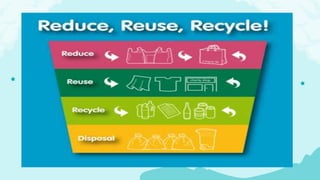
  • #9 It is the famous phrase that means reduce the use of materials, reuse them whenever possible, and recycle them if they can be. All three steps help save energy and resources consumed in the manufacture and transport of the products. For the products that have to be thrown away, proper disposal helps in preventing contamination. Reusing and recycling one ton of paper saves half the amount of water consumed in producing the new paper, along with 17 trees. Composting reduces the decay of the organic material and the carbon emissions released in the process.
  • #10 Reduce the use of new materials, single-use materials like some form of plastics, tissue papers, etc. Reuse and repurpose things like grocery bags, clothes, glass, and wood. Increase consumption of second-hand things and limit the purchase of new products. Encourage the purchase of recyclable items like cardboard, glass, or paper, and put them in recycle bin to prevent them from going to the landfill.
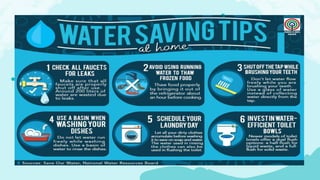
  • #11 Water is abundant on the Earth's surface, with over 71% of it on Earth. Nevertheless, the fresh water is less than 2.5% of the total water, and less than 1% is drinkable. With the regularly expanding weight of the human population, there has been serious tension on water resources. Small things like a leaking faucet can waste 128 liters of water per day.  Water conservation is the process of effectively using water and avoiding unnecessary or wasteful use. Water conservation is very crucial and essential today, as fresh and clean water is recognized as a finite resource. Water conservation, particularly through reuse and recycling, could be a good solution to the issue. A water conservation measure is an action, improved process, design, and technology implemented to reduce works water waste, loss, or overuse.
  • #12 Reduce the use of new materials, single-use materials like some form of plastics, tissue papers, etc. Reuse and repurpose things like grocery bags, clothes, glass, and wood. Increase consumption of second-hand things and limit the purchase of new products. Encourage the purchase of recyclable items like cardboard, glass, or paper, and put them in recycle bin to prevent them from going to the landfill.
  • #13 Trees save energy and release oxygen that keeps the air clean. If you have the means (and the yard space), plant a few trees on your property. Look for a variety that’s native to your area and help it grow by following the care instructions for that type of tree. Trees are crucial and also they provide over 70% of the world's oxygen to the environment, and they reduce the effects of global warming and climate change.[1]
  • #14 Reduce the use of new materials, single-use materials like some form of plastics, tissue papers, etc. Reuse and repurpose things like grocery bags, clothes, glass, and wood. Increase consumption of second-hand things and limit the purchase of new products. Encourage the purchase of recyclable items like cardboard, glass, or paper, and put them in recycle bin to prevent them from going to the landfill.
  • #15 This can be done by using energy more effectively (using less energy for continuous service) or changing one's behavior to use less service (for example, by driving less).  What it means when we say to conserve energy or energy conservation is simply the conscious decision to both use and produce less energy. Saving energy is one of the paths to becoming more eco-friendly and green, whether you make it your personal goal to be more sustainable or for your business to have green branding.  nergy plays a big part in the things we do and how we live our everyday lives, and it is doubtful that most of us go a day without using any energy. However, to live sustainably and protect the environment, we all must be mindful of how much energy we consume.
  • #16 Reduce the use of new materials, single-use materials like some form of plastics, tissue papers, etc. Reuse and repurpose things like grocery bags, clothes, glass, and wood. Increase consumption of second-hand things and limit the purchase of new products. Encourage the purchase of recyclable items like cardboard, glass, or paper, and put them in recycle bin to prevent them from going to the landfill.
  • #17 Advocacy and education allow more people to create a positive impact. Spread the word about environmental conservation by sharing information on social media and in conversations with your family and friends, by sharing about some of the lifestyle changes you've made, and by encouraging others to take action as well. Get involved politically by contacting government officials about supporting renewable energy and voting for people who prioritize environmental conservation
  • #19 At a young age, you can be a good example of being a responsible environmentalist. Doing simple things that can help the environment safe is a good way to show that you care about our environment. For example, throwing your trash in the proper place, cleaning your house and backyard, taking care of plants, and participating in clean-up drive programs in your community.