International Monetary
Fund (IMF)
and the World Bank
IMF AND WORLD BANK
IMF AND WORLD BANK
• They were founded after WW II.
• They were established mainly because
of peace advocacy after world war.
• These two institutions aimed to help
the economic stability of the world.
IMF
• It’s main goal was to help countries
which were in trouble and could not
obtain money by any means.
• They served as a lender or a last resort
for countries which needed for financial
assistance.
World Bank
• It had a more long-term approach.
• It helped countries to reach their goals,
especially in poor countries.
• They served as a lender or a last resort
for countries which needed for financial
assistance, especially in poor
countries.
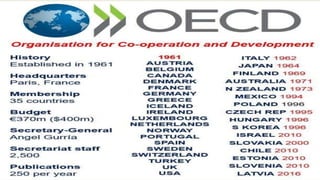
THE ORGANIZATION FOR ECONOMIC
COOPERATION AND DEVELOPMENT (OECD)
• The most encompassing club of the
richest countries in the world.
• It is an intergovernmental
organization with 35 member
countries,
• It stimulate economic progress and
world trade.
THE ORGANIZATION FOR ECONOMIC
COOPERATION AND DEVELOPMENT (OECD)
• It is a forum whose member countries
describe themselves as committed
to democracy and the market economy,
providing a platform to compare policy
experiences, seek answers to common
problems, identify good practices, and
coordinate domestic and international
policies of its members.
Title slide
WHY IT IS
FORMED?
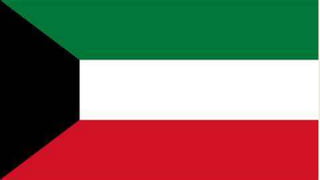
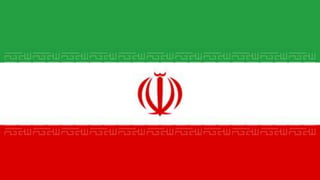
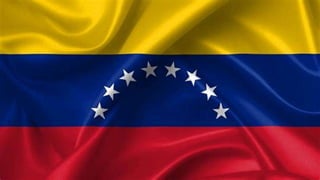
OPEC
• It was formed
because member
countries wanted
to increase the
price of oil.
OPEC
OPEC
• is an organization
enabling the co-
operation of leading
oil-producing
countries, in order to
collectively influence
the global market
and maximize profit.
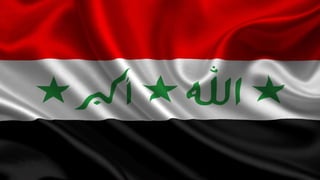
EUROPEAN UNION
• The European Union (EU) is a political and
economic alliance of 27 countries.
• The EU promotes democratic values in its
member nations and is one of the world's most
powerful trade blocs.
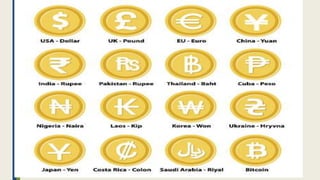
• Nineteen of the countries share the euro as their
official currency.
UNDERSTANDING NAFTA
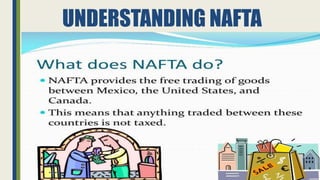
• The North American Free Trade Agreement (NAFTA) was
implemented to promote trade between the U.S., Canada, and
Mexico.
• The agreement, which eliminated most tariffs on trade between
the three countries, went into effect on Jan. 1, 1994.
• Numerous tariffs—particularly those related to agricultural
products, textiles, and automobiles.
UNDERSTANDING NAFTA
• NAFTA reduced or eliminated tariffs on imports and
exports between the three participating countries,
creating a huge free-trade zone.
• Two side agreements to NAFTA aimed to establish
high common standards in: workplace safety, labor
rights, and environmental protection, to prevent
businesses from relocating to other countries to
exploit lower wages or looser regulations.
UNDERSTANDING NAFTA
• It’s purpose was to encourage economic activity
among North America's three major economic
powers: Canada, the U. S., and Mexico.
• Proponents of the agreement believed that it would
benefit the three nations involved by promoting freer
trade and lower tariffs among Canada, Mexico, and
the United States.
UNDERSTANDING NAFTA
Aug. 27, 2018
• President Donald Trump
announced a new trade deal with
Mexico to replace NAFTA.
Sept. 30, 2018
• This agreement was modified to
include Canada. The United
States-Mexico-Canada
Agreement (USMCA) took effect
on July 1, 2020, completely
replacing NAFTA.
• USMCA will give our workers, farmers,
ranchers, and businesses a high-standard
trade agreement that will result in freer
markets, fairer trade, and robust economic
growth in our region.
• “It will strengthen the middle class
and create good, well-paying jobs and new
opportunities for the nearly half billion people
who call North America home."

International Monetary Fund (IMF).pptx

  • 1.
  • 2.
  • 3.
    IMF AND WORLDBANK • They were founded after WW II. • They were established mainly because of peace advocacy after world war. • These two institutions aimed to help the economic stability of the world.
  • 4.
    IMF • It’s maingoal was to help countries which were in trouble and could not obtain money by any means. • They served as a lender or a last resort for countries which needed for financial assistance.
  • 5.
    World Bank • Ithad a more long-term approach. • It helped countries to reach their goals, especially in poor countries. • They served as a lender or a last resort for countries which needed for financial assistance, especially in poor countries.
  • 7.
    THE ORGANIZATION FORECONOMIC COOPERATION AND DEVELOPMENT (OECD) • The most encompassing club of the richest countries in the world. • It is an intergovernmental organization with 35 member countries, • It stimulate economic progress and world trade.
  • 8.
    THE ORGANIZATION FORECONOMIC COOPERATION AND DEVELOPMENT (OECD) • It is a forum whose member countries describe themselves as committed to democracy and the market economy, providing a platform to compare policy experiences, seek answers to common problems, identify good practices, and coordinate domestic and international policies of its members.
  • 9.
  • 10.
    WHY IT IS FORMED? OPEC •It was formed because member countries wanted to increase the price of oil.
  • 11.
    OPEC OPEC • is anorganization enabling the co- operation of leading oil-producing countries, in order to collectively influence the global market and maximize profit.
  • 18.
    EUROPEAN UNION • TheEuropean Union (EU) is a political and economic alliance of 27 countries. • The EU promotes democratic values in its member nations and is one of the world's most powerful trade blocs. • Nineteen of the countries share the euro as their official currency.
  • 20.
    UNDERSTANDING NAFTA • TheNorth American Free Trade Agreement (NAFTA) was implemented to promote trade between the U.S., Canada, and Mexico. • The agreement, which eliminated most tariffs on trade between the three countries, went into effect on Jan. 1, 1994. • Numerous tariffs—particularly those related to agricultural products, textiles, and automobiles.
  • 21.
    UNDERSTANDING NAFTA • NAFTAreduced or eliminated tariffs on imports and exports between the three participating countries, creating a huge free-trade zone. • Two side agreements to NAFTA aimed to establish high common standards in: workplace safety, labor rights, and environmental protection, to prevent businesses from relocating to other countries to exploit lower wages or looser regulations.
  • 22.
    UNDERSTANDING NAFTA • It’spurpose was to encourage economic activity among North America's three major economic powers: Canada, the U. S., and Mexico. • Proponents of the agreement believed that it would benefit the three nations involved by promoting freer trade and lower tariffs among Canada, Mexico, and the United States.
  • 23.
  • 24.
    Aug. 27, 2018 •President Donald Trump announced a new trade deal with Mexico to replace NAFTA.
  • 25.
    Sept. 30, 2018 •This agreement was modified to include Canada. The United States-Mexico-Canada Agreement (USMCA) took effect on July 1, 2020, completely replacing NAFTA.
  • 26.
    • USMCA willgive our workers, farmers, ranchers, and businesses a high-standard trade agreement that will result in freer markets, fairer trade, and robust economic growth in our region. • “It will strengthen the middle class and create good, well-paying jobs and new opportunities for the nearly half billion people who call North America home."