Downloaded 20 times

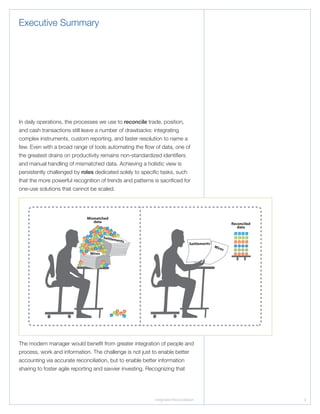
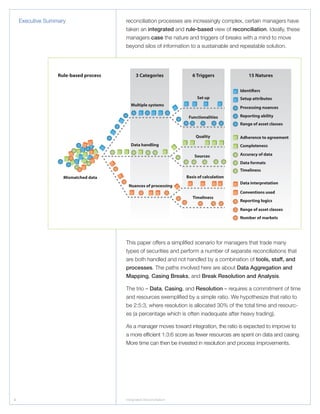
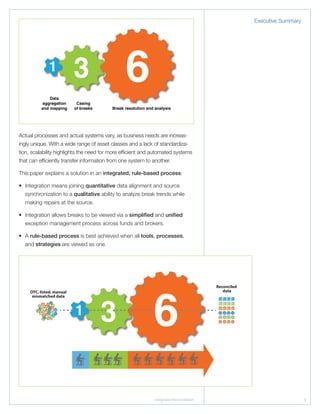
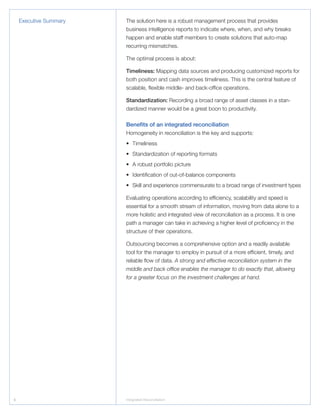

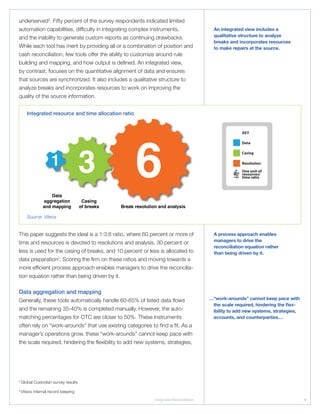
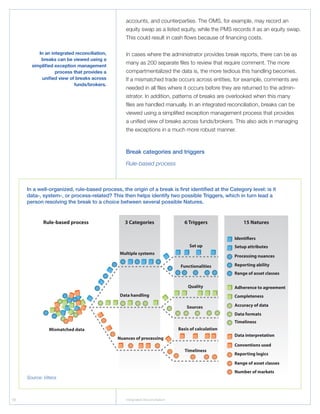
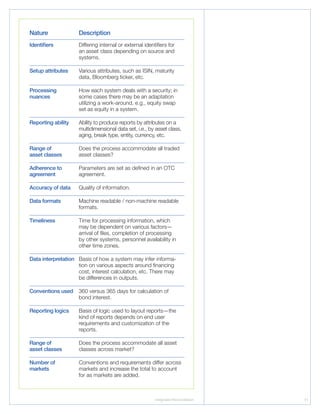
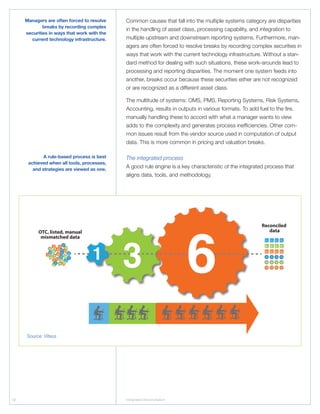
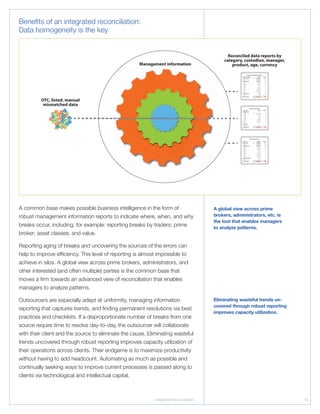
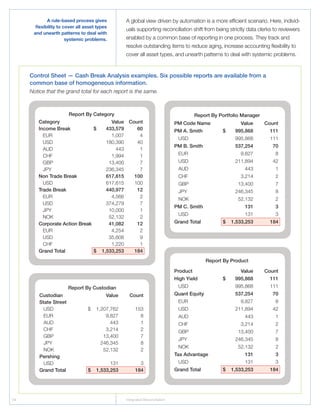
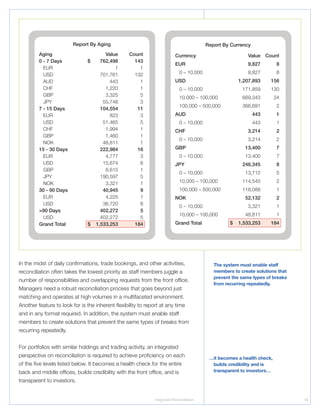
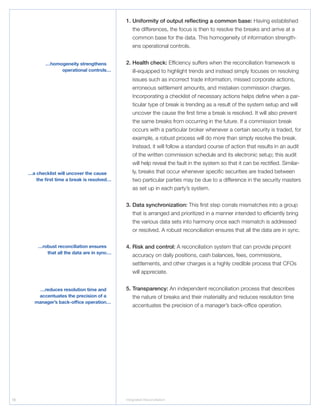
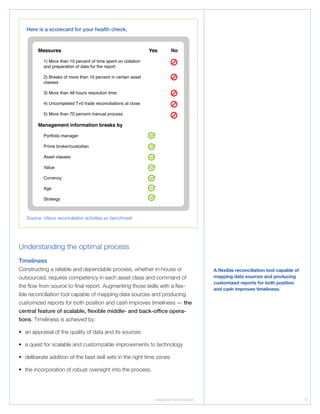
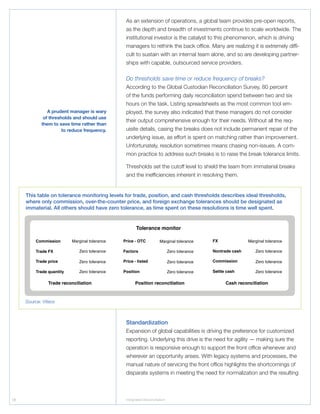
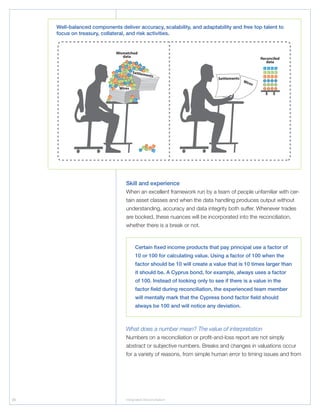
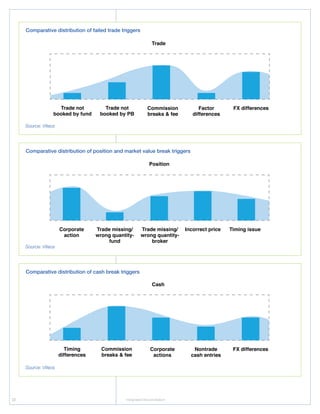
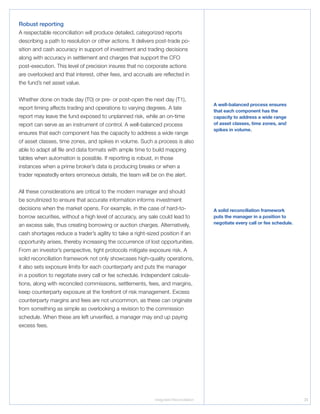


The document discusses the benefits of an integrated reconciliation process over the current state of siloed reconciliation systems and processes. It argues that integrating data, casing breaks, and resolution into a single process allows managers to gain a holistic view of reconciliation and address inefficiencies. Specifically: 1) Currently, managers use many different specialized systems that do not integrate, requiring manual workarounds. This hinders the ability to analyze patterns in mismatched data and improve processes. 2) An integrated process combines strategies, staff, and tools into a single workflow from data to resolution. This allows managers to derive standardized information and reports across asset classes. 3) The ideal integrated process allocates more time and resources to


