Integrated Public Alert
and Warning System
(IPAWS)
Fred Molesworth
Communications Officer
Oregon Office of Emergency Management
•
•
•
•

What is Ipaws?
How will it be implemented in Oregon?
How do you use it?
What’s the implementation Schedule?

IPAWS
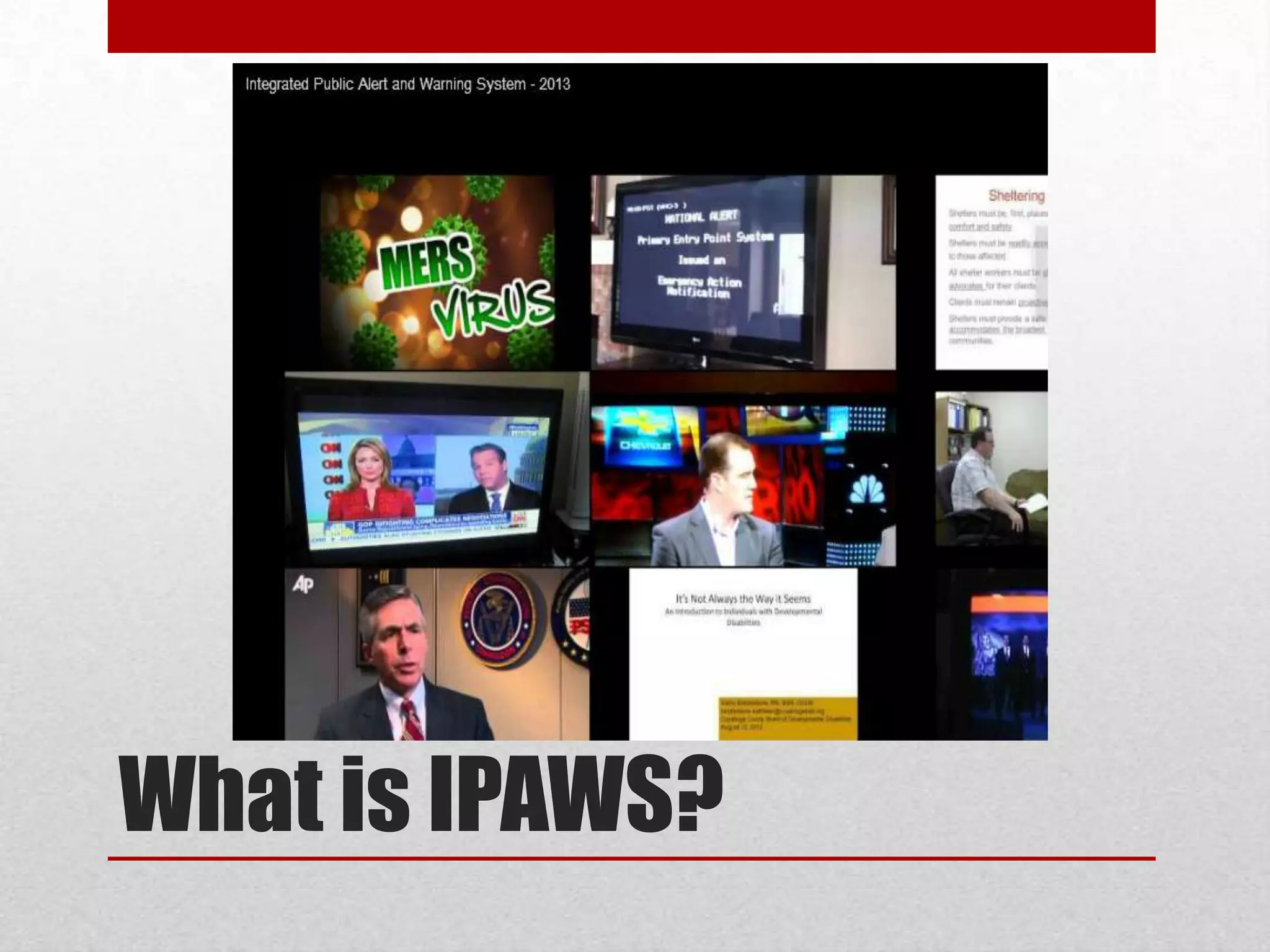
What is IPAWS?
• Alerts for Imminent threat to life or property, Amber
Alerts, Presidential messages
• Alerts are sent by FIPS codes and can be issued to and
for:
• Individual counties
• Multiple counties
• Statewide

• Future versions may allow polygons, but current
warnings are at the county level.

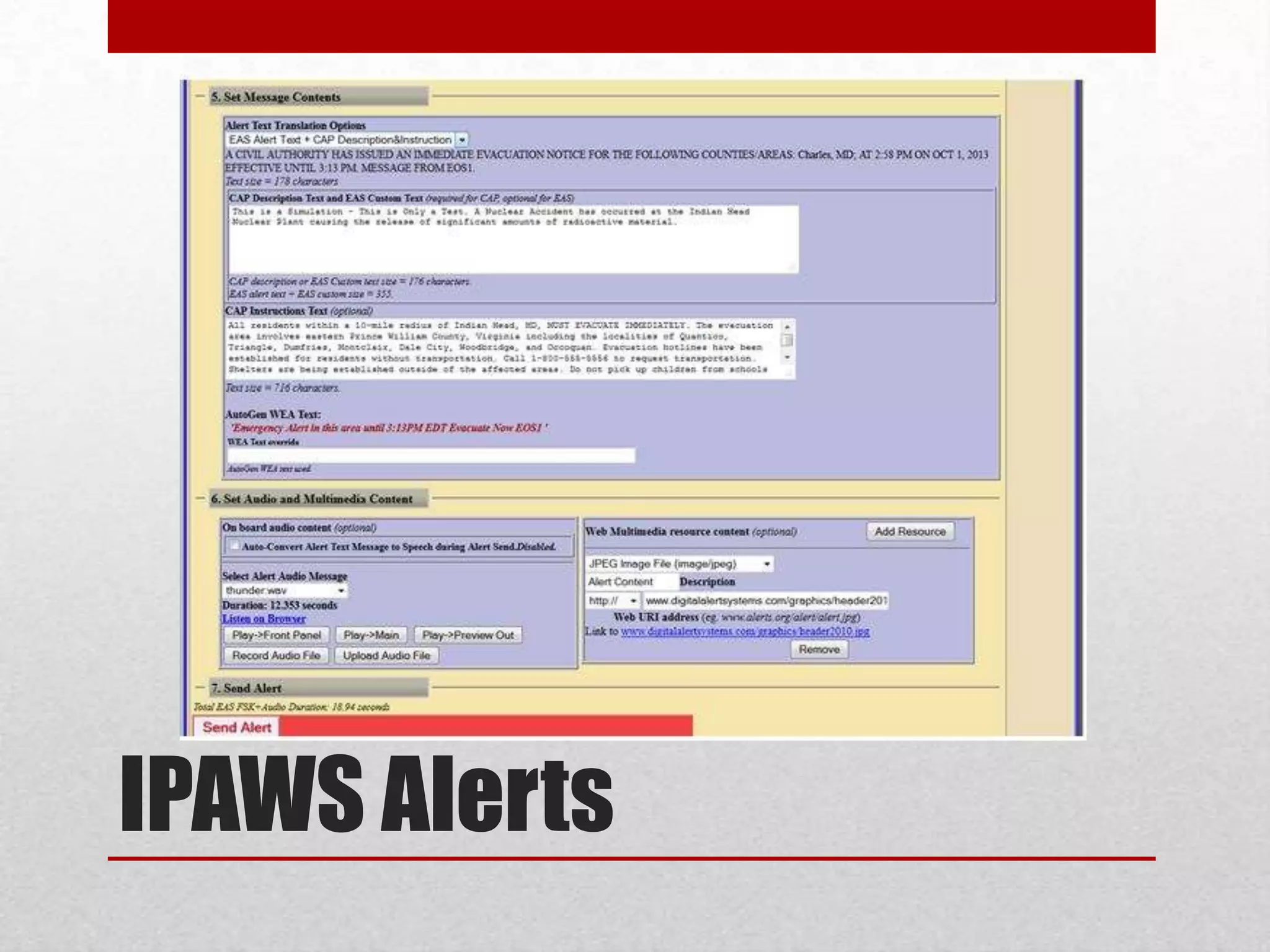
IPAWS Alerts
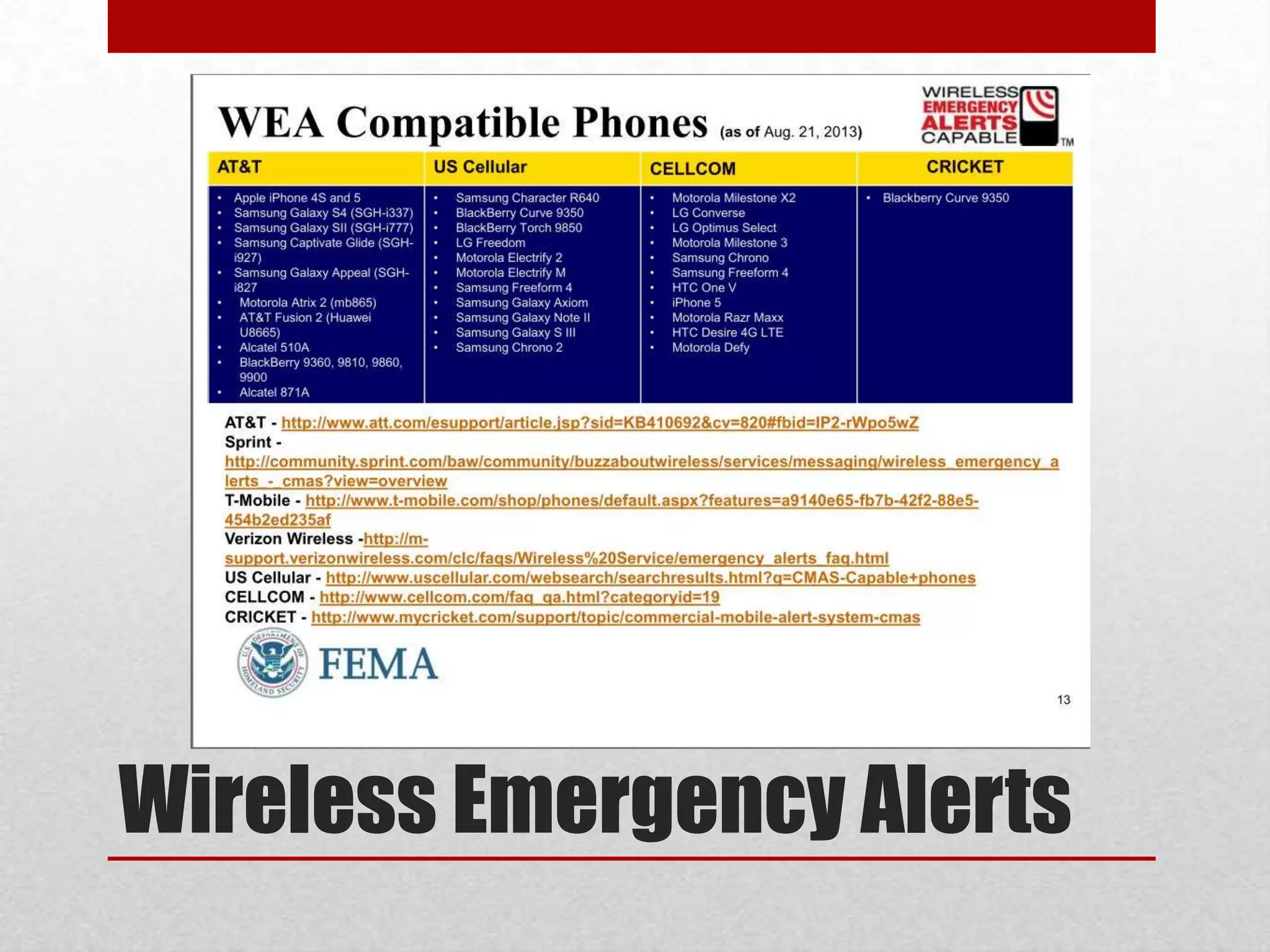
Wireless Emergency Alerts
Wireless Usage Statistics
• 90% of Americans are wireless users
• 92% of Americans with disabilities are wireless users
• 68% of adults between 66 and 74 are wireless users
• 48% of adults over 75 are wireless users.
• A rapidly growing percentage of users now use smart
phones

Wireless Emergency Alerts
What is WEA?
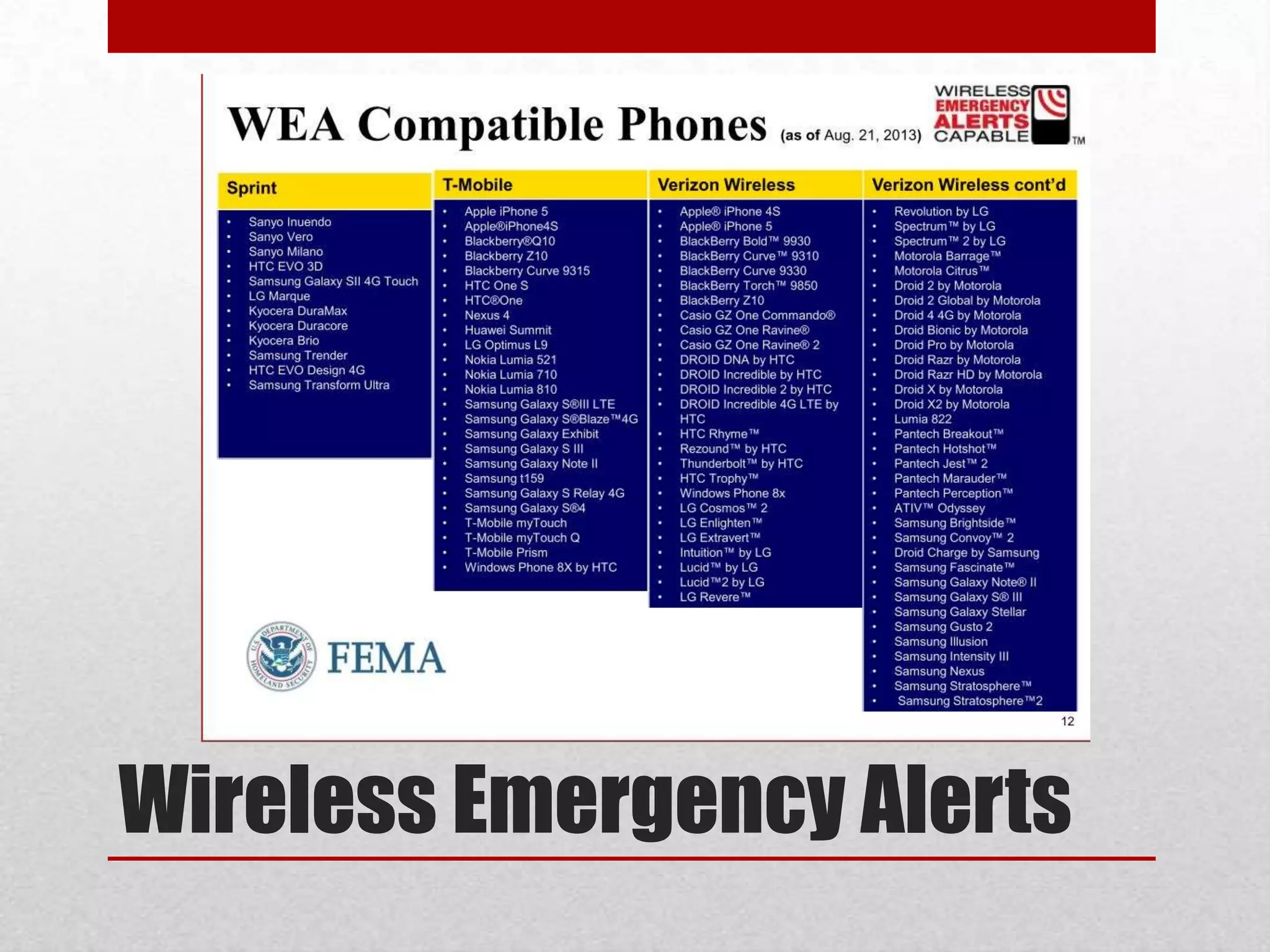
• IPAWS alert tool using smart phones
• Automatic – all newer smart phones will receive the
alerts if they’re in the area
• All wireless providers in Oregon support WEA
• NOT an opt-in program, but users CAN opt out.
• No cost to issuer or to recipients

Wireless Emergency Alerts
What does it do?
• Automatically alerts all newer smart phones within a
selected geographic area, residents and visitors alike
• Will work even when cell phone networks are jammed
using a special administrative channel between tower and
phone
• Will NOT awaken a powered off phone, or interrupt a call

Wireless Emergency Alerts
What is a WEA Message?
• 90 Character “text-like message”, but it’s not a standard text
message
• A unique tone and vibration to alert user to incoming message
• An “ATTENTION GETTER” to get users to take further
action: Brief situation message plus instructions:
•
•
•
•
•

Take Shelter Now,
Evacuate Now
Make Preparations
Execute instructions
Monitor TV or Radio

Wireless Emergency Alerts
Types of WEA Alerts
• Three types of alerts permitted:
• Presidential Alerts
• Imminent threat to life and property
• Amber Alerts

• Users CAN opt out of all but Presidential Alerts
• Guard against overuse – “cry wolf syndrome”
• Severity, Urgency, Certainty criteria

Wireless Emergency Alerts
•
•
•
•

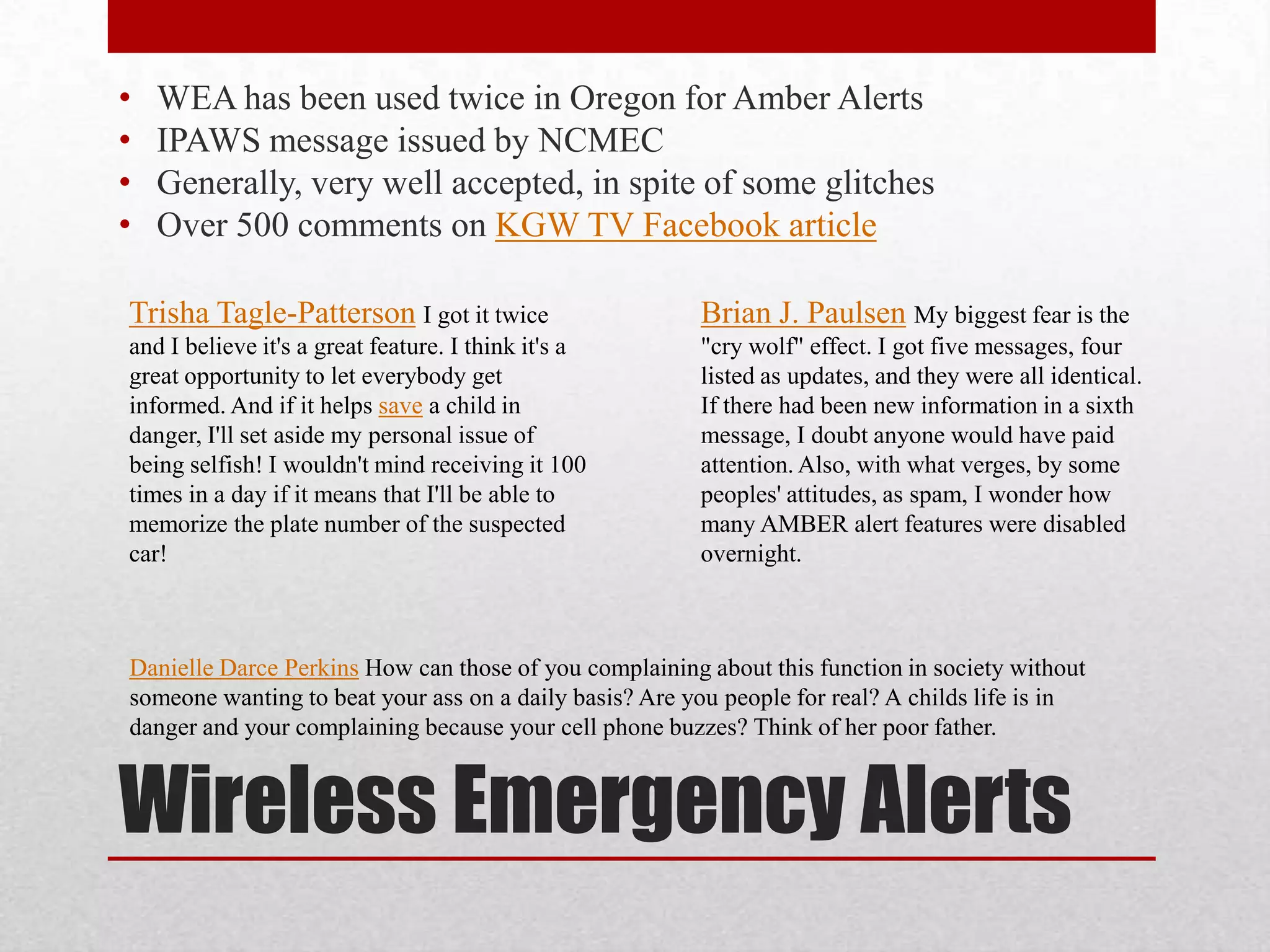
WEA has been used twice in Oregon for Amber Alerts
IPAWS message issued by NCMEC
Generally, very well accepted, in spite of some glitches
Over 500 comments on KGW TV Facebook article

Trisha Tagle-Patterson I got it twice

Brian J. Paulsen My biggest fear is the

and I believe it's a great feature. I think it's a
great opportunity to let everybody get
informed. And if it helps save a child in
danger, I'll set aside my personal issue of
being selfish! I wouldn't mind receiving it 100
times in a day if it means that I'll be able to
memorize the plate number of the suspected
car!

"cry wolf" effect. I got five messages, four
listed as updates, and they were all identical.
If there had been new information in a sixth
message, I doubt anyone would have paid
attention. Also, with what verges, by some
peoples' attitudes, as spam, I wonder how
many AMBER alert features were disabled
overnight.

Danielle Darce Perkins How can those of you complaining about this function in society without
someone wanting to beat your ass on a daily basis? Are you people for real? A childs life is in
danger and your complaining because your cell phone buzzes? Think of her poor father.

Wireless Emergency Alerts
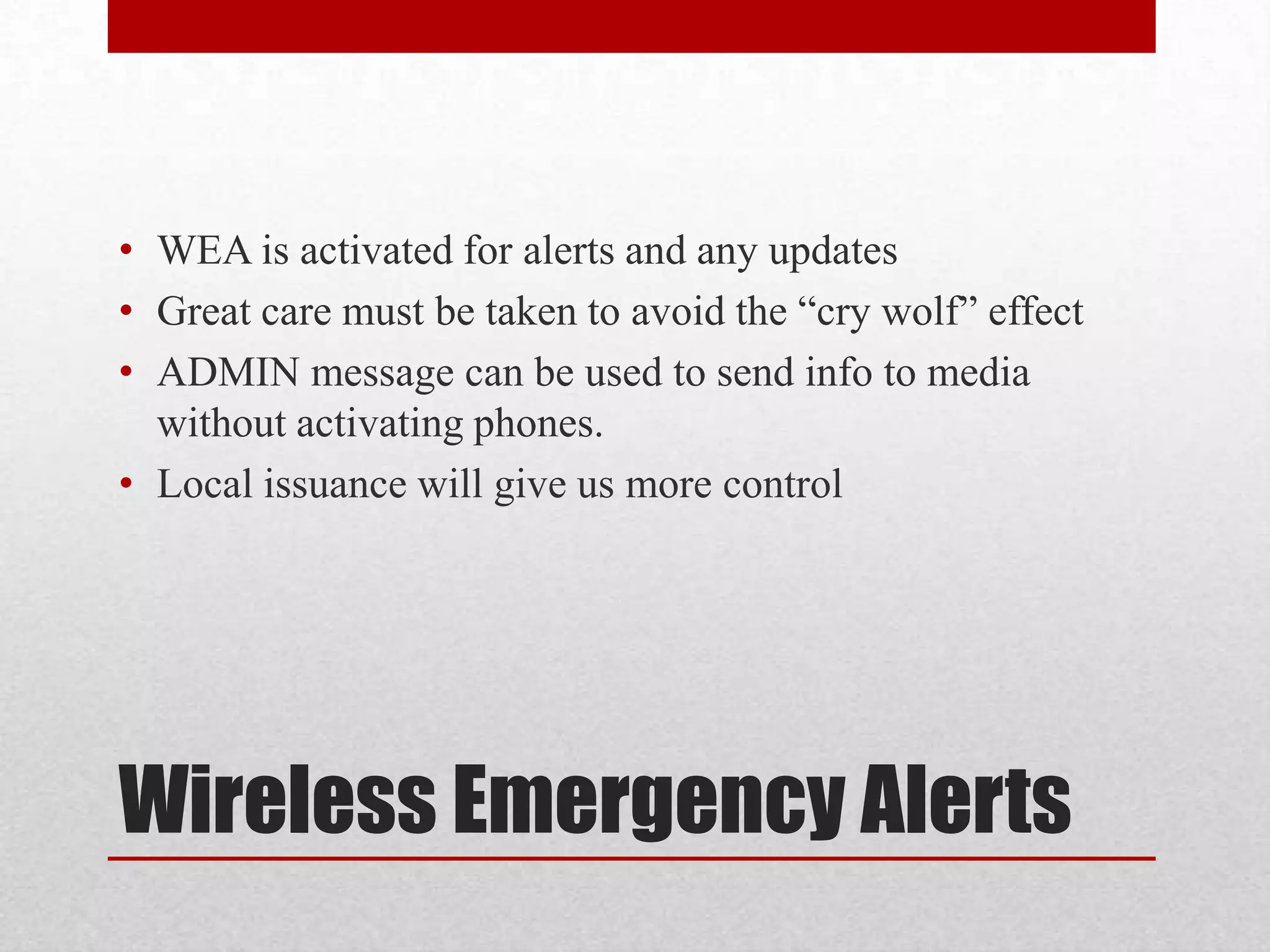
• WEA is activated for alerts and any updates
• Great care must be taken to avoid the “cry wolf” effect
• ADMIN message can be used to send info to media
without activating phones.
• Local issuance will give us more control

Wireless Emergency Alerts
•
•
•
•

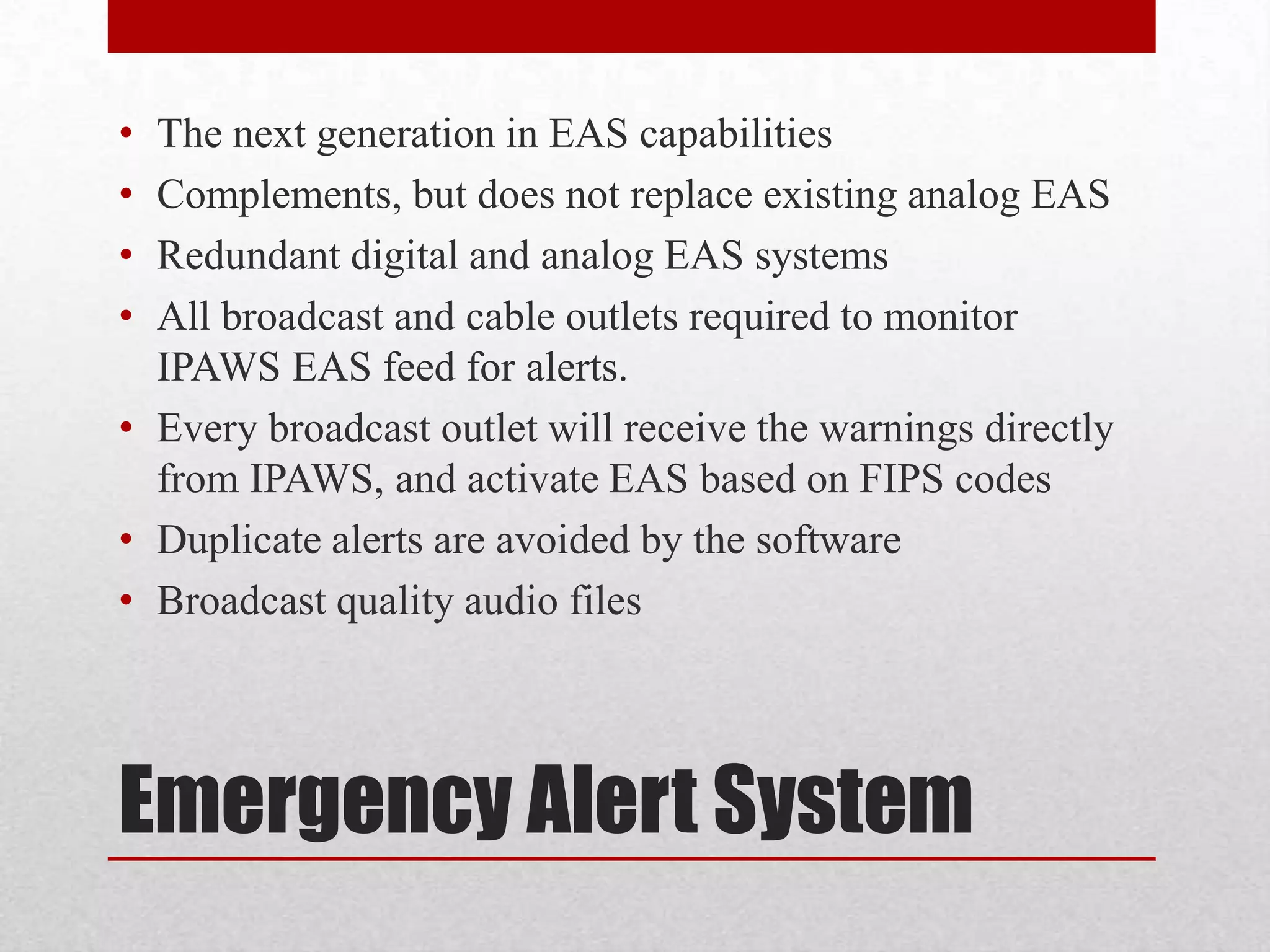
The next generation in EAS capabilities
Complements, but does not replace existing analog EAS
Redundant digital and analog EAS systems
All broadcast and cable outlets required to monitor
IPAWS EAS feed for alerts.
• Every broadcast outlet will receive the warnings directly
from IPAWS, and activate EAS based on FIPS codes
• Duplicate alerts are avoided by the software
• Broadcast quality audio files

Emergency Alert System
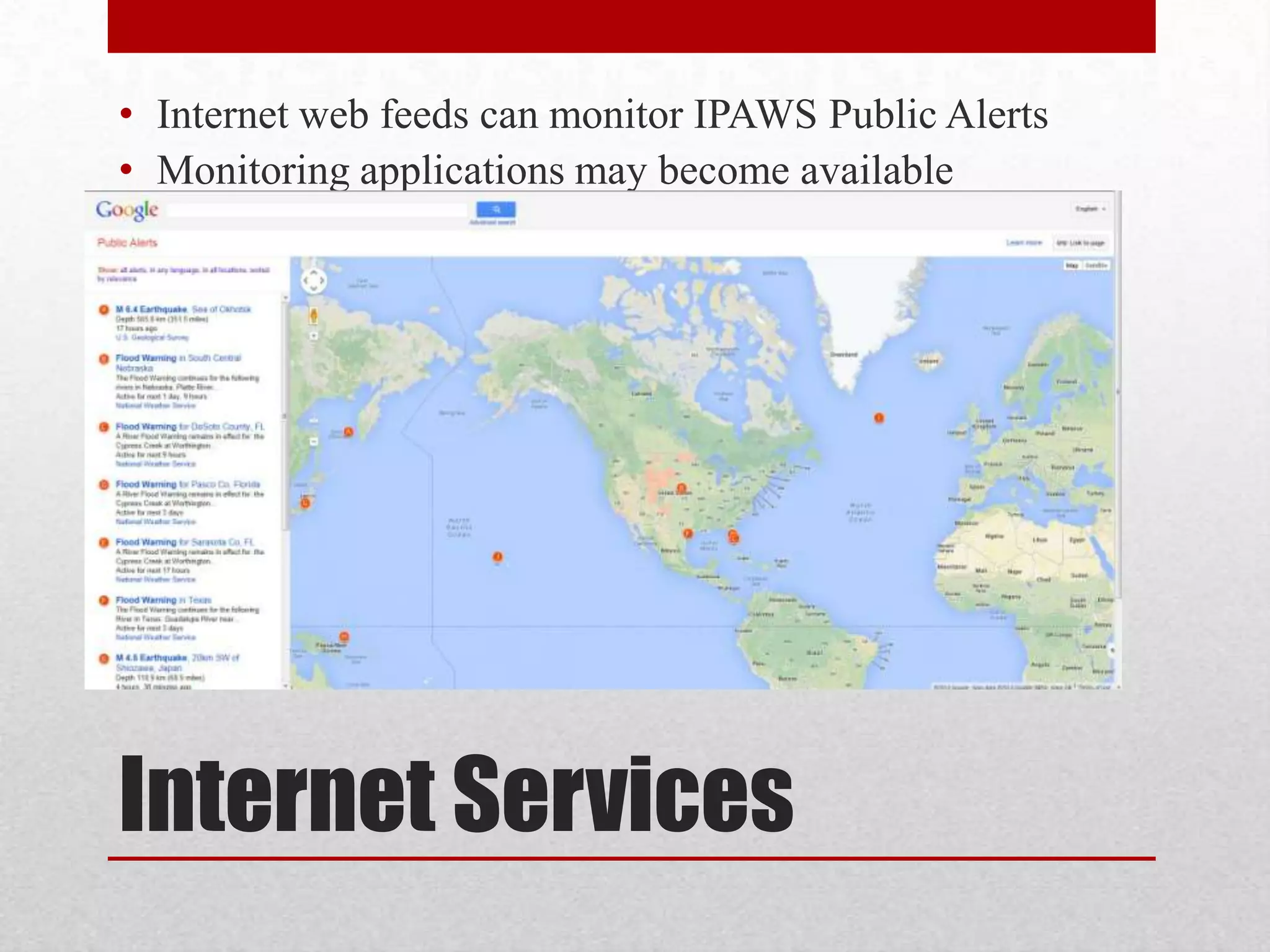
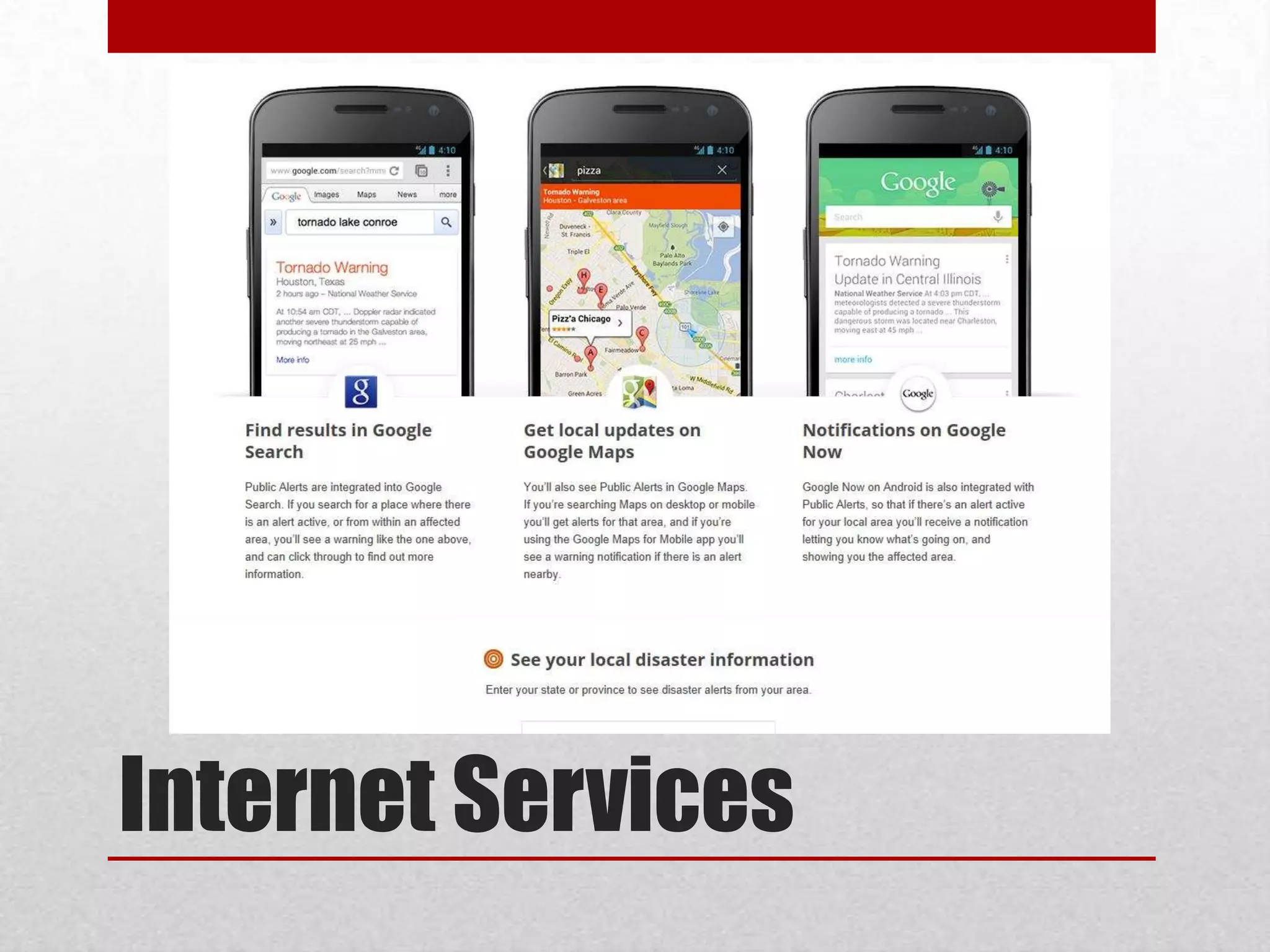
• Internet web feeds can monitor IPAWS Public Alerts
• Monitoring applications may become available

Internet Services
Internet Services
• Since IPAWS uses a industry standard digital format for
warnings, other devices capable or reading a digital
message represent added capability.
• Warning Sirens
• Freeway Signs (VMS)

• Vendors are developing devices and capabilities that can
monitor IPAWS and alert through various other
technologies, particularly for hearing and vision impaired

Other Potential Warning tools
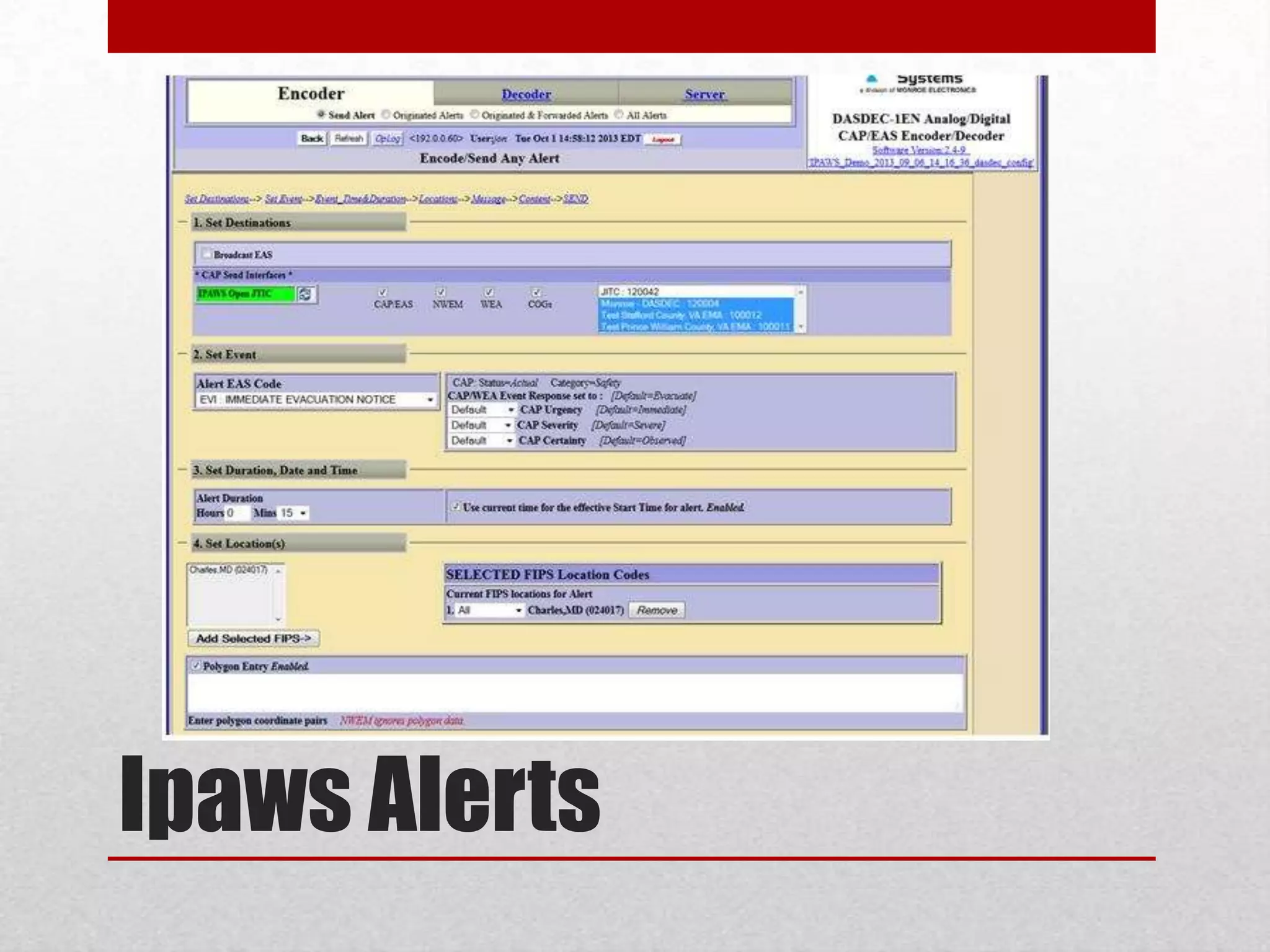
Ipaws Alerts
IPAWS Alerts
• OEM implementing at OERS on a statewide basis
• Hardware implementation using Digital Alert Systems
DASDAC EOC
• Redundant systems – one at OEM, one at OPB
• Fully functional by end of 2013
• Available to all jurisdictions at no cost

IPAWS in Oregon
• Message templates being created for most effective
messaging to public
• Custom messages may also be sent
• Warnings may include links to supporting files such as
audio, video, photographs that can be accessed by media

IPAWS in Oregon
• Issuing an Imminent Danger Alert
•
•
•
•
•
•

Contact OERS with request
OERS contacts OEM Duty Officer
Duty Officer confirms request, authorizes issuance
OERS initiates alert using templates, sends to IPAWS Server
OERS records audio file for EAS system
IPAWS system validates alert authority, checks criteria, forwards
alert
• IPAWS sends WEA alert to carriers, issues EAS message
• Broadcast stations activated by EAS message
• Broadcast picks up added info from server

IPAWS in Oregon
Issuing an Amber Alert
• Police agency requests OSP issue Amber Alert
• OSP validates against criteria, authorizes alert
• OERS enters alert using templates, sends to IPAWS
• OERS records audio message, using templates
• IPAWS sends WEA message, issues EAS message
• Broadcast stations pick up and broadcast EAS alert
• News organizations use added files from server for more
information.

IPAWS in Oregon
October
•
•
•

Complete warning templates
OEM - Develop procedures and plans for Immediate Danger
OSP update procedures and plans for Amber Alerts

• November
•
•
•
•

Extensively test system, using FEMA test bed
Update procedures as needed
Train OERS staff
Emergency Manager material

December
•
•
•

OERS testing
Public Information campaign
Rollout system

IPAWS in Oregon
• Digital technology means more ways to warn the public
with more information available
• No cost for local jurisdictions to use, no cost to the public
• Up and in operation about the end of 2013.
• Questions and feedback

IPAWS in Oregon

Integrated public alert and warning system (ipaws

  • 1.
    Integrated Public Alert andWarning System (IPAWS) Fred Molesworth Communications Officer Oregon Office of Emergency Management
  • 2.
    • • • • What is Ipaws? Howwill it be implemented in Oregon? How do you use it? What’s the implementation Schedule? IPAWS
  • 3.
  • 6.
    • Alerts forImminent threat to life or property, Amber Alerts, Presidential messages • Alerts are sent by FIPS codes and can be issued to and for: • Individual counties • Multiple counties • Statewide • Future versions may allow polygons, but current warnings are at the county level. IPAWS Alerts
  • 7.
  • 8.
    Wireless Usage Statistics •90% of Americans are wireless users • 92% of Americans with disabilities are wireless users • 68% of adults between 66 and 74 are wireless users • 48% of adults over 75 are wireless users. • A rapidly growing percentage of users now use smart phones Wireless Emergency Alerts
  • 9.
    What is WEA? •IPAWS alert tool using smart phones • Automatic – all newer smart phones will receive the alerts if they’re in the area • All wireless providers in Oregon support WEA • NOT an opt-in program, but users CAN opt out. • No cost to issuer or to recipients Wireless Emergency Alerts
  • 10.
    What does itdo? • Automatically alerts all newer smart phones within a selected geographic area, residents and visitors alike • Will work even when cell phone networks are jammed using a special administrative channel between tower and phone • Will NOT awaken a powered off phone, or interrupt a call Wireless Emergency Alerts
  • 11.
    What is aWEA Message? • 90 Character “text-like message”, but it’s not a standard text message • A unique tone and vibration to alert user to incoming message • An “ATTENTION GETTER” to get users to take further action: Brief situation message plus instructions: • • • • • Take Shelter Now, Evacuate Now Make Preparations Execute instructions Monitor TV or Radio Wireless Emergency Alerts
  • 12.
    Types of WEAAlerts • Three types of alerts permitted: • Presidential Alerts • Imminent threat to life and property • Amber Alerts • Users CAN opt out of all but Presidential Alerts • Guard against overuse – “cry wolf syndrome” • Severity, Urgency, Certainty criteria Wireless Emergency Alerts
  • 13.
  • 14.
  • 15.
    • • • • WEA has beenused twice in Oregon for Amber Alerts IPAWS message issued by NCMEC Generally, very well accepted, in spite of some glitches Over 500 comments on KGW TV Facebook article Trisha Tagle-Patterson I got it twice Brian J. Paulsen My biggest fear is the and I believe it's a great feature. I think it's a great opportunity to let everybody get informed. And if it helps save a child in danger, I'll set aside my personal issue of being selfish! I wouldn't mind receiving it 100 times in a day if it means that I'll be able to memorize the plate number of the suspected car! "cry wolf" effect. I got five messages, four listed as updates, and they were all identical. If there had been new information in a sixth message, I doubt anyone would have paid attention. Also, with what verges, by some peoples' attitudes, as spam, I wonder how many AMBER alert features were disabled overnight. Danielle Darce Perkins How can those of you complaining about this function in society without someone wanting to beat your ass on a daily basis? Are you people for real? A childs life is in danger and your complaining because your cell phone buzzes? Think of her poor father. Wireless Emergency Alerts
  • 16.
    • WEA isactivated for alerts and any updates • Great care must be taken to avoid the “cry wolf” effect • ADMIN message can be used to send info to media without activating phones. • Local issuance will give us more control Wireless Emergency Alerts
  • 17.
    • • • • The next generationin EAS capabilities Complements, but does not replace existing analog EAS Redundant digital and analog EAS systems All broadcast and cable outlets required to monitor IPAWS EAS feed for alerts. • Every broadcast outlet will receive the warnings directly from IPAWS, and activate EAS based on FIPS codes • Duplicate alerts are avoided by the software • Broadcast quality audio files Emergency Alert System
  • 18.
    • Internet webfeeds can monitor IPAWS Public Alerts • Monitoring applications may become available Internet Services
  • 19.
  • 20.
    • Since IPAWSuses a industry standard digital format for warnings, other devices capable or reading a digital message represent added capability. • Warning Sirens • Freeway Signs (VMS) • Vendors are developing devices and capabilities that can monitor IPAWS and alert through various other technologies, particularly for hearing and vision impaired Other Potential Warning tools
  • 21.
  • 22.
  • 23.
    • OEM implementingat OERS on a statewide basis • Hardware implementation using Digital Alert Systems DASDAC EOC • Redundant systems – one at OEM, one at OPB • Fully functional by end of 2013 • Available to all jurisdictions at no cost IPAWS in Oregon
  • 24.
    • Message templatesbeing created for most effective messaging to public • Custom messages may also be sent • Warnings may include links to supporting files such as audio, video, photographs that can be accessed by media IPAWS in Oregon
  • 25.
    • Issuing anImminent Danger Alert • • • • • • Contact OERS with request OERS contacts OEM Duty Officer Duty Officer confirms request, authorizes issuance OERS initiates alert using templates, sends to IPAWS Server OERS records audio file for EAS system IPAWS system validates alert authority, checks criteria, forwards alert • IPAWS sends WEA alert to carriers, issues EAS message • Broadcast stations activated by EAS message • Broadcast picks up added info from server IPAWS in Oregon
  • 26.
    Issuing an AmberAlert • Police agency requests OSP issue Amber Alert • OSP validates against criteria, authorizes alert • OERS enters alert using templates, sends to IPAWS • OERS records audio message, using templates • IPAWS sends WEA message, issues EAS message • Broadcast stations pick up and broadcast EAS alert • News organizations use added files from server for more information. IPAWS in Oregon
  • 27.
    October • • • Complete warning templates OEM- Develop procedures and plans for Immediate Danger OSP update procedures and plans for Amber Alerts • November • • • • Extensively test system, using FEMA test bed Update procedures as needed Train OERS staff Emergency Manager material December • • • OERS testing Public Information campaign Rollout system IPAWS in Oregon
  • 28.
    • Digital technologymeans more ways to warn the public with more information available • No cost for local jurisdictions to use, no cost to the public • Up and in operation about the end of 2013.
  • 29.
    • Questions andfeedback IPAWS in Oregon