BRASIL STEAM PROJECT
Latin American art is the combination of artistic expressions typical of South America,
Central America, the Caribbean, and Mexico, as well as Latin Americans living in other
regions. It begins properly with the arrival in America of the Latin peoples from
Europe (Spanish, Portuguese, Italian, French). Although prior to the arrival of the
Latinos there was a broad artistic development on the part of the different indigenous
cultures that inhabited the continent before the Spanish invasion in the 16th century,
and these would influence regional artistic developments, they cannot be classified as'
Latin American 'since these peoples did not speak a Latin language, but a language of
their own.
PAITING
SCULPTURE
The first news of sculptures in the European tradition in Brazil date from the end of the 16th
century, when some peoples had already established themselves on the coast and the
construction of temples and public buildings began. In this initial period, it is observed that
João Gonçalo Fernandes, the first sculptor identified in the activity in Brazil, produced works in
the 1560s. Much of the sculptural activity was limited to works of decorative wood carving and,
to a lesser extent, measured, in stone. One of the first names worth remembering in the 17th
century as a carver of refined talents is Frei Domingos da Conceição da Silva, who worked at
the São Bento Monastery in Rio de Janeiro. He also began an activity in the devotional
statuette, where the first figure to stand out was Frei Agostinho da Piedade, leaving creations
of serene beauty and great sensitivity, already pointing to the Baroque, but still indebted to
the spirit of balance and sobriety in a Renaissance style. . called transitory mannerism that
would be practiced until the middle of the seventeenth century, with a significant delay in
relation to the European chronology. Frei Agostinho da Piedade is considered the founder of
the national sculpture.
ARCHITECTURE
The architecture of Brazil begins before the arrival of Europeans to America and
continues to this day. However, since the 16th century the influence of the
architecture of Europe, in particular of Portugal, has been definitive. In that sense, the
arrival of Pedro Cabral to Brazil in 1500 marks a milestone that defines a new
beginning. The colonial architecture of Portugal was the first to develop in this area
of America and forms the basis for later developments. In the 19th century during the
end of the Empire of Brazil, this country in turn followed European trends and
adopted neoclassical and neo-Gothic styles. In the 20th century, the country was at
the forefront of modern architecture. The federal capital Brasilia is a planned city
whose buildings were designed by Oscar Niemeyer and since 1987 it is a Unesco
World Heritage Site.
CINEMA
During the "belle-epoque" of Brazilian cinema, when silent black and white films were
less expensive to produce, most of the work
It resulted from the effort of passionate individuals who wanted to take the risk for
themselves, rather than business ventures. Nor did the State pay much attention to
cinema, as there was practically no legislation for the sector. Movie theaters only
increased in number in Rio de Janeiro and São Paulo at the beginning of the 20th
century, when the electrical current became safer. Foreign companies and short films
documenting local events were the most common. Some of the earliest works of
fiction filmed in Brazil were the so-called "posadas movies," reconstructions of crimes
that had recently made headlines. Also popular were "sung" films, in which the actors
hid behind the ecran and dubbed themselves singing during the screening.
BRAZILIAN MUSIC
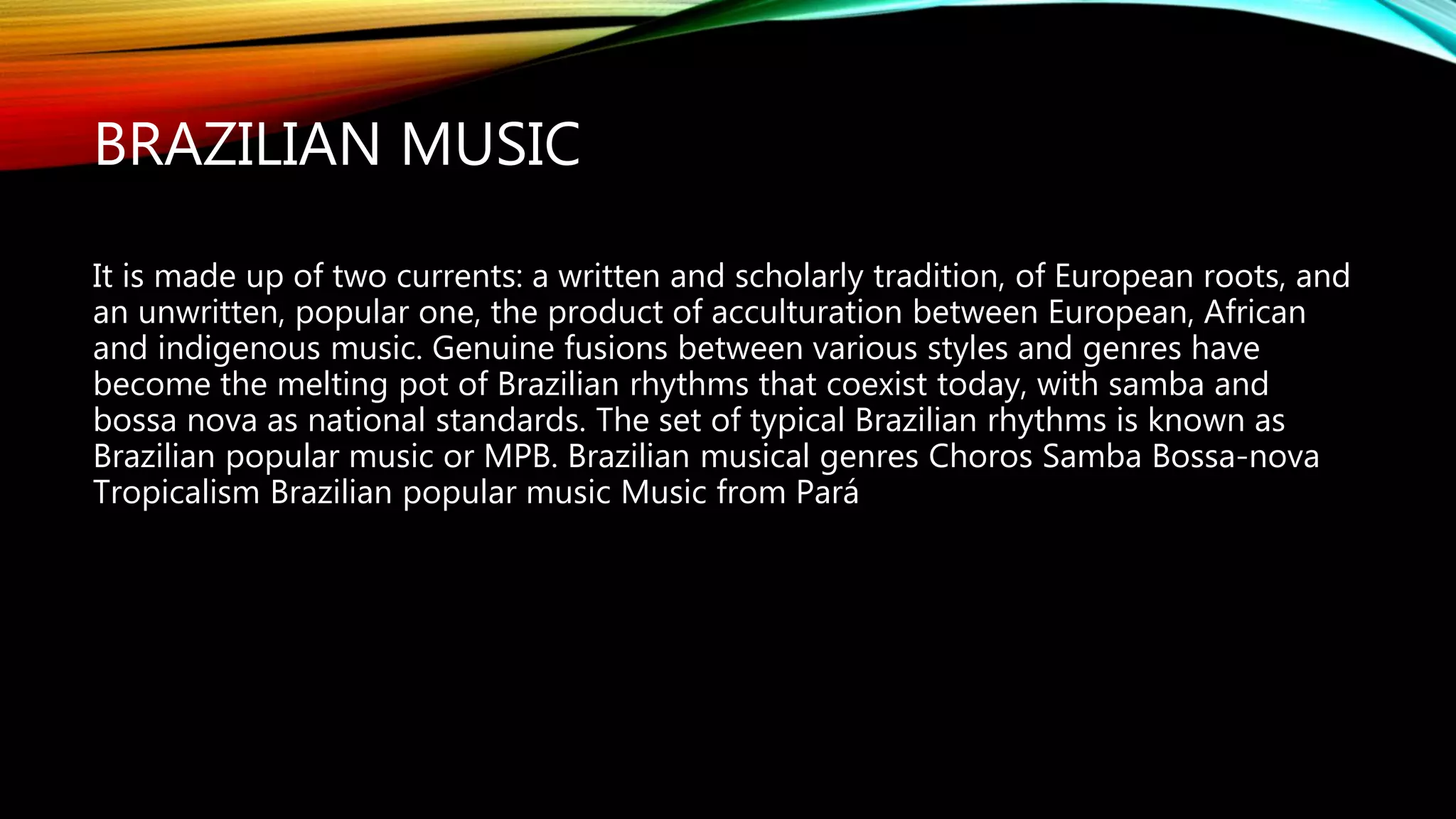
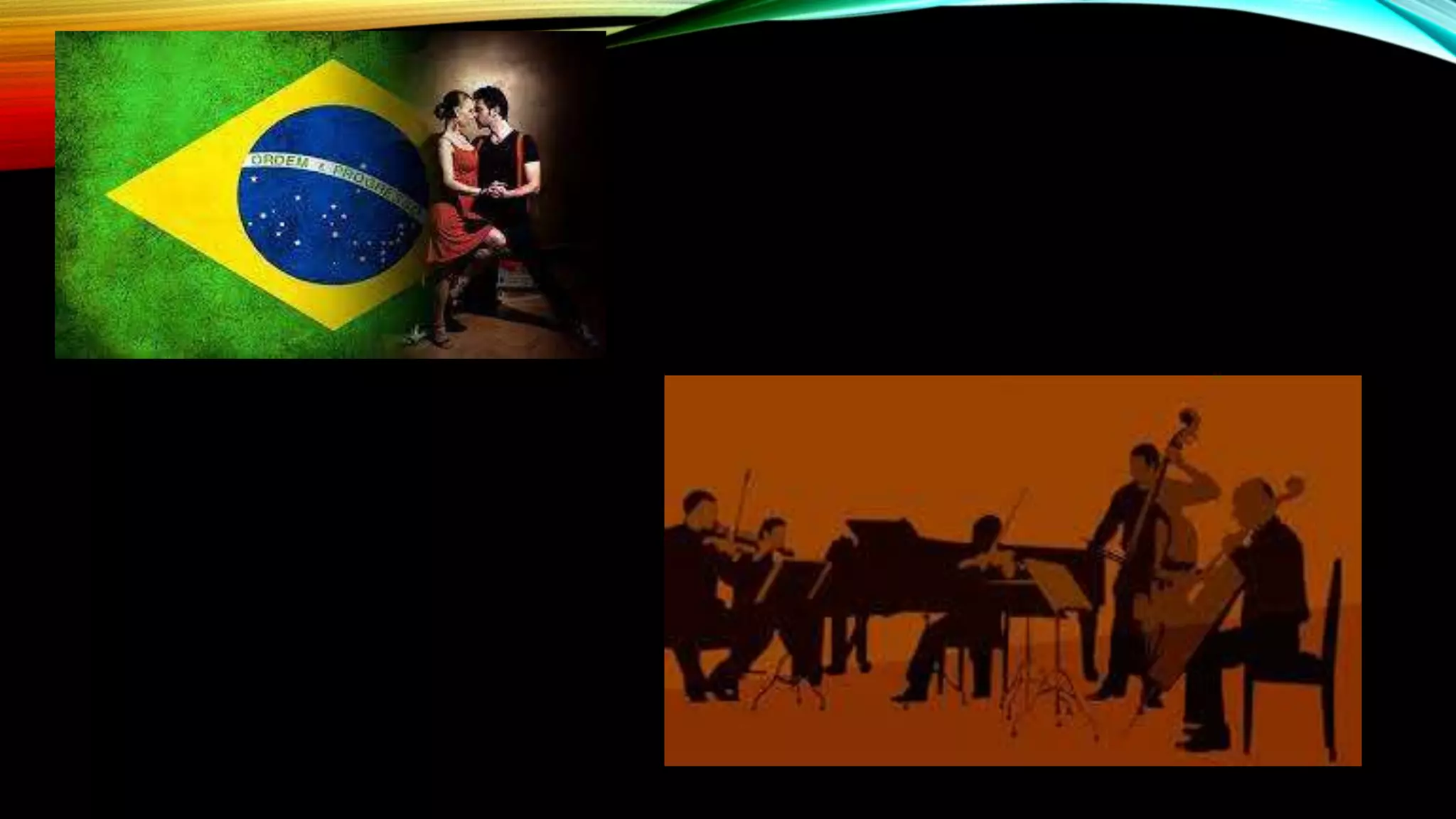
It is made up of two currents: a written and scholarly tradition, of European roots, and
an unwritten, popular one, the product of acculturation between European, African
and indigenous music. Genuine fusions between various styles and genres have
become the melting pot of Brazilian rhythms that coexist today, with samba and
bossa nova as national standards. The set of typical Brazilian rhythms is known as
Brazilian popular music or MPB. Brazilian musical genres Choros Samba Bossa-nova
Tropicalism Brazilian popular music Music from Pará
BRAZILIAN LITERATURE
Brazilian literature, considering its development based on the Portuguese language, is part of the Lusophone
cultural spectrum. It arose from the literary activity encouraged by the discovery of Brazil during the sixteenth
century. At first, quite linked to metropolitan literature, little by little it gained independence, especially during
the nineteenth century, with the romantic and realist movements, until reach its culminating point with the
Modern Art Week in 1922, which is characterized by the definitive break with the literatures of other countries,
forming, therefore, from Modernism and its schools the first generations of truly independent writers. At this
time great names emerged such as Manuel Bandeira, Carlos Drummond de Andrade, João Guimarães Rosa,
Clarice Lispector and Cecilia Meireles. The literature produced in Brazil plays an important role in the cultural
sphere of the country: all the main newspapers dedicate a large part of their cultural supplements to literary
analysis and criticism. Likewise, the teaching of the discipline is compulsory in secondary school.
Brazilian authors:
Clarice lispector
Monteiro Lobarto
Cecilia Meireles
Carlos Drummond de Andrade
Ingles

Ingles

  • 1.
  • 2.
    Latin American artis the combination of artistic expressions typical of South America, Central America, the Caribbean, and Mexico, as well as Latin Americans living in other regions. It begins properly with the arrival in America of the Latin peoples from Europe (Spanish, Portuguese, Italian, French). Although prior to the arrival of the Latinos there was a broad artistic development on the part of the different indigenous cultures that inhabited the continent before the Spanish invasion in the 16th century, and these would influence regional artistic developments, they cannot be classified as' Latin American 'since these peoples did not speak a Latin language, but a language of their own. PAITING
  • 3.
    SCULPTURE The first newsof sculptures in the European tradition in Brazil date from the end of the 16th century, when some peoples had already established themselves on the coast and the construction of temples and public buildings began. In this initial period, it is observed that João Gonçalo Fernandes, the first sculptor identified in the activity in Brazil, produced works in the 1560s. Much of the sculptural activity was limited to works of decorative wood carving and, to a lesser extent, measured, in stone. One of the first names worth remembering in the 17th century as a carver of refined talents is Frei Domingos da Conceição da Silva, who worked at the São Bento Monastery in Rio de Janeiro. He also began an activity in the devotional statuette, where the first figure to stand out was Frei Agostinho da Piedade, leaving creations of serene beauty and great sensitivity, already pointing to the Baroque, but still indebted to the spirit of balance and sobriety in a Renaissance style. . called transitory mannerism that would be practiced until the middle of the seventeenth century, with a significant delay in relation to the European chronology. Frei Agostinho da Piedade is considered the founder of the national sculpture.
  • 5.
    ARCHITECTURE The architecture ofBrazil begins before the arrival of Europeans to America and continues to this day. However, since the 16th century the influence of the architecture of Europe, in particular of Portugal, has been definitive. In that sense, the arrival of Pedro Cabral to Brazil in 1500 marks a milestone that defines a new beginning. The colonial architecture of Portugal was the first to develop in this area of America and forms the basis for later developments. In the 19th century during the end of the Empire of Brazil, this country in turn followed European trends and adopted neoclassical and neo-Gothic styles. In the 20th century, the country was at the forefront of modern architecture. The federal capital Brasilia is a planned city whose buildings were designed by Oscar Niemeyer and since 1987 it is a Unesco World Heritage Site.
  • 7.
    CINEMA During the "belle-epoque"of Brazilian cinema, when silent black and white films were less expensive to produce, most of the work It resulted from the effort of passionate individuals who wanted to take the risk for themselves, rather than business ventures. Nor did the State pay much attention to cinema, as there was practically no legislation for the sector. Movie theaters only increased in number in Rio de Janeiro and São Paulo at the beginning of the 20th century, when the electrical current became safer. Foreign companies and short films documenting local events were the most common. Some of the earliest works of fiction filmed in Brazil were the so-called "posadas movies," reconstructions of crimes that had recently made headlines. Also popular were "sung" films, in which the actors hid behind the ecran and dubbed themselves singing during the screening.
  • 9.
    BRAZILIAN MUSIC It ismade up of two currents: a written and scholarly tradition, of European roots, and an unwritten, popular one, the product of acculturation between European, African and indigenous music. Genuine fusions between various styles and genres have become the melting pot of Brazilian rhythms that coexist today, with samba and bossa nova as national standards. The set of typical Brazilian rhythms is known as Brazilian popular music or MPB. Brazilian musical genres Choros Samba Bossa-nova Tropicalism Brazilian popular music Music from Pará
  • 11.
    BRAZILIAN LITERATURE Brazilian literature,considering its development based on the Portuguese language, is part of the Lusophone cultural spectrum. It arose from the literary activity encouraged by the discovery of Brazil during the sixteenth century. At first, quite linked to metropolitan literature, little by little it gained independence, especially during the nineteenth century, with the romantic and realist movements, until reach its culminating point with the Modern Art Week in 1922, which is characterized by the definitive break with the literatures of other countries, forming, therefore, from Modernism and its schools the first generations of truly independent writers. At this time great names emerged such as Manuel Bandeira, Carlos Drummond de Andrade, João Guimarães Rosa, Clarice Lispector and Cecilia Meireles. The literature produced in Brazil plays an important role in the cultural sphere of the country: all the main newspapers dedicate a large part of their cultural supplements to literary analysis and criticism. Likewise, the teaching of the discipline is compulsory in secondary school. Brazilian authors: Clarice lispector Monteiro Lobarto Cecilia Meireles Carlos Drummond de Andrade