INFORMATICS
PRACTICES
DIGITAL CERTIFICATE
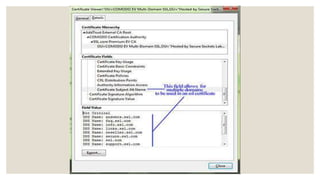
◦ A digital certificate is also known as public key certificate or identity certificate.
◦ It is an electronic documents to used to prove the ownership of public key.
◦ The certificate includes information about the key, information about the identity of its owner
(called the subject), and the digital signature of an entity that has verified the certificate's
contents (called the issuer).
◦ The certificate can be used to verify that a public key belongs to an authorized individual or
organization.
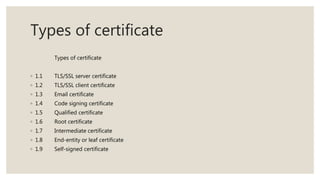
Types of certificate
◦ 1.1 TLS/SSL server certificate
◦ 1.2 TLS/SSL client certificate
◦ 1.3 Email certificate
◦ 1.4 Code signing certificate
◦ 1.5 Qualified certificate
◦ 1.6 Root certificate
◦ 1.7 Intermediate certificate
◦ 1.8 End-entity or leaf certificate
◦ 1.9 Self-signed certificate
COOKIES
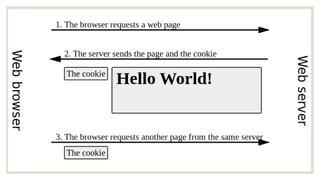
◦ An cookie also called web cookie, Internet cookie, browser cookie, or HTTP cookie is a small
piece of data sent from a website and stored on the user's computer by the user's web browser
while the user is browsing.
◦ Cookies were designed to be a reliable mechanism for websites to remember stateful
information (such as items added in the shopping cart in an online store) or to record the user's
browsing activity (including clicking particular buttons, logging in, or recording which pages
were visited in the past).
◦ They can also be used to remember random pieces of information that the user previously
entered into form fields such as names, addresses, passwords, and credit card numbers.
◦ Cookies have been a problem for Internet privacy. This is because they can be used to track
browsing behavior. Because of this, laws have been made in some countries to protect people's
privacy. There are many other options than cookies, but each option has its own problems.
More points
◦ Cookies have often been mistaken for computer programs. But cookies cannot do much on
their own. They are simply a piece of data. They are often called spyware or viruses, but they
are not either of these.
◦ Most web browsers allow users to choose whether to accept cookies. If the user does not allow
cookies, some websites will become unusable. For example, shopping baskets which use
cookies do not work if the user does not allow cookies.
◦ Cookies have been a problem for Internet privacy. This is because they can be used to track
browsing behavior. Because of this, laws have been made in some countries to protect
people's privacy. There are many other options than cookies, but each option has its own
problems.
CYBER CRIME AND CYBER POLICE
◦ Cyber crime is crime that involves a computer and a network.
◦ Cyber police are police departments or government agencies in charge of stopping cybercrime.
Types or forms of cyber crime
Common types of cybercrime include
1. Hacking.
2. Online scams and fraud.
3. Identity theft.
4. Attacks on computer systems
5. And illegal or prohibited online content.
6. Cyber terrorism.
7. Drug trafficking through internet.
8. Sending offensive messages.
9. Harassment through emails and web messages.
CYBER LAW OF INDIA
◦Cyber crimes can involve criminal activities that are
traditional in nature, such as theft, fraud, forgery,
defamation and mischief, all of which are subject to
the Indian Penal Code. The abuse of computers has
also given birth to a gamut of new age crimes that
are addressed by the Information Technology Act,
2000.

Informatics practices (1)

  • 1.
  • 2.
    DIGITAL CERTIFICATE ◦ Adigital certificate is also known as public key certificate or identity certificate. ◦ It is an electronic documents to used to prove the ownership of public key. ◦ The certificate includes information about the key, information about the identity of its owner (called the subject), and the digital signature of an entity that has verified the certificate's contents (called the issuer). ◦ The certificate can be used to verify that a public key belongs to an authorized individual or organization.
  • 3.
    Types of certificate Typesof certificate ◦ 1.1 TLS/SSL server certificate ◦ 1.2 TLS/SSL client certificate ◦ 1.3 Email certificate ◦ 1.4 Code signing certificate ◦ 1.5 Qualified certificate ◦ 1.6 Root certificate ◦ 1.7 Intermediate certificate ◦ 1.8 End-entity or leaf certificate ◦ 1.9 Self-signed certificate
  • 5.
    COOKIES ◦ An cookiealso called web cookie, Internet cookie, browser cookie, or HTTP cookie is a small piece of data sent from a website and stored on the user's computer by the user's web browser while the user is browsing. ◦ Cookies were designed to be a reliable mechanism for websites to remember stateful information (such as items added in the shopping cart in an online store) or to record the user's browsing activity (including clicking particular buttons, logging in, or recording which pages were visited in the past). ◦ They can also be used to remember random pieces of information that the user previously entered into form fields such as names, addresses, passwords, and credit card numbers. ◦ Cookies have been a problem for Internet privacy. This is because they can be used to track browsing behavior. Because of this, laws have been made in some countries to protect people's privacy. There are many other options than cookies, but each option has its own problems.
  • 6.
    More points ◦ Cookieshave often been mistaken for computer programs. But cookies cannot do much on their own. They are simply a piece of data. They are often called spyware or viruses, but they are not either of these. ◦ Most web browsers allow users to choose whether to accept cookies. If the user does not allow cookies, some websites will become unusable. For example, shopping baskets which use cookies do not work if the user does not allow cookies. ◦ Cookies have been a problem for Internet privacy. This is because they can be used to track browsing behavior. Because of this, laws have been made in some countries to protect people's privacy. There are many other options than cookies, but each option has its own problems.
  • 8.
    CYBER CRIME ANDCYBER POLICE ◦ Cyber crime is crime that involves a computer and a network. ◦ Cyber police are police departments or government agencies in charge of stopping cybercrime.
  • 9.
    Types or formsof cyber crime Common types of cybercrime include 1. Hacking. 2. Online scams and fraud. 3. Identity theft. 4. Attacks on computer systems 5. And illegal or prohibited online content. 6. Cyber terrorism. 7. Drug trafficking through internet. 8. Sending offensive messages. 9. Harassment through emails and web messages.
  • 10.
    CYBER LAW OFINDIA ◦Cyber crimes can involve criminal activities that are traditional in nature, such as theft, fraud, forgery, defamation and mischief, all of which are subject to the Indian Penal Code. The abuse of computers has also given birth to a gamut of new age crimes that are addressed by the Information Technology Act, 2000.