INFECTION
CONTROL
PROCEDURE
S
Elements in infection
control protocol
• patient evaluation
• personal protection
• instrument-cleaning, sterilization
and storage
• use of disposables
• disinfection
• laboratory asepsis
• disposal of waste
Patient
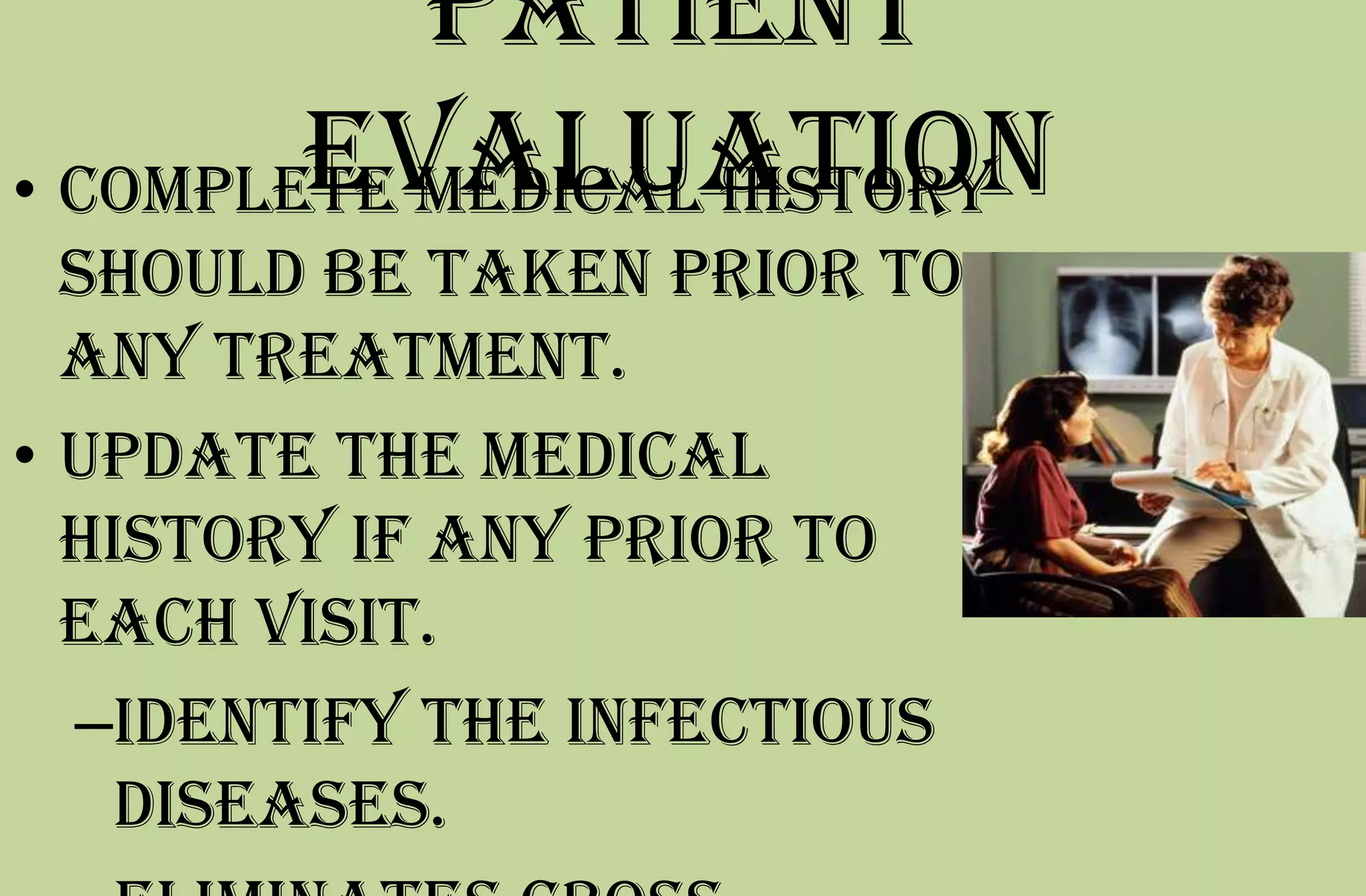
evaluation• Complete medical history
should be taken prior to
any treatment.
• Update the medical
history if any prior to
each visit.
–Identify the infectious
diseases.
Personal protection
• personal hygiene
• clinic clothing
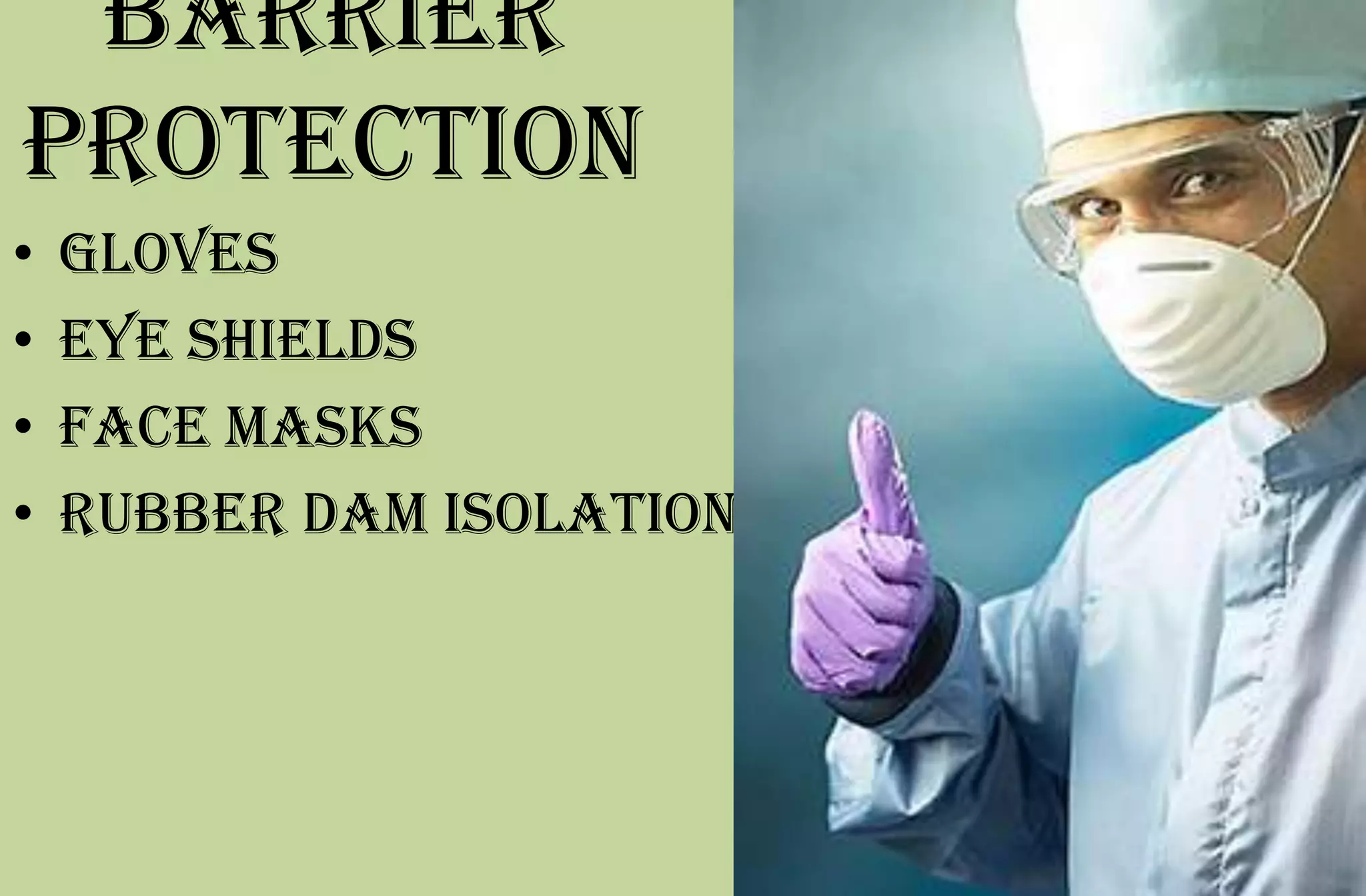
• barrier protection (gloves, eye
shield, face masks, rubber dam
isolation)
• immunization procedures.
Personal hygiene
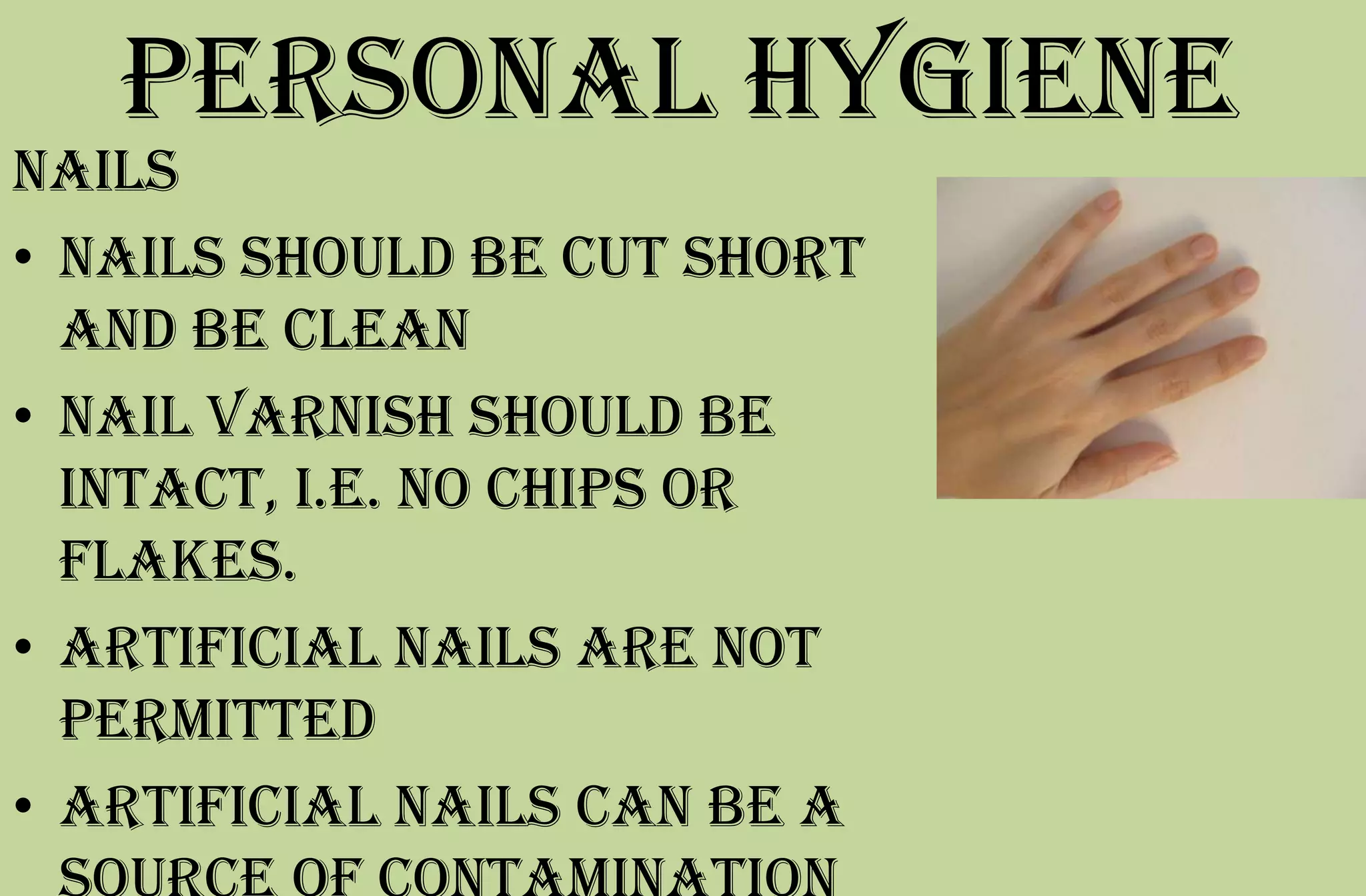
Nails
• Nails should be cut short
and be clean
• Nail varnish should be
intact, i.e. no chips or
flakes.
• Artificial nails are not
permitted
• Artificial nails can be a
Jewellery
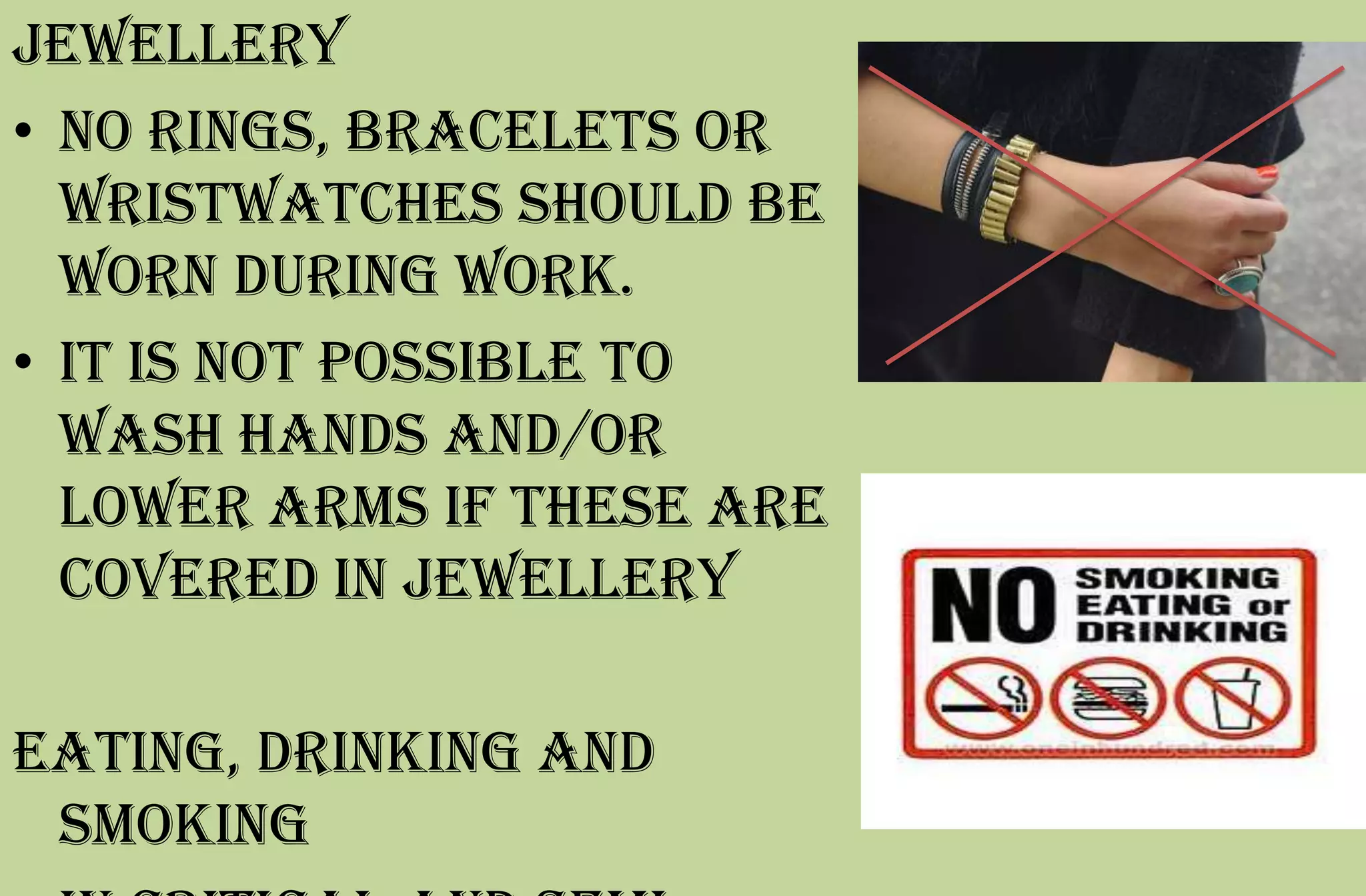
• No rings, bracelets or
wristwatches should be
worn during work.
• It is not possible to
wash hands and/or
lower arms if these are
covered in jewellery
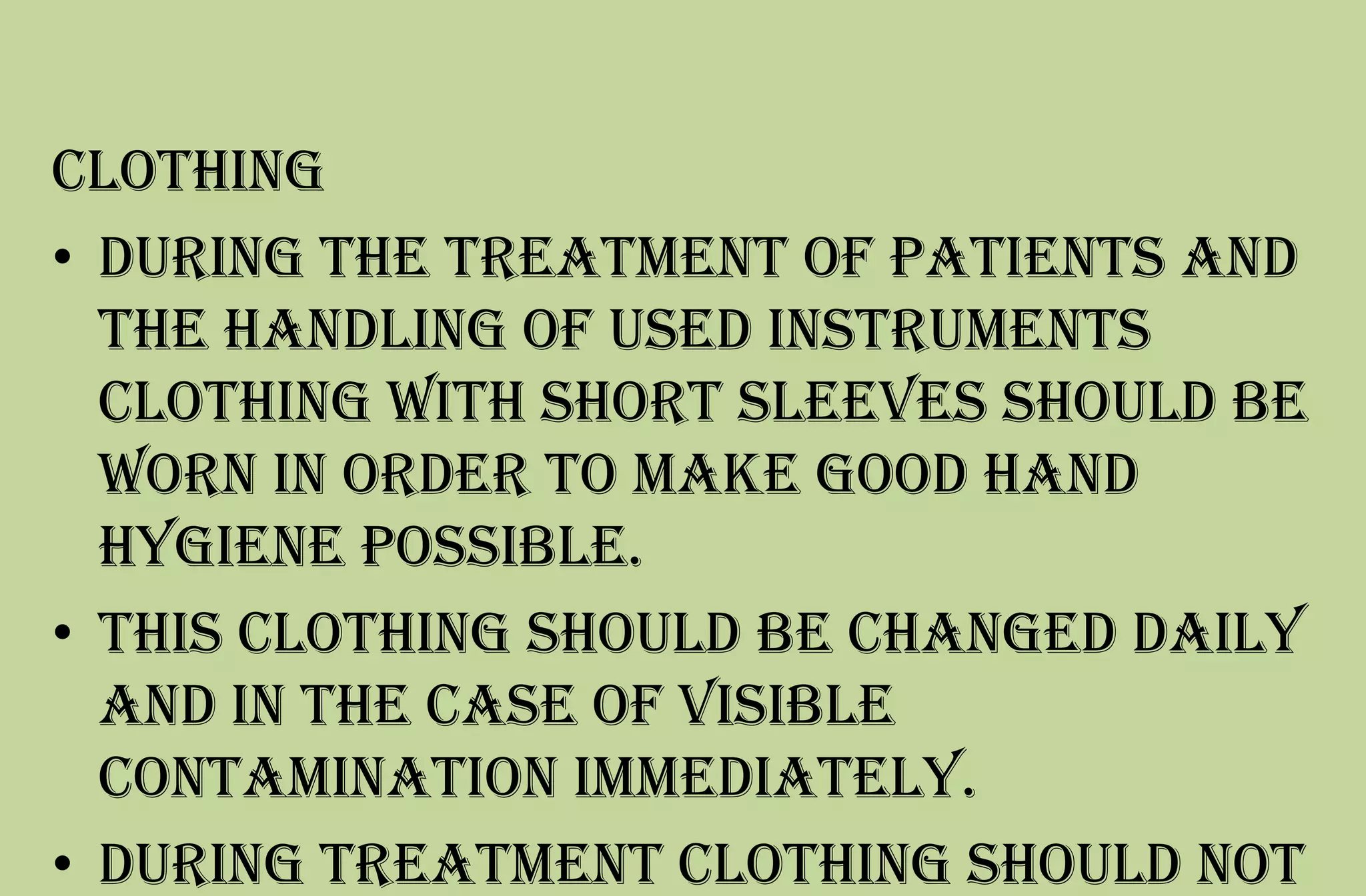
Eating, drinking and
smoking
Clothing
• During the treatment of patients and
the handling of used instruments
clothing with short sleeves should be
worn in order to make good hand
hygiene possible.
• This clothing should be changed daily
and in the case of visible
contamination immediately.
• During treatment clothing should not
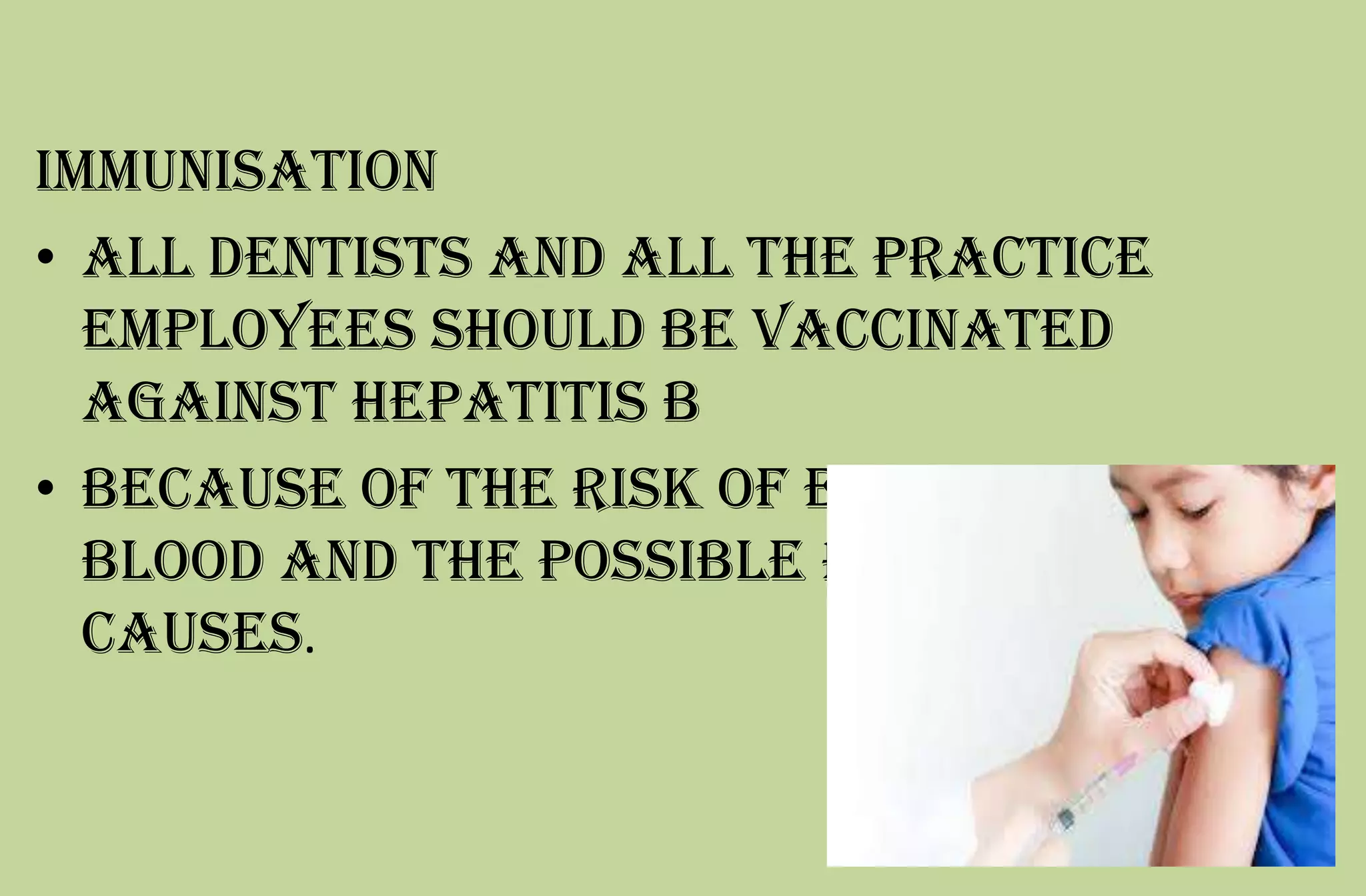
Immunisation
• All dentists and all the practice
employees should be vaccinated
against hepatitis B
• because of the risk of exposure to
blood and the possible risks it
causes.
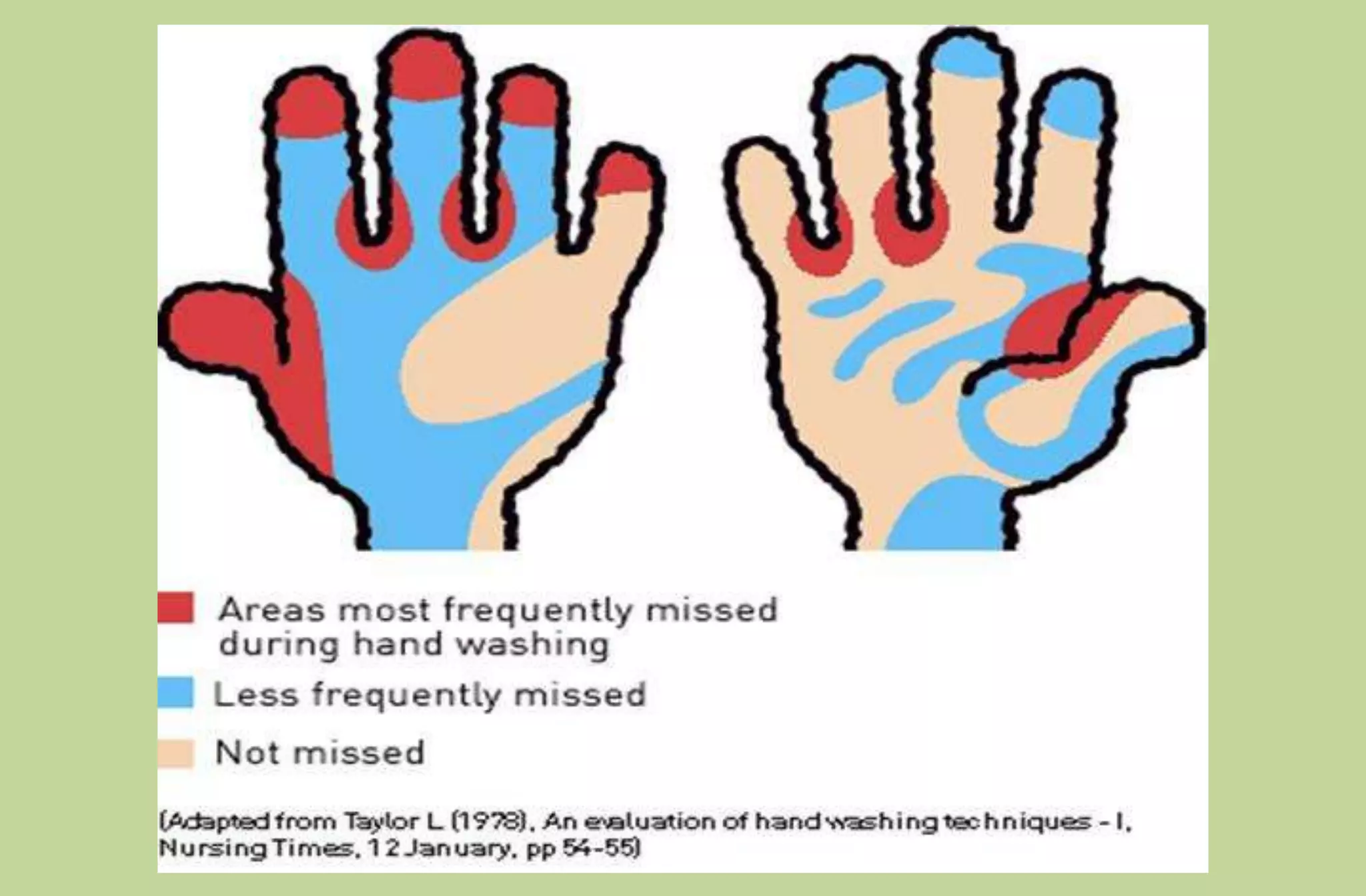
• A dedicated clean sink should be provided
in the clinic for hand-washing, and the taps
should be operated by elbow or foot
controls or sensors (no-touch technique).
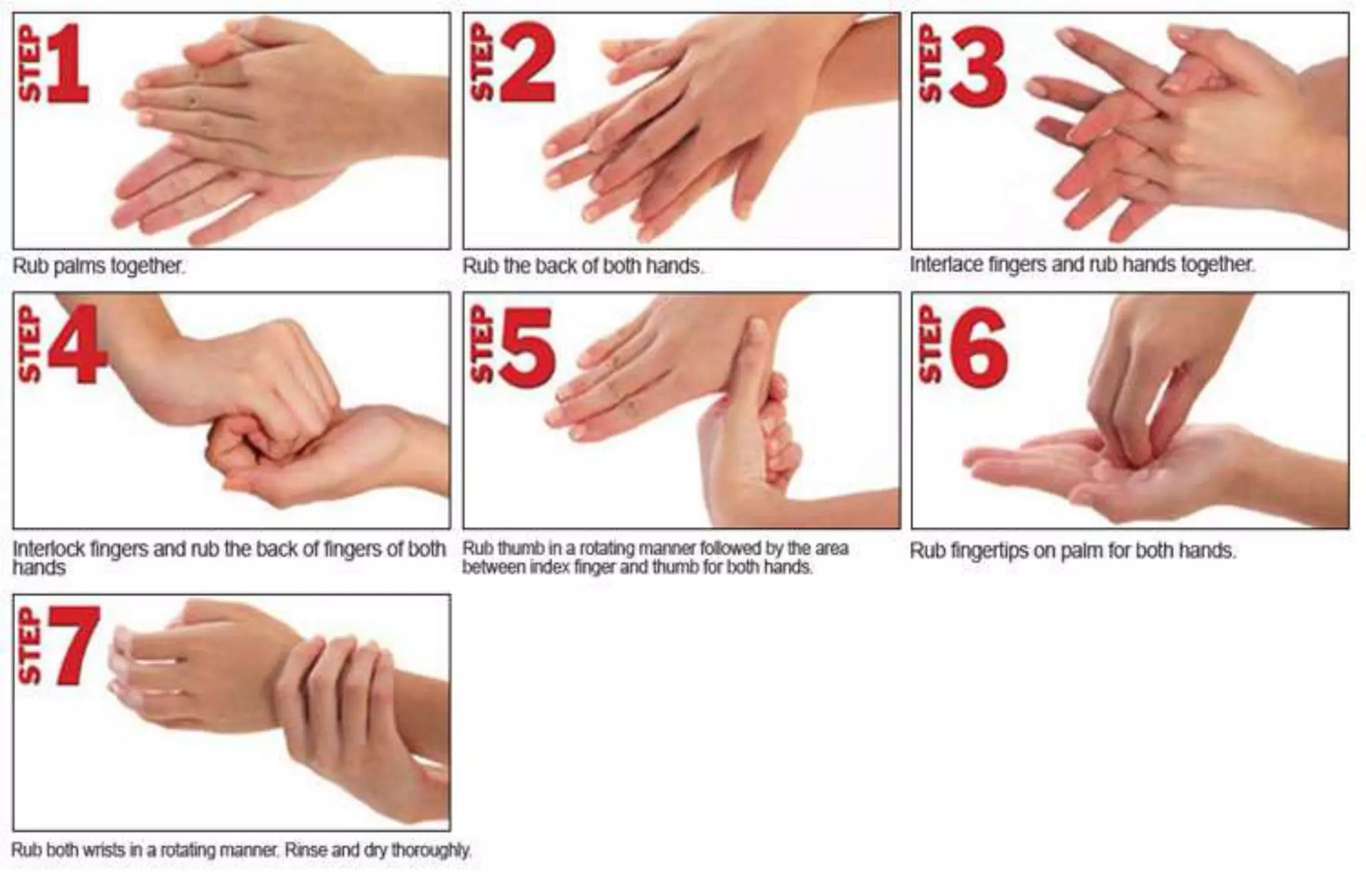
• Thoroughly wash the hands before and
after treating each patient using a
proprietary antimicrobial handwash (e.g.
chlorhexidine gluconate) before putting
on gloves.
• Hands should also be washed before
leaving the surgery for any purpose, and
upon return.
• Any obvious cuts or abrasions must be
covered with adhesive waterproof
dressings.
• Liquid (not bar) soap should be used for
routine handwashing, and antimicrobial
liquids for hand-washing prior to surgical
procedures.
• Hands should be dried thoroughly using
disposable paper towels, and gloves
should be worn as the last step before
treatment commences.
• Moisturizing cream should be used as a
Barrier
protection
• gloves
• eye shields
• face masks
• rubber dam isolation
Gloves
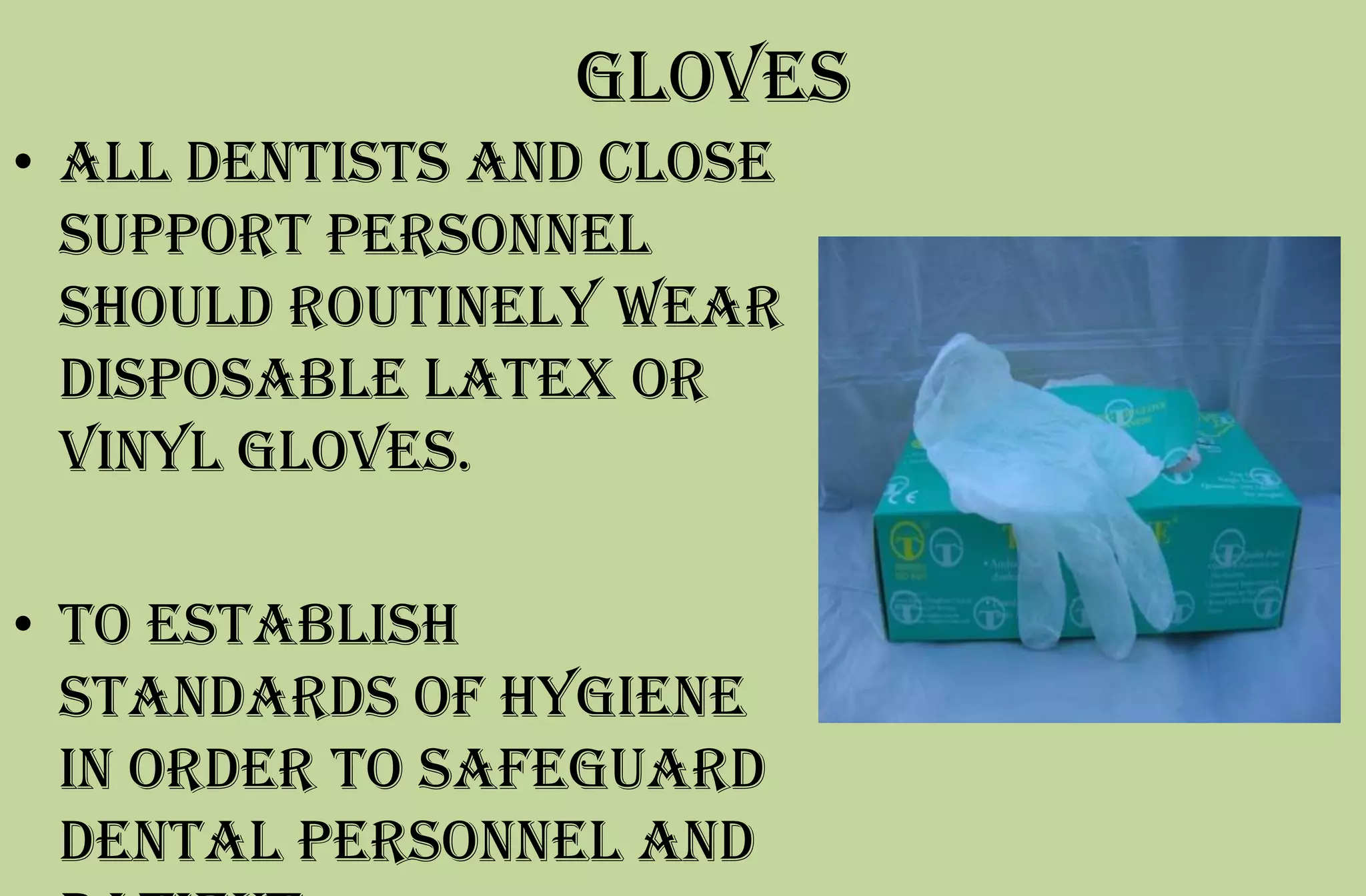
• All dentists and close
support personnel
should routinely wear
disposable latex or
vinyl gloves.
• to establish
standards of hygiene
in order to safeguard
dental personnel and
• Gloves should be checked for visible
defects immediately after wearing
them, and immediately changed when
breaches occur
• never wash and reuse
gloves.
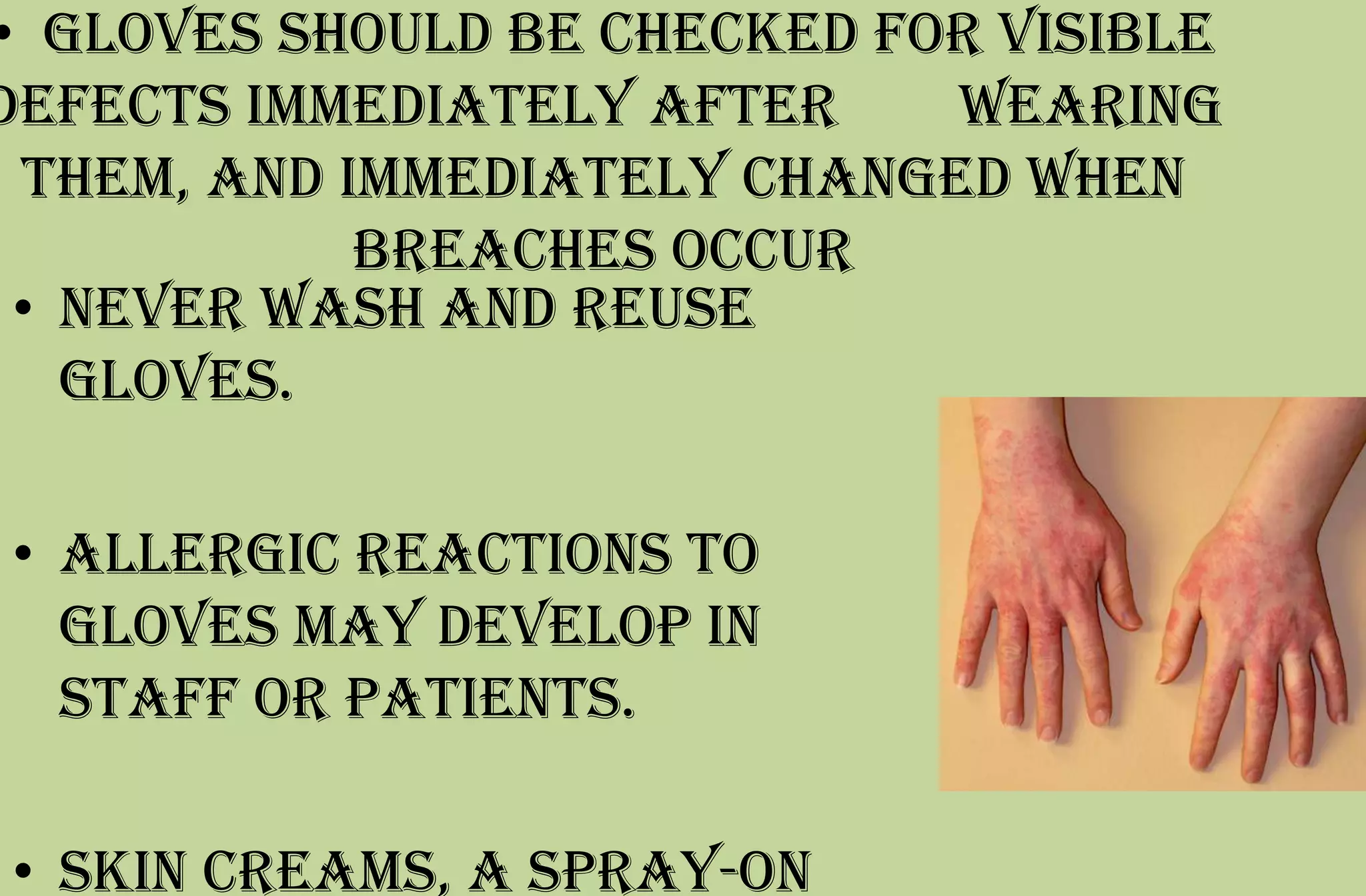
• allergic reactions to
gloves may develop in
staff or patients.
• Skin creams, a spray-on
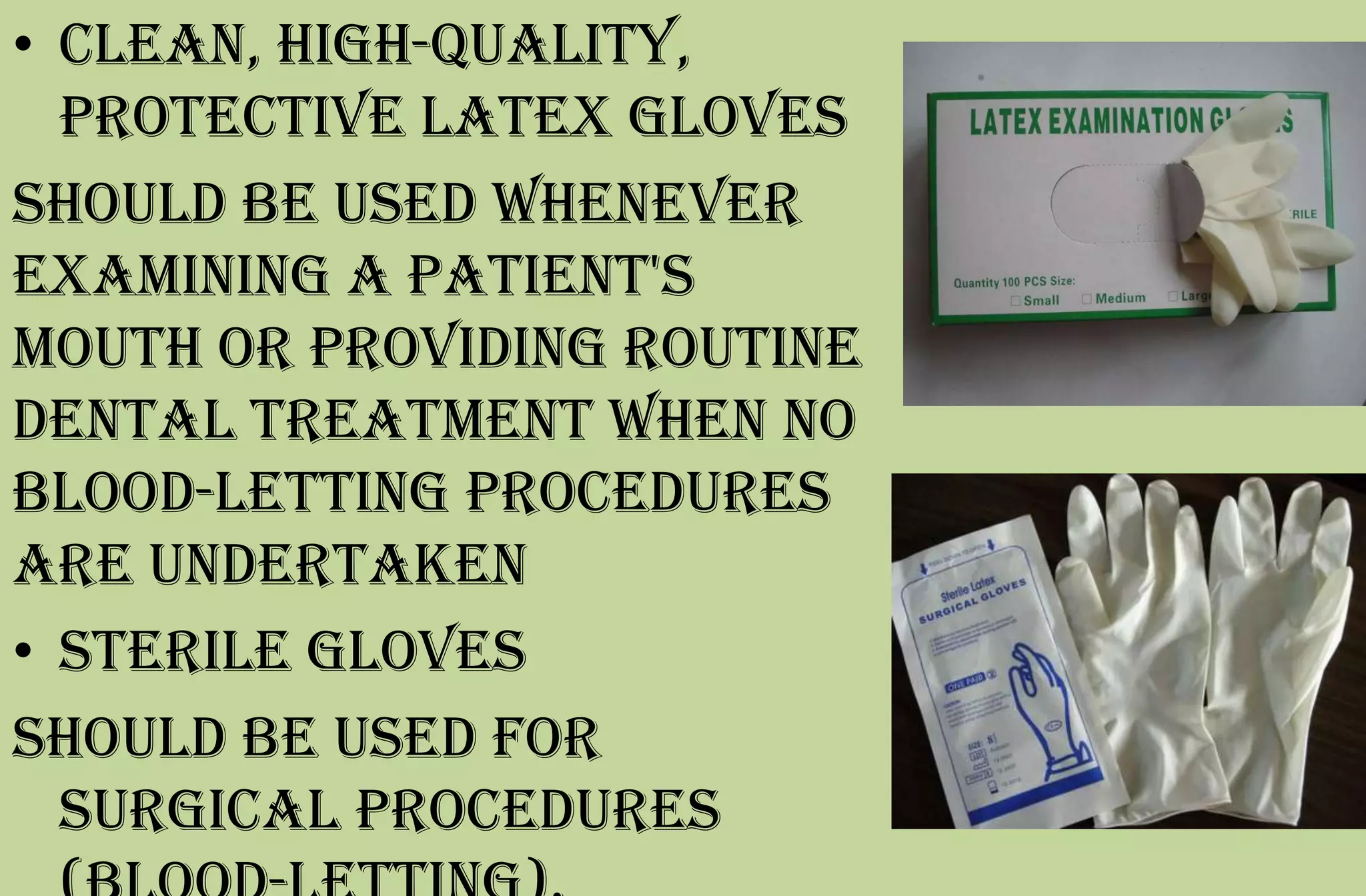
• clean, high-quality,
protective latex gloves
should be used whenever
examining a patient's
mouth or providing routine
dental treatment when no
blood-letting procedures
are undertaken
• sterile gloves
should be used for
surgical procedures
• heavy-duty utility gloves
should be used for cleaning
instruments or surfaces or handling
chemicals.
Eye shields.
• should be worn by dentists
and close support personnel
• to protect the conjunctivae
from spatter and debris
generated by high-speed
handpieces, scaling (manual
or ultrasonic), and polishing
and cleaning of instruments.
Face masks.
• clean mask should be
worn for each patient.
• particularly during
high-speed
instrumentation, as it
prevents inhalation of
contaminated aerosols
• The filtration efficacy of such
aerosols depends upon:
the material used for mask manufacture
(paper masks are inferior to glass
fibre and polypropylene types)
length of time the mask is worn
the useful life of a mask is about 30-
60 min, particularly if the ! mask is
wet.
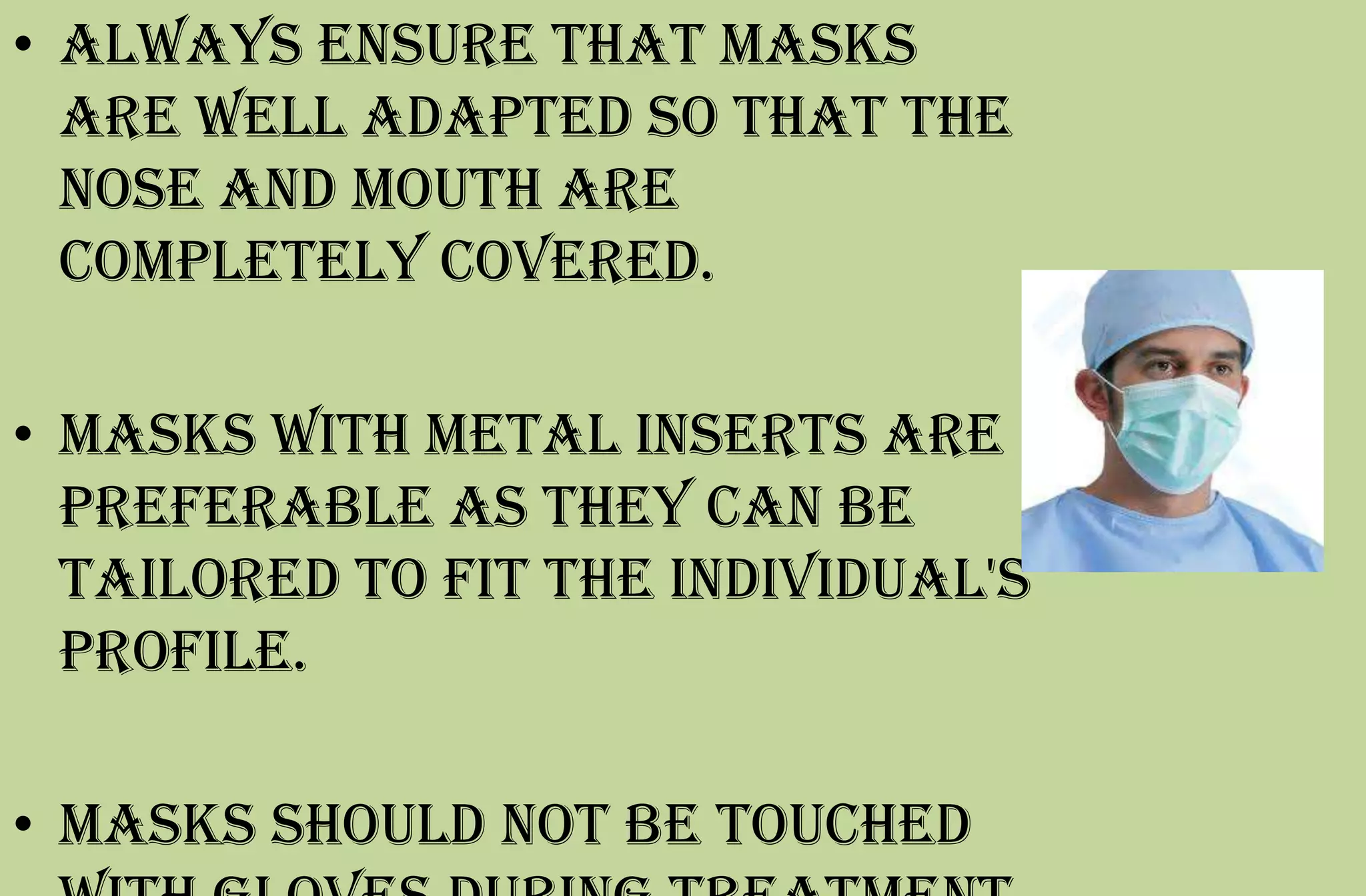
• Always ensure that masks
are well adapted so that the
nose and mouth are
completely covered.
• Masks with metal inserts are
preferable as they can be
tailored to fit the individual's
profile.
• Masks should not be touched
Rubber dam isolation
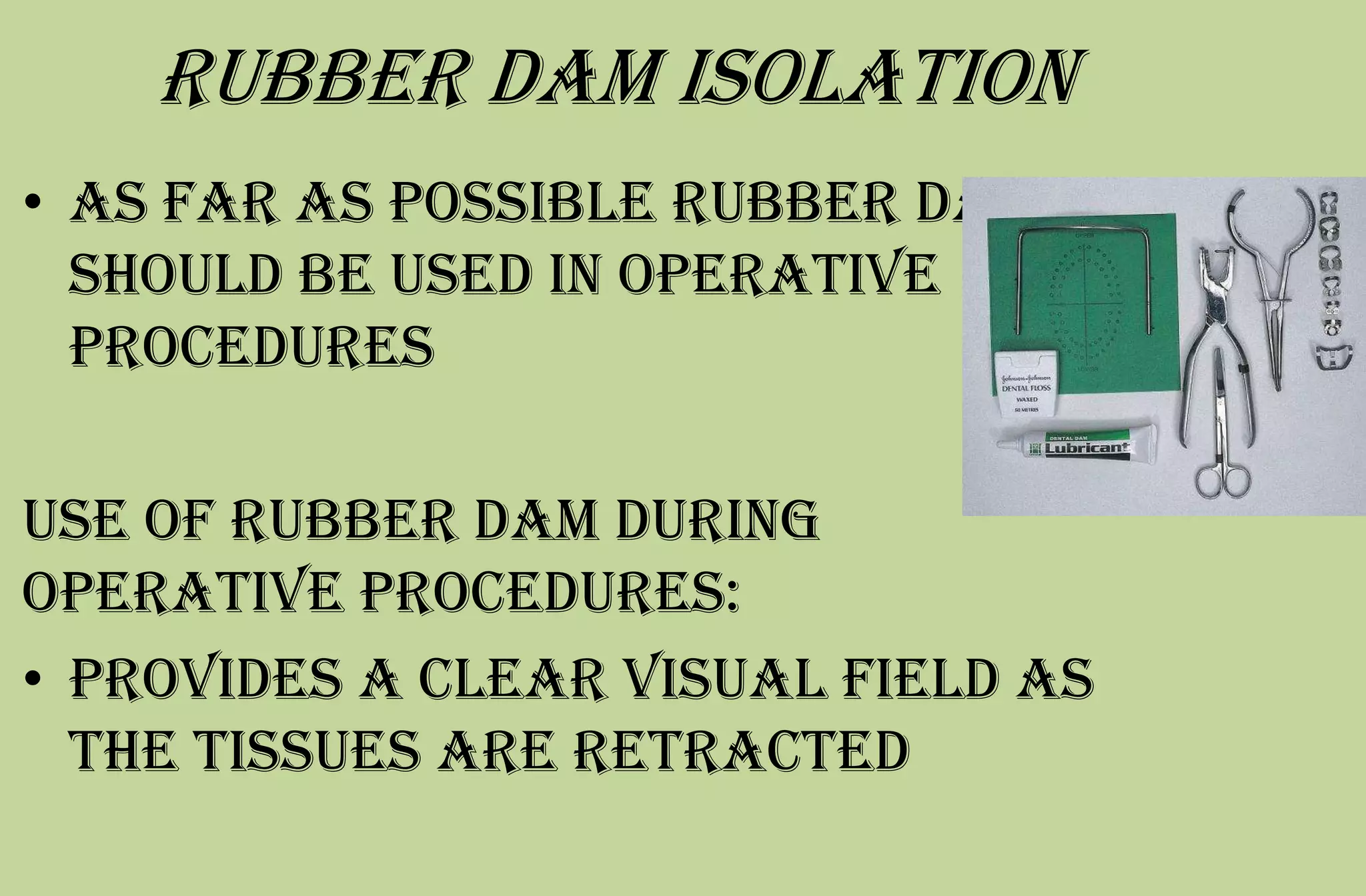
• As far as possible rubber dam
should be used in operative
procedures
Use of rubber dam during
operative procedures:
• provides a clear visual field as
the tissues are retracted
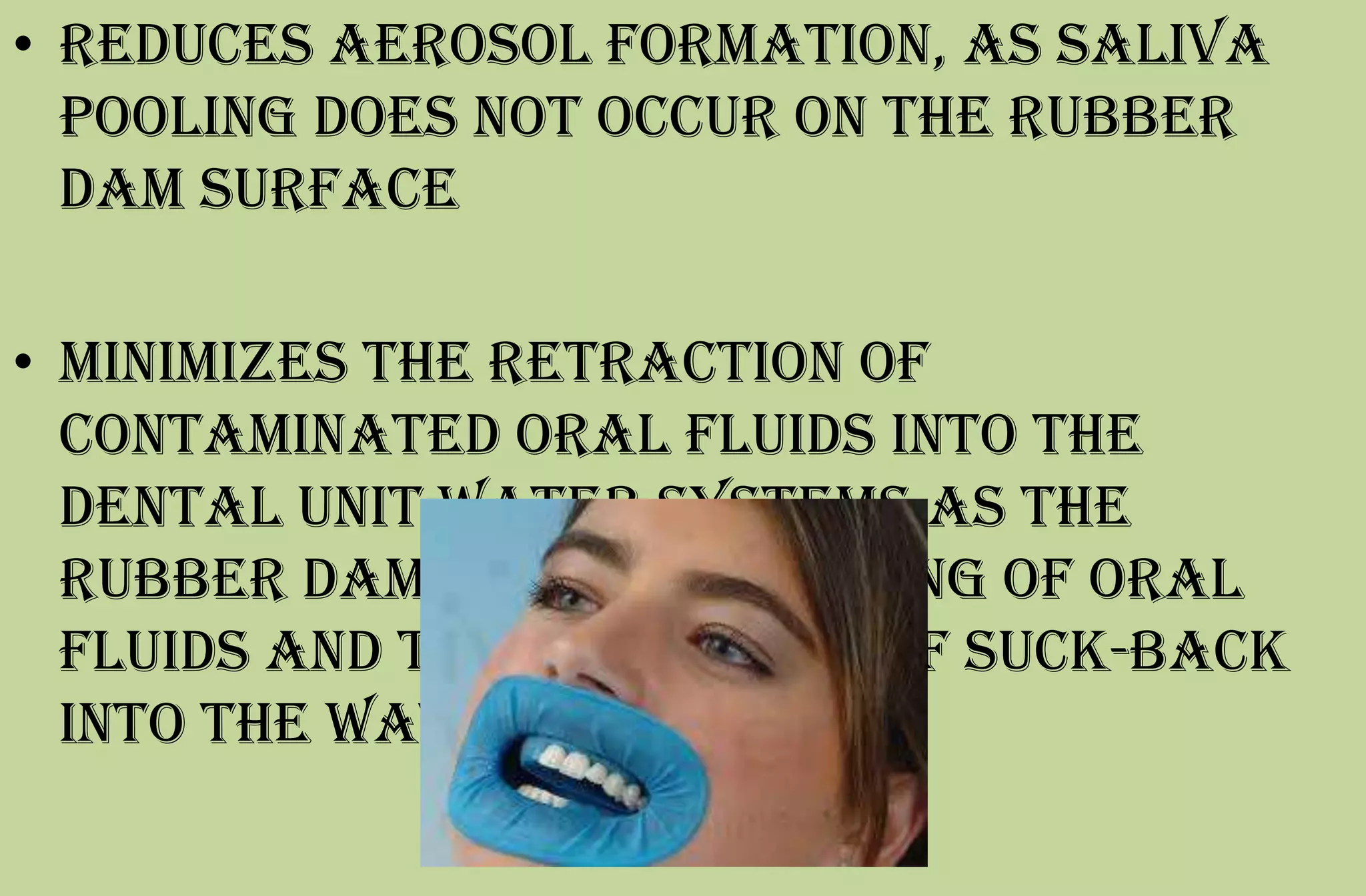
• reduces aerosol formation, as saliva
pooling does not occur on the rubber
dam surface
• minimizes the retraction of
contaminated oral fluids into the
dental unit water systems as the
rubber dam prevents pooling of oral
fluids and the possibility of suck-back
into the water lines.

Infection control procedures

  • 1.
  • 2.
    Elements in infection controlprotocol • patient evaluation • personal protection • instrument-cleaning, sterilization and storage • use of disposables • disinfection • laboratory asepsis • disposal of waste
  • 3.
    Patient evaluation• Complete medicalhistory should be taken prior to any treatment. • Update the medical history if any prior to each visit. –Identify the infectious diseases.
  • 4.
    Personal protection • personalhygiene • clinic clothing • barrier protection (gloves, eye shield, face masks, rubber dam isolation) • immunization procedures.
  • 5.
    Personal hygiene Nails • Nailsshould be cut short and be clean • Nail varnish should be intact, i.e. no chips or flakes. • Artificial nails are not permitted • Artificial nails can be a
  • 6.
    Jewellery • No rings,bracelets or wristwatches should be worn during work. • It is not possible to wash hands and/or lower arms if these are covered in jewellery Eating, drinking and smoking
  • 7.
    Clothing • During thetreatment of patients and the handling of used instruments clothing with short sleeves should be worn in order to make good hand hygiene possible. • This clothing should be changed daily and in the case of visible contamination immediately. • During treatment clothing should not
  • 8.
    Immunisation • All dentistsand all the practice employees should be vaccinated against hepatitis B • because of the risk of exposure to blood and the possible risks it causes.
  • 9.
    • A dedicatedclean sink should be provided in the clinic for hand-washing, and the taps should be operated by elbow or foot controls or sensors (no-touch technique). • Thoroughly wash the hands before and after treating each patient using a proprietary antimicrobial handwash (e.g. chlorhexidine gluconate) before putting on gloves. • Hands should also be washed before leaving the surgery for any purpose, and upon return.
  • 11.
    • Any obviouscuts or abrasions must be covered with adhesive waterproof dressings. • Liquid (not bar) soap should be used for routine handwashing, and antimicrobial liquids for hand-washing prior to surgical procedures. • Hands should be dried thoroughly using disposable paper towels, and gloves should be worn as the last step before treatment commences. • Moisturizing cream should be used as a
  • 13.
    Barrier protection • gloves • eyeshields • face masks • rubber dam isolation
  • 14.
    Gloves • All dentistsand close support personnel should routinely wear disposable latex or vinyl gloves. • to establish standards of hygiene in order to safeguard dental personnel and
  • 15.
    • Gloves shouldbe checked for visible defects immediately after wearing them, and immediately changed when breaches occur • never wash and reuse gloves. • allergic reactions to gloves may develop in staff or patients. • Skin creams, a spray-on
  • 16.
    • clean, high-quality, protectivelatex gloves should be used whenever examining a patient's mouth or providing routine dental treatment when no blood-letting procedures are undertaken • sterile gloves should be used for surgical procedures
  • 17.
    • heavy-duty utilitygloves should be used for cleaning instruments or surfaces or handling chemicals.
  • 18.
    Eye shields. • shouldbe worn by dentists and close support personnel • to protect the conjunctivae from spatter and debris generated by high-speed handpieces, scaling (manual or ultrasonic), and polishing and cleaning of instruments.
  • 19.
    Face masks. • cleanmask should be worn for each patient. • particularly during high-speed instrumentation, as it prevents inhalation of contaminated aerosols
  • 20.
    • The filtrationefficacy of such aerosols depends upon: the material used for mask manufacture (paper masks are inferior to glass fibre and polypropylene types) length of time the mask is worn the useful life of a mask is about 30- 60 min, particularly if the ! mask is wet.
  • 21.
    • Always ensurethat masks are well adapted so that the nose and mouth are completely covered. • Masks with metal inserts are preferable as they can be tailored to fit the individual's profile. • Masks should not be touched
  • 22.
    Rubber dam isolation •As far as possible rubber dam should be used in operative procedures Use of rubber dam during operative procedures: • provides a clear visual field as the tissues are retracted
  • 23.
    • reduces aerosolformation, as saliva pooling does not occur on the rubber dam surface • minimizes the retraction of contaminated oral fluids into the dental unit water systems as the rubber dam prevents pooling of oral fluids and the possibility of suck-back into the water lines.