AR3501 - ARCHITECTURE AND
URBANISM OF COLONIALISM AND
MODERNITY
Industrial revolution
Big ben
Industrial revolution
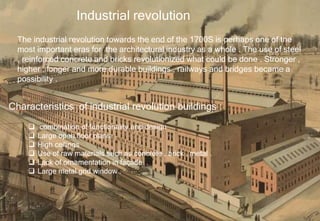
The industrial revolution towards the end of the 1700S is perhaps one of the
most important eras for the architectural industry as a whole . The use of steel
, reinforced concrete and bricks revolutionized what could be done . Stronger ,
higher , longer and more durable buildings , railways and bridges became a
possibility .
Characteristics of industrial revolution buildings :
 combination of functionality and design
 Large open floor plans
 High ceilings
 Use of raw materials such as concrete , brick , metal .
 Lack of ornamentation in façade .
 Large metal grid window .
BIG BEN
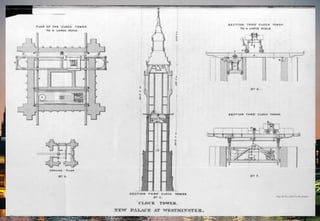
Big ben is a stunning clock tower located in England . It was built on the north end of the
Westminster palace in 1859 and is considered a masterpiece of gothic revival architecture .
 ALTERNATIVE NAME : ELIZABETH TOWER
 TYPE : CLOCK TOWER
 ARCHITECTURAL STYLE : GOTHIC REVIVAL
 LOCATION : WESTMINSTER , LONDON .
 HEIGHT :316 FEET (96 M )
 FLOOR COUNT :11
 ARCHITECT : AUGUSTUS PUGIN
THE BIRTH OF BIG BEN :
In the mid-19th century, London was rapidly expanding and modernizing. The city's population
had grown to over two million people, and the demand for accurate timekeeping was becoming
increasingly important. In response to this need, the British government commissioned the
construction of a new clock tower that would become known as Big Ben. Construction of the
tower began in 1843 and took over a decade to complete. When it was finished, the tower
stood at over 300 feet tall and housed the largest clock in the world at the time.
Its original purpose was to provide a reliable time signal for the ships in the Thames, as
well as to serve as a symbol of Britain's industrial and technological prowess. Today, Big
Ben is one of the most iconic landmarks in the world and continues to be a testament to
the ingenuity and innovation of the Industrial Revolution.
Big Ben's Role in the Industrial Revolution :
During the Industrial Revolution, the need for accurate timekeeping became increasingly
important as factories and transportation systems relied on precise timing to operate
efficiently. This is where Big Ben came into play. As one of the most accurate clocks of its
time, Big Ben was essential in ensuring that trains ran on schedule and workers arrived at
their jobs on time.
IMPACT ON SOCIETY :
BIG BEN BECOME A SYMBOL OF THE INDUSTRIAL REVOLUTION AND THE TECHNOLOGICAL
ADVANCEMENT OF THE TIME . IT ALSO PLAYED A SIGNIFICANT ROLE IN SOCIETY AS A TIMEKEEPER FOR
LONDONERS AND A SYMBOL OF BRITISH IDENTIFY AND PRIDE .
BIG BEN IN INDUSTRIAL REVOLUTION :
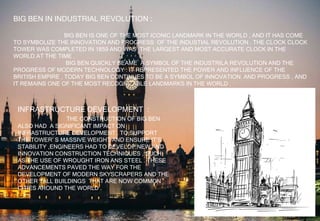
BIG BEN IS ONE OF THE MOST ICONIC LANDMARK IN THE WORLD , AND IT HAS COME
TO SYMBOLIZE THE INNOVATION AND PROGRESS OF THE INDUSTIAL REVOLUTION . THE CLOCK CLOCK
TOWER WAS COMPLETED IN 1859 AND WAS THE LARGEST AND MOST ACCURATE CLOCK IN THE
WORLD AT THE TIME .
BIG BEN QUICKLY BEAME A SYMBOL OF THE INDUSTRILA REVOLUTION AND THE
PROGRESS OF MODERN TECHNOLOGY . IT REPRESENTED THE POWER AND INFLUENCE OF THE
BRITISH EMPIRE , TODAY BIG BEN CONTINUES TO BE A SYMBOL OF INNOVATION AND PROGRESS , AND
IT REMAINS ONE OF THE MOST RECOGNIZABLE LANDMARKS IN THE WORLD .
INFRASTRUCTURE DEVELOPMENT :
THE CONSTRUCTION OF BIG BEN
ALSO HAD A SIGNIFICANT IMPACT ON
INFRASTRUCTURE DEVELOPMENT . TO SUPPORT
THE TOWER’ S MASSIVE WEIGHT AND ENSURE IT’S
STABILITY ,ENGINEERS HAD TO DEVELOP NEW AND
INNOVATION CONSTRUCTION TECHNIQUES , SUCH
AS THE USE OF WROUGHT IRON ANS STEEL . THESE
ADVANCEMENTS PAVED THE WAY FOR THE
DEVELOPMENT OF MODERN SKYSCRAPERS AND THE
OTHER TALL BUILDINGS THAT ARE NOW COMMON
CITIES AROUND THE WORLD .
DESIGN :
BIG BEN FEATURES A NEO-GOTHIC STYLE WITH INTRICATE DETAILLING AND A
PROMINENT CLOCK FACE .
MATERIALS :
BIG BEN WAS CONSTRUCTED PRIMARILY WITH BRICKS AND STONE ,WITH
CAST IRON USED FOR CLOCK MECHANISM .
FUNCTIONALITY :
BIG BEN SERVED AS A CLOCK TOWER AND SYMBOL OF LONDON POWER AND
INFLUENCE DURING THE INDUSTRIAL REVOLUTION .
THANK YOU

Industrial revolution big ben

  • 1.
    AR3501 - ARCHITECTUREAND URBANISM OF COLONIALISM AND MODERNITY Industrial revolution Big ben
  • 2.
    Industrial revolution The industrialrevolution towards the end of the 1700S is perhaps one of the most important eras for the architectural industry as a whole . The use of steel , reinforced concrete and bricks revolutionized what could be done . Stronger , higher , longer and more durable buildings , railways and bridges became a possibility . Characteristics of industrial revolution buildings :  combination of functionality and design  Large open floor plans  High ceilings  Use of raw materials such as concrete , brick , metal .  Lack of ornamentation in façade .  Large metal grid window .
  • 3.
    BIG BEN Big benis a stunning clock tower located in England . It was built on the north end of the Westminster palace in 1859 and is considered a masterpiece of gothic revival architecture .  ALTERNATIVE NAME : ELIZABETH TOWER  TYPE : CLOCK TOWER  ARCHITECTURAL STYLE : GOTHIC REVIVAL  LOCATION : WESTMINSTER , LONDON .  HEIGHT :316 FEET (96 M )  FLOOR COUNT :11  ARCHITECT : AUGUSTUS PUGIN THE BIRTH OF BIG BEN : In the mid-19th century, London was rapidly expanding and modernizing. The city's population had grown to over two million people, and the demand for accurate timekeeping was becoming increasingly important. In response to this need, the British government commissioned the construction of a new clock tower that would become known as Big Ben. Construction of the tower began in 1843 and took over a decade to complete. When it was finished, the tower stood at over 300 feet tall and housed the largest clock in the world at the time.
  • 4.
    Its original purposewas to provide a reliable time signal for the ships in the Thames, as well as to serve as a symbol of Britain's industrial and technological prowess. Today, Big Ben is one of the most iconic landmarks in the world and continues to be a testament to the ingenuity and innovation of the Industrial Revolution. Big Ben's Role in the Industrial Revolution : During the Industrial Revolution, the need for accurate timekeeping became increasingly important as factories and transportation systems relied on precise timing to operate efficiently. This is where Big Ben came into play. As one of the most accurate clocks of its time, Big Ben was essential in ensuring that trains ran on schedule and workers arrived at their jobs on time. IMPACT ON SOCIETY : BIG BEN BECOME A SYMBOL OF THE INDUSTRIAL REVOLUTION AND THE TECHNOLOGICAL ADVANCEMENT OF THE TIME . IT ALSO PLAYED A SIGNIFICANT ROLE IN SOCIETY AS A TIMEKEEPER FOR LONDONERS AND A SYMBOL OF BRITISH IDENTIFY AND PRIDE .
  • 5.
    BIG BEN ININDUSTRIAL REVOLUTION : BIG BEN IS ONE OF THE MOST ICONIC LANDMARK IN THE WORLD , AND IT HAS COME TO SYMBOLIZE THE INNOVATION AND PROGRESS OF THE INDUSTIAL REVOLUTION . THE CLOCK CLOCK TOWER WAS COMPLETED IN 1859 AND WAS THE LARGEST AND MOST ACCURATE CLOCK IN THE WORLD AT THE TIME . BIG BEN QUICKLY BEAME A SYMBOL OF THE INDUSTRILA REVOLUTION AND THE PROGRESS OF MODERN TECHNOLOGY . IT REPRESENTED THE POWER AND INFLUENCE OF THE BRITISH EMPIRE , TODAY BIG BEN CONTINUES TO BE A SYMBOL OF INNOVATION AND PROGRESS , AND IT REMAINS ONE OF THE MOST RECOGNIZABLE LANDMARKS IN THE WORLD . INFRASTRUCTURE DEVELOPMENT : THE CONSTRUCTION OF BIG BEN ALSO HAD A SIGNIFICANT IMPACT ON INFRASTRUCTURE DEVELOPMENT . TO SUPPORT THE TOWER’ S MASSIVE WEIGHT AND ENSURE IT’S STABILITY ,ENGINEERS HAD TO DEVELOP NEW AND INNOVATION CONSTRUCTION TECHNIQUES , SUCH AS THE USE OF WROUGHT IRON ANS STEEL . THESE ADVANCEMENTS PAVED THE WAY FOR THE DEVELOPMENT OF MODERN SKYSCRAPERS AND THE OTHER TALL BUILDINGS THAT ARE NOW COMMON CITIES AROUND THE WORLD .
  • 7.
    DESIGN : BIG BENFEATURES A NEO-GOTHIC STYLE WITH INTRICATE DETAILLING AND A PROMINENT CLOCK FACE . MATERIALS : BIG BEN WAS CONSTRUCTED PRIMARILY WITH BRICKS AND STONE ,WITH CAST IRON USED FOR CLOCK MECHANISM . FUNCTIONALITY : BIG BEN SERVED AS A CLOCK TOWER AND SYMBOL OF LONDON POWER AND INFLUENCE DURING THE INDUSTRIAL REVOLUTION .
  • 8.