Hupa
Maya Ingold
The Northern Coastal Region
They lived in the northern
coastal region.
Their climate of their region
was wet, and green.
The hupa’s food
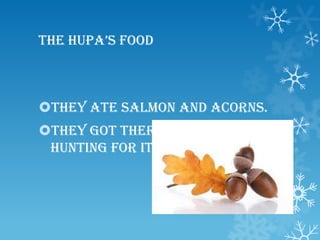
They ate Salmon and acorns.
They got there food by
hunting for it.
The Hupa’s housing
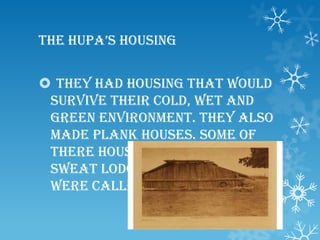
 They had housing that would
survive their cold, wet and
green environment. They also
made plank houses. Some of
there houses were called a
sweat lodge. Other houses
were called plank houses.
Natural Resources
The Hupa had a lot of palm
trees in there resources. The
women also wore deerskin
skirts that were sometimes
decorated with shells.
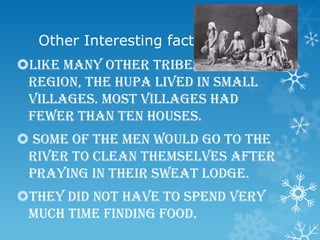
Other Interesting facts
Like many other tribes in the
region, the Hupa lived in small
villages. Most villages had
fewer than ten houses.
 Some of the men would go to the
river to clean themselves after
praying in their sweat lodge.
They did not have to spend very
much time finding food.
Works Cited
 http://www.photo-
dictionary.com/phrase/5439/acorns.htmlp.3
 http://www.ushistoricalarchive.com/index.php?route=produ
ct/product&product_id=1519US Historical Archive © 2013
pg.4
 http://logos.co/design/royalty-free-vector-of-a-double-
gree-palm-tree-logo-by-hit-toon-3040 pg.5
 http://panam1901.org/usgov/smithsonian/hupa.htm
http://www.quesper.com/Projects_Student/Native_Amer/N
A_Region_by_culture_CAC.htm
 constructed by J. P. Harrington in 1912. Picture from
California State Parks Website.

Indians mi!

  • 1.
  • 2.
    The Northern CoastalRegion They lived in the northern coastal region. Their climate of their region was wet, and green.
  • 3.
    The hupa’s food Theyate Salmon and acorns. They got there food by hunting for it.
  • 4.
    The Hupa’s housing They had housing that would survive their cold, wet and green environment. They also made plank houses. Some of there houses were called a sweat lodge. Other houses were called plank houses.
  • 5.
    Natural Resources The Hupahad a lot of palm trees in there resources. The women also wore deerskin skirts that were sometimes decorated with shells.
  • 6.
    Other Interesting facts Likemany other tribes in the region, the Hupa lived in small villages. Most villages had fewer than ten houses.  Some of the men would go to the river to clean themselves after praying in their sweat lodge. They did not have to spend very much time finding food.
  • 7.
    Works Cited  http://www.photo- dictionary.com/phrase/5439/acorns.htmlp.3 http://www.ushistoricalarchive.com/index.php?route=produ ct/product&product_id=1519US Historical Archive © 2013 pg.4  http://logos.co/design/royalty-free-vector-of-a-double- gree-palm-tree-logo-by-hit-toon-3040 pg.5  http://panam1901.org/usgov/smithsonian/hupa.htm http://www.quesper.com/Projects_Student/Native_Amer/N A_Region_by_culture_CAC.htm  constructed by J. P. Harrington in 1912. Picture from California State Parks Website.