How to Develop a Green Thumb
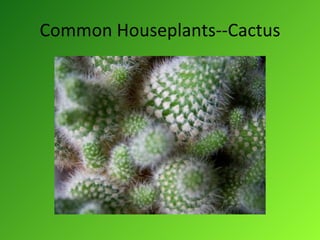
Common Houseplants--Cactus
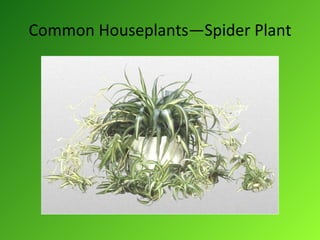
Common Houseplants—Spider Plant
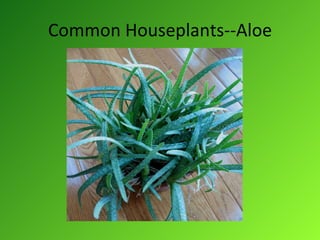
Common Houseplants--Aloe
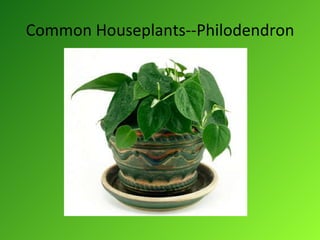
Common Houseplants--Philodendron
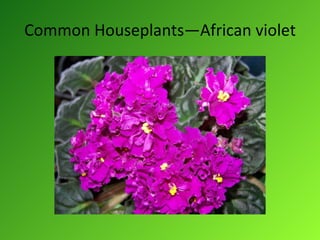
Common Houseplants—African violet
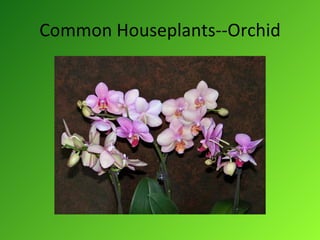
Common Houseplants--Orchid
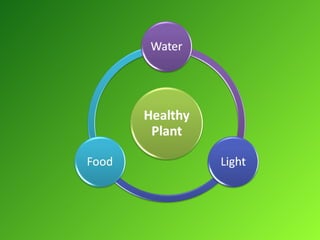
When it comes to keeping plants healthy, it’s all about balance.
 
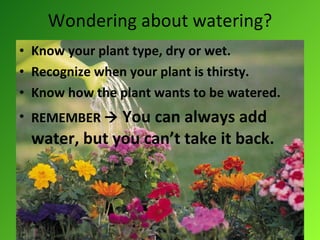
Wondering about watering? Know your plant type, dry or wet. Recognize when your plant is thirsty. Know how the plant wants to be watered. REMEMBER     You can always add water, but you can’t take it back.
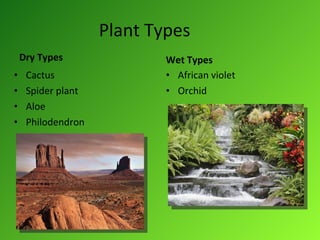
Plant Types Dry Types Cactus Spider plant Aloe Philodendron Wet Types African violet Orchid
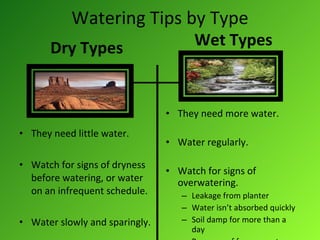
Watering Tips by Type Dry Types They need little water. Watch for signs of dryness before watering, or water on an infrequent schedule. Water slowly and sparingly. Wet Types They need more water. Water regularly. Watch for signs of overwatering. Leakage from planter Water isn’t absorbed quickly Soil damp for more than a day Presence of fungus gnats
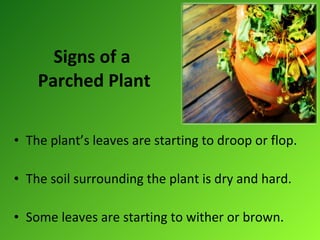
Signs of a   Parched Plant The plant’s leaves are starting to droop or flop. The soil surrounding the plant is dry and hard. Some leaves are starting to wither or brown.
Top-Down Watering Definition: Watering the exposed soil in the planter from the top Good for: Aloe Spider plant Philodendron CAUTION: Water the soil, not wet the plant.
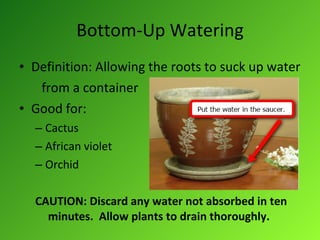
Bottom-Up Watering Definition: Allowing the roots to suck up water from a container Good for: Cactus African violet Orchid CAUTION: Discard any water not absorbed in ten  minutes.  Allow plants to drain thoroughly.
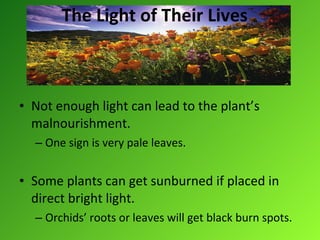
The Light of Their Lives Not enough light can lead to the plant’s malnourishment.  One sign is very pale leaves. Some plants can get sunburned if placed in direct bright light. Orchids’ roots or leaves will get black burn spots.
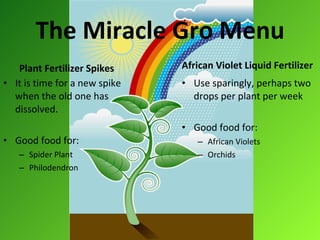
The Miracle Gro Menu Plant Fertilizer Spikes It is time for a new spike when the old one has dissolved. Good food for: Spider Plant Philodendron African Violet Liquid Fertilizer Use sparingly, perhaps two drops per plant per week Good food for: African Violets Orchids
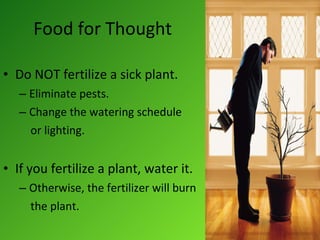
Food for Thought Do NOT fertilize a sick plant. Eliminate pests. Change the watering schedule or lighting. If you fertilize a plant, water it. Otherwise, the fertilizer will burn  the plant.
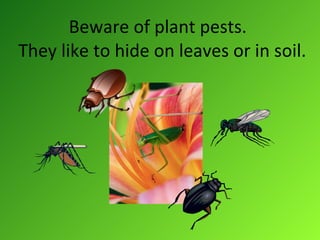
Beware of plant pests.   They like to hide on leaves or in soil.
Prevent Problems Isolate sick plants from healthy plants. You don’t want fungus, blight, or pest infestations to spread. Keep new plants in isolation for a month. Make sure the new plant is healthy and pest-free before exposing your other plants to it.

Ignite presentation

  • 1.
    How to Developa Green Thumb
  • 2.
  • 3.
  • 4.
  • 5.
  • 6.
  • 7.
  • 8.
    When it comesto keeping plants healthy, it’s all about balance.
  • 9.
  • 10.
    Wondering about watering?Know your plant type, dry or wet. Recognize when your plant is thirsty. Know how the plant wants to be watered. REMEMBER  You can always add water, but you can’t take it back.
  • 11.
    Plant Types DryTypes Cactus Spider plant Aloe Philodendron Wet Types African violet Orchid
  • 12.
    Watering Tips byType Dry Types They need little water. Watch for signs of dryness before watering, or water on an infrequent schedule. Water slowly and sparingly. Wet Types They need more water. Water regularly. Watch for signs of overwatering. Leakage from planter Water isn’t absorbed quickly Soil damp for more than a day Presence of fungus gnats
  • 13.
    Signs of a Parched Plant The plant’s leaves are starting to droop or flop. The soil surrounding the plant is dry and hard. Some leaves are starting to wither or brown.
  • 14.
    Top-Down Watering Definition:Watering the exposed soil in the planter from the top Good for: Aloe Spider plant Philodendron CAUTION: Water the soil, not wet the plant.
  • 15.
    Bottom-Up Watering Definition:Allowing the roots to suck up water from a container Good for: Cactus African violet Orchid CAUTION: Discard any water not absorbed in ten minutes. Allow plants to drain thoroughly.
  • 16.
    The Light ofTheir Lives Not enough light can lead to the plant’s malnourishment. One sign is very pale leaves. Some plants can get sunburned if placed in direct bright light. Orchids’ roots or leaves will get black burn spots.
  • 17.
    The Miracle GroMenu Plant Fertilizer Spikes It is time for a new spike when the old one has dissolved. Good food for: Spider Plant Philodendron African Violet Liquid Fertilizer Use sparingly, perhaps two drops per plant per week Good food for: African Violets Orchids
  • 18.
    Food for ThoughtDo NOT fertilize a sick plant. Eliminate pests. Change the watering schedule or lighting. If you fertilize a plant, water it. Otherwise, the fertilizer will burn the plant.
  • 19.
    Beware of plantpests. They like to hide on leaves or in soil.
  • 20.
    Prevent Problems Isolatesick plants from healthy plants. You don’t want fungus, blight, or pest infestations to spread. Keep new plants in isolation for a month. Make sure the new plant is healthy and pest-free before exposing your other plants to it.