IDENDIFYING AND SELECTING
SYSTEM DEVELOPMENT PROJECT
Presented by:Aashika Lamichhane
SDP
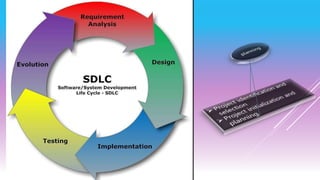
SDP means System Development
Project. System Development
Project is the process of defining,
designing, testing and
implementing a new software
application or program.
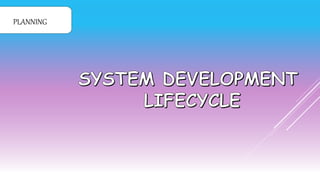
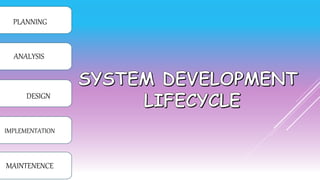
PLANNING
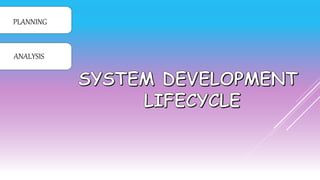
PLANNING
ANALYSIS
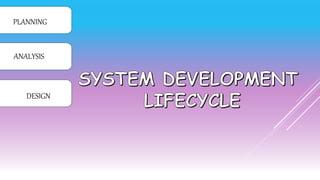
PLANNING
ANALYSIS
DESIGN
PLANNING
ANALYSIS
IMPLEMENTATION
DESIGN
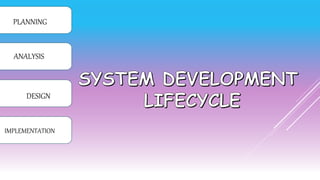
PLANNING
ANALYSIS
IMPLEMENTATION
DESIGN
MAINTENENCE
IDENTIFYING AND SELECTING SDP
Three main steps:
Identifying potential development project.
Classifying and ranking IS development
project.
Selecting IS development projects.
IDENTIFYING AND SELECTING SDP
a) Identifying Potential Development
Projects
 Projects are identified by:
Top Management-greater strategic focus,
largest project size
Steering Committee-cross function focus,
formal cost-benefit analysis
User Department-narrow non-strategic focus,
fewer users and business functions
Development group-fewer development
delays, less concern on cost-benefit analysis
IDENTIFYING AND SELECTING SDP
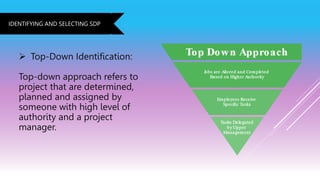
 Top-Down Identification:
Top-down approach refers to
project that are determined,
planned and assigned by
someone with high level of
authority and a project
manager.
IDENTIFYING AND SELECTING SDP
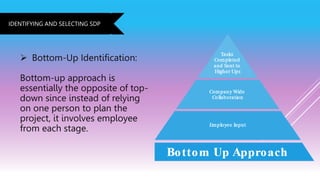
 Bottom-Up Identification:
Bottom-up approach is
essentially the opposite of top-
down since instead of relying
on one person to plan the
project, it involves employee
from each stage.
IDENTIFYING AND SELECTING SDP
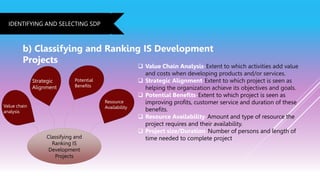
b) Classifying and Ranking IS Development
Projects
 Value Chain Analysis-Extent to which activities add value
and costs when developing products and/or services.
 Strategic Alignment-Extent to which project is seen as
helping the organization achieve its objectives and goals.
 Potential Benefits-Extent to which project is seen as
improving profits, customer service and duration of these
benefits.
 Resource Availability-Amount and type of resource the
project requires and their availability.
 Project size/Duration-Number of persons and length of
time needed to complete project
Classifying and
Ranking IS
Development
Projects
Strategic
Alignment
Potential
Benefits
Resource
Availability
Value chain
analysis
IDENTIFYING AND SELECTING SDP
c) Selecting IS development Projects.
 Actual selection of projects for further development
 Process of considering short and long-term projects
 Projects most likely to achieve business objectives are
selected
IDENTIFYING AND SELECTING SDP
Conclusion:
A clear understanding of the business and
the desired role of information system in
achieving organizational goals is a
precondition to improving the identification
and selecting process.
Outcomes
IDENTIFYING AND SELECTING SYSTEM DEVELOPMENT PROJECT

IDENTIFYING AND SELECTING SYSTEM DEVELOPMENT PROJECT

  • 1.
    IDENDIFYING AND SELECTING SYSTEMDEVELOPMENT PROJECT Presented by:Aashika Lamichhane
  • 3.
    SDP SDP means SystemDevelopment Project. System Development Project is the process of defining, designing, testing and implementing a new software application or program.
  • 5.
  • 6.
  • 7.
  • 8.
  • 9.
  • 11.
    IDENTIFYING AND SELECTINGSDP Three main steps: Identifying potential development project. Classifying and ranking IS development project. Selecting IS development projects.
  • 12.
    IDENTIFYING AND SELECTINGSDP a) Identifying Potential Development Projects  Projects are identified by: Top Management-greater strategic focus, largest project size Steering Committee-cross function focus, formal cost-benefit analysis User Department-narrow non-strategic focus, fewer users and business functions Development group-fewer development delays, less concern on cost-benefit analysis
  • 13.
    IDENTIFYING AND SELECTINGSDP  Top-Down Identification: Top-down approach refers to project that are determined, planned and assigned by someone with high level of authority and a project manager.
  • 14.
    IDENTIFYING AND SELECTINGSDP  Bottom-Up Identification: Bottom-up approach is essentially the opposite of top- down since instead of relying on one person to plan the project, it involves employee from each stage.
  • 15.
    IDENTIFYING AND SELECTINGSDP b) Classifying and Ranking IS Development Projects  Value Chain Analysis-Extent to which activities add value and costs when developing products and/or services.  Strategic Alignment-Extent to which project is seen as helping the organization achieve its objectives and goals.  Potential Benefits-Extent to which project is seen as improving profits, customer service and duration of these benefits.  Resource Availability-Amount and type of resource the project requires and their availability.  Project size/Duration-Number of persons and length of time needed to complete project Classifying and Ranking IS Development Projects Strategic Alignment Potential Benefits Resource Availability Value chain analysis
  • 16.
    IDENTIFYING AND SELECTINGSDP c) Selecting IS development Projects.  Actual selection of projects for further development  Process of considering short and long-term projects  Projects most likely to achieve business objectives are selected
  • 17.
    IDENTIFYING AND SELECTINGSDP Conclusion: A clear understanding of the business and the desired role of information system in achieving organizational goals is a precondition to improving the identification and selecting process. Outcomes

Editor's Notes

  • #16 VCA- analyzing an organizations activities to determine where value is added to products/services and the costs incurred for doing so.