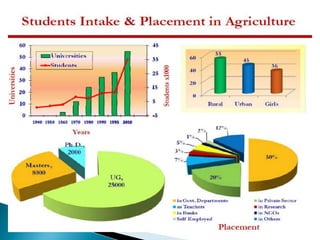
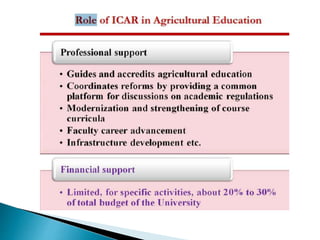
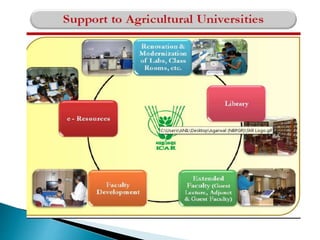
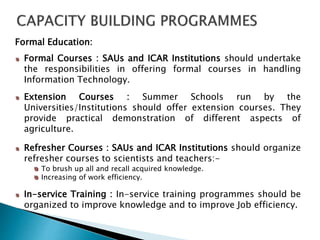
This document discusses the importance of information and communication technology (ICT) in agricultural education and capacity building. It notes that ICT has replaced traditional teaching methods with smart classrooms, e-learning, and remote teaching. ICT provides access to updated information through multimedia and helps build the professional competence of teachers. Key aspects of ICT that help with capacity building include educational content, e-resources, teaching portals, and institutional repositories. The goals of ICT-enabled capacity building programs are to help agricultural scientists and teachers keep updated on new developments and improve their skills and career prospects. Both formal education through university courses and informal education through activities like workshops are discussed.