LOCATION
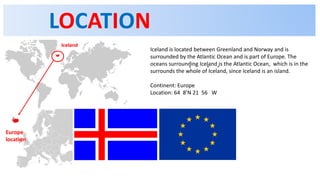
Iceland is located between Greenland and Norway and is
surrounded by the Atlantic Ocean and is part of Europe. The
oceans surrounding Iceland is the Atlantic Ocean, which is in the
surrounds the whole of Iceland, since Iceland is an island.
Continent: Europe
Location: 64 8’N 21 56 W
Europe
location
HEMISPHERE
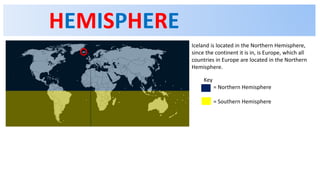
Iceland is located in the Northern Hemisphere,
since the continent it is in, is Europe, which all
countries in Europe are located in the Northern
Hemisphere.
Key
= Northern Hemisphere
= Southern Hemisphere
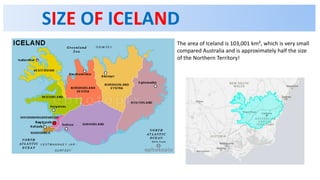
This topographic map of Iceland shows the countries
elevation above sea level, as well as the major river
systems and the glaciers.
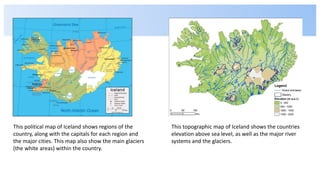
This political map of Iceland shows regions of the
country, along with the capitals for each region and
the major cities. This map also show the main glaciers
(the white areas) within the country.
SIZE OF ICELAND
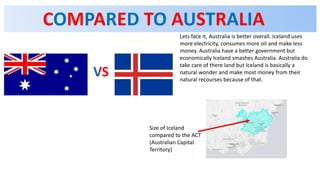
The area of Iceland is 103,001 km², which is very small
compared Australia and is approximately half the size
of the Northern Territory!
COMPARED TO AUSTRALIA
Lets face it, Australia is better overall. Iceland uses
more electricity, consumes more oil and make less
money. Australia have a better government but
economically Iceland smashes Australia. Australia do
take care of there land but Iceland is basically a
natural wonder and make most money from their
natural recourses because of that.
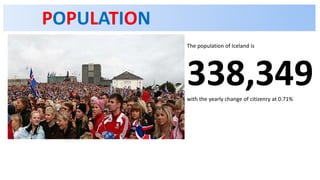
Size of Iceland
compared to the ACT
(Australian Capital
Territory)
POPULATION
The population of Iceland is
338,349with the yearly change of citizenry at 0.71%
NATIONAL ANIMAL & PLANT
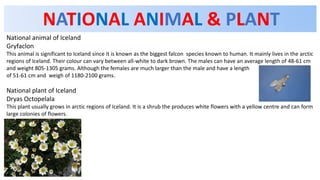
National animal of Iceland
Gryfaclon
This animal is significant to Iceland since it is known as the biggest falcon species known to human. It mainly lives in the arctic
regions of Iceland. Their colour can vary between all-white to dark brown. The males can have an average length of 48-61 cm
and weight 805-1305 grams. Although the females are much larger than the male and have a length
of 51-61 cm and weigh of 1180-2100 grams.
National plant of Iceland
Dryas Octopelala
This plant usually grows in arctic regions of Iceland. It is a shrub the produces white flowers with a yellow centre and can form
large colonies of flowers.
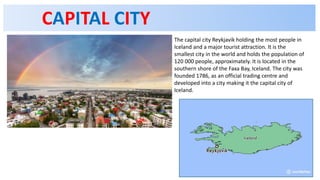
CAPITAL CITY
The capital city Reykjavik holding the most people in
Iceland and a major tourist attraction. It is the
smallest city in the world and holds the population of
120 000 people, approximately. It is located in the
southern shore of the Faxa Bay, Iceland. The city was
founded 1786, as an official trading centre and
developed into a city making it the capital city of
Iceland.
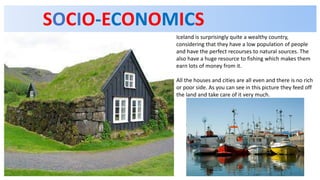
SOCIO-ECONOMICS
Iceland is surprisingly quite a wealthy country,
considering that they have a low population of people
and have the perfect recourses to natural sources. The
also have a huge resource to fishing which makes them
earn lots of money from it.
All the houses and cities are all even and there is no rich
or poor side. As you can see in this picture they feed off
the land and take care of it very much.
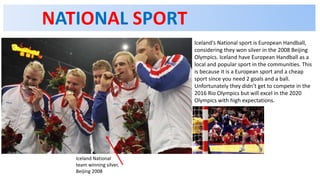
NATIONAL SPORT
Iceland's National sport is European Handball,
considering they won silver in the 2008 Beijing
Olympics. Iceland have European Handball as a
local and popular sport in the communities. This
is because it is a European sport and a cheap
sport since you need 2 goals and a ball.
Unfortunately they didn’t get to compete in the
2016 Rio Olympics but will excel in the 2020
Olympics with high expectations.
Iceland National
team winning silver,
Beijing 2008
CELEBRATIONS!
Twelfth night
This is celebrated on sixth of January as the last day of Christmas.
Bóndadagur
This celebration is related to fathers day but is celebrated in a different way and usually falls in January . Every women in Iceland
gives a gift to each of their well known men in their lives. They also often give them traditional food to eat, which is related to the
Thorri Festivites (An ancient festival, which is still popular in Iceland).
Thorrablót
This is the festival of the 'Thorri feast' and is celebrated in mid-January to mid-February. The people all wear traditional clothing
and cooked traditional meals along with music as well.
Sjómannadagur
This celebration is dedicated to all the Icelandic seamen and is during the first day of Sunday on June. It is celebrated with fun
games for the kids around all the communities around Iceland.
Icelandic Republic day
The Icelandic Republic day is on the 17th of June which memorialize the creation of the republic in 1944.
PHYSICAL GEOGRAPHY
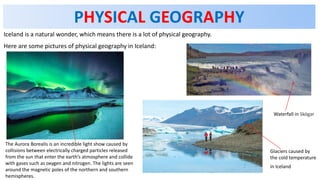
Iceland is a natural wonder, which means there is a lot of physical geography.
Here are some pictures of physical geography in Iceland:
Glaciers caused by
the cold temperature
in Iceland
Waterfall in Skógar
The Aurora Borealis is an incredible light show caused by
collisions between electrically charged particles released
from the sun that enter the earth’s atmosphere and collide
with gases such as oxygen and nitrogen. The lights are seen
around the magnetic poles of the northern and southern
hemispheres.
HUMAN GEOGRAPHY
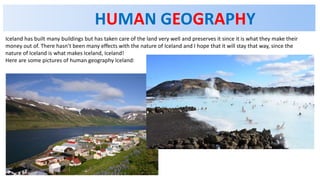
Iceland has built many buildings but has taken care of the land very well and preserves it since it is what they make their
money out of. There hasn’t been many effects with the nature of Iceland and I hope that it will stay that way, since the
nature of Iceland is what makes Iceland, Iceland!
Here are some pictures of human geography Iceland:

Iceland

  • 2.
    LOCATION Iceland is locatedbetween Greenland and Norway and is surrounded by the Atlantic Ocean and is part of Europe. The oceans surrounding Iceland is the Atlantic Ocean, which is in the surrounds the whole of Iceland, since Iceland is an island. Continent: Europe Location: 64 8’N 21 56 W Europe location
  • 3.
    HEMISPHERE Iceland is locatedin the Northern Hemisphere, since the continent it is in, is Europe, which all countries in Europe are located in the Northern Hemisphere. Key = Northern Hemisphere = Southern Hemisphere
  • 4.
    This topographic mapof Iceland shows the countries elevation above sea level, as well as the major river systems and the glaciers. This political map of Iceland shows regions of the country, along with the capitals for each region and the major cities. This map also show the main glaciers (the white areas) within the country.
  • 5.
    SIZE OF ICELAND Thearea of Iceland is 103,001 km², which is very small compared Australia and is approximately half the size of the Northern Territory!
  • 6.
    COMPARED TO AUSTRALIA Letsface it, Australia is better overall. Iceland uses more electricity, consumes more oil and make less money. Australia have a better government but economically Iceland smashes Australia. Australia do take care of there land but Iceland is basically a natural wonder and make most money from their natural recourses because of that. Size of Iceland compared to the ACT (Australian Capital Territory)
  • 7.
    POPULATION The population ofIceland is 338,349with the yearly change of citizenry at 0.71%
  • 8.
    NATIONAL ANIMAL &PLANT National animal of Iceland Gryfaclon This animal is significant to Iceland since it is known as the biggest falcon species known to human. It mainly lives in the arctic regions of Iceland. Their colour can vary between all-white to dark brown. The males can have an average length of 48-61 cm and weight 805-1305 grams. Although the females are much larger than the male and have a length of 51-61 cm and weigh of 1180-2100 grams. National plant of Iceland Dryas Octopelala This plant usually grows in arctic regions of Iceland. It is a shrub the produces white flowers with a yellow centre and can form large colonies of flowers.
  • 9.
    CAPITAL CITY The capitalcity Reykjavik holding the most people in Iceland and a major tourist attraction. It is the smallest city in the world and holds the population of 120 000 people, approximately. It is located in the southern shore of the Faxa Bay, Iceland. The city was founded 1786, as an official trading centre and developed into a city making it the capital city of Iceland.
  • 10.
    SOCIO-ECONOMICS Iceland is surprisinglyquite a wealthy country, considering that they have a low population of people and have the perfect recourses to natural sources. The also have a huge resource to fishing which makes them earn lots of money from it. All the houses and cities are all even and there is no rich or poor side. As you can see in this picture they feed off the land and take care of it very much.
  • 11.
    NATIONAL SPORT Iceland's Nationalsport is European Handball, considering they won silver in the 2008 Beijing Olympics. Iceland have European Handball as a local and popular sport in the communities. This is because it is a European sport and a cheap sport since you need 2 goals and a ball. Unfortunately they didn’t get to compete in the 2016 Rio Olympics but will excel in the 2020 Olympics with high expectations. Iceland National team winning silver, Beijing 2008
  • 12.
    CELEBRATIONS! Twelfth night This iscelebrated on sixth of January as the last day of Christmas. Bóndadagur This celebration is related to fathers day but is celebrated in a different way and usually falls in January . Every women in Iceland gives a gift to each of their well known men in their lives. They also often give them traditional food to eat, which is related to the Thorri Festivites (An ancient festival, which is still popular in Iceland). Thorrablót This is the festival of the 'Thorri feast' and is celebrated in mid-January to mid-February. The people all wear traditional clothing and cooked traditional meals along with music as well. Sjómannadagur This celebration is dedicated to all the Icelandic seamen and is during the first day of Sunday on June. It is celebrated with fun games for the kids around all the communities around Iceland. Icelandic Republic day The Icelandic Republic day is on the 17th of June which memorialize the creation of the republic in 1944.
  • 13.
    PHYSICAL GEOGRAPHY Iceland isa natural wonder, which means there is a lot of physical geography. Here are some pictures of physical geography in Iceland: Glaciers caused by the cold temperature in Iceland Waterfall in Skógar The Aurora Borealis is an incredible light show caused by collisions between electrically charged particles released from the sun that enter the earth’s atmosphere and collide with gases such as oxygen and nitrogen. The lights are seen around the magnetic poles of the northern and southern hemispheres.
  • 14.
    HUMAN GEOGRAPHY Iceland hasbuilt many buildings but has taken care of the land very well and preserves it since it is what they make their money out of. There hasn’t been many effects with the nature of Iceland and I hope that it will stay that way, since the nature of Iceland is what makes Iceland, Iceland! Here are some pictures of human geography Iceland: