Hypotheses
Supercharging your ideas and improving
your decision making
Tom Adams @sonofswiss
NUX, 9th April 2018
@sonofswiss
Ideas.
@sonofswiss
Think of an idea
you’ve had recently.
@sonofswiss
@sonofswiss
1.Ideas
2.Hypotheses
3.Better hypotheses
4.Using hypotheses to
prioritise and persuade
@sonofswiss
Cambridge Dictionary
https://dictionary.cambridge.org/dictionary/english/hypothesis
idea
noun /aɪˈdɪə/
a suggestion or plan for doing something.
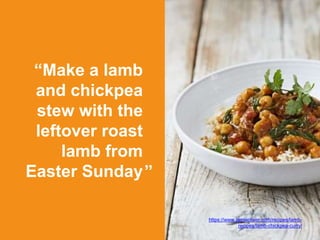
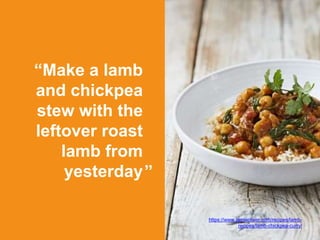
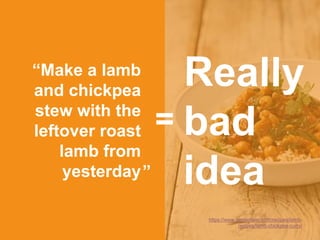
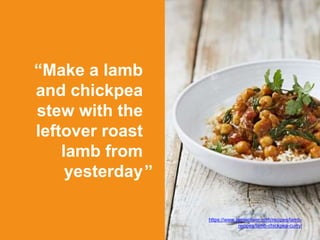
“Make a lamb
and chickpea
stew with the
leftover roast
lamb from
Easter Sunday
https://www.jamieoliver.com/recipes/lamb-
recipes/lamb-chickpea-curry/
”
@sonofswiss
There is nothing inherent in an
idea that says whether it is a
good idea or a bad idea
@sonofswiss
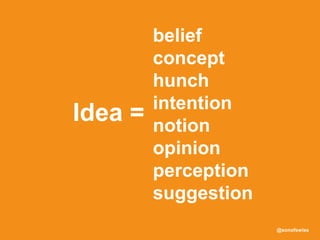
belief
concept
hunch
intention
notion
opinion
perception
suggestion
Idea =
@sonofswiss
‘Experimenting’ isn’t
throwing any old idea at a
wall to see if it sticks.
It is our responsibility to
spend our budgets wisely.
@sonofswiss
We use bad ideas all
the time.
@sonofswiss
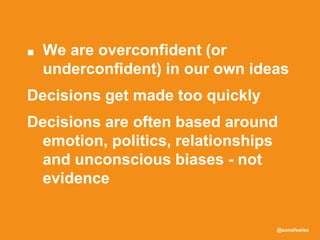
■ We are overconfident (or
underconfident) in our own ideas
Decisions get made too quickly
Decisions are often based around
emotion, politics, relationships
and unconscious biases - not
evidence
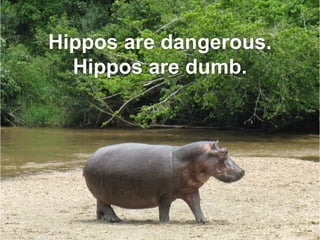
Hippos are dangerous.
Hippos are dumb.
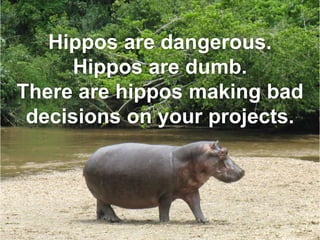
Hippos are dangerous.
Hippos are dumb.
There are hippos making bad
decisions on your projects.
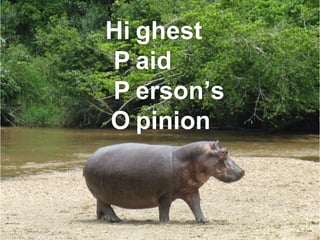
ghest
aid
erson’s
pinion
Hi
P
P
O
@sonofswiss
How can we tell if an idea is
good or bad, so we make
good decisions around it?
@sonofswiss
2.Hypotheses
@sonofswiss
A hypothesis contains an
idea, plus extra information
about that idea.
@sonofswiss
– Ben Holliday, Design Director @ FutureGov
“Hypothesis driven design
helps teams take calculated risks
to move a product forward and
explore different solutions”
@sonofswiss
1. Come up with an idea
Clearly state what you think the idea will
achieve, and who for
Clearly state how you’ll measure
whether it actually achieves it
@sonofswiss
Jeff Gothelf, Josh Seiden, Lean UX
We believe this
[business outcome]
will be achieved if
[these users]
successfully
[attain this user outcome]
with [this feature]
@sonofswiss
We believe [idea]
For [users]
Will result in [outcome]
We’ll know this is true if [evidence]
@sonofswiss
■ What’s the idea you’re proposing?
■ Should be directional and non-ambiguous
■ May be a fully-formed idea, may be the
starting point of a design process
We believe [idea]
@sonofswiss
■ Which users* does this idea target?
(If you don’t understand your different user
types, stop everything and do that first)
*
For [users]
@sonofswiss
■ This is the expected outcome.
■ It should state a clear value to users
and/or the business
■ Should tie into strategic goals of the
product
Will result in [outcome]
@sonofswiss
■ What metric(s) can we measure
to show success?
■ Should be a quantitative measure
(one exception: if the product/feature is a prototype)
■ Consider measuring for unintended
consequences (defensive metrics)
We’ll know this is true if [evidence]
@sonofswiss
We believe [idea]
For [users]
Will result in [outcome]
We’ll know this is true if [evidence]
@sonofswiss
Hypotheses have
saved the world!
@sonofswiss
But…
“Make a lamb
and chickpea
stew with the
leftover roast
lamb from
yesterday
https://www.jamieoliver.com/recipes/lamb-
recipes/lamb-chickpea-curry/
”
I believe
[making lamb and
chickpea stew] for
[us and the kids]
will result in [a
great dinner time
and no waste]. We’ll
know this is true if
[everyone eats and
enjoys their dinner]
https://www.jamieoliver.com/recipes/lamb-
recipes/lamb-chickpea-curry/
I believe
[making lamb and
chickpea stew] for
[us and the kids]
will result in [a
great dinner time
and no waste]. We’ll
know this is true if
[everyone eats and
enjoys their dinner]
Text
=
“Make a lamb
and chickpea
stew with the
leftover roast
lamb from
yesterday
https://www.jamieoliver.com/recipes/lamb-
recipes/lamb-chickpea-curry/
”
=
@sonofswiss
Conversion Optimisation / CRO
@sonofswiss
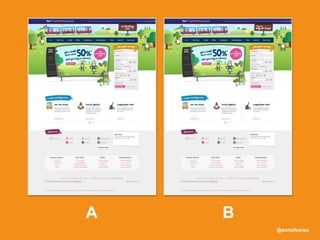
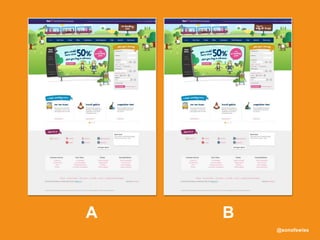
A B
@sonofswiss
Conversion Optimisation / CRO
@sonofswiss
A B
@sonofswiss
@sonofswiss
@sonofswiss
A hunch you can
measure is still a hunch.
@sonofswiss
We weren’t doing
enough user research.
(?)
@sonofswiss
We weren’t doing
enough user research.
(?)
@sonofswiss
1. There was little client buy-in for UR
When we did do UR, there was no clear
record of which UR fed into which
AB test
Also, the UR we were doing wasn’t
being used effectively in
prioritisation and decision making
@sonofswiss
1. There was little client buy-in for UR
When we did do UR, there was no clear
record of which UR fed into which
AB test
The UR we were doing wasn’t being
used effectively in prioritisation and
decision making
We believe [idea]
For [users]
Will result in [outcome]
We’ll know this is true if [evidence]
@sonofswiss
How do we build an
evidence base into the
hypothesis, and use it to
persuade our HiPPOS?
@sonofswiss
3.Better hypotheses
@sonofswiss
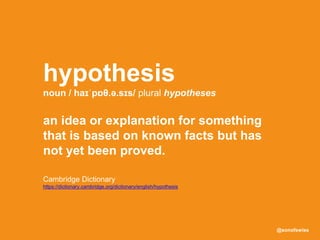
Cambridge Dictionary
https://dictionary.cambridge.org/dictionary/english/hypothesis
hypothesis
noun / haɪˈpɒθ.ə.sɪs/ plural hypotheses
an idea or explanation for something
that is based on known facts but has
not yet been proved.
@sonofswiss
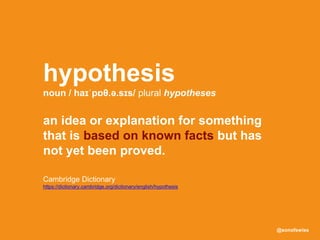
Cambridge Dictionary
https://dictionary.cambridge.org/dictionary/english/hypothesis
hypothesis
noun / haɪˈpɒθ.ə.sɪs/ plural hypotheses
an idea or explanation for something
that is based on known facts but has
not yet been proved.
@sonofswiss
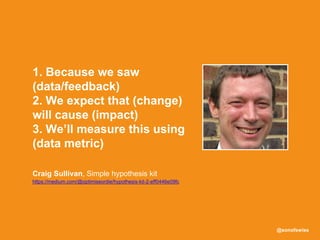
Craig Sullivan, Simple hypothesis kit
https://medium.com/@optimiseordie/hypothesis-kit-2-eff0446e09fc
1. Because we saw
(data/feedback)
2. We expect that (change)
will cause (impact)
3. We’ll measure this using
(data metric)
@sonofswiss
‘Because’
@sonofswiss
But isn’t this just
obvious?
@sonofswiss
Confidence not evidence
“How confident are we that
this idea will work?”
@sonofswiss
Because [things we know or believe]
We believe [idea]
For [users]
Will result in [outcome]
We’ll know this is true if [evidence]
@sonofswiss
■ Be specific
■ Aim for a range of evidence
Because [things we know or believe]
@sonofswiss
■ Be specific
■ Aim for a range of evidence
■ Don’t discount hunches!
Because [things we know or believe]
“Make a lamb
and chickpea
stew with the
leftover roast
lamb from
yesterday
https://www.jamieoliver.com/recipes/lamb-
recipes/lamb-chickpea-curry/
”
I believe
[making lamb and
chickpea stew] for
[us and the kids]
will result in [a
great dinner time
and no waste]. We’ll
know this is true if
[everyone eats and
enjoys their dinner]
https://www.jamieoliver.com/recipes/lamb-
recipes/lamb-chickpea-curry/
Because [evidence?],
I believe
[making lamb and
chickpea stew] for
[us and the kids] will
result in [a great
dinner time and no
waste]. We’ll know
this is true if
[everyone eats and
enjoys their dinner]
https://www.jamieoliver.com/recipes/lamb-
recipes/lamb-chickpea-curry/
@sonofswiss
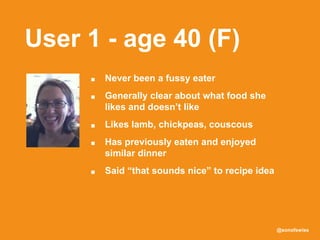
User 1 - age 40 (F)
■ Never been a fussy eater
■ Generally clear about what food she
likes and doesn’t like
■ Likes lamb, chickpeas, couscous
■ Has previously eaten and enjoyed
similar dinner
■ Said “that sounds nice” to recipe idea
@sonofswiss
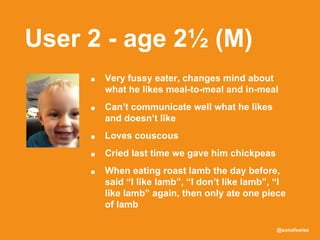
User 2 - age 2½ (M)
■ Very fussy eater, changes mind about
what he likes meal-to-meal and in-meal
■ Can’t communicate well what he likes
and doesn’t like
■ Loves couscous
■ Cried last time we gave him chickpeas
■ When eating roast lamb the day before,
said “I like lamb”, “I don’t like lamb”, “I
like lamb” again, then only ate one piece
of lamb
@sonofswiss
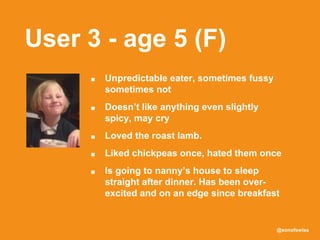
User 3 - age 5 (F)
■ Unpredictable eater, sometimes fussy
sometimes not
■ Doesn’t like anything even slightly
spicy, may cry
■ Loved the roast lamb.
■ Liked chickpeas once, hated them once
■ Is going to nanny’s house to sleep
straight after dinner. Has been over-
excited and on an edge since breakfast
Because [evidence?],
I believe
[making lamb and
chickpea stew] for
[us and the kids] will
result in [a great
dinner time and no
waste]. We’ll know
this is true if
[everyone eats and
enjoys their dinner]
https://www.jamieoliver.com/recipes/lamb-
recipes/lamb-chickpea-curry/
ABORT!
@sonofswiss
What evidence
drove your idea?
How confident were
you in it?
@sonofswiss
4.Using hypotheses to
prioritise and persuade
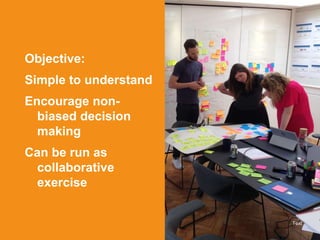
Objective:
Simple to understand
Encourage non-
biased decision
making
Can be run as
collaborative
exercise
Text
@sonofswiss
Effort
Value
Confidence
@sonofswiss
Value
Confidence
@sonofswiss
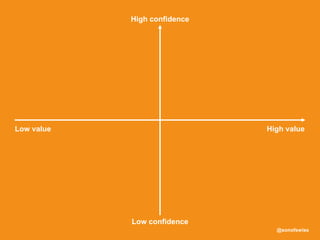
Low value High value
High confidence
Low confidence
@sonofswiss
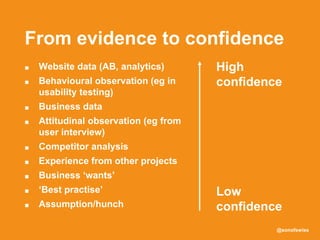
From evidence to confidence
■ Website data (AB, analytics)
■ Behavioural observation (eg in
usability testing)
■ Business data
■ Attitudinal observation (eg from
user interview)
■ Competitor analysis
■ Experience from other projects
■ Business ‘wants’
■ ‘Best practise’
■ Assumption/hunch
High
confidence
Low
confidence
@sonofswiss
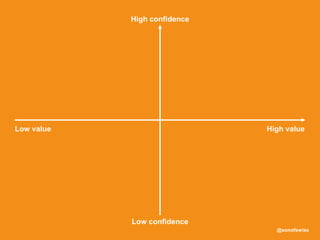
Low value High value
High confidence
Low confidence
@sonofswiss
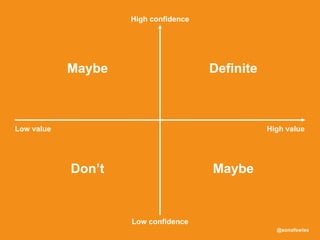
Don’t
Maybe
Maybe
Definite
Low value High value
High confidence
Low confidence
@sonofswiss
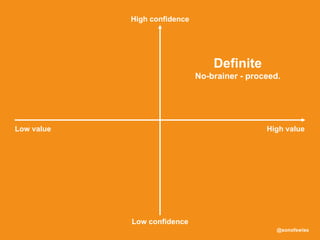
Definite
No-brainer - proceed.
Low value High value
High confidence
Low confidence
@sonofswiss
Low value High value
High confidence
Low confidence
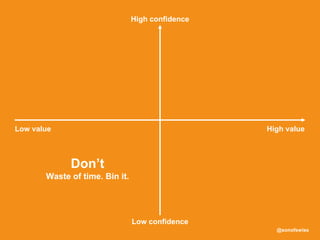
Don’t
Waste of time. Bin it.
@sonofswiss
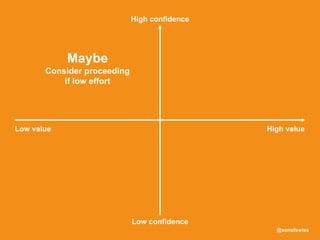
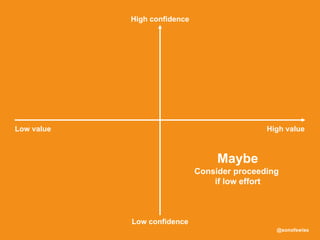
Maybe
Consider proceeding
if low effort
Low value High value
High confidence
Low confidence
@sonofswiss
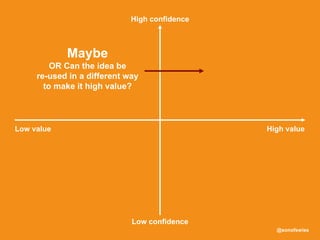
Maybe
OR Can the idea be
re-used in a different way
to make it high value?
Low value High value
High confidence
Low confidence
@sonofswiss
Maybe
Consider proceeding
if low effort
Low value High value
High confidence
Low confidence
@sonofswiss
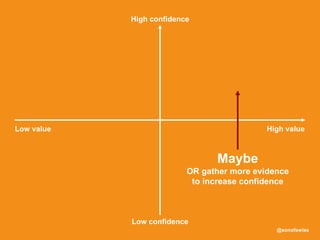
Maybe
OR gather more evidence
to increase confidence
Low value High value
High confidence
Low confidence
@sonofswiss
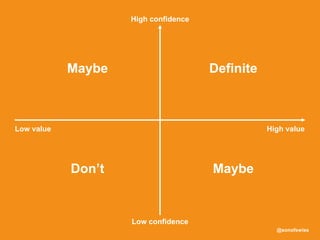
Don’t
Maybe
Maybe
Definite
Low value High value
High confidence
Low confidence
@sonofswiss
@sonofswiss
Never cook a lamb
and chickpea stew
for my kids.
Thanks
Tom Adams @sonofswiss

Hypotheses: Supercharging your ideas and improving your decision making (NUX Manchester)

Editor's Notes

  • #3 Tonight I’m going to talk about ideas. Before we get started, I’d like to ask you to do something.
  • #4 Could be at work or at home, Could be a big idea - change the world, change your life - or a little idea. My idea was what to cook for dinner one night last week. Don’t worry! Etc Next: introduce myself.
  • #5 [Introduce myself] Ideas are probably the most powerful currency in our lives. Whether it’s at work or at home, on creative design ideas, or ideas of team ways of working, or ideas of what to do in the evening or have for dinner.
  • #6 So tonight I’ll be talking about what ideas are, and why hypotheses are better. It doesn’t matter what kind of idea - a design idea, an AB test, something in your personal life - you can use hypotheses to structure that idea and make it more powerful. I’ll be taking about why the standard hypothesis formats that the books tell us to use aren’t good enough. And I want to introduce an amended format, with one simple change, that I think makes your design ideas much more powerful, and I’ll tell you how this made it simpler to prioritise ideas, and easier to persuade stakeholders to do the right thing.
  • #7 This is a dictionary definition - a suggestion or plan for doing something. But for ideas to be useful to us, I think there’s something really important missing from here…
  • #8 This is my recent idea. [DESCRIBE IDEA] [AUDIENCE VOTE] Who thinks this was a good idea? A bad idea? And that’s the point - how do we know if any idea is a good idea or a bad idea?
  • #9 And as digital professionals, this is a problem. It’s a problem because it’s our job to spend our business’s time and money, or our clients’ time and money, in the best way possible. If we don’t know what’s a good idea and a bad idea, how do we go about selecting the best ideas to take forwards?
  • #10 And this becomes clearer when you look at synonyms of ‘idea’. E.g. belief, hunch. Why would we spend lots of time and money on something that’s just a hunch?! But this happens ALL THE TIME. BUT you might be thinking: what about experimenting?
  • #11 As designers, we want to experiment, but experimenting doesn’t mean throwing things at a wall to see what sticks.
  • #12 And the fact is we’re always using bad ideas. When I think about my workplace, my homelife, my social life, there are bad decisions based on poor ideas happening all the time. I do it. You do it. Everybody does it. You are! But why do we all do this?
  • #13 3 - eg fear of not hitting deadlines, fear of taking risks. Maybe the the UX designer’s ideas get sidelined because the product owner likes the lead developer more. Unconscious biases. 3 - this is particularly clear when there is a hierarchy in decision making We allow people further up the chain to make decisions even when we think they are poor decisions. And this is where I need to introduce you to a hippo.
  • #14 Hippos look cute. They’re like big funny fat cows. But there are three important things you need to know about hippos:
  • #15 Hippos are one of the deadliest animals to humans. 3000 people a year are killed by them. And this is because they’re dumb - they’re aggressive, they’re fast and they get spooked really easily. So if they see a human near them, they’re likely to charge them and kill them. And some of your clients and stakeholders are hippos.
  • #16 Hippos are one of the deadliest animals to humans. 3000 people a year are killed by them. And this is because they’re dumb - they’re aggressive, they’re fast and they get spooked really easily. So if they see a human near them, they’re likely to charge them and kill them. And some of your clients and stakeholders are hippos.
  • #17 I’ve seen again and again, that you can be in a client meeting with a senior person - a director of marketing, a CEO - and they will always have the final say. Their team defer to them. My team defers to them. My director of client services defers to them. And this is really dangerous - because they are just as prone to making poor decisions as the rest of us. And you’ll see this in organisation and team hierarchies everywhere. The person seen as highest in the food chain makes decisions, and they might not always be the right decisions. JCT600 example? Driving around Bradford. So we need strategies to ensure that decisions are made for the right reasons, whether it’s us making the decision, or the hippo.
  • #18 So… what can we do to help us understand our ideas better, and then make better decisions around them? Luckily, we have a tool…
  • #19 Who is currently using hypotheses in their work, or have used them in the past? For those who haven’t used them, you’ll remember them from science classes at school. A hypothesis is different from an idea. They don’t mean the same thing. A hypothesis is a way to structure an idea.
  • #20 There’s a quote I really like from Ben Holliday, who used to be director of user centred design at DWP when I was there.
  • #21 And I like it because of that phrase “calculated risks”. Ideas are cavalier, they can be anything - hypotheses are calculated, considered, thought about. You just throw ideas out there! Nobody throws hypotheses anywhere. We talk about hypotheses like they are a thing in themselves, but really it’s just a term to describe a framework, a way of working. There are a million different ways to structure hypotheses out there, but they tend to aim for something like this…
  • #23 Here’s an example - if you’ve read the excellent Lean UX by Jeff Gothelf and Josh Seidon, or if you’ve seen Jeff speak, then you’ll probably recognise this (if you haven’t read it, I hugely recommend it)
  • #24 This is the format I settled on at Code - I wanted something that was simpler and easier to understand than some of the other versions out there, because I believed that that would be more persuasive - if my Hippos understood what they were looking at, they’d be more likely to make good decisions about them. So let’s go through this format line by line… And for each line, I want you all to think about your idea from earlier. What would you populate the hypothesis with?
  • #25 - Team shouldn’t have to come back with loads of qs and clarifications This may be the starting point for an iterative design process (depends on your organisational culture and ways of working) YOUR IDEA FROM EARLIER - DOES IT MEET THESE CRITERIA?
  • #26 E.g. HMRC: small Etsy seller vs specialist import tax account in Tesco WHO ARE THE USERS FOR YOUR IDEA?
  • #27 Why are you even considering this idea? If it doesn’t fit with some kind of primary or micro objective of your product, then why bother? WHAT IS THE OUTCOME YOU WANTED FROM YOUR IDEA?
  • #28 If it’s not measurable, then you can never know if it’s a good idea - so don’t bother doing it. Unintended consequences, or defensive metrics - eg Web Blind sales vs samples HOW COULD YOU MEASURE YOUR IDEA?
  • #29 Yay! We can structure our ideas, we can throw out ones with no clear outcome or that aren’t measurable or are for the wrong users. And we can measure whether they’re successful.
  • #30 So! Job done. Structure your ideas as hypotheses and you’ll never make a bad decision again, right?
  • #31 The problem is this just begs the question. If we want to know whether an idea is a good idea or a bad idea, this will do it - but only after we’ve designed, built and tested the idea. And that’s not good enough for me - if my job is to spend my client’s money in the best way, then why are we spending their money designing and building things that we don’t have confidence will be successful? That we go back to them afterwards and say “no, that idea bombed - we’ll throw it away”
  • #32 So I can test whether this is a good idea or a bad idea
  • #35 And this was the kind of problem I was grappling with at Code
  • #36 As I said, I spent 18 months managing the Conversion Optimisation team at Code. If you don’t know what conversion optimisation or CRO is, at it’s simplest it’s this…
  • #37 [describe AB testing]
  • #38 I took over managing the CRO team at a difficult time. The old team of two had both left within a couple of months of each other, so we had to recruit and onboard a new team. Results across clients were OK in places, less OK in others. They weren’t spectacular anywhere. But this was an opportunity - with a new team in place, I started analysing what we were doing and trying to understand where we could improve.
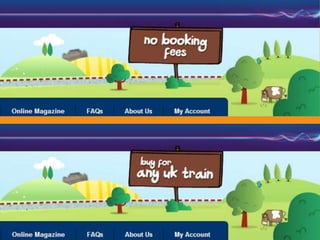
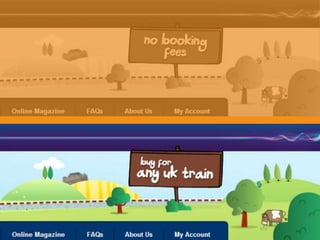
  • #39 I want to look in more detail at this AB test. If you’ve got really sharp eyesight you might have spotted the difference between the two versions - but for the rest of us…
  • #40 Only change on the page. One version was worth around £30k more sales to the client in one month. So hands up - which design won?
  • #41 The problem we were having at Code was that often we effectively had as much idea of which test was likely to win as you’ve just had. Tests the team thought would win bombed. Tests that nobody was really sure about won. Everything was a bit random. And that meant that clients weren’t getting good ROI. And I thought I understood why: We were using hypotheses, but the ideas at the core of them were still just hunches.
  • #42 My first lightbulb moment. We had no clue until after the fact about whether they were good ideas or bad ideas. So I’m a user researcher at heart. I was convinced that I knew why this was the case…
  • #43 And it definitely was the case, but …
  • #44 Once I observed how we were working with our clients and analysed our tests and hypotheses I saw a more complex picture.
  • #45 So we started finding ways to fix these - we slipped low cost UR in under the radar, we did internal training and talked about it to clients as much as we could. Then we had Trello boards to record what we knew and to start to link up research to hypotheses. But there was a third problem that was even more of a blocker.
  • #46 And it was number 3 that really threw me. Even when we had a good strong evidence base of user research, still the wrong tests were getting through.
  • #47 We were asking our clients, and also our internal product teams, to agree and prioritise ideas we’d put into hypotheses, but we still weren’t giving them explicit information about whether we thought the ideas were good or not. Decisions were being made based on the hypothesis, but the hypothesis itself didn’t show the driver behind the idea. And this meant we weren’t giving our teams and our hippos all the information they needed to make the right decisions, and we were allowing space for politics to get into those decisions. So there was a key question for me…
  • #49 So I decided to rethink our hypothesis format. I wanted something simple, persuasive and less open to poor decision making.
  • #50 I went to the dictionary. And there was something really interesting here.
  • #51 This was my next lightbulb moment. Our hypotheses might or might not have been based on known facts, but we weren’t capturing what those facts were, and because we weren’t ourselves always in control of the so decision making process, the facts got lost. As I researched, I found one prominent conversion person talking about this.
  • #52 If you went to the NUX conference last year, you’ll have seen Craig Sullivan. 3 years ago he wrote a series of Medium posts where he was looking for the perfect hypothesis format. And this was hugely influential to me, I’m a massive fanboy. And I like this because of one word…
  • #53 Because is such a powerful word. Like at school where you had to show your workings - this one word shows how you got to your idea.
  • #54 But, you might be thinking, isn’t this all obvious? Why would something even get to a hypothesis without evidence? Why weren’t you just being more rigorous about what you let through to even be a hypothesis? This is a really fair point. Some CRO agencies have an evidence gateway [descibe]. But, when I was analysing approaches, I really didn’t like this one. Just having evidence doesn’t confirm that we have confidence - Different types of evidence can mean different things. And sometimes - just occasionally - we might have an idea that we’re really convinced is a good idea, but we don’t have an evidence base for. And I’ll come back to those ideas later.
  • #55 But that all led me to another lightbulb moment. Evidence isn’t what I care about - but confidence. “How confident are we that this idea will work?”
  • #56 So we adjusted our hypothesis format but adding ‘because’. What we’ve done is captured forever a set of content that infers how confident we are about whether this is a good or a bad idea.
  • #57 I’m going to be a massive hypocrite…
  • #59 So I can test whether this is a good idea or a bad idea
  • #61 Things we know or believe
  • #71 Not going to pretend this is pretty! But it contains everything needed for a product team to work on this feature, and it contains what the product owner needed to make decisions about the value of this feature.
  • #73 So we’ve got a better hypothesis format that contains everything you need to make the right decisions about which ideas to proceed with, and which to dump. But how do you actually do that?
  • #74 At Code I wanted to come up with a good way of prioritising our hypotheses, and I had three main objectives. Simple - you don’t want your hippos to feel like they’re being challenged.
  • #75 Prioritisation takes key factors that you care about, and ranks your hypotheses against those factors in some way. We have 3 key factors we could prioritise against But prioritising against more than 2 factors at once is difficult to do in a simple way.
  • #76 I selected these two because they should be the key drivers for the stakeholders making a decision. Effort really means cost, and cost should never be the primary driver for making any decision. Find the good ideas, then decide if you can afford them! Also, Hippos don’t care so much about effort - and if you can show them a high value idea that you’re really confident in, they will tend to support high effort
  • #77 [Explain matrix] So how do we calculate confidence?
  • #78 When I started looking at this, I thought that there could be some kind of formula for this - a spreadsheet that we’d feed types of evidence in and it would give us a confidence score. But it’s not like that at all, it’s not an exact science… So now we understand our evidence, we can plot it onto our matrix
  • #87 And it’s as simple as that. Like I said before, this is a great workshop activity to do. We ran it with all our CRO clients, with Flipchart paper and post-its, and we found it a great leveller, and a great way to really prompt honest conversations about the evidence base behind the hypotheses. Sometimes Hippos still dug their heels in (‘it’s my idea, and I’m very confident in it’) but we definitely saw less of that than we used to.
  • #88 And that’s it! I’ve talked about why ideas on their own aren’t enough I’ve talked about how hypotheses are an amazing tool, and how the word ‘because’ can make them more powerful. And I’ve talked about how to prioritise hypotheses in a way that is more persuasive for teams and HiPPOs. But if there’s one really important thing to take away from this evening, it’s this…
  • #91 People use the word to try and sound clever, to give weight to their ideas. Defeat these people.
  • #93 It’s our job to help meet our business and customer goals as efficiently as possible. It’s our job to get a return on investment.