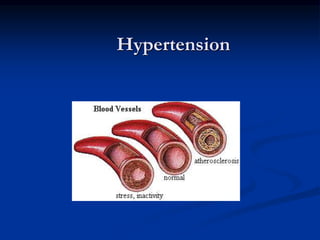
Hypertension
Hypertension
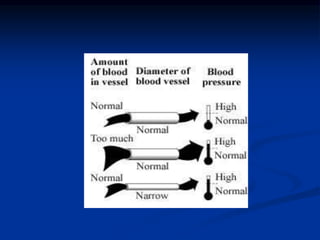
 Blood pressure levels are a function of cardiac
output multiplied by peripheral resistance (the
resistance in the blood vessels to the flow of
blood)
Hypertension
 The major factors which help maintain blood
pressure (BP) include the sympathetic
nervous system and the kidneys.
 Optimal healthy blood pressure is a systolic
blood pressure of <120 mmHg and a
diastolic blood pressure of <80
 <120/80.
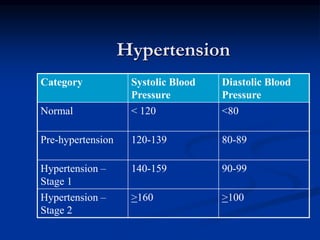
Hypertension
Category Systolic Blood
Pressure
Diastolic Blood
Pressure
Normal < 120 <80
Pre-hypertension 120-139 80-89
Hypertension –
Stage 1
140-159 90-99
Hypertension –
Stage 2
>160 >100
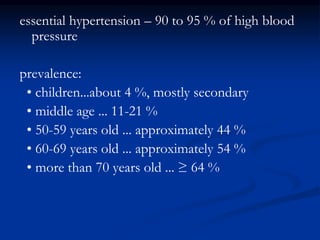
essential hypertension – 90 to 95 % of high blood
pressure
prevalence:
• children...about 4 %, mostly secondary
• middle age ... 11-21 %
• 50-59 years old ... approximately 44 %
• 60-69 years old ... approximately 54 %
• more than 70 years old ... ≥ 64 %
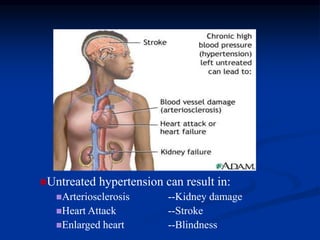
Untreated hypertension can result in:
Arteriosclerosis --Kidney damage
Heart Attack --Stroke
Enlarged heart --Blindness
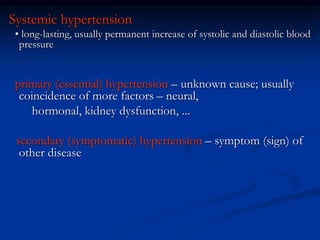
Systemic hypertension
• long-lasting, usually permanent increase of systolic and diastolic blood
pressure
primary (essential) hypertension – unknown cause; usually
coincidence of more factors – neural,
hormonal, kidney dysfunction, ...
secondary (symptomatic) hypertension – symptom (sign) of
other disease
Factors Influencing the Development of
Hypertension
 High-normal blood pressure
 Family history of hypertension
 African-American ancestry
 Overweight
Factors Influencing the Development of
Hypertension
 Excess Consumption of Sodium Chloride
 Certain segments of the population are
‘salt sensitive’ because their blood
pressure is affected by salt
consumption
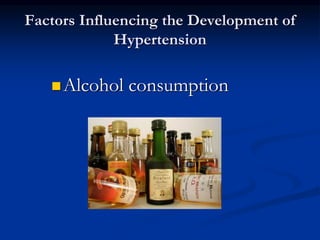
Factors Influencing the Development of
Hypertension
Alcohol consumption
Factors Influencing the Development
of Hypertension
 Exercise
 Less active individuals are 30-50% more likely to
develop hypertension.
Factors Influencing the Development
of Hypertension
 Other Dietary Factors
 Potassium:
 Calcium:
 Magnesium:
Treatment
 The final goal of antihypertensive therapy is
reduction of mortality and morbidity to CVS
and renal diseases.
 Primary goal is reduction of systolic BP.
Pharmacologic treatment
Antihypertensives
1st choice drugs:
1. diuretics
2. β-blockers
3. inhibitors of ACE
4. blockers of AT1 receptors (ARB)
5. calcium channel blockers
2nd choice drugs – mainly to drug combinations:
α1-sympatholytics; α2-sympathomimetics; direct
vasodilators;
agonists of I1 receptors in CNS
 Other antihypertensives
magnesium (MgSO4) – natural antagonist of calcium
• sodium nitroprusside – simple molecule releasing NO;
only i.v. at severe hypertension crisis
• ketanserin – blocks S2 receptors for serotonin →
prevents effect increase of catecholamines on symp.
receptors
Nonpharmacological treatment
Change of life-style:
• intake of salt ... ≤ 5 – 6 g per day
• prevention of obesity – dietetic modification
• alcohol ... ≤ 30 g per day
• smoking – stop
• physical activity
• psychological relaxation
The DASH Diet
 The Dietary Approaches to Stop
Hypertension clinical trial (DASH)
 Diet rich in fruits, vegetables, and low fat dairy
foods, can substantially lower blood pressure in
individuals with hypertension and high normal
blood pressure.
The DASH Diet
 The DASH Diet includes:
 7-8 servings of grains and grain products
 4-5 servings of vegetables
 4-5 servings of fruits
 2-3 servings of low fat dairy products
 2 or less servings of meat, poultry and fish
 2-3 servings of fats and oils
 Nuts, seeds and dry beans 4-5 times /week
 Limited ‘sweets’ low in fat.
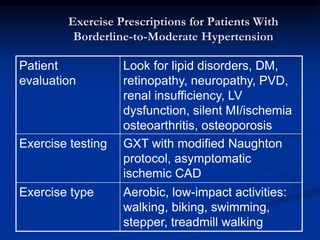
Exercise Prescriptions for Patients With
Borderline-to-Moderate Hypertension
Patient
evaluation
Look for lipid disorders, DM,
retinopathy, neuropathy, PVD,
renal insufficiency, LV
dysfunction, silent MI/ischemia
osteoarthritis, osteoporosis
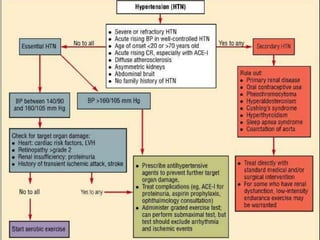
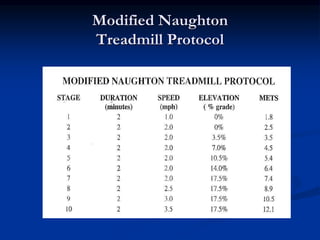
Exercise testing GXT with modified Naughton
protocol, asymptomatic
ischemic CAD
Exercise type Aerobic, low-impact activities:
walking, biking, swimming,
stepper, treadmill walking
Modified Naughton
Treadmill Protocol
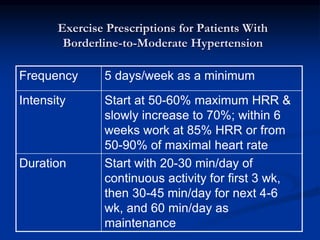
Exercise Prescriptions for Patients With
Borderline-to-Moderate Hypertension
Frequency 5 days/week as a minimum
Intensity Start at 50-60% maximum HRR &
slowly increase to 70%; within 6
weeks work at 85% HRR or from
50-90% of maximal heart rate
Duration Start with 20-30 min/day of
continuous activity for first 3 wk,
then 30-45 min/day for next 4-6
wk, and 60 min/day as
maintenance
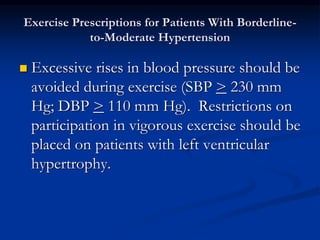
Exercise Prescriptions for Patients With Borderline-
to-Moderate Hypertension
 Excessive rises in blood pressure should be
avoided during exercise (SBP > 230 mm
Hg; DBP > 110 mm Hg). Restrictions on
participation in vigorous exercise should be
placed on patients with left ventricular
hypertrophy.
Weight Training
 Resistive exercise produces the most striking increases
in BP
 Resistive exercise results in less of a HR increase
compared with aerobic exercise and as a result the “rate
pressure product” may be less than aerobic exercise
 Assessment of BP response by handgrip should be
considered in patients with HTN
 Growing evidence that resistive training may be of
value for controlling BP

Hypertension.ppt

  • 1.
  • 2.
    Hypertension  Blood pressurelevels are a function of cardiac output multiplied by peripheral resistance (the resistance in the blood vessels to the flow of blood)
  • 4.
    Hypertension  The majorfactors which help maintain blood pressure (BP) include the sympathetic nervous system and the kidneys.  Optimal healthy blood pressure is a systolic blood pressure of <120 mmHg and a diastolic blood pressure of <80  <120/80.
  • 5.
    Hypertension Category Systolic Blood Pressure DiastolicBlood Pressure Normal < 120 <80 Pre-hypertension 120-139 80-89 Hypertension – Stage 1 140-159 90-99 Hypertension – Stage 2 >160 >100
  • 6.
    essential hypertension –90 to 95 % of high blood pressure prevalence: • children...about 4 %, mostly secondary • middle age ... 11-21 % • 50-59 years old ... approximately 44 % • 60-69 years old ... approximately 54 % • more than 70 years old ... ≥ 64 %
  • 7.
    Untreated hypertension canresult in: Arteriosclerosis --Kidney damage Heart Attack --Stroke Enlarged heart --Blindness
  • 8.
    Systemic hypertension • long-lasting,usually permanent increase of systolic and diastolic blood pressure primary (essential) hypertension – unknown cause; usually coincidence of more factors – neural, hormonal, kidney dysfunction, ... secondary (symptomatic) hypertension – symptom (sign) of other disease
  • 9.
    Factors Influencing theDevelopment of Hypertension  High-normal blood pressure  Family history of hypertension  African-American ancestry  Overweight
  • 10.
    Factors Influencing theDevelopment of Hypertension  Excess Consumption of Sodium Chloride  Certain segments of the population are ‘salt sensitive’ because their blood pressure is affected by salt consumption
  • 11.
    Factors Influencing theDevelopment of Hypertension Alcohol consumption
  • 12.
    Factors Influencing theDevelopment of Hypertension  Exercise  Less active individuals are 30-50% more likely to develop hypertension.
  • 13.
    Factors Influencing theDevelopment of Hypertension  Other Dietary Factors  Potassium:  Calcium:  Magnesium:
  • 14.
    Treatment  The finalgoal of antihypertensive therapy is reduction of mortality and morbidity to CVS and renal diseases.  Primary goal is reduction of systolic BP.
  • 16.
    Pharmacologic treatment Antihypertensives 1st choicedrugs: 1. diuretics 2. β-blockers 3. inhibitors of ACE 4. blockers of AT1 receptors (ARB) 5. calcium channel blockers 2nd choice drugs – mainly to drug combinations: α1-sympatholytics; α2-sympathomimetics; direct vasodilators; agonists of I1 receptors in CNS
  • 17.
     Other antihypertensives magnesium(MgSO4) – natural antagonist of calcium • sodium nitroprusside – simple molecule releasing NO; only i.v. at severe hypertension crisis • ketanserin – blocks S2 receptors for serotonin → prevents effect increase of catecholamines on symp. receptors
  • 18.
    Nonpharmacological treatment Change oflife-style: • intake of salt ... ≤ 5 – 6 g per day • prevention of obesity – dietetic modification • alcohol ... ≤ 30 g per day • smoking – stop • physical activity • psychological relaxation
  • 19.
    The DASH Diet The Dietary Approaches to Stop Hypertension clinical trial (DASH)  Diet rich in fruits, vegetables, and low fat dairy foods, can substantially lower blood pressure in individuals with hypertension and high normal blood pressure.
  • 20.
    The DASH Diet The DASH Diet includes:  7-8 servings of grains and grain products  4-5 servings of vegetables  4-5 servings of fruits  2-3 servings of low fat dairy products  2 or less servings of meat, poultry and fish  2-3 servings of fats and oils  Nuts, seeds and dry beans 4-5 times /week  Limited ‘sweets’ low in fat.
  • 21.
    Exercise Prescriptions forPatients With Borderline-to-Moderate Hypertension Patient evaluation Look for lipid disorders, DM, retinopathy, neuropathy, PVD, renal insufficiency, LV dysfunction, silent MI/ischemia osteoarthritis, osteoporosis Exercise testing GXT with modified Naughton protocol, asymptomatic ischemic CAD Exercise type Aerobic, low-impact activities: walking, biking, swimming, stepper, treadmill walking
  • 22.
  • 23.
    Exercise Prescriptions forPatients With Borderline-to-Moderate Hypertension Frequency 5 days/week as a minimum Intensity Start at 50-60% maximum HRR & slowly increase to 70%; within 6 weeks work at 85% HRR or from 50-90% of maximal heart rate Duration Start with 20-30 min/day of continuous activity for first 3 wk, then 30-45 min/day for next 4-6 wk, and 60 min/day as maintenance
  • 24.
    Exercise Prescriptions forPatients With Borderline- to-Moderate Hypertension  Excessive rises in blood pressure should be avoided during exercise (SBP > 230 mm Hg; DBP > 110 mm Hg). Restrictions on participation in vigorous exercise should be placed on patients with left ventricular hypertrophy.
  • 25.
    Weight Training  Resistiveexercise produces the most striking increases in BP  Resistive exercise results in less of a HR increase compared with aerobic exercise and as a result the “rate pressure product” may be less than aerobic exercise  Assessment of BP response by handgrip should be considered in patients with HTN  Growing evidence that resistive training may be of value for controlling BP