A California Road Map
The Commercialization of Hydrogen Fuel Cell Vehicles
________________________________________
2014 Update: Hydrogen Progress, Priorities and Opportunities (HyPPO) Report
2012 Road Map
• Initial station network
coverage to launch the
market
» Five initial clusters
» Destinations, connectors
• Carefully balancing
coverage vs. capacity
• Defining the resources
necessary to build stations
and keep stations
operating
HyPPO update
• Are 2012 assumptions still valid?
• Are we on track to meeting goals?
• How has the landscape changed?
• What progress have we made?
• What are the next actions to take?
2012 Apr Jul Oct Jan Apr Jul
ARB evaluation
of AB8
published
DMS station testing began
Rebates for FCEVs
increased
J2799
finalized
NPFA
hydrogen
station
report
released
California
Sustainable
Freight
Strategy
introduced
DOE
grant
for
parcel
delivery
awarded
H2NIP
published
ZEV
Readiness
Guidebook
published
"Go"
campaign
wins award
Bus Road
Map
published
A California Road Map
released
Jun
Progress
Toyota/BMW
announcement
Mercedes-
Nissan-Ford
announcement
GM-Honda
announcement
Jan
2014
Hyundai lease
CEC station
funding awarded
Toyota at CES
Honda FCEV concept
AB 8 signed
H2USA
announced
2013
ZEV
Infrastructure
Project
Manager
appointed
J2601 finalized
Developments in other FCs
1. Customer experience
2. Deploy funded stations
3. Synchronize vehicle market development
4. Station performance and monitoring
5. Develop codes, standards and regulations
6. Prepare communities
Station Network Activation &
DevelopmentEstablish the fundamental building blocks of coverage and
convenience to meet specific customer needs.
Progress: Station funding grants
consider station reliability, operation
and location
Next actions:
• Bring planned stations online quickly
• Ensure stations have consistent
operation
• Identify data collection needs that
will help the market grow
Emeryville – AC Transit
Cupertino
Foster City
Mountain View
*West Sacramento
Open
In Development
Northern CA
Hydrogen Stations
August 2014
Managed by BKi
Campbell
Hayward
Mill Valley
Oakland
Palo Alto
Redwood City
*Rohnert Park
San Jose
San Ramon
Saratoga
South San Francisco
*Truckee
Woodside
*Not shown on map
California Fuel Cell Partnership
www.cafcp.org/stationmap
Southern CA
Hydrogen Stations
Burbank
Fountain Valley – OCSD
Irvine – UC Irvine
Los Angeles - Harbor City
Los Angeles - West LA 1
Newport Beach
*Thousand Palms – SunLine Transit
Torrance
Anaheim
Chino (upgrade)
Diamond Bar (upgrade)
Irvine - UC Irvine (upgrade)
Irvine - Walnut Ave.
Lawndale
Los Angeles – Cal State LA
Los Angeles - West LA 2
Los Angeles - Woodland Hills
Los Angeles - Beverly Blvd.
Mission Viejo
Redondo Beach
San Juan Capistrano
Santa Monica
Open
In Development
*Coalinga
Costa Mesa
La Canada Flintridge
Laguna Niguel
Lake Forest
Long Beach
Los Angeles – LAX (upgrade)
Los Angeles - Lincoln Blvd.
Los Angeles - Hollywood Blvd.
Ontario
Orange
Pacific Palisades
*Riverside
*San Diego
*Santa Barbara
South Pasadena
*Not shown on map
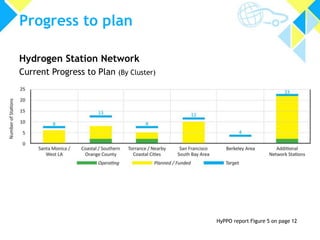
Progress to plan
Hydrogen Station Network
Current Progress to Plan (By Cluster)
HyPPO report Figure 5 on page 12
Progress: AB 8 demonstrates
California’s commitment with co-
funding for hydrogen stations
Next actions:
• Develop routine, transparent status
reports about station installation
progress
• Develop a larger supply chain to
reduce costs and increase station
up-time
• Evaluate an “incentive toolbox” for
station developers and owners
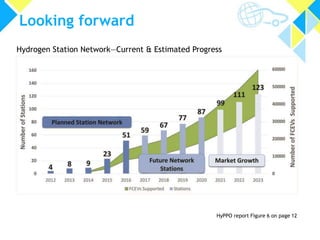
Looking forward
Hydrogen Station Network—Current & Estimated Progress
HyPPO report Figure 6 on page 12
Progress: Annual evaluations and
reports ensure that state funded
stations coordinate with FCEV roll-outs
Next actions:
• Conduct annual surveys of
automaker deployment plans
• Explore the effect of medium- and
heavy-duty vehicles on station use
Progress: Funding for operations
and maintenance of existing and
new stations
Next actions:
• Effectively communicate station
availability to customers
• Explore effectiveness of O&M grants
on the station network
• Look at how capacity of future
stations effects the network
• Fewer, larger stations
compared to more, smaller
stations
Progress:J2601 and J2790 were
finalized, NFPA 2 completed, and
DMS testing is underway
Next actions:
• Integrate SAE and CSA standards
into new stations, and into funding
opportunities
• Implement the regulations for
certifying hydrogen dispensers
• Encourage supply chain
development
• Establish station testing procedures
to support commissioning ahead of
retail operation
Progress: Ongoing education and
outreach to stakeholders and
general public; GO-Biz
involvement
Next actions:
• Continue outreach activities
• Complete readiness planning with
early market communities
• Stakeholders
• AHJs
• First responders
• Support GO-Biz efforts
• Launch national ER training program
1. Meaningful vehicle incentives
2. AB 32 and LCFS
3. Policy support for all hydrogen pathways
4. Interaction with CPCU proceedings
Maintaining Complementary Policy
FrameworksComplementary policies that can shape the execution of
early FCEV and hydrogen business models.
Complementary policies
HyPPO summary
• We’ve made significant progress toward Road Map
considerations and milestones
• Next actions are aimed at station deployment
» Ensuring a great customer experience
» Establishing a network of reliable stations
» Generating interest in cars and stations
» Using data to plan for the future
• Market readiness activities will require broad support
• HyPPO shows a new phase of planning and development
Download at www.cafcp.org
Download the report!
CaFCP Members
California Fuel Cell Partnership
www.cafcp.org

Hydrogen Progress, Priorities and Opportunities

  • 1.
    A California RoadMap The Commercialization of Hydrogen Fuel Cell Vehicles ________________________________________ 2014 Update: Hydrogen Progress, Priorities and Opportunities (HyPPO) Report
  • 2.
    2012 Road Map •Initial station network coverage to launch the market » Five initial clusters » Destinations, connectors • Carefully balancing coverage vs. capacity • Defining the resources necessary to build stations and keep stations operating
  • 3.
    HyPPO update • Are2012 assumptions still valid? • Are we on track to meeting goals? • How has the landscape changed? • What progress have we made? • What are the next actions to take?
  • 4.
    2012 Apr JulOct Jan Apr Jul ARB evaluation of AB8 published DMS station testing began Rebates for FCEVs increased J2799 finalized NPFA hydrogen station report released California Sustainable Freight Strategy introduced DOE grant for parcel delivery awarded H2NIP published ZEV Readiness Guidebook published "Go" campaign wins award Bus Road Map published A California Road Map released Jun Progress Toyota/BMW announcement Mercedes- Nissan-Ford announcement GM-Honda announcement Jan 2014 Hyundai lease CEC station funding awarded Toyota at CES Honda FCEV concept AB 8 signed H2USA announced 2013 ZEV Infrastructure Project Manager appointed J2601 finalized
  • 6.
  • 7.
    1. Customer experience 2.Deploy funded stations 3. Synchronize vehicle market development 4. Station performance and monitoring 5. Develop codes, standards and regulations 6. Prepare communities Station Network Activation & DevelopmentEstablish the fundamental building blocks of coverage and convenience to meet specific customer needs.
  • 8.
    Progress: Station fundinggrants consider station reliability, operation and location Next actions: • Bring planned stations online quickly • Ensure stations have consistent operation • Identify data collection needs that will help the market grow
  • 9.
    Emeryville – ACTransit Cupertino Foster City Mountain View *West Sacramento Open In Development Northern CA Hydrogen Stations August 2014 Managed by BKi Campbell Hayward Mill Valley Oakland Palo Alto Redwood City *Rohnert Park San Jose San Ramon Saratoga South San Francisco *Truckee Woodside *Not shown on map
  • 10.
    California Fuel CellPartnership www.cafcp.org/stationmap Southern CA Hydrogen Stations Burbank Fountain Valley – OCSD Irvine – UC Irvine Los Angeles - Harbor City Los Angeles - West LA 1 Newport Beach *Thousand Palms – SunLine Transit Torrance Anaheim Chino (upgrade) Diamond Bar (upgrade) Irvine - UC Irvine (upgrade) Irvine - Walnut Ave. Lawndale Los Angeles – Cal State LA Los Angeles - West LA 2 Los Angeles - Woodland Hills Los Angeles - Beverly Blvd. Mission Viejo Redondo Beach San Juan Capistrano Santa Monica Open In Development *Coalinga Costa Mesa La Canada Flintridge Laguna Niguel Lake Forest Long Beach Los Angeles – LAX (upgrade) Los Angeles - Lincoln Blvd. Los Angeles - Hollywood Blvd. Ontario Orange Pacific Palisades *Riverside *San Diego *Santa Barbara South Pasadena *Not shown on map
  • 11.
    Progress to plan HydrogenStation Network Current Progress to Plan (By Cluster) HyPPO report Figure 5 on page 12
  • 12.
    Progress: AB 8demonstrates California’s commitment with co- funding for hydrogen stations Next actions: • Develop routine, transparent status reports about station installation progress • Develop a larger supply chain to reduce costs and increase station up-time • Evaluate an “incentive toolbox” for station developers and owners
  • 13.
    Looking forward Hydrogen StationNetwork—Current & Estimated Progress HyPPO report Figure 6 on page 12
  • 14.
    Progress: Annual evaluationsand reports ensure that state funded stations coordinate with FCEV roll-outs Next actions: • Conduct annual surveys of automaker deployment plans • Explore the effect of medium- and heavy-duty vehicles on station use
  • 15.
    Progress: Funding foroperations and maintenance of existing and new stations Next actions: • Effectively communicate station availability to customers • Explore effectiveness of O&M grants on the station network • Look at how capacity of future stations effects the network • Fewer, larger stations compared to more, smaller stations
  • 16.
    Progress:J2601 and J2790were finalized, NFPA 2 completed, and DMS testing is underway Next actions: • Integrate SAE and CSA standards into new stations, and into funding opportunities • Implement the regulations for certifying hydrogen dispensers • Encourage supply chain development • Establish station testing procedures to support commissioning ahead of retail operation
  • 17.
    Progress: Ongoing educationand outreach to stakeholders and general public; GO-Biz involvement Next actions: • Continue outreach activities • Complete readiness planning with early market communities • Stakeholders • AHJs • First responders • Support GO-Biz efforts • Launch national ER training program
  • 18.
    1. Meaningful vehicleincentives 2. AB 32 and LCFS 3. Policy support for all hydrogen pathways 4. Interaction with CPCU proceedings Maintaining Complementary Policy FrameworksComplementary policies that can shape the execution of early FCEV and hydrogen business models.
  • 19.
  • 20.
    HyPPO summary • We’vemade significant progress toward Road Map considerations and milestones • Next actions are aimed at station deployment » Ensuring a great customer experience » Establishing a network of reliable stations » Generating interest in cars and stations » Using data to plan for the future • Market readiness activities will require broad support • HyPPO shows a new phase of planning and development
  • 21.
  • 22.
  • 23.
    California Fuel CellPartnership www.cafcp.org