5
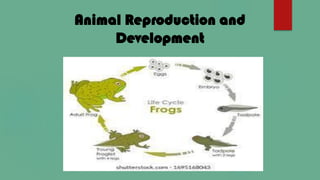
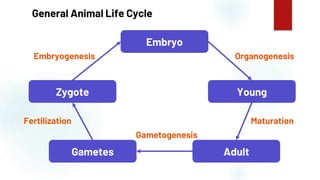
General Animal LifeCycle
Embryo
Zygote Young
Gametes Adult
Embryogenesis Organogenesis
Maturation
Gametogenesis
Fertilization
6.
6
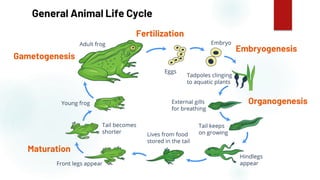
General Animal LifeCycle
Embryogenesis
Gametogenesis
Maturation
Organogenesis
Fertilization
7.
7
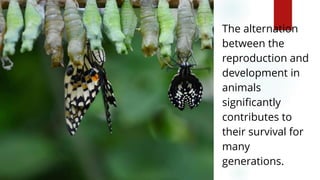
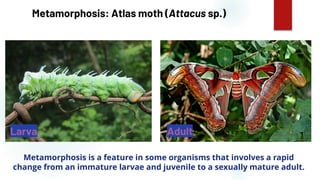
Metamorphosis: Atlas moth(Attacus sp.)
Metamorphosis is a feature in some organisms that involves a rapid
change from an immature larvae and juvenile to a sexually mature adult.
Larva Adult
8.
8
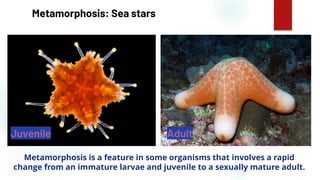
Metamorphosis: Sea stars
Metamorphosisis a feature in some organisms that involves a rapid
change from an immature larvae and juvenile to a sexually mature adult.
Juvenile Adult
9.
9
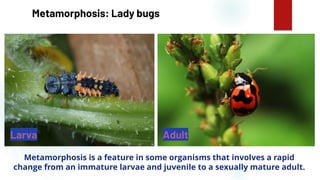
Metamorphosis: Lady bugs
LarvaAdult
Metamorphosis is a feature in some organisms that involves a rapid
change from an immature larvae and juvenile to a sexually mature adult.
13
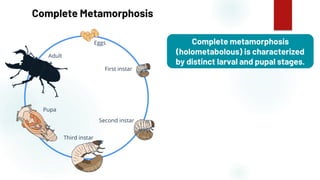
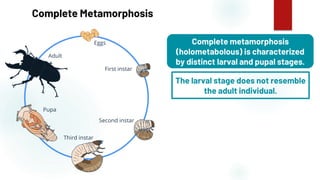
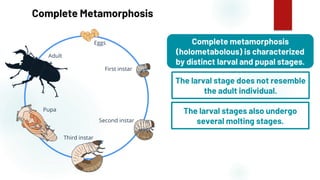
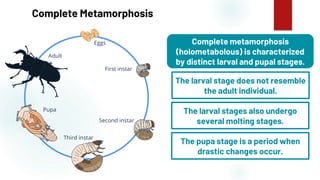
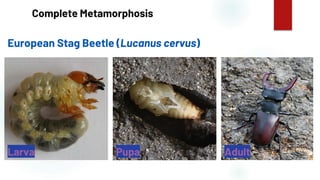
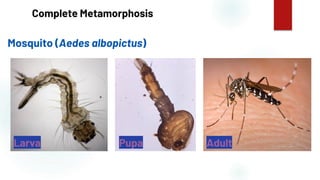
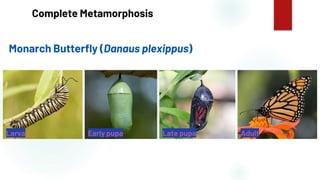
Complete Metamorphosis
Complete metamorphosis
(holometabolous)is characterized
by distinct larval and pupal stages.
The larval stage does not resemble
the adult individual.
The larval stages also undergo
several molting stages.
The pupa stage is a period when
drastic changes occur.
19
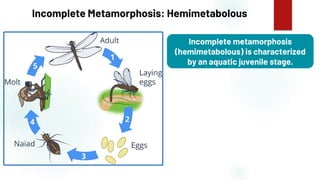
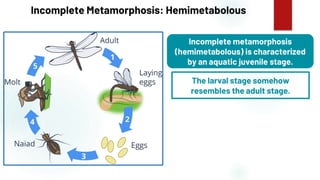
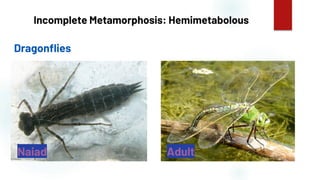
Incomplete Metamorphosis: Hemimetabolous
Incompletemetamorphosis
(hemimetabolous) is characterized
by an aquatic juvenile stage.
The larval stage somehow
resembles the adult stage.
The larval stages also undergo
several molting stages.
20.
20
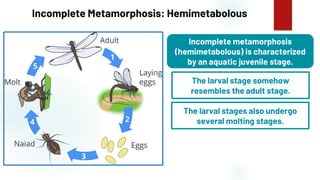
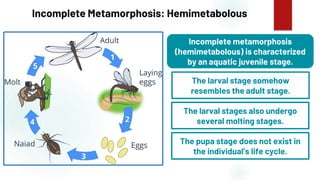
Incomplete Metamorphosis: Hemimetabolous
Incompletemetamorphosis
(hemimetabolous) is characterized
by an aquatic juvenile stage.
The larval stage somehow
resembles the adult stage.
The larval stages also undergo
several molting stages.
The pupa stage does not exist in
the individual’s life cycle.
24
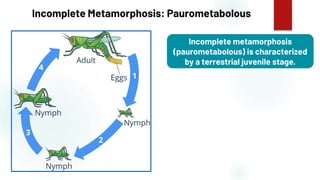
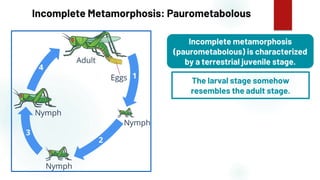
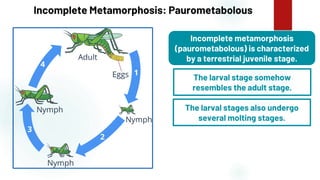
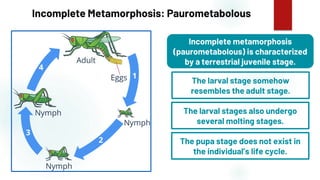
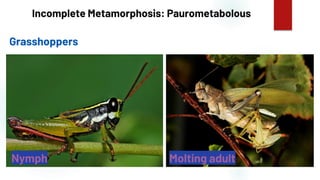
Incomplete Metamorphosis: Paurometabolous
Incompletemetamorphosis
(paurometabolous) is characterized
by a terrestrial juvenile stage.
The larval stage somehow
resembles the adult stage.
The larval stages also undergo
several molting stages.
25.
25
Incomplete Metamorphosis: Paurometabolous
Incompletemetamorphosis
(paurometabolous) is characterized
by a terrestrial juvenile stage.
The larval stage somehow
resembles the adult stage.
The larval stages also undergo
several molting stages.
The pupa stage does not exist in
the individual’s life cycle.
28
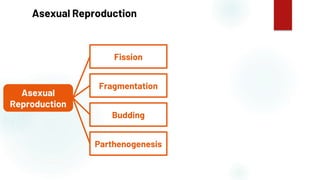
Asexual Reproduction
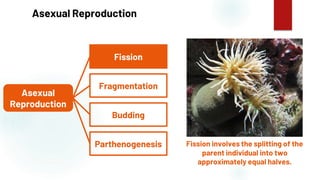
Fission involvesthe splitting of the
parent individual into two
approximately equal halves.
Asexual
Reproduction
Fission
Fragmentation
Budding
Parthenogenesis
29.
29
Asexual Reproduction
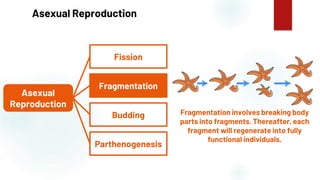
Fragmentation involvesbreaking body
parts into fragments. Thereafter, each
fragment will regenerate into fully
functional individuals.
Asexual
Reproduction
Fission
Fragmentation
Budding
Parthenogenesis
30.
30
Asexual Reproduction
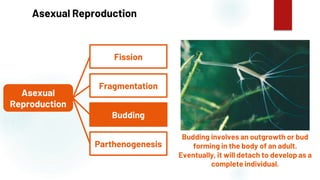
Budding involvesan outgrowth or bud
forming in the body of an adult.
Eventually, it will detach to develop as a
complete individual.
Asexual
Reproduction
Fission
Fragmentation
Budding
Parthenogenesis
32
Sexual Reproduction
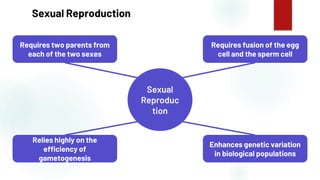
Sexual
Reproduc
tion
Requires twoparents from
each of the two sexes
Requires fusion of the egg
cell and the sperm cell
Relies highly on the
efficiency of
gametogenesis
Enhances genetic variation
in biological populations
34
Sexual Reproduction
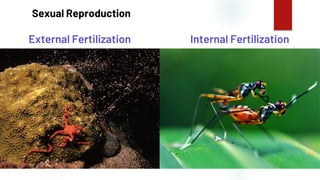
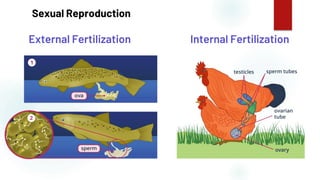
External FertilizationInternal Fertilization
Usually involves the release of
gametes into the surroundings
Sperm cells are usually deposited
into the female reproductive tract
35.
35
Sexual Reproduction
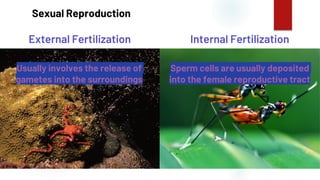
External FertilizationInternal Fertilization
Usually involves the release of
gametes into the surroundings
Sperm cells are usually deposited
into the female reproductive tract
The developing embryos are
usually nourish externally or may
immediately land on a substrate
The young may be nourished in the
female’s body or eggs are laid after
fertilization
36.
36
Sexual Reproduction
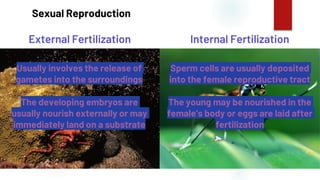
External FertilizationInternal Fertilization
Usually involves the release of
gametes into the surroundings
Sperm cells are usually deposited
into the female reproductive tract
The developing embryos are
usually nourish externally or may
immediately land on a substrate
The young may be nourished in the
female’s body or eggs are laid after
fertilization
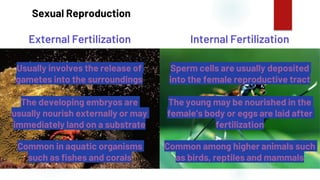
Common in aquatic organisms
such as fishes and corals
Common among higher animals such
as birds, reptiles and mammals
38
Variations in InternalFertilization
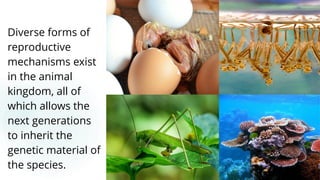
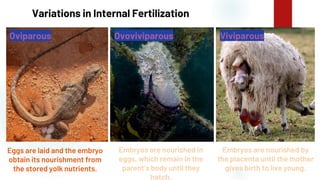
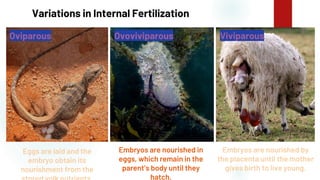
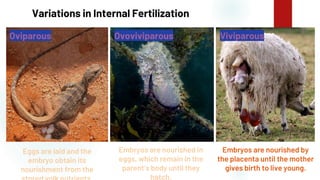
Eggs are laid and the embryo
obtain its nourishment from
the stored yolk nutrients.
Embryos are nourished in
eggs, which remain in the
parent’s body until they
hatch.
Embryos are nourished by
the placenta until the mother
gives birth to live young.
Oviparous Ovoviviparous Viviparous
39.
39
Variations in InternalFertilization
Eggs are laid and the
embryo obtain its
nourishment from the
Embryos are nourished in
eggs, which remain in the
parent’s body until they
hatch.
Embryos are nourished by
the placenta until the mother
gives birth to live young.
Oviparous Ovoviviparous Viviparous
40.
40
Variations in InternalFertilization
Eggs are laid and the
embryo obtain its
nourishment from the
Embryos are nourished in
eggs, which remain in the
parent’s body until they
hatch.
Embryos are nourished by
the placenta until the mother
gives birth to live young.
Oviparous Ovoviviparous Viviparous
41.
41
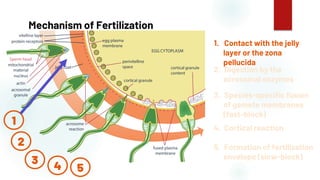
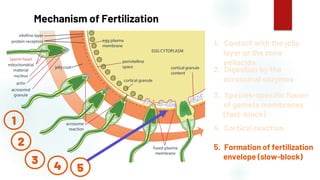
Mechanism of Fertilization
1.Contact with the jelly
layer or the zona
pellucida
2. Digestion by the
acrosomal enzymes
3. Species-specific fusion
of gamete membranes
(fast-block)
4. Cortical reaction
5. Formation of fertilization
envelope (slow-block)
1
2
3
4 5
42.
42
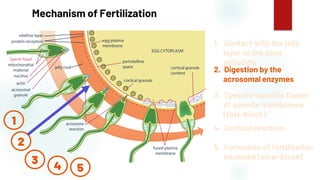
Mechanism of Fertilization
1.Contact with the jelly
layer or the zona
pellucida
2. Digestion by the
acrosomal enzymes
3. Species-specific fusion
of gamete membranes
(fast-block)
4. Cortical reaction
5. Formation of fertilization
envelope (slow-block)
1
2
3
4 5
43.
43
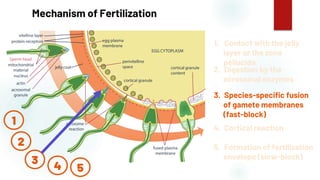
Mechanism of Fertilization
1.Contact with the jelly
layer or the zona
pellucida
2. Digestion by the
acrosomal enzymes
3. Species-specific fusion
of gamete membranes
(fast-block)
4. Cortical reaction
5. Formation of fertilization
envelope (slow-block)
1
2
3
4 5
44.
44
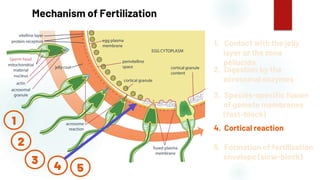
Mechanism of Fertilization
1.Contact with the jelly
layer or the zona
pellucida
2. Digestion by the
acrosomal enzymes
3. Species-specific fusion
of gamete membranes
(fast-block)
4. Cortical reaction
5. Formation of fertilization
envelope (slow-block)
1
2
3
4 5
45.
45
Mechanism of Fertilization
1.Contact with the jelly
layer or the zona
pellucida
2. Digestion by the
acrosomal enzymes
3. Species-specific fusion
of gamete membranes
(fast-block)
4. Cortical reaction
5. Formation of fertilization
envelope (slow-block)
1
2
3
4 5
46.
46
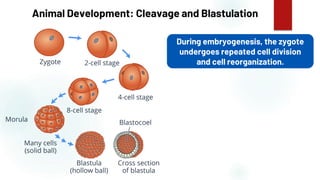
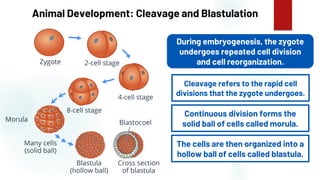
Animal Development: Cleavageand Blastulation
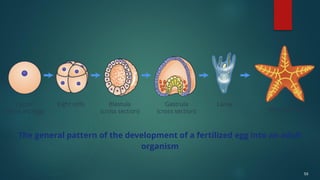
During embryogenesis, the zygote
undergoes repeated cell division
and cell reorganization.
47.
47
Animal Development: Cleavageand Blastulation
During embryogenesis, the zygote
undergoes repeated cell division
and cell reorganization.
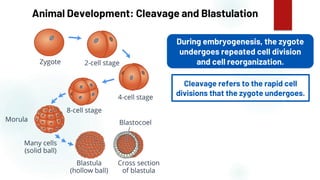
Cleavage refers to the rapid cell
divisions that the zygote undergoes.
48.
48
Animal Development: Cleavageand Blastulation
During embryogenesis, the zygote
undergoes repeated cell division
and cell reorganization.
Cleavage refers to the rapid cell
divisions that the zygote undergoes.
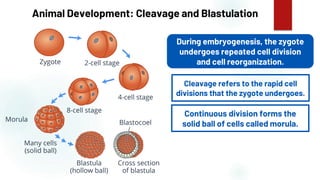
Continuous division forms the
solid ball of cells called morula.
49.
49
Animal Development: Cleavageand Blastulation
During embryogenesis, the zygote
undergoes repeated cell division
and cell reorganization.
Cleavage refers to the rapid cell
divisions that the zygote undergoes.
Continuous division forms the
solid ball of cells called morula.
The cells are then organized into a
hollow ball of cells called blastula.
53
What do youthink will happen
if cells do not differentiate
during the development of the
embryo?
54.
54
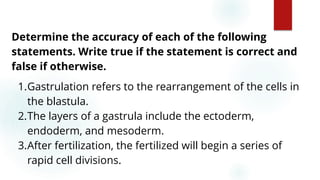
Determine the accuracyof each of the following
statements. Write true if the statement is correct and
false if otherwise.
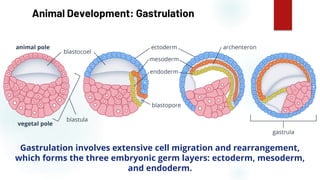
1.Gastrulation refers to the rearrangement of the cells in
the blastula.
2.The layers of a gastrula include the ectoderm,
endoderm, and mesoderm.
3.After fertilization, the fertilized will begin a series of
rapid cell divisions.
55.
55
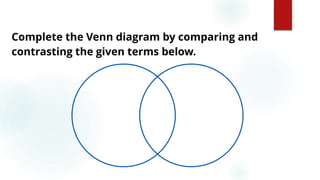
Complete the Venndiagram by comparing and
contrasting the given terms below.
Blastula Gastrula
56.
56
● The lifecycle of an animal usually starts from the
fusion of the male (sperm) and the female (egg
cell) gametes during the fertilization process.
● Metamorphosis is a biological feature in the life
cycle of some organisms. It can either be
complete or incomplete, depending on whether a
pupa stage is present.
57.
57
● The fertilizedegg will undergo active cell division
and cell differentiation to form the developing
embryo during embryogenesis.
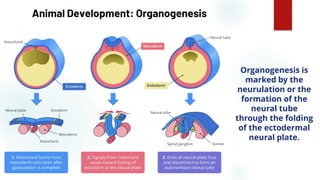
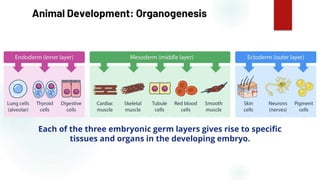
● The embryo will undergo organogenesis, where
it starts to form several types of tissues that will
lead to the formation of the organs and organ
systems.
58.
58
● Once anindividual is formed, this will grow and
mature into an adult, which will be capable of
reproducing and forming another generation
of individuals.