PowerPoint Presentation by Charlie Cook
The University of West Alabama
Chapter 1
Introduction to
Human Resource
Management
Part One | Introduction
Copyright © 2011 Pearson Education, Inc.
publishing as Prentice Hall
Copyright © 2011 Pearson Education, Inc. publishing as Prentice Hall 1–2
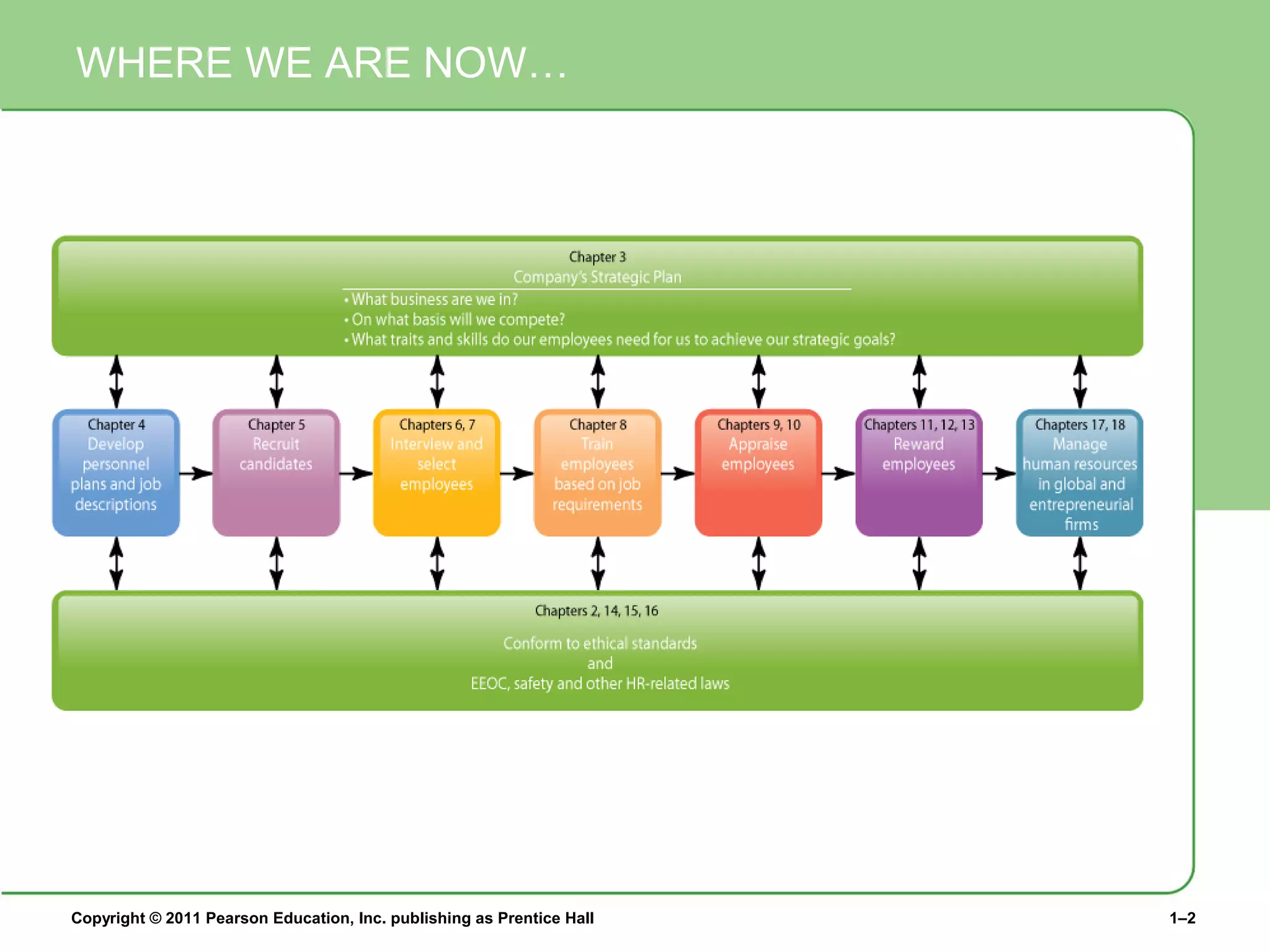
WHERE WE ARE NOW…
Copyright © 2011 Pearson Education, Inc. publishing as Prentice Hall 1–3
1.1. Explain what human resource management is and howExplain what human resource management is and how
it relates to the management process.it relates to the management process.
2.2. Show with examples why human resource managementShow with examples why human resource management
is important to all managers.is important to all managers.
3.3. Illustrate the human resources responsibilities of lineIllustrate the human resources responsibilities of line
and staff (HR) managers.and staff (HR) managers.
4.4. Briefly discuss and illustrate each of the importantBriefly discuss and illustrate each of the important
trends influencing human resource management.trends influencing human resource management.
5.5. List and briefly describe important trends in humanList and briefly describe important trends in human
resource management.resource management.
6.6. Define and give an example of evidence-based humanDefine and give an example of evidence-based human
resource management.resource management.
7.7. Outline the plan of this book.Outline the plan of this book.
LEARNING OUTCOMESLEARNING OUTCOMES
Copyright © 2011 Pearson Education, Inc. publishing as Prentice Hall 1–4
Human Resource Management at WorkHuman Resource Management at Work
• What Is Human Resource Management (HRM)?What Is Human Resource Management (HRM)?
 The process of acquiring, training, appraising, andThe process of acquiring, training, appraising, and
compensating employees, and of attending to their laborcompensating employees, and of attending to their labor
relations, health and safety, and fairness concerns.relations, health and safety, and fairness concerns.
• OrganizationOrganization
 People with formally assigned roles who work together toPeople with formally assigned roles who work together to
achieve the organization’s goals.achieve the organization’s goals.
• ManagerManager
 The person responsible for accomplishing the organization’sThe person responsible for accomplishing the organization’s
goals, and who does so by managing the efforts of thegoals, and who does so by managing the efforts of the
organization’s people.organization’s people.
Copyright © 2011 Pearson Education, Inc. publishing as Prentice Hall 1–5
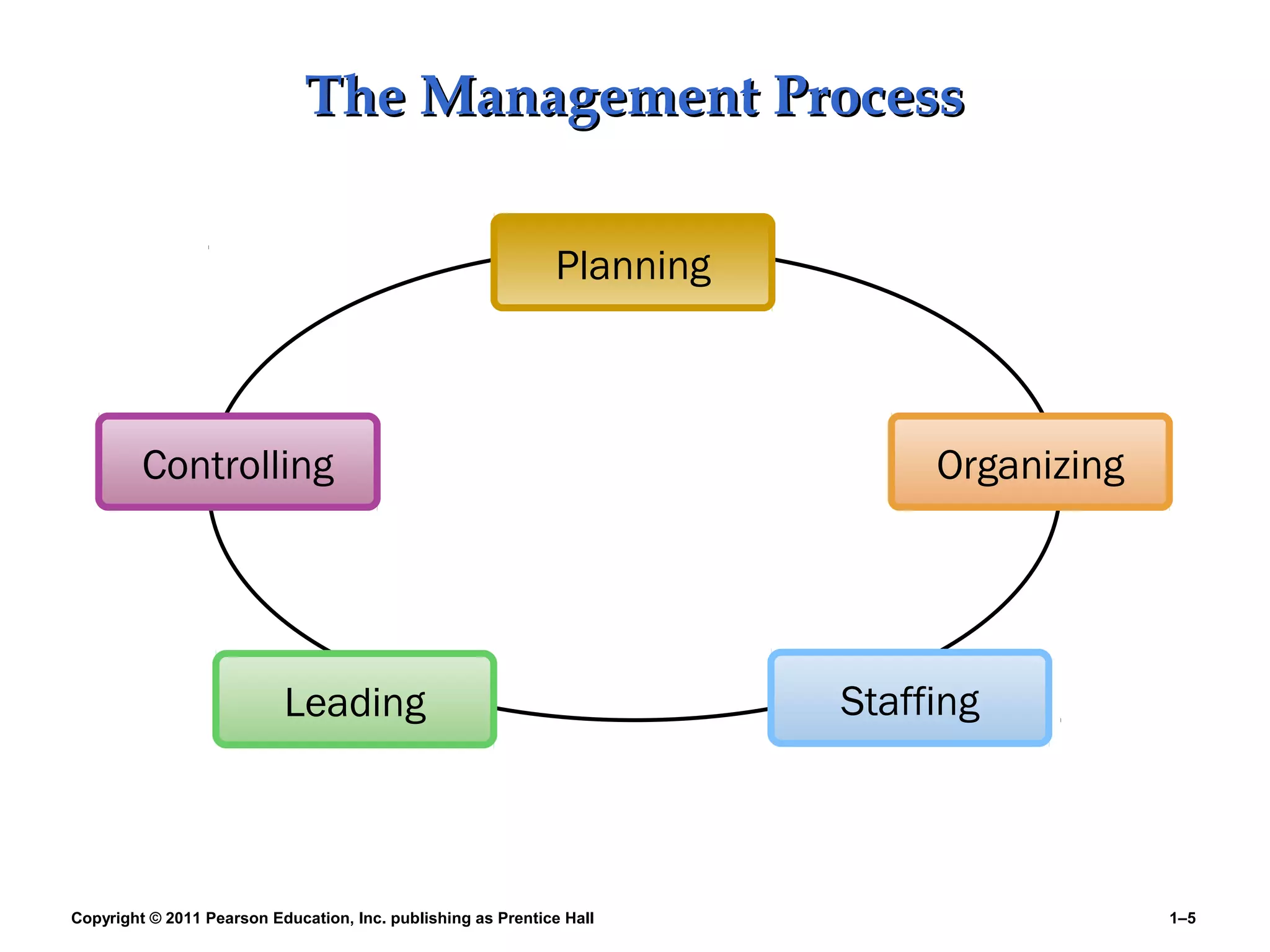
The Management ProcessThe Management Process
Planning
Organizing
Leading Staffing
Controlling
Management functions
• Planning: Establishing Goals and standards;
developing rules and procedures; developing plans and
forecasting
• Organizing: Giving each subordinate a specific task;
establishing departments; delegating authority to
subordinates; establishing channels of authority and
communication; coordinating the work of subordinates
• Staffing: Determining what type of people should be
hired; recruiting prospective employees; selecting
employees; setting performance standards;
compensating employees; evaluating performance;
counseling employees; training and developing
employees
Management functions Contd..
• Leading: Getting others to get the job done;
maintaining morale; motivating subordinates
• Controlling: Setting standards; checking to see how
actual performance compares with standards set; taking
corrective action as needed
Copyright © 2011 Pearson Education, Inc. publishing as Prentice Hall 1–8
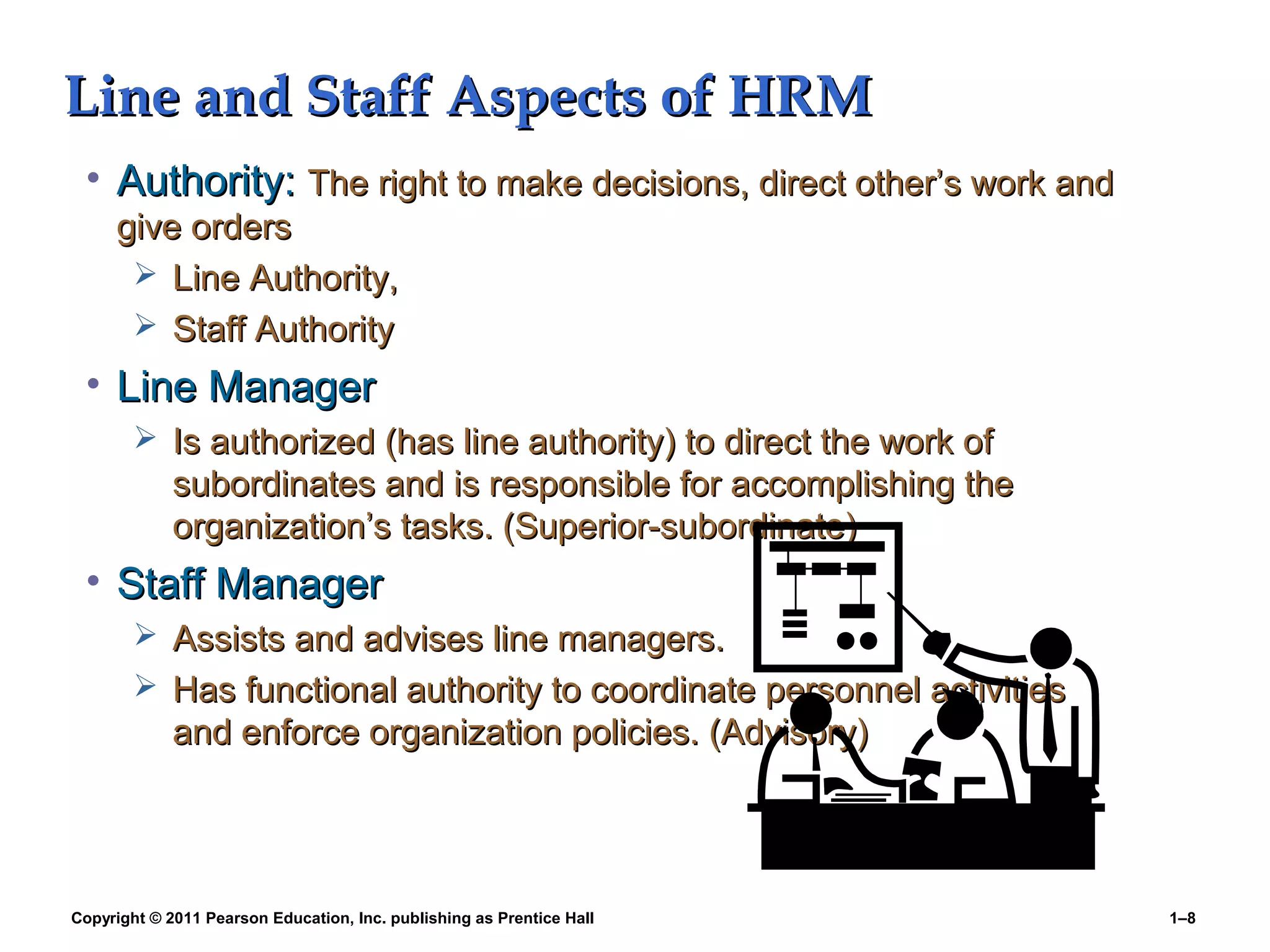
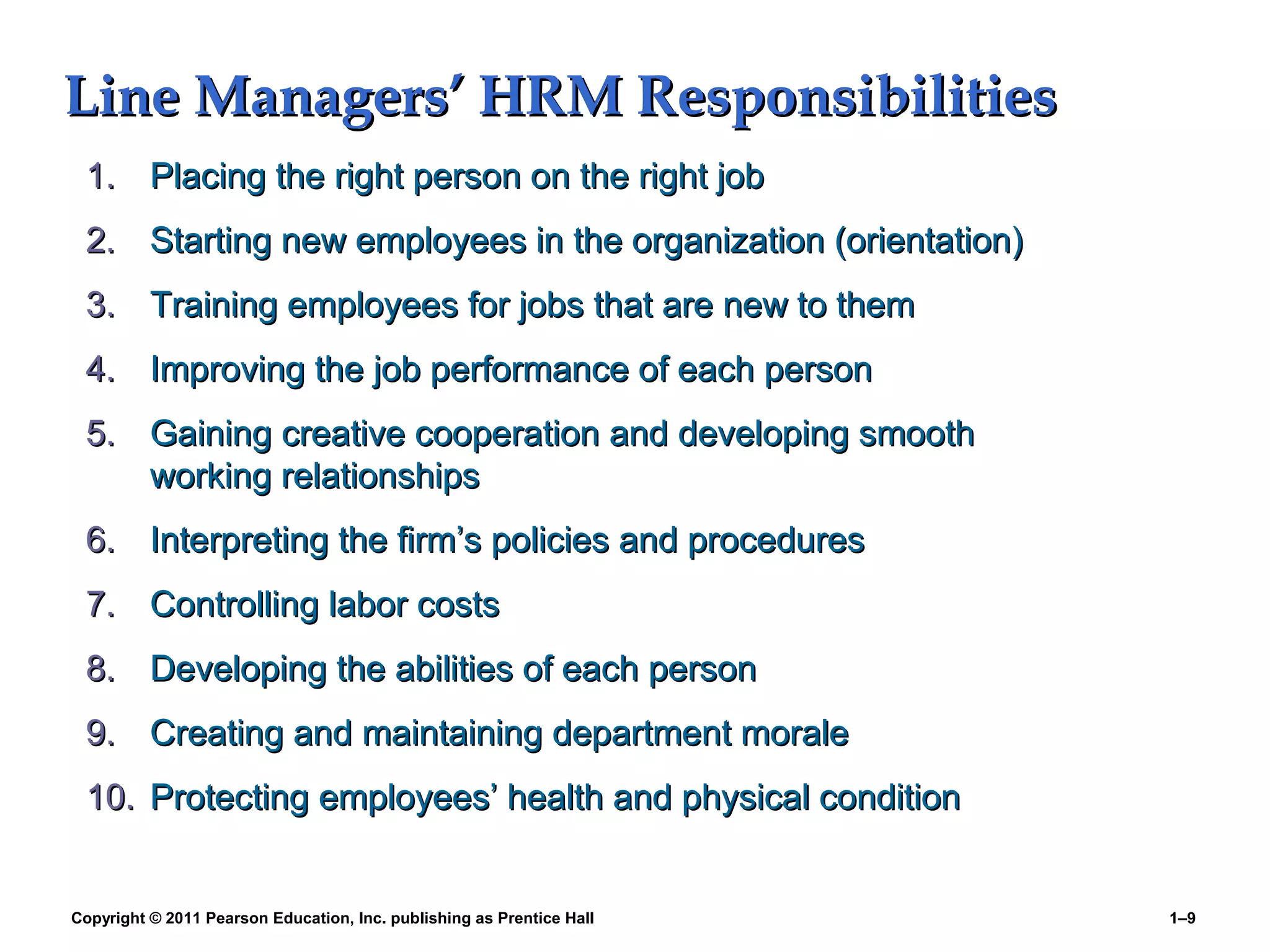
Line and Staff Aspects of HRMLine and Staff Aspects of HRM
• Authority:Authority: The right to make decisions, direct other’s work andThe right to make decisions, direct other’s work and
give ordersgive orders
 Line Authority,Line Authority,
 Staff AuthorityStaff Authority
• Line ManagerLine Manager
 Is authorized (has line authority) to direct the work ofIs authorized (has line authority) to direct the work of
subordinates and is responsible for accomplishing thesubordinates and is responsible for accomplishing the
organization’s tasks. (Superior-subordinate)organization’s tasks. (Superior-subordinate)
• Staff ManagerStaff Manager
 Assists and advises line managers.Assists and advises line managers.
 Has functional authority to coordinate personnel activitiesHas functional authority to coordinate personnel activities
and enforce organization policies. (Advisory)and enforce organization policies. (Advisory)
Copyright © 2011 Pearson Education, Inc. publishing as Prentice Hall 1–9
Line Managers’ HRM ResponsibilitiesLine Managers’ HRM Responsibilities
1.1. Placing the right person on the right jobPlacing the right person on the right job
2.2. Starting new employees in the organization (orientation)Starting new employees in the organization (orientation)
3.3. Training employees for jobs that are new to themTraining employees for jobs that are new to them
4.4. Improving the job performance of each personImproving the job performance of each person
5.5. Gaining creative cooperation and developing smoothGaining creative cooperation and developing smooth
working relationshipsworking relationships
6.6. Interpreting the firm’s policies and proceduresInterpreting the firm’s policies and procedures
7.7. Controlling labor costsControlling labor costs
8.8. Developing the abilities of each personDeveloping the abilities of each person
9.9. Creating and maintaining department moraleCreating and maintaining department morale
10.10. Protecting employees’ health and physical conditionProtecting employees’ health and physical condition
Copyright © 2011 Pearson Education, Inc. publishing as Prentice Hall 1–10
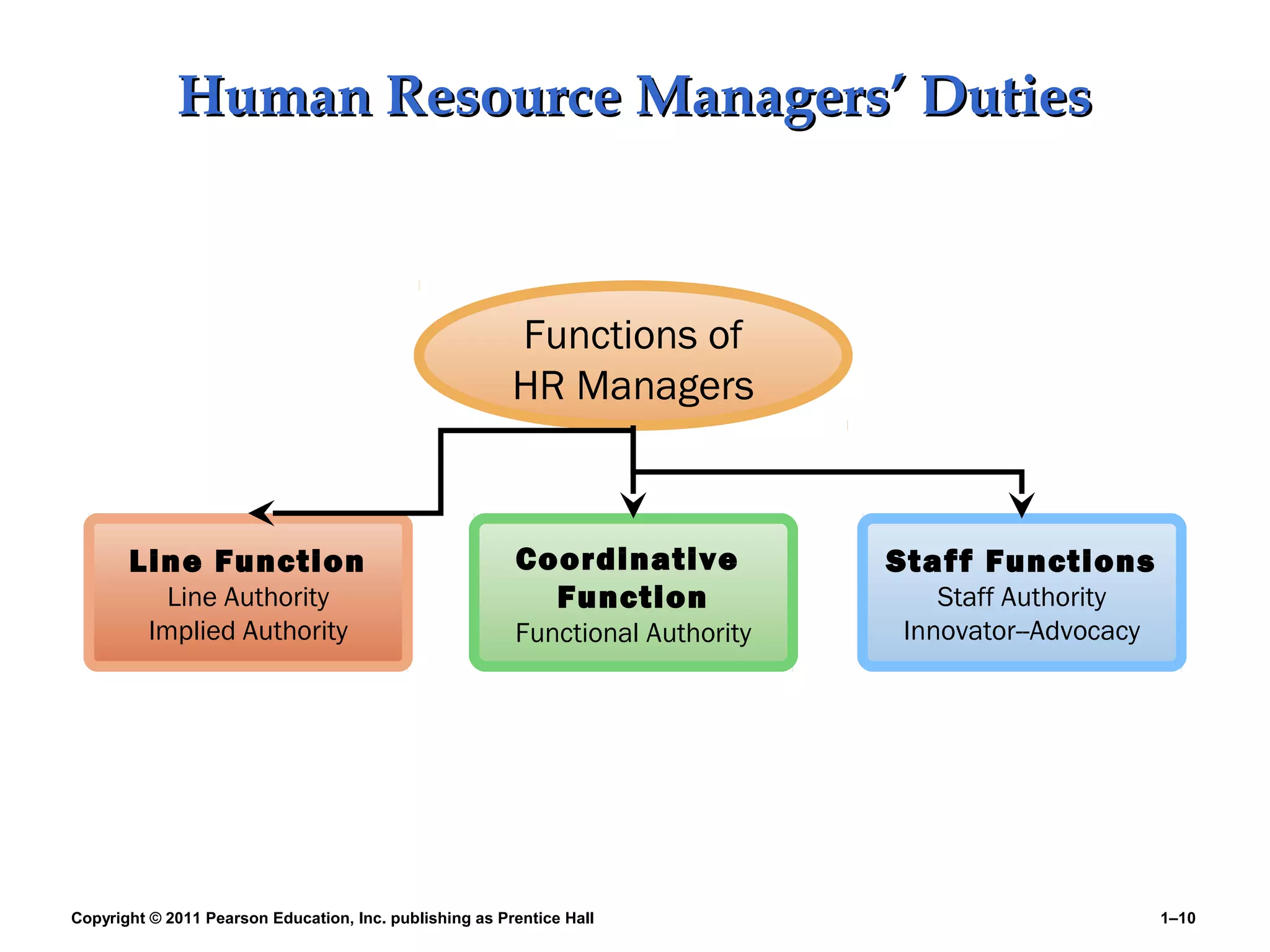
Human Resource Managers’ DutiesHuman Resource Managers’ Duties
Line Function
Line Authority
Implied Authority
Staff Functions
Staff Authority
Innovator--Advocacy
Functions of
HR Managers
Coordinative
Function
Functional Authority
Copyright © 2011 Pearson Education, Inc. publishing as Prentice Hall 1–11
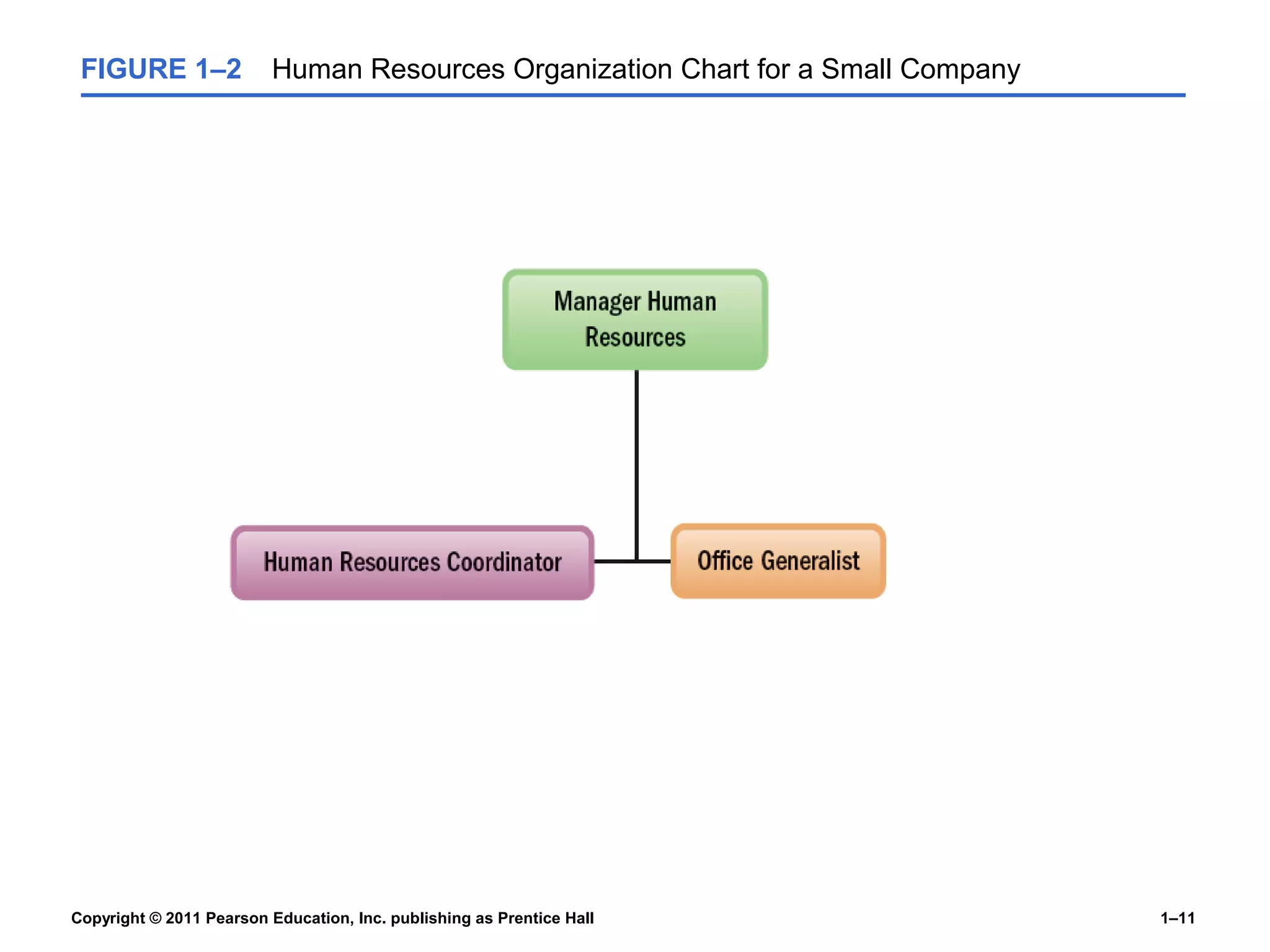
FIGURE 1–2 Human Resources Organization Chart for a Small Company
Copyright © 2011 Pearson Education, Inc. publishing as Prentice Hall 1–12
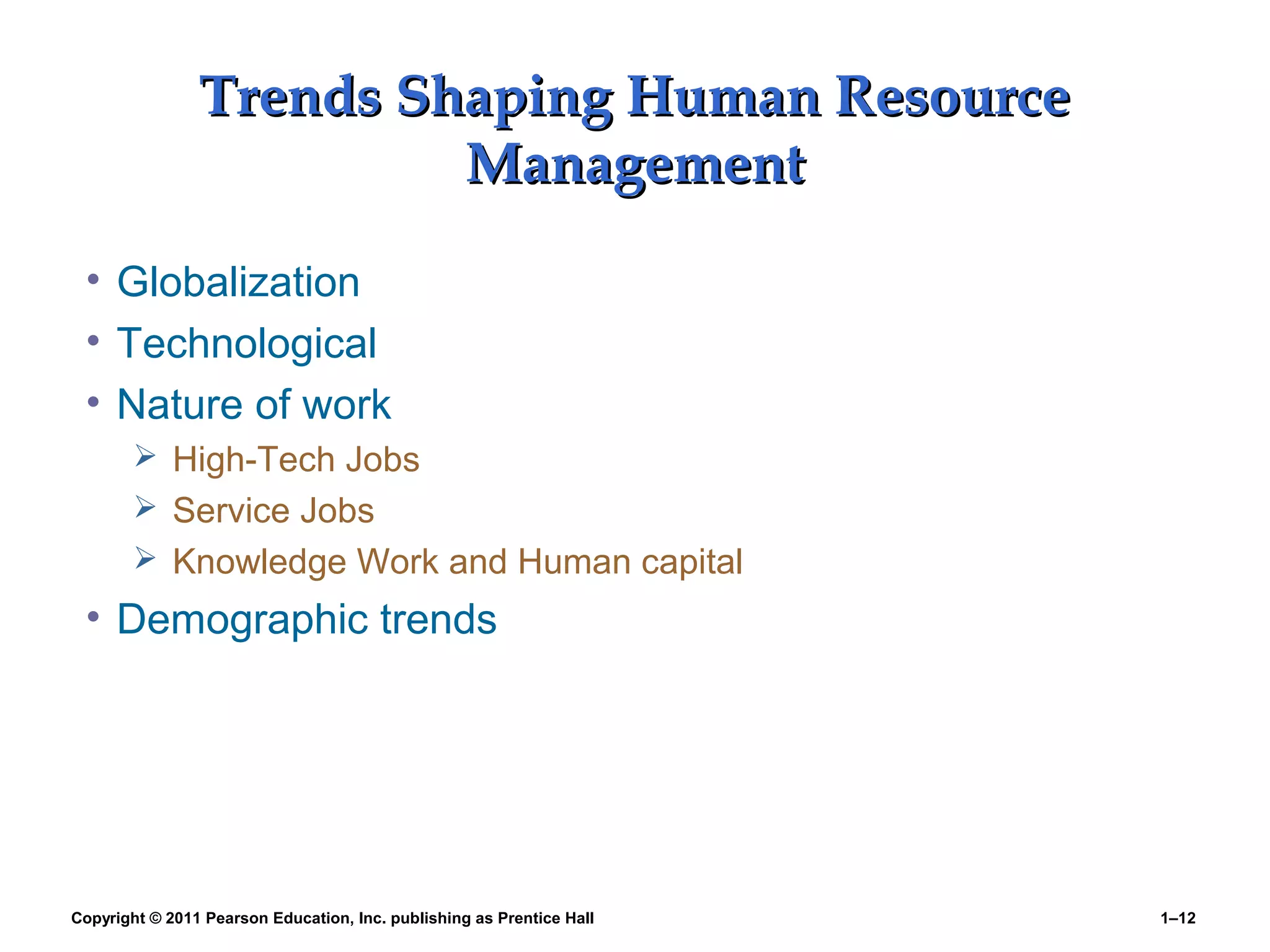
Trends Shaping Human ResourceTrends Shaping Human Resource
ManagementManagement
• Globalization
• Technological
• Nature of work
 High-Tech Jobs
 Service Jobs
 Knowledge Work and Human capital
• Demographic trends
Copyright © 2011 Pearson Education, Inc. publishing as Prentice Hall 1–13
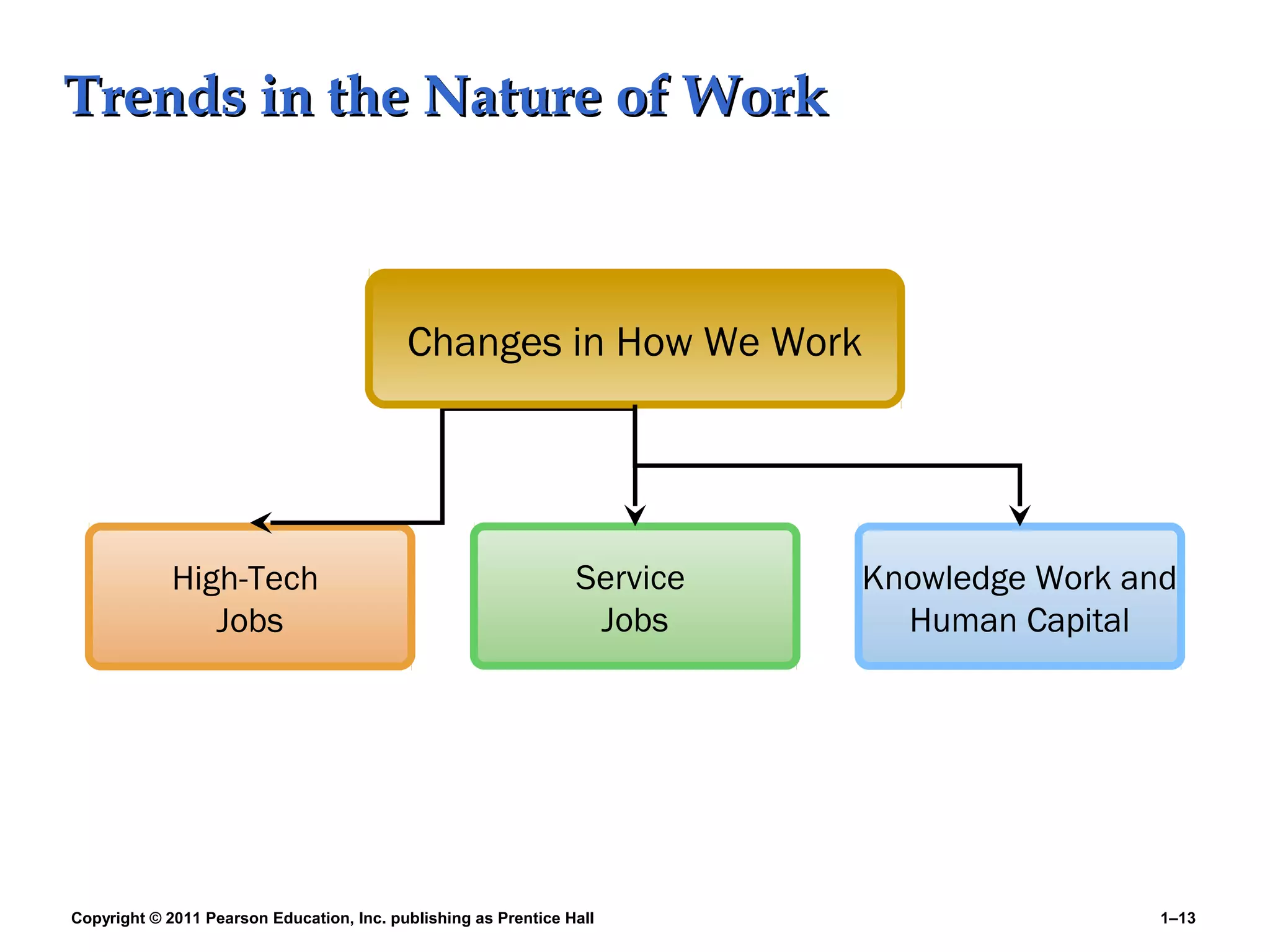
Trends in the Nature of WorkTrends in the Nature of Work
High-Tech
Jobs
Service
Jobs
Changes in How We Work
Knowledge Work and
Human Capital
Copyright © 2011 Pearson Education, Inc. publishing as Prentice Hall 1–14
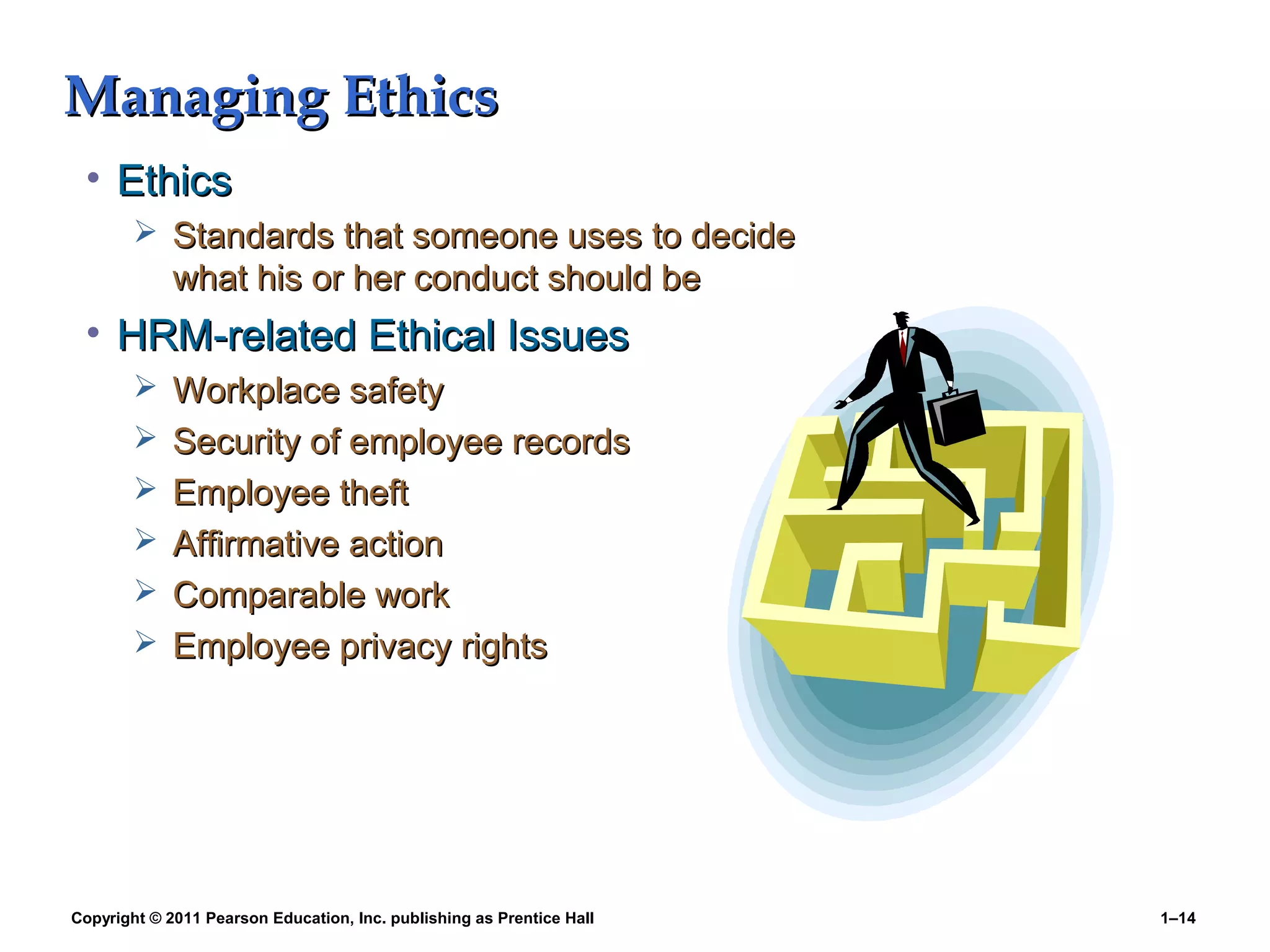
Managing EthicsManaging Ethics
• EthicsEthics
 Standards that someone uses to decideStandards that someone uses to decide
what his or her conduct should bewhat his or her conduct should be
• HRM-related Ethical IssuesHRM-related Ethical Issues
 Workplace safetyWorkplace safety
 Security of employee recordsSecurity of employee records
 Employee theftEmployee theft
 Affirmative actionAffirmative action
 Comparable workComparable work
 Employee privacy rightsEmployee privacy rights
Copyright © 2011 Pearson Education, Inc. publishing as Prentice Hall 1–15
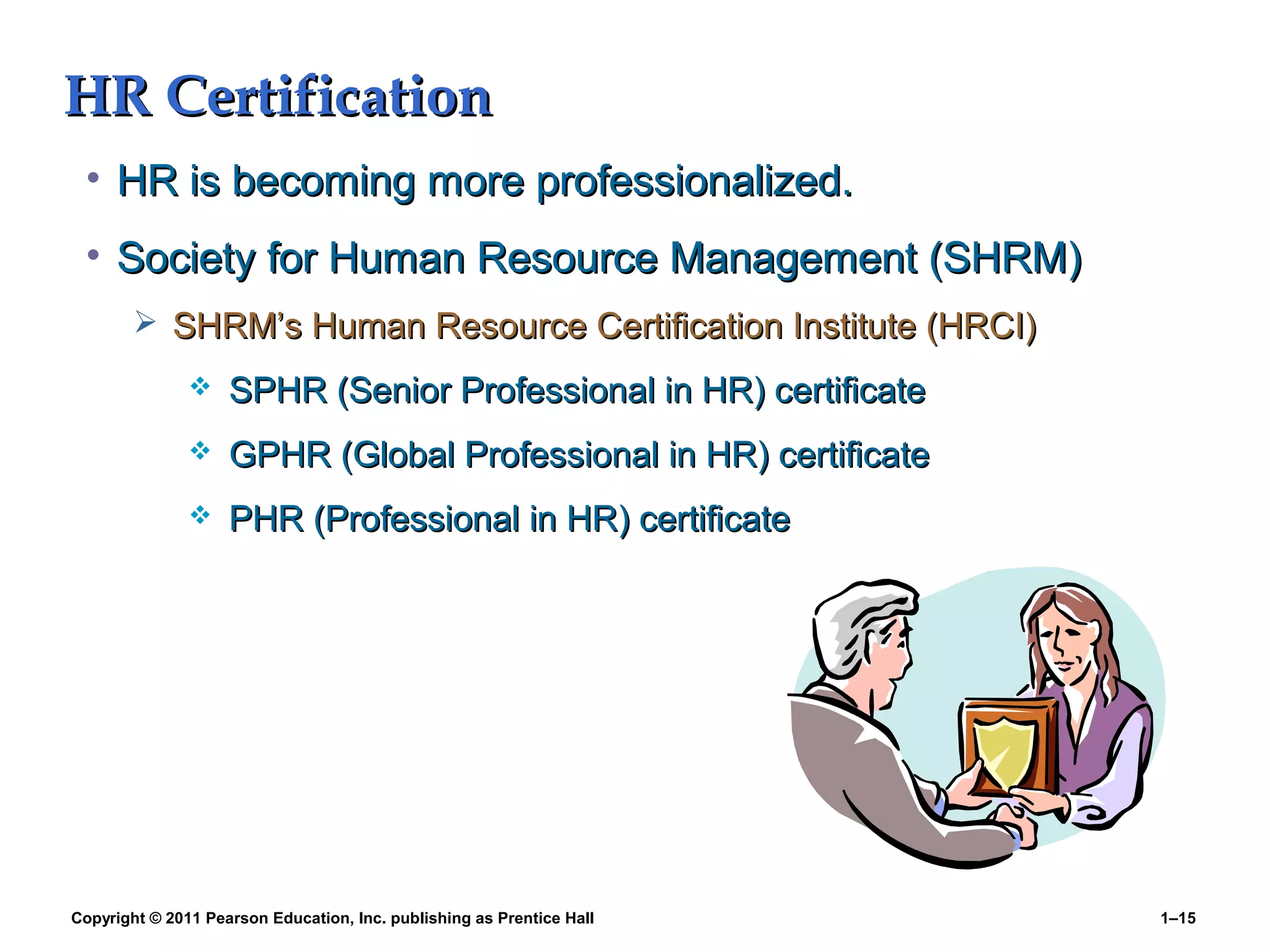
HR CertificationHR Certification
• HR is becoming more professionalized.HR is becoming more professionalized.
• Society for Human Resource Management (SHRM)Society for Human Resource Management (SHRM)
 SHRM’s Human Resource Certification Institute (HRCI)SHRM’s Human Resource Certification Institute (HRCI)
 SPHR (Senior Professional in HR) certificateSPHR (Senior Professional in HR) certificate
 GPHR (Global Professional in HR) certificateGPHR (Global Professional in HR) certificate
 PHR (Professional in HR) certificatePHR (Professional in HR) certificate
Copyright © 2011 Pearson Education, Inc. publishing as Prentice Hall 1–16
The Plan of This Book: Basic ThemesThe Plan of This Book: Basic Themes
• HRM is the responsibility of every manager.HRM is the responsibility of every manager.
• The workforce is becoming increasingly diverse.The workforce is becoming increasingly diverse.
• Current economic challenges require that HR managersCurrent economic challenges require that HR managers
develop new and better skills to effectively and efficientlydevelop new and better skills to effectively and efficiently
deliver and manage HR services.deliver and manage HR services.
• The intensely competitive nature of business todayThe intensely competitive nature of business today
means human resource managers must defend theirmeans human resource managers must defend their
plans and contributions in measurable terms.plans and contributions in measurable terms.
Copyright © 2011 Pearson Education, Inc. publishing as Prentice Hall 1–17
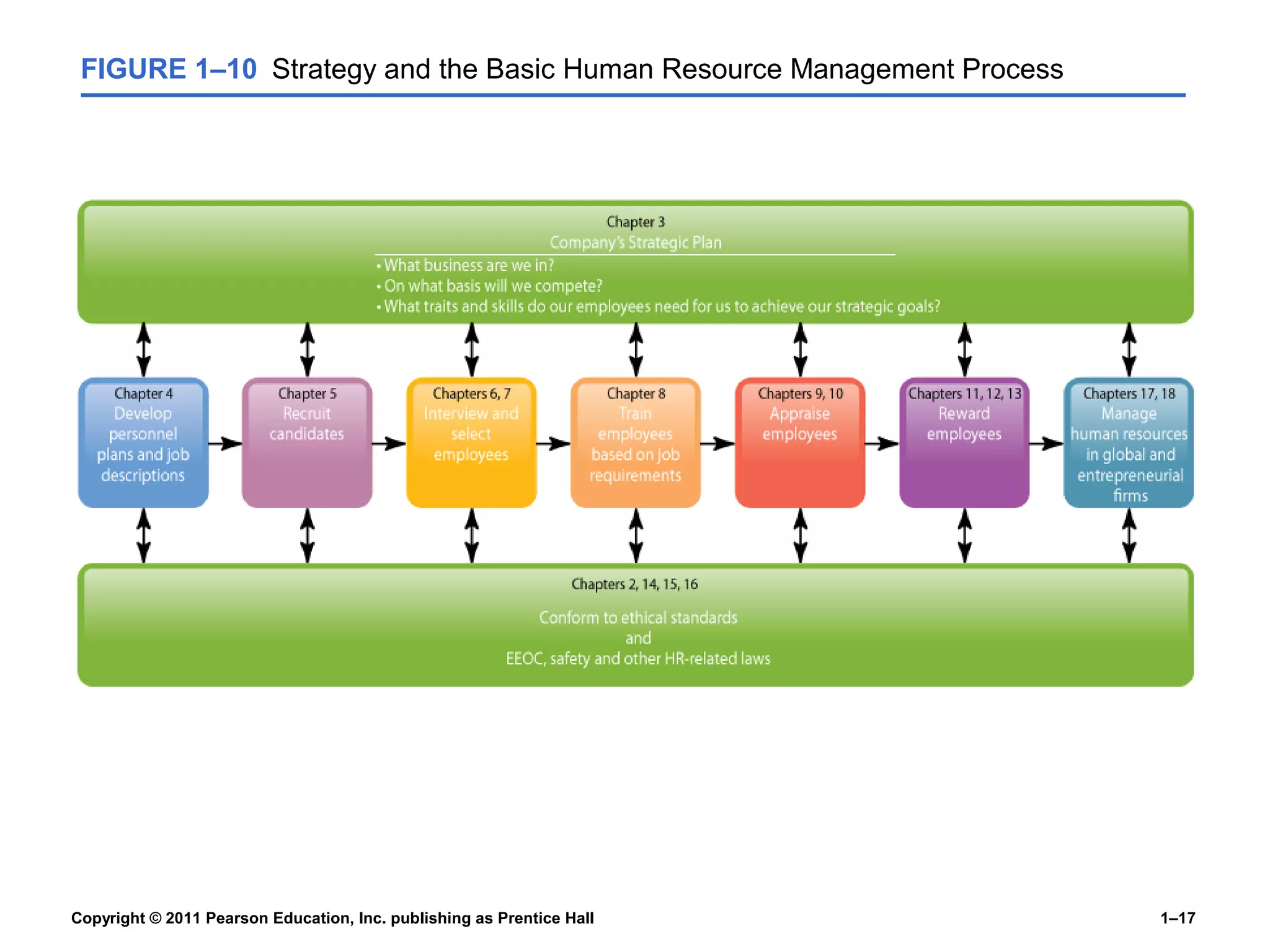
FIGURE 1–10 Strategy and the Basic Human Resource Management Process
Copyright © 2011 Pearson Education, Inc. publishing as Prentice Hall 1–18
K E Y T E R M S
organization
manager
management process
human resource management (HRM)
authority
line authority
staff authority
line manager
staff manager
functional authority
globalization
human capital
Copyright © 2011 Pearson Education, Inc. publishing as Prentice Hall 1–19
All rights reserved. No part of this publication may be reproduced,
stored in a retrieval system, or transmitted, in any form or by any
means, electronic, mechanical, photocopying, recording, or
otherwise, without the prior written permission of the publisher.
Printed in the United States of America.

Hr,ch 1

  • 1.
    PowerPoint Presentation byCharlie Cook The University of West Alabama Chapter 1 Introduction to Human Resource Management Part One | Introduction Copyright © 2011 Pearson Education, Inc. publishing as Prentice Hall
  • 2.
    Copyright © 2011Pearson Education, Inc. publishing as Prentice Hall 1–2 WHERE WE ARE NOW…
  • 3.
    Copyright © 2011Pearson Education, Inc. publishing as Prentice Hall 1–3 1.1. Explain what human resource management is and howExplain what human resource management is and how it relates to the management process.it relates to the management process. 2.2. Show with examples why human resource managementShow with examples why human resource management is important to all managers.is important to all managers. 3.3. Illustrate the human resources responsibilities of lineIllustrate the human resources responsibilities of line and staff (HR) managers.and staff (HR) managers. 4.4. Briefly discuss and illustrate each of the importantBriefly discuss and illustrate each of the important trends influencing human resource management.trends influencing human resource management. 5.5. List and briefly describe important trends in humanList and briefly describe important trends in human resource management.resource management. 6.6. Define and give an example of evidence-based humanDefine and give an example of evidence-based human resource management.resource management. 7.7. Outline the plan of this book.Outline the plan of this book. LEARNING OUTCOMESLEARNING OUTCOMES
  • 4.
    Copyright © 2011Pearson Education, Inc. publishing as Prentice Hall 1–4 Human Resource Management at WorkHuman Resource Management at Work • What Is Human Resource Management (HRM)?What Is Human Resource Management (HRM)?  The process of acquiring, training, appraising, andThe process of acquiring, training, appraising, and compensating employees, and of attending to their laborcompensating employees, and of attending to their labor relations, health and safety, and fairness concerns.relations, health and safety, and fairness concerns. • OrganizationOrganization  People with formally assigned roles who work together toPeople with formally assigned roles who work together to achieve the organization’s goals.achieve the organization’s goals. • ManagerManager  The person responsible for accomplishing the organization’sThe person responsible for accomplishing the organization’s goals, and who does so by managing the efforts of thegoals, and who does so by managing the efforts of the organization’s people.organization’s people.
  • 5.
    Copyright © 2011Pearson Education, Inc. publishing as Prentice Hall 1–5 The Management ProcessThe Management Process Planning Organizing Leading Staffing Controlling
  • 6.
    Management functions • Planning:Establishing Goals and standards; developing rules and procedures; developing plans and forecasting • Organizing: Giving each subordinate a specific task; establishing departments; delegating authority to subordinates; establishing channels of authority and communication; coordinating the work of subordinates • Staffing: Determining what type of people should be hired; recruiting prospective employees; selecting employees; setting performance standards; compensating employees; evaluating performance; counseling employees; training and developing employees
  • 7.
    Management functions Contd.. •Leading: Getting others to get the job done; maintaining morale; motivating subordinates • Controlling: Setting standards; checking to see how actual performance compares with standards set; taking corrective action as needed
  • 8.
    Copyright © 2011Pearson Education, Inc. publishing as Prentice Hall 1–8 Line and Staff Aspects of HRMLine and Staff Aspects of HRM • Authority:Authority: The right to make decisions, direct other’s work andThe right to make decisions, direct other’s work and give ordersgive orders  Line Authority,Line Authority,  Staff AuthorityStaff Authority • Line ManagerLine Manager  Is authorized (has line authority) to direct the work ofIs authorized (has line authority) to direct the work of subordinates and is responsible for accomplishing thesubordinates and is responsible for accomplishing the organization’s tasks. (Superior-subordinate)organization’s tasks. (Superior-subordinate) • Staff ManagerStaff Manager  Assists and advises line managers.Assists and advises line managers.  Has functional authority to coordinate personnel activitiesHas functional authority to coordinate personnel activities and enforce organization policies. (Advisory)and enforce organization policies. (Advisory)
  • 9.
    Copyright © 2011Pearson Education, Inc. publishing as Prentice Hall 1–9 Line Managers’ HRM ResponsibilitiesLine Managers’ HRM Responsibilities 1.1. Placing the right person on the right jobPlacing the right person on the right job 2.2. Starting new employees in the organization (orientation)Starting new employees in the organization (orientation) 3.3. Training employees for jobs that are new to themTraining employees for jobs that are new to them 4.4. Improving the job performance of each personImproving the job performance of each person 5.5. Gaining creative cooperation and developing smoothGaining creative cooperation and developing smooth working relationshipsworking relationships 6.6. Interpreting the firm’s policies and proceduresInterpreting the firm’s policies and procedures 7.7. Controlling labor costsControlling labor costs 8.8. Developing the abilities of each personDeveloping the abilities of each person 9.9. Creating and maintaining department moraleCreating and maintaining department morale 10.10. Protecting employees’ health and physical conditionProtecting employees’ health and physical condition
  • 10.
    Copyright © 2011Pearson Education, Inc. publishing as Prentice Hall 1–10 Human Resource Managers’ DutiesHuman Resource Managers’ Duties Line Function Line Authority Implied Authority Staff Functions Staff Authority Innovator--Advocacy Functions of HR Managers Coordinative Function Functional Authority
  • 11.
    Copyright © 2011Pearson Education, Inc. publishing as Prentice Hall 1–11 FIGURE 1–2 Human Resources Organization Chart for a Small Company
  • 12.
    Copyright © 2011Pearson Education, Inc. publishing as Prentice Hall 1–12 Trends Shaping Human ResourceTrends Shaping Human Resource ManagementManagement • Globalization • Technological • Nature of work  High-Tech Jobs  Service Jobs  Knowledge Work and Human capital • Demographic trends
  • 13.
    Copyright © 2011Pearson Education, Inc. publishing as Prentice Hall 1–13 Trends in the Nature of WorkTrends in the Nature of Work High-Tech Jobs Service Jobs Changes in How We Work Knowledge Work and Human Capital
  • 14.
    Copyright © 2011Pearson Education, Inc. publishing as Prentice Hall 1–14 Managing EthicsManaging Ethics • EthicsEthics  Standards that someone uses to decideStandards that someone uses to decide what his or her conduct should bewhat his or her conduct should be • HRM-related Ethical IssuesHRM-related Ethical Issues  Workplace safetyWorkplace safety  Security of employee recordsSecurity of employee records  Employee theftEmployee theft  Affirmative actionAffirmative action  Comparable workComparable work  Employee privacy rightsEmployee privacy rights
  • 15.
    Copyright © 2011Pearson Education, Inc. publishing as Prentice Hall 1–15 HR CertificationHR Certification • HR is becoming more professionalized.HR is becoming more professionalized. • Society for Human Resource Management (SHRM)Society for Human Resource Management (SHRM)  SHRM’s Human Resource Certification Institute (HRCI)SHRM’s Human Resource Certification Institute (HRCI)  SPHR (Senior Professional in HR) certificateSPHR (Senior Professional in HR) certificate  GPHR (Global Professional in HR) certificateGPHR (Global Professional in HR) certificate  PHR (Professional in HR) certificatePHR (Professional in HR) certificate
  • 16.
    Copyright © 2011Pearson Education, Inc. publishing as Prentice Hall 1–16 The Plan of This Book: Basic ThemesThe Plan of This Book: Basic Themes • HRM is the responsibility of every manager.HRM is the responsibility of every manager. • The workforce is becoming increasingly diverse.The workforce is becoming increasingly diverse. • Current economic challenges require that HR managersCurrent economic challenges require that HR managers develop new and better skills to effectively and efficientlydevelop new and better skills to effectively and efficiently deliver and manage HR services.deliver and manage HR services. • The intensely competitive nature of business todayThe intensely competitive nature of business today means human resource managers must defend theirmeans human resource managers must defend their plans and contributions in measurable terms.plans and contributions in measurable terms.
  • 17.
    Copyright © 2011Pearson Education, Inc. publishing as Prentice Hall 1–17 FIGURE 1–10 Strategy and the Basic Human Resource Management Process
  • 18.
    Copyright © 2011Pearson Education, Inc. publishing as Prentice Hall 1–18 K E Y T E R M S organization manager management process human resource management (HRM) authority line authority staff authority line manager staff manager functional authority globalization human capital
  • 19.
    Copyright © 2011Pearson Education, Inc. publishing as Prentice Hall 1–19 All rights reserved. No part of this publication may be reproduced, stored in a retrieval system, or transmitted, in any form or by any means, electronic, mechanical, photocopying, recording, or otherwise, without the prior written permission of the publisher. Printed in the United States of America.

Editor's Notes

  • #2 Human Resources Management 12e Gary Dessler Copyright © 2011 Pearson Education, Inc. publishing as Prentice Hall 1 –
  • #3 Human Resources Management 12e Gary Dessler Copyright © 2011 Pearson Education, Inc. publishing as Prentice Hall 1 – The purpose of this chapter is to explain what human resource management is, and why it’s important to all managers. We’ll see that HRM activities such as hiring, training, appraising, compensating, and developing employees are part of every manager’s job. And we’ll see that HRM is also a separate function, usually with its own human resource or “HR” manager. The main topics we’ll cover include the meaning of human resource management; why HRM is important to all managers; global and competitive trends; HRM trends; and the plan of this book. The framework (which introduces each chapter) makes this point: That to formulate and apply HR practices like testing and training you should understand the strategic and legal context in which you’re managing.
  • #4 Human Resources Management 12e Gary Dessler Copyright © 2011 Pearson Education, Inc. publishing as Prentice Hall 1 –
  • #5 Human Resources Management 12e Gary Dessler Copyright © 2011 Pearson Education, Inc. publishing as Prentice Hall 1 – Human resource management is the process of acquiring, training, appraising, and compensating employees, and of attending to their labor relations, health and safety, and fairness concerns.
  • #6 Human Resources Management 12e Gary Dessler Copyright © 2011 Pearson Education, Inc. publishing as Prentice Hall 1 – Most experts agree that managing involves five functions: planning, organizing, staffing, leading, and controlling. In total, these functions represent the management process.
  • #9 Human Resources Management 12e Gary Dessler Copyright © 2011 Pearson Education, Inc. publishing as Prentice Hall 1 – Line managers manage operational functions that are crucial for the company’s survival. Staff managers run departments that are advisory or supportive, like purchasing, HRM, and quality control. Human resource managers are usually staff managers. They assist and advise line managers with recruiting, hiring, and compensation. However, line managers still have human resource duties.
  • #10 Human Resources Management 12e Gary Dessler Copyright © 2011 Pearson Education, Inc. publishing as Prentice Hall 1 – In small organizations, line managers carry out many personnel duties unassisted. As the organization grows, the need arises for the specialized assistance, knowledge, and advice of a human resource department.
  • #11 Human Resources Management 12e Gary Dessler Copyright © 2011 Pearson Education, Inc. publishing as Prentice Hall 1 – An HR manager directs the activities of the people in the HR department, coordinates organizational-wide personnel activities and provides HRM assistance and advice to line managers.
  • #12 Human Resources Management 12e Gary Dessler Copyright © 2011 Pearson Education, Inc. publishing as Prentice Hall 1 – The HR team for a small firm may contain just five or six (or fewer) staff, and have an organization similar to that in Figure 1-2. There is generally about one human resource employee per 100 company employees.
  • #13 Human Resources Management 12e Gary Dessler Copyright © 2011 Pearson Education, Inc. publishing as Prentice Hall 1 – Some trends shaping human resource management practices include globalization, technology, deregulation, debt or “leverage,” changes in demographics and the nature of work, and economic challenges.
  • #14 Human Resources Management 12e Gary Dessler Copyright © 2011 Pearson Education, Inc. publishing as Prentice Hall 1 – Technology has also had a huge impact on how people work, and on the skills and training today’s workers need. Jobs are becoming more high tech, less-labor intensive, and require more knowledge and higher skill levels (human capital).
  • #15 Human Resources Management 12e Gary Dessler Copyright © 2011 Pearson Education, Inc. publishing as Prentice Hall 1 – Every line manager or human resource manager needs to keep in mind the ethical implications of his or her employee-related decisions.
  • #16 Human Resources Management 12e Gary Dessler Copyright © 2011 Pearson Education, Inc. publishing as Prentice Hall 1 – As the human resource manager’s job becomes more demanding, HRM is becoming more professionalized. The Society for Human Resource Management’s (SHRM) HR professional certification exams test the HR professional’s knowledge of all aspects of HRM.
  • #17 Human Resources Management 12e Gary Dessler Copyright © 2011 Pearson Education, Inc. publishing as Prentice Hall 1 – In this book, we’ll use several themes and features to emphasize particularly important issues, and to provide continuity from chapter to chapter.
  • #18 Human Resources Management 12e Gary Dessler Copyright © 2011 Pearson Education, Inc. publishing as Prentice Hall 1 – In practice, don’t think of each of this book’s 18 chapters and topics as being unrelated to the others. Each topic interacts with and affects the others, and all should align with the employer’s strategic plan. Figure 1-10 summarizes this idea.
  • #19 Human Resources Management 12e Gary Dessler Copyright © 2011 Pearson Education, Inc. publishing as Prentice Hall 1 –
  • #20 Human Resources Management 12e Gary Dessler Copyright © 2011 Pearson Education, Inc. publishing as Prentice Hall 1 –