Group 6
Towfiqul Islam- C141018
Sayem Bin Sarwar Chowdhury- C141022
18/24/2017
ABSTRACT
 Think of a computer that is much faster than a common classical
silicon computer. This might be a quantum computer.
Theoretically it can run without energy consumption and billion
times faster than today’s Normal computers.
 This research paper gives an overview of high performance
quantum computers – description of their operation, major
construction problems of a quantum computer and many other
basic aspects.
 Quantum Computer uses Qubits. It works on Parallel
computing and highly developed algorithms are used here and
so it works much more faster than normal computers. To
accelerate parsing data faster cloud database can be used here.
28/24/2017
EXISTING SYSTEM
As we know Google is working on a Quantum
Computer called D-Wave.
Google is maintaining its edge in the world of
quantum computing. Its 20-qubit processor is
currently undergoing tests, and the company appears
to be on schedule to have its working 49-qubit chip
ready by the end of 2017 as promised.
This 49-qubit chip will allow them to develop a 49-
qubit quantum system that can solve problems that are
far beyond the capacity of ordinary computers. Google
calls this goal Quantum Supremacy.
38/24/2017
 IBM's two quantum computing platforms just took a
leap forward in processing power. The company
announced that it has successfully built and tested its
two most powerful quantum computers yet.
 The new systems are now 16 and 17 quantum bits
(qubits) of quantum volume respectively and both are
a big jump from the previous 5 qubit processor that
powered the Quantum Experience platform before. By
thinking beyond ones and zeroes,
 This platform can solve problems that we haven't even
thought of yet in fields like pharmaceuticals, artificial
intelligence, financial services and logistics. If you're
having trouble wrapping your head around the
concept, IBM has you covered there.
48/24/2017
PROPOSED SYSTEM
5
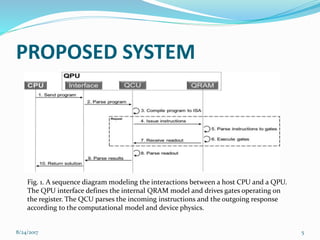
Fig. 1. A sequence diagram modeling the interactions between a host CPU and a QPU.
The QPU interface defines the internal QRAM model and drives gates operating on
the register. The QCU parses the incoming instructions and the outgoing response
according to the computational model and device physics.
8/24/2017
PROPOSED SYSTEM
6
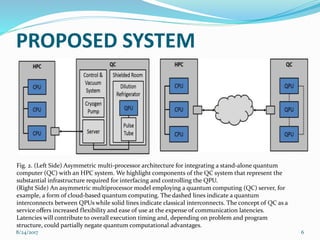
Fig. 2. (Left Side) Asymmetric multi-processor architecture for integrating a stand-alone quantum
computer (QC) with an HPC system. We highlight components of the QC system that represent the
substantial infrastructure required for interfacing and controlling the QPU.
(Right Side) An asymmetric multiprocessor model employing a quantum computing (QC) server, for
example, a form of cloud-based quantum computing. The dashed lines indicate a quantum
interconnects between QPUs while solid lines indicate classical interconnects. The concept of QC as a
service offers increased flexibility and ease of use at the expense of communication latencies.
Latencies will contribute to overall execution timing and, depending on problem and program
structure, could partially negate quantum computational advantages.
8/24/2017
PROPOSED SYSTEM
7
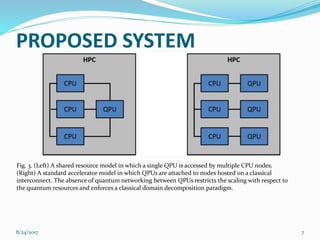
Fig. 3. (Left) A shared resource model in which a single QPU is accessed by multiple CPU nodes.
(Right) A standard accelerator model in which QPUs are attached to nodes hosted on a classical
interconnect. The absence of quantum networking between QPUs restricts the scaling with respect to
the quantum resources and enforces a classical domain decomposition paradigm.
8/24/2017
PROPOSED SYSTEM
8
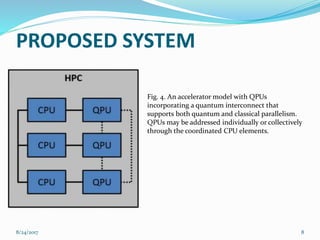
Fig. 4. An accelerator model with QPUs
incorporating a quantum interconnect that
supports both quantum and classical parallelism.
QPUs may be addressed individually or collectively
through the coordinated CPU elements.
8/24/2017
DRAWBACKS
Since Quantum Computers run on Qubits, so the
algorithms that are used for normal Computers will
not going to work in Quantum Computers.
Normal applications of classical computers will not
run on Quantum Computers.
Since all codes are written for bits and Quantum
computers are based on Qubits, so for running
quantum computers all the codes must be re-written
again, which is like a burden.
98/24/2017
DRAWBACKS
Since the algorithms that are used for quantum
computers are probabilistic(not deterministic), so it is
quite hard to measure the performance time of a task
perfectly.
108/24/2017
SYSTEM REQUIRERMENT
HARDWARE REQUIREMENTS
 Large Scale Hybrid Computing Systems
 Bulky and Costly Infrastructure
 To suppress thermal noise it needs refrigerators
 Electromagnetic Shielding to avert ambient energy
SOFTWARE REQUIREMENTS
 Algorithms that are compatible with Quantum
Computer
 Application that can be run on Quantum Computer
 New Programs that can be executed on Quantum
Computers
118/24/2017
REFERENCES
128/24/2017
• KEITH A. BRITT and TRAVIS S. HUMBLE, Oak Ridge National
Laboratory and University of Tennessee. ACM Journal on Emerging
Technologies in Computing Systems, Vol. 13, No. 3, Article 39,
Publication date: March 2017.
• Ali Javadi Abhari, Arvin Faruque, Mohammad Javad Dousti, Lukas
Svec, Oana Catu, Amlan Chakrabati, Chen-Fu Chiang, Seth
Vanderwilt, John Black, Fred Chong, Margaret Martonosi, Martin
Suchara andKen Brown, Massoud Pedram, and Todd Brun. 2012.
Scaffold: Quantum Programming Language. Technical Report.
Retrieved from ftp://ftp.cs.princeton.edu/techreports/2012/934.pdf
• Daniel S. Abrams and Seth Lloyd. 1997. Simulation ofmany-body
fermi systems on a universal quantum computer. Phys. Rev. Lett. 79,
13 (Sep. 1997), 2586–2589.
DOI:http://dx.doi.org/10.1103/PhysRevLett.79.2586
138/24/2017

Hpc with qpu

  • 1.
    Group 6 Towfiqul Islam-C141018 Sayem Bin Sarwar Chowdhury- C141022 18/24/2017
  • 2.
    ABSTRACT  Think ofa computer that is much faster than a common classical silicon computer. This might be a quantum computer. Theoretically it can run without energy consumption and billion times faster than today’s Normal computers.  This research paper gives an overview of high performance quantum computers – description of their operation, major construction problems of a quantum computer and many other basic aspects.  Quantum Computer uses Qubits. It works on Parallel computing and highly developed algorithms are used here and so it works much more faster than normal computers. To accelerate parsing data faster cloud database can be used here. 28/24/2017
  • 3.
    EXISTING SYSTEM As weknow Google is working on a Quantum Computer called D-Wave. Google is maintaining its edge in the world of quantum computing. Its 20-qubit processor is currently undergoing tests, and the company appears to be on schedule to have its working 49-qubit chip ready by the end of 2017 as promised. This 49-qubit chip will allow them to develop a 49- qubit quantum system that can solve problems that are far beyond the capacity of ordinary computers. Google calls this goal Quantum Supremacy. 38/24/2017
  • 4.
     IBM's twoquantum computing platforms just took a leap forward in processing power. The company announced that it has successfully built and tested its two most powerful quantum computers yet.  The new systems are now 16 and 17 quantum bits (qubits) of quantum volume respectively and both are a big jump from the previous 5 qubit processor that powered the Quantum Experience platform before. By thinking beyond ones and zeroes,  This platform can solve problems that we haven't even thought of yet in fields like pharmaceuticals, artificial intelligence, financial services and logistics. If you're having trouble wrapping your head around the concept, IBM has you covered there. 48/24/2017
  • 5.
    PROPOSED SYSTEM 5 Fig. 1.A sequence diagram modeling the interactions between a host CPU and a QPU. The QPU interface defines the internal QRAM model and drives gates operating on the register. The QCU parses the incoming instructions and the outgoing response according to the computational model and device physics. 8/24/2017
  • 6.
    PROPOSED SYSTEM 6 Fig. 2.(Left Side) Asymmetric multi-processor architecture for integrating a stand-alone quantum computer (QC) with an HPC system. We highlight components of the QC system that represent the substantial infrastructure required for interfacing and controlling the QPU. (Right Side) An asymmetric multiprocessor model employing a quantum computing (QC) server, for example, a form of cloud-based quantum computing. The dashed lines indicate a quantum interconnects between QPUs while solid lines indicate classical interconnects. The concept of QC as a service offers increased flexibility and ease of use at the expense of communication latencies. Latencies will contribute to overall execution timing and, depending on problem and program structure, could partially negate quantum computational advantages. 8/24/2017
  • 7.
    PROPOSED SYSTEM 7 Fig. 3.(Left) A shared resource model in which a single QPU is accessed by multiple CPU nodes. (Right) A standard accelerator model in which QPUs are attached to nodes hosted on a classical interconnect. The absence of quantum networking between QPUs restricts the scaling with respect to the quantum resources and enforces a classical domain decomposition paradigm. 8/24/2017
  • 8.
    PROPOSED SYSTEM 8 Fig. 4.An accelerator model with QPUs incorporating a quantum interconnect that supports both quantum and classical parallelism. QPUs may be addressed individually or collectively through the coordinated CPU elements. 8/24/2017
  • 9.
    DRAWBACKS Since Quantum Computersrun on Qubits, so the algorithms that are used for normal Computers will not going to work in Quantum Computers. Normal applications of classical computers will not run on Quantum Computers. Since all codes are written for bits and Quantum computers are based on Qubits, so for running quantum computers all the codes must be re-written again, which is like a burden. 98/24/2017
  • 10.
    DRAWBACKS Since the algorithmsthat are used for quantum computers are probabilistic(not deterministic), so it is quite hard to measure the performance time of a task perfectly. 108/24/2017
  • 11.
    SYSTEM REQUIRERMENT HARDWARE REQUIREMENTS Large Scale Hybrid Computing Systems  Bulky and Costly Infrastructure  To suppress thermal noise it needs refrigerators  Electromagnetic Shielding to avert ambient energy SOFTWARE REQUIREMENTS  Algorithms that are compatible with Quantum Computer  Application that can be run on Quantum Computer  New Programs that can be executed on Quantum Computers 118/24/2017
  • 12.
    REFERENCES 128/24/2017 • KEITH A.BRITT and TRAVIS S. HUMBLE, Oak Ridge National Laboratory and University of Tennessee. ACM Journal on Emerging Technologies in Computing Systems, Vol. 13, No. 3, Article 39, Publication date: March 2017. • Ali Javadi Abhari, Arvin Faruque, Mohammad Javad Dousti, Lukas Svec, Oana Catu, Amlan Chakrabati, Chen-Fu Chiang, Seth Vanderwilt, John Black, Fred Chong, Margaret Martonosi, Martin Suchara andKen Brown, Massoud Pedram, and Todd Brun. 2012. Scaffold: Quantum Programming Language. Technical Report. Retrieved from ftp://ftp.cs.princeton.edu/techreports/2012/934.pdf • Daniel S. Abrams and Seth Lloyd. 1997. Simulation ofmany-body fermi systems on a universal quantum computer. Phys. Rev. Lett. 79, 13 (Sep. 1997), 2586–2589. DOI:http://dx.doi.org/10.1103/PhysRevLett.79.2586
  • 13.