Understanding
Project Proposals
A Comprehensive Guide
What is a Project Proposal?
• A project proposal is a written document
outlining a project’s details and essential
information, such as the timeline,
budget, scope, objectives, and goals.
• the project proposal should paint a clear
picture of the project, its’ importance.
Why is a Project Proposal
Important?
• Cornerstone of pre-project phase.
• Translates ideas into a concrete plan.
• Continues as a resource for the project
team.
• Foundation for the project charter and
business case.
How is a Project Proposal
Different from Other
Documents?
The project proposal is drafted and
presented to key stakeholders before the
project lifecycle ever begins.
Parts of a Project Proposal
The project proposal is drafted and
presented to key stakeholders before the
project lifecycle ever begins.
1. Introduction
The introduction of your project proposal
provides a quick overview of the project
without going into granular detail. While this
portion of the proposal is usually under 500
words, it should provide a general roadmap
of what you plan to accomplish with some
context about the project itself.
2. The Problem
The problem portion of your project
proposal, also considered the
background phase, should detail what
problem your project aims to solve while
highlighting the significance of this
project in comparison to your
organization’s unique goals and history.
3. The Solution
The solution phase is the time to roll out the details
of your project, the advantages that it will bring your
organization, and how you plan to make the project
successful. Be sure to make clear connections between
your project solution and existing company pain points,
while highlighting how your project can address them.
As you outline the advantages of the project, also
include details about potential risks and mitigation
strategies.
4. Deliverables & Goals
The deliverables and goals segment should
clearly outline the SMART (Specific, Measurable,
Achievable, Realistic, and Timely) goals you have
set in place to accomplish key project goals, as
well as how those goals relate back to
organizational needs. Now is the time to also
outline key deliverables, as well as the tentative
timeline for them to be delivered.
5. Resources
When it comes to project planning, resource
management is an essential part of the process. You’ll
need to consider a wide variety of resource types: from
team members to external contractors, tangible
resources (such as software), and financial resources.
During this portion of the proposal, you should outline a
budget for the project while detailing the resources you
will require.
Types of Project Proposals
1. Solicited
Solicited project proposals are sent in response to
a request for a proposal document sent expressing
interest in a project or initiative. This type of project
proposal is often used to compare proposals from
multiple vendors who are both under consideration for
a job, which is common in bid-focused industries such
as construction.
Types of Project Proposals
2. Unsolicited
Unsolicited project proposals allow you to
bring a new idea to the table to solve a company
problem or optimize an existing process. While
this type of proposal is not asked for, it gives you
a chance to advocate for a new project that might
have otherwise been overlooked.
Types of Project Proposals
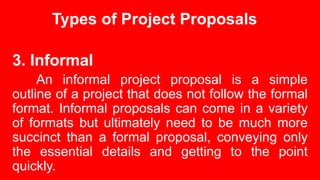
3. Informal
An informal project proposal is a simple
outline of a project that does not follow the formal
format. Informal proposals can come in a variety
of formats but ultimately need to be much more
succinct than a formal proposal, conveying only
the essential details and getting to the point
quickly.
Types of Project Proposals
4. Renewal
A project renewal proposal is common in a
circumstance where a project needs to restart
again. This type of proposal is typically used to
convey the success of a previous project and
highlight why similar results can be achieved if a
renewal is granted.
How to Write a Project Proposal
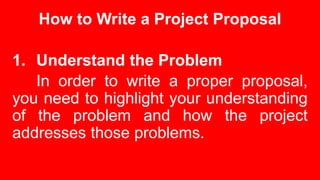
1. Understand the Problem
In order to write a proper proposal,
you need to highlight your understanding
of the problem and how the project
addresses those problems.
How to Write a Project Proposal
2. Flush Out the Solution & End goals
When writing a proposal, it’s helpful to
reverse engineer your thinking to identify
your end goals first, working backward to
create a plan for making those goals
possible.
How to Write a Project Proposal
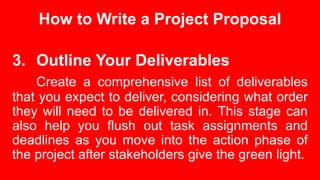
3. Outline Your Deliverables
Create a comprehensive list of deliverables
that you expect to deliver, considering what order
they will need to be delivered in. This stage can
also help you flush out task assignments and
deadlines as you move into the action phase of
the project after stakeholders give the green light.
How to Write a Project Proposal
4. Consider Any Obstacles or
Challenges
Don’t get so caught up in the positives
of your project that you forget to consider
any risks, obstacles, or challenges you
may encounter.
How to Write a Project Proposal
5. Create a Plan for Tackling the
Project (Schedule/Budget/Etc)
While the plan itself will likely change after the
proposal phase, you need to present a rough idea
of the schedule, budget, resources needed, and
for larger projects, the phases your project will
follow.
How to Write a Project Proposal
6. Polish It Up
After you’ve drafted your proposal, take the
time to step away from it and come back later
with fresh eyes to edit. Polish it up by adding in
any final details, reformatting any hard-to-read
sections, and considering questions that
stakeholders may have.

How to Write a Project Proposal.pptx

  • 1.
  • 2.
    What is aProject Proposal? • A project proposal is a written document outlining a project’s details and essential information, such as the timeline, budget, scope, objectives, and goals. • the project proposal should paint a clear picture of the project, its’ importance.
  • 3.
    Why is aProject Proposal Important? • Cornerstone of pre-project phase. • Translates ideas into a concrete plan. • Continues as a resource for the project team. • Foundation for the project charter and business case.
  • 4.
    How is aProject Proposal Different from Other Documents? The project proposal is drafted and presented to key stakeholders before the project lifecycle ever begins.
  • 5.
    Parts of aProject Proposal The project proposal is drafted and presented to key stakeholders before the project lifecycle ever begins.
  • 6.
    1. Introduction The introductionof your project proposal provides a quick overview of the project without going into granular detail. While this portion of the proposal is usually under 500 words, it should provide a general roadmap of what you plan to accomplish with some context about the project itself.
  • 7.
    2. The Problem Theproblem portion of your project proposal, also considered the background phase, should detail what problem your project aims to solve while highlighting the significance of this project in comparison to your organization’s unique goals and history.
  • 8.
    3. The Solution Thesolution phase is the time to roll out the details of your project, the advantages that it will bring your organization, and how you plan to make the project successful. Be sure to make clear connections between your project solution and existing company pain points, while highlighting how your project can address them. As you outline the advantages of the project, also include details about potential risks and mitigation strategies.
  • 9.
    4. Deliverables &Goals The deliverables and goals segment should clearly outline the SMART (Specific, Measurable, Achievable, Realistic, and Timely) goals you have set in place to accomplish key project goals, as well as how those goals relate back to organizational needs. Now is the time to also outline key deliverables, as well as the tentative timeline for them to be delivered.
  • 10.
    5. Resources When itcomes to project planning, resource management is an essential part of the process. You’ll need to consider a wide variety of resource types: from team members to external contractors, tangible resources (such as software), and financial resources. During this portion of the proposal, you should outline a budget for the project while detailing the resources you will require.
  • 11.
    Types of ProjectProposals 1. Solicited Solicited project proposals are sent in response to a request for a proposal document sent expressing interest in a project or initiative. This type of project proposal is often used to compare proposals from multiple vendors who are both under consideration for a job, which is common in bid-focused industries such as construction.
  • 12.
    Types of ProjectProposals 2. Unsolicited Unsolicited project proposals allow you to bring a new idea to the table to solve a company problem or optimize an existing process. While this type of proposal is not asked for, it gives you a chance to advocate for a new project that might have otherwise been overlooked.
  • 13.
    Types of ProjectProposals 3. Informal An informal project proposal is a simple outline of a project that does not follow the formal format. Informal proposals can come in a variety of formats but ultimately need to be much more succinct than a formal proposal, conveying only the essential details and getting to the point quickly.
  • 14.
    Types of ProjectProposals 4. Renewal A project renewal proposal is common in a circumstance where a project needs to restart again. This type of proposal is typically used to convey the success of a previous project and highlight why similar results can be achieved if a renewal is granted.
  • 15.
    How to Writea Project Proposal 1. Understand the Problem In order to write a proper proposal, you need to highlight your understanding of the problem and how the project addresses those problems.
  • 16.
    How to Writea Project Proposal 2. Flush Out the Solution & End goals When writing a proposal, it’s helpful to reverse engineer your thinking to identify your end goals first, working backward to create a plan for making those goals possible.
  • 17.
    How to Writea Project Proposal 3. Outline Your Deliverables Create a comprehensive list of deliverables that you expect to deliver, considering what order they will need to be delivered in. This stage can also help you flush out task assignments and deadlines as you move into the action phase of the project after stakeholders give the green light.
  • 18.
    How to Writea Project Proposal 4. Consider Any Obstacles or Challenges Don’t get so caught up in the positives of your project that you forget to consider any risks, obstacles, or challenges you may encounter.
  • 19.
    How to Writea Project Proposal 5. Create a Plan for Tackling the Project (Schedule/Budget/Etc) While the plan itself will likely change after the proposal phase, you need to present a rough idea of the schedule, budget, resources needed, and for larger projects, the phases your project will follow.
  • 20.
    How to Writea Project Proposal 6. Polish It Up After you’ve drafted your proposal, take the time to step away from it and come back later with fresh eyes to edit. Polish it up by adding in any final details, reformatting any hard-to-read sections, and considering questions that stakeholders may have.