ENGR 120/240
WRITING MEMORANDUMS:
Communicating with
Co-Workers
Objectives
• What is a Memo?
• Purpose
• Differences Among Memos, Letters,
and E-mail
• Format
• Techniques for Writing Successful
Memos
• Language
• Practice
What is a Memo?
• Memo is short for Memorandum
• A memo is a form of internal
communication used within an
organization
• It can be used for a variety of purposes
and sent to a variety of audiences; it is a
very versatile document form.
Why write a Memo?
• To introduce the transmittal of internal documents
• To provide information and updates on new policies,
procedures, meetings, confirmation of projects,
decisions, directives, etc.
• To inform audience about an issue or problem
• To create a record
• As short internal reports (proposals, progress reports,
etc. Messages within memos may contain
headings and graphics)
Why Write Memos?
• Memos are company internal letters.
(E-mail is taking over their function.)
• Memos are more formal than e-mails,
but less formal than business letters.
• Originally used only in hard copy, they
are now often processed electronically.
• Memos vary in length.
(Short memos serve as inter- or intra-office
communication; long memos may serve as reports.)
Purpose
• To Inquire
• To Report
• To Transmit
• To Remind
• To Inform
• To Promote Goodwill
Mnemonic: IR TRIP
• Because of their open construction and
informal method of delivery(such as
being placed in baskets), memos are less
private than letters.
• In many organizations, email messages,
blogs, and other recent electronic media
have largely replaced paper memos
• Both memos & letters can be distributed
via fax machines, in addition to hand
delivery & postal services
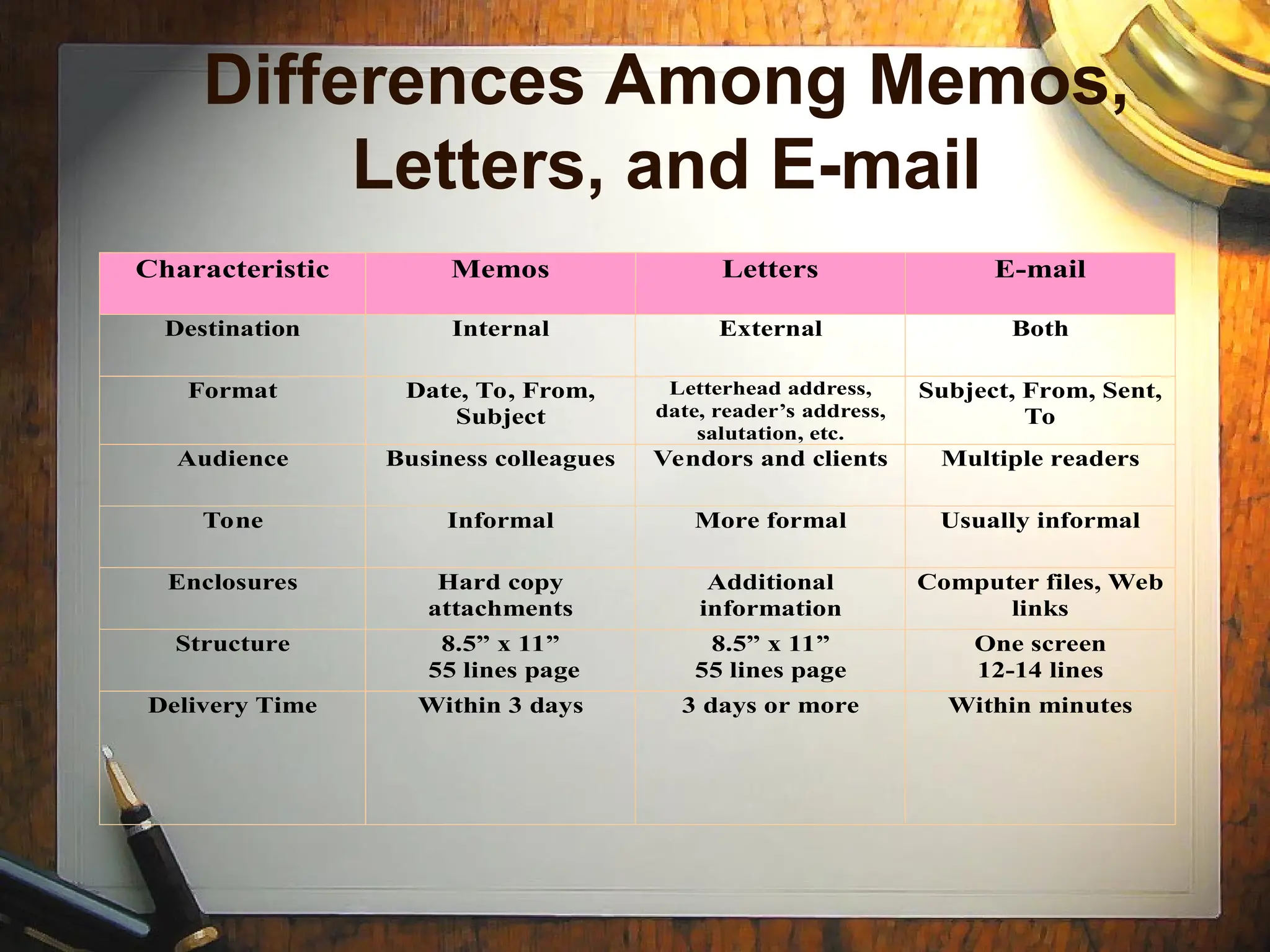
Differences Among Memos,
Letters, and E-mail
Characteristic Memos Letters E-mail
Destination Internal External Both
Format Date, To, From,
Subject
Letterhead address,
date, reader’s address,
salutation, etc.
Subject, From, Sent,
To
Audience Business colleagues Vendors and clients Multiple readers
Tone Informal More formal Usually informal
Enclosures Hard copy
attachments
Additional
information
Computer files, Web
links
Structure 8.5” x 11”
55 lines page
8.5” x 11”
55 lines page
One screen
12-14 lines
Delivery Time Within 3 days 3 days or more Within minutes
Memos vs Letters
• Memos differ from letters in that they are “in house”
communications
• They can be somewhat informal
– Use “you” and “I” and contractions
– But avoid slang and colloquialisms :- word or phrase
that is not formal or literary and is used in ordinary or familiar
conversation.
– Some examples of informal colloquialisms can include
words (such as “y'all” or “gonna” or "wanna")
Memo Format
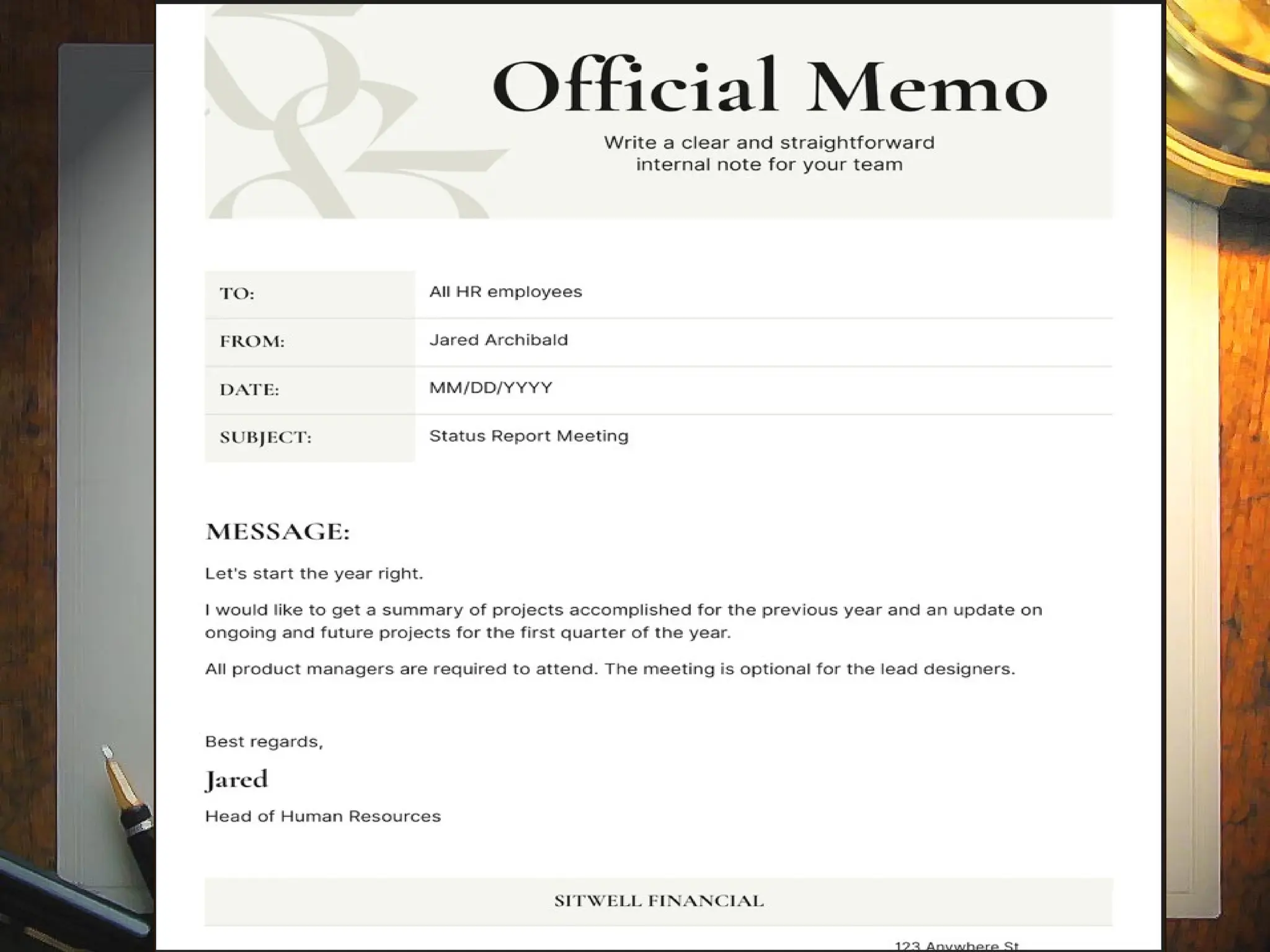
A Memo has 3 formatted sections:
1. Letterhead/logo of the business or
organization
2. Header: To/from/date/subject block
3. Message
1. Logo/letterhead
• You can make up your own hypothetical
workplace logo.
• Logo is generally centred or placed on the
right side of the page
2. Memo Header
Set margins about a 1/4 inch past the
longest line (subject) so all text
items are left justified and aligned
TO: 120 Students
FROM: Sumera
DATE: Jan. 18, 2023
SUBJECT: . 120 Learning Plan Proposal
-------------------------------------------------------------------
Typically Bold; may be ALL CAP or just first letter in upper case
Subject line should be short, but
Specific. You can
Capitalize key words or not,
as long as you are consistent:
ie:. 120 project proposal
Line separates header from
message
3. Message
• Message should be left
justified, aligned with
the header
• leave ragged right
margin
• Traditionally, memos
had a handwritten
signature at the bottom.
Now, electronic
signatures are common
MEMO
From; Sumera
To: All students
Date: Jan15, 2023
Subject: . 120 Learning Plan assignment
__________________________________________
_
Your Learning Plan is due on ______. I would like
you to submit this in the form of a Memo written to
me. Your memo will include
-what you want to achieve
-how you plan to achieve it
-and why (in a conclusion)
You will display your learning goals, strategies and
resources in a three column table, and explain the
table in the text of your memo.
I look forward to reading your memo and helping
you achieve your goals.
Sumera
Message Content
• The Message of the Memo typically has a 3 part
structure:
1. Opening paragraph clearly indicates purpose of the
memo. The reader should be able to answer: why do I
have to read this?
2. The middle paragraph(s) give the specific details that
the reader needs to know
3. The final paragraph indicates what action is expected of
the reader: what do you want me to do now that I have
read the memo?
Memo style guidelines
– Use your best informal writing style in terms
of grammar, spelling, word choice,
punctuation, sentence structure, etc.
• Informal means you can use “I” and
contractions, but avoid slang, inappropriate
tone, and colloquial expressions)
Make sure paragraphs have clear topic
sentences and are coherent

how to write a memorandum in english-1.ppt

  • 1.
  • 2.
    Objectives • What isa Memo? • Purpose • Differences Among Memos, Letters, and E-mail • Format • Techniques for Writing Successful Memos • Language • Practice
  • 3.
    What is aMemo? • Memo is short for Memorandum • A memo is a form of internal communication used within an organization • It can be used for a variety of purposes and sent to a variety of audiences; it is a very versatile document form.
  • 4.
    Why write aMemo? • To introduce the transmittal of internal documents • To provide information and updates on new policies, procedures, meetings, confirmation of projects, decisions, directives, etc. • To inform audience about an issue or problem • To create a record • As short internal reports (proposals, progress reports, etc. Messages within memos may contain headings and graphics)
  • 5.
    Why Write Memos? •Memos are company internal letters. (E-mail is taking over their function.) • Memos are more formal than e-mails, but less formal than business letters. • Originally used only in hard copy, they are now often processed electronically. • Memos vary in length. (Short memos serve as inter- or intra-office communication; long memos may serve as reports.)
  • 6.
    Purpose • To Inquire •To Report • To Transmit • To Remind • To Inform • To Promote Goodwill Mnemonic: IR TRIP
  • 7.
    • Because oftheir open construction and informal method of delivery(such as being placed in baskets), memos are less private than letters. • In many organizations, email messages, blogs, and other recent electronic media have largely replaced paper memos
  • 8.
    • Both memos& letters can be distributed via fax machines, in addition to hand delivery & postal services
  • 9.
    Differences Among Memos, Letters,and E-mail Characteristic Memos Letters E-mail Destination Internal External Both Format Date, To, From, Subject Letterhead address, date, reader’s address, salutation, etc. Subject, From, Sent, To Audience Business colleagues Vendors and clients Multiple readers Tone Informal More formal Usually informal Enclosures Hard copy attachments Additional information Computer files, Web links Structure 8.5” x 11” 55 lines page 8.5” x 11” 55 lines page One screen 12-14 lines Delivery Time Within 3 days 3 days or more Within minutes
  • 10.
    Memos vs Letters •Memos differ from letters in that they are “in house” communications • They can be somewhat informal – Use “you” and “I” and contractions – But avoid slang and colloquialisms :- word or phrase that is not formal or literary and is used in ordinary or familiar conversation. – Some examples of informal colloquialisms can include words (such as “y'all” or “gonna” or "wanna")
  • 12.
    Memo Format A Memohas 3 formatted sections: 1. Letterhead/logo of the business or organization 2. Header: To/from/date/subject block 3. Message
  • 13.
    1. Logo/letterhead • Youcan make up your own hypothetical workplace logo. • Logo is generally centred or placed on the right side of the page
  • 14.
    2. Memo Header Setmargins about a 1/4 inch past the longest line (subject) so all text items are left justified and aligned TO: 120 Students FROM: Sumera DATE: Jan. 18, 2023 SUBJECT: . 120 Learning Plan Proposal ------------------------------------------------------------------- Typically Bold; may be ALL CAP or just first letter in upper case Subject line should be short, but Specific. You can Capitalize key words or not, as long as you are consistent: ie:. 120 project proposal Line separates header from message
  • 15.
    3. Message • Messageshould be left justified, aligned with the header • leave ragged right margin • Traditionally, memos had a handwritten signature at the bottom. Now, electronic signatures are common MEMO From; Sumera To: All students Date: Jan15, 2023 Subject: . 120 Learning Plan assignment __________________________________________ _ Your Learning Plan is due on ______. I would like you to submit this in the form of a Memo written to me. Your memo will include -what you want to achieve -how you plan to achieve it -and why (in a conclusion) You will display your learning goals, strategies and resources in a three column table, and explain the table in the text of your memo. I look forward to reading your memo and helping you achieve your goals. Sumera
  • 16.
    Message Content • TheMessage of the Memo typically has a 3 part structure: 1. Opening paragraph clearly indicates purpose of the memo. The reader should be able to answer: why do I have to read this? 2. The middle paragraph(s) give the specific details that the reader needs to know 3. The final paragraph indicates what action is expected of the reader: what do you want me to do now that I have read the memo?
  • 17.
    Memo style guidelines –Use your best informal writing style in terms of grammar, spelling, word choice, punctuation, sentence structure, etc. • Informal means you can use “I” and contractions, but avoid slang, inappropriate tone, and colloquial expressions) Make sure paragraphs have clear topic sentences and are coherent