How to start a Digital
Transformation
Program
JAVIER SILVA.
Digital transformation definition
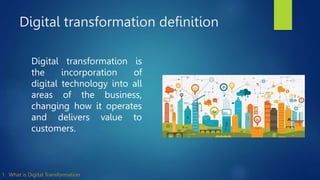
Digital transformation is
the incorporation of
digital technology into all
areas of the business,
changing how it operates
and delivers value to
customers.
1. What is Digital Transformation
The business needs determines the priorities
Transformation is not evolution
Digital Marketing
Metrics Pyramid
Efficacy
Value
Spend
“We don’t
know what
we don’t
measure”
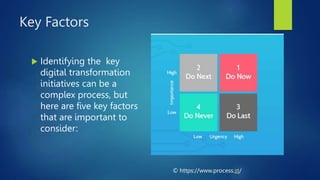
Key Factors
 Identifying the key
digital transformation
initiatives can be a
complex process, but
here are five key factors
that are important to
consider:
© https://www.process.st/
Identify the business objectives:
 The first step in any digital
transformation initiative is to
identify the business objectives
that the initiative is intended to
support.
 This might include increasing
revenue, reducing costs,
improving customer experience,
or achieving other strategic
goals.
Understand the technology landscape:
 It is important to have a deep
understanding of the
technology landscape,
including emerging
technologies and trends, and
how they can be leveraged to
support the business
objectives.
 This might include cloud
computing, artificial
intelligence, data analytics,
and automation, among
others.
Evaluate the organization's readiness
for change:
 Digital transformation
initiatives often require
significant changes to the
organization's culture,
processes, and technology
infrastructure. It is important
to evaluate the organization's
readiness for change and
identify any potential
roadblocks or obstacles that
may need to be addressed.
Identify the key stakeholders:
 Digital transformation
initiatives often involve
multiple stakeholders,
including customers,
employees, partners, and
vendors. It is important to
identify the key
stakeholders and ensure
that their needs and
concerns are addressed
throughout the initiative.
Develop a comprehensive roadmap:
 Once the business objectives,
technology landscape, readiness for
change, and key stakeholders have been
identified, You will
 Develop a comprehensive roadmap that
outlines the specific initiatives,
milestones, and timelines for achieving
the desired outcomes.
 This roadmap should be regularly
reviewed and updated to ensure that
the initiative stays on track and
continues to deliver value to the
organization.
Thank You!
JAVIER.SILVA@GMAIL.COM

How to start a Digital Transformation Program.pptx

  • 1.
    How to starta Digital Transformation Program JAVIER SILVA.
  • 2.
    Digital transformation definition Digitaltransformation is the incorporation of digital technology into all areas of the business, changing how it operates and delivers value to customers. 1. What is Digital Transformation
  • 3.
    The business needsdetermines the priorities
  • 4.
  • 5.
    Digital Marketing Metrics Pyramid Efficacy Value Spend “Wedon’t know what we don’t measure”
  • 6.
    Key Factors  Identifyingthe key digital transformation initiatives can be a complex process, but here are five key factors that are important to consider: © https://www.process.st/
  • 7.
    Identify the businessobjectives:  The first step in any digital transformation initiative is to identify the business objectives that the initiative is intended to support.  This might include increasing revenue, reducing costs, improving customer experience, or achieving other strategic goals.
  • 8.
    Understand the technologylandscape:  It is important to have a deep understanding of the technology landscape, including emerging technologies and trends, and how they can be leveraged to support the business objectives.  This might include cloud computing, artificial intelligence, data analytics, and automation, among others.
  • 9.
    Evaluate the organization'sreadiness for change:  Digital transformation initiatives often require significant changes to the organization's culture, processes, and technology infrastructure. It is important to evaluate the organization's readiness for change and identify any potential roadblocks or obstacles that may need to be addressed.
  • 10.
    Identify the keystakeholders:  Digital transformation initiatives often involve multiple stakeholders, including customers, employees, partners, and vendors. It is important to identify the key stakeholders and ensure that their needs and concerns are addressed throughout the initiative.
  • 11.
    Develop a comprehensiveroadmap:  Once the business objectives, technology landscape, readiness for change, and key stakeholders have been identified, You will  Develop a comprehensive roadmap that outlines the specific initiatives, milestones, and timelines for achieving the desired outcomes.  This roadmap should be regularly reviewed and updated to ensure that the initiative stays on track and continues to deliver value to the organization.
  • 12.

Editor's Notes

  • #3 Digital transformation is the incorporation of digital technology into all areas of the business, changing how it operates and delivers value to customers. It's also a cultural change that requires organizations to continually challenge the status quo, experiment, and get comfortable with failure.