How To Prepare A Dissertation Proposal David R Krathwohl Nick L Smith
How To Prepare A Dissertation Proposal David R Krathwohl Nick L Smith
How To Prepare A Dissertation Proposal David R Krathwohl Nick L Smith
How To Prepare A Dissertation Proposal David R Krathwohl Nick L Smith
How To Prepare A Dissertation Proposal David R Krathwohl Nick L Smith
1.
How To PrepareA Dissertation Proposal David R
Krathwohl Nick L Smith download
https://ebookbell.com/product/how-to-prepare-a-dissertation-
proposal-david-r-krathwohl-nick-l-smith-49511886
Explore and download more ebooks at ebookbell.com
2.
Here are somerecommended products that we believe you will be
interested in. You can click the link to download.
How To Prepare A Scientific Doctoral Dissertation Based On Research
Articles 1st Edition Bjrn Gustavii
https://ebookbell.com/product/how-to-prepare-a-scientific-doctoral-
dissertation-based-on-research-articles-1st-edition-bjrn-
gustavii-4990434
Writing Your Dissertation How To Plan Prepare And Present Successful
Work 3rd Edition Derek Swetnam
https://ebookbell.com/product/writing-your-dissertation-how-to-plan-
prepare-and-present-successful-work-3rd-edition-derek-swetnam-2124696
How To Prepare A Business Plan Create Your Strategy Forecast Your
Finances Produce That Persuasive Plan Fifth Editionrevisedfifth
Edition Revised Edward Blackwell
https://ebookbell.com/product/how-to-prepare-a-business-plan-create-
your-strategy-forecast-your-finances-produce-that-persuasive-plan-
fifth-editionrevisedfifth-edition-revised-edward-blackwell-2389446
How To Prepare A Standout College Application Expert Advice That Takes
You From Lmo Like Many Others To Admit Alison Cooper Chisolm
https://ebookbell.com/product/how-to-prepare-a-standout-college-
application-expert-advice-that-takes-you-from-lmo-like-many-others-to-
admit-alison-cooper-chisolm-46313696
3.
How To PrepareA Historic Racing Mini Cck Historiclackey Daniel H
https://ebookbell.com/product/how-to-prepare-a-historic-racing-mini-
cck-historiclackey-daniel-h-11368476
Opening A Restaurant Or Other Food Business Starter Kit How To Prepare
A Restaurant Business Plan Feasibility Study Sharon Fullen
https://ebookbell.com/product/opening-a-restaurant-or-other-food-
business-starter-kit-how-to-prepare-a-restaurant-business-plan-
feasibility-study-sharon-fullen-46411562
The Google Resume How To Prepare For A Career And Land A Job At Apple
Microsoft Google Or Any Top Tech Company 1st Edition Gayle Laakmann
Mcdowell
https://ebookbell.com/product/the-google-resume-how-to-prepare-for-a-
career-and-land-a-job-at-apple-microsoft-google-or-any-top-tech-
company-1st-edition-gayle-laakmann-mcdowell-2385578
Represent Yourself In Court How To Prepare Try A Winning Case 7th
Edition 7th Paul Bergman
https://ebookbell.com/product/represent-yourself-in-court-how-to-
prepare-try-a-winning-case-7th-edition-7th-paul-bergman-2365224
Before Your Pregnancy A 90day Guide For Couples On How To Prepare For
A Healthy Conception Ogle
https://ebookbell.com/product/before-your-pregnancy-a-90day-guide-for-
couples-on-how-to-prepare-for-a-healthy-conception-ogle-48524722
5.
How to Preparea
Dissertation Proposal
Suggestions for Students
in Education
& the Social and Behavioral Sciences
oe
ie
David R. Krathwohl & NickL. Smith
ae
How to Preparea
Dissertation Proposal
Suggestions for Students in Education
and the Social and Behavioral Sciences
David R. Krathwohl
Nick L. Smith
Distributed by Syracuse University Press
Contents
Illustrations xi
Preface xiii
PARTONE: Concepts Fundamental to Proposal Writing 1
1. WhatIsaProposal? 3
Definition of a Proposal 3
Typical Dissertation Proposal Sections 6
Overview ofthe Dissertation Proposal Process 6
Preparing Yourself 6
Preparing the Proposal z
Worksheet 1.1: Self-Assessment 10
Worksheet 1.2: Environmental Assessment 13
2. The Functions of a Dissertation Proposal 15
The Functions ofthe Proposal in the Dissertation Process 15
The Proposal as Justification for the Study 17
The Proposal as Work Plan 17
The Proposal as Evidence ofAbility 18
The Proposal as Request for Committment 18
The Proposalas Contract 18
The Proposal as Evaluative Criterion 19
The Proposal as Partial Dissertation Draft 20
Summary 22
How Functions Differ with Different Kinds ofInquiry 22
Prespecified vs. Emergent Studies 23
General vs. Local Findings 24
Worksheet 2.1: Proposal Function Review 30
3. The Proposal as a Chain of Reasoning 31
The Proposal as a Chain ofReasoning 31
The Chain ofReasoning in Studies with Generalizable Findings 32
The Links in the Chain 32
12.
vi CONTENTS
Details oftheLinks from Procedure to Data 34
Four Useful Characteristics ofthe Chain Analogy 36
Relation ofthe Chain Analogy to the Proposal 38
The Chain ofReasoning in Development and Problem-Solving Studies 39
Worksheet 3.1: Chain ofReasoning Analysis 42
PART TWO: AdviceCommonto Most Proposals 43
4. The Description of the Problem 45
The Problem ofthe Problem 46
Problem Statement 47
Related Research 49
What toInclude 50
Search Strategies and Information Sources 52
Use ofthe Internet and World Wide Web — 52
Research Strategies Before the Internet 54
Relevant Information Sources Appropriate to Successively Specific Stages ofProblem
Definition 58
Save Steps and Time with Your Computer—An Example 58
Quantitative Literature Summaries 62
Questions, Hypotheses, or Models? 64
Descriptions ofWhere to Look and Questions 65
Hypotheses 66
Models 67
Worksheet 4.1: Characteristics of a Good Dissertation Topic 69
Worksheet 4.2: What to Look for in Reviewing Literature for a Dissertation
Worksheet 4.3: Characteristics of aGood Proposal Statement 73
5. The Method Section 75
Section 1: General Considerations 76
Adapt the Material on Method to Your Study 76
71
The Method Section Flows from the “Questions, Hypotheses, or Models” Section
Operationalizing Terms May Result in New Conceptualizations 79
Restrain the Design to Realistic Limits 80
Eliminate Plausible Alternative Explanations 82
Design Efficiency 86
Give Special Care to Those Sections Critical to Your Research Method 87
Section 2: Developing the Subsections ofMethod 87
Participants—Population and Sample 88
Situation 90
Focus ofAction—Treatment(s), Independent and Dependent Variable(s)
Records—Instrumentation and Observations 91
Comparison and Contrast—The Basis for Sensing Attributes or Changes
Time Schedule—The Specification ofthe Procedure 96
90
95
76
13.
CONTENTS vii
Problems inData Collection 96
Analysis 98
Expected End Product 98
An Alternative Dissertation Format: Articles Ready for Publication 99
Worksheet 5.1: Study Methods Review 100
6. Ensuring Feasibility and Other Proposal Parts 102
Time Schedule or Work Plan 103
Graphic Depictions ofthe Work Plan 105
Assurance ofCompetence 108
Assurance ofAccess 109
Assurance ofObservance ofEthical Considerations 110
Budget and/or Sources ofFinancial Support 111
Other Parts ofthe Proposal 112
Appendix 112
Abstract 113
Title 114
Last Steps Before Submitting for Approval 114
A Final Check and Review 114
Preparing the Final Copy 114
Funding 115
Writing the Proposal after You Are Well into the Study 115
Worksheet 6.1: Assurances Review 118
PART THREE: Advice Specific to Particular Kinds of Studies 119
7. The Special Requirements of Proposals
Using Qualitative Approaches:
Emergent, Qualitative, Philosophical, Historical 121
Section 1: Qualitative Method Studies 122
The Special Problems ofEmergent Study Proposals 122
A Checklist for Qualitative Method Study Proposals 124
The Focus or Question and Its Rationale 126
Sample ofPersons, Sites, and Situations 127
Qualitative Orientation 128
Researcher’s Qualifications 129
Data Collection 130
Data Analysis 132
Ensuring Ethical Procedure 135
Worksheet 7.1: Review ofProposals Using Emergent Qualitative Approaches 136
Section 2: Philosophical and Historical Study Proposals 137
The Nature ofthe Proposal 137
The Conceptual Roots ofthe Study 138
Your Conceptual Contribution 138
14.
vill CONTENTS
The Assumptionson Which Your Study Proceeds 139
The Criteria by Which Your Study Is to Be Judged = 139
In Any Kind ofStudy, How Much Is Enough? 141
Worksheet 7.2: Review ofProposals Using Philosophical
and Historical Approaches 142
8. The Special Requirements of Proposals
Using Quantitative Approaches:
Experimental, Causal Modeling, Meta-Analysis 143
Section 1: Experiments 143
Rationale 144
Hypotheses 144
Design or Procedure 144
Analysis ofthe Data 153
Section 2: Causal Modeling 154
Worksheet 8.1: Review ofProposals Using Experimental and Causal Modeling
Approaches 155
Section 3: Meta-Analysis 156
Special Requirements of a Meta-Analysis Proposal 157
Worksheet 8.2: Review ofProposals Using Meta-Analysis Approaches 162
. The Special Requirements of Proposals Using Qualitative
and/or Quantitative Approaches:
Survey, Evaluation, Development, Demonstration 163
Section 1: Sample Surveys 164
Problem 164
Review ofPrevious Research 165
Design 166
Data Analysis 170
Worksheet 9.1: Review ofProposals Using Sample Survey Methods 172
Section 2: Evaluation Studies 173
Audiences 173
Who Defines Program Goals or Standards? 175
What Evaluation Orientation Do You Bring to the Study? 176
Formative or Summative? 178
Describe the Research Method 179
Worksheet 9.2: Review ofProposals for Evaluation Studies 180
Section 3; Development Studies (e.g., Curriculum, Equipment, Instrument
Software, and Methodology) 179
Special Emphases in the Problem Statement 181
Who Will be Involved? 182
Describe the Development Process 182
Work Plan 183
Whether and How Thoroughly to Evaluate the Product 183
yf
15.
CONTENTS
Protection ofYour EndProduct 183
Worksheet 9.3: Review ofProposals for Development Studies 185
Section 4: Demonstration and Action Research Studies 184
Demonstration Projects 186
Worksheet 9.4: Review ofProposals for Demonstration Studies 190
Action Research Projects 189
Worksheet 9.5: Review ofProposals for Action Research Studies 194
PART FOUR: Additional Considerations 195
10. Other Things to Consider 197
What IfThis Book's Advice and That ofMy Committee Differ? 197
Literature Review 197
Statement ofHypotheses 198
I’m Having Trouble Getting Started, What DoIDo? — 199
Is There Enough Detail? 199
Is the Hasty Reader Signaled to Critically Important Proposal Parts? 199
How Shall IShow My Competence? 200
When Shall I Get My Chairperson’s Reaction toa Draft? 201
AFinal Review 202
Worksheet 10.1: Checklist ofSections of a Dissertation Proposal 203
PART FIVE: Annotated Proposals 207
11. An Annotated Dissertation Proposal
Using Qualitative Methods 209
The Change Process in Men Who Batter Women by Bill Warters 210
12. An Annotated Dissertation Proposal
Using Quantitative Methods 231
A Study of the Effectiveness of Concept Mapping in Improving Problem Solving
by Katherine L. Beissner 232
13. A Quantitative Dissertation Proposal
with Student Annotations 252
Self-Directed Learning’s Impact on MBA Students and Their Attitudes Toward
Personal Development by Thomas D. Phelan =252
PART $S1xX: FundedProposals 265
14. Finding Funding 267
Search Current Grants 268
Federal 268
Foundations 268
Use Professional Associations 269
Examine Successful Proposals 269
Use Your Institution's Grants Support Office 270
1X
Illustrations
FIGURES
SL
Dude
Bo.
3.4.
4.1.
6.1.
6.2.
The chain ofreasoning in the presentation of findings (adapted from
Krathwohl, 1998/2004, with suggestions from John T. Behrens) 33
Detail of the connections between the Procedure and Data links 34
The connections in the chain of reasoning between the Procedure and
Datalinks 35
The complete chain of reasoning with all the labels (adapted from
Krathwohl, 1998/2004, with suggestions from John T. Behrens) —37
Sources of information in a literature search
(adapted from Krathwohl, 1988) 53
Illustrative Gantt Chart for sample survey study 105
Asample survey’s work plan created with Microsoft Word using flowchart
forms from AutoShapes in the Drawing toolbar with text inserted by control
(Macintosh, for PC, right) clicking it and choosing “add text” from the pop-
up menu (graphic adapted from Krathwohl, 1988, p.76) 107
TABLES
2.45
mF
4.1.
Laks
8.1.
A summary of how the functions of a proposal are the same and different for
prespecified and emergent studies 25
The chain of reasoning in development and problem solving studies —_40
Relevant references and reference sources at entry points in the literature
search that are increasingly close toa specified problem 59
A checklist of topics and subtopics that should be included in a qualitative
method proposal together with where examples of the items may be found in
the Warters’ proposal, chapter11 125
Matrix showing the combinations of variations in whole-part learning with
variations in massed vs. distributed practice. Studies to be included in the
meta-analysis would be sorted into the blank cells 159
x1
18.
xii
Gale
ILLUSTRATIONS
The Solomon Four-GroupDesign as adapted for this study 259
WORKSHEETS
doe
12
PN,
Saks
4.1,
4.2.
4.3.
oe
6.1.
Zale
Likes
Soh.
8
wale
9.2.
92:
9.4.
9:3.
LO a:
Self-Assessment 10
Environmental Assessment 13
Proposal Function Review — 30
Chain of Reasoning Analysis 42
Characteristics of a Good Dissertation Topic . 69
What to Look for in Reviewing Literature fora Dissertation 71
Characteristics of aGood Proposal Problem Statement 73
Study Methods Review 100
Assurances Review 118
Review of Proposals Using Emergent Qualitative Approaches 136
Review of Proposals Using Philosophical and Historical Approaches
Review of Proposals Using Experimental and Causal
Modeling Approaches — 155
Review of Proposals Using Meta-Analysis Approaches 162
Review of Proposals Using Sample Survey Methods 172
Review of Proposals for Evaluation Studies 180
Review of Proposals for Development Studies 185
Review of Proposals for Demonstration Studies 190
Review of Proposals for Action Research Studies 194
Checklist of Sections of a Dissertation Proposal 203
142
19.
Preface
CHAPTER CONTENTS
How ShouldYou Read This Book? —xiii
An Assembly Manual witha Difference xv
What Do We Assume You Bring to Reading the Book? xv
What Is Distinctive about This Book? xvi
HOW SHOULD YOU READ THIS BOOK?
This book will guide you through the steps of drafting a dissertation proposal.
It is an assembly manual that will (1) identify and explain the components of a
dissertation proposal, (2) assist you in constructing the needed elements, and
(3) guide you in combining the pieces to produce a complete and convincing
proposal. There are several ways you can use this book.
“T learn best when you tell me what to do, give me some examples to study, and then
show me how to practice it.”
“7 like to figure out how to do things for myself from some examples and then check my
process against the instructions to be sure I didn’t miss anything.”
“An example and achecklist are worth a thousand words of instruction!”
Would you just as soon be given instructions and then see some illustra-
tions of their use? Or are you one of those people who learns best from exam-
ples? Or does your preference depend on the material you are mastering?
Depending on how you prefer to learn, you may want to read this book’s chap-
ters in an atypical order. Let us explain why this is so.
This book is organized into six parts. Part 1 deals with the definition of a
proposal, its different functions, and the basic logic that underlies many stud-
ies. Everyone should start with it.
xiti
20.
Xiv PREFACE
Part 2presents the core elements of any proposal, the problem statement
and the method statement, while part 3 shows how those elements are modi-
fied to convey the strengths of particular kinds of studies, such as qualitative
investigations, experimental tests, demonstrations, etc.
Part 4 both explains the additional material needed to complete a full pro-
posal and discusses the process of getting your proposal reviewed and
approved.
Part 5 reproduces three actual student proposals of different types
(chapters: 11, Warters; 12, Beissner; and 13, Phelan) with interspersed annota-
tions that refer back to the advice given in parts 2, 3, and 4.
Part 6 discusses getting the proposal funded.
Most of us expect to have a procedure explained and then be shown exam-
ples of its application. Those of you who prefer this will want to proceed by
reading parts 1, 2, 3, and 4 in order, looking ahead to see how those ideas are
implemented in the annotated student proposals of part 5. We have provided
worksheets at the end of each chapter in parts 1, 2, 3, and 4 to help you make
practical use of the material you have just read.
If you empathized with the quotes above about starting with examples,
however, after reading part 1, you may want to proceed to part 5, first working
through the examples and then reading parts 2, 3, and 4 to see in more detail the
rationale for the annotations. If you learn best by working on specific tasks re-
lated to a problem, then you may want to pay particular attention to the work-
sheets at the end of each chapter. They will help you work through each step in
the process and give you a checklist for reviewing your progress.
Maybe you'll want to work back and forth between the parts as you pro-
ceed. Since parts 2 and 3 frequently cite examples in the annotated proposals of
part 5 to show what is meant by their advice, and since part 5 indicates where in
parts 2 and 3 the topic of the annotation is covered, it is easy to move back and
forth between them. So you may choose this alternative. See what works best
for you.
Remember that this is a “how-to-do-it” instruction manual. You don’t read
an instruction manual just once, but alternately refer to different sections as
you encounter various parts of the assembly process. For example, if you are
designing a quantitative experimental study as part of your dissertation, you
will probably need to refer repeatedly to part 3, chapter 8, on experiments and
to the corresponding sample proposal in part 5, chapter 12. Read through the
book once, then use it selectively to assemble your own proposal.
If you are reading the book selectively, concentrating on those parts that
seem most relevant to your situation, you may miss two discussions of impor-
tance. One concerns the problem of “how much is enough for a dissertation.”
While this is discussed in the context of philosophical and historical studies, it
can be a problem in almost any type of study, so include pp. 139-41 in your
reading. Include as well pp. 115-16 that refer to the problem of doing the pro-
21.
PREFACE XV
posal afterthe dissertation is started, which you may consider doing. Also
don’t forget to consult part 6 if you anticipate needing additional resources to
support your work.
AN ASSEMBLY MANUAL WITH A DIFFERENCE
We have referred to this book as an assembly manual. But where our usual con-
ception of a manual is something that guides you mechanically through a se-
ries of steps, this manual is much more than that. We want you to understand
the “why” of what is called for, how your proposal can advance your relations
with your faculty mentors, how each part of the proposal fits into and con-
tributes to a larger whole, and the logic that constitutes the larger whole that
will be represented in your proposal. If you understand the “whys” and bear in
mind the logic of the larger picture, then as you formulate the steps in your pro-
posal you will be able to creatively translate what is suggested here into what
you propose to do. So, yes, this is an assembly manual, but one with a
difference.
WHAT DO WE ASSUME YOU BRING TO READING THE BOOK?
An assembly manual, whether for assembling a child’s swing set, a new com-
puter system, or a dissertation proposal, must assume that the user has all the
needed materials, tools, and skills at hand to do the work. In writing this book,
we too have had to make certain assumptions about what background you
bring to it. Specifically, we assume:
1. You already have a dissertation topic or know enough about a possible
topic that you can sort among the various dissertation proposal formats to find
the one or those few that are relevant to your study. In order to develop an
effective proposal, you must tailor it to the specific details of a particular
problem.
2. You have had enough research background and are willing to look up the
appropriate references when you come across a research aspect you don’t un-
derstand, so that we don’t have to make this both a research text as well as a
“how-to” manual.
We make the first assumption because we start the book at that point in the
dissertation process where you either are close to having a topic or already
have one. For this reason, we did not include a chapter on finding a dissertation
topic. If you are still looking for one, reading chapter 5, “Finding a Problem,” in
Krathwohl (1998/2004) or a similar chapter in a research methods book may
help you.
Why the second assumption? Because in order to include all the back-
ground provided in a research methods text would have produced a book re-
quiring you to reinforce your bookshelf. When providing advice regarding a
22.
XVi PREFACE
part ofthe proposal, we try to supply enough detail for you to know what to
write about and how to describe it without going into the detail you would ex-
pect to find in a research text.
A good example of the boundaries of this book’s coverage is the matter of
ruling out alternative explanations. If you are explaining a phenomenon, you
don’t want your explanation to be rivaled by a plausible alternative. We have
supplied one or two examples so that you are clear about what we mean by al-
ternative explanations. But there are many, many others we don’t mention. If
you don’t know the ones to protect against in your study, you need to find out
about them by reviewing a research methods text, studying prior research, or
consulting a fellow researcher.
Another boundary example: As a proposal assembly manual, this book
will demonstrate how the results of your literature review should be used in
the proposal to strengthen your research argument, but it will not provide in-
struction on how to conduct literature searches. Further, the book emphasizes
the importance of clear, direct, well-written English in producing a convincing
proposal, but does not offer instruction in how to write well. The goal of this
book, therefore, is to help you with the specific task of assembling an effective
dissertation proposal, and so it assumes you either have certain required re-
lated knowledge and skills or will seek out and acquire them.
WHAT IS DISTINCTIVE ABOUT THIS BOOK?
Here are some of the distinctive aspects of this book:
1. The definition ofa proposal and the variety ofits functions. We all have some
idea of what a proposal is, but chapters 1 and 2 challenge you to consider it
more broadly. The definition presented in chapter 1 is curious and thought pro-
voking, deals with both attitude and content, and has implications for how the
proposal is written. The different functions a proposal can serve described in
chapter 2 also affect how it is written, as well as how it is judged by various
audiences.
2. How the chain ofreasoning organizes and integrates the proposal. One of the
most important functions of the proposal is to present a rationale for the study.
Chapter 3 shows how the presentation of that rationale (as well as how you
later present the findings of your study) is analogous to a particular pattern of
metal chain, its properties and characteristics. Keeping the chain analogy in
mind helps you develop a strong and integrated proposal.
3. How to write the various parts ofthe proposal is described in detail. Chapters 4
and 5 describe in considerable detail what is to be included in the core sections
of the proposal. Chapter 4 describes how you present what you hope to study
and shows how it builds on past research. Chapter 5 indicates how you de-
scribe what you will operationally do in pursuing the problem. Chapter 6 pro-
vides the various assurances that your chair, committee, and institution need in
23.
PREFACE xvii
order tofeel confident that you have appropriate background knowledge, ade-
quate understanding of your procedure, every intent to observe ethical cau-
tions, and adequate time and fiscal resources. Chapter 10 gives tips and invites
consideration of other aspects of the process not covered elsewhere.
4. How to adapt the typical proposal format to a wide variety of types ofstudies.
Chapters 7 through 9 discuss how the proposal differs depending on the types
of studies that can be pursued for the doctorate. Chapter 7 does this for qualita-
tive studies such as case studies, philosophical and conceptual studies, and his-
torical investigations. Chapter 8 does the same for quantitative investigations
such as experimental, causal modeling, and meta-analysis studies. Chapter 9
likewise covers studies that combine both qualitative and quantitative ap-
proaches such as sample survey studies, evaluation studies, development proj-
ects, and demonstration and action projects.
5. The inclusion ofannotated sample proposals. Because so much can be learned
from examples, this book includes not just one, but three annotated proposals,
each different with respect to method and topic.
6. Worksheets for working through the proposal development process. The work-
sheets provided with each chapter help you put the material just presented into
actual practice. Collectively, they guide you through the development process
and provide you with criteria for checking your progress.
In this book, we have provided a variety of paths and tools to help you in
putting together a convincing and effective dissertation proposal. Become fa-
miliar with the entire volume, so you can refer to the separate chapters as
needed in assembling your proposal.
Remember that complicated products often require refitting and reassem-
bly until the parts fit just as you want them. Developing a dissertation proposal
is a complicated and difficult task, but with persistence, you can produce a pro-
posal to be proud of. Good luck!
24.
he Santen 7*; =
, | 1s ; - ie pi Pema 7
ois guaeakyong ter ator neh Mo ee n> a
ee
vdiiais baeniran )
aie soda cme wei raetinee teatbwaa penoit
eactainecneals tnsbevMora tench
asitrcs) Ott A
thes RARE te ay fe ekg co dS mab
asupey anit
yggreltinema
edsamdtilelungnatmafiityyal oe ‘alte ye :
ow
iter
aces Coeabegel 9-2 beste
eit98 ee penance. 2)
AG
bth hiqn-ceialiputie liner nltonlnustiralyomsiethe maatietncmenen seecsthasenNt
eo MrMandira
HY01
Cr
HER
HEEFos
cot eon oyReed) Jgnortagnteiyondtiadiamt” 7
(ata aecettetecaeg regeet tarts ap8 rhea Lenora imewohegesendions os
: qeeamiin my oat coe ennitee thot oni ten tate culbutte arene weal
sfRig eae odesta WSF tere gees lao cenittert finenltymverscttanantwisca
= Ce rearvky dj Aes evecsyt' ip
oshiays Kotne rei Donen a ee
SS msigatiad
ate tay cate: ot Sleeps Sayher lrtnitemlcr antennae boy
: Aaagerpeaiagaleineas
rt ee ee feline den
ith elQe
oe ee yt Yond taeat rt a
Y<> ase eTD meeceray rent ae Lsataopongess#
gan aren hide thie
<> Rader
aires
177 Fethetipreyo8 1a, uatmw eka Wsteiutts aac die!Hit wou iensalle
a icone Sisaneiialiarse ynlenDp eanale
teistgrareath
ciulepommmiannta rere
0. RE is Age Labrtaicly eatbli
det sgulea 08 =(into iw Muprenare red.
e
aaa HitBenejiniot Sloe? bin wltan hi pet 6 bol Flor» ed ow dowd aie”
Say ST ieee fi ilhepeallyeatt'v Tv a Arter ins OR a ae
= ra westeans Sey oA id 2 tet ne mies (Ry ominy tte wit Ade uidtion —
a :
i b Peere ds one : +, Ana peasy gale Hoe
a bebe
m denetacblalategbititeaT LA ee |she iiyrt ay.a nein Sivetan ) ql
ai a L aplea' 7 i ~, @ i a, | 4p
° Yaraant yoaltebrosn ag quien lh (rates heenc Fol okpega
+
7
— agape ann nile epi ve geod Molt: baile gohyrtetiammd a
i plat, OmGn wth L eation’y: sEifeat
tl
tyeuehbutad donee ea 3
Bee: apni mci. Rie rm bacon 6 sel A ear
| aubeese 2 «+? Are vritty oat z hp ited, = pat a
= pee ! oan
a — a ; te a oi en —
= eather : | ere acide ‘esl tinie ane pare — fae:
ae a w Te (at eS f uly ue ieee ye 7 *
ek gman! He be , rs &» a »paartad pacead
Radi Vey. & cf te ; Mis #4 Wa | j e envendiogy
i _
tas Pri so Rasy, Cra: eg) wr Gices 5 Oxon 4 a
S disse caps ite pIwet> sd Je seepep to yee &: Aa Wapirn 4
dS DeesBie a meecen tl, per) hat @in achulleS aie
gia mone Sam
uf Ge 9-24 Foae: Cay Ihe Gew 9) poeeeg] ous pain Senertes wurty : a
eel rat (ae SIN ee gmt aoennca
le, gins hls gee
merece ee oe ere bevgrees shah,det
vrs fh eee aa ail ined
25.
PART ONE
Concepts Fundamentalto Proposal Writing
Before preparing your proposal, you should become familiar with the informa-
tion in this part; it provides concepts fundamental to all proposals. It may also
broaden your conception of what proposals are and the variety of problems
they encompass. This part consists of three chapters:
Chapter 1 defines a dissertation proposal in terms you may not have
considered.
Chapter 2 describes the functions that are served by proposals and how
these functions may vary depending on the kind of problem posed. A funda-
mental function served by all proposals is the presentation of an argument to
justify conducting the study.
Chapter 3 describes how presenting that argument is like a chain of reason-
ing and explores some of the consequences of that analogy for writing the
proposal.
26.
i, or ._ a
_
i]
—_——— - tea
8 RN ——ce
*
Beriotni ott ritiw railice whoa! Minade rere teeoqeng wy annogug oiiky
deals yam tl 2inanqurg {Ty ob iahnoriehrnsl eintiont: aebivera sf Sug ei sim
gorsiderg to vistey ort) boy nnn Seeogerig larly
ic
10putiqestns wcy seme
voi (fis seul 2 ateianon ing.ant ¥
Siri tot Ype irOV goat i IseumpeRg siehsecth p eonitel f rmaqui>
wo tae dnaagery yd bovis 10 tell ennliocyl ont awlpcweb £ seat,
“paid},Hee raider] io brit aif Ap gribneqsb yay” kins aGaloriast re:
‘offrrerticrasty on te i ll unt af elneoong fe yo tireree wooltgudt a a
~ phat anitgotatbee ville "i
sANeeT Te citine oA aPinodugis HID griitreomag Hat Seyaltacet soubeyeirt = >.
cai ea tot wegen th IG serine:ene aad ity ie nade bes
hae ‘
=~ } : iia ? ~ 7
27.
Cre
AD Relers Re1
What Is a Proposal?
CHAPTER CONTENTS
Definition of a Proposal 3
Typical Dissertation Proposal Sections 6
Overview of the Dissertation Proposal Process 6
Preparing Yourself 6
Preparing the Proposal 7
Worksheet 1.1: Self-Assessment 10
Worksheet 1.2: Environmental Assessment 13
DEFINITION OF A PROPOSAL
What is a proposal? “That’s obvious,” you say, “let’s get on with it!” We would
agree with you, except that it always pays to have a precise idea of where one
is going; it makes it so much easier to get there! So here are some things to
consider:
e What you will be proposing as your dissertation research has never been
done exactly as you propose to do it. So you, your doctoral chairperson,
and your committee! are sharing some risk if it is approved. Shared
decision making is a much more appropriate frame of mind when pro-
fessional reputations, energy, time, and resources are ventured by both
sides.
e Sharing the decision making takes maximum advantage of your chair-
person’s and committee’s ability to test the worth of the ideas you pro-
1. Institutions vary; some require a committee that works with a chairperson to guide the student’s
work, some require only a chairperson, or advisor, and use readers to review the final product. All, how-
ever, require someone who serves as a mentor. Throughout this book we will refer to the mentor as
chairperson, and those who work with her as the committee. Note also that because of the lack of a neu-
tral pronoun, masculine and feminine forms will be used randomly throughout the book to avoid the
awkward “he/she” and “his/her” forms of expression.
3
28.
4 CONCEPTS FUNDAMENTALTO PROPOSAL WRITING
pose. Students who approach the presentation of their ideas more as a
hurdle requiring a strong sales pitch than as a chance to try them out lose
this advantage.
A sales job may not stand up on sober reflection, but a carefully formu-
lated problem is more likely to. Indeed, if you later need to make sub-
stantial changes or get help or additional resources, a solidly based
document is more likely to result in the chairperson’s and committee’s se-
rious commitment to the project—a stance conducive to getting the help
you need. Further, proposal development is part of the process of build-
ing your relationship with your chairperson in particular and your com-
mittee in general. You want those relations to be solid!
If, even though you have presented your ideas adequately, your chair-
person (and/or your committee) turns the proposal down for substan-
tive reasons, she may have done you a favor (although it may take a bit of
time to realize it). You may have been saved from venturing a substantial
amount of your time and energy in a useless quest. Shared decision mak-
ing may save you a misstep.
As noted below, you will have chosen your dissertation chairperson and
committee members for their experience and special qualifications for making
the judgments needed to guide and improve the quality of your work. Since
they also function as gatekeepers to the profession, some students may view
them with apprehension. In reality, faculty want good ideas to succeed. Indeed,
having accepted membership on your committee, they want you to succeed. In
addition to their interest in you as a person, your success reflects favorably on
them! Keeping their concern for you in mind results in a more positive attitude;
let that attitude show through in your writing!
All of the above assumes that in the proposal you presented your case in
such a way that the chairperson and committee could fully encounter it and
could make what you consider a fair judgment based on their perceptions of
the ideas and actions that you intend. Someone once said, “Books exist in the
minds of readers. It really doesn’t matter what the author intended at all.” Of
course it matters! It matters a great deal to you. You want what “exists in the
minds of readers” to be what you meant. It is because the reviewer’s image of
both the proposal and the proposer is so often not what was intended—the case
for the study was not made as well as it could have been—that books like this
have value. Adequate and appropriate presentation of an idea is a skill that can
be learned. This book’s intent is to help you learn it.
So we have begun defining a proposal by explaining some considerations
underlying it. To help you with the material that follows, however, we need a
more explicit definition, one that is compatible with the considerations with
which we began yet amplifies and specifies what is to be done. So, what is a
proposal?
29.
in WHAT ISA PROPOSAL? 5
‘Detina.
——
Basically, adissertation proposal describes a plan of work to learn something of real or
potential significance about an area of interest. It is a logical presentation. Its opening
problem statement draws the reader into the plan: showing its significance, describing
how it builds upon previous work (both substantively and methodologically), and out-
lining the investigation. The overall plan of action flows from the problem statement:
specific steps are described in the methods section, their sequence is illuminated graph-
ically in the work plan (and, if one is included, by the time schedule), and their feasibil-
ity is shown by the availability of resources. The enthusiasm of the proposal carries the
reader along; the reader is impressed with the proposal’s perspective on the problem, is
reassured by the technical and scholarly competence shown, and is provided with a
model of the clarity of thought and writing that can be expected in the final write-up.
The reader comes away feeling that the opportunity to support this research should not
be missed.
Perhaps you are thinking, “That is a great definition, but hardly compatible
with all the talk about not being a sales pitch!” Not true. First, it simply recog-
nizes that if you are not enthusiastic about your ideas, you cannot expect others
to be. Material can be written interestingly and still presented with integrity.
Your writing doesn’t have to be boring to be good.
Second, the definition points out that the proposal is an integrated chain of
reasoning that makes strong logical connections between your problem state-
ment and the coherent plan of action you are proposing to undertake. This
point is discussed further in chapter 3.
Third, as this modified definition makes clear, it is not only your idea and
action plan that are subject to consideration, but also your capability to suc-
cessfully carry them through.
Alright now, let’s pull it together and add a few realities. Once more, “What
is a proposal?”
Your dissertation proposal is an opportunity for you to present your idea and proposed
actions for consideration in a shared decision-making situation. You, with all the in-
tegrity at your command, are helping your chairperson and/or doctoral committee to
see how you view the situation, how the work you propose fills a need, how it builds on
what has been done before, how it will proceed, how pitfalls will be avoided, why pit-
falls not avoided are not a serious threat, what the consequences of your efforts are
likely to be, and what significance they are likely to have. It is a carefully prepared,
enthusiastic, interestingly written, skillful presentation. Your presentation displays
your ability to assemble the foregoing materials into an internally consistent chain of
reasoning.
Is that what you thought a proposal was? Well, whether it was or not, now
you know where we want to go. And that makes it easier to get there. Helping
you get there is what this book is about.
30.
6 CONCEPTS FUNDAMENTALTO PROPOSAL WRITING
TYPICAL DISSERTATION PROPOSAL SECTIONS
The content and format of dissertation proposals vary across institutions, de-
partments, and committees. Some have strict requirements or formal guide-
lines, while others allow the student considerable latitude. Although we
present a range of alternatives, to learn what is expected of you, you should
search out your school’s officially stated requirements, review prior proposals
accepted in your department, and discuss expectations with your chairperson.
A conventional format of a completed dissertation consists of five chapters:
Chapter 1: Problem Statement
Chapter 2: Literature Review
Chapter 3: Method Statement
Chapter 4: Study Results
Chapter 5: Interpretation and Conclusions
Some departments therefore expect the dissertation proposal to consist of
the first three chapters of the final dissertation, either in annotated outline
form, substantially developed, or possibly even in full draft form. (The reasons
for some of these requirements are discussed further in the next chapter.) Stu-
dents are often allowed, or even encouraged, to develop a prospectus prior to
the development of the full proposal. The prospectus provides an overview of
the same topics as the Problem Statement, Literature Review, and Method
Statement, but in a much abbreviated two—to ten-page presentation. A
prospectus is especially useful for initiating discussions about possible disser-
tation studies, recruiting dissertation committee members, and soliciting po-
tential study participants.
OVERVIEW OF THE DISSERTATION PROPOSAL PROCESS
Producing a dissertation proposal involves not only preparing the proposal
document, but also preparing yourself to do the dissertation research.
Preparing Yourself
Before even considering a dissertation proposal, of course, you have spent sev-
eral years of graduate education preparing to do a dissertation study. You will
continue to improve your knowledge and skills throughout the proposal de-
velopment process, the actual dissertation study, and the rest of your profes-
sional career. At this point, the key question is, “How prepared are you to begin
the proposal development process?” To what extent have you already:
Developed a research interest? Completing a dissertation requires a major time, resource,
and ego investment; do you have a dissertation topic of sufficiently strong personal in-
terest? If not, how close are you to finding one?
31.
WHAT IS APROPOSAL? 7
Accumulated required knowledge? Do you have or do you still need to attain adequate
knowledge about the phenomena and problem of interest? About how others have
studied this problem? About your own motivation, inquiry skills, work style and pref-
erences?
Acquired Necessary Skills? Considering your possible research, do you have, or will you
need to develop, sufficient skills to conduct literature searches, design studies, develop
instrumentation, create interventions and treatments, collect and analyze data, commu-
nicate orally and in technical writing, use computers and technology, and manage re-
sources and time?
Garnered Adequate Resources? Do you have, or can you obtain, the resources needed to
develop the proposal, including technical assistance (including a chairperson), study
resources, and sufficient time, financial, and personal support to develop the proposal?
How well prepared should you be before starting to develop the proposal,
as opposed to developing the needed knowledge and skills as you work on the
proposal? The answer varies, and this is a good question to discuss with your
chairperson, researchers working in your area of interest, and fellow students
already past the proposal development stage.
Part of what makes doing dissertations interesting is the occurrence of the
unexpected. So you can’t prepare for every eventuality, but adequate prepara-
tion makes the process easier. Therefore, we have provided Worksheet 1.1: Self-
Assessment and Worksheet 1.2: Environmental Assessment to help you review
your readiness to begin drafting the dissertation proposal. Think of them as as-
sembly-manual lists that ensure you will have the necessary parts when you
begin the assembly process.
There are a variety of ways of gaining this assurance. Additional course
work is often the fastest and most efficient way to make major improvements in
knowledge or skills, but also consider independent study, tutoring, workshops
and short-term training sessions, and consultant help. If, more than further in-
struction, you need increased experience with your topic of interest and how to
research it, then consider apprenticeships, volunteer positions, on-the-job
training, and, of course, pilot testing some of your preliminary ideas. Nothing
improves a proposal like drawing on your own personal experiences of what
does and does not work.
Preparing the Proposal
So you are ready to start on the proposal; how do you proceed? It is true that
your proposal will typically follow a logical chain of reasoning from problem to
literature review to method, etc. But, depending on circumstances, the process
of its preparation may start in any number of places such as reviewing the liter-
32.
8 CONCEPTS FUNDAMENTALTO PROPOSAL WRITING
ature, investigating research methods, or working to understand the problem
better through observation or pilot studies.
The central task of the proposal preparation process is to transform a per-
sonal interest into a researchable problem: dissertation studies are typically
constructed, not discovered. They develop through a process of reading, writ-
ing, review and discussion, rewriting, further discussion, additional reading,
redrafting, and so on. The work of this process is thinking; the proposal docu-
ment records the results of that thinking.
¢ Reading is important; read selectively and critically to gain understand-
ing and insight.
e Writing is important; use it as a means of clarifying and making explicit
your own ideas so you can communicate them to others.
e Reviews and discussions are important; use them to capture the
strengths and repair the weaknesses of your and others’ thinking.
You redraft and rethink, move from problem analysis to method considera-
tions and back again, until an acceptable balance of study importance, technical
quality, and practical feasibility is reached.
Although this describes the internal process of proposal development, there
are also common external milestones of progress. While this process varies, the
following describes typical events in developing a dissertation proposal.
1. After relevant course work, extensive reading, and informal conversa-
tions, the student either verbally tries out or drafts an initial “think
piece” about a possible dissertation topic.
2. The student works with the chairperson through successive drafts to de-
velop a short but adequate prospectus.
3. The prospectus is used to feel out potential committee members regard-
ing their interest, the student's likely compatibility with them, and their
suggestions for further revisions.
4. The student works with the chairperson and committee to further de-
velop the problem and method statements.
5. The chairperson and committee give the student provisional approval
for initial field and development work.
6. The student works to develop the full proposal, possibly including de-
velopment of instrumentation, interventions, or treatments; initial qual-
itative fieldwork; development and submission of Institutional Review
Board clearances; and the design and conduct of pilot tests.
7. The student increasingly interacts with professional colleagues: peers
for personal support, other researchers for procedural advice, and
methodologists for assistance with instrument development, data col-
lection, analysis plans, etc.
33.
WHAT IS APROPOSAL? 9
8. With the chairperson’s prior approval, the student presents and defends
the full dissertation proposal, either at a meeting of just the committee or
possibly at a public oral defense.
9. After making requested revisions, obtaining all required permissions
and approvals, and possibly submitting the proposal for external fund-
ing, the student proceeds to implement the proposal and conduct the
dissertation research.
There are also subtle aspects of this process not made explicit in the above
steps that require an understanding of the variety of functions the proposal
serves in addition to providing one a “green light” on the road to a degree—a
topic we take up in the next chapter.
WORKSHEET 21.2
Environmental Assessment
WhatResources Are Available?
For each item in the table, rate how sufficient the resource is, and note what steps you can
take to increase needed resources before starting on the proposal.
Bik
Ribs
ane (Continued on next page)
13
GHeArP
TD BE Ry2
The Functions of a Dissertation Proposal
CHAPTER CONTENTS
The Functions of the Proposal in the Dissertation Process 15
The Proposal as Justification for the Study 17
The Proposal as Work Plan 17
The Proposal as Evidence of Ability 18
The Proposal as Request forCommitment 18
The Proposal as Contract 18
The Proposal as Evaluative Criterion 19
The Proposal as Partial Dissertation Draft 20
Summary 22
How Functions Differ with Different Kinds of Inquiry 22
Prespecified vs. Emergent Studies 23
General vs. Local Findings 24
Worksheet 2.1: Proposal Function Review 30
In this chapter, we review the various functions a proposal can serve in the dis-
sertation process, and how those functions may differ depending on the type of
inquiry being proposed. Student examples illustrate some of these differences.
THE FUNCTIONS OF THE PROPOSAL IN THE DISSERTATION PROCESS
Anna! was proud of her new dissertation proposal. It had been completed just two
weeks after she had started her doctoral program; in fact, approval by a faculty commit-
tee was required before she could officially begin her doctoral studies. Having learned
about the kind of research her mentors conducted, she had indicated her desire to do
similar research, and, after discussing possible projects, had agreed to the work de-
scribed in her new dissertation proposal. The eight-page statement, which had been
1. Because the student examples provided throughout the book are based on actual cases, names
and personal details have been changed to preserve confidentiality.
15
40.
16 CONCEPTS FUNDAMENTALTO PROPOSAL WRITING
drafted by two faculty members who were to serve as her mentors and supervisors, in-
cluded a description of the background of the problem, research questions, and a gen-
eral scope of proposed work. Anna’s name did not appear in the document because it
would be submitted for funding by her mentors. On receiving the grant, they would
employ her for the next four years to study, design, implement, evaluate, and produce
research related to alternative coaching procedures for teacher professional develop-
ment in four international settings.
In contrast, after more than two years of doctoral courses, Laura was still uncertain
about her dissertation topic. Her interests were varied, and she had approached several
faculty members about the possibility of their working with her. Because she was an
outstanding student, most faculty members expressed interest and support, but asked
for greater clarity about the nature of her possible research. After choosing an advisor
who had agreed to help her through the proposal development process, she decided to
conduct extensive field interviews and collect other data in order to find a focus within
her general concern, the professional development of medical personnel. As she learned
more, however, her shifting interests were reflected in multiple proposal revisions and a
changing cast of possible faculty mentors. Finally, after months of difficult fieldwork,
Laura produced an extensive dissertation proposal that reflected considerable sophisti-
cation about the topic of her research and enabled her to gain the agreement of several
faculty members to assist her.
Anna’s story reflects an instance in which a dissertation proposal is simply
a statement of planned work out of which the student’s deeper understanding
is to emerge as the problem is engaged (indeed, it is quite possible that the plan
of work will change as the work unfolds). This pattern, where the faculty set
the problem, is more common in the natural and physical sciences. Laura’s
story reflects significant understanding of her research problem. This pattern,
where the student sets the problem, is common in the social sciences and hu-
manities and is the pattern to which the bulk of this book is addressed. In both
cases, however, the proposal provides a set of boundaries for actually doing the
dissertation work.
Clearly, boundary setting is one role of the proposal, and that enters into
some of the other multiple purposes the proposal may play in the dissertation
process. This chapter identifies seven possible functions:
¢ Justification for the dissertation study
¢ Work plan
¢ Evidence of ability
¢ Request for commitment
¢ Contract
e Evaluative criterion
¢ Partial dissertation draft
41.
FUNCTIONS OF APROPOSAL 17
The Proposal afJustification for
the Study
Asound argument, a well-grounded or firmly-backed claim, is one which will stand up
to criticism . . . [and] deserve[s] a favourable verdict. (Toulmin, 1958, p. 8)
Researchers employ theory, method, evidence, and reasoning to produce find-
ings they claim are important and relevant to the questions of interest. The rea-
soning producing the findings and relating them to the problem constitutes an
argument that is the heart of the dissertation proposal. This argument justifies
conducting the study and supports the meaning and utility of the results
found. The primary function of the dissertation proposal, then, is to provide
this
justification for the inquiry.
Therefore, in doing the study, the student develops the following points
into a reasoned argument:
1. Why it is worth studying what will be studied.
2. Whatis already known, how that relates to the proposed study, and how
it coalesces into an argument for:
a. an extrapolation of past knowledge to predict the outcome of the
study,
b. or, if not a prediction, some anticipation of possible outcomes,
c. or knowledge of where to look for results,
d. or knowledge of what area to study in order to likely attain payoff.
(If much is known about what is to be researched, a, above, is possible.
With less prior knowledge, one falls back to b, with still less to c, and
finally to d.)
3. How the study will proceed: what method will be used; data gathered;
and situations, circumstances, and persons involved.
4. How those data represent future situations, circumstances, and/or per-
sons in sucha way as to relate usefully and meaningfully to the problem,
question, or area of investigation proposed.
As might be expected, these points relate to the proposal as well as to the
dissertation study itself. The first three points are covered in the proposal, the
fourth in the dissertation report. As discussed in the next chapter, designing
the proposal as a chain of reasoning is an effective way of providing a strong
justification for the dissertation study.
The Proposal as Work Plan
This is the most common function a proposal serves. It sets forth what work
will be done, why, and with what anticipated result. Most proposals include a
scope of work, alist of activities, and possibly a time line and budget. These in-
42.
18 CONCEPTS FUNDAMENTALTO PROPOSAL WRITING
dicate how the student plans to proceed. The work plan allows faculty to judge
the investigation’s importance, feasibility, efficiency, and likely success. The
material in the following sections of this book will assist you in developing a
strong work plan.
The Proposal as Evidence of Ability
A dissertation proposal may also serve as evidence of ability—the student's
knowledge of the topic, understanding of the relevant literature, grasp of ap-
propriate inquiry procedures and methods, analytic and design skills, and, cer-
tainly, organizational and writing skills are all reflected in the proposal. A
student who produces a strong proposal in these respects can have greater con-
fidence that she is indeed prepared to undertake the proposed inquiry. And the
faculty, by assessing the proposal’s clarity, organization, attention to detail,
originality, and level of sophistication, can judge the student’s current state of
readiness and her need for additional preparation, support, or supervision.
Both Anna’s and Laura’s dissertation proposals served as work plans, but
only Laura’s was used as a means of providing evidence of her ability to carry
out the planned research. Her proposal helped to certify to the faculty that,
after months of extensive investigation and fieldwork, she was prepared to
proceed with the full study. In Anna’s doctoral program, students were ex-
pected to develop all needed abilities as the dissertation proceeded. When she
started her dissertation, Anna did not yet have the abilities needed to write
“her” proposal.
The Proposal as Request for Commitment
As mentioned earlier, a draft prospectus may be used to identify persons who
might serve as collaborators, consultants, or participants in the inquiry. A more
complete version may be used to solicit faculty participation on the dissertation
committee. Either of these versions may be useful in gaining the approval of
gatekeepers of sites from which one hopes to collect data. Often they like to see
it in less than final form so they may suggest changes. This both makes the proj-
ect more acceptable to them and gives them a sense of partial ownership of it.
The latter is equally true of faculty being sought as dissertation committee
members. As noted below, it also commits the faculty to helping the student
meet the challenges the project will present. A full draft of the proposal may be
used to seek financial or institutional support.
The Proposal as Contract
A proposal may come to serve as a contract as it changes from a request for
commitment to an accepted agreement of work to be done. Approval of the
proposal may entail faculty and institutional obligation to provide support, re-
sources, and ultimately a doctoral degree if the work is completed as pro-
43.
FUNCTIONS OF APROPOSAL 19
posed.” Because approval by the dissertation committee may constitute an in-
stitutional contract to accept the basic elements of the proposal, a dissertation
committee may be particularly careful to ensure that the proposed study is
well designed, complies with institutional guidelines and local norms, and is
feasible.
Both Anna’s and Laura’s proposals served as requests for commitment and subse-
quently as contracts, but in different ways. In accepting their proposals, the students
were expected to conduct the work as outlined in their respective documents. Anna’s
proposal contained less detail, providing her greater room for subsequent change, but
less direction on how to proceed, making her more dependent on her mentors. Laura’s
proposal was very procedurally specific and detailed, reflecting a direction she had cho-
sen and was now committed to seeing through.
In both cases, the faculty made commitments to work with the student, but Anna’s men-
tors were agreeing to provide intensive training, consultation, and supervision in her
conduct of a study related to their own research. Laura had used early versions of her
proposal to identify and solicit faculty to work with her. Her committee was serving
more at her invitation to assist in a dissertation that was to be primarily under her di-
rection and initiative. Anna’s proposal included guaranteed financial support; Laura
was promised only the resources of faculty time and expertise.
The Proposal as Evaluative Criterion
Once accepted, a dissertation proposal can become an evaluative criterion used
to judge the direction and quality of the ensuing work. The more specific and
detailed the proposal is, the more likely it will be used to monitor the progress
of the inquiry. The student may be expected to implement the study as
planned, inform the faculty of further details as she works them out, and pro-
vide justification when seeking approval for any major changes to the study as
proposed. The proposal may also serve as an evaluative criterion in judging the
quality of the final dissertation report. Consider Laura’s and Anna’s situations:
Because of the detail contained in Laura’s proposal, it was used as an evaluative crite-
rion to monitor the progress and direction of her work. As her proposal continued to
evolve, periodic restatements of the proposal were produced to ensure that she and her
committee all shared the same understanding of the direction of her work. Although
she was not forced to comply with the formally accepted proposal, she was required to
document and justify any subsequent changes. Further, her proposal did include sub-
stantial sections of what were expected to be the first three chapters of her final report.
2. In some institutions, once the student's dissertation committee has formally accepted the pro-
posal, all subsequent reviewers, even at the final dissertation hearing, must accept the basic design deci-
sions contained in the accepted proposal.
44.
20 CONCEPTS FUNDAMENTALTO PROPOSAL WRITING
Anna’s proposal contained only an outline of work to be conducted over a four-year pe-
riod, and so was not a strong criterion for judging either the progress or the final report
of her dissertation. Because she had not written the proposal, it also provided no prior
information on the nature or quality of her final report.
Other examples:
Jerry’s dissertation committee criticized his final report as not living up to the high
quality of work that he had shown in his proposal. They felt he had not taken his study
seriously enough and that, in an attempt to finish quickly, he had not done his best
work. (Note: Dissertation standards may be adjusted to what can be expected of each
individual.)
Reviewers at her final dissertation defense criticized Lilly for implementing a study de-
sign with serious flaws. Since she had identified many of these flaws herself when she
reviewed prior research in her proposal, it was charged that she had already given evi-
dence that she knew better.
Franklin, an international student, had returned home to collect data after his proposal
had been approved. He made several major changes to his study design without prior
faculty approval. He provided a strong, convincing argument at his defense, however,
that the approved proposal design had turned out to be infeasible in his home setting.
His study changes gave evidence of his mastery of inquiry design principles and were
applauded by his dissertation committee.
A committee member, anticipating using the proposal to monitor and eval-
uate the implementation of the dissertation study, may request greater proce-
dural detail. A similarly concerned committee member may suggest that the
student write the proposal to show sensitivity to possible changing conditions,
flexibility to meet them, and, perhaps, how likely deviations from plans will be
handled. A student, knowing how others may use the proposal as a criterion to
judge her work, uses the opportunity to suggest the basis on which she wants
to be judged and to describe the amount of flexibility from plans she anticipates
needing.
The Proposal as Partial Dissertation Draft
Each student must adjust the final dissertation format to fit his study. As out-
lined in chapter 1, however, the conventional pattern employs five chapters:
¢ The first chapter covers what will be studied and why it is worth study-
ing. It may also foreshadow what is to come in the remainder of the
document.
e The second chapter reviews how far previous researchers have taken the
45.
FUNCTIONS OF APROPOSAL 21
area and how the study relates to and builds on what they have done,
both substantively and methodologically.
e The third chapter describes the study method and design.
¢ The fourth chapter describes what was found and presents the data
processed so their meaning can be assessed.
¢ The fifth chapter interprets what was found in terms of the original study
aims.
In some cases, dissertation advisors ask for a proposal that amounts to a
partial dissertation draft—the first three chapters: statement of problem, re-
view of the literature, and description of method.’ Presumably, if there are sub-
sequently no significant changes in the study’s process or design, these three
early chapter drafts can be used in the final dissertation report with only minor
modifications.
For the faculty, a full three-chapter proposal provides the strongest basis
for several of the functions of a proposal discussed above (for example, evi-
dence of ability, contractual obligation, and subsequent evaluative criterion).
For the student, substantial initial work is required without formal assurance
that the study being planned will be acceptable, but once such a proposal is ap-
proved, the student is well on his way to completing the entire study.
More often, however, proposals provide a sketchier coverage of the study
than the development of chapters implies. This better fits the level of knowl-
edge of the student at the time the proposal is written, as well as allowing for
the almost inevitable adjustments required later to fit newly revealed realities.
This is less true, however, if the preparation of the proposal is preceded by a
pilot study. For empirical studies, a pilot test enables the researcher to cycle
through the entire study on a small scale so that an improved argument, in-
quiry process, and set of questions can be developed for the dissertation pro-
posal. Let’s look at Dana’s pilot test study as an example of this sequence.
In simplified terms, Dana suspected that undergraduates would do better in philoso-
phy classes if they produced study outlines of the various philosophers’ positions they
were studying. She developed an argument based on research and theory in cognitive
processing, instructional design, and the structural nature of philosophy, which sup-
ported her claim that having the student construct outlines would improve both under-
standing and recall of philosophical positions.
She then designed a study to test her claims. She had an instructor teach students in a
philosophy course how to construct study outlines, and, in a comparable course, the
3. Some advisors prefer a four-chapter dissertation format in which the problem statement and lit-
erature review are combined in the first chapter. In such cases, the proposal covers only the first two dis-
sertation chapters, thus covering the same items.
46.
22 CONCEPTS FUNDAMENTALTO PROPOSAL WRITING
same instructor had the students study as they usually did. Dana then ran apilot test of
her study and compared results from the students’ course examinations in the two
classes. She found no difference between the two groups.
At this point, Dana reexamined why she may have obtained the results she did. Was her
argument flawed? (Perhaps outlining really didn’t improve performance.) Was the
study process she had used a poor way to test her claims? (Perhaps students in both
groups already used outlining, or perhaps the course examinations were not a good
measure of the kind of increased understanding that outlining provides.) Did the in-
structor attend more carefully to the class taught outlining? .
Dana then went back to the research and theory on the topic, and clarified and strength-
ened her argument about what outlining should do and why. She developed more care-
ful procedures to rule out the alternative explanations she was encountering (such as
more clearly defining the difference in treatments) and developed better measures of
the impact of outlining. Because of her pilot test experience, Dana’s subsequent data
collection and defense of her claims were based on a much more sophisticated argu-
ment and collection of evidence.
When Harry was asked at his final dissertation defense what was the one
most important thing he had learned from his work, he responded in jest,
“How to do this study right!” Seriously, however, that is probably one of the
most important lessons you will learn from your dissertation study; pilot test-
ing can help you learn it sooner and can dramatically increase the quality of
your proposal and final study.
Summary
A dissertation proposal may serve several functions, then: as justification for
the study, as work plan, as evidence of ability to conduct inquiry, as a request
for commitment, as the basis for contractual agreements, as an evaluative crite-
rion for judging the progress and final product, and even as a report of the por-
tion of the dissertation work already completed. Anna’s and Laura’s proposals
illustrate two different ways in which a proposal may serve some of these func-
tions; there are, of course, countless other variations. All proposals share in
common the first of these functions—they provide an argument that the pro-
posed inquiry addresses a problem worth investigating, in a feasible way, and
it is likely to produce meaningful and useful information. Proposals provide a
justification for pursuing the proposed inquiry.
HOW FUNCTIONS DIFFER WITH DIFFERENT KINDS OF INQUIRY
An ever widening array of dissertation options reflects, in part, both the diver-
sification of methods in the social sciences over the past half-century and the in-
creased application of social science procedures to the solution of social
47.
FUNCTIONS OF APROPOSAL 8}
problems. As the range of acceptable dissertation inquiry has grown, some
functions of the proposal are less important for certain kinds of studies, while
other functions are more emphasized. We examine this variability in terms of
(1) the extent to which the study can be planned in advance (prespecified vs.
emergent studies), and (2) the extent to which study findings are intended to
have general or more local application (general vs. local findings).
Prespecified vs. Emergent Studies
Some studies are painstakingly planned in advance; others are tailored as the
inquiry progresses.
In prespecified studies, the questions of interest, arguments supporting the
inquiry, and specific procedures of the inquiry are worked out at the beginning
of the investigation. Once the design is established, the researcher implements
the study, adhering to the original plan as closely as possible. Much of the tra-
ditional empirical research in the social sciences is of this kind.
Emergent) studies have a long tradition in the humanities and in some
branc the social sciences. In emergent studies, the questions of interest,
supporting arguments, and procedural details are worked out as the study pro-
ceeds. Such studies are most frequently employed to investigate natural varia-
tion, to study phenomena afresh and/or in all their normal complexity, or to
explore phenomena to see what can be learned. Emergent designs may also be
used because researchers lack prior knowledge of the phenomenon, method-
ological tools are inappropriate or lacking, or situational control is inadequate
to conduct a prespecified study.
Studies need not be one or the other but may blend the two strategies, in-
tentionally or inadvertently. A prespecified study may become more emergent
as field controls break down, new information suggests that initial assump-
tions were incorrect, or unstable conditions demand greater researcher flexibil-
ity. Ronnie implemented an experimental study of the impact of a film-editing
course on students’ spatial visualization abilities. When the pretest measures
showed that the control group was already scoring higher than the treatment
group, instead of both groups starting out equally, Ronnie responded by mak-
ing his design more investigative. He included additional data collection
points and qualitative impact measures.
Other studies intentionally start as emergent and exploratory and then be-
come increasingly prespecified as background investigations and pilot testing
clarify which specific questions are most meaningful, important, and feasible
to study. Laura’s study of the professional development of medical personnel
followed this latter approach. After months of emergent fieldwork and study of
prior research, she accumulated sufficient understanding of the important is-
sues and methodological constraints to develop a focused, prespecified design.
The nature of the phenomenon being examined also influences whether a
more prespecified or more emergent strategy is the best choice. Suppose you
48.
24 CONCEPTS FUNDAMENTALTO PROPOSAL WRITING
were interested in knowing more about how different personality types re-
spond to chronic stress. You might choose as your dissertation to conduct a
meta-analysis (combining results of comparable studies into a single index) of
the considerable empirical literature that relates elevated blood pressure to
such personality characteristics as level of affect expression and defensiveness.
A prespecified design that summarized the extent of the available literature,
specified the criteria for selecting studies for review, and stated the analytic
procedures to be used would provide a strong proposal and an efficient work
plan. Instead, you might choose to study the psychological and physical effects
of prolonged unemployment. In this case, a more emergent design of following
selected individuals through extended periods of unemployment might be
more revealing. The kinds of data collected would depend, in part, on what the
individuals in the study were experiencing.
Note that the prespecified vs. emergent distinction is not synonymous with
the common division of qualitative (e.g., interpretivist, naturalistic, ethno-
graphic) vs. quantitative (e.g., behaviorist, postpositivist, experimental, statis-
tical) approaches. Some ethnographic and systematic qualitative studies
employ relatively prespecified designs, while some single-subject and inves-
tigative quantitative studies use relatively more emergent designs. Although
qualitative studies most frequently employ emergent designs and quantitative
studies most commonly use prespecified designs, there are numerous exam-
ples of the converse.
Functions ofthe Proposal in Prespecified and Emergent Studies
Proposals function differently between prespecified and emergent studies.
Because of greater detail on specific tasks, time lines, and budgets, prespecified
proposals are better suited to provide an argument for the anticipated results
and to serve as a work plan, as a basis for contractual commitments, and
as an evaluative criterion. Proposals for emergent studies allow greater respon-
siveness to changes in the study context and incremental understanding of
the phenomenon of interest. Both types of proposals serve the functions of
providing evidence of the student's ability and of soliciting commitment.
Differences across prespecified and emergent studies are summarized in
Table 2.1 on the next page.
General vs. Local Findings
Some studies emphasize production of findings that generalize beyond the in-
stance and circumstances in which the study was done—generalizable find-
ings. Other studies emphasize the solution of problems in a particular
setting—local findings. Let us examine the nature of such studies and implica-
tions for functions of the proposal, beginning with those seeking generalizable
findings.
49.
FUNCTIONS OF APROPOSAL B5
TABLE 25
A Summary of How the Functions of a Proposal Are the
Same and Different for Prespecified and Emergent Studies
Proposal Function
Provides an argument for
conducting the study.
Describes a work plan.
Provides evidence of
student's ability.
Serves as a request for
commitment.
Serves as a contract.
Serves as an evaluative criterion.
Provides partial dissertation draft.
Prespecified Studies Emergent Studies
Yes, fully elaborated argument
is expected.
Yes, usually with detailed
timeline, and resource analysis.
Yes, but argument also
emerges as study is
completed. Includes as
much as is feasible at time
of approval (with pilot
study, it may be fairly
complete).
Yes, but includes only
general purpose, approach,
boundaries, rules for
proceeding, possible
outcomes, and maximum
resource expenditure.
Yes, quality work must be
demonstrated.
Yes, quality work must be
demonstrated.
Yes, and may also request field
entry, data-site approvals,
or financial aid.
Yes, extensive detail provides
Possibly, if extensive detail
provided initially and few
subsequent changes made.
strong basis for monitoring work.
Yes, for both process and product.
Yes, and may also request
field entry, data-site
approvals, or financial aid.
No, or only weakly, since
only general boundaries
and parameters are
specified.
No, or only weakly, since
few design details are
specified.
No, initial statement is
insufficient and subject to
considerable change.
50.
ie
26 CONCEPTS FUNDAMENTALTO PROPOSAL WRITING
Studies Emphasizing Generalizable Findings _
—~
“Empirical Studies Keeatepiual tudies
Sample Suey Philosophical
Experimental Historical
Case Study Methodological
What is considered acceptable dissertation inquiry differs by discipline, in-
stitution, department, and dissertation committee. In many doctoral programs
that prepare researchers to work in academic settings, the dissertation is to be a
form of research, resulting in generalizable findings. These are findings that apply
to (and therefore could be replicated with) other persons, situations or contexts,
treatments, observations or measures, study methods or designs, and times.
Further, in the social sciences it is often expected that most dissertations will be
empirical, that is, gathering data from or about persons. They typically employ
such methods as sample survey designs; experimental /quasi-experimental de-
signs; longitudinal designs; case study/single-subject designs; qualitative
designs; meta-analytic/secondary data analysis designs; and so on.
An example of an empirical study seeking generalizable knowledge was
described earlier—Dana’s investigation of whether the use of study outlines
helps students understand philosophy.
In contrast, some forms of dissertation research employ conceptual methods
to investigate philosophical, historical, methodological, or theoretical topics,
but are still concerned with producing generalizable findings. In these doctoral
programs, dissertations are judged according to the established canons of so-
cial science or the humanities relevant to each particular domain. Although
topics for dissertations of this type are often more abstract and narrowly fo-
cused on issues of academic importance, the proposal must still show the
student’s familiarity with prior research and research method.
David had a full fellowship for the last year of his dissertation, and he spent almost the
entire year reading, studying, and writing. He seldom left his apartment except to shop,
exercise, and socialize with a few close friends. He met with his dissertation advisor
whenever possible. David’s dissertation task was to clarify the forms of reasoning that
could be used in making evaluative judgments about social and educational programs.
In his proposal, he had to convince colleagues in a narrow professional area that his
problem had substantial intellectual merit and that he was capable of making a signifi-
cant contribution to the problem’s solution. Although he was seeking generalizable
knowledge, few individuals outside this narrow area could judge the importance of the
problem or its likely solution (certainly no one in David's family could understand why
he chose to spend so much time studying such an arcane issue).
51.
FUNCTIONS OF APROPOSAL D7
Consider, for the moment, how the faculty viewed these respective proposals of con-
ceptual and empirical research designed to produce generalizable results. Since David
was doing conceptual analysis, his proposal had no plan for empirical data collection
and only a very modest method statement. His proposal was accepted late in the disser-
tation process. It consisted primarily of his progress to date, offered as evidence of his
ability to work on the problem. Neither David nor the faculty knew how long the study
might take or whether an acceptable solution would be found. (By the way, David pub-
lished a major portion of his research within one year after defending his dissertation!)
Similar to David’s work, only a few of Dana’s fellow researchers were capable of assess-
ing her arguments based on prior research in cognitive psychology and instructional
design. Her ability to conduct her proposed research had already been established,
however, through collaborative studies she had done with faculty and her pilot study
experience. In reviewing her proposal, her committee members were most concerned
with the strength of her study design, the quality of the measurement instruments, and
the logistics of actually collecting the data in the field.
Functions ofthe Proposal in Studies Emphasizing Generalizable Findings
Generalizable findings may be located by both prespecified and emergent
studies. The nature of the generalities found by the strategies may differ, how-
ever, with those from the prespecified tending to be abstract and more inde-
pendent of context whereas emergent study findings oftenare heavily context
dependent. Indeed, in emergent studies, the extent of generality is often left to
the interpretation of the reader, with descriptions rather than conclusions re-
sulting from the study.
The functions played by the proposal are largely determined by whether it
more closely resembles prespecified or emergent. Prespecified empirical stud-
ies are usually expected to result in generalizable findings. Experiments and
sample surveys have been common approaches, with proposals expected to be
fully developed statements serving all the functions described above. In emer-
gent studies, the function of the proposal as argument, work plan, contract, and
evaluative criterion is weak or nonexistent. Therefore, the functions of giving
evidence of ability and requesting commitment on the part of faculty become
more critical.
Studies Emphasizing Local Findings—Application Studies
Development Studies Problem-Solving Studies
Measuring Instruments Cost Analysis
Curriculum Evaluation
Software Diffusion
52.
28 CONCEPTS FUNDAMENTALTO PROPOSAL WRITING
Many doctoral programs prepare practitioners who are more concerned
with the application of knowledge in specific contexts. In these programs, the
dissertation is often a process of development resulting in a needed product with
demonstrated effectiveness, such as a measurement instrument, a piece of
equipment, a curriculum, computer software, a policy, or a program or inter-
vention. Such studies tend to be prespecified so that all the functions of the pro-
posal are important.
Some application dissertations are explicitly problem solving in nature—for
example, action-oriented studies, evaluations, need assessments, diffusion
studies, and cost analysis studies. Application dissertations may be as broad as
the development and testing of anew K-12 mathematics curriculum or as nar-
row as the evaluation of a local substance abuse program. Application disserta-
tion proposals are expected to emphasize social relevance and utility and the
use of existing knowledge to address a practical problem. They must show fa-
miliarity with the practical issues involved and give evidence of the student’s
interpersonal and managerial skills that are often as important as technical and
analytic skills in doing such studies.
Functions ofthe Proposal in Application Studies
Proposals for application studies are likely to emphasize the functions of re-
quest for commitment, giving evidence of ability, and describing the evaluative
criteria against which the problem solution should be judged.
Philip worked in the human resource development area of a large utility company. His
dissertation involved the development and testing of a training intervention designed
to encourage employees to take greater responsibility for their own professional devel-
opment. There was little question of Philip’s ability to do the study he proposed, since
he had been a corporate trainer for many years and planned to conduct the study ina
setting he knew well—the corporation where he currently worked. Further, his study
was based on a major theory of adult learning of which his dissertation chairperson was
a nationally known proponent.
Much of the dissertation committee’s discussion of Philip’s proposal concerned the lo-
gistical problems of implementing a complex quasi-experimental design in a practical
setting. Because Philip planned to conduct his training intervention with corporate em-
ployees taking classes offered by alocal college, he had to obtain permissions and pro-
tection of human subject clearances from his corporation, the local college, as well as his
own university. Initial approvals had to be renegotiated when the corporation became
concerned about potential employee union objections and possible conflict-of-interest
charges arising from the use of corporate resources to conduct personal (dissertation)
research. Dealing with such problems took as much of Philip’s time as clarifying his ar-
guments that his intervention would indeed ameliorate the existing staff development
problem. Clearly, the functions of request for commitment and evidence of relevant
abilities were important for Philip’s proposal.
53.
FUNCTIONS OF APROPOSAL 29
Dissertations may be a blend. For example, constructing a measurement in-
strument or developing an instructional CD-ROM may be each a dissertation
in itself or may be parts of a test of an instructional learning theory. Anna’s dis-
sertation proposal involved her in a sequence of tasks, including development
of instructional materials, evaluation of a training intervention, research on
cultural differences, etc.
The prospect of combining the dissertation study with ongoing job respon-
sibilities has appeal, but two half-time jobs often add up to more than one full-
time job—pleasing two (or more) masters simultaneously. The dissertation
committee may encourage the student in one direction, the job setting in a dif-
ferent one, usually at a faster pace.
Janeen left the university for a well-paying job at a research corporation that was doing
a study very similar to her approved proposal. She continued with only minor changes,
but the intellectual ownership of her results had to be renegotiated since the corporation
legally owned the work.
You can see why faculty members pay particular attention to matters of
field relationships, time lines, and control of the study when reviewing propos-
als for application dissertations.
<a
Think about which of the various functions your dissertation proposal will be
expected to serve. Worksheet 2.1: Proposal Function Review is provided to help
you. Also think about the kind of study you might propose (prespecified vs.
emergent) and the kind of findings you hope to produce (general vs. local), and
then fill in those sections of the worksheet relevant to your plans. Be sure to re-
view prior accepted proposals similar to the studies you are considering and to
discuss expectations about the proposal with your chairperson and committee
members.
Since the primary function of every dissertation proposal is to justify the
proposed study, we next consider in chapter 3 how viewing the proposal as a
chain of reasoning facilitates that task, especially for those studies emphasizing
generalizable findings.
54.
30 CONCEPTS FUNDAMENTALTO PROPOSAL WRITING
WORKSHEET 2.1
Proposal Function Review
What Are Expectations for My Proposal?
For the type(s) of study you expect to propose for your dissertation, describe the extent to
which your proposal will be expected to serve each of the functions identified. It may be
helpful to consult faculty advisors, more senior dissertation students, and prior local disser-
tation proposals.
To What Extent Will My Proposal Need To... ?
Provide an argument for justifying my study?
Include a work plan?
Provide evidence of my ability to do the study?
Serve as a request for commitment to work with me?
Serve as a contract for how my study is to be conducted?
Be used later to judge the quality of my dissertation work?
Serve as a partial draft of my final dissertation report?
principle of thatact; a principle which, unquestionably, he and his
friends would never have acted upon; but which others have
since acted upon, with a violence which has brought us to the
brink of ruin.
[4] In p. 19. he calls liberty “a freedom from all restraints
except such as established law imposes for the good of the
community.” But this addition can make no difference of any
consequence, as long as it is not specified where the power is
lodged of judging what laws are for the good of the community.
In countries where the laws are the edicts of absolute princes,
the end professed is always the good of the Community.
[5] “The laws against Papists have been extremely severe. New
dangers may arise; and if at any time another denomination of men
should be equally dangerous to our civil interests, it would be
justifiable to lay them under similar restraints.” Page 17.—In
another part of this sermon the great men in opposition (some of
the first in the kingdom in respect of rank, ability, and virtue) are
described as a body of men void of principle, who, without
regarding the relation in which they stand to the community, have
entered into a league for advancing their private interest, and
“who are held together by the same bond that keeps together the
lowest and wickedest combinations.”—Was there ever such a
censure delivered from a pulpit? What wonder is it that the
Dissenters should come in for a share in his Grace’s abuse?—Their
political principles, he says, are growing dangerous.—On what
does he ground this insinuation? He is mistaken if he imagines
that they are all such delinquents as the author of the following
tracts, or that they think universally as he does of the war with
America. On this subject they are, like other bodies of men in the
kingdom, of different opinions.—But I will tell him in what they
agree.—They agree in detesting the doctrines of passive
obedience and non-resistance. They are all Whigs, enemies to
arbitrary power, and firmly attached to those principles of civil
and religious liberty which produced the glorious Revolution and
the Hanoverian succession.—Such principles are the nation’s best
defence; and Protestant Dissenters have hitherto reckoned it their
glory to be distinguished by zeal for them, and an adherence to
them. Once these principles were approved by men in power. No
good can be expected, if they are now reckoned dangerous.
[6] That is, the missionaries of the society in America.—The
charter of the society declares the end of its incorporation to be
57.
“propagating the gospelin foreign parts, and making provision for
the worship of God in those plantations which wanted the
administration of God’s word and sacraments, and were
abandoned to atheism and infidelity.” The chief business, on the
contrary, of the society has been to provide for the support of
episcopalianism in the northern colonies, and particularly New-
England, where the sacraments are more regularly administered,
and the people less abandoned to infidelity, than perhaps in any
country under heaven. The missionaries employed and paid by
the society for this purpose, have generally been clergymen of
the highest principles in church and state. America, having been
for some time very hostile to men of such principles, most of
them have been obliged to take refuge in this country; and here
they have, I am afraid, been too successful in propagating their
own resentments, in misleading our rulers, and widening the
breach which has produced the present war.
[7] I am sorry to mention one exception to the fact here
intimated. The new constitution for Pensilvania (in other respects
wise and liberal) is dishonoured by a religious test. It requires an
acknowledgment of the divine inspiration of the Old and New
Testament, as a condition of being admitted to a seat in the
House of Representatives; directing however, at the same time,
that no other religious test shall for ever hereafter be required of
any civil officer.—This has been, probably, an accommodation to
the prejudices of some of the narrower sects in the province, to
which the more liberal part have for the present thought fit to
yield; and, therefore, it may be expected that it will not be of long
continuance.
Religious tests and subscriptions in general, and all
establishments of particular systems of faith, with civil
emoluments annexed, do inconceivable mischief, by turning
religion into a trade, by engendering strife and persecution, by
forming hypocrites, by obstructing the progress of truth, and
fettering and perverting the human mind; nor will the world ever
grow much wiser, or better, or happier, till, by the abolition of
them, truth can gain fair play, and reason free scope for exertion.
The Archbishop, page 11, speaks of christianity as “insufficient to
rely on its own energies; and of the assistances which it is the
business of civil authority to provide for gospel truths.”—A worse
slander was never thrown on gospel truths. Christianity disdains
such assistances as the corrupted governments of this world are
capable of giving it. Politicians and statesmen know little of it.
58.
Their enmity hassometimes done it good; but their friendship, by
supporting corruptions carrying its name, has been almost fatal to
it.
[8] In 1742, after the resignation of Sir Robert Walpole.
[9] Sir Francis Bacon was the second Attorney-General who sat
in the House of Commons; but, to prevent its being drawn into a
precedent, the House would not admit him, till they had made an
order, that no Attorney-General should for the future be allowed
to sit and vote in that House.—In conformity to this order,
whenever afterwards a member was appointed Attorney-General,
his place was vacated, and a new writ issued. This continued to
be the practice till the year 1670, when Sir Heneage Finch
(afterwards Earl of Nottingham) being appointed Attorney-General,
he was allowed by connivance to preserve his seat, which
connivance has been continued ever since.—I give these facts not
from any enquiry or knowledge of my own, but from the authority
of a friend, who is perhaps better informed than any person in
the kingdom on every subject of this kind.
[10] The following facts will shew, in some degree, how this
change has been brought about.—For ten years ending Aug. 1,
1717 (a period comprehending in it a general war abroad; and
the demise of the crown, the establishment of a new family, and
an open rebellion at home) the money expended in secret
services amounted only to 279,444l.—For ten years ending Feb.
11, 1742, it amounted to no less a sum than 1.384,600; of which
50,077l. was paid to printers of News-papers and writers for
government; and a greater sum expended, in the last six weeks
of these ten years, than had been spent in three years before
Aug. 1710.—See the Report of the Committee appointed March 23,
1742, to enquire into the conduct of Robert Earl of Orford, printed
in the Journals of the House of Commons, vol. 24, p. 295, 296,
300.—One passage, in this report, contains remarks, so much to
my present purpose and so important, that I cannot help copying
it.—“There are no laws particularly adapted to the case of a
minister who clandestinely employs the money of the public, and
the whole power and profitable employments that attend the
collecting and disposing of it, against the people: And, by this
profusion and criminal distribution of offices, in some measure
justifies the expence that particular persons are obliged to be at,
by making it necessary to the preservation of all that is valuable
to a free nation. For in that case, the contest is plain and visible.
59.
It is, whetherthe Commons shall retain the third state in their
own hands; while this whole dispute is carried on at the expence
of the people, and, on the side of the minister, out of the money
granted to support and secure the constitutional independence of
the three branches of the legislature.—This method of corruption
is as sure, and, therefore, as criminal a way of subverting the
constitution as by an armed force. It is a crime, productive of a
total destruction of the very being of this government; and is so
high and unnatural, that nothing but the powers of parliament
can reach it; and, as it never can meet with parliamentary
animadversion but when it is unsuccessful, it must seek for its
security in the extent and efficacy of the mischief it produces.” P.
395. The obstructions which this committee met with in their
enquiry proved that the crime they here describe in such
emphatical language, had even then obtained that very security,
in the extent of the mischief it produced, which, they observe, it
was under a necessity of seeking.
OBSERVATIONS
on the NATURE of
CIVIL LIBERTY,
the PRINCIPLES of
GOVERNMENT,
AND THE
JUSTICE and POLICY
60.
OF THE
WAR withAMERICA.
Quis furor iste novus? quo nunc, quo tenditis⸺
Heu! miseri cives? non Hostem, inimicaque castra,
⸺ Vestras Spes uritis.
Virg.
By RICHARD PRICE, D. D. F. R. S.
THE EIGHTH EDITION,
With Corrections and Additions.
LONDON:
Printed for T. Cadell, in the Strand.
M.DCC.LXXVIII.
61.
I
PREFACE
TO
The FIRST EDITION.
nthe following Observations, I have taken that liberty of
examining public measures, which, happily for this kingdom,
every person in it enjoys. They contain the sentiments of a private
and unconnected man; for which, should there be any thing wrong
in them, he alone is answerable.
After all that has been written on the dispute with America, no
reader can expect to be informed, in this publication, of much that
he has not before known. Perhaps, however, he may find in it some
new matter; and if he should, it will be chiefly in the Observations on
the Nature of Civil Liberty, and the Policy of the War with America.
February 8th, 1776.
62.
T
PREFACE
TO
The FIFTH EDITION.
hefavourable reception which the following Tract has met with,
makes me abundant amends for the abuse it has brought upon
me. I should be ill employed were I to take much notice of this
abuse: But there is one circumstance attending it, which I cannot
help just mentioning.—The principles on which I have argued form
the foundation of every state as far as it is free; and are the same
with those taught by Mr. Locke, and all the writers on Civil Liberty
who have been hitherto most admired in this country. But I find with
concern, that our Governors chuse to decline trying by them their
present measures: For, in a Pamphlet which has been circulated by
government with great industry, these principles are pronounced to
be “unnatural and wild, incompatible with practice, and the offspring
of the distempered imagination of a man who is biassed by party,
and who writes to deceive.”
I must take this opportunity to add, that I love quiet too well to
think of entering into a controversy with any writers; particularly,
nameless ones. Conscious of good intentions, and unconnected with
any party, I have endeavoured to plead the cause of general liberty
and justice: And happy in knowing this, I shall, in silence, commit
myself to that candour of the public of which I have had so much
experience.
March 12th, 1776.
63.
CONTENTS.
Page
PART I.
SECT. I.Of the Nature of Liberty in general. 2
SECT. II. Of Civil Liberty and the Principles of Government. 6
SECT. III. Of the Authority of one Country over another. 19
PART II.
SECT. I. Of the Justice of the War with America. 34
SECT. II. Whether the War with America is justified by the
Principles of the Constitution. 48
SECT. III. Of the Policy of the War with America. 50
SECT. IV. Of the Honour of the Nation as affected by the War
with America. 87
SECT. V. Of the Probability of succeeding in the War with
America. 94
64.
O
OBSERVATIONS, &c.
ur Coloniesin North America appear to be now determined to
risk and suffer every thing, under the persuasion, that Great
Britain is attempting to rob them of that Liberty to which every
member of society, and all civil communities, have a natural and
unalienable title. The question, therefore, whether this is a right
persuasion, is highly interesting, and deserves the careful attention
of every Englishman who values Liberty, and wishes to avoid staining
himself with the guilt of invading it. But it is impossible to judge
properly of this question without just ideas of Liberty in general; and
of the nature, limits, and principles of Civil Liberty in particular.—The
following observations on this subject appear to me of some
importance; and I cannot make myself easy without offering them to
the public at the present period, big with events of the last
consequence to this kingdom. I do this, with reluctance and pain,
urged by strong feelings, but at the same time checked by the
consciousness that I am likely to deliver sentiments not favourable to
the present measures of that government, under which I live, and to
which I am a constant and zealous well-wisher. Such, however, are
my present sentiments and views, that this is a consideration of
inferior moment with me; and, as I hope never to go beyond the
bounds of decent discussion and expostulation, I flatter myself, that
I shall be able to avoid giving any person reason for offence.
The observations with which I shall begin, are of a more general
and abstracted nature; but being necessary to introduce what I have
principally in view, I hope they will be patiently read and considered.
SECT. I.
Of the Nature of Liberty in General.
65.
I
n order toobtain a more distinct view of the nature of Liberty as
such, it will be useful to consider it under the four following
general divisions.
First, Physical Liberty.—Secondly, Moral Liberty.—Thirdly, Religious
Liberty.—And Fourthly, Civil Liberty.—These heads comprehend all
the different kinds of Liberty. And I have placed Civil Liberty last,
because I mean to apply to it all I shall say of the other kinds of
Liberty.
By Physical Liberty I mean that principle of Spontaneity, or Self-
determination, which constitutes us Agents; or which gives us a
command over our actions, rendering them properly ours, and not
effects of the operation of any foreign cause.—Moral Liberty is the
power of following, in all circumstances, our sense of right and
wrong; or of acting in conformity to our reflecting and moral
principles, without being controuled by any contrary principles.—
Religious Liberty signifies the power of exercising, without
molestation, that mode of religion which we think best; or of making
the decisions of our own consciences respecting religious truth, the
rule of our conduct, and not any of the decisions of our fellow-men.
—In like manner; Civil Liberty is the power of a Civil Society or State
to govern itself by its own discretion, or by laws of its own making,
without being subject to the impositions of any power, in appointing
and directing which the collective body of the people have no
concern, and over which they have no controul.
It should be observed, that, according to these definitions of the
different kinds of liberty, there is one general idea, that runs through
them all; I mean, the idea of Self-direction, or Self-government.—Did
our volitions originate not with ourselves, but with some cause over
which we have no power; or were we under a necessity of always
following some will different from our own, we should want Physical
Liberty.
In like manner; he whose perceptions of moral obligation are
controuled by his passions has lost his Moral Liberty; and the most
common language applied to him is, that he wants Self-government.
66.
He likewise who,in religion, cannot govern himself by his
convictions of religious duty, but is obliged to receive formularies of
faith, and to practise modes of worship imposed upon him by others,
wants Religious Liberty.—And the Community also that is governed,
not by itself, but by some will independent of it, wants Civil Liberty.
In all these cases there is a force which stands opposed to the
agent’s own will; and which, as far as it operates, produces
Servitude.—In the first case, this force is incompatible with the very
idea of voluntary motion; and the subject of it is a mere passive
instrument which never acts, but is always acted upon.—In the
second case; this force is the influence of passion getting the better
of reason; or the brute overpowering and conquering the will of the
man.—In the third case; it is Human Authority in religion requiring
conformity to particular modes of faith and worship, and superseding
private judgment.—And in the last case, it is any will distinct from
that of the Majority of a Community, which claims a power of making
laws for it, and disposing of its property.
This it is, I think, that marks the limit between Liberty and
Slavery. As far as, in any instance, the operation of any cause comes
in to restrain the power of Self-government, so far Slavery is
introduced: Nor do I think that a preciser idea than this of Liberty
and Slavery can be formed.
I cannot help wishing I could here fix my reader’s attention, and
engage him to consider carefully the dignity of that blessing to which
we give the name of Liberty, according to the representation now
made of it. There is not a word in the whole compass of language
which expresses so much of what is important and excellent. It is, in
every view of it, a blessing truly sacred and invaluable.—Without
Physical Liberty, man would be a machine acted upon by mechanical
springs, having no principle of motion in himself, or command over
events; and, therefore, incapable of all merit and demerit.—Without
Moral Liberty, he is a wicked and detestable being, subject to the
tyranny of base lusts, and the sport of every vile appetite.—And
67.
F
without Religious andCivil Liberty he is a poor and abject animal,
without rights, without property, and without a conscience, bending
his neck to the yoke, and crouching to the will of every silly creature
who has the insolence to pretend to authority over him.—Nothing,
therefore, can be of so much consequence to us as Liberty. It is the
foundation of all honour, and the chief privilege and glory of our
natures.
In fixing our ideas on the subject of Liberty, it is of particular use
to take such an enlarged view of it as I have now given. But the
immediate object of the present enquiry being Civil Liberty, I will
confine to it all the subsequent observations.
SECT. II.
Of Civil Liberty and the Principles of Government.
rom what has been said it is obvious, that all civil government, as
far as it can be denominated free, is the creature of the people.
It originates with them. It is conducted under their direction; and
has in view nothing but their happiness. All its different forms are no
more than so many different modes in which they chuse to direct
their affairs, and to secure the quiet enjoyment of their rights.—In
every free state every man is his own Legislator.[11]—All taxes are
free-gifts for public services.—All laws are particular provisions or
regulations established by common consent for gaining protection and
safety.—And all Magistrates are Trustees or Deputies for carrying
these regulations into execution.
Liberty, therefore, is too imperfectly defined when it is said to be
“a Government by Laws, and not by Men.” If the laws are made by
one man, or a junto of men in a state, and not by common consent, a
government by them does not differ from Slavery. In this case it
would be a contradiction in terms to say that the state governs itself.
From hence it is obvious that Civil Liberty, in its most perfect
degree, can be enjoyed only in small states, where every
68.
independent agent iscapable of giving his suffrage in person, and of
being chosen into public offices. When a state becomes so
numerous, or when the different parts of it are removed to such
distances from one another, as to render this impracticable, a
diminution of Liberty necessarily arises. There are, however, in these
circumstances, methods by which such near approaches may be
made to perfect Liberty as shall answer all the purposes of
government, and at the same time secure every right of human
nature.
Tho’ all the members of a state should not be capable of giving
their suffrages on public measures, individually and personally, they
may do this by the appointment of Substitutes or Representatives.
They may entrust the powers of legislation, subject to such
restrictions as they shall think necessary, with any number of
Delegates; and whatever can be done by such delegates within the
limits of their trust, may be considered as done by the united voice
and counsel of the Community.—In this method a free government
may be established in the largest state; and it is conceivable that by
regulations of this kind, any number of states might be subjected to
a scheme of government, that would exclude the desolations of war,
and produce universal peace and order.
Let us think here of what may be practicable in this way with
respect to Europe in particular.—While it continues divided, as it is at
present, into a great number of independent kingdoms whose
interests are continually clashing, it is impossible but that disputes
will often arise which must end in war and carnage. It would be no
remedy to this evil to make one of these states supreme over the
rest; and to give it an absolute plenitude of power to superintend
and controul them. This would be to subject all the states to the
arbitrary discretion of one, and to establish an ignominious slavery
not possible to be long endured. It would, therefore, be a remedy
worse than the disease; nor is it possible it should be approved by
any mind that has not lost every idea of Civil Liberty. On the
contrary.—Let every state, with respect to all its internal concerns,
be continued independent of all the rest; and let a general
69.
confederacy be formedby the appointment of a Senate consisting of
Representatives from all the different states. Let this Senate possess
the power of managing all the common concerns of the united
states, and of judging and deciding between them, as a common
Arbiter or Umpire, in all disputes; having, at the same time, under its
direction, the common force of the states to support its decisions.—
In these circumstances, each separate state would be secure against
the interference of foreign power in its private concerns, and,
therefore, would possess Liberty; and at the same time it would be
secure against all oppression and insult from every neighbouring
state.—Thus might the scattered force and abilities of a whole
continent be gathered into one point; all litigations settled as they
rose; universal peace preserved; and nation prevented from any
more lifting up a sword against nation.
I have observed, that tho’, in a great state, all the individuals that
compose it cannot be admitted to an immediate participation in the
powers of legislation and government, yet they may participate in
these powers by a delegation of them to a body of representatives.
—In this case it is evident that the state will be still free or self-
governed; and that it will be more or less so in proportion as it is
more or less fairly and adequately represented. If the persons to
whom the trust of government is committed hold their places for
short terms; if they are chosen by the unbiassed voices of a majority
of the state, and subject to their instructions; Liberty will be enjoyed
in its highest degree. But if they are chosen for long terms by a part
only of the state; and if during that term they are subject to no
controul from their constituents; the very idea of Liberty will be lost,
and the power of chusing representatives becomes nothing but a
power, lodged in a few, to chuse at certain periods, a body of
Masters for themselves and for the rest of the Community. And if a
state is so sunk that the majority of its representatives are elected
by a handful of the meanest[12] persons in it, whose votes are
always paid for; and if also, there is a higher will on which even
these mock representatives themselves depend, and that directs
70.
their voices: Inthese circumstances, it will be an abuse of language
to say that the state possesses Liberty. Private men, indeed, might
be allowed the exercise of Liberty; as they might also under the
most despotic government, but it would be an indulgence or
connivance derived from the spirit of the times, or from an
accidental mildness in the administration. And, rather than be
governed in such a manner, it would perhaps be better to be
governed by the will of one man without any representation: For a
representation so degenerated could answer no other end than to
mislead and deceive, by disguising slavery, and keeping up a form of
Liberty when the reality was lost.
Within the limits now mentioned, Liberty may be enjoyed in every
possible degree; from that which is complete and perfect, to that
which is merely nominal; according as the people have more or less
of a share in government, and of a controuling power over the
persons by whom it is administered.
In general, to be free is to be guided by one’s own will; and to be
guided by the will of another is the characteristic of Servitude. This
is particularly applicable to Political Liberty. That state, I have
observed, is free, which is guided by its own will; or, (which comes
to the same) by the will of an assembly of representatives appointed
by itself and accountable to itself. And every state that is not so
governed; or in which a body of men representing the people make
not an essential part of the Legislature, is in slavery.—In order to
form the most perfect constitution of government, there may be the
best reasons for joining to such a body of representatives, an
Hereditary Council consisting of men of the first rank in the state,
with a Supreme executive Magistrate at the head of all. This will
form useful checks in a legislature; and contribute to give it vigour,
union, and dispatch, without infringing liberty: for, as long as that
part of a government which represents the people is a fair
representation; and also has a negative on all public measures,
together with the sole power of imposing taxes and originating
71.
supplies; the essentialsof liberty will be preserved.—We make it our
boast in this country, that this is our own constitution. I will not say
with how much reason.
Of such Liberty as I have now described, it is impossible there
should be an excess. Government is an institution for the benefit of
the people governed, which they have power to model as they
please; and to say, that they can have too much of this power, is to
say, that there ought to be a power in the state superior to that
which gives it being, and from which all jurisdiction in it is derived.—
Licentiousness, which has been commonly mentioned, as an
extreme of liberty, is indeed its opposite. It is government by the will
of rapacious individuals, in opposition to the will of the community,
made known and declared in the laws. A free state, at the same
time that it is free itself, makes all its members free, by excluding
licentiousness, and guarding their persons and property and good
name against insult. It is the end of all just government, at the same
time that it secures the liberty of the public against foreign injury, to
secure the liberty of the individual against private injury. I do not,
therefore, think it strictly just to say, that it belongs to the nature of
government to entrench on private liberty. It ought never to do this,
except as far as the exercise of private liberty encroaches on the
liberties of others. That is; it is licentiousness it restrains, and liberty
itself only when used to destroy liberty.
It appears from hence, that licentiousness and despotism are
more nearly allied than is commonly imagined. They are both alike
inconsistent with liberty, and the true end of government; nor is
there any other difference between them, than that the one is the
licentiousness of great men, and the other the licentiousness of little
men; or that, by the one, the persons and property of a people are
subject to outrage and invasion from a King, or a lawless body of
Grandees; and that, by the other, they are subject to the like outrage
from a lawless mob.—In avoiding one of these evils, mankind have
often run into the other. But all well constituted governments guard
72.
equally against both.Indeed of the two, the last is, on several
accounts, the least to be dreaded, and has done the least mischief.
It may be truly said, that if licentiousness has destroyed its
thousands, despotism has destroyed its millions. The former, having
little power, and no system to support it, necessarily finds its own
remedy; and a people soon get out of the tumult and anarchy
attending it. But a despotism, wearing the form of government, and
being armed with its force, is an evil not to be conquered without
dreadful struggles. It goes on from age to age, debasing the human
faculties, levelling all distinctions, and preying on the rights and
blessings of society.—It deserves to be added, that in a state
disturbed by licentiousness, there is an animation which is
favourable to the human mind, and which puts it upon exerting its
powers. But in a state habituated to a despotism, all is still and
torpid. A dark and savage tyranny stifles every effort of genius; and
the mind loses all its spirit and dignity.
Before I proceed to what I have farther in view, I will observe,
that the account now given of the principles of public Liberty, and
the nature of an equal and free government, shews what judgment
we should form of that omnipotence, which, it has been said, must
belong to every government as such. Great stress has been laid on
this, but most unreasonably.—Government, as has been before
observed, is, in the very nature of it, a Trust; and all its powers a
delegation for gaining particular ends. This trust may be misapplied
and abused. It may be employed to defeat the very ends for which it
was instituted; and to subvert the very rights which it ought to
protect.—A Parliament, for instance, consisting of a body of
representatives, chosen for a limited period, to make laws, and to
grant money for public services, would forfeit its authority by making
itself perpetual, or even prolonging its own duration; by nominating
its own members; by accepting bribes; or subjecting itself to any
kind of foreign influence. This would convert a Parliament into a
conclave or junto of self-created tools; and a state that has lost its
regard to its own rights, so far as to submit to such a breach of trust
73.
in its rulers,is enslaved.—Nothing, therefore, can be more absurd
than the doctrine which some have taught, with respect to the
omnipotence of parliaments. They possess no power beyond the
limits of the trust for the execution of which they were formed. If
they contradict this trust, they betray their constituents, and dissolve
themselves. All delegated power must be subordinate and limited.—
If omnipotence can, with any sense, be ascribed to a legislature, it
must be lodged where all legislative authority originates; that is, in
the People. For their sakes government is instituted; and their’s is the
only real omnipotence.
I am sensible, that all I have been saying would be very absurd,
were the opinions just which some have maintained concerning the
origin of government. According to these opinions, government is
not the creature of the people, or the result of a convention between
them and their rulers: But there are certain men who possess in
themselves, independently of the will of the people, a right of
governing them, which they derive from the Deity. This doctrine has
been abundantly refuted by many[13] excellent writers. It is a
doctrine which avowedly subverts Civil Liberty; and which represents
mankind as a body of vassals, formed to descend like cattle from
one set of owners to another, who have an absolute dominion over
them. It is a wonder, that those who view their species in a light so
humiliating, should ever be able to think of themselves without
regret and shame. The intention of these observations is not to
oppose such sentiments; but, taking for granted the reasonableness
of Civil Liberty, to shew wherein it consists, and what distinguishes it
from its contrary.—And, in considering this subject, as it has been
now treated, it is unavoidable to reflect on the excellency of a free
government, and its tendency to exalt the nature of man.—Every
member of a free state, having his property secure, and knowing
himself his own governor, possesses a consciousness of dignity in
himself, and feels incitements to emulation and improvement, to
which the miserable slaves of arbitrary power must be utter
strangers. In such a state all the springs of action have room to
74.
operate, and themind is stimulated to the noblest exertions[14].—
But to be obliged, from our birth, to look up to a creature no better
than ourselves as the master of our fortunes; and to receive his will
as our law—What can be more humiliating? What elevated ideas can
enter a mind in such a situation?—Agreeably to this remark; the
subjects of free states have, in all ages, been most distinguished for
genius and knowledge. Liberty is the soil where the arts and
sciences have flourished; and the more free a state has been, the
more have the powers of the human mind been drawn forth into
action, and the greater number of brave men has it produced. With
what lustre do the antient free states of Greece shine in the annals
of the world? How different is that country now, under the Great
Turk? The difference between a country inhabited by men and by
brutes is not greater.
These are reflexions which should be constantly present to every
mind in this country.—As Moral Liberty is the prime blessing of man
in his private capacity, so is Civil liberty in his public capacity. There
is nothing that requires more to be watched than power. There is
nothing that ought to be opposed with a more determined resolution
than its encroachments. Sleep in a state, as Montesquieu says, is
always followed by slavery.
The people of this kingdom were once warmed by such
sentiments as these. Many a sycophant of power have they
sacrificed. Often have they fought and bled in the cause of Liberty.
But that time seems to be going. The fair inheritance of Liberty left
us by our ancestors many of us are willing to resign. An abandoned
venality, the inseparable companion of dissipation and extravagance,
has poisoned the springs of public virtue among us: And should any
events ever arise that should render the same opposition necessary
that took place in the times of King Charles the First, and James the
Second, I am afraid all that is valuable to us would be lost. The
terror of the standing army, the danger of the public funds, and the
all-corrupting influence of the treasury, would deaden all zeal, and
produce general acquiescence and servility.
75.
F
SECT. III.
Of theAuthority of one Country over another.
rom the nature and principles of Civil Liberty, as they have been
now explained, it is an immediate and necessary inference that
no one community can have any power over the property or
legislation of another community, which is not incorporated with it by
a just and adequate representation.—Then only, it has been shewn,
is a state free, when it is governed by its own will. But a country that
is subject to the legislature of another country, in which it has no
voice, and over which it has no controul, cannot be said to be
governed by its own will. Such a country, therefore, is in a state of
slavery. And it deserves to be particularly considered, that such a
slavery is worse, on several accounts, than any slavery of private
men to one another, or of kingdoms to despots within themselves.—
Between one state and another, there is none of that fellow-feeling
that takes place between persons in private life. Being detached
bodies that never see one another, and residing perhaps in different
quarters of the globe, the state that governs cannot be a witness to
the sufferings occasioned by its oppressions; or a competent judge
of the circumstances and abilities of the people who are governed.
They must also have in a great degree separate interests; and the
more the one is loaded, the more the other may be eased. The
infamy likewise of oppression, being in such circumstances shared
among a multitude, is not likely to be much felt or regarded.—On all
these accounts there is, in the case of one country subjugated to
another, little or nothing to check rapacity; and the most flagrant
injustice and cruelty may be practised without remorse or pity.—I will
add, that it is particularly difficult to shake off a tyranny of this kind.
A single despot, if a people are unanimous and resolute, may be
soon subdued. But a despotic state is not easily subdued; and a
people subject to it cannot emancipate themselves without entering
into a dreadful, and, perhaps, very unequal contest.
76.
I cannot helpobserving farther, that the slavery of a people to
internal despots may be qualified and limited; but I don’t see what
can limit the authority of one state over another. The exercise of
power in this case can have no other measure than discretion; and,
therefore, must be indefinite and absolute.
Once more. It should be considered that the government of one
country by another, can only be supported by a military force; and,
without such a support, must be destitute of all weight and
efficiency.
This will be best explained by putting the following case.—There
is, let us suppose, in a province subject to the sovereignty of a
distant state, a subordinate legislature consisting of an Assembly
chosen by the people; a Council chosen by that Assembly; and a
Governor appointed by the Sovereign state, and paid by the
Province. There are, likewise, judges and other officers, appointed
and paid in the same manner, for administering justice agreeably to
the laws, by the verdicts of juries fairly chosen.—This forms a
constitution seemingly free, by giving the people a share in their
own government, and some check on their rulers. But, while there is
a higher legislative power, to the controul of which such a
constitution is subject, it does not itself possess Liberty, and
therefore cannot be of any use as a security to Liberty; nor is it
possible that it should be of long duration. Laws offensive to the
Province will be enacted by the Sovereign State. The legislature of
the Province will remonstrate against them. The magistrates will not
execute them. Juries will not convict upon them; and consequently,
like the Pope’s Bulls which once governed Europe, they will become
nothing but forms and empty sounds, to which no regard will be
shewn.—In order to remedy this evil, and to give efficiency to its
government, the supreme state will naturally be led to withdraw the
Governor, the Council, and the Judges[15] from the controul of the
Province, by making them entirely dependant on itself for their pay
and continuance in office, as well as for their appointment. It will
77.
also alter themode of chusing Juries on purpose to bring them more
under its influence: And in some cases, under the pretence of the
impossibility of gaining an impartial trial where government is
resisted, it will perhaps ordain, that offenders shall be removed from
the Province to be tried within its own territories: And it may even
go so far in this kind of policy, as to endeavour to prevent the effects
of discontents, by forbidding all meetings and associations of the
people, except at such times, and for such particular purposes, as
shall be permitted them.
Thus will such a Province be exactly in the same state that Britain
would be in, were our first executive magistrate, our House of Lords,
and our Judges, nothing but the instruments of a foreign
democratical power; were our Juries nominated by that power; or
were we liable to be transported to a distant country to be tried for
offences committed here, and restrained from calling any meetings,
consulting about any grievances, or associating for any purposes,
except when leave should be given us by a Lord Lieutenant or
Viceroy.
It is certain that this is a state of oppression which no country
could endure, and to which it would be vain to expect, that any
people should submit an hour without an armed force to compel
them.
The late transactions in Massachuset’s Bay are a perfect
exemplification of what I have now said. The government of Great
Britain in that Province has gone on exactly in the train I have
described; till at last it became necessary to station troops there, not
amenable to the civil power; and all terminated in a government by
the Sword. And such, if a people are not sunk below the character of
men, will be the issue of all government in similar circumstances.
It may be asked—“Are there not causes by which one state may
acquire a rightful authority over another, though not consolidated by
an adequate Representation?”—I answer, that there are no such
78.
causes.—All the causesto which such an effect can be ascribed are
Conquest, Compact, or Obligations conferred.
Much has been said of the right of conquest; and history contains
little more than accounts of kingdoms reduced by it under the
dominion of other kingdoms, and of the havock it has made among
mankind. But the authority derived from hence, being founded on
violence, is never rightful. The Roman Republic was nothing but a
faction against the general liberties of the world; and had no more
right to give law to the Provinces subject to it, than thieves have to
the property they seize, or to the houses into which they break.—
Even in the case of a just war undertaken by one people to defend
itself against the oppressions of another people, conquest gives only
a right to an indemnification for the injury which occasioned the war,
and a reasonable security against future injury.
Neither can any state acquire such an authority over other states
in virtue of any compacts or cessions. This is a case in which
compacts are not binding. Civil Liberty is, in this respect, on the
same footing with Religious Liberty. As no people can lawfully
surrender their Religious Liberty, by giving up their right of judging
for themselves in religion, or by allowing any human beings to
prescribe to them what faith they shall embrace, or what mode of
worship they shall practise; so neither can any civil societies lawfully
surrender their Civil Liberty, by giving up to any extraneous
jurisdiction their power of legislating for themselves and disposing
their property. Such a cession, being inconsistent with the
unalienable rights of human nature, would either not bind at all; or
bind only the individuals who made it. This is a blessing which no
one generation of men can give up for another; and which, when
lost, a people have always a right to resume.—Had our ancestors in
this country been so mad as to have subjected themselves to any
foreign Community, we could not have been under any obligation to
continue in such a state. And all the nations now in the world who,
in consequence of the tameness and folly of their predecessors, are
subject to arbitrary power, have a right to emancipate themselves as
soon as they can.
79.
If neither conquestnor compact can give such an authority, much
less can any favours received, or any services performed by one
state for another.—Let the favour received be what it will, Liberty is
too dear a price for it. A state that has been obliged is not,
therefore, bound to be enslaved. It ought, if possible, to make an
adequate return for the services done to it; but to suppose that it
ought to give up the power of governing itself, and the disposal of its
property, would be to suppose, that, in order to shew its gratitude, it
ought to part with the power of ever afterwards exercising gratitude.
—How much has been done by this kingdom for Hanover? But no
one will say that on this account, we have a right to make the laws
of Hanover; or even to draw a single penny from it without its own
consent.
After what has been said it will, I am afraid, be trifling to apply the
preceding arguments to the case of different communities, which are
considered as different parts of the same Empire. But there are
reasons which render it necessary for me to be explicit in making
this application.
What I mean here is just to point out the difference of situation
between communities forming an Empire; and particular bodies or
classes of men forming different parts of a Kingdom. Different
communities forming an Empire have no connexions, which produce
a necessary reciprocation of interests between them. They inhabit
different districts, and are governed by different legislatures.—On
the contrary. The different classes of men within a kingdom are all
placed on the same ground. Their concerns and interests are the
same; and what is done to one part must affect all.—These are
situations totally different; and a constitution of government that
may be consistent with Liberty in one of them, may be entirely
inconsistent with it in the other. It is, however, certain that, even in
the last of these situations, no one part ought to govern the rest. In
order to a fair and equal government, there ought to be a fair and
equal representation of all that are governed; and as far as this is
80.
wanting in anygovernment, it deviates from the principles of Liberty,
and becomes unjust and oppressive.—But in the circumstances of
different communities, all this holds with unspeakably more force.
The government of a part in this case becomes complete tyranny;
and subjection to it becomes complete slavery.
But ought there not, it is asked, to exist somewhere in an Empire
a supreme legislative authority over the whole; or a power to
controul and bind all the different states of which it consists?—This
enquiry has been already answered. The truth is, that such a
supreme controuling power ought to exist no-where except in such a
Senate or body of delegates as that described in page 8; and that the
authority or supremacy of even this senate ought to be limited to the
common concerns of the Empire.—I think I have proved that the
fundamental principles of Liberty necessarily require this.
In a word. An Empire is a collection of states or communities
united by some common bond or tye. If these states have each of
them free constitutions of government, and, with respect to taxation
and internal legislation, are independent of the other states, but
united by compacts, or alliances, or subjection to a Great Council,
representing the whole, or to one monarch entrusted with the
supreme executive power: In these circumstances, the Empire will
be an Empire of Freemen.—If, on the contrary, like the different
provinces subject to the Grand Seignior, none of the states possess
any independent legislative authority; but are all subject to an
absolute monarch, whose will is their law; then is the Empire an
Empire of Slaves.—If one of the states is free, but governs by its will
all the other states; then is the Empire, like that of the Romans in
the times of the republic, an Empire consisting of one state free, and
the rest in slavery: Nor does it make any more difference in this
case, that the governing state is itself free, than it does, in the case
of a kingdom subject to a despot, that this despot is himself free. I
have before observed, that this only makes the slavery worse. There
is, in the one case, a chance, that, in the quick succession of
81.
despots, a goodone will sometimes arise. But bodies of men
continue the same; and have generally proved the most unrelenting
of all tyrants.
A great writer before[16] quoted, observes of the Roman Empire,
that while Liberty was at the center, tyranny prevailed in the distant
provinces; that such as were free under it were extremely so, while
those who were slaves groaned under the extremity of slavery; and
that the same events that destroyed the liberty of the former, gave
liberty to the latter.
The Liberty of the Romans, therefore, was only an additional
calamity to the provinces governed by them; and though it might
have been said of the citizens of Rome, that they were the “freest
members of any civil society in the known world;” yet of the subjects
of Rome, it must have been said, that they were the completest
slaves in the known world.—How remarkable is it, that this very
people, once the freest of mankind, but at the same time the most
proud and tyrannical, should become at last the most contemptible
and abject slaves that ever existed?
82.
I
PART II.
n theforegoing disquisitions, I have, from one leading principle,
deduced a number of consequences, that seem to me incapable
of being disputed. I have meant that they should be applied to the
great question between this kingdom and the Colonies which has
occasioned the present war with them.
It is impossible, but my readers must have been all along making
this application; and if they still think, that the claims of this
kingdom are reconcileable to the principles of true liberty and
legitimate government, I am afraid, that nothing I shall farther say
will have any effect on their judgments. I wish, however, they would
have the patience and candour to go with me, and grant me a
hearing some time longer.
Though clearly decided in my own judgment on this subject, I am
inclined to make great allowances for the different judgments of
others. We have been so used to speak of the Colonies as our
Colonies, and to think of them as in a state of subordination to us,
and as holding their existence in America only for our use, that it is
no wonder the prejudices of many are alarmed, when they find a
different doctrine maintained. The meanest person among us is
disposed to look upon himself as having a body of subjects in
America; and to be offended at the denial of his right to make laws
for them, though perhaps he does not know what colour they are of,
or what language they talk.—Such are the natural prejudices of this
country.—But the time is coming, I hope, when the
unreasonableness of them will be seen; and more just sentiments
prevail.
Before I proceed, I beg it may be attended to, that I have chosen
to try this question by the general principles of Civil Liberty; and not
83.
by the practiceof former times; or by the Charters granted the
colonies.—The arguments for them, drawn from these last topics,
appear to me greatly to outweigh the arguments against them. But I
wish to have this question brought to a higher test, and surer issue.
The question with all liberal enquirers ought to be, not what
jurisdiction over them Precedents, Statutes, and Charters give, but
what reason and equity, and the rights of humanity give.—This is, in
truth, a question which no kingdom has ever before had occasion to
agitate. The case of a free country branching itself out in the
manner Britain has done, and sending to a distant world colonies
which have there, from small beginnings, and under free legislatures
of their own, increased, and formed a body of powerful states, likely
soon to become superior the parent state.—This is a case which is
new in the history of mankind; and it is extremely improper to judge
of it by the rules of any narrow and partial policy; or to consider it
on any other ground than the general one of reason and justice.—
Those who will be candid enough to judge on this ground, and who
can divest themselves of national prejudices, will not, I fancy, remain
long unsatisfied.—But alas! Matters are gone too far. The dispute
probably must be settled another way; and the sword alone, I am
afraid, is now to determine what the rights of Britain and America
are.—Shocking situation!—Detested be the measures which have
brought us into it: And, if we are endeavouring to enforce injustice,
cursed will be the war.—A retreat, however, is not yet impracticable.
The duty we owe our gracious sovereign obliges us to rely on his
disposition to stay the sword, and to promote the happiness of all
the different parts of the Empire at the head of which he is placed.
With some hopes, therefore, that it may not be too late to reason on
this subject, I will, in the following Sections, enquire what the war
with America is in the following respects.
1. In respect of Justice.
2. The Principles of the Constitution.
3. In respect of Policy and Humanity.
4. The Honour of the Kingdom.
84.
T
And lastly, TheProbability of succeeding in it.
SECT. I.
Of the Justice of the War with America.
he enquiry, whether the war with the Colonies is a just war, will
be best determined by stating the power over them, which it is
the end of the war to maintain: And this cannot be better done, than
in the words of an act of parliament, made on purpose to define it.
That act, it is well known, declares, “That this kingdom has power,
and of right ought to have power to make laws and statutes to bind
the Colonies, and people of America, in all cases whatever.”—
Dreadful power indeed! I defy any one to express slavery in stronger
language. It is the same with declaring “that we have a right to do
with them what we please.”—I will not waste my time by applying to
such a claim any of the preceding arguments. If my reader does not
feel more in this case, than words can express, all reasoning must
be vain.
But, probably, most persons will be for using milder language; and
for saying no more than, that the united legislatures of England and
Scotland have of right power to tax the Colonies, and a supremacy
of legislation over America.—But this comes to the same. If it means
any thing, it means, that the property and the legislations of the
Colonies, are subject to the absolute discretion of Great Britain, and
ought of right to be so. The nature of the thing admits of no
limitation. The Colonies can never be admitted to be judges, how far
the authority over them in these cases shall extend. This would be
to destroy it entirely—If any part of their property is subject to our
discretion, the whole must be so. If we have a right to interfere at all
in their internal legislations, we have a right to interfere as far as we
think proper.—It is self-evident, that this leaves them nothing they
can call their own.—And what is it that can give to any people such a
supremacy over another people?—I have already examined the
85.
Welcome to ourwebsite – the perfect destination for book lovers and
knowledge seekers. We believe that every book holds a new world,
offering opportunities for learning, discovery, and personal growth.
That’s why we are dedicated to bringing you a diverse collection of
books, ranging from classic literature and specialized publications to
self-development guides and children's books.
More than just a book-buying platform, we strive to be a bridge
connecting you with timeless cultural and intellectual values. With an
elegant, user-friendly interface and a smart search system, you can
quickly find the books that best suit your interests. Additionally,
our special promotions and home delivery services help you save time
and fully enjoy the joy of reading.
Join us on a journey of knowledge exploration, passion nurturing, and
personal growth every day!
ebookbell.com







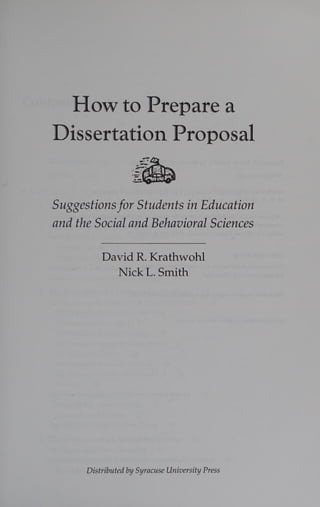
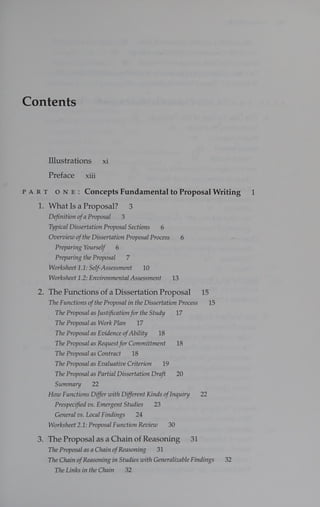
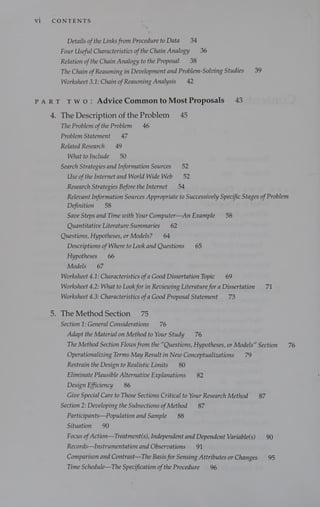
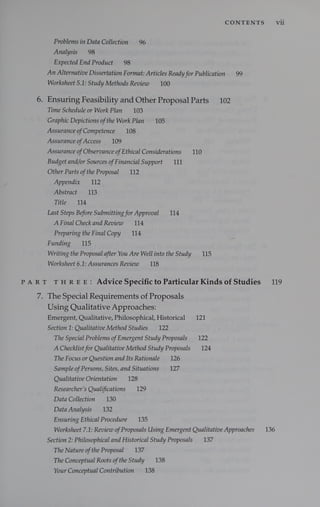
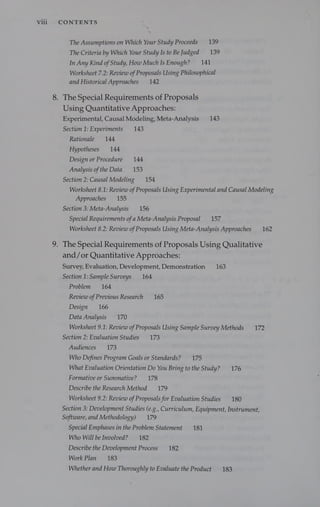
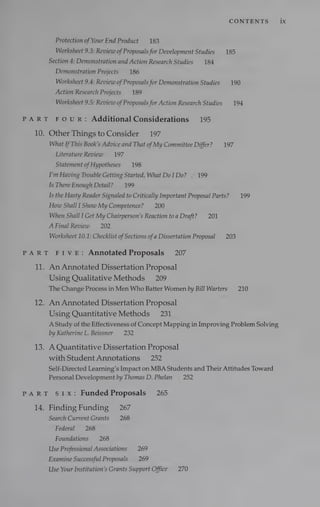

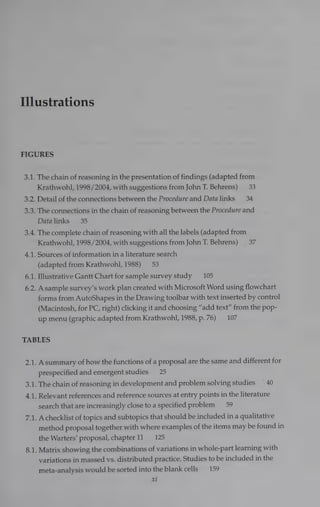
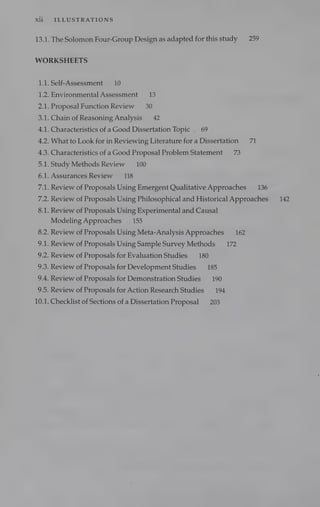
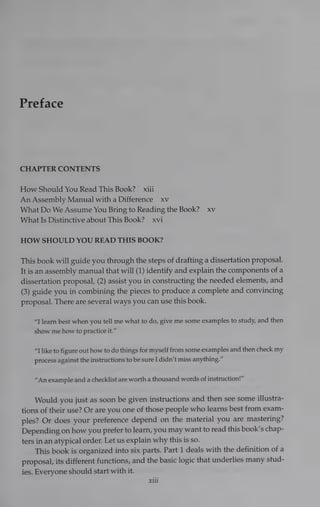
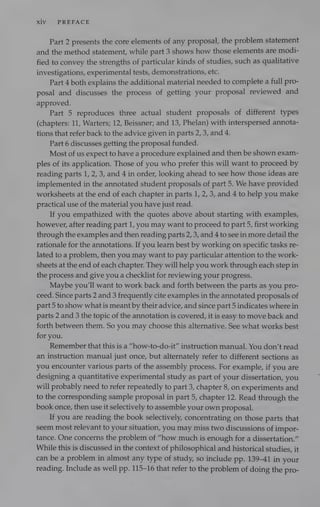
![he Santen 7 *; =
, | 1s ; - ie pi Pema 7
ois guaeakyong ter ator neh Mo ee n> a
ee
vdiiais baeniran )
aie soda cme wei raetinee teatbwaa penoit
eactainecneals tnsbevMora tench
asitrcs) Ott A
thes RARE te ay fe ekg co dS mab
asupey anit
yggreltinema
edsamdtilelungnatmafiityyal oe ‘alte ye :
ow
iter
aces Coeabegel 9-2 beste
eit98 ee penance. 2)
AG
bth hiqn-ceialiputie liner nltonlnustiralyomsiethe maatietncmenen seecsthasenNt
eo MrMandira
HY01
Cr
HER
HEEFos
cot eon oyReed) Jgnortagnteiyondtiadiamt” 7
(ata aecettetecaeg regeet tarts ap8 rhea Lenora imewohegesendions os
: qeeamiin my oat coe ennitee thot oni ten tate culbutte arene weal
sfRig eae odesta WSF tere gees lao cenittert finenltymverscttanantwisca
= Ce rearvky dj Aes evecsyt' ip
oshiays Kotne rei Donen a ee
SS msigatiad
ate tay cate: ot Sleeps Sayher lrtnitemlcr antennae boy
: Aaagerpeaiagaleineas
rt ee ee feline den
ith elQe
oe ee yt Yond taeat rt a
Y<> ase eTD meeceray rent ae Lsataopongess#
gan aren hide thie
<> Rader
aires
177 Fethetipreyo8 1a, uatmw eka Wsteiutts aac die!Hit wou iensalle
a icone Sisaneiialiarse ynlenDp eanale
teistgrareath
ciulepommmiannta rere
0. RE is Age Labrtaicly eatbli
det sgulea 08 =(into iw Muprenare red.
e
aaa HitBenejiniot Sloe? bin wltan hi pet 6 bol Flor» ed ow dowd aie”
Say ST ieee fi ilhepeallyeatt'v Tv a Arter ins OR a ae
= ra westeans Sey oA id 2 tet ne mies (Ry ominy tte wit Ade uidtion —
a :
i b Peere ds one : +, Ana peasy gale Hoe
a bebe
m denetacblalategbititeaT LA ee |she iiyrt ay.a nein Sivetan ) ql
ai a L aplea' 7 i ~, @ i a, | 4p
° Yaraant yoaltebrosn ag quien lh (rates heenc Fol okpega
+
7
— agape ann nile epi ve geod Molt: baile gohyrtetiammd a
i plat, OmGn wth L eation’y: sEifeat
tl
tyeuehbutad donee ea 3
Bee: apni mci. Rie rm bacon 6 sel A ear
| aubeese 2 «+? Are vritty oat z hp ited, = pat a
= pee ! oan
a — a ; te a oi en —
= eather : | ere acide ‘esl tinie ane pare — fae:
ae a w Te (at eS f uly ue ieee ye 7 *
ek gman! He be , rs &» a »paartad pacead
Radi Vey. & cf te ; Mis #4 Wa | j e envendiogy
i _
tas Pri so Rasy, Cra: eg) wr Gices 5 Oxon 4 a
S disse caps ite pIwet> sd Je seepep to yee &: Aa Wapirn 4
dS DeesBie a meecen tl, per) hat @in achulleS aie
gia mone Sam
uf Ge 9-24 Foae: Cay Ihe Gew 9) poeeeg] ous pain Senertes wurty : a
eel rat (ae SIN ee gmt aoennca
le, gins hls gee
merece ee oe ere bevgrees shah,det
vrs fh eee aa ail ined](https://image.slidesharecdn.com/24755943-250514090930-dcce508b/85/How-To-Prepare-A-Dissertation-Proposal-David-R-Krathwohl-Nick-L-Smith-24-320.jpg)
![i, or . _ a
_
i]
—_——— - tea
8 RN ——ce
*
Beriotni ott ritiw railice whoa! Minade rere teeoqeng wy annogug oiiky
deals yam tl 2inanqurg {Ty ob iahnoriehrnsl eintiont: aebivera sf Sug ei sim
gorsiderg to vistey ort) boy nnn Seeogerig larly
ic
10putiqestns wcy seme
voi (fis seul 2 ateianon ing.ant ¥
Siri tot Ype irOV goat i IseumpeRg siehsecth p eonitel f rmaqui>
wo tae dnaagery yd bovis 10 tell ennliocyl ont awlpcweb £ seat,
“paid},Hee raider] io brit aif Ap gribneqsb yay” kins aGaloriast re:
‘offrrerticrasty on te i ll unt af elneoong fe yo tireree wooltgudt a a
~ phat anitgotatbee ville "i
sANeeT Te citine oA aPinodugis HID griitreomag Hat Seyaltacet soubeyeirt = >.
cai ea tot wegen th IG serine:ene aad ity ie nade bes
hae ‘
=~ } : iia ? ~ 7](https://image.slidesharecdn.com/24755943-250514090930-dcce508b/85/How-To-Prepare-A-Dissertation-Proposal-David-R-Krathwohl-Nick-L-Smith-26-320.jpg)
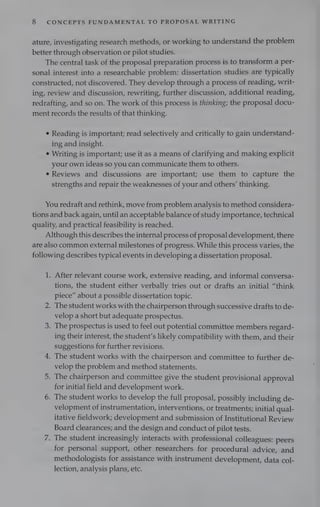

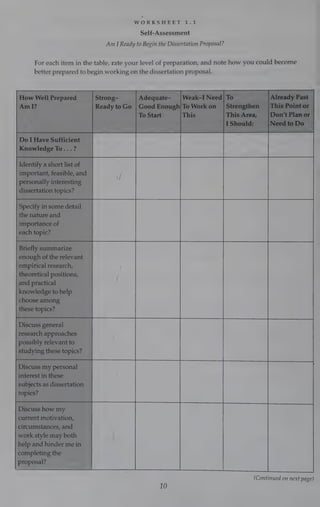
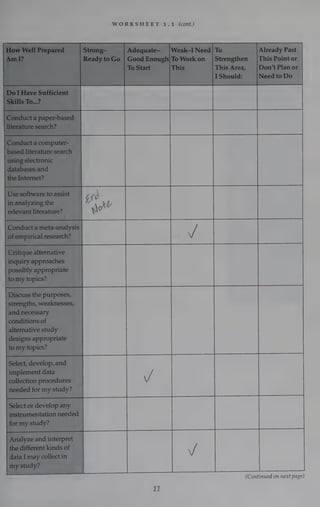
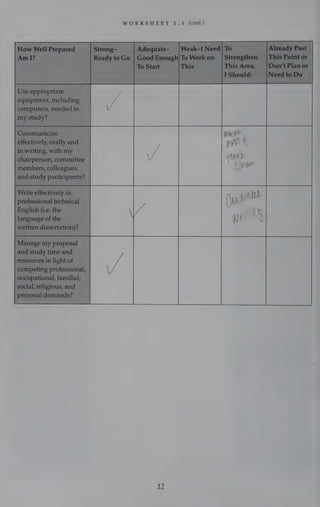
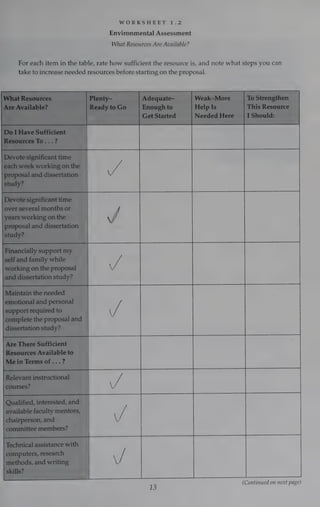

![FUNCTIONS OF A PROPOSAL 17
The Proposal afJustification for
the Study
Asound argument, a well-grounded or firmly-backed claim, is one which will stand up
to criticism . . . [and] deserve[s] a favourable verdict. (Toulmin, 1958, p. 8)
Researchers employ theory, method, evidence, and reasoning to produce find-
ings they claim are important and relevant to the questions of interest. The rea-
soning producing the findings and relating them to the problem constitutes an
argument that is the heart of the dissertation proposal. This argument justifies
conducting the study and supports the meaning and utility of the results
found. The primary function of the dissertation proposal, then, is to provide
this
justification for the inquiry.
Therefore, in doing the study, the student develops the following points
into a reasoned argument:
1. Why it is worth studying what will be studied.
2. Whatis already known, how that relates to the proposed study, and how
it coalesces into an argument for:
a. an extrapolation of past knowledge to predict the outcome of the
study,
b. or, if not a prediction, some anticipation of possible outcomes,
c. or knowledge of where to look for results,
d. or knowledge of what area to study in order to likely attain payoff.
(If much is known about what is to be researched, a, above, is possible.
With less prior knowledge, one falls back to b, with still less to c, and
finally to d.)
3. How the study will proceed: what method will be used; data gathered;
and situations, circumstances, and persons involved.
4. How those data represent future situations, circumstances, and/or per-
sons in sucha way as to relate usefully and meaningfully to the problem,
question, or area of investigation proposed.
As might be expected, these points relate to the proposal as well as to the
dissertation study itself. The first three points are covered in the proposal, the
fourth in the dissertation report. As discussed in the next chapter, designing
the proposal as a chain of reasoning is an effective way of providing a strong
justification for the dissertation study.
The Proposal as Work Plan
This is the most common function a proposal serves. It sets forth what work
will be done, why, and with what anticipated result. Most proposals include a
scope of work, alist of activities, and possibly a time line and budget. These in-](https://image.slidesharecdn.com/24755943-250514090930-dcce508b/85/How-To-Prepare-A-Dissertation-Proposal-David-R-Krathwohl-Nick-L-Smith-41-320.jpg)
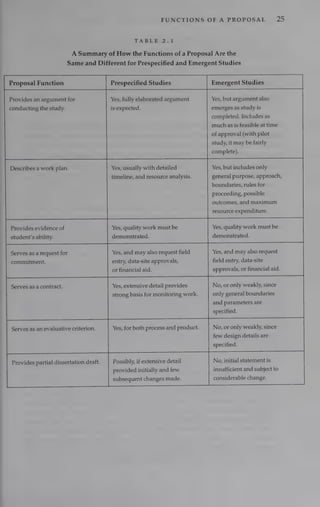
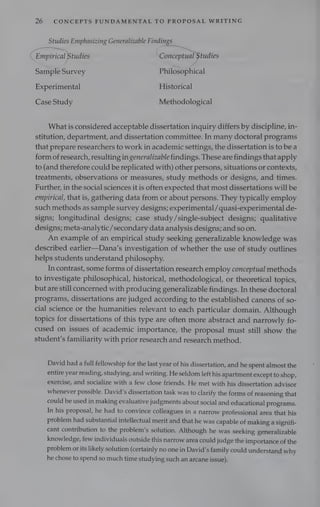
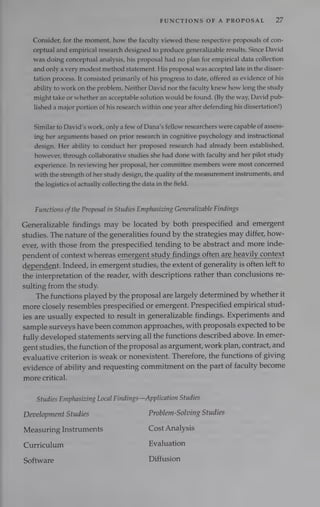
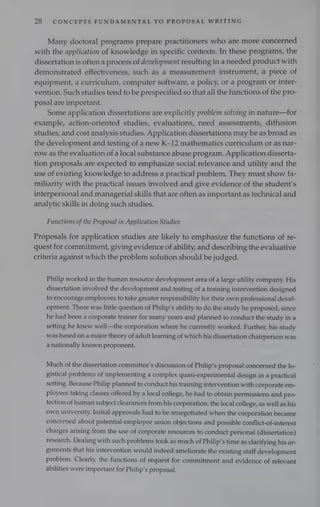
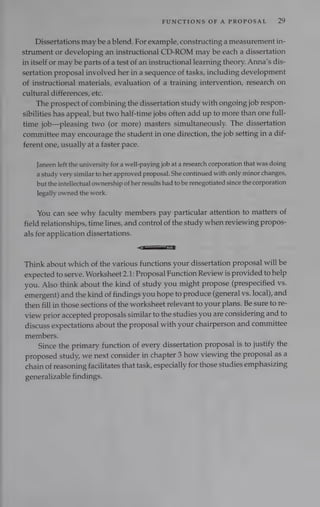
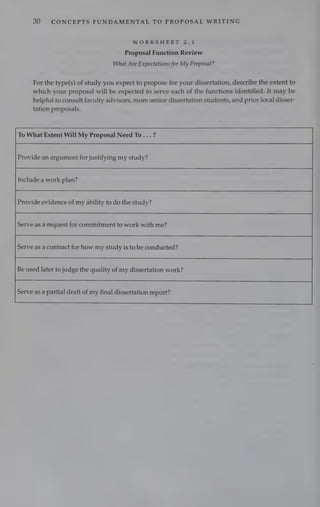

![principle of that act; a principle which, unquestionably, he and his
friends would never have acted upon; but which others have
since acted upon, with a violence which has brought us to the
brink of ruin.
[4] In p. 19. he calls liberty “a freedom from all restraints
except such as established law imposes for the good of the
community.” But this addition can make no difference of any
consequence, as long as it is not specified where the power is
lodged of judging what laws are for the good of the community.
In countries where the laws are the edicts of absolute princes,
the end professed is always the good of the Community.
[5] “The laws against Papists have been extremely severe. New
dangers may arise; and if at any time another denomination of men
should be equally dangerous to our civil interests, it would be
justifiable to lay them under similar restraints.” Page 17.—In
another part of this sermon the great men in opposition (some of
the first in the kingdom in respect of rank, ability, and virtue) are
described as a body of men void of principle, who, without
regarding the relation in which they stand to the community, have
entered into a league for advancing their private interest, and
“who are held together by the same bond that keeps together the
lowest and wickedest combinations.”—Was there ever such a
censure delivered from a pulpit? What wonder is it that the
Dissenters should come in for a share in his Grace’s abuse?—Their
political principles, he says, are growing dangerous.—On what
does he ground this insinuation? He is mistaken if he imagines
that they are all such delinquents as the author of the following
tracts, or that they think universally as he does of the war with
America. On this subject they are, like other bodies of men in the
kingdom, of different opinions.—But I will tell him in what they
agree.—They agree in detesting the doctrines of passive
obedience and non-resistance. They are all Whigs, enemies to
arbitrary power, and firmly attached to those principles of civil
and religious liberty which produced the glorious Revolution and
the Hanoverian succession.—Such principles are the nation’s best
defence; and Protestant Dissenters have hitherto reckoned it their
glory to be distinguished by zeal for them, and an adherence to
them. Once these principles were approved by men in power. No
good can be expected, if they are now reckoned dangerous.
[6] That is, the missionaries of the society in America.—The
charter of the society declares the end of its incorporation to be](https://image.slidesharecdn.com/24755943-250514090930-dcce508b/85/How-To-Prepare-A-Dissertation-Proposal-David-R-Krathwohl-Nick-L-Smith-56-320.jpg)
![“propagating the gospel in foreign parts, and making provision for
the worship of God in those plantations which wanted the
administration of God’s word and sacraments, and were
abandoned to atheism and infidelity.” The chief business, on the
contrary, of the society has been to provide for the support of
episcopalianism in the northern colonies, and particularly New-
England, where the sacraments are more regularly administered,
and the people less abandoned to infidelity, than perhaps in any
country under heaven. The missionaries employed and paid by
the society for this purpose, have generally been clergymen of
the highest principles in church and state. America, having been
for some time very hostile to men of such principles, most of
them have been obliged to take refuge in this country; and here
they have, I am afraid, been too successful in propagating their
own resentments, in misleading our rulers, and widening the
breach which has produced the present war.
[7] I am sorry to mention one exception to the fact here
intimated. The new constitution for Pensilvania (in other respects
wise and liberal) is dishonoured by a religious test. It requires an
acknowledgment of the divine inspiration of the Old and New
Testament, as a condition of being admitted to a seat in the
House of Representatives; directing however, at the same time,
that no other religious test shall for ever hereafter be required of
any civil officer.—This has been, probably, an accommodation to
the prejudices of some of the narrower sects in the province, to
which the more liberal part have for the present thought fit to
yield; and, therefore, it may be expected that it will not be of long
continuance.
Religious tests and subscriptions in general, and all
establishments of particular systems of faith, with civil
emoluments annexed, do inconceivable mischief, by turning
religion into a trade, by engendering strife and persecution, by
forming hypocrites, by obstructing the progress of truth, and
fettering and perverting the human mind; nor will the world ever
grow much wiser, or better, or happier, till, by the abolition of
them, truth can gain fair play, and reason free scope for exertion.
The Archbishop, page 11, speaks of christianity as “insufficient to
rely on its own energies; and of the assistances which it is the
business of civil authority to provide for gospel truths.”—A worse
slander was never thrown on gospel truths. Christianity disdains
such assistances as the corrupted governments of this world are
capable of giving it. Politicians and statesmen know little of it.](https://image.slidesharecdn.com/24755943-250514090930-dcce508b/85/How-To-Prepare-A-Dissertation-Proposal-David-R-Krathwohl-Nick-L-Smith-57-320.jpg)
![Their enmity has sometimes done it good; but their friendship, by
supporting corruptions carrying its name, has been almost fatal to
it.
[8] In 1742, after the resignation of Sir Robert Walpole.
[9] Sir Francis Bacon was the second Attorney-General who sat
in the House of Commons; but, to prevent its being drawn into a
precedent, the House would not admit him, till they had made an
order, that no Attorney-General should for the future be allowed
to sit and vote in that House.—In conformity to this order,
whenever afterwards a member was appointed Attorney-General,
his place was vacated, and a new writ issued. This continued to
be the practice till the year 1670, when Sir Heneage Finch
(afterwards Earl of Nottingham) being appointed Attorney-General,
he was allowed by connivance to preserve his seat, which
connivance has been continued ever since.—I give these facts not
from any enquiry or knowledge of my own, but from the authority
of a friend, who is perhaps better informed than any person in
the kingdom on every subject of this kind.
[10] The following facts will shew, in some degree, how this
change has been brought about.—For ten years ending Aug. 1,
1717 (a period comprehending in it a general war abroad; and
the demise of the crown, the establishment of a new family, and
an open rebellion at home) the money expended in secret
services amounted only to 279,444l.—For ten years ending Feb.
11, 1742, it amounted to no less a sum than 1.384,600; of which
50,077l. was paid to printers of News-papers and writers for
government; and a greater sum expended, in the last six weeks
of these ten years, than had been spent in three years before
Aug. 1710.—See the Report of the Committee appointed March 23,
1742, to enquire into the conduct of Robert Earl of Orford, printed
in the Journals of the House of Commons, vol. 24, p. 295, 296,
300.—One passage, in this report, contains remarks, so much to
my present purpose and so important, that I cannot help copying
it.—“There are no laws particularly adapted to the case of a
minister who clandestinely employs the money of the public, and
the whole power and profitable employments that attend the
collecting and disposing of it, against the people: And, by this
profusion and criminal distribution of offices, in some measure
justifies the expence that particular persons are obliged to be at,
by making it necessary to the preservation of all that is valuable
to a free nation. For in that case, the contest is plain and visible.](https://image.slidesharecdn.com/24755943-250514090930-dcce508b/85/How-To-Prepare-A-Dissertation-Proposal-David-R-Krathwohl-Nick-L-Smith-58-320.jpg)
![F
without Religious and Civil Liberty he is a poor and abject animal,
without rights, without property, and without a conscience, bending
his neck to the yoke, and crouching to the will of every silly creature
who has the insolence to pretend to authority over him.—Nothing,
therefore, can be of so much consequence to us as Liberty. It is the
foundation of all honour, and the chief privilege and glory of our
natures.
In fixing our ideas on the subject of Liberty, it is of particular use
to take such an enlarged view of it as I have now given. But the
immediate object of the present enquiry being Civil Liberty, I will
confine to it all the subsequent observations.
SECT. II.
Of Civil Liberty and the Principles of Government.
rom what has been said it is obvious, that all civil government, as
far as it can be denominated free, is the creature of the people.
It originates with them. It is conducted under their direction; and
has in view nothing but their happiness. All its different forms are no
more than so many different modes in which they chuse to direct
their affairs, and to secure the quiet enjoyment of their rights.—In
every free state every man is his own Legislator.[11]—All taxes are
free-gifts for public services.—All laws are particular provisions or
regulations established by common consent for gaining protection and
safety.—And all Magistrates are Trustees or Deputies for carrying
these regulations into execution.
Liberty, therefore, is too imperfectly defined when it is said to be
“a Government by Laws, and not by Men.” If the laws are made by
one man, or a junto of men in a state, and not by common consent, a
government by them does not differ from Slavery. In this case it
would be a contradiction in terms to say that the state governs itself.
From hence it is obvious that Civil Liberty, in its most perfect
degree, can be enjoyed only in small states, where every](https://image.slidesharecdn.com/24755943-250514090930-dcce508b/85/How-To-Prepare-A-Dissertation-Proposal-David-R-Krathwohl-Nick-L-Smith-67-320.jpg)
![confederacy be formed by the appointment of a Senate consisting of
Representatives from all the different states. Let this Senate possess
the power of managing all the common concerns of the united
states, and of judging and deciding between them, as a common
Arbiter or Umpire, in all disputes; having, at the same time, under its
direction, the common force of the states to support its decisions.—
In these circumstances, each separate state would be secure against
the interference of foreign power in its private concerns, and,
therefore, would possess Liberty; and at the same time it would be
secure against all oppression and insult from every neighbouring
state.—Thus might the scattered force and abilities of a whole
continent be gathered into one point; all litigations settled as they
rose; universal peace preserved; and nation prevented from any
more lifting up a sword against nation.
I have observed, that tho’, in a great state, all the individuals that
compose it cannot be admitted to an immediate participation in the
powers of legislation and government, yet they may participate in
these powers by a delegation of them to a body of representatives.
—In this case it is evident that the state will be still free or self-
governed; and that it will be more or less so in proportion as it is
more or less fairly and adequately represented. If the persons to
whom the trust of government is committed hold their places for
short terms; if they are chosen by the unbiassed voices of a majority
of the state, and subject to their instructions; Liberty will be enjoyed
in its highest degree. But if they are chosen for long terms by a part
only of the state; and if during that term they are subject to no
controul from their constituents; the very idea of Liberty will be lost,
and the power of chusing representatives becomes nothing but a
power, lodged in a few, to chuse at certain periods, a body of
Masters for themselves and for the rest of the Community. And if a
state is so sunk that the majority of its representatives are elected
by a handful of the meanest[12] persons in it, whose votes are
always paid for; and if also, there is a higher will on which even
these mock representatives themselves depend, and that directs](https://image.slidesharecdn.com/24755943-250514090930-dcce508b/85/How-To-Prepare-A-Dissertation-Proposal-David-R-Krathwohl-Nick-L-Smith-69-320.jpg)
![in its rulers, is enslaved.—Nothing, therefore, can be more absurd
than the doctrine which some have taught, with respect to the
omnipotence of parliaments. They possess no power beyond the
limits of the trust for the execution of which they were formed. If
they contradict this trust, they betray their constituents, and dissolve
themselves. All delegated power must be subordinate and limited.—
If omnipotence can, with any sense, be ascribed to a legislature, it
must be lodged where all legislative authority originates; that is, in
the People. For their sakes government is instituted; and their’s is the
only real omnipotence.
I am sensible, that all I have been saying would be very absurd,
were the opinions just which some have maintained concerning the
origin of government. According to these opinions, government is
not the creature of the people, or the result of a convention between
them and their rulers: But there are certain men who possess in
themselves, independently of the will of the people, a right of
governing them, which they derive from the Deity. This doctrine has
been abundantly refuted by many[13] excellent writers. It is a
doctrine which avowedly subverts Civil Liberty; and which represents
mankind as a body of vassals, formed to descend like cattle from
one set of owners to another, who have an absolute dominion over
them. It is a wonder, that those who view their species in a light so
humiliating, should ever be able to think of themselves without
regret and shame. The intention of these observations is not to
oppose such sentiments; but, taking for granted the reasonableness
of Civil Liberty, to shew wherein it consists, and what distinguishes it
from its contrary.—And, in considering this subject, as it has been
now treated, it is unavoidable to reflect on the excellency of a free
government, and its tendency to exalt the nature of man.—Every
member of a free state, having his property secure, and knowing
himself his own governor, possesses a consciousness of dignity in
himself, and feels incitements to emulation and improvement, to
which the miserable slaves of arbitrary power must be utter
strangers. In such a state all the springs of action have room to](https://image.slidesharecdn.com/24755943-250514090930-dcce508b/85/How-To-Prepare-A-Dissertation-Proposal-David-R-Krathwohl-Nick-L-Smith-73-320.jpg)
![operate, and the mind is stimulated to the noblest exertions[14].—
But to be obliged, from our birth, to look up to a creature no better
than ourselves as the master of our fortunes; and to receive his will
as our law—What can be more humiliating? What elevated ideas can
enter a mind in such a situation?—Agreeably to this remark; the
subjects of free states have, in all ages, been most distinguished for
genius and knowledge. Liberty is the soil where the arts and
sciences have flourished; and the more free a state has been, the
more have the powers of the human mind been drawn forth into
action, and the greater number of brave men has it produced. With
what lustre do the antient free states of Greece shine in the annals
of the world? How different is that country now, under the Great
Turk? The difference between a country inhabited by men and by
brutes is not greater.
These are reflexions which should be constantly present to every
mind in this country.—As Moral Liberty is the prime blessing of man
in his private capacity, so is Civil liberty in his public capacity. There
is nothing that requires more to be watched than power. There is
nothing that ought to be opposed with a more determined resolution
than its encroachments. Sleep in a state, as Montesquieu says, is
always followed by slavery.
The people of this kingdom were once warmed by such
sentiments as these. Many a sycophant of power have they
sacrificed. Often have they fought and bled in the cause of Liberty.
But that time seems to be going. The fair inheritance of Liberty left
us by our ancestors many of us are willing to resign. An abandoned
venality, the inseparable companion of dissipation and extravagance,
has poisoned the springs of public virtue among us: And should any
events ever arise that should render the same opposition necessary
that took place in the times of King Charles the First, and James the
Second, I am afraid all that is valuable to us would be lost. The
terror of the standing army, the danger of the public funds, and the
all-corrupting influence of the treasury, would deaden all zeal, and
produce general acquiescence and servility.](https://image.slidesharecdn.com/24755943-250514090930-dcce508b/85/How-To-Prepare-A-Dissertation-Proposal-David-R-Krathwohl-Nick-L-Smith-74-320.jpg)
![I cannot help observing farther, that the slavery of a people to
internal despots may be qualified and limited; but I don’t see what
can limit the authority of one state over another. The exercise of
power in this case can have no other measure than discretion; and,
therefore, must be indefinite and absolute.
Once more. It should be considered that the government of one
country by another, can only be supported by a military force; and,
without such a support, must be destitute of all weight and
efficiency.
This will be best explained by putting the following case.—There
is, let us suppose, in a province subject to the sovereignty of a
distant state, a subordinate legislature consisting of an Assembly
chosen by the people; a Council chosen by that Assembly; and a
Governor appointed by the Sovereign state, and paid by the
Province. There are, likewise, judges and other officers, appointed
and paid in the same manner, for administering justice agreeably to
the laws, by the verdicts of juries fairly chosen.—This forms a
constitution seemingly free, by giving the people a share in their
own government, and some check on their rulers. But, while there is
a higher legislative power, to the controul of which such a
constitution is subject, it does not itself possess Liberty, and
therefore cannot be of any use as a security to Liberty; nor is it
possible that it should be of long duration. Laws offensive to the
Province will be enacted by the Sovereign State. The legislature of
the Province will remonstrate against them. The magistrates will not
execute them. Juries will not convict upon them; and consequently,
like the Pope’s Bulls which once governed Europe, they will become
nothing but forms and empty sounds, to which no regard will be
shewn.—In order to remedy this evil, and to give efficiency to its
government, the supreme state will naturally be led to withdraw the
Governor, the Council, and the Judges[15] from the controul of the
Province, by making them entirely dependant on itself for their pay
and continuance in office, as well as for their appointment. It will](https://image.slidesharecdn.com/24755943-250514090930-dcce508b/85/How-To-Prepare-A-Dissertation-Proposal-David-R-Krathwohl-Nick-L-Smith-76-320.jpg)
![despots, a good one will sometimes arise. But bodies of men
continue the same; and have generally proved the most unrelenting
of all tyrants.
A great writer before[16] quoted, observes of the Roman Empire,
that while Liberty was at the center, tyranny prevailed in the distant
provinces; that such as were free under it were extremely so, while
those who were slaves groaned under the extremity of slavery; and
that the same events that destroyed the liberty of the former, gave
liberty to the latter.
The Liberty of the Romans, therefore, was only an additional
calamity to the provinces governed by them; and though it might
have been said of the citizens of Rome, that they were the “freest
members of any civil society in the known world;” yet of the subjects
of Rome, it must have been said, that they were the completest
slaves in the known world.—How remarkable is it, that this very
people, once the freest of mankind, but at the same time the most
proud and tyrannical, should become at last the most contemptible
and abject slaves that ever existed?](https://image.slidesharecdn.com/24755943-250514090930-dcce508b/85/How-To-Prepare-A-Dissertation-Proposal-David-R-Krathwohl-Nick-L-Smith-81-320.jpg)