How to Play the Viola
Parts
• Before you start playing you have to know the
  parts of the viola and what they do.
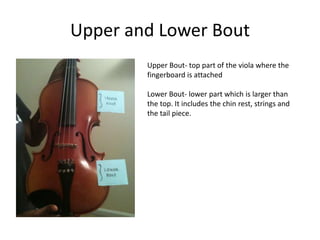
Upper and Lower Bout
        Upper Bout- top part of the viola where the
        fingerboard is attached

        Lower Bout- lower part which is larger than
        the top. It includes the chin rest, strings and
        the tail piece.
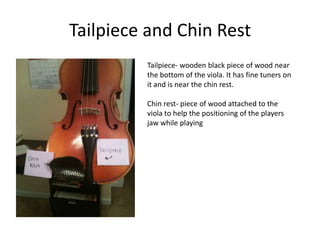
Tailpiece and Chin Rest
         Tailpiece- wooden black piece of wood near
         the bottom of the viola. It has fine tuners on
         it and is near the chin rest.

         Chin rest- piece of wood attached to the
         viola to help the positioning of the players
         jaw while playing
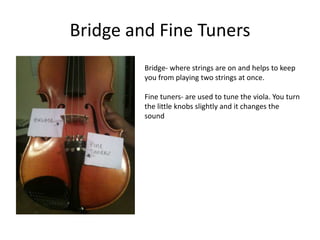
Bridge and Fine Tuners
         Bridge- where strings are on and helps to keep
         you from playing two strings at once.

         Fine tuners- are used to tune the viola. You turn
         the little knobs slightly and it changes the
         sound
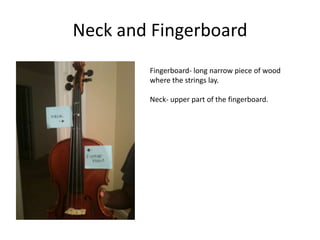
Neck and Fingerboard
        Fingerboard- long narrow piece of wood
        where the strings lay.

        Neck- upper part of the fingerboard.
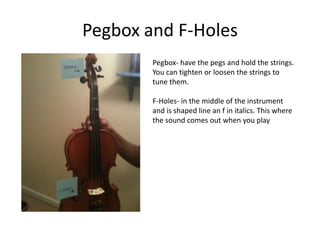
Pegbox and F-Holes
        Pegbox- have the pegs and hold the strings.
        You can tighten or loosen the strings to
        tune them.

        F-Holes- in the middle of the instrument
        and is shaped line an f in italics. This where
        the sound comes out when you play
Notes
• Seven letters of the alphabet are used to
  name notes in music
• A,B,C,D,E,F,G,H
• There whole, half, quarter, eighth….
• Using math is and easy way to calculate how
  many notes are in a measure
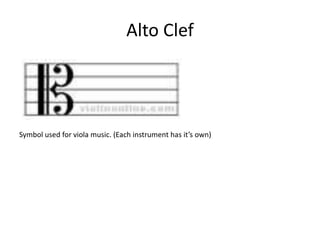
Alto Clef


Symbol used for viola music. (Each instrument has it’s own)
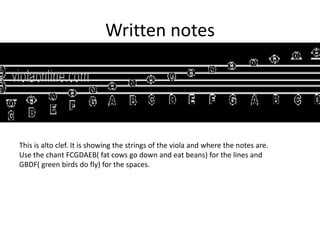
Written notes


This is alto clef. It is showing the strings of the viola and where the notes are.
Use the chant FCGDAEB( fat cows go down and eat beans) for the lines and
GBDF( green birds do fly) for the spaces.

How to play the viola

  • 1.
    How to Playthe Viola
  • 2.
    Parts • Before youstart playing you have to know the parts of the viola and what they do.
  • 3.
    Upper and LowerBout Upper Bout- top part of the viola where the fingerboard is attached Lower Bout- lower part which is larger than the top. It includes the chin rest, strings and the tail piece.
  • 4.
    Tailpiece and ChinRest Tailpiece- wooden black piece of wood near the bottom of the viola. It has fine tuners on it and is near the chin rest. Chin rest- piece of wood attached to the viola to help the positioning of the players jaw while playing
  • 5.
    Bridge and FineTuners Bridge- where strings are on and helps to keep you from playing two strings at once. Fine tuners- are used to tune the viola. You turn the little knobs slightly and it changes the sound
  • 6.
    Neck and Fingerboard Fingerboard- long narrow piece of wood where the strings lay. Neck- upper part of the fingerboard.
  • 7.
    Pegbox and F-Holes Pegbox- have the pegs and hold the strings. You can tighten or loosen the strings to tune them. F-Holes- in the middle of the instrument and is shaped line an f in italics. This where the sound comes out when you play
  • 8.
    Notes • Seven lettersof the alphabet are used to name notes in music • A,B,C,D,E,F,G,H • There whole, half, quarter, eighth…. • Using math is and easy way to calculate how many notes are in a measure
  • 9.
    Alto Clef Symbol usedfor viola music. (Each instrument has it’s own)
  • 10.
    Written notes This isalto clef. It is showing the strings of the viola and where the notes are. Use the chant FCGDAEB( fat cows go down and eat beans) for the lines and GBDF( green birds do fly) for the spaces.