Download to read offline

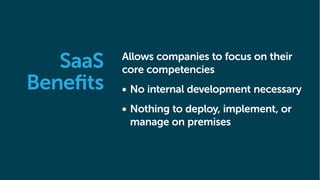
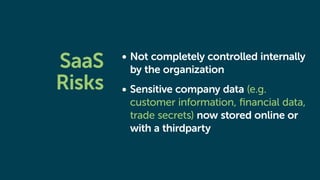



This document discusses how to leverage Software as a Service (SaaS) applications while minimizing risks. It provides four steps: 1) connect SaaS apps to directory services for access management; 2) inventory all SaaS apps used; 3) audit access rights and roles; 4) centrally manage access using directory services and multi-factor authentication. Following these steps allows companies to benefit from SaaS's agility while maintaining centralized control and security over user access and sensitive data.


![[null] Iso 27001 a business view by Sripathi](https://cdn.slidesharecdn.com/ss_thumbnails/iso27001-abusinessview-101219215411-phpapp01-thumbnail.jpg?width=640&height=640&fit=bounds)


![谷歌留痕技术教程[ 𝙩𝙤𝙥 𝟮𝟯𝟯. 𝙘 𝙤𝙢 ]](https://cdn.slidesharecdn.com/ss_thumbnails/top233-260130173900-2eb784f9-thumbnail.jpg?width=640&height=640&fit=bounds)


