How to Keep Your Feet Fit
Rachel N. Verville, DPM
RNV Podiatry
Fun Foot Facts
The Human Foot Consists
of 26 Bones and 33
Ligaments
The 52 Bones in Your Feet
Make Up 25% of All the
Bones In Your Body
The Average Person Takes
8,000 to 10,000 Steps Per
Day – Which Adds Up to
115,000 Miles In a Lifetime
(More Than 4x
Circumference of Globe)
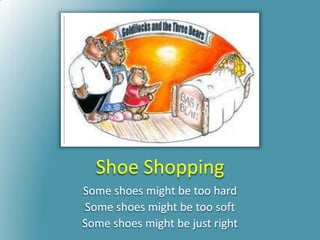
Shoe Shopping
Some shoes might be too hard
Some shoes might be too soft
Some shoes might be just right
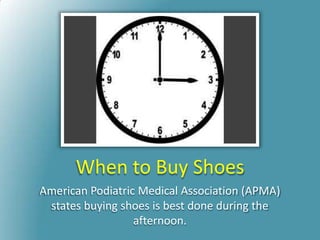
When to Buy Shoes
American Podiatric Medical Association (APMA)
states buying shoes is best done during the
afternoon.
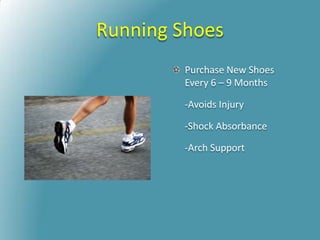
Running Shoes
Purchase New Shoes
Every 6 – 9 Months
-Avoids Injury
-Shock Absorbance
-Arch Support
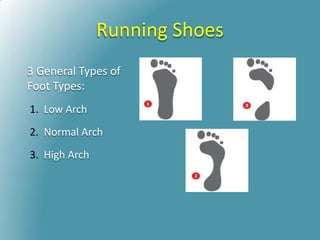
Running Shoes
3 General Types of
Foot Types:
1. Low Arch
2. Normal Arch
3. High Arch
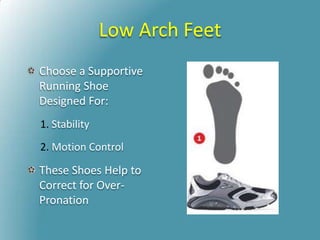
Low Arch Feet
Choose a Supportive
Running Shoe
Designed For:
1. Stability
2. Motion Control
These Shoes Help to
Correct for Over-
Pronation
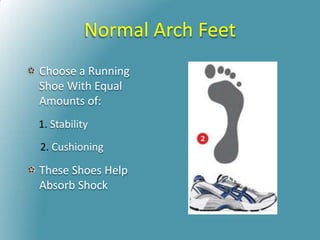
Normal Arch Feet
Choose a Running
Shoe With Equal
Amounts of:
1. Stability
2. Cushioning
These Shoes Help
Absorb Shock
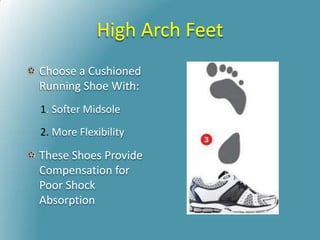
High Arch Feet
Choose a Cushioned
Running Shoe With:
1. Softer Midsole
2. More Flexibility
These Shoes Provide
Compensation for
Poor Shock
Absorption
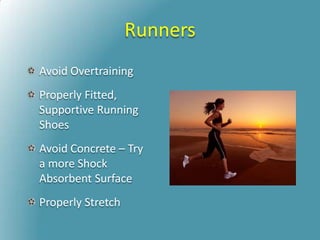
Runners
Avoid Overtraining
Properly Fitted,
Supportive Running
Shoes
Avoid Concrete – Try
a more Shock
Absorbent Surface
Properly Stretch
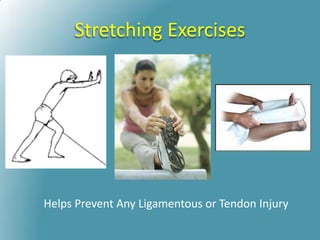
Stretching Exercises
Helps Prevent Any Ligamentous or Tendon Injury
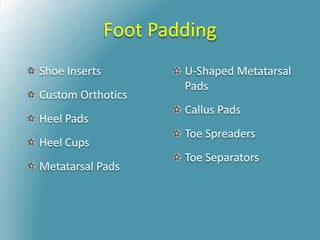
Foot Padding
Shoe Inserts
Custom Orthotics
Heel Pads
Heel Cups
Metatarsal Pads
U-Shaped Metatarsal
Pads
Callus Pads
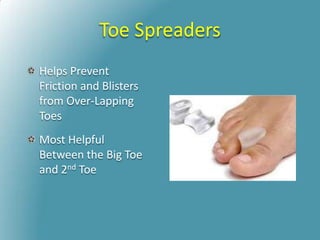
Toe Spreaders
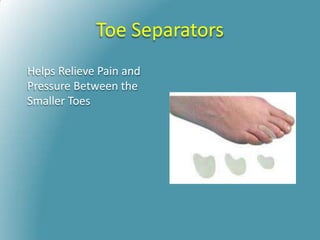
Toe Separators
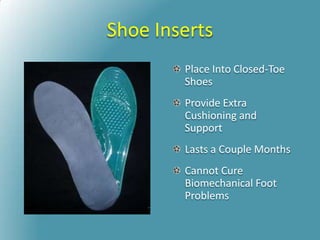
Shoe Inserts
Place Into Closed-Toe
Shoes
Provide Extra
Cushioning and
Support
Lasts a Couple Months
Cannot Cure
Biomechanical Foot
Problems
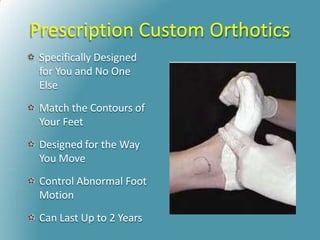
Prescription Custom Orthotics
Specifically Designed
for You and No One
Else
Match the Contours of
Your Feet
Designed for the Way
You Move
Control Abnormal Foot
Motion
Can Last Up to 2 Years
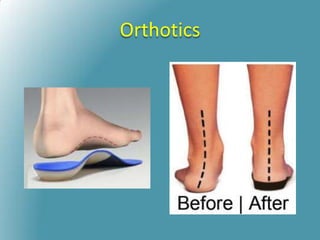
Orthotics
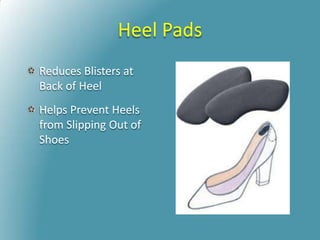
Heel Pads
Reduces Blisters at
Back of Heel
Helps Prevent Heels
from Slipping Out of
Shoes
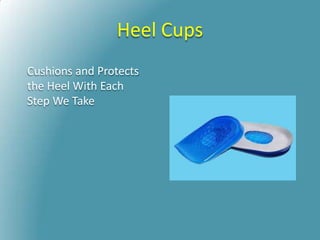
Heel Cups
Cushions and Protects
the Heel With Each
Step We Take
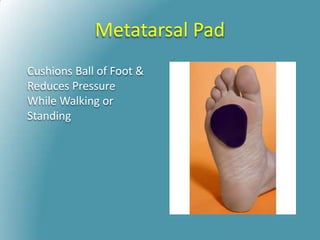
Metatarsal Pad
Cushions Ball of Foot &
Reduces Pressure
While Walking or
Standing
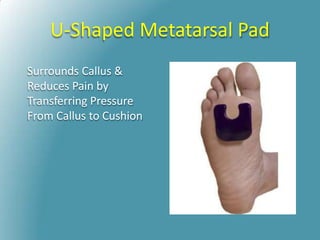
U-Shaped Metatarsal Pad
Surrounds Callus &
Reduces Pain by
Transferring Pressure
From Callus to Cushion
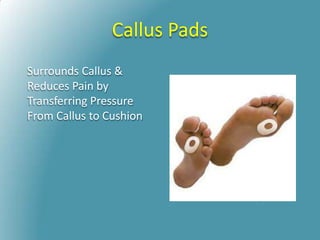
Callus Pads
Surrounds Callus &
Reduces Pain by
Transferring Pressure
From Callus to Cushion
Toe Spreaders
Helps Prevent
Friction and Blisters
from Over-Lapping
Toes
Most Helpful
Between the Big Toe
and 2nd Toe
Toe Separators
Helps Relieve Pain and
Pressure Between the
Smaller Toes
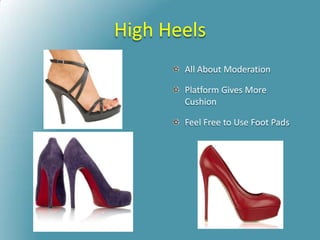
High Heels
All About Moderation
Platform Gives More
Cushion
Feel Free to Use Foot Pads
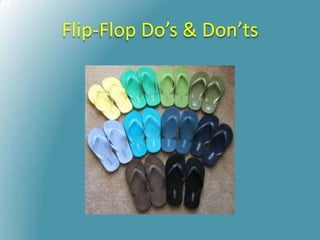
Flip-Flop Do’s & Don’ts
Flip-Flop Do’s
Do Shop For a Flip-Flop Made of High-Quality, Soft
Leather
Do Gently Bend From End-to-End, Ensuring it
Bends at Ball of Foot
Do Ensure Your Foot Does Not Hang Off the Edge
Do Wear Around a Public Pool, Hotel Rooms, &
Locker Rooms
Flip-Flop Don’ts
Don’t Re-Wear Flip-Flops Year After Year
Don’t Ignore Irritation Between Toes
Don’t Wear When Walking Long Distances
Don’t Do Yard-Work When Wearing
Don’t Play Sports When Wearing
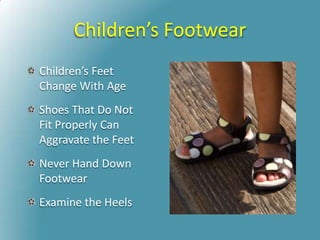
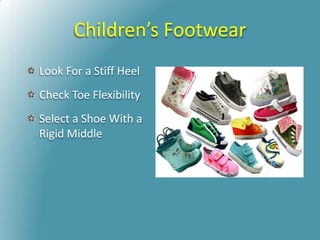
Children’s Footwear
Children’s Feet
Change With Age
Shoes That Do Not
Fit Properly Can
Aggravate the Feet
Never Hand Down
Footwear
Examine the Heels
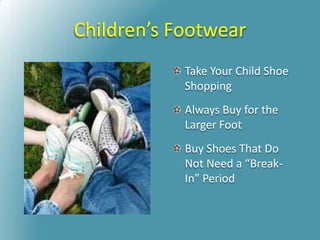
Children’s Footwear
Take Your Child Shoe
Shopping
Always Buy for the
Larger Foot
Buy Shoes That Do
Not Need a “Break-
In” Period
Children’s Footwear
Look For a Stiff Heel
Check Toe Flexibility
Select a Shoe With a
Rigid Middle
Common Foot Problems
Bunions
Hammertoes
Plantar Fasciitis
Ingrown Toenails
Toenail Fungus
Athlete’s Foot
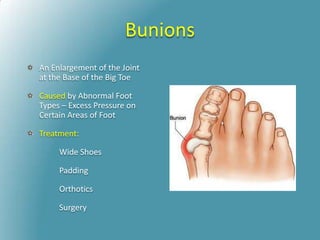
Bunions
An Enlargement of the Joint
at the Base of the Big Toe
Caused by Abnormal Foot
Types – Excess Pressure on
Certain Areas of Foot
Treatment:
Wide Shoes
Padding
Orthotics
Surgery
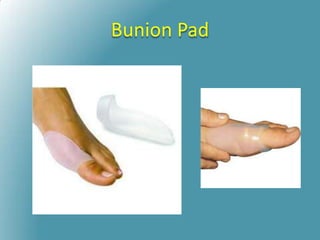
Bunion Pad
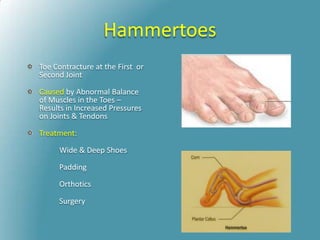
Hammertoes
Toe Contracture at the First or
Second Joint
Caused by Abnormal Balance
of Muscles in the Toes –
Results in Increased Pressures
on Joints & Tendons
Treatment:
Wide & Deep Shoes
Padding
Orthotics
Surgery
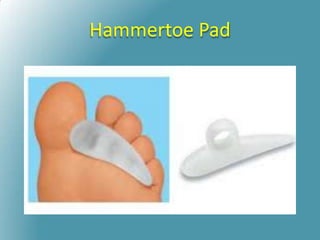
Hammertoe Pad
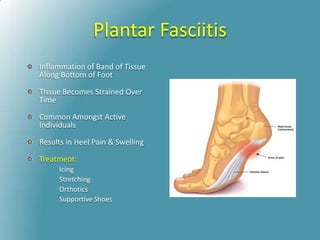
Plantar Fasciitis
Inflammation of Band of Tissue
Along Bottom of Foot
Tissue Becomes Strained Over
Time
Common Amongst Active
Individuals
Results in Heel Pain & Swelling
Treatment:
Icing
Stretching
Orthotics
Supportive Shoes
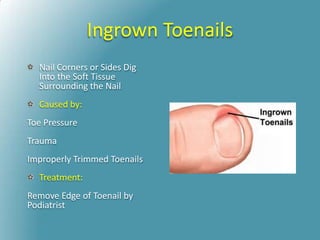
Ingrown Toenails
Nail Corners or Sides Dig
Into the Soft Tissue
Surrounding the Nail
Caused by:
Toe Pressure
Trauma
Improperly Trimmed Toenails
Treatment:
Remove Edge of Toenail by
Podiatrist
Toenail Fungus
Thickened, Discolored Toenails
Fungi Thrive in Damp Areas – Such as Swimming Pools & Locker
Rooms – Barefoot Areas
Prevention:
Wear Shower Shoes When Possible in Public Areas
Wear Shoes that Fit Well with Materials that Breathe
Disinfect Home Pedicure Tools
Treatment:
Antifungal Medication / Creams / Ointments
Athlete’s Foot
Skin Disorder Caused by Fungus
Fungi Thrive in Dampness around Swimming Pools & Locker
Rooms
Symptoms:
Dry, Itching, Scaling Skin
Redness
Treatment:
Antifungal Creams / Ointments
Diabetes
Body’s Inability to Manufacture or Properly Use
Insulin – Resulting in a High Blood Sugar
Diabetes Greatly Affects Your Eyes, Heart,
Kidneys, Nerves, & Feet
25.8 Million Children & Adults have Diabetes
8.3% of the Population
Diabetes Warning Signs in the
Feet
Skin Color Changes
Swelling of the Foot or Ankle
Numbness of the Feet or Toes
Open Sores on the Feet that are Slow to Heel
Pain
Diabetic Foot Care
Inspect Feet Daily
Wear Thick, Soft Socks
Have New Shoes Properly Fitted
Exercise
Do Not Walk Barefoot
Do Not Try to Remove Corns or Calluses on Your Own
Regular Check-ups With a Podiatrist
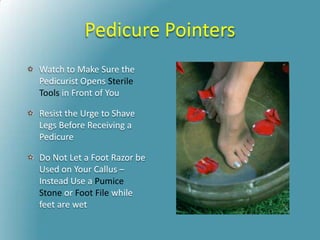
Pedicure Pointers
Watch to Make Sure the
Pedicurist Opens Sterile
Tools in Front of You
Resist the Urge to Shave
Legs Before Receiving a
Pedicure
Do Not Let a Foot Razor be
Used on Your Callus –
Instead Use a Pumice
Stone or Foot File while
feet are wet
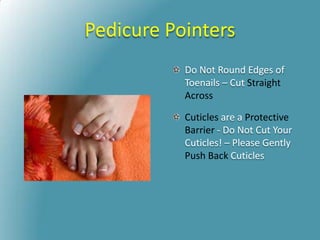
Pedicure Pointers
Do Not Round Edges of
Toenails – Cut Straight
Across
Cuticles are a Protective
Barrier - Do Not Cut Your
Cuticles! – Please Gently
Push Back Cuticles
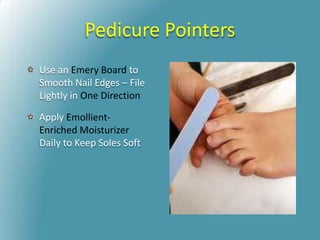
Pedicure Pointers
Use an Emery Board to
Smooth Nail Edges – File
Lightly in One Direction
Apply Emollient-
Enriched Moisturizer
Daily to Keep Soles Soft
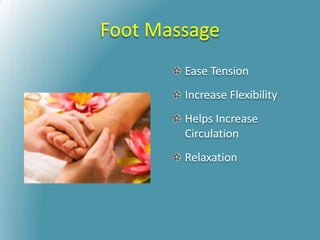
Foot Massage
Ease Tension
Increase Flexibility
Helps Increase
Circulation
Relaxation
Conclusion
No Need to Live with Foot Pain
MODERATION is the KEY
Try to Place COMFORT FIRST
Take Good Care of Your Feet
Feel Free to Visit a Podiatrist with any Questions
Thank You
6300 West Parker Rd.
Suite 425
Plano, TX 75093
(214) 385-8822
www.RNVPodiatry.com
RNV@RNVpodiatry.com

How to keep your feet fit

  • 1.
    How to KeepYour Feet Fit Rachel N. Verville, DPM RNV Podiatry
  • 2.
    Fun Foot Facts TheHuman Foot Consists of 26 Bones and 33 Ligaments The 52 Bones in Your Feet Make Up 25% of All the Bones In Your Body The Average Person Takes 8,000 to 10,000 Steps Per Day – Which Adds Up to 115,000 Miles In a Lifetime (More Than 4x Circumference of Globe)
  • 3.
    Shoe Shopping Some shoesmight be too hard Some shoes might be too soft Some shoes might be just right
  • 4.
    When to BuyShoes American Podiatric Medical Association (APMA) states buying shoes is best done during the afternoon.
  • 5.
    Running Shoes Purchase NewShoes Every 6 – 9 Months -Avoids Injury -Shock Absorbance -Arch Support
  • 6.
    Running Shoes 3 GeneralTypes of Foot Types: 1. Low Arch 2. Normal Arch 3. High Arch
  • 7.
    Low Arch Feet Choosea Supportive Running Shoe Designed For: 1. Stability 2. Motion Control These Shoes Help to Correct for Over- Pronation
  • 8.
    Normal Arch Feet Choosea Running Shoe With Equal Amounts of: 1. Stability 2. Cushioning These Shoes Help Absorb Shock
  • 9.
    High Arch Feet Choosea Cushioned Running Shoe With: 1. Softer Midsole 2. More Flexibility These Shoes Provide Compensation for Poor Shock Absorption
  • 10.
    Runners Avoid Overtraining Properly Fitted, SupportiveRunning Shoes Avoid Concrete – Try a more Shock Absorbent Surface Properly Stretch
  • 11.
    Stretching Exercises Helps PreventAny Ligamentous or Tendon Injury
  • 12.
    Foot Padding Shoe Inserts CustomOrthotics Heel Pads Heel Cups Metatarsal Pads U-Shaped Metatarsal Pads Callus Pads Toe Spreaders Toe Separators
  • 13.
    Shoe Inserts Place IntoClosed-Toe Shoes Provide Extra Cushioning and Support Lasts a Couple Months Cannot Cure Biomechanical Foot Problems
  • 14.
    Prescription Custom Orthotics SpecificallyDesigned for You and No One Else Match the Contours of Your Feet Designed for the Way You Move Control Abnormal Foot Motion Can Last Up to 2 Years
  • 15.
  • 16.
    Heel Pads Reduces Blistersat Back of Heel Helps Prevent Heels from Slipping Out of Shoes
  • 17.
    Heel Cups Cushions andProtects the Heel With Each Step We Take
  • 18.
    Metatarsal Pad Cushions Ballof Foot & Reduces Pressure While Walking or Standing
  • 19.
    U-Shaped Metatarsal Pad SurroundsCallus & Reduces Pain by Transferring Pressure From Callus to Cushion
  • 20.
    Callus Pads Surrounds Callus& Reduces Pain by Transferring Pressure From Callus to Cushion
  • 21.
    Toe Spreaders Helps Prevent Frictionand Blisters from Over-Lapping Toes Most Helpful Between the Big Toe and 2nd Toe
  • 22.
    Toe Separators Helps RelievePain and Pressure Between the Smaller Toes
  • 23.
    High Heels All AboutModeration Platform Gives More Cushion Feel Free to Use Foot Pads
  • 24.
  • 25.
    Flip-Flop Do’s Do ShopFor a Flip-Flop Made of High-Quality, Soft Leather Do Gently Bend From End-to-End, Ensuring it Bends at Ball of Foot Do Ensure Your Foot Does Not Hang Off the Edge Do Wear Around a Public Pool, Hotel Rooms, & Locker Rooms
  • 26.
    Flip-Flop Don’ts Don’t Re-WearFlip-Flops Year After Year Don’t Ignore Irritation Between Toes Don’t Wear When Walking Long Distances Don’t Do Yard-Work When Wearing Don’t Play Sports When Wearing
  • 27.
    Children’s Footwear Children’s Feet ChangeWith Age Shoes That Do Not Fit Properly Can Aggravate the Feet Never Hand Down Footwear Examine the Heels
  • 28.
    Children’s Footwear Take YourChild Shoe Shopping Always Buy for the Larger Foot Buy Shoes That Do Not Need a “Break- In” Period
  • 29.
    Children’s Footwear Look Fora Stiff Heel Check Toe Flexibility Select a Shoe With a Rigid Middle
  • 30.
    Common Foot Problems Bunions Hammertoes PlantarFasciitis Ingrown Toenails Toenail Fungus Athlete’s Foot
  • 31.
    Bunions An Enlargement ofthe Joint at the Base of the Big Toe Caused by Abnormal Foot Types – Excess Pressure on Certain Areas of Foot Treatment: Wide Shoes Padding Orthotics Surgery
  • 32.
  • 33.
    Hammertoes Toe Contracture atthe First or Second Joint Caused by Abnormal Balance of Muscles in the Toes – Results in Increased Pressures on Joints & Tendons Treatment: Wide & Deep Shoes Padding Orthotics Surgery
  • 34.
  • 35.
    Plantar Fasciitis Inflammation ofBand of Tissue Along Bottom of Foot Tissue Becomes Strained Over Time Common Amongst Active Individuals Results in Heel Pain & Swelling Treatment: Icing Stretching Orthotics Supportive Shoes
  • 36.
    Ingrown Toenails Nail Cornersor Sides Dig Into the Soft Tissue Surrounding the Nail Caused by: Toe Pressure Trauma Improperly Trimmed Toenails Treatment: Remove Edge of Toenail by Podiatrist
  • 37.
    Toenail Fungus Thickened, DiscoloredToenails Fungi Thrive in Damp Areas – Such as Swimming Pools & Locker Rooms – Barefoot Areas Prevention: Wear Shower Shoes When Possible in Public Areas Wear Shoes that Fit Well with Materials that Breathe Disinfect Home Pedicure Tools Treatment: Antifungal Medication / Creams / Ointments
  • 38.
    Athlete’s Foot Skin DisorderCaused by Fungus Fungi Thrive in Dampness around Swimming Pools & Locker Rooms Symptoms: Dry, Itching, Scaling Skin Redness Treatment: Antifungal Creams / Ointments
  • 39.
    Diabetes Body’s Inability toManufacture or Properly Use Insulin – Resulting in a High Blood Sugar Diabetes Greatly Affects Your Eyes, Heart, Kidneys, Nerves, & Feet 25.8 Million Children & Adults have Diabetes 8.3% of the Population
  • 40.
    Diabetes Warning Signsin the Feet Skin Color Changes Swelling of the Foot or Ankle Numbness of the Feet or Toes Open Sores on the Feet that are Slow to Heel Pain
  • 41.
    Diabetic Foot Care InspectFeet Daily Wear Thick, Soft Socks Have New Shoes Properly Fitted Exercise Do Not Walk Barefoot Do Not Try to Remove Corns or Calluses on Your Own Regular Check-ups With a Podiatrist
  • 42.
    Pedicure Pointers Watch toMake Sure the Pedicurist Opens Sterile Tools in Front of You Resist the Urge to Shave Legs Before Receiving a Pedicure Do Not Let a Foot Razor be Used on Your Callus – Instead Use a Pumice Stone or Foot File while feet are wet
  • 43.
    Pedicure Pointers Do NotRound Edges of Toenails – Cut Straight Across Cuticles are a Protective Barrier - Do Not Cut Your Cuticles! – Please Gently Push Back Cuticles
  • 44.
    Pedicure Pointers Use anEmery Board to Smooth Nail Edges – File Lightly in One Direction Apply Emollient- Enriched Moisturizer Daily to Keep Soles Soft
  • 45.
    Foot Massage Ease Tension IncreaseFlexibility Helps Increase Circulation Relaxation
  • 46.
    Conclusion No Need toLive with Foot Pain MODERATION is the KEY Try to Place COMFORT FIRST Take Good Care of Your Feet Feel Free to Visit a Podiatrist with any Questions
  • 47.
    Thank You 6300 WestParker Rd. Suite 425 Plano, TX 75093 (214) 385-8822 www.RNVPodiatry.com RNV@RNVpodiatry.com

Editor's Notes

  • #5 Your feet tend to swell a little during the day, and it’s best to buy shoes that fit then.
  • #6 Helps prevent tendonitis, stress fracture, overuse injury…Rubber soles wear-down, which decreases shock absorbance.Need supportive shoes and shoe inserts or orthotics.
  • #11 Grass and Dirt are more shock absorbent.
  • #12 Please stretch prior to any activity
  • #14 OTC Shoe InsertsLess Expensive than custom orthotics.
  • #15 More Expensive than OTC Shoe Inserts.
  • #24 Slight platform shoe gives more support at ball of foot.Metatarsal pad at ball of foot.Heel pads at back of heel to help prevent blisters.
  • #26 Leather minimizes the potential for blisters and other types of irritation.Shoes of any kind should never fold in half.Walking barefoot can expose foot soles to plantar warts and athlete’s foot.
  • #27 Inspect older pairs for wear. If they show signs of severe wear, discard them.This can lead to blisters and possible infections.Even the sturdiest flip-flops offer little in terms of shock absorption and arch support.Always wear a shoe that fully protects feet when doing outside activities, such as mowing the lawn or using a weed-eater.This practice can lead to twisting of the foot or ankle, as well as sprains and breaks.
  • #28 Shoe and sock sizes may change every few months as a child’s feet growAlways measure a child’s feet before buying shoes and watch for signs of irritationJust because a shoe size fits one child comfortably doesn’t mean it will fit another the same way. Also, sharing shoes can spread fungi, such as athlete’s foot and nail fungus.Children may wear through the heels of shoes quicker than outgrowing shoes themselves. Uneven heel wear can indicate a foot problem, which may require shoe inserts.
  • #29 Every shoe fits differently. Letting a child have a say in the shoe buying process promotes healthy foot habits.Feet are seldom precisely the same size.Shoe should be comfortable immediately. Also make sure to have your child try on shoes with socks or tights, if that’s how they’ll be worn.
  • #30 Press on both sides of the heel counter. It should not collapse.The shoe should bend with your child’s toes. It should not be too stiff or bend too much in the toe box area.Does your shoe twist? Your shoe should never twist in the middle.
  • #32 Although bunions tend to run in families, it is the foot type that is passed down—not the bunion. Parents who suffer from poor foot mechanics can pass their problematic foot type on to their children, who in turn are prone to developing bunions. The abnormal functioning caused by this faulty foot development can lead to pressure being exerted on and within the foot, often resulting in bone and joint deformities.
  • #34 Heredity and trauma can also lead to the formation of a hammer toe. Arthritis is another factor, because the balance around the toe in people with arthritis is disrupted.
  • #37 Must trim nails straight across – Do not curve nails.Do not try to remove toenail yourself – may cause harm & infection.
  • #41 Redness due to swelling
  • #42 Diabetes warning signs include the following:Skin color changesSwelling of the foot or ankleNumbness in the feet or toesPain in the legsOpen sores on the feet that are slow to healTrying to avoid any open wounds or infection – limb salvage.
  • #43 Freshly shaven legs or small cuts on your legs may allow bacteria to enter.A razor can cause permanent damage if incorrectly used – and an infection may ensue if too much skin is removed.
  • #44 Rounded toenails may increase the chances of painful ingrown toenails.Cuticles serve as a protective barrier against bacteria. Cutting cuticles increases the risk of infection.
  • #45 Do not leave any moisture between your toes. Moisture left between your toes can promote the development of athlete’s foot or a fungal infection.
  • #47 Any kind of foot pain – see a podiatrist – we can help!I’m all about wearing heels and dress shoes – but all in moderationTry different padding and inserts to help make your shoes more comfortableComfortable shoes with orthotics – moisturizing – pedicures – RESTING & ELEVATING –