How Maslow’s Hierarchy of
Needs Is Impacting Your
Employee Engagement
(And how to address it)
Aley Brown
VP of Marketing @ Careerminds
@careermindsaley
abrown@careerminds.com
👋👋👋💃
PS. Want these slides?
Send me an email:
abrown@careerminds.com
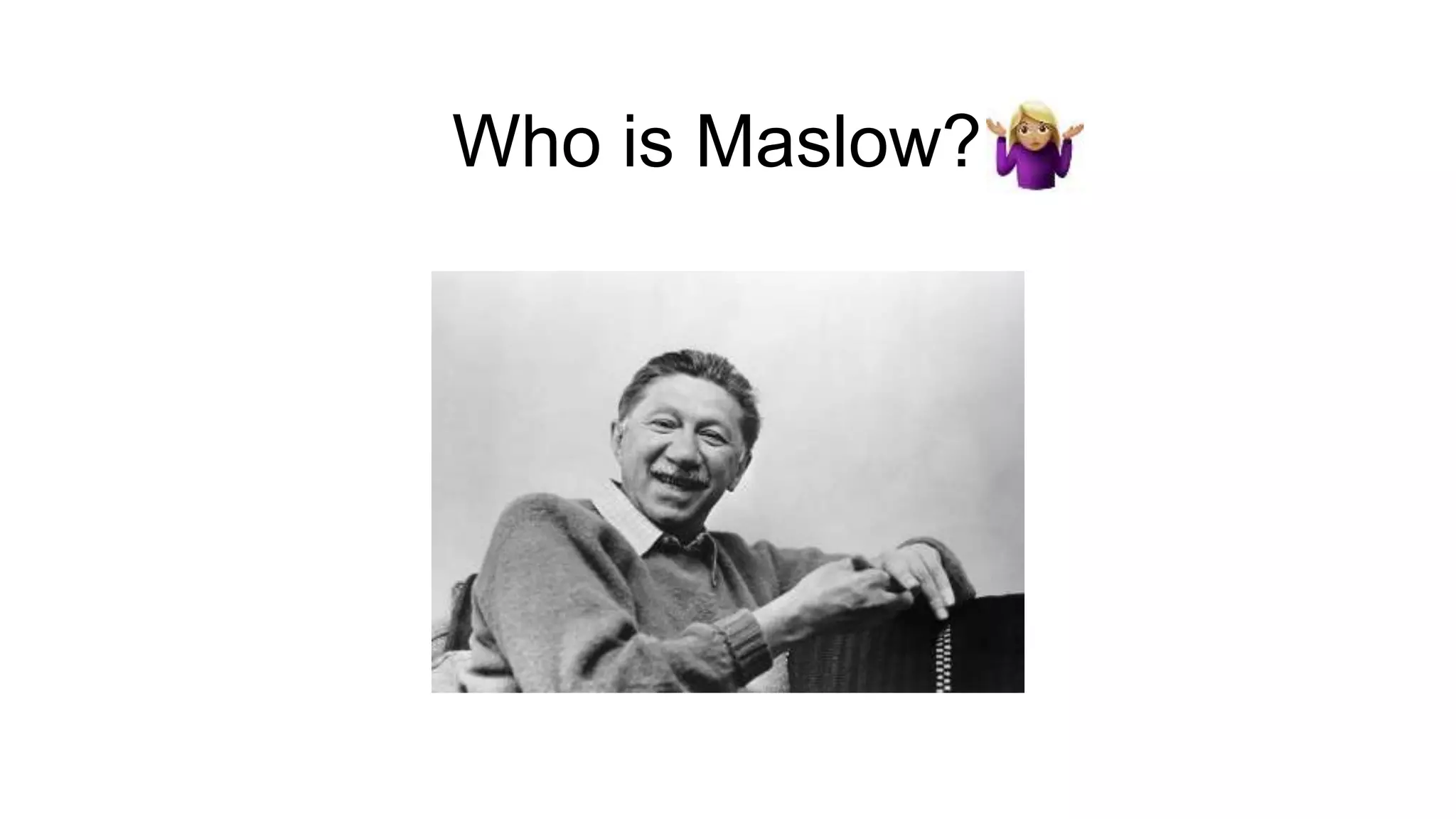
Who is Maslow?
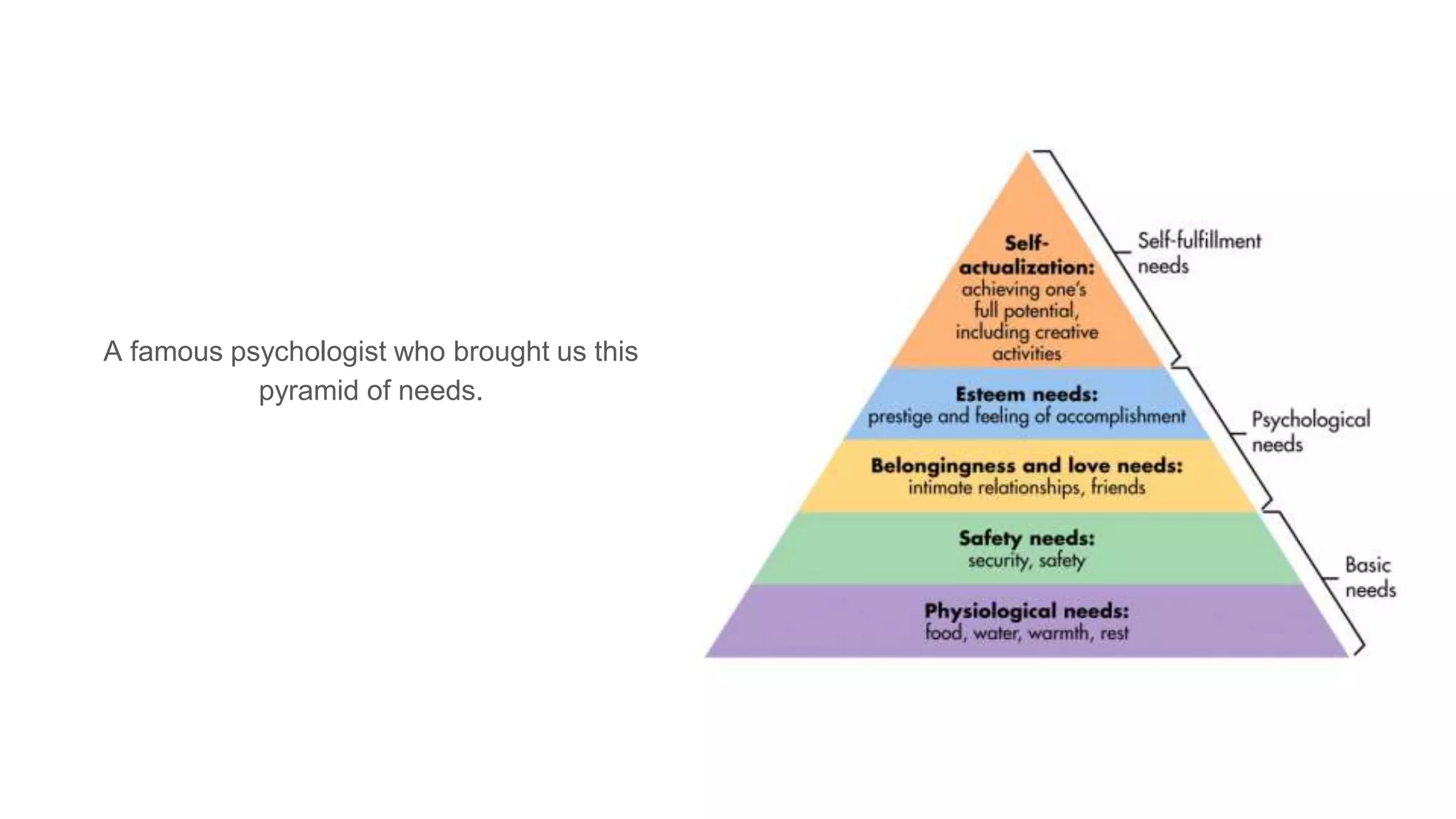
A famous psychologist who brought us this
pyramid of needs.
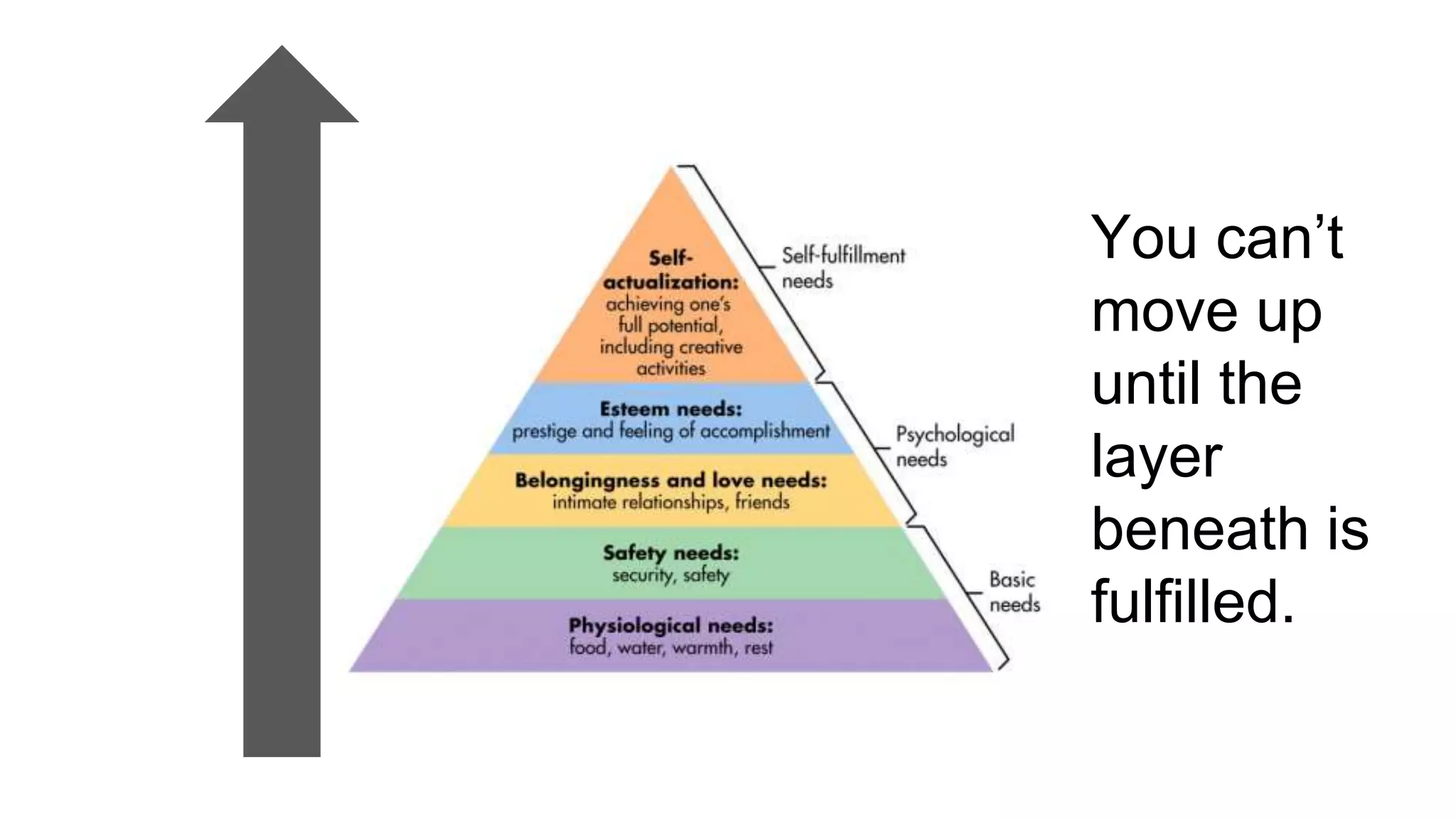
You can’t
move up
until the
layer
beneath is
fulfilled.
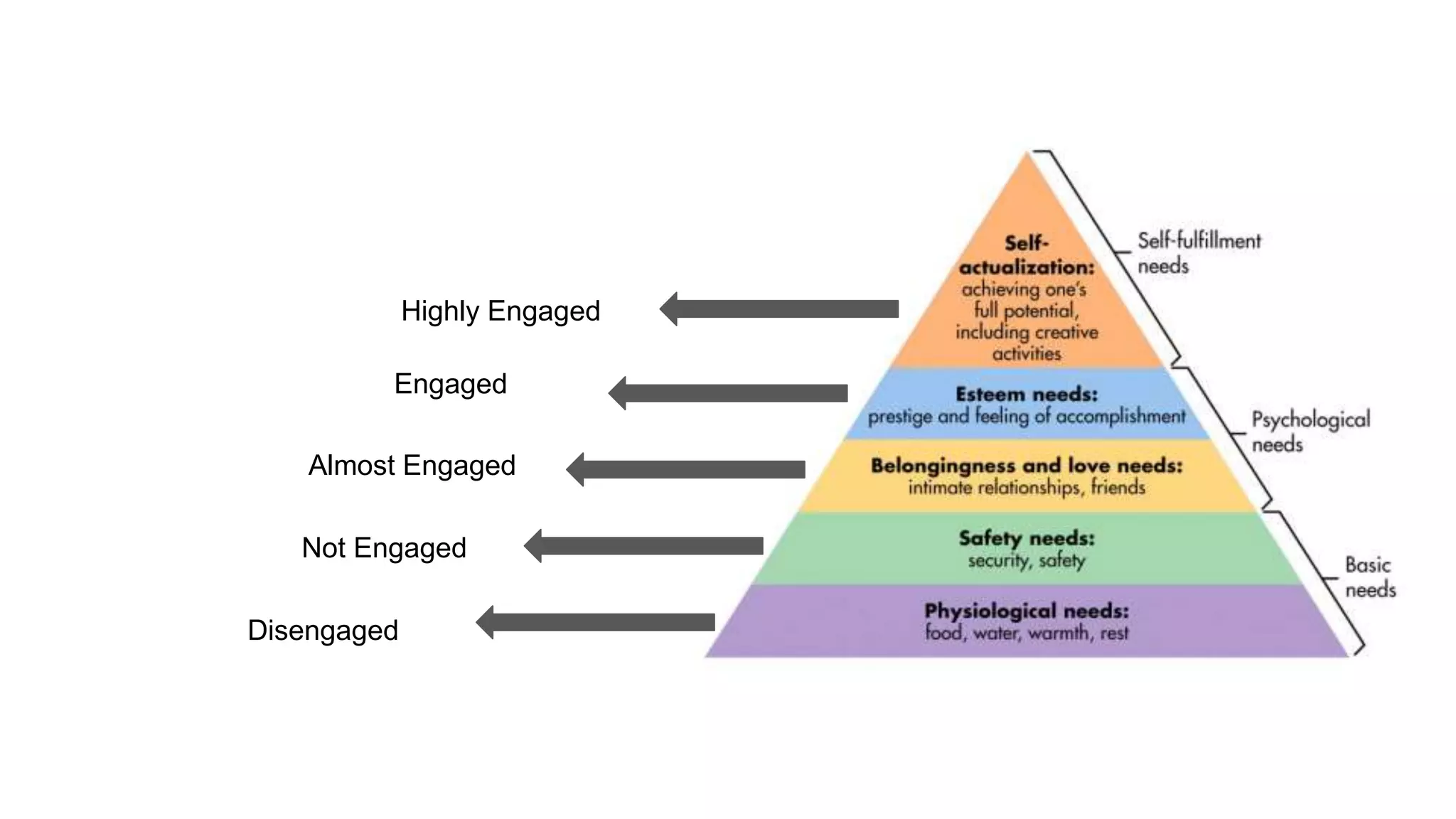
This lines up pretty well with employee
engagement.
Disengaged
Not Engaged
Almost Engaged
Engaged
Highly Engaged
We all know that employee engagement
increases productivity and reduces cost. 📈
With the low unemployment rate, employee
engagement is more important than ever.
Which is why you should consider how
Maslow’s hierarchy is impacting your employee
engagement.
It’s TOO important not to review!
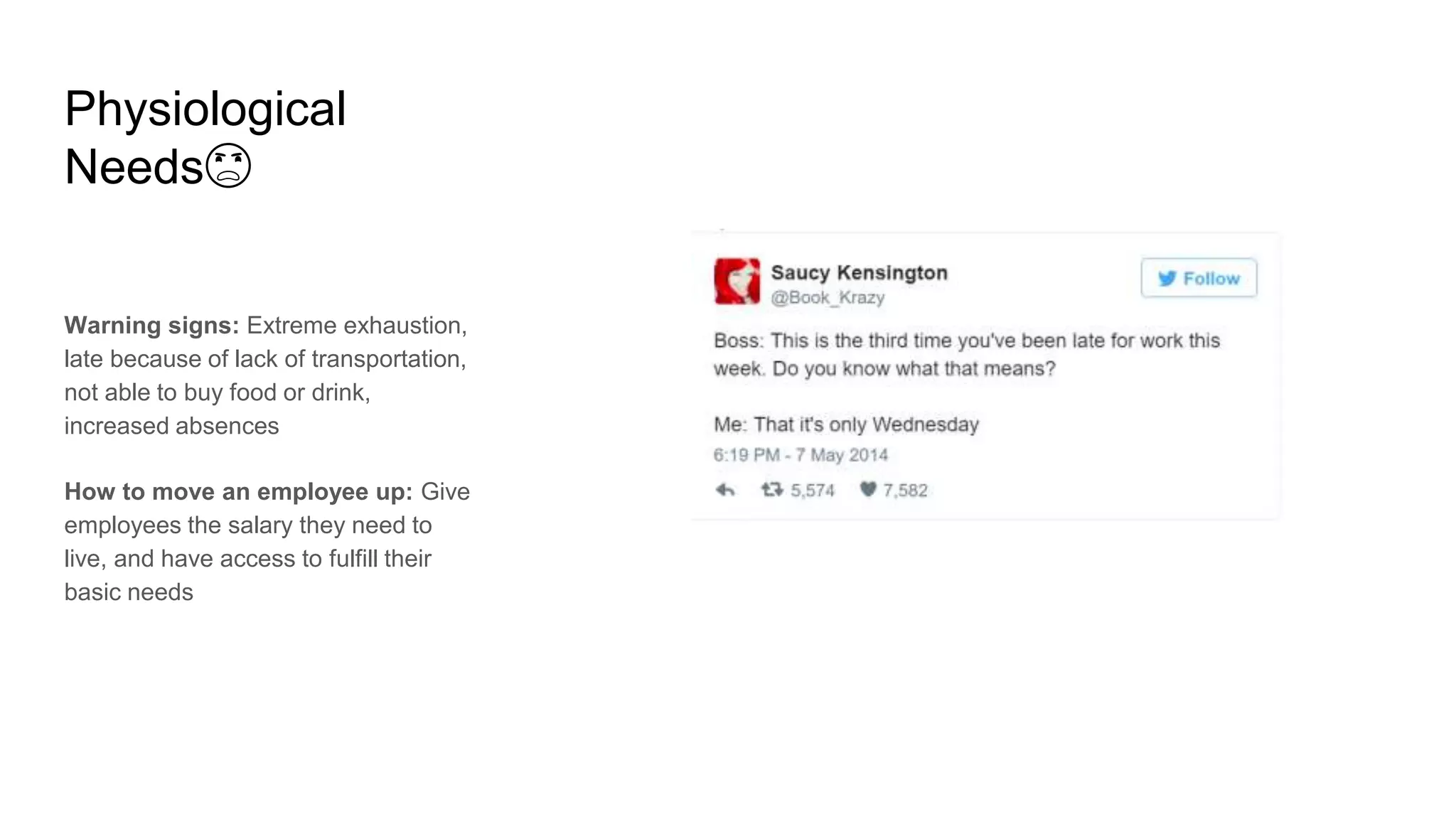
Physiological
Needs😦
Warning signs: Extreme exhaustion,
late because of lack of transportation,
not able to buy food or drink,
increased absences
How to move an employee up: Give
employees the salary they need to
live, and have access to fulfill their
basic needs
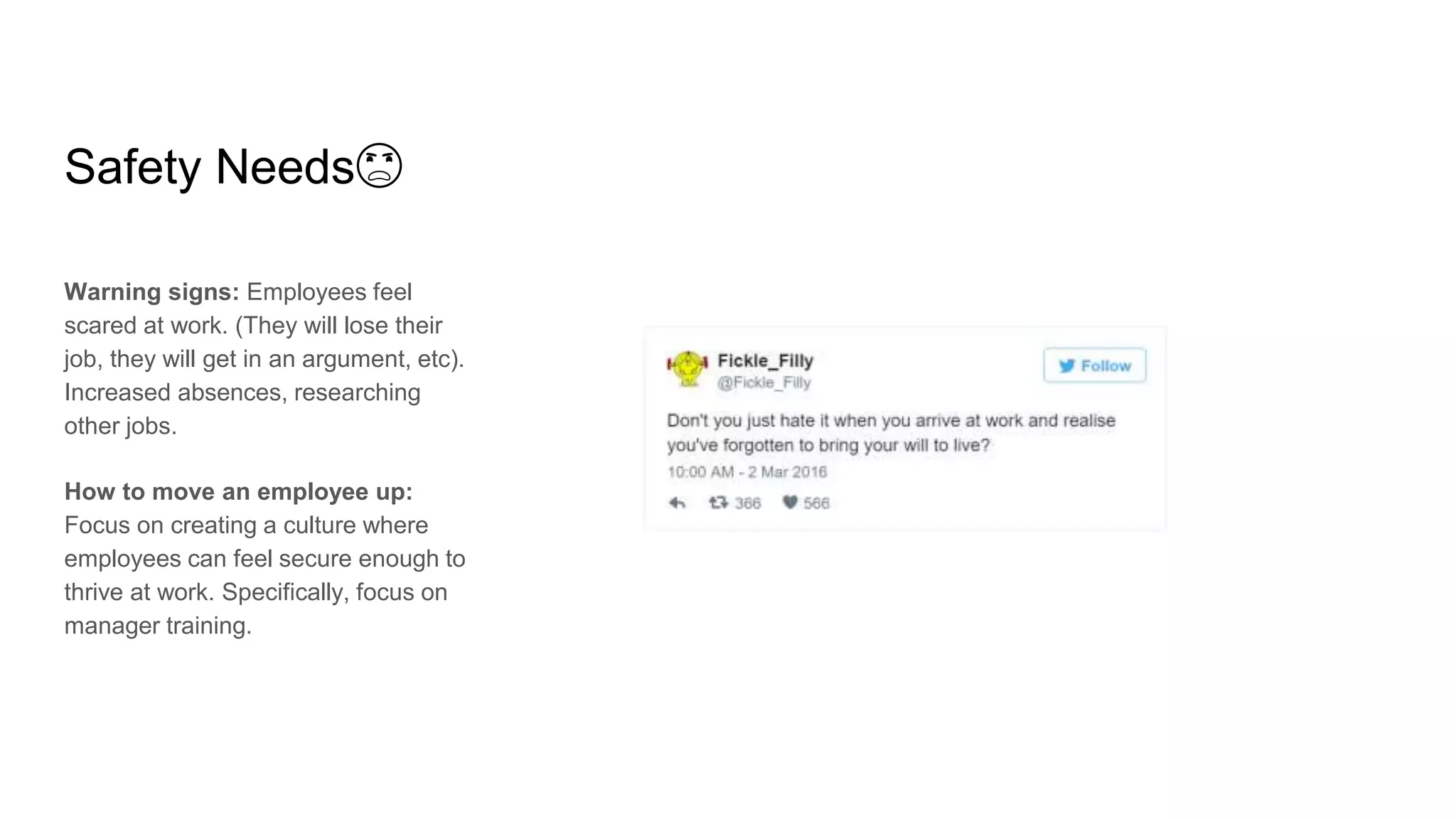
Safety Needs😦
Warning signs: Employees feel
scared at work. (They will lose their
job, they will get in an argument, etc).
Increased absences, researching
other jobs.
How to move an employee up:
Focus on creating a culture where
employees can feel secure enough to
thrive at work. Specifically, focus on
manager training.
Belongingness
Needs😀
Signs: Employees are engaged part
of the time. They could be tempted to
leave. They aren’t brand
ambassadors, and they don’t engage
in career development.
How to move an employee up:
Develop and encourage strong
relationships on your team. Encourage
managers to give praise and to build
personal bonds with their direct
reports.
Importance Needs
😀
Signs: Employees are engaged most
of the time. They would have to
receive a MUCH better job offer to
leave. They feel vital to the business.
Are very busy and usually highly
stressed.
How to move an employee up: Give
public recognition, utilize your
incentive program, and give them
flexibility to rule their own roast.
Self-actualization😀
Signs: These employees are
performing at the most optimal level.
They come to the table with ideas, are
leading, and inspire others.
How to move an employee up: Make
sure that these employees have all the
right resources, structure, support, and
tools that they need to thrive. Don’t
micromanage, let them blossom!
What is one change you can make with
your current employee engagement
strategy to match this?
Aley Brown
VP of Marketing @ Careerminds
@careermindsaley
abrown@careerminds.com
👋👋👋💃THANK YOU.

How to Increase Employee Engagement with Maslow's Hierarchy of Needs

  • 1.
    How Maslow’s Hierarchyof Needs Is Impacting Your Employee Engagement (And how to address it)
  • 2.
    Aley Brown VP ofMarketing @ Careerminds @careermindsaley abrown@careerminds.com 👋👋👋💃
  • 3.
    PS. Want theseslides? Send me an email: abrown@careerminds.com
  • 4.
  • 5.
    A famous psychologistwho brought us this pyramid of needs.
  • 6.
    You can’t move up untilthe layer beneath is fulfilled.
  • 7.
    This lines uppretty well with employee engagement.
  • 8.
  • 9.
    We all knowthat employee engagement increases productivity and reduces cost. 📈
  • 10.
    With the lowunemployment rate, employee engagement is more important than ever. Which is why you should consider how Maslow’s hierarchy is impacting your employee engagement. It’s TOO important not to review!
  • 11.
    Physiological Needs😦 Warning signs: Extremeexhaustion, late because of lack of transportation, not able to buy food or drink, increased absences How to move an employee up: Give employees the salary they need to live, and have access to fulfill their basic needs
  • 12.
    Safety Needs😦 Warning signs:Employees feel scared at work. (They will lose their job, they will get in an argument, etc). Increased absences, researching other jobs. How to move an employee up: Focus on creating a culture where employees can feel secure enough to thrive at work. Specifically, focus on manager training.
  • 13.
    Belongingness Needs😀 Signs: Employees areengaged part of the time. They could be tempted to leave. They aren’t brand ambassadors, and they don’t engage in career development. How to move an employee up: Develop and encourage strong relationships on your team. Encourage managers to give praise and to build personal bonds with their direct reports.
  • 14.
    Importance Needs 😀 Signs: Employeesare engaged most of the time. They would have to receive a MUCH better job offer to leave. They feel vital to the business. Are very busy and usually highly stressed. How to move an employee up: Give public recognition, utilize your incentive program, and give them flexibility to rule their own roast.
  • 15.
    Self-actualization😀 Signs: These employeesare performing at the most optimal level. They come to the table with ideas, are leading, and inspire others. How to move an employee up: Make sure that these employees have all the right resources, structure, support, and tools that they need to thrive. Don’t micromanage, let them blossom!
  • 16.
    What is onechange you can make with your current employee engagement strategy to match this?
  • 17.
    Aley Brown VP ofMarketing @ Careerminds @careermindsaley abrown@careerminds.com 👋👋👋💃THANK YOU.