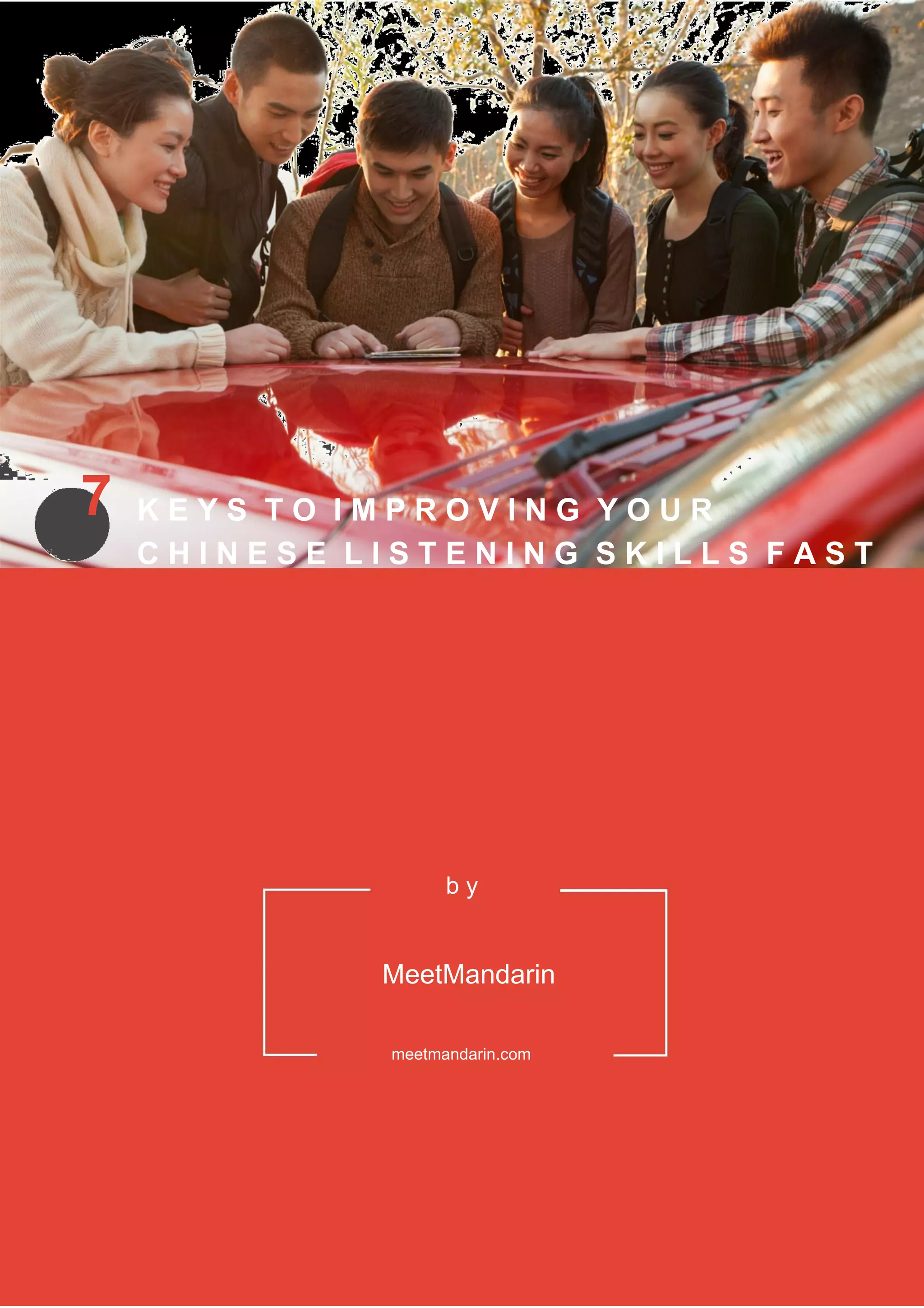
7 K E Y S T O I M P R O V I N G Y O U R
C H I N E S E L I S T E N I N G S K I L L S F A S T
b y
MeetMandarin
meetmandarin.com
1. Choose Appropriate Listening Materials
Listen to fairly easy AND slightly more
challenging content.
Stay motivated & focused by listening to short
clips on interesting & relevant topics.
Prepare for real world situations by listening to
naturally spoken Mandarin.
Try to find clips that come with a transcript so you can
compare what you heard to what was actually said.
2. Set Realistic Expectations and Stay Cool
Accept the fact that NOT understanding 100% the
first time you listen to something is 100% normal.
Relax and stay calm when you listen.
10
3. Repeat and Repeat More
Always listen to a clip MANY times before you
look at the transcript/subtitles.
Check your understanding and get better at
matching what you hear to how it’s written (in
pinyin or characters) by reading along with the
transcript as you listen to the clip a few more times.
Use short clips (15-75 seconds) to make it easy to
listen actively many times in a short period of time.
13
4. Get the Gist Before You Drill Down to the Details
It’s usually NOT necessary to understand every
word of what someone says to get their overall
message — Keywords + context goes a long way.
When you practise listening, focus on understanding
the gist (i.e. getting the message) first, before
concentrating on the details of the clip.
5. Guess Meaning from Context
Contextual clues can often help you figure out the
meaning of unknown words and get the gist of
what you’re listening to.
Develop the skill of using contextual clues by 1)
actively predicting what you will hear before you listen
and 2) using your knowledge of both the language and
the topic/situation to work out the meaning of words
and phrases that you don’t understand.
21
6. Learn the Right Vocabulary the Right Way
Be clear about what types of situations YOU most want
to be able to understand native speakers in and learn
vocabulary people use in those specific situations.
Learn new words in "chunks" (i.e. as part of a
phrase) rather than in isolation.
Always write down new words and phrases with tone
marks. Practice pronouncing both the sounds and the
tones as accurately as you possibly can. Get feedback!
25
7. Make Listening a Daily Habit
Break down a typical day into small blocks. Identify
blocks where you can listen actively.
Set an easily achievable goal (e.g. to listen actively
for 10 minutes a day) and plug your listening slot(s)
into your calendar as a recurring event.
When you get into the habit of achieving the "easy

How to improve mandarin listening skills

  • 1.
    7 K EY S T O I M P R O V I N G Y O U R C H I N E S E L I S T E N I N G S K I L L S F A S T b y MeetMandarin meetmandarin.com
  • 2.
    1. Choose AppropriateListening Materials Listen to fairly easy AND slightly more challenging content. Stay motivated & focused by listening to short clips on interesting & relevant topics. Prepare for real world situations by listening to naturally spoken Mandarin. Try to find clips that come with a transcript so you can compare what you heard to what was actually said.
  • 3.
    2. Set RealisticExpectations and Stay Cool Accept the fact that NOT understanding 100% the first time you listen to something is 100% normal. Relax and stay calm when you listen. 10
  • 4.
    3. Repeat andRepeat More Always listen to a clip MANY times before you look at the transcript/subtitles. Check your understanding and get better at matching what you hear to how it’s written (in pinyin or characters) by reading along with the transcript as you listen to the clip a few more times. Use short clips (15-75 seconds) to make it easy to listen actively many times in a short period of time. 13
  • 5.
    4. Get theGist Before You Drill Down to the Details It’s usually NOT necessary to understand every word of what someone says to get their overall message — Keywords + context goes a long way. When you practise listening, focus on understanding the gist (i.e. getting the message) first, before concentrating on the details of the clip.
  • 6.
    5. Guess Meaningfrom Context Contextual clues can often help you figure out the meaning of unknown words and get the gist of what you’re listening to. Develop the skill of using contextual clues by 1) actively predicting what you will hear before you listen and 2) using your knowledge of both the language and the topic/situation to work out the meaning of words and phrases that you don’t understand. 21
  • 7.
    6. Learn theRight Vocabulary the Right Way Be clear about what types of situations YOU most want to be able to understand native speakers in and learn vocabulary people use in those specific situations. Learn new words in "chunks" (i.e. as part of a phrase) rather than in isolation. Always write down new words and phrases with tone marks. Practice pronouncing both the sounds and the tones as accurately as you possibly can. Get feedback! 25
  • 8.
    7. Make Listeninga Daily Habit Break down a typical day into small blocks. Identify blocks where you can listen actively. Set an easily achievable goal (e.g. to listen actively for 10 minutes a day) and plug your listening slot(s) into your calendar as a recurring event. When you get into the habit of achieving the "easy