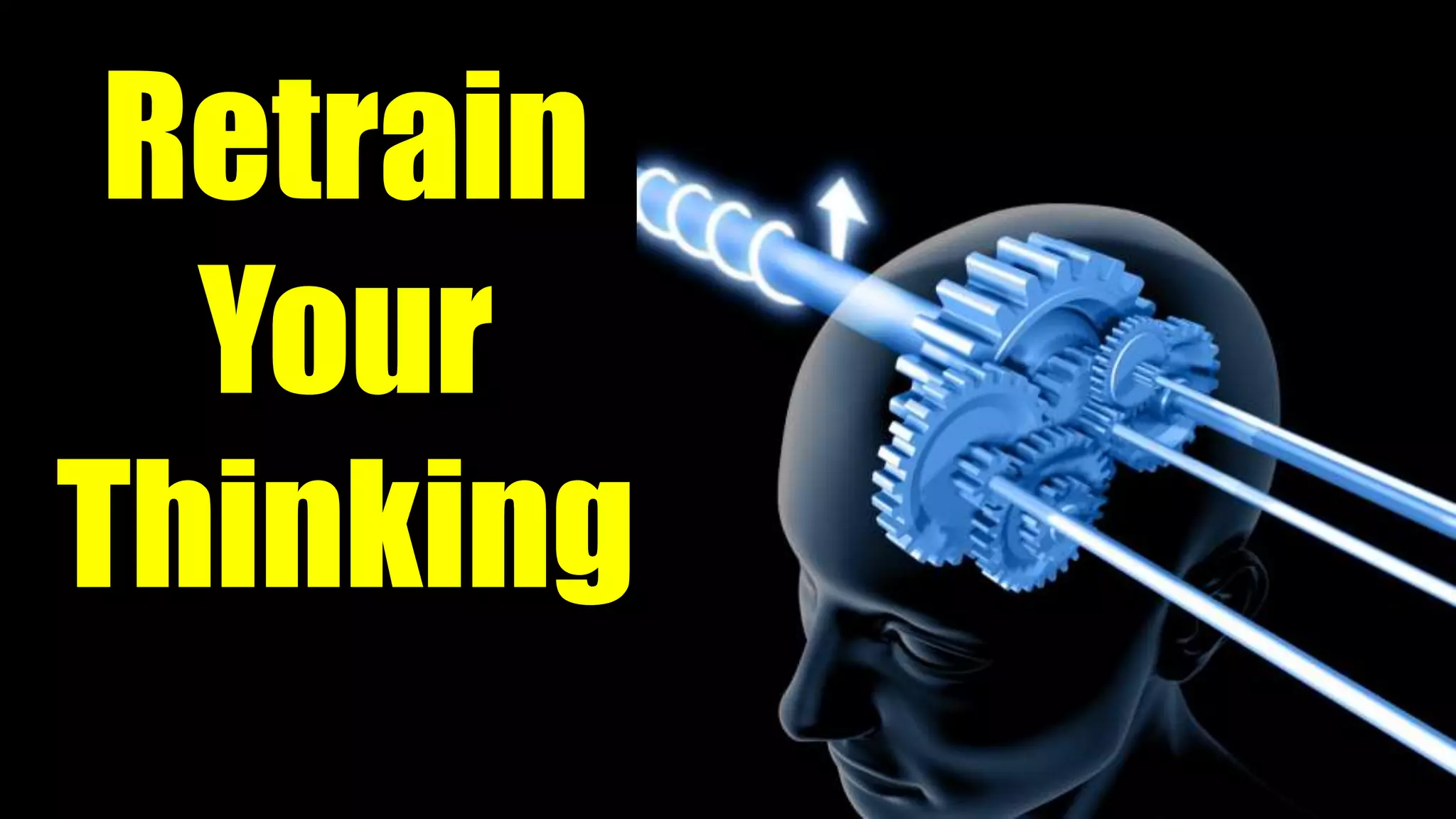
Retrain
Your
Thinking
When I was younger, I played a lot of
golf.
I had a set of hand-me-down clubs
that I used.
One thing that I always did was slice.
Meaning the ball would start going
straight, then it would curve to the
right.
It was so consistent that I would just
aim left, and then my ball would curve
back on track.
People I played with thought I was
nuts.
After all, anybody could see what the
problem was. Even me.
My grip was all wrong.
All I needed to do was change my grip,
and it would fix the problem.
The reason I never took the time to do
that is because I was too lazy.
Going from something that feels
natural, to something that feels
unnatural, wasn't something I was
willing to do.
However, had I kept that "unnatural"
feeling long enough, it would have
become natural.
And my balls wouldn't slice. They
would go straight.
But since I wasn't really serious about
golfing, I didn't see the point.
It was easier just to aim left.
Changing thinking patterns often
require the same amount of effort.
We think one way, and it gets us a less
than perfect result. So we
compensate.
But if we change our thinking we can
get a much better result.
Problem is that changing our thinking
isn't as easy as flipping a switch, as
many people believe.
It's just as hard as training in a new
golf swing, or learning a new song by
heart on any instrument.
Unfortunately, a lot of self-
development courses tend to imply
that new ways of thinking are "once
and done."
But in reality, new ways of thinking,
especially if you've been thinking the
"old way" for a while, can take some
time to "feel natural."
In the book Psycho Cybernetics,
there's an exercise where you tie your
shoes backwards. Meaning when you
tie the laces instead of going right over
left, you go left over right (or whatever
the opposite way is).
Something as simple as this takes a
while getting used to.
How do you change your thinking?
A great way is by daily journaling.
Take any situation where you didn't
"act" or "behave" like you wanted to.
Then rewrite that situation, as if you
behaved the way you DID want to.
Then visualize that NEW situation for a
minute or two.
If you did this every day, you'd soon be
thinking in much more resourceful
ways.
Which means you'd be behaving in a
way that would get you a lot more of
what you want, and a lot less of what
you didn't want.
The Interpersonal Resonance book is
filled with simple but extremely
powerful exercises that you can do on
daily basis, so you can rebuild your
communication skills from the ground
up.
Going from where you are now, to an
outgoing, charismatic communicator
that people can't get enough of.
mindpersuasion.com/ir/

How To Change The Way You Think

  • 1.
  • 2.
    When I wasyounger, I played a lot of golf.
  • 3.
    I had aset of hand-me-down clubs that I used.
  • 4.
    One thing thatI always did was slice.
  • 5.
    Meaning the ballwould start going straight, then it would curve to the right.
  • 6.
    It was soconsistent that I would just aim left, and then my ball would curve back on track.
  • 7.
    People I playedwith thought I was nuts.
  • 8.
    After all, anybodycould see what the problem was. Even me.
  • 9.
    My grip wasall wrong.
  • 10.
    All I neededto do was change my grip, and it would fix the problem.
  • 11.
    The reason Inever took the time to do that is because I was too lazy.
  • 12.
    Going from somethingthat feels natural, to something that feels unnatural, wasn't something I was willing to do.
  • 13.
    However, had Ikept that "unnatural" feeling long enough, it would have become natural.
  • 14.
    And my ballswouldn't slice. They would go straight.
  • 15.
    But since Iwasn't really serious about golfing, I didn't see the point.
  • 16.
    It was easierjust to aim left.
  • 17.
    Changing thinking patternsoften require the same amount of effort.
  • 18.
    We think oneway, and it gets us a less than perfect result. So we compensate.
  • 19.
    But if wechange our thinking we can get a much better result.
  • 20.
    Problem is thatchanging our thinking isn't as easy as flipping a switch, as many people believe.
  • 21.
    It's just ashard as training in a new golf swing, or learning a new song by heart on any instrument.
  • 22.
    Unfortunately, a lotof self- development courses tend to imply that new ways of thinking are "once and done."
  • 23.
    But in reality,new ways of thinking, especially if you've been thinking the "old way" for a while, can take some time to "feel natural."
  • 24.
    In the bookPsycho Cybernetics, there's an exercise where you tie your shoes backwards. Meaning when you tie the laces instead of going right over left, you go left over right (or whatever the opposite way is).
  • 25.
    Something as simpleas this takes a while getting used to.
  • 26.
    How do youchange your thinking?
  • 27.
    A great wayis by daily journaling.
  • 28.
    Take any situationwhere you didn't "act" or "behave" like you wanted to.
  • 29.
    Then rewrite thatsituation, as if you behaved the way you DID want to.
  • 30.
    Then visualize thatNEW situation for a minute or two.
  • 31.
    If you didthis every day, you'd soon be thinking in much more resourceful ways.
  • 32.
    Which means you'dbe behaving in a way that would get you a lot more of what you want, and a lot less of what you didn't want.
  • 33.
    The Interpersonal Resonancebook is filled with simple but extremely powerful exercises that you can do on daily basis, so you can rebuild your communication skills from the ground up.
  • 34.
    Going from whereyou are now, to an outgoing, charismatic communicator that people can't get enough of.
  • 35.