How to Build a Tech Community
Vance Lucas - vancelucas.com
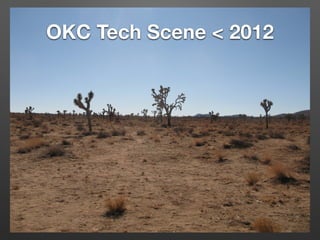
OKC Tech Scene < 2012
Story of OKC Tech Scene
• Before 2012
• Many past user groups inactive/dead
• Almost no tech scene or regular meetups
• Only active, well-supported UG was Java
• RedDirtJS, RedDirtRuby (one-time conferences)
(continued)
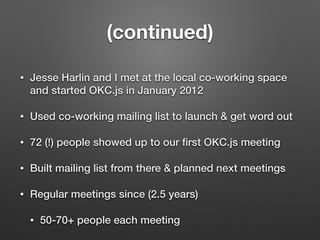
• Jesse Harlin and I met at the local co-working space
and started OKC.js in January 2012
• Used co-working mailing list to launch & get word out
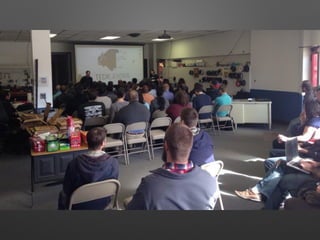
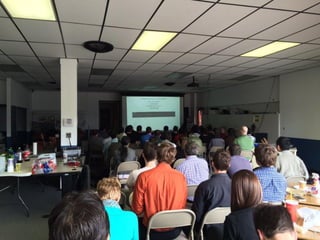
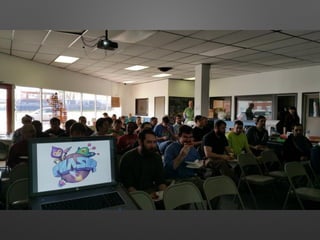
• 72 (!) people showed up to our first OKC.js meeting
• Built mailing list from there & planned next meetings
• Regular meetings since (2.5 years)
• 50-70+ people each meeting
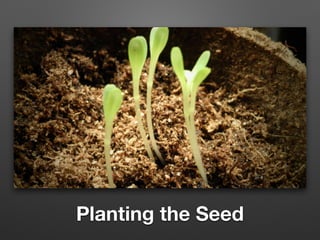
Planting the Seed
Start a User Group
• Should be group or tech with wide appeal that can
bring the community together
• General language or tech type - not too specific
• JavaScript is awesome for this (everyone uses it),
but any user group is better than none
• Popular tech stack may very depending on area
• Find a good co-founder (or two!) - don’t go it alone
Find a Great Location
• Local tech (or community-friendly) biz w/event space
• Public library with meeting rooms
• Vo-tech or local community college
• Co-working office or maker space
Plan Your Meetings
• Hardest thing to do on a continuing basis
• Announce meeting information in advance (1 week)
• Find speakers (email invitations work great)
• Lunch vs. After work - be consistent
• OKC.js uses lunch meetings w/free food
• Can be community-driven (lightning talks, town hall)
Build a Mailing List
• Pass around sheets of paper at your UG meetings (at
least the first few)
• Put a link to signup on your website
• Use something like MailChimp (free for 2k emails)
• Email meeting announcements & reminders day before
Find a Sponsor
• Allows you to provide free food at meetings - great for
getting more people to come
• Local tech startups/co’s are good
• Some recruiters are okay
• Can come from individuals also, esp. when starting
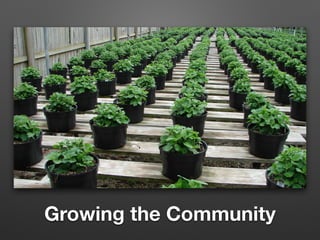
Growing the Community
–Jean Vanier, Community And Growth
“One of the marvelous things about community
is that it enables us to welcome and help
people in a way we couldn't as individuals.
When we pool our strength and share the work
and responsibility, we can welcome many
people, even those in deep distress, and
perhaps help them find self-confidence and
inner healing.”
Goal: Remove Risk and Fear
Secure a Location
• Parter with a meeting space / location / company to be
the “community hub”
• May cost $$; look for mutually beneficial partnership
• Should have ability to host multiple user group
meetings each month (need flexibility)
Plan to Help Others
• Setup a plan to help other user groups start
• Find space or time that works to meet
• Lots of setup: Website, Mailing list, Twitter,
Facebook, etc.
• How to find a sponsor
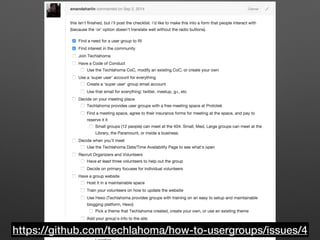
https://github.com/techlahoma/how-to-usergroups/issues/4
Setting Boundaries
• You need a code of conduct
• https://github.com/techlahoma/CodeofConduct
• Be open to all types of tech-related user groups - not
everyone lives and breathes open source
• The community does not belong to you, even if you
had a significant role in starting it
–Gene Roddenberry
“If man is to survive, he will have learned to
take a delight in the essential differences
between men and between cultures. He will
learn that differences in ideas and attitudes are
a delight, part of life's exciting variety, not
something to fear.”
Start a Non-Profit
• Consider starting a non-profit to benefit all user groups
in the area
• Expands opportunities for support/donations
• Legitimizes your efforts
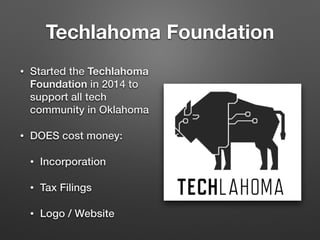
Techlahoma Foundation
• Started the Techlahoma
Foundation in 2014 to
support all tech
community in Oklahoma
• DOES cost money:
• Incorporation
• Tax Filings
• Logo / Website
Start a Conference
• VERY time-intensive - consider partnering if you can
• Risky to attempt before community is large
• Start with a one-day event with 1-2 tracks
• Start with mostly or only local speakers first
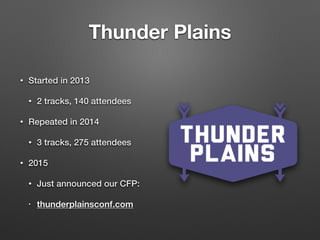
Thunder Plains
• Started in 2013
• 2 tracks, 140 attendees
• Repeated in 2014
• 3 tracks, 275 attendees
• 2015
• Just announced our CFP:
• thunderplainsconf.com
That’s All You Have to Do!
Easy, right?
Community Starts With You
Thanks!
OKC.js: http://okcjs.com
Techlahoma Foundation: http://techlahoma.org
Vance Lucas: http://vancelucas.com | Twitter: @vlucas

How to Build a Tech Community

  • 1.
    How to Builda Tech Community Vance Lucas - vancelucas.com
  • 2.
  • 3.
    Story of OKCTech Scene • Before 2012 • Many past user groups inactive/dead • Almost no tech scene or regular meetups • Only active, well-supported UG was Java • RedDirtJS, RedDirtRuby (one-time conferences)
  • 4.
    (continued) • Jesse Harlinand I met at the local co-working space and started OKC.js in January 2012 • Used co-working mailing list to launch & get word out • 72 (!) people showed up to our first OKC.js meeting • Built mailing list from there & planned next meetings • Regular meetings since (2.5 years) • 50-70+ people each meeting
  • 8.
  • 9.
    Start a UserGroup • Should be group or tech with wide appeal that can bring the community together • General language or tech type - not too specific • JavaScript is awesome for this (everyone uses it), but any user group is better than none • Popular tech stack may very depending on area • Find a good co-founder (or two!) - don’t go it alone
  • 10.
    Find a GreatLocation • Local tech (or community-friendly) biz w/event space • Public library with meeting rooms • Vo-tech or local community college • Co-working office or maker space
  • 11.
    Plan Your Meetings •Hardest thing to do on a continuing basis • Announce meeting information in advance (1 week) • Find speakers (email invitations work great) • Lunch vs. After work - be consistent • OKC.js uses lunch meetings w/free food • Can be community-driven (lightning talks, town hall)
  • 12.
    Build a MailingList • Pass around sheets of paper at your UG meetings (at least the first few) • Put a link to signup on your website • Use something like MailChimp (free for 2k emails) • Email meeting announcements & reminders day before
  • 13.
    Find a Sponsor •Allows you to provide free food at meetings - great for getting more people to come • Local tech startups/co’s are good • Some recruiters are okay • Can come from individuals also, esp. when starting
  • 14.
  • 15.
    –Jean Vanier, CommunityAnd Growth “One of the marvelous things about community is that it enables us to welcome and help people in a way we couldn't as individuals. When we pool our strength and share the work and responsibility, we can welcome many people, even those in deep distress, and perhaps help them find self-confidence and inner healing.”
  • 16.
  • 17.
    Secure a Location •Parter with a meeting space / location / company to be the “community hub” • May cost $$; look for mutually beneficial partnership • Should have ability to host multiple user group meetings each month (need flexibility)
  • 18.
    Plan to HelpOthers • Setup a plan to help other user groups start • Find space or time that works to meet • Lots of setup: Website, Mailing list, Twitter, Facebook, etc. • How to find a sponsor
  • 19.
  • 20.
    Setting Boundaries • Youneed a code of conduct • https://github.com/techlahoma/CodeofConduct • Be open to all types of tech-related user groups - not everyone lives and breathes open source • The community does not belong to you, even if you had a significant role in starting it
  • 21.
    –Gene Roddenberry “If manis to survive, he will have learned to take a delight in the essential differences between men and between cultures. He will learn that differences in ideas and attitudes are a delight, part of life's exciting variety, not something to fear.”
  • 22.
    Start a Non-Profit •Consider starting a non-profit to benefit all user groups in the area • Expands opportunities for support/donations • Legitimizes your efforts
  • 23.
    Techlahoma Foundation • Startedthe Techlahoma Foundation in 2014 to support all tech community in Oklahoma • DOES cost money: • Incorporation • Tax Filings • Logo / Website
  • 24.
    Start a Conference •VERY time-intensive - consider partnering if you can • Risky to attempt before community is large • Start with a one-day event with 1-2 tracks • Start with mostly or only local speakers first
  • 25.
    Thunder Plains • Startedin 2013 • 2 tracks, 140 attendees • Repeated in 2014 • 3 tracks, 275 attendees • 2015 • Just announced our CFP: • thunderplainsconf.com
  • 27.
    That’s All YouHave to Do! Easy, right?
  • 28.
  • 29.
    Thanks! OKC.js: http://okcjs.com Techlahoma Foundation:http://techlahoma.org Vance Lucas: http://vancelucas.com | Twitter: @vlucas