Download to read offline
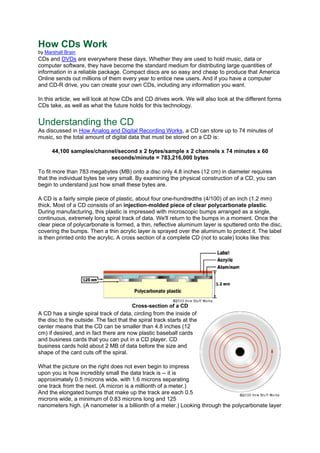
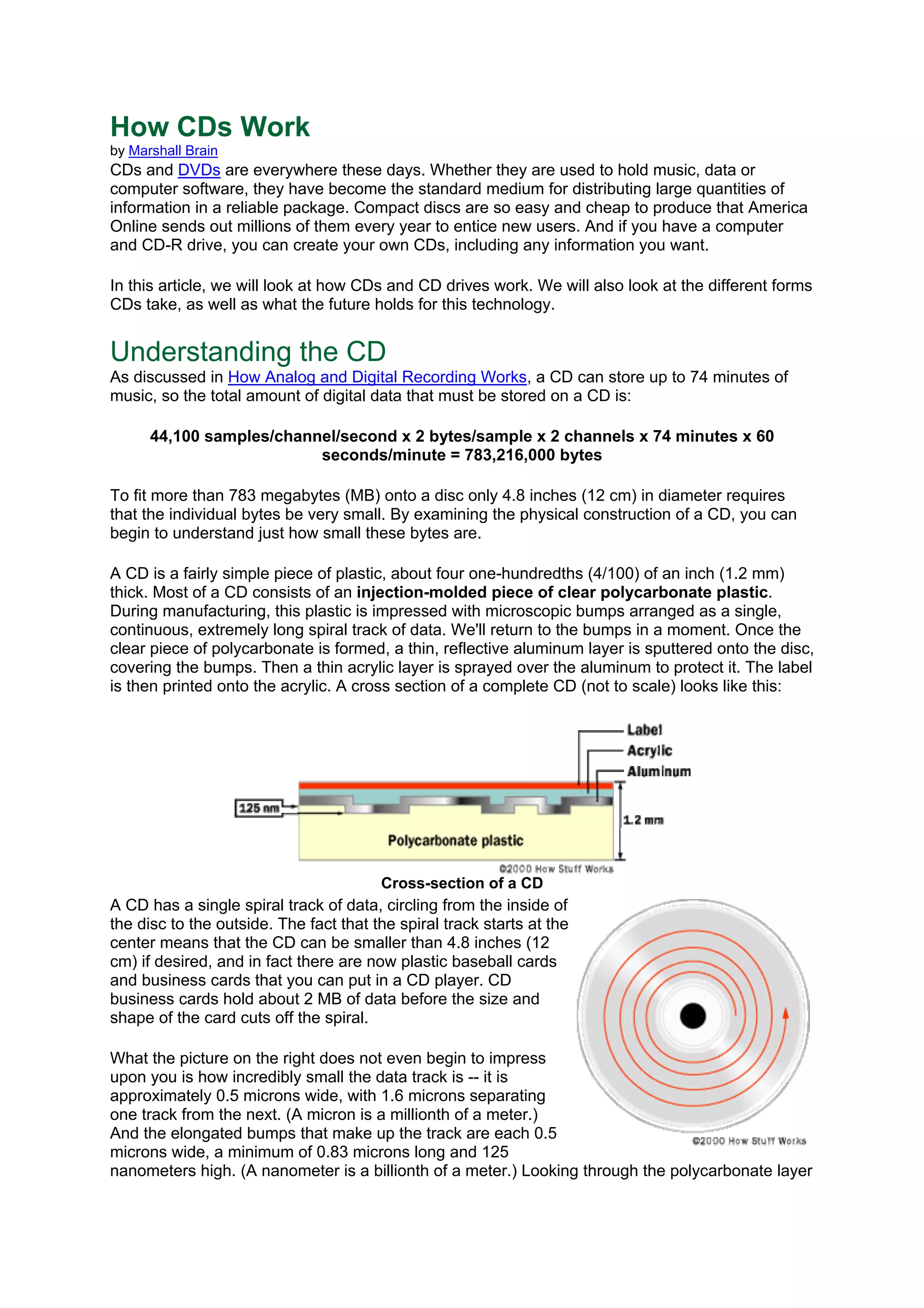
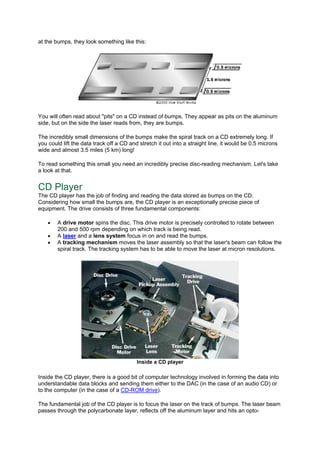
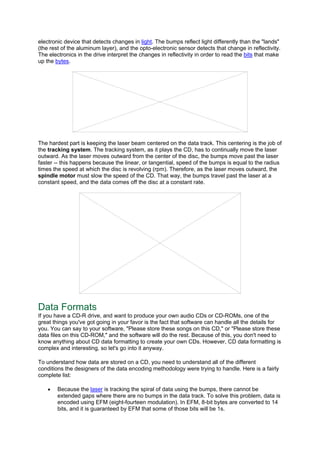


CDs store large amounts of digital data by encoding it as microscopic bumps arranged in a continuous spiral track on the disc. A CD player precisely reads these bumps using a laser beam that detects changes in reflectivity. It tracks along the spiral from the inside to outside of the disc while adjusting the rotation speed to keep the data rate constant. Complex error-correcting encoding schemes are used to ensure reliable reading despite defects or errors.


