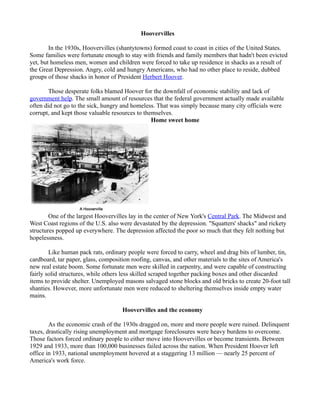
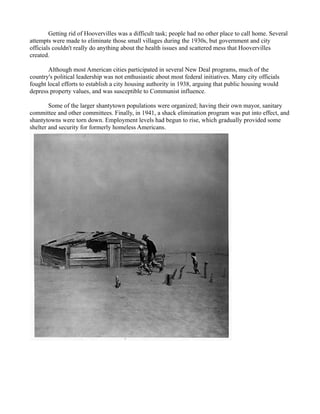
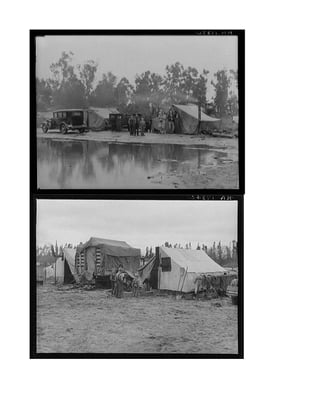
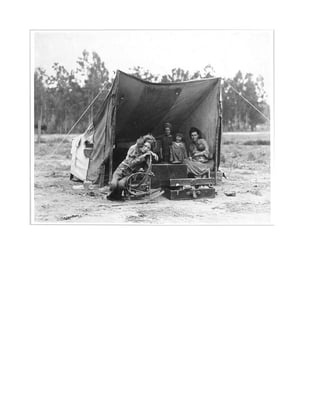
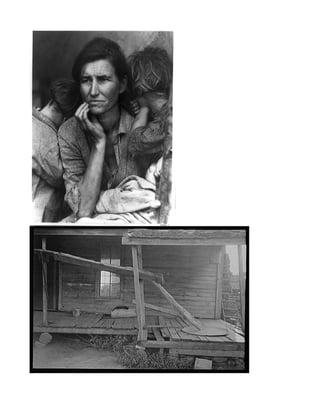
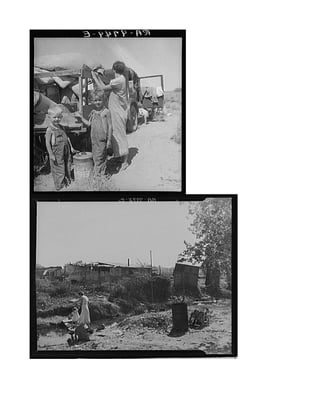
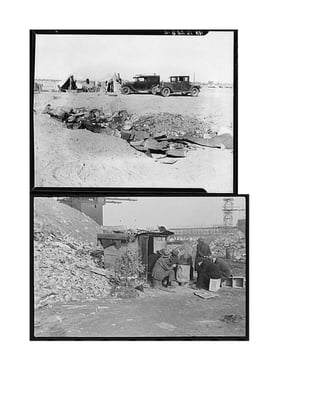
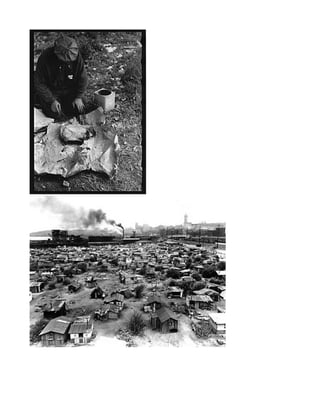
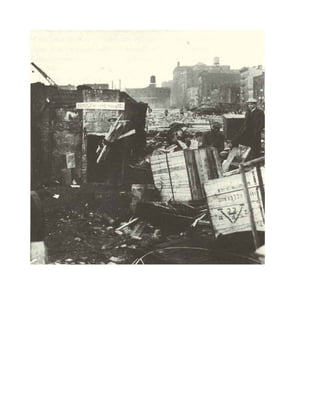
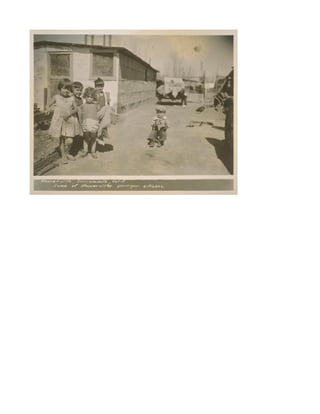
In the 1930s, due to the economic devastation of the Great Depression, shantytowns known as Hoovervilles emerged across the United States as unemployed people lost their homes and had no place else to live. These makeshift communities, made up of scrap materials like cardboard and tin, provided shelter for homeless families and individuals who blamed President Hoover for the economic downturn. The largest Hooverville was located in New York City's Central Park and housed thousands. Efforts to eliminate Hoovervilles in the 1930s proved difficult as the communities persisted due to lack of alternatives for residents. It was not until 1941, after employment levels began rising again during World War II, that shantytowns were finally torn down


![One-way Ticket. Short Stories [1].pdf](https://cdn.slidesharecdn.com/ss_thumbnails/one-wayticket-220628124136-e3875e0c-thumbnail.jpg?width=640&height=640&fit=bounds)


