Holistic Well-Being
Infectious
• means communicable/contagious by infection
  from one person to another or from one part of
  the body to another
• Examples include:
  o HIV/AIDS
  o Cholera
  o The common cold
  o Hepatitis A-E
  o Chicken pox
  o Malaria
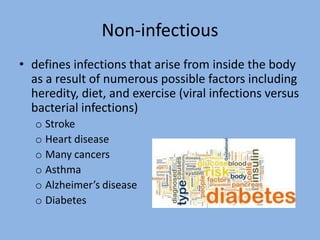
Non-infectious
• defines infections that arise from inside the body
  as a result of numerous possible factors including
  heredity, diet, and exercise (viral infections versus
  bacterial infections)
   o Stroke
   o Heart disease
   o Many cancers
   o Asthma
   o Alzheimer’s disease
   o Diabetes
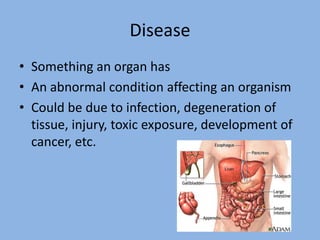
Disease
• Something an organ has
• An abnormal condition affecting an organism
• Could be due to infection, degeneration of
  tissue, injury, toxic exposure, development of
  cancer, etc.
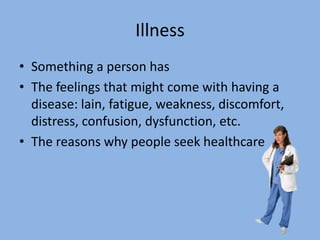
Illness
• Something a person has
• The feelings that might come with having a
  disease: lain, fatigue, weakness, discomfort,
  distress, confusion, dysfunction, etc.
• The reasons why people seek healthcare
How the body stays healthy
• intact skin
• understanding portals/openings of entry such
  as eyes and mouth
• immune system
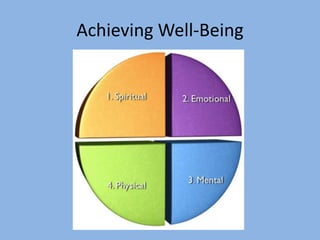
Achieving Well-Being
Questions for Deeper Understanding
• Where do new diseases come from?
• Why do people die from a disease when some
  people can be cured?
• Why are some diseases more common in
  adults than in children and vice versa?
• Can a person have a disease and still be
  healthy?
Resources
• Local Sources
  o Saskatoon Health Region
• Provincial Sources
  o Government of Saskatchewan
• National Sources
  o Government of Canada
• An interesting read
  o Illness vs. Disease

Holistic well being

  • 1.
  • 2.
    Infectious • means communicable/contagiousby infection from one person to another or from one part of the body to another • Examples include: o HIV/AIDS o Cholera o The common cold o Hepatitis A-E o Chicken pox o Malaria
  • 3.
    Non-infectious • defines infectionsthat arise from inside the body as a result of numerous possible factors including heredity, diet, and exercise (viral infections versus bacterial infections) o Stroke o Heart disease o Many cancers o Asthma o Alzheimer’s disease o Diabetes
  • 4.
    Disease • Something anorgan has • An abnormal condition affecting an organism • Could be due to infection, degeneration of tissue, injury, toxic exposure, development of cancer, etc.
  • 5.
    Illness • Something aperson has • The feelings that might come with having a disease: lain, fatigue, weakness, discomfort, distress, confusion, dysfunction, etc. • The reasons why people seek healthcare
  • 6.
    How the bodystays healthy • intact skin • understanding portals/openings of entry such as eyes and mouth • immune system
  • 7.
  • 8.
    Questions for DeeperUnderstanding • Where do new diseases come from? • Why do people die from a disease when some people can be cured? • Why are some diseases more common in adults than in children and vice versa? • Can a person have a disease and still be healthy?
  • 9.
    Resources • Local Sources o Saskatoon Health Region • Provincial Sources o Government of Saskatchewan • National Sources o Government of Canada • An interesting read o Illness vs. Disease