How our thinking shapes the way we
approach historical inquiry

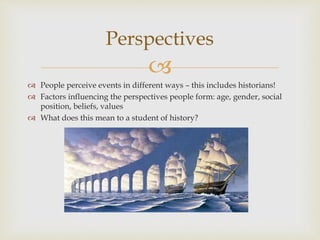
 People perceive events in different ways – this includes historians!
 Factors influencing the perspectives people form: age, gender, social
position, beliefs, values
 What does this mean to a student of history?
Perspectives

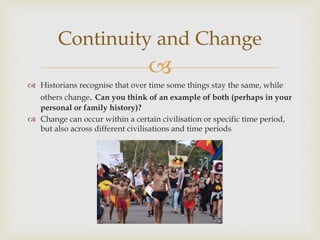
 Historians recognise that over time some things stay the same, while
others change. Can you think of an example of both (perhaps in your
personal or family history)?
 Change can occur within a certain civilisation or specific time period,
but also across different civilisations and time periods
Continuity and Change

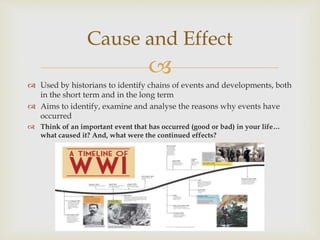
 Used by historians to identify chains of events and developments, both
in the short term and in the long term
 Aims to identify, examine and analyse the reasons why events have
occurred
 Think of an important event that has occurred (good or bad) in your life…
what caused it? And, what were the continued effects?
Cause and Effect

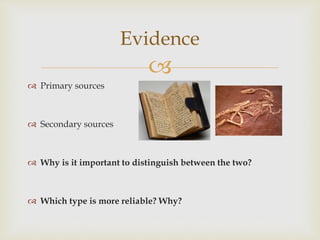
 Primary sources
 Secondary sources
 Why is it important to distinguish between the two?
 Which type is more reliable? Why?
Evidence

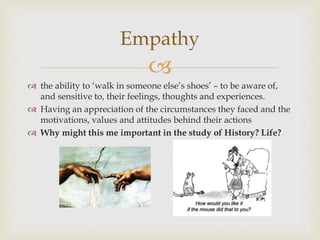
 the ability to ‘walk in someone else’s shoes’ – to be aware of,
and sensitive to, their feelings, thoughts and experiences.
 Having an appreciation of the circumstances they faced and the
motivations, values and attitudes behind their actions
 Why might this me important in the study of History? Life?
Empathy

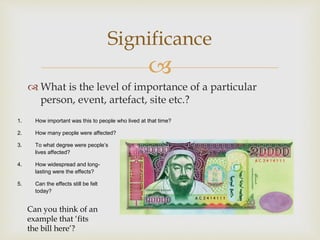
 What is the level of importance of a particular
person, event, artefact, site etc.?
Significance
1. How important was this to people who lived at that time?
2. How many people were affected?
3. To what degree were people’s
lives affected?
4. How widespread and long-
lasting were the effects?
5. Can the effects still be felt
today?
Can you think of an
example that ‘fits
the bill here’?

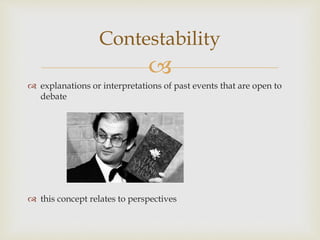
 explanations or interpretations of past events that are open to
debate
 this concept relates to perspectives
Contestability

Historical concepts

  • 1.
    How our thinkingshapes the way we approach historical inquiry
  • 2.
      People perceiveevents in different ways – this includes historians!  Factors influencing the perspectives people form: age, gender, social position, beliefs, values  What does this mean to a student of history? Perspectives
  • 3.
      Historians recognisethat over time some things stay the same, while others change. Can you think of an example of both (perhaps in your personal or family history)?  Change can occur within a certain civilisation or specific time period, but also across different civilisations and time periods Continuity and Change
  • 4.
      Used byhistorians to identify chains of events and developments, both in the short term and in the long term  Aims to identify, examine and analyse the reasons why events have occurred  Think of an important event that has occurred (good or bad) in your life… what caused it? And, what were the continued effects? Cause and Effect
  • 5.
      Primary sources Secondary sources  Why is it important to distinguish between the two?  Which type is more reliable? Why? Evidence
  • 6.
      the abilityto ‘walk in someone else’s shoes’ – to be aware of, and sensitive to, their feelings, thoughts and experiences.  Having an appreciation of the circumstances they faced and the motivations, values and attitudes behind their actions  Why might this me important in the study of History? Life? Empathy
  • 7.
      What isthe level of importance of a particular person, event, artefact, site etc.? Significance 1. How important was this to people who lived at that time? 2. How many people were affected? 3. To what degree were people’s lives affected? 4. How widespread and long- lasting were the effects? 5. Can the effects still be felt today? Can you think of an example that ‘fits the bill here’?
  • 8.
      explanations orinterpretations of past events that are open to debate  this concept relates to perspectives Contestability