INTRODUCTION TO
HISTORY
Lecture 1
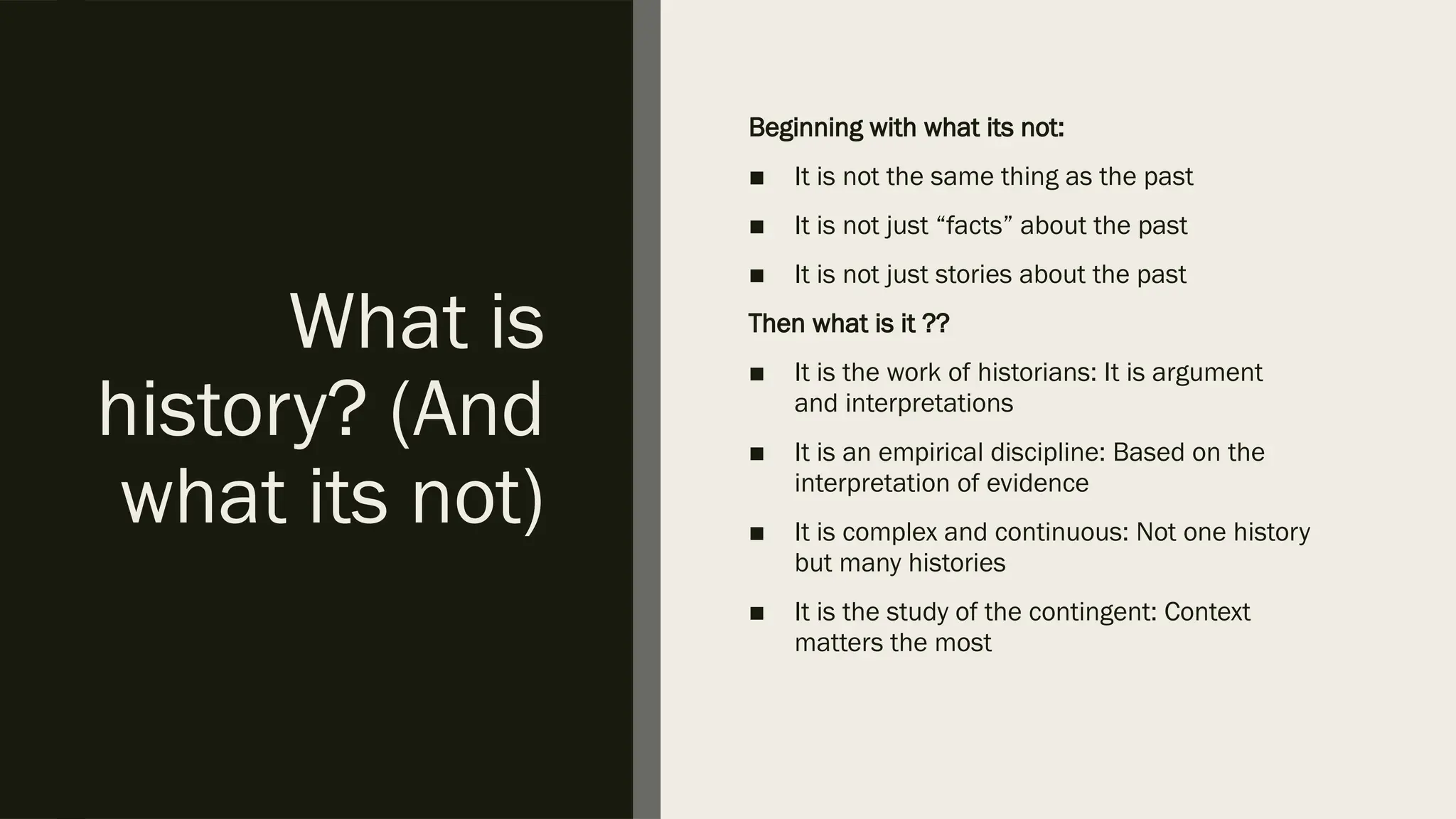
What is
history? (And
what its not)
Beginning with what its not:
■ It is not the same thing as the past
■ It is not just “facts” about the past
■ It is not just stories about the past
Then what is it ??
■ It is the work of historians: It is argument
and interpretations
■ It is an empirical discipline: Based on the
interpretation of evidence
■ It is complex and continuous: Not one history
but many histories
■ It is the study of the contingent: Context
matters the most
What is
historiography?
(Not the same
as history)
■ Two approaches to understanding it:
1) “the history of history”
 A narrative account of how the discipline has
evolved
 Includes ‘big names’ and sub-fields
 A study of the changing interpretations of
the past
2) Historical writing on a particular topic
 Includes all the work by historians on a
particular question/topic
 Focuses on approaches
 Pretty much like a literature review
Why Study History?
■ It helps us make sense of the present
■ Builds empathy
■ Can be intensely personal
■ It can feel like solving a puzzle
■ https://www.youtube.com/watch?v=yxMKGi61N_U
■ Everything has a history
■ https://epaper.hindustantimes.com/delhi?eddate=31/07/2025&pageid=916735
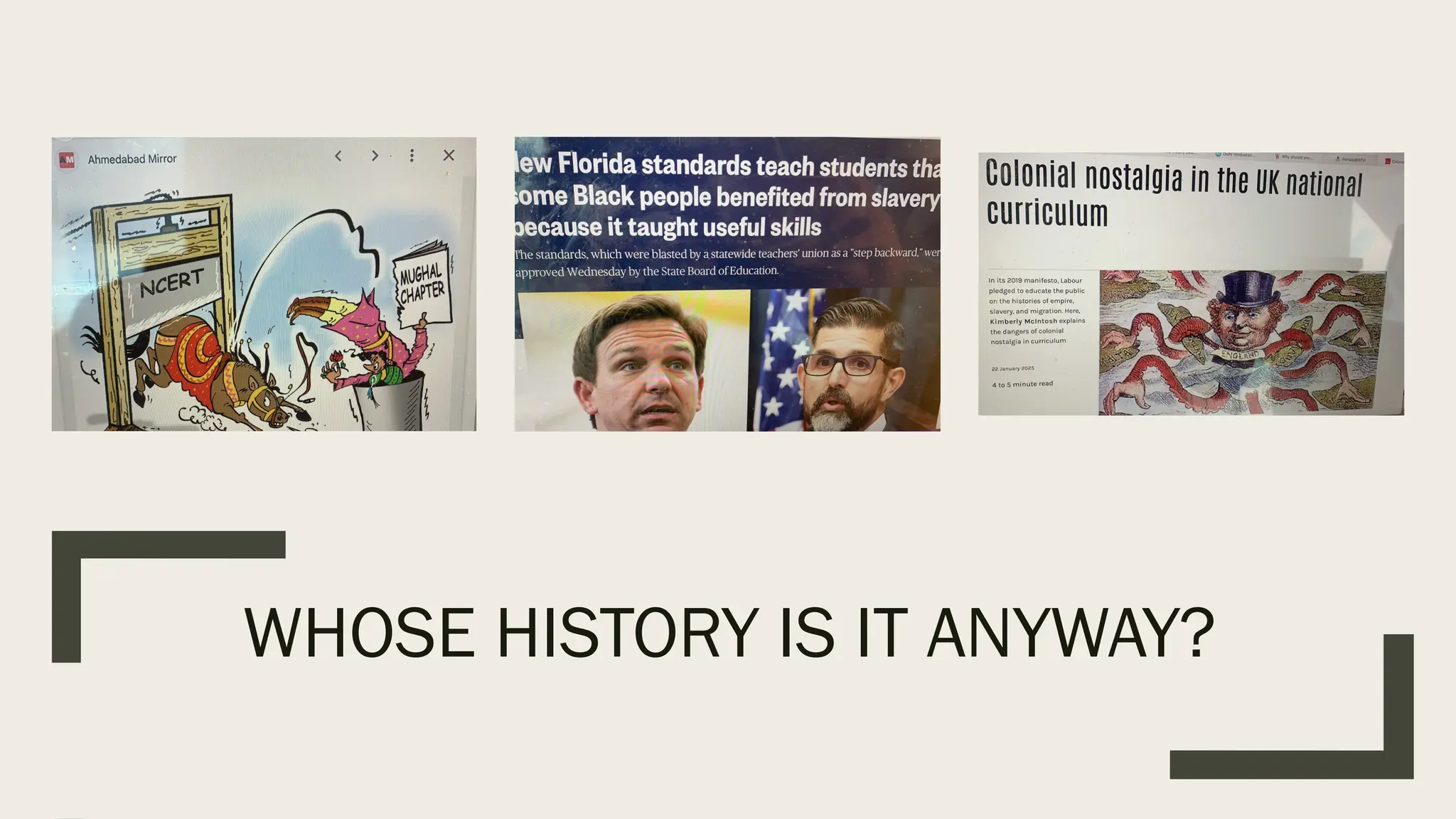
WHOSE HISTORY IS IT ANYWAY?
What do historians do?
■ Asking questions about the past
■ Searching for evidence : Primary and secondary sources
■ Making sense of the evidence
■ Narrativising the past
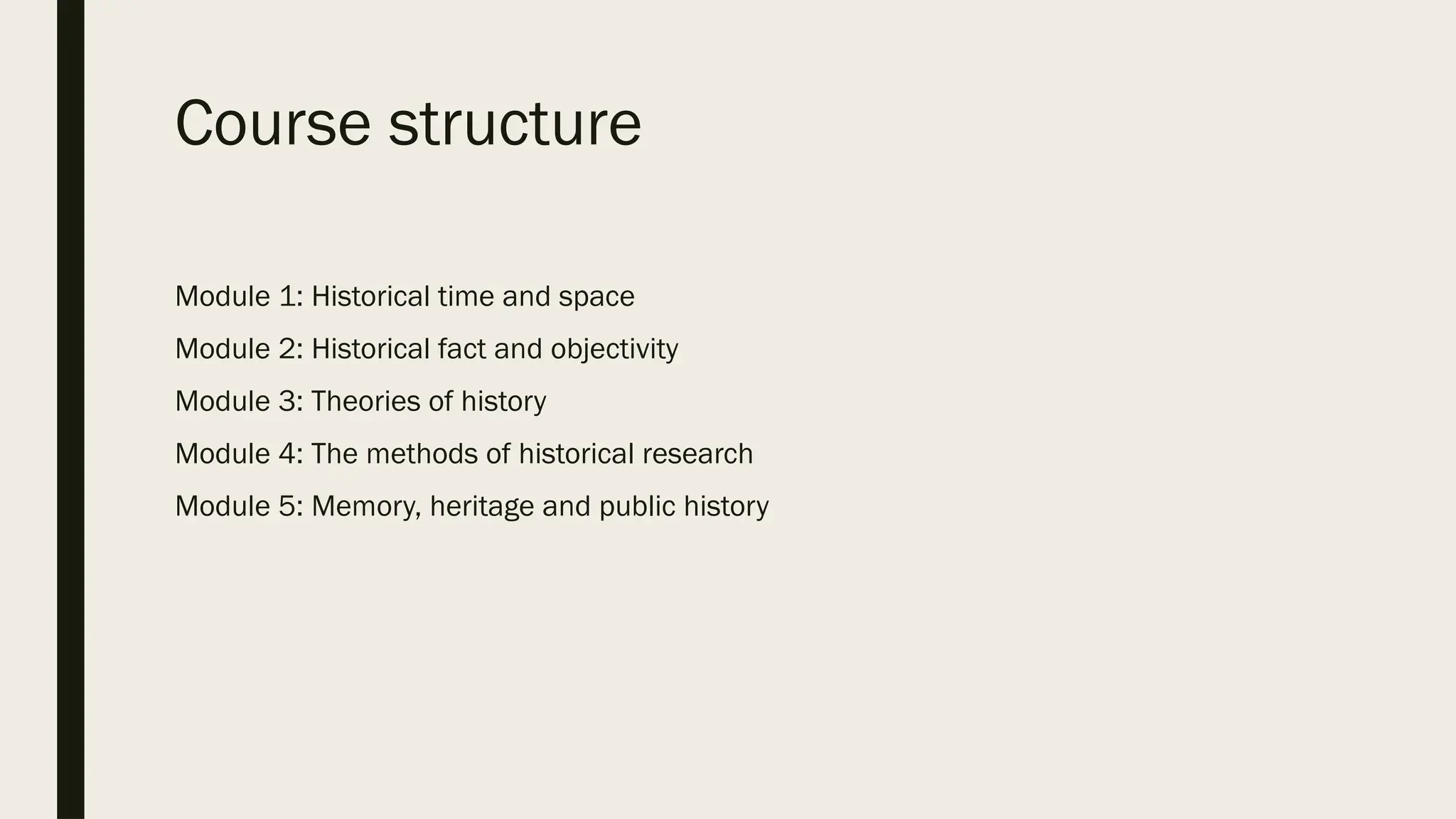
Course structure
Module 1: Historical time and space
Module 2: Historical fact and objectivity
Module 3: Theories of history
Module 4: The methods of historical research
Module 5: Memory, heritage and public history
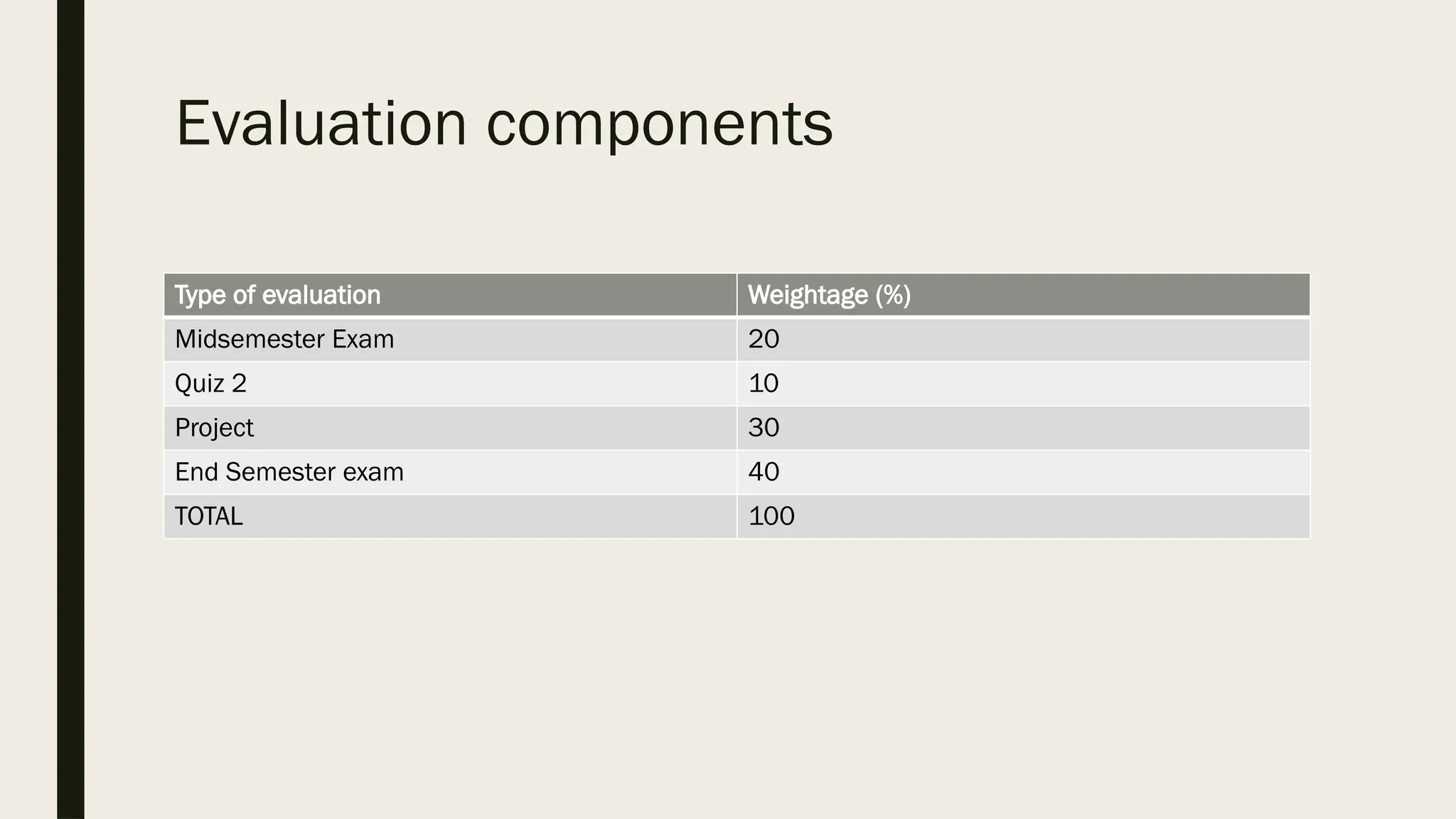
Evaluation components
Type of evaluation Weightage (%)
Midsemester Exam 20
Quiz 2 10
Project 30
End Semester exam 40
TOTAL 100
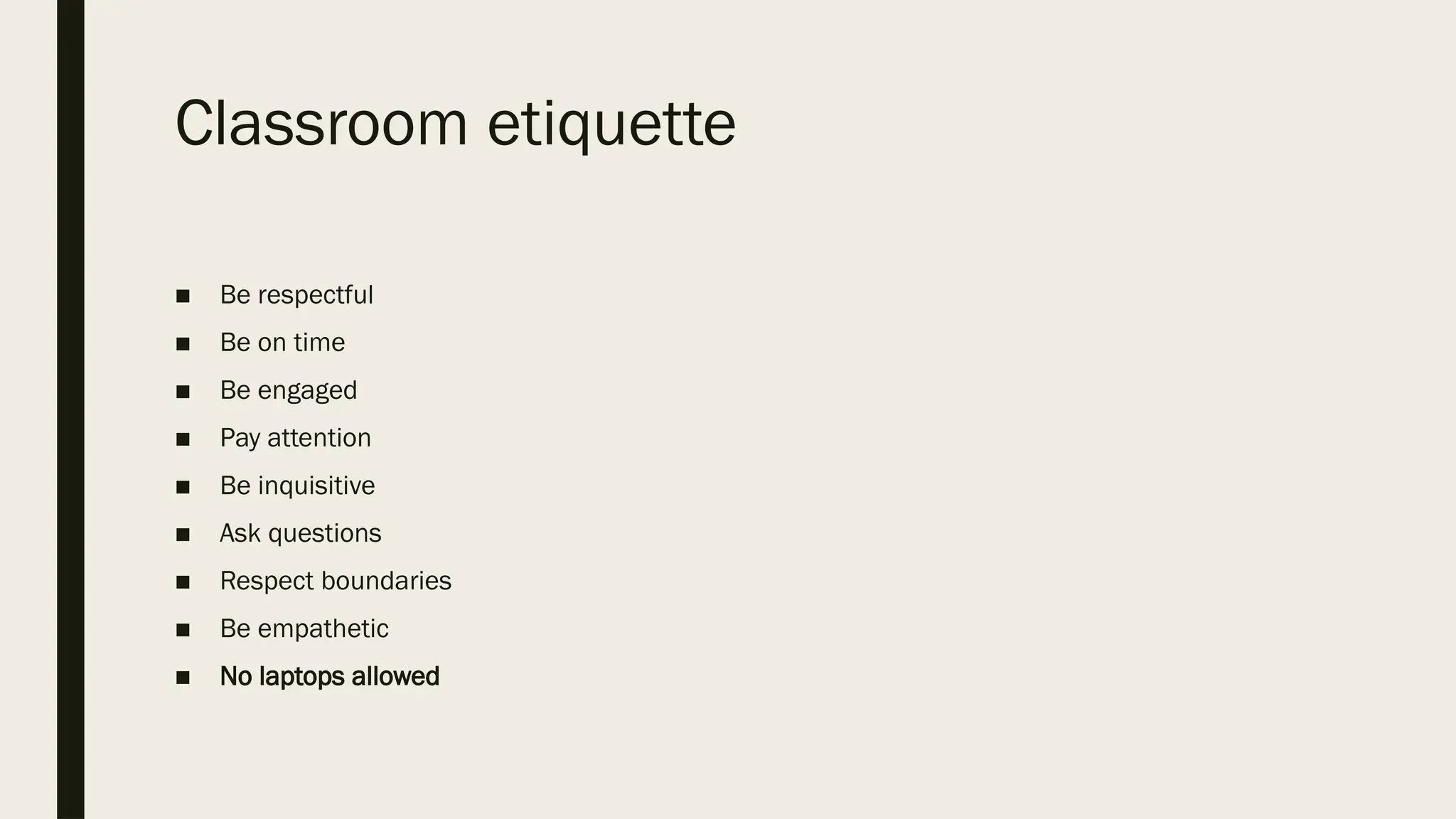
Classroom etiquette
■ Be respectful
■ Be on time
■ Be engaged
■ Pay attention
■ Be inquisitive
■ Ask questions
■ Respect boundaries
■ Be empathetic
■ No laptops allowed
Introduction to History Lecture 1 by Professor

  • 1.
  • 2.
    What is history? (And whatits not) Beginning with what its not: ■ It is not the same thing as the past ■ It is not just “facts” about the past ■ It is not just stories about the past Then what is it ?? ■ It is the work of historians: It is argument and interpretations ■ It is an empirical discipline: Based on the interpretation of evidence ■ It is complex and continuous: Not one history but many histories ■ It is the study of the contingent: Context matters the most
  • 3.
    What is historiography? (Not thesame as history) ■ Two approaches to understanding it: 1) “the history of history”  A narrative account of how the discipline has evolved  Includes ‘big names’ and sub-fields  A study of the changing interpretations of the past 2) Historical writing on a particular topic  Includes all the work by historians on a particular question/topic  Focuses on approaches  Pretty much like a literature review
  • 4.
    Why Study History? ■It helps us make sense of the present ■ Builds empathy ■ Can be intensely personal ■ It can feel like solving a puzzle ■ https://www.youtube.com/watch?v=yxMKGi61N_U ■ Everything has a history ■ https://epaper.hindustantimes.com/delhi?eddate=31/07/2025&pageid=916735
  • 5.
    WHOSE HISTORY ISIT ANYWAY?
  • 6.
    What do historiansdo? ■ Asking questions about the past ■ Searching for evidence : Primary and secondary sources ■ Making sense of the evidence ■ Narrativising the past
  • 7.
    Course structure Module 1:Historical time and space Module 2: Historical fact and objectivity Module 3: Theories of history Module 4: The methods of historical research Module 5: Memory, heritage and public history
  • 8.
    Evaluation components Type ofevaluation Weightage (%) Midsemester Exam 20 Quiz 2 10 Project 30 End Semester exam 40 TOTAL 100
  • 9.
    Classroom etiquette ■ Berespectful ■ Be on time ■ Be engaged ■ Pay attention ■ Be inquisitive ■ Ask questions ■ Respect boundaries ■ Be empathetic ■ No laptops allowed