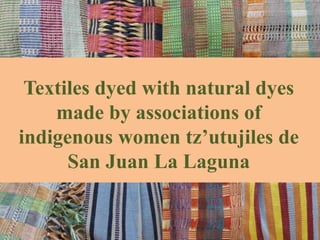
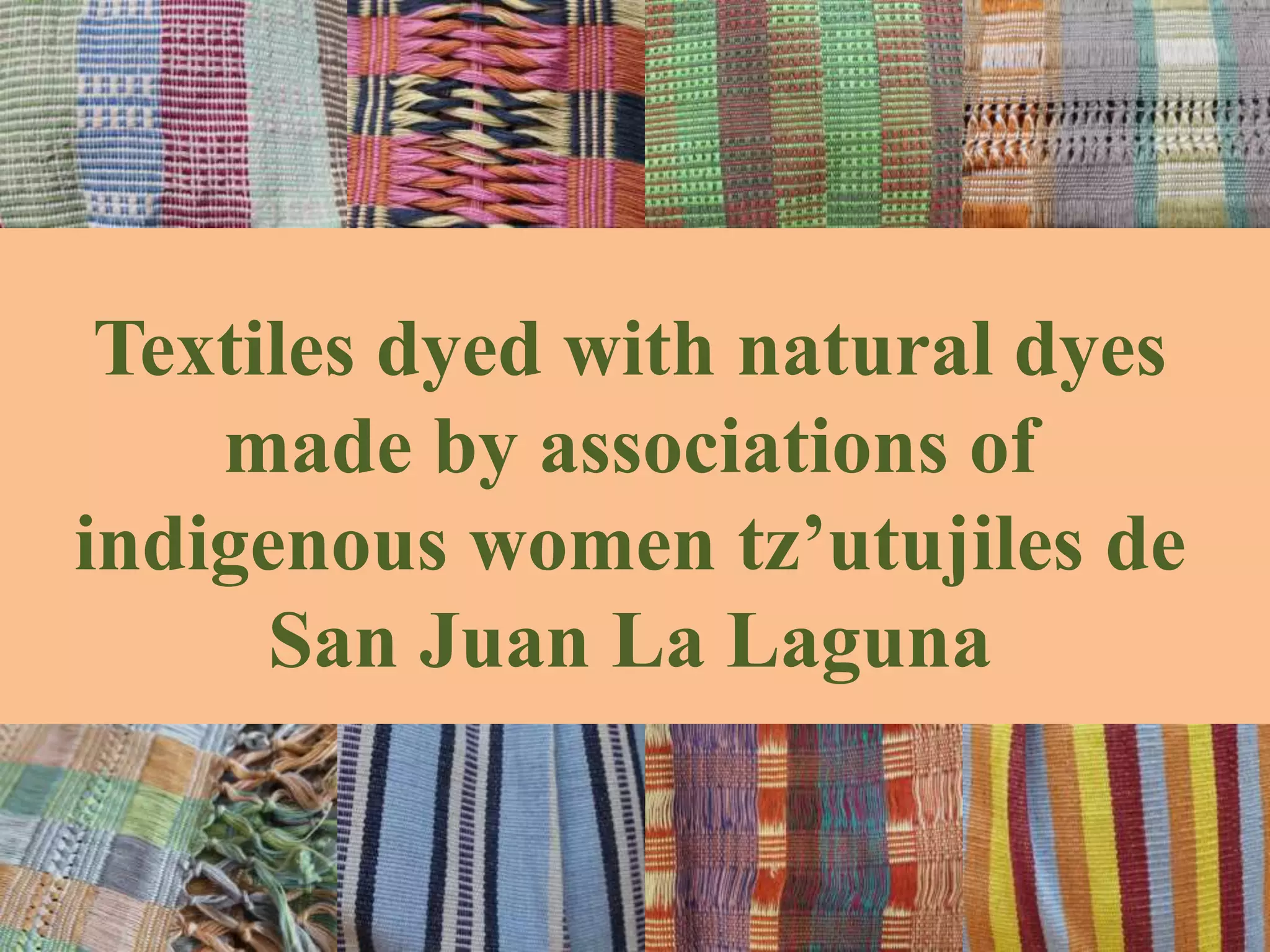
Textiles dyed with natural dyes
made by associations of
indigenous women tz’utujiles de
San Juan La Laguna
Group Aj’kemaa
Who we are?
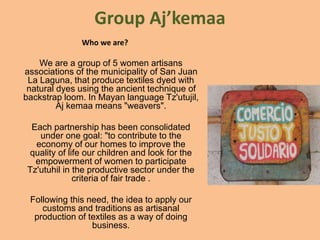
We are a group of 5 women artisans
associations of the municipality of San Juan
La Laguna, that produce textiles dyed with
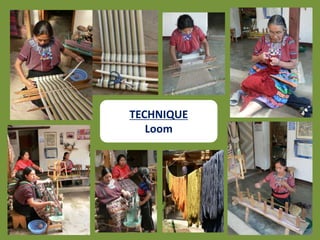
natural dyes using the ancient technique of
backstrap loom. In Mayan language Tz'utujil,
Aj kemaa means "weavers".
Each partnership has been consolidated
under one goal: "to contribute to the
economy of our homes to improve the
quality of life our children and look for the
empowerment of women to participate
Tz'utuhil in the productive sector under the
criteria of fair trade .
Following this need, the idea to apply our
customs and traditions as artisanal
production of textiles as a way of doing
business.
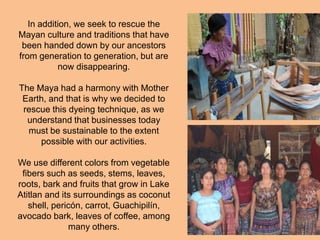
In addition, we seek to rescue the
Mayan culture and traditions that have
been handed down by our ancestors
from generation to generation, but are
now disappearing.
The Maya had a harmony with Mother
Earth, and that is why we decided to
rescue this dyeing technique, as we
understand that businesses today
must be sustainable to the extent
possible with our activities.
We use different colors from vegetable
fibers such as seeds, stems, leaves,
roots, bark and fruits that grow in Lake
Atitlan and its surroundings as coconut
shell, pericón, carrot, Guachipilín,
avocado bark, leaves of coffee, among
many others.
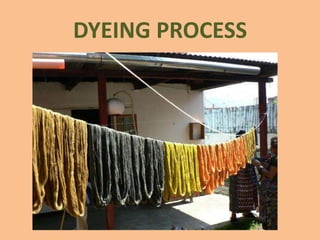
DYEING PROCESS
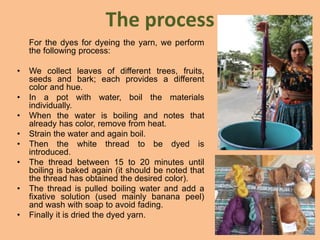
The process
For the dyes for dyeing the yarn, we perform
the following process:
• We collect leaves of different trees, fruits,
seeds and bark; each provides a different
color and hue.
• In a pot with water, boil the materials
individually.
• When the water is boiling and notes that
already has color, remove from heat.
• Strain the water and again boil.
• Then the white thread to be dyed is
introduced.
• The thread between 15 to 20 minutes until
boiling is baked again (it should be noted that
the thread has obtained the desired color).
• The thread is pulled boiling water and add a
fixative solution (used mainly banana peel)
and wash with soap to avoid fading.
• Finally it is dried the dyed yarn.
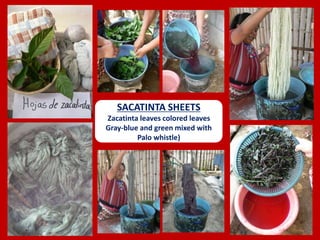
SACATINTA SHEETS
Zacatinta leaves colored leaves
Gray-blue and green mixed with
Palo whistle)
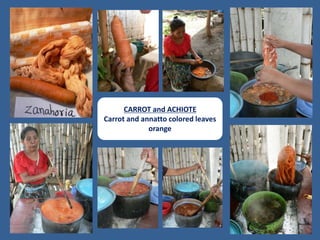
CARROT and ACHIOTE
Carrot and annatto colored leaves
orange
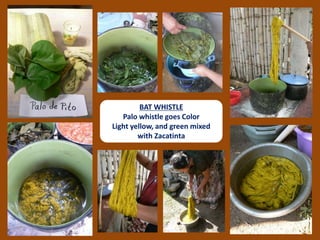
BAT WHISTLE
Palo whistle goes Color
Light yellow, and green mixed
with Zacatinta
TECHNIQUE
Loom
OUR PRODUCTS
We offer three product lines:
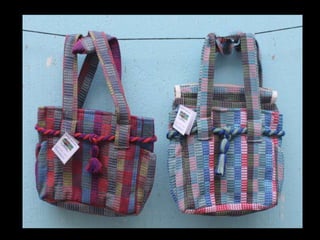
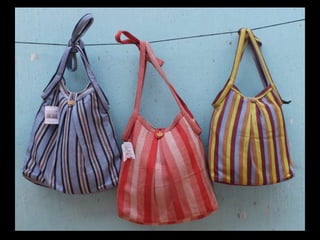
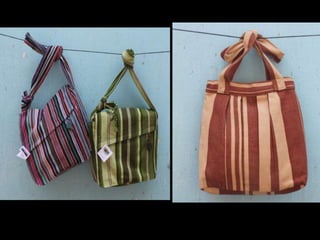
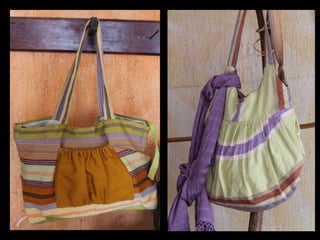
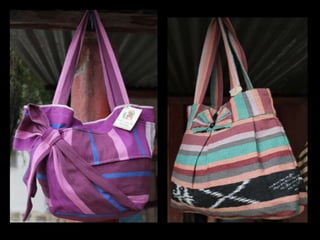
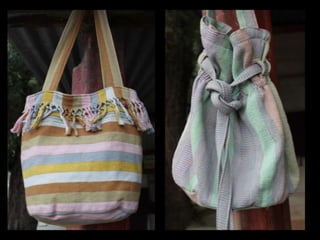
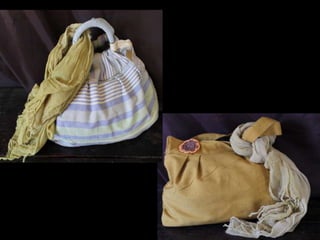
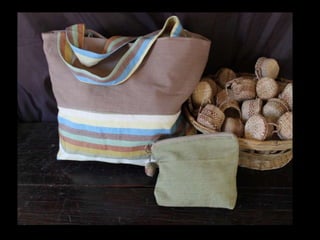
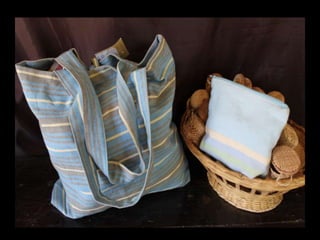
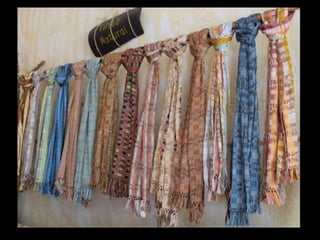
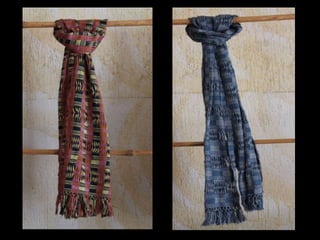
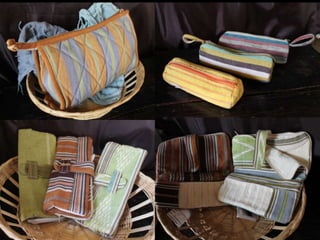
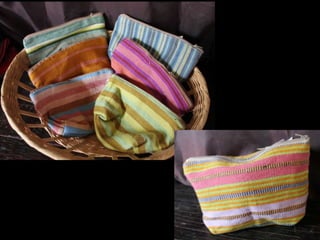
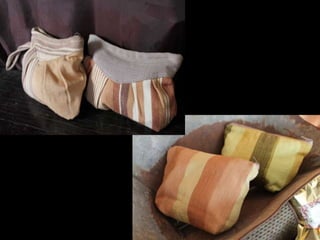
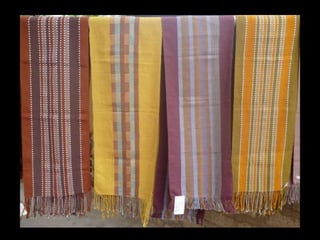
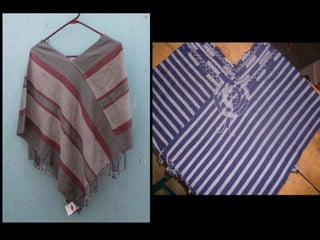
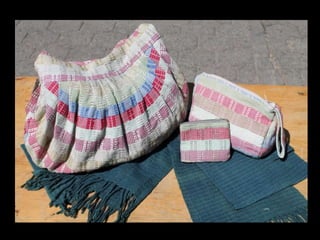
Personal accessories: bags / backpacks, scarves
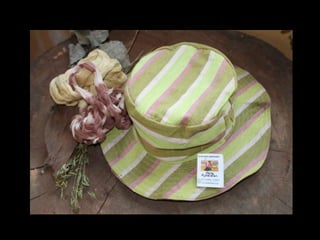
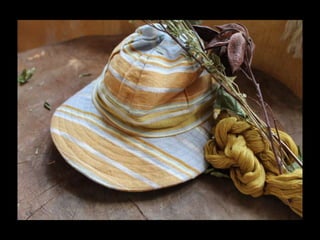
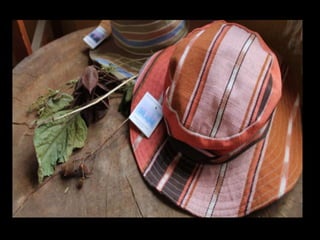
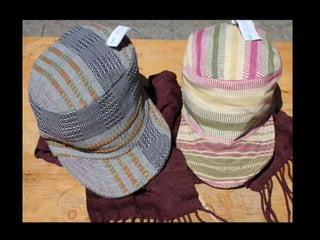
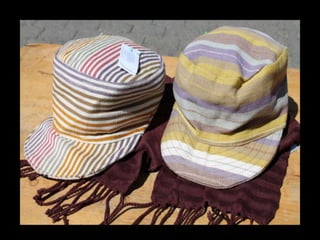
shawls, cosmetiqueras, purses, hats.
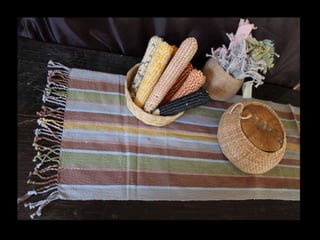
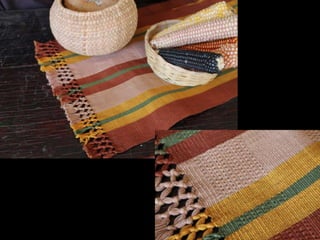
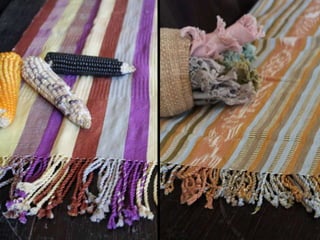
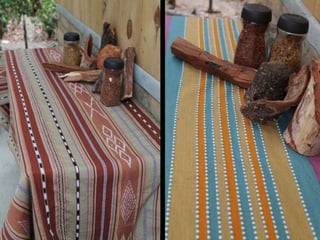
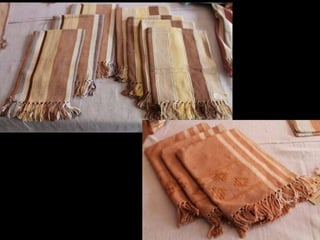
Linen: tablecloths, place mats, table runners, napkins.
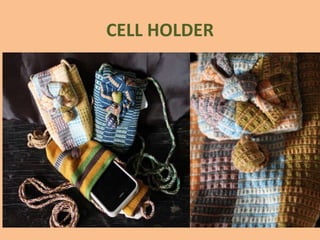
Other: bedspreads, hammocks, carrying cell
We have different designs and color schemes; We
can
make products the customer already requested the
measure.
BAGS
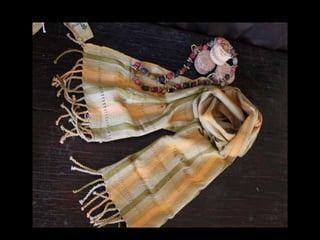
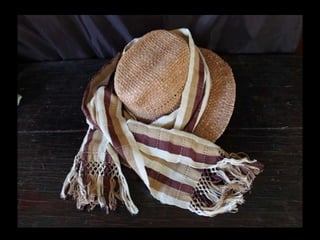
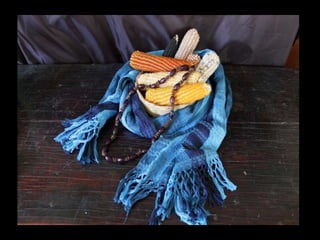
SCARVES
HATS
COSMETIQUERAS
COSMETIQUERAS
CENTERS TABLE
TABLECLOTHS
Centros de mesa
NAPKINS
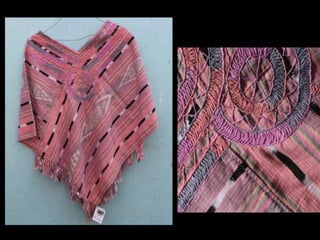
Mañaneras
MAÑANERAS
CELL HOLDER

Historia

  • 1.
    Textiles dyed withnatural dyes made by associations of indigenous women tz’utujiles de San Juan La Laguna
  • 2.
    Group Aj’kemaa Who weare? We are a group of 5 women artisans associations of the municipality of San Juan La Laguna, that produce textiles dyed with natural dyes using the ancient technique of backstrap loom. In Mayan language Tz'utujil, Aj kemaa means "weavers". Each partnership has been consolidated under one goal: "to contribute to the economy of our homes to improve the quality of life our children and look for the empowerment of women to participate Tz'utuhil in the productive sector under the criteria of fair trade . Following this need, the idea to apply our customs and traditions as artisanal production of textiles as a way of doing business.
  • 3.
    In addition, weseek to rescue the Mayan culture and traditions that have been handed down by our ancestors from generation to generation, but are now disappearing. The Maya had a harmony with Mother Earth, and that is why we decided to rescue this dyeing technique, as we understand that businesses today must be sustainable to the extent possible with our activities. We use different colors from vegetable fibers such as seeds, stems, leaves, roots, bark and fruits that grow in Lake Atitlan and its surroundings as coconut shell, pericón, carrot, Guachipilín, avocado bark, leaves of coffee, among many others.
  • 4.
  • 5.
    The process For thedyes for dyeing the yarn, we perform the following process: • We collect leaves of different trees, fruits, seeds and bark; each provides a different color and hue. • In a pot with water, boil the materials individually. • When the water is boiling and notes that already has color, remove from heat. • Strain the water and again boil. • Then the white thread to be dyed is introduced. • The thread between 15 to 20 minutes until boiling is baked again (it should be noted that the thread has obtained the desired color). • The thread is pulled boiling water and add a fixative solution (used mainly banana peel) and wash with soap to avoid fading. • Finally it is dried the dyed yarn.
  • 6.
    SACATINTA SHEETS Zacatinta leavescolored leaves Gray-blue and green mixed with Palo whistle)
  • 7.
    CARROT and ACHIOTE Carrotand annatto colored leaves orange
  • 8.
    BAT WHISTLE Palo whistlegoes Color Light yellow, and green mixed with Zacatinta
  • 9.
  • 10.
    OUR PRODUCTS We offerthree product lines: Personal accessories: bags / backpacks, scarves shawls, cosmetiqueras, purses, hats. Linen: tablecloths, place mats, table runners, napkins. Other: bedspreads, hammocks, carrying cell We have different designs and color schemes; We can make products the customer already requested the measure.
  • 11.
  • 21.
  • 27.
  • 33.
  • 34.
  • 38.
  • 39.
  • 44.
  • 45.
  • 46.
  • 49.