What is
histochemistry?
 It is the study of qualitative identification &
quantitative assessment of chemical
groupings within cells and tissues.
 Histochemical techniques are based on
precise chemical rationales for their ability to
identify or stain different biochemical
substances.
 Visualizing Chemicals and Enzymes in
Tissue.
Based on chemical reactions between
cell components and stains.
The end products of the reaction are
permanent, colored precipitates that
can be viewed under the microscope.
There are stains specific to each
component of the cell, based on the
basic or acidic nature of the dye.
Applications
Origin- based on the chemical
substances
Progression
Microbial infections
Healing
Repair
Structure and chemical
composition of oral tissues
 Epithelium and its derivatives
 Connective tissue
 Cells and fibers
 Ground substance
Epithelium and its derivatives
 Oral epithelium
 Epithelial components of
tooth
 Salivary glands
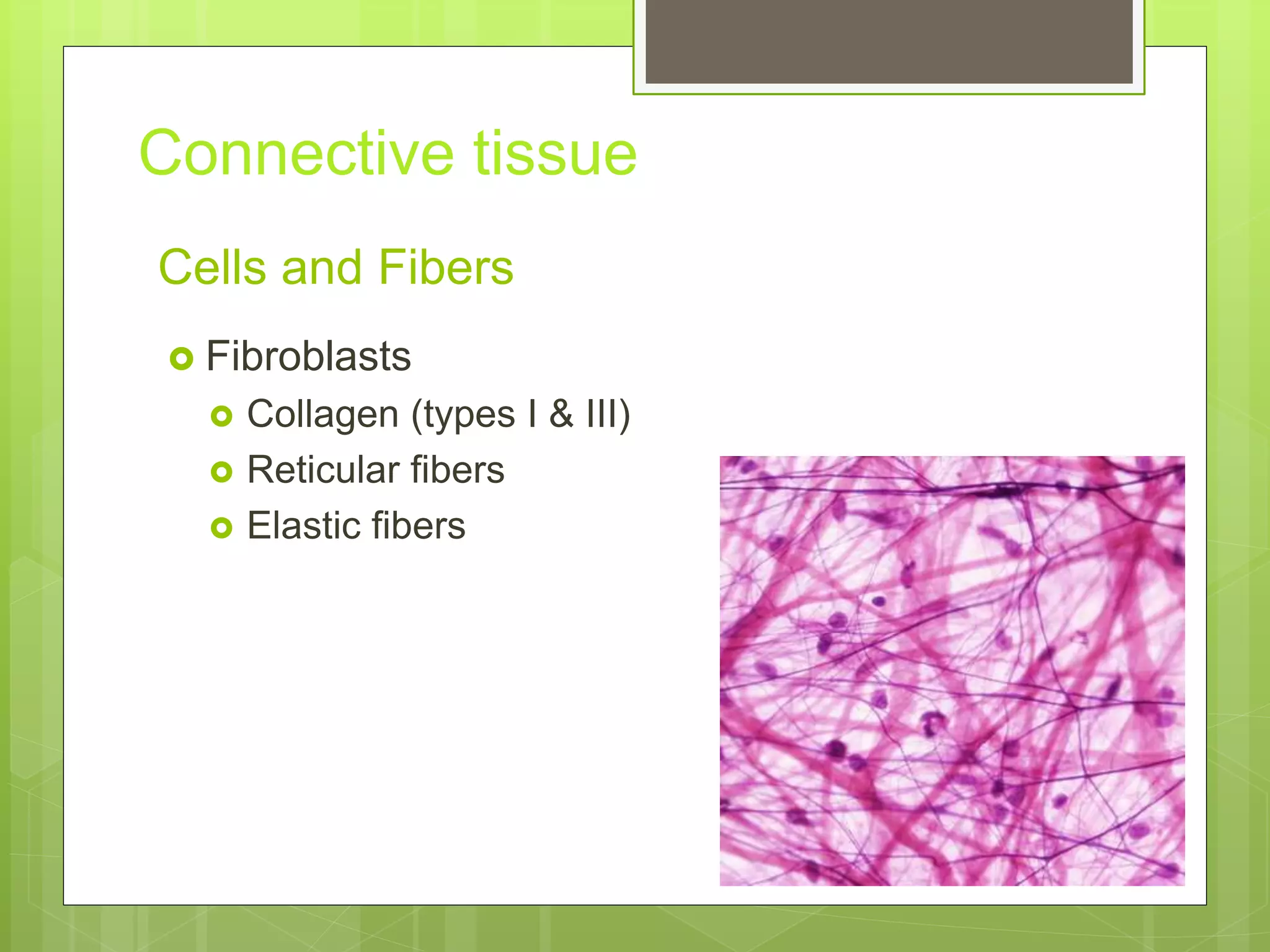
Cells and Fibers
 Fibroblasts
 Collagen (types I & III)
 Reticular fibers
 Elastic fibers
Connective tissue
Ground substances
 Key role is adhesion and signaling events
 Composition-Mixture of macromolecules
 Proteoglycans
 Cell surface associated macromolecules
 Extra cellular macromolecules
 Glycoproteins
 Fibronectin- fibroblasts, smooth muscle, etc.,
 Laminin- epithelial cells, basement membrane
 Chondronectin- chondrocytes
 Osteonectin- osteoblasts
Histochemical techniques
 Fixation procedures
 Chemical
 Formaldehyde
 Acrolein
 Gluteraldehyde
 Rossman’s fluid- glycogen, glycoproteins
 Carnoy’s mixture- nucleic acid (Fuelgen reaction)
 Paraformaldehyde- lipids
 Non-chemical
 Freeze drying- cytochrome oxidases
 Freeze fracture- electron microscopy (3D picture
of cell membranes)
Histochemical study of teeth
and bone
 Simultaneous fixation and decalcification with
formaldehyde or gluteraldehyde and EDTA
(ethylenediaminetetraacetic acid) for light and
electron microscopic histochemistry.
 Recently techniques have been developed for
sectioning freeze-dried, undecalcified tissues.
(eg: for studying DC).
 Bone- deproteinization with conc. Hydrazine.
Specific histochemical methods
Carbohydrates- PAS
Proteoglycans- Toluidine blue, Azure A, Alcian
blue.
Proteins- Dinitrofluorobenzene, Ninhydrin or
Ferric ferricyanide
Lipids- Sudan dyes (Sudan black- phospholipids)
Enzymes (For eg-Phosphatases- Gomori
method)
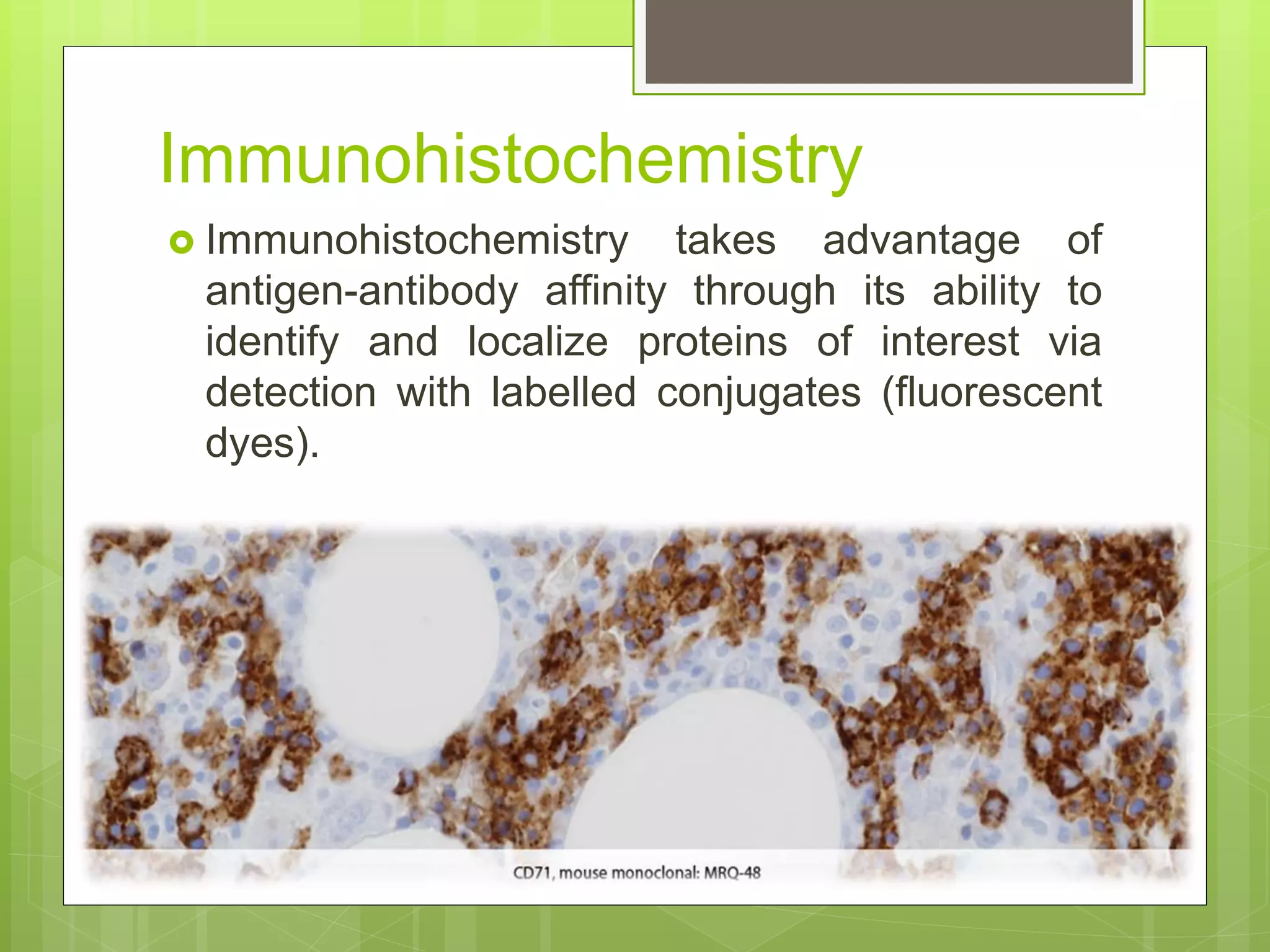
Immunohistochemistry
 Immunohistochemistry takes advantage of
antigen-antibody affinity through its ability to
identify and localize proteins of interest via
detection with labelled conjugates (fluorescent
dyes).
Enzyme Histochemistry
 The techniques of enzyme histochemistry, which relate
structure and function, can be used to locate many enzymes,
including acid phosphatase, dehydrogenases, and
peroxidases.
 Enzymes indicates what is happening in the tissue
Histochemistry of Oral hard
tissues
Carbohydrates(PAS)
 Proteins (dinitrofluorobenzene, ninhydrin or
ferric ferricyanide)
Lipids(Sudan dyes)
Enzyme histochemistry
 Alkaline phosphatase- absorption
 Adenosine triphosphatase- pre absorptive
ameloblasts
 Acid phosphatase- resorption
 Esterase- matrix of bone and dentin
 Aminopeptidase- human osteoclasts
 Cytochrome oxidase- oxidation (osteoblasts,
osteoclasts)
 Succinate dehydrogenase- osteoclasts
Histochemistry of oral soft tissues
 Polysaccharides
 Proteins
 Lipids
 Mucins(PAS for neutral mucins & alcian blue
for acid mucins)
Enzyme histochemistry
 Alkaline phosphatase- endothelium,
basement membranes
 Acid phosphatase- degree of keratinization
 Esterase- Gingiva(keratinized areas),
salivary gland ducts, serous demilunes in
sublingual gland, taste buds, mast cells.
 Aminopeptidase
 Succinate dehydrogenase
and glucose-6-phosphate dehydrogenase
 β-glucuronidase- basal layer
 Cytochrome oxidase- crevicular epithelium
basal layer, ducts
of SG
Recent techniques
 In situ hybridization (identification
of gene or gene products)
 Laser spectroscopy (inorganic
components of calcified tissue)
 Confocal Laser scanning
microscope (3D picture)
 Radioautographic techniques
(explains uptake of chemicals)
histochemistryoforaltissues-160811144259.pdf

histochemistryoforaltissues-160811144259.pdf

  • 2.
    What is histochemistry?  Itis the study of qualitative identification & quantitative assessment of chemical groupings within cells and tissues.  Histochemical techniques are based on precise chemical rationales for their ability to identify or stain different biochemical substances.  Visualizing Chemicals and Enzymes in Tissue.
  • 3.
    Based on chemicalreactions between cell components and stains. The end products of the reaction are permanent, colored precipitates that can be viewed under the microscope. There are stains specific to each component of the cell, based on the basic or acidic nature of the dye.
  • 4.
    Applications Origin- based onthe chemical substances Progression Microbial infections Healing Repair
  • 5.
    Structure and chemical compositionof oral tissues  Epithelium and its derivatives  Connective tissue  Cells and fibers  Ground substance
  • 6.
    Epithelium and itsderivatives  Oral epithelium  Epithelial components of tooth  Salivary glands
  • 7.
    Cells and Fibers Fibroblasts  Collagen (types I & III)  Reticular fibers  Elastic fibers Connective tissue
  • 8.
    Ground substances  Keyrole is adhesion and signaling events  Composition-Mixture of macromolecules  Proteoglycans  Cell surface associated macromolecules  Extra cellular macromolecules  Glycoproteins  Fibronectin- fibroblasts, smooth muscle, etc.,  Laminin- epithelial cells, basement membrane  Chondronectin- chondrocytes  Osteonectin- osteoblasts
  • 9.
    Histochemical techniques  Fixationprocedures  Chemical  Formaldehyde  Acrolein  Gluteraldehyde  Rossman’s fluid- glycogen, glycoproteins  Carnoy’s mixture- nucleic acid (Fuelgen reaction)  Paraformaldehyde- lipids  Non-chemical  Freeze drying- cytochrome oxidases  Freeze fracture- electron microscopy (3D picture of cell membranes)
  • 10.
    Histochemical study ofteeth and bone  Simultaneous fixation and decalcification with formaldehyde or gluteraldehyde and EDTA (ethylenediaminetetraacetic acid) for light and electron microscopic histochemistry.  Recently techniques have been developed for sectioning freeze-dried, undecalcified tissues. (eg: for studying DC).  Bone- deproteinization with conc. Hydrazine.
  • 11.
    Specific histochemical methods Carbohydrates-PAS Proteoglycans- Toluidine blue, Azure A, Alcian blue. Proteins- Dinitrofluorobenzene, Ninhydrin or Ferric ferricyanide Lipids- Sudan dyes (Sudan black- phospholipids) Enzymes (For eg-Phosphatases- Gomori method)
  • 12.
    Immunohistochemistry  Immunohistochemistry takesadvantage of antigen-antibody affinity through its ability to identify and localize proteins of interest via detection with labelled conjugates (fluorescent dyes).
  • 14.
    Enzyme Histochemistry  Thetechniques of enzyme histochemistry, which relate structure and function, can be used to locate many enzymes, including acid phosphatase, dehydrogenases, and peroxidases.  Enzymes indicates what is happening in the tissue
  • 15.
    Histochemistry of Oralhard tissues Carbohydrates(PAS)  Proteins (dinitrofluorobenzene, ninhydrin or ferric ferricyanide) Lipids(Sudan dyes)
  • 16.
    Enzyme histochemistry  Alkalinephosphatase- absorption  Adenosine triphosphatase- pre absorptive ameloblasts  Acid phosphatase- resorption  Esterase- matrix of bone and dentin  Aminopeptidase- human osteoclasts  Cytochrome oxidase- oxidation (osteoblasts, osteoclasts)  Succinate dehydrogenase- osteoclasts
  • 17.
    Histochemistry of oralsoft tissues  Polysaccharides  Proteins  Lipids  Mucins(PAS for neutral mucins & alcian blue for acid mucins)
  • 18.
    Enzyme histochemistry  Alkalinephosphatase- endothelium, basement membranes  Acid phosphatase- degree of keratinization  Esterase- Gingiva(keratinized areas), salivary gland ducts, serous demilunes in sublingual gland, taste buds, mast cells.  Aminopeptidase  Succinate dehydrogenase and glucose-6-phosphate dehydrogenase  β-glucuronidase- basal layer  Cytochrome oxidase- crevicular epithelium basal layer, ducts of SG
  • 19.
    Recent techniques  Insitu hybridization (identification of gene or gene products)  Laser spectroscopy (inorganic components of calcified tissue)  Confocal Laser scanning microscope (3D picture)  Radioautographic techniques (explains uptake of chemicals)