plays an
important role in our
livelihood.
Become
one of
the
leading
products
for
Methods ofProcessing fish and shellfish:
Freezing
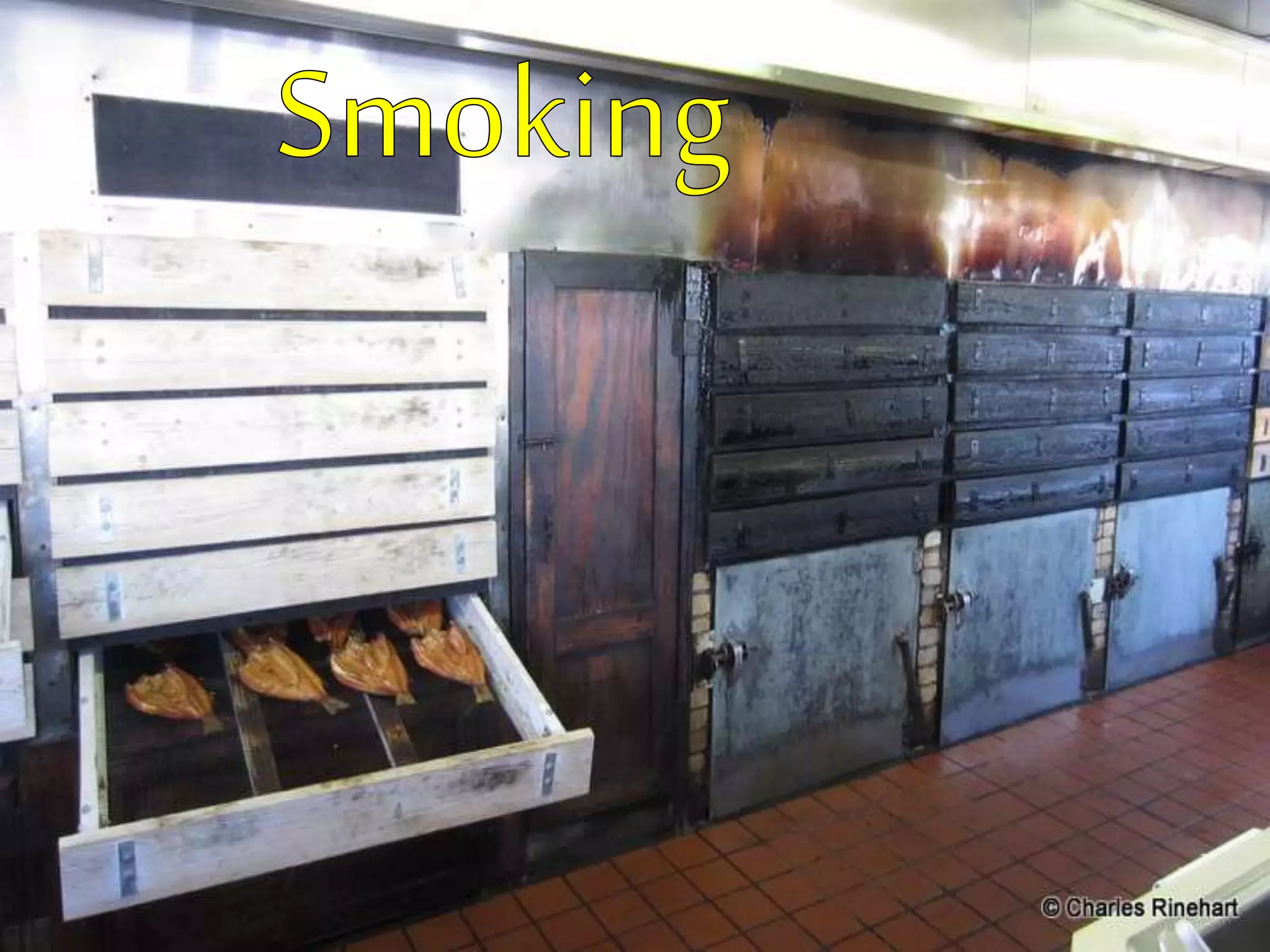
Smoking
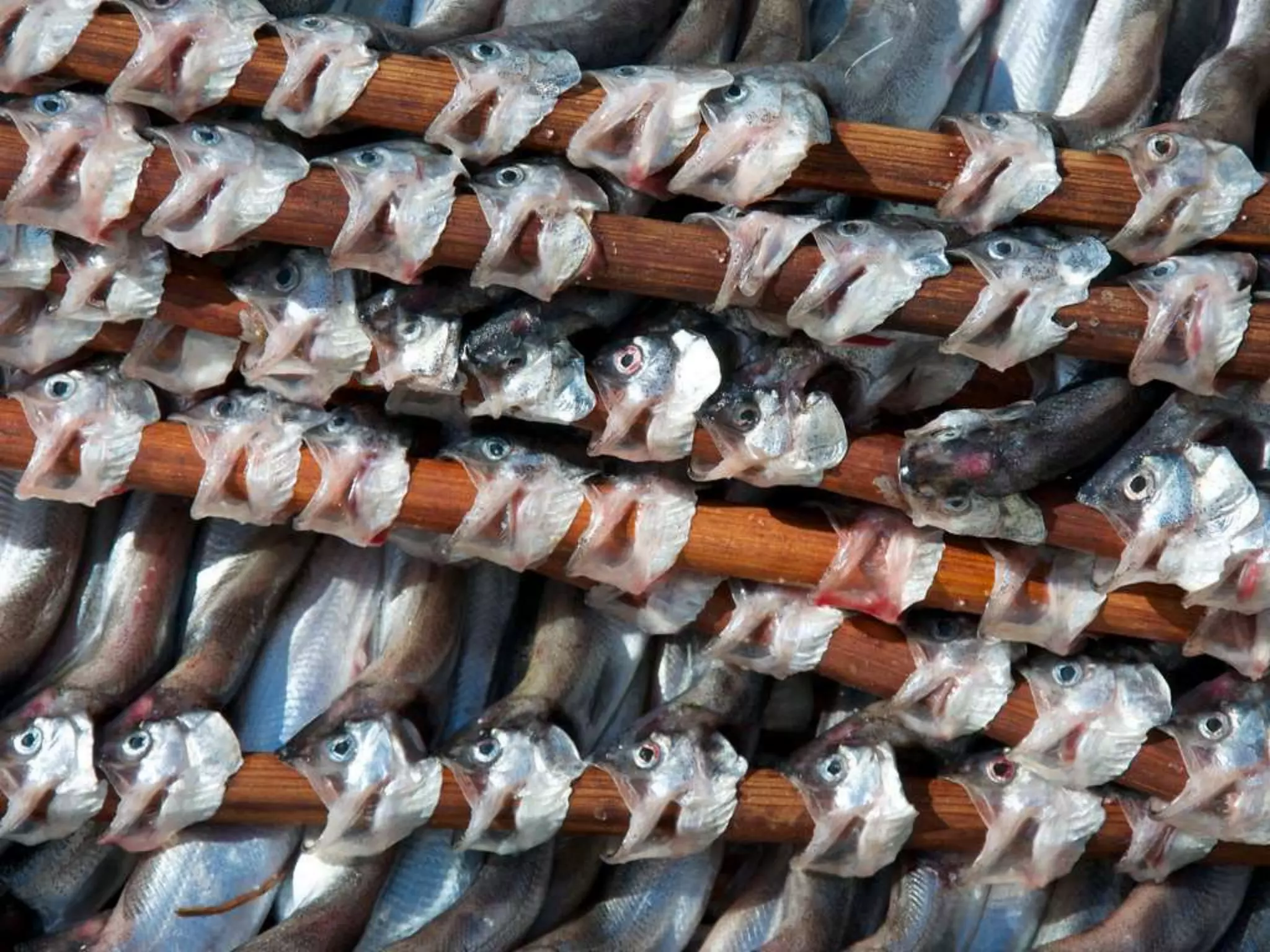
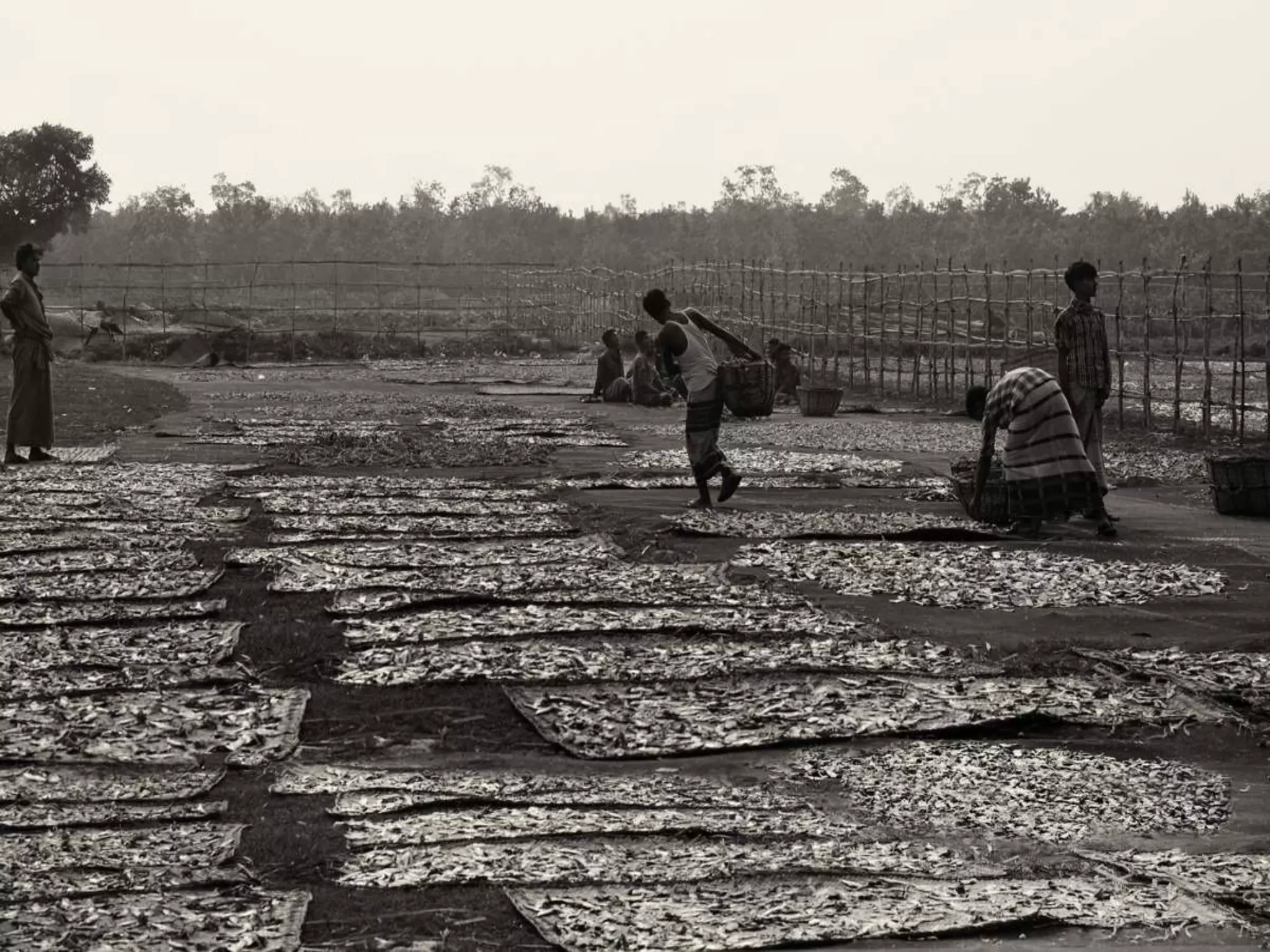
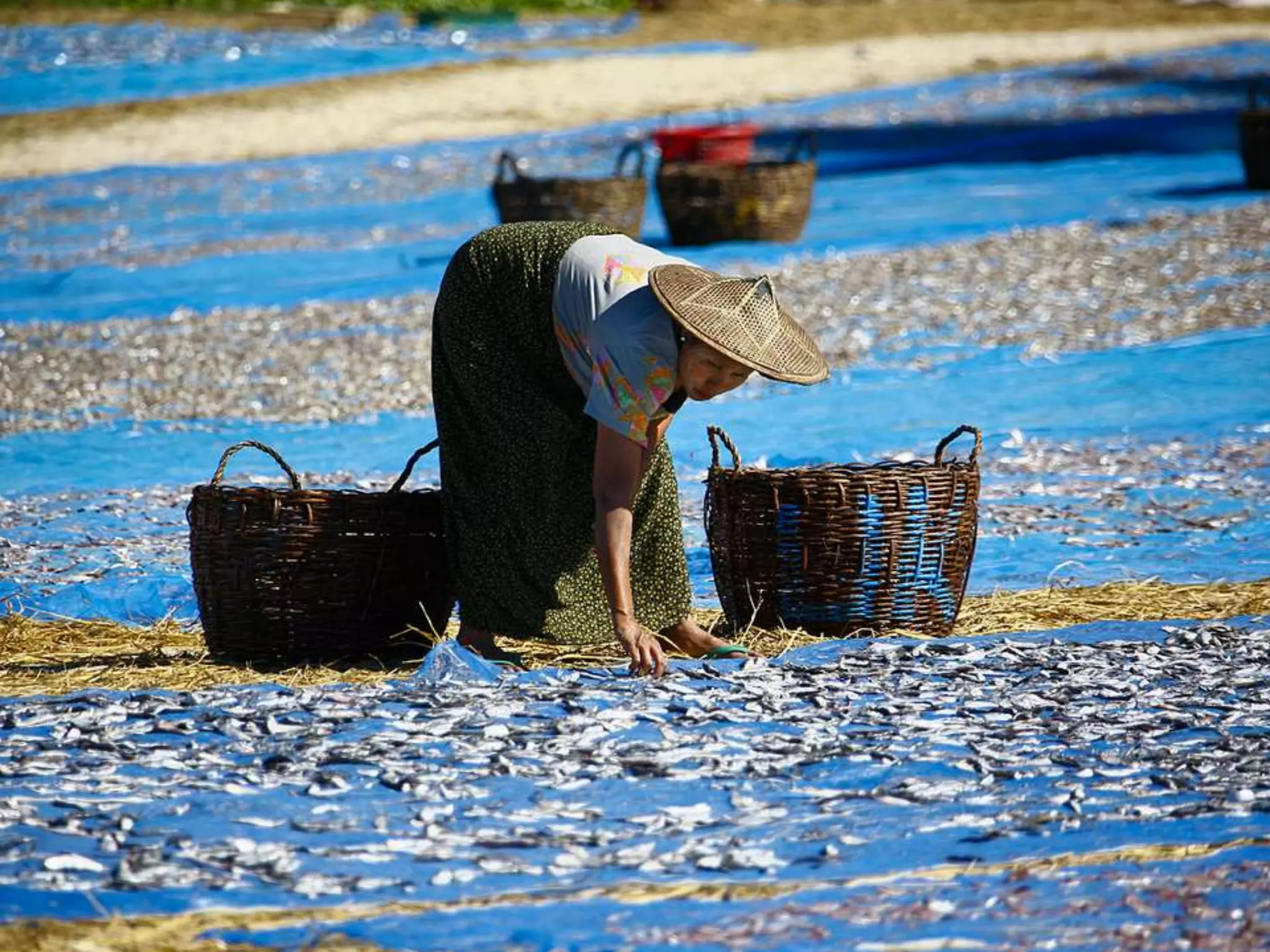
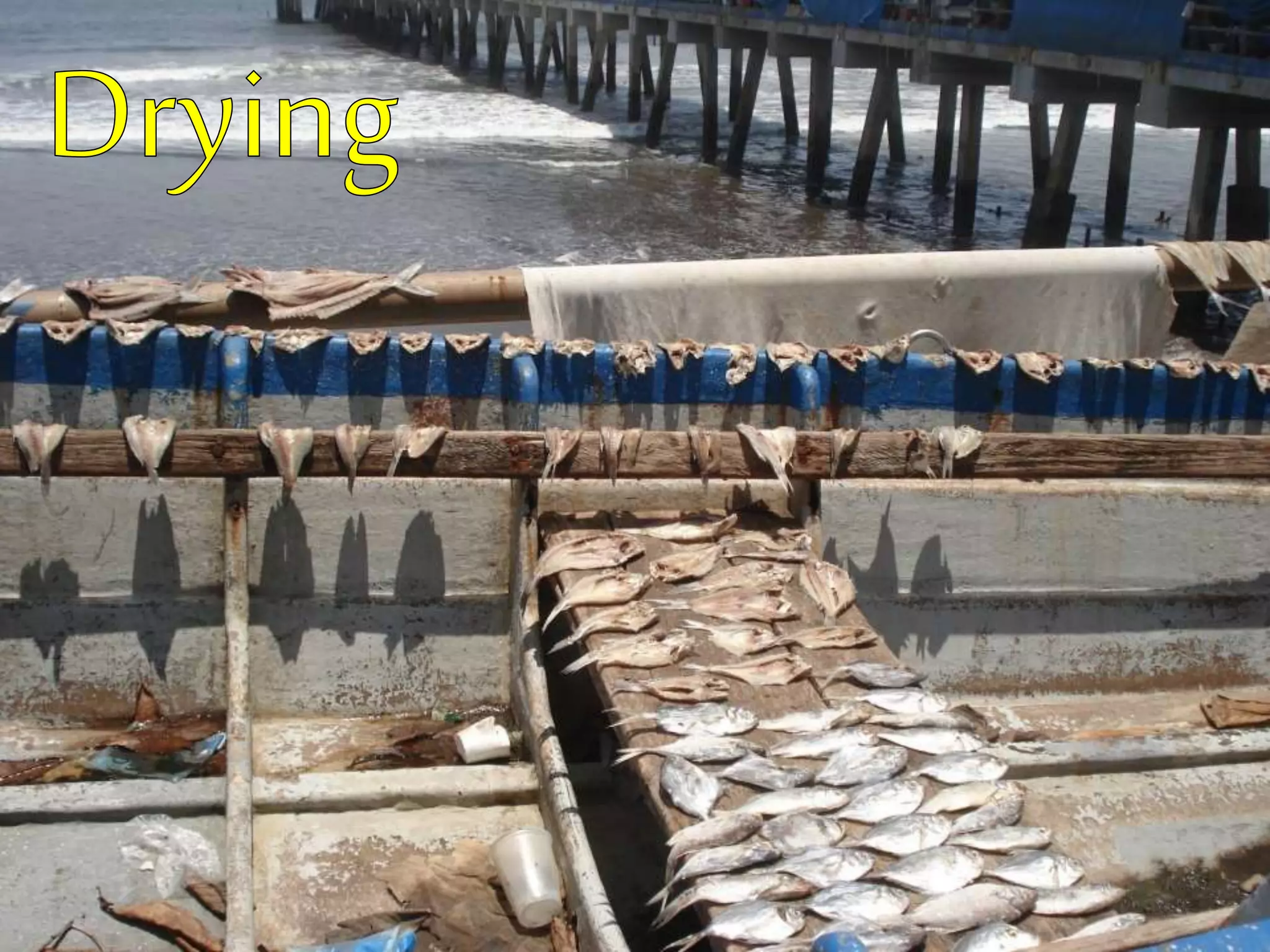
Drying or dehydration
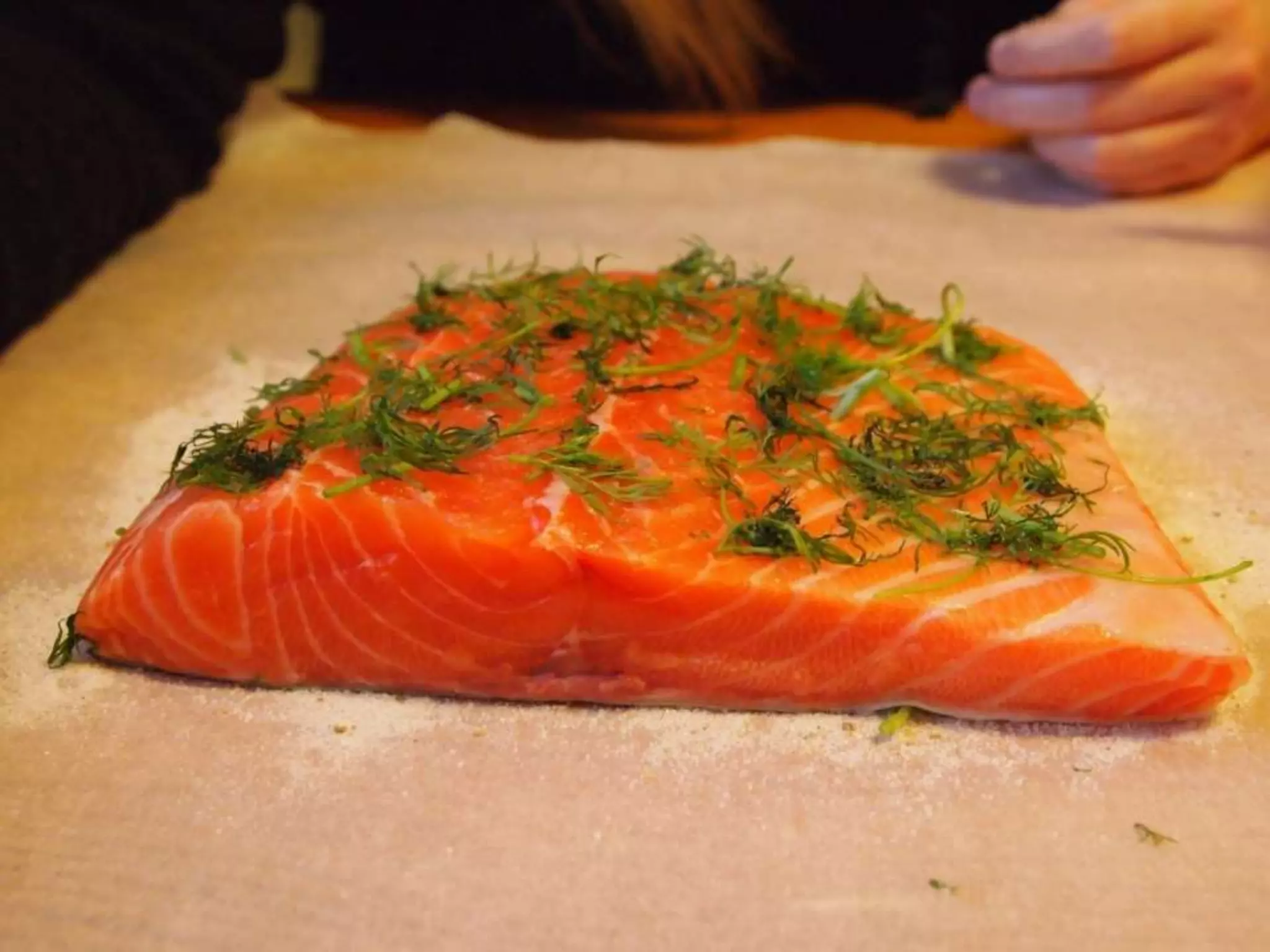
Fish Curing
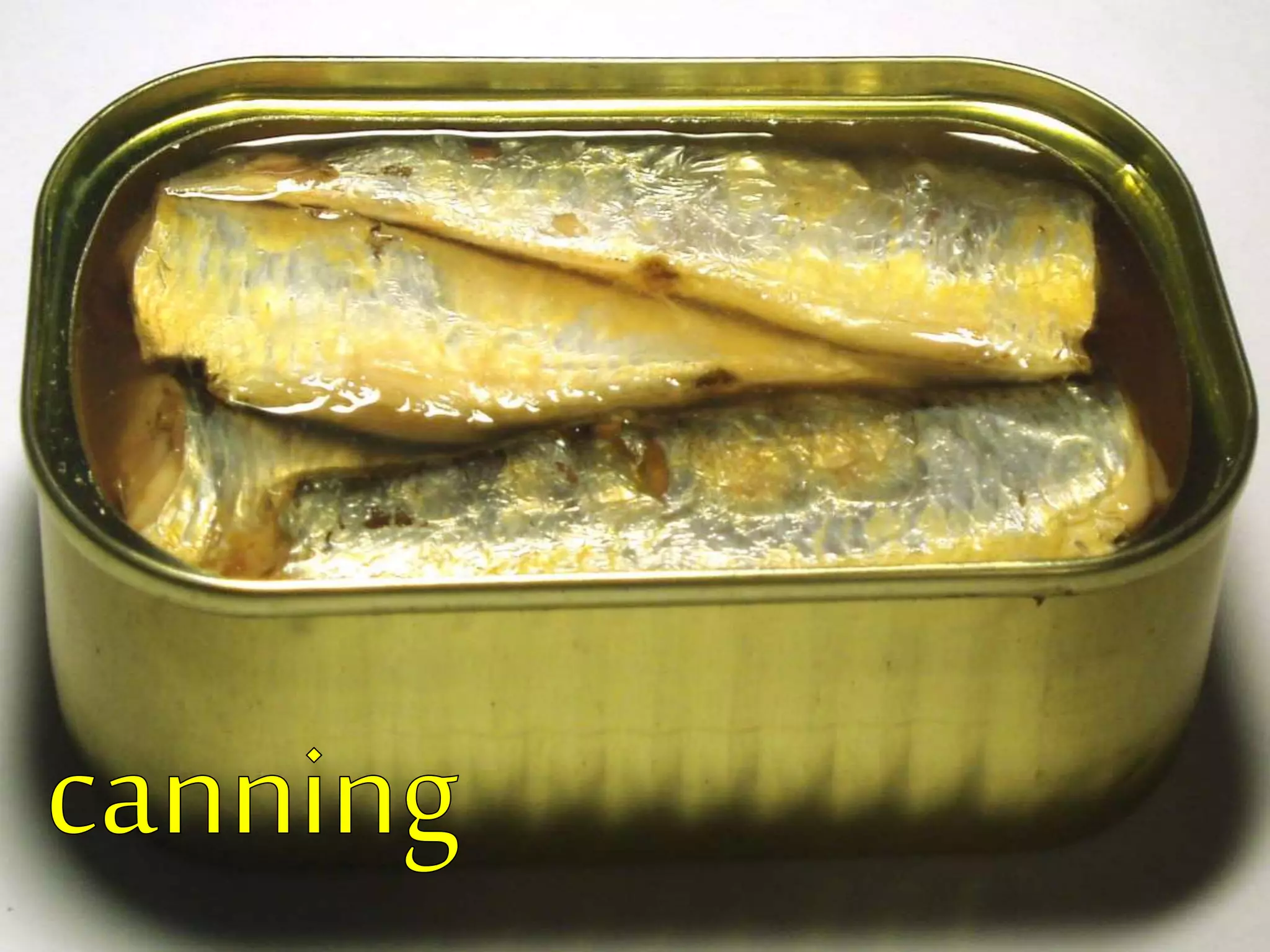
Canning
Simplest and most natural wayof preserving fish.
Maintain the flavor and quality of fresh fish.
Reducesor halt the biochemical reactions in fish flesh.
Freezer
Fish
.
.
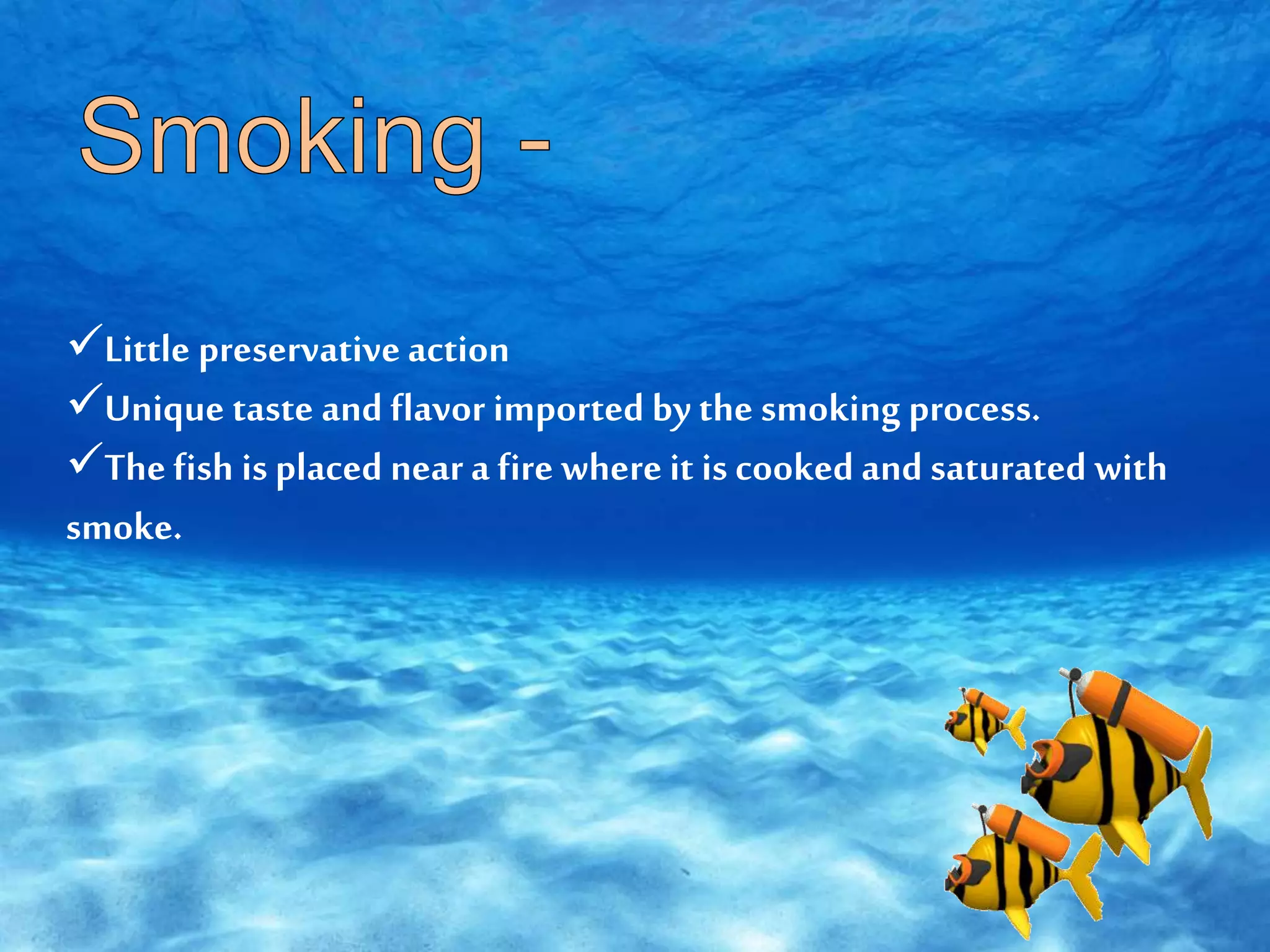
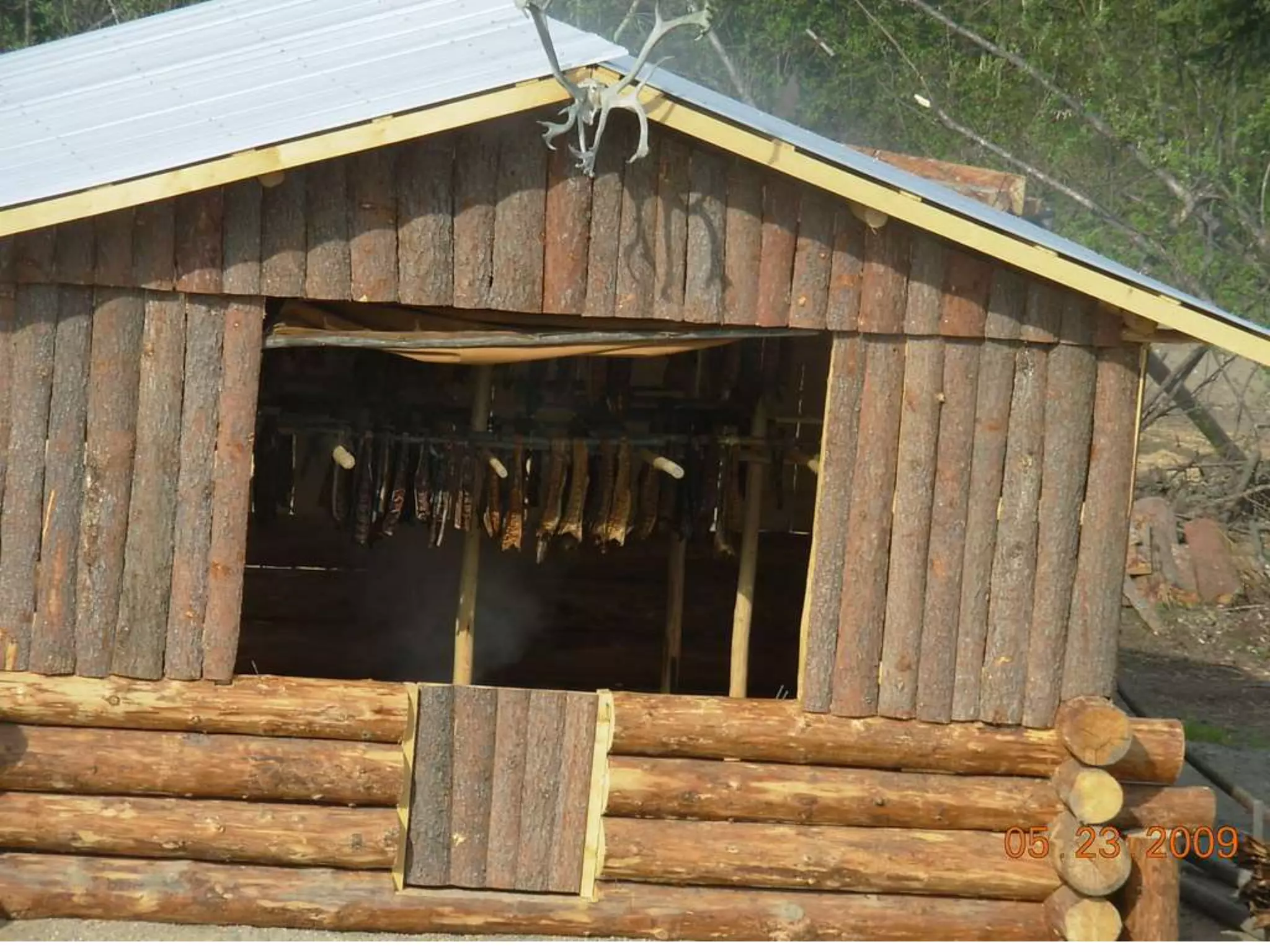
Little preservativeaction
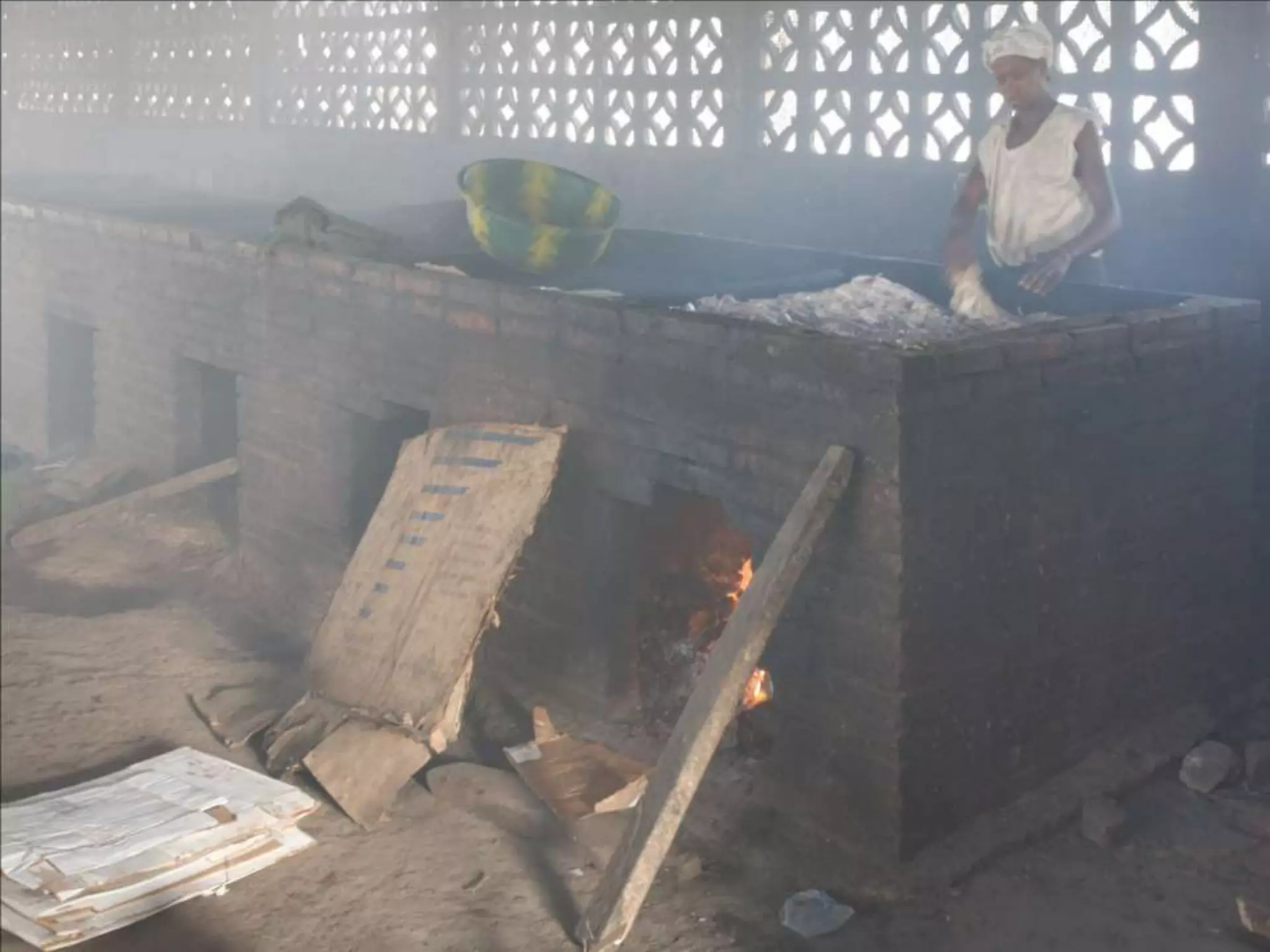
Unique taste and flavor imported by the smoking process.
The fish is placed near a fire where it is cooked and saturated with
smoke.
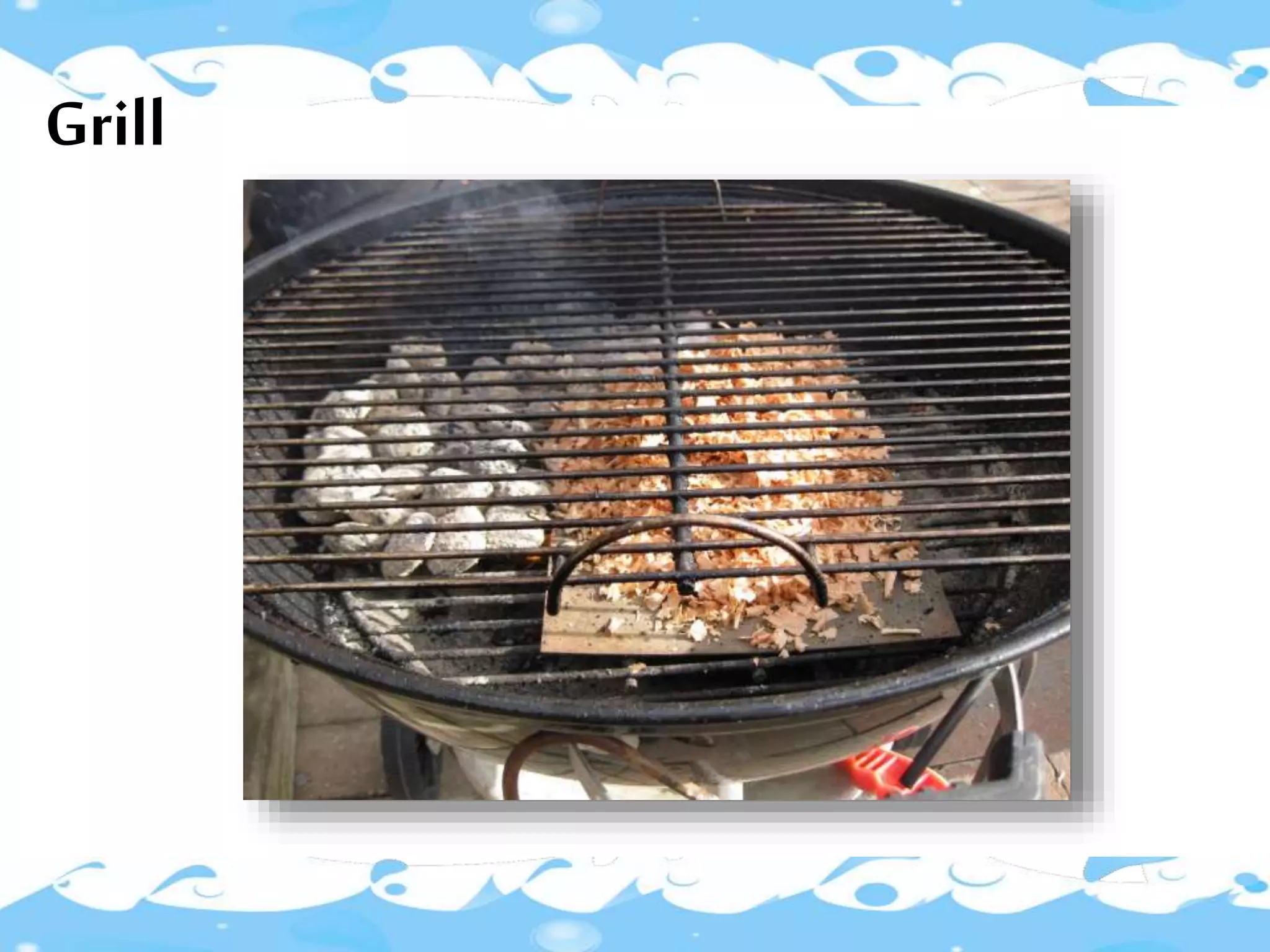
Grill
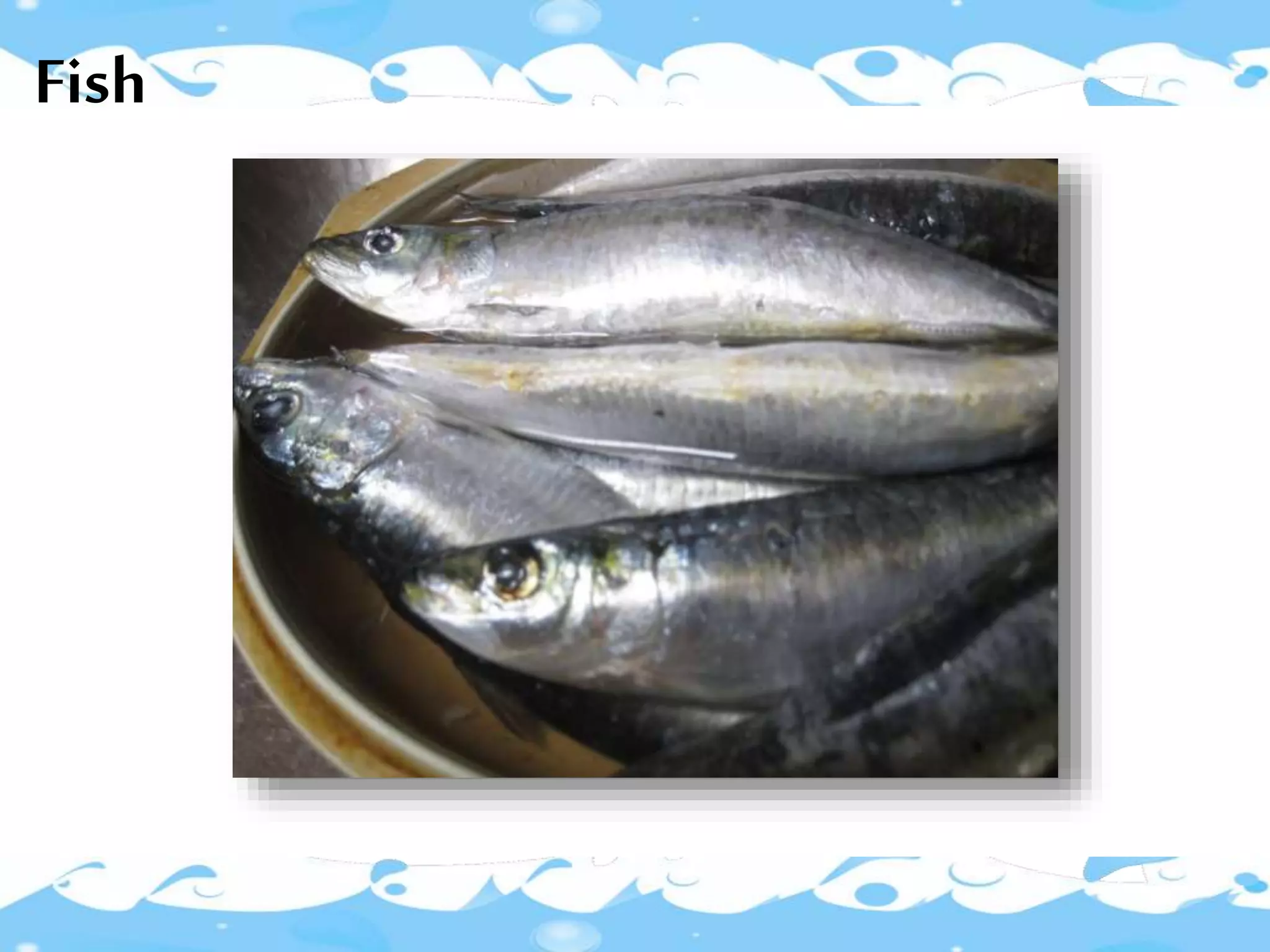
Fish
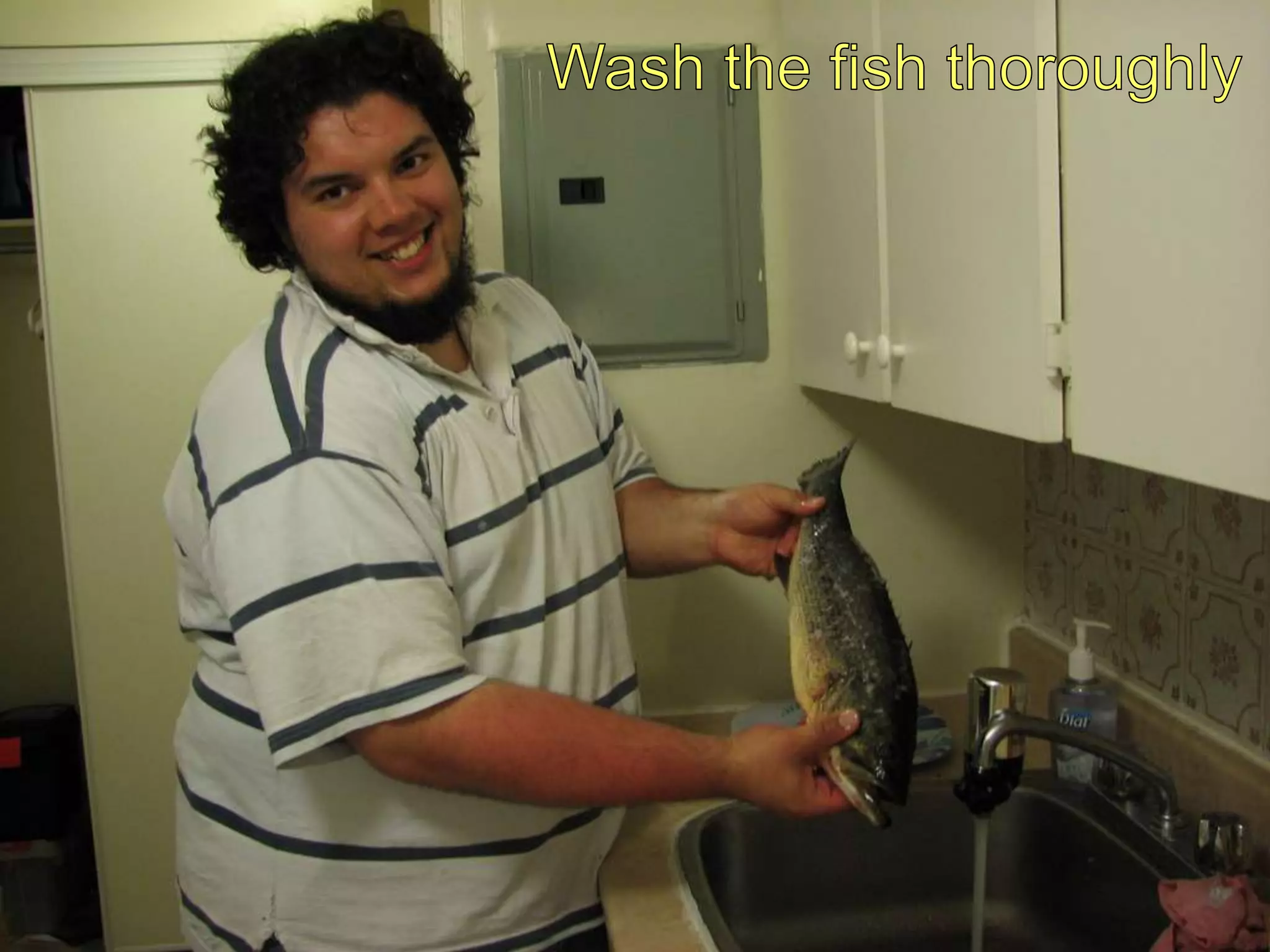
Washand evisceratethe fish
•Keep the fish awayfrom the heat asmuch possible.
•Cover the smoker and let the smoke for 1 ½ hour.
•You’ll need to add wood every 20 minutes to keep the smoke.
Oil-drumsmoker
Altona-type oven
Chorkor
One of the most popular method of processing fish.

You expose the fish products to a temperature that’s high enough to
removethemoisture but low that it doesn’t cook.
Fish
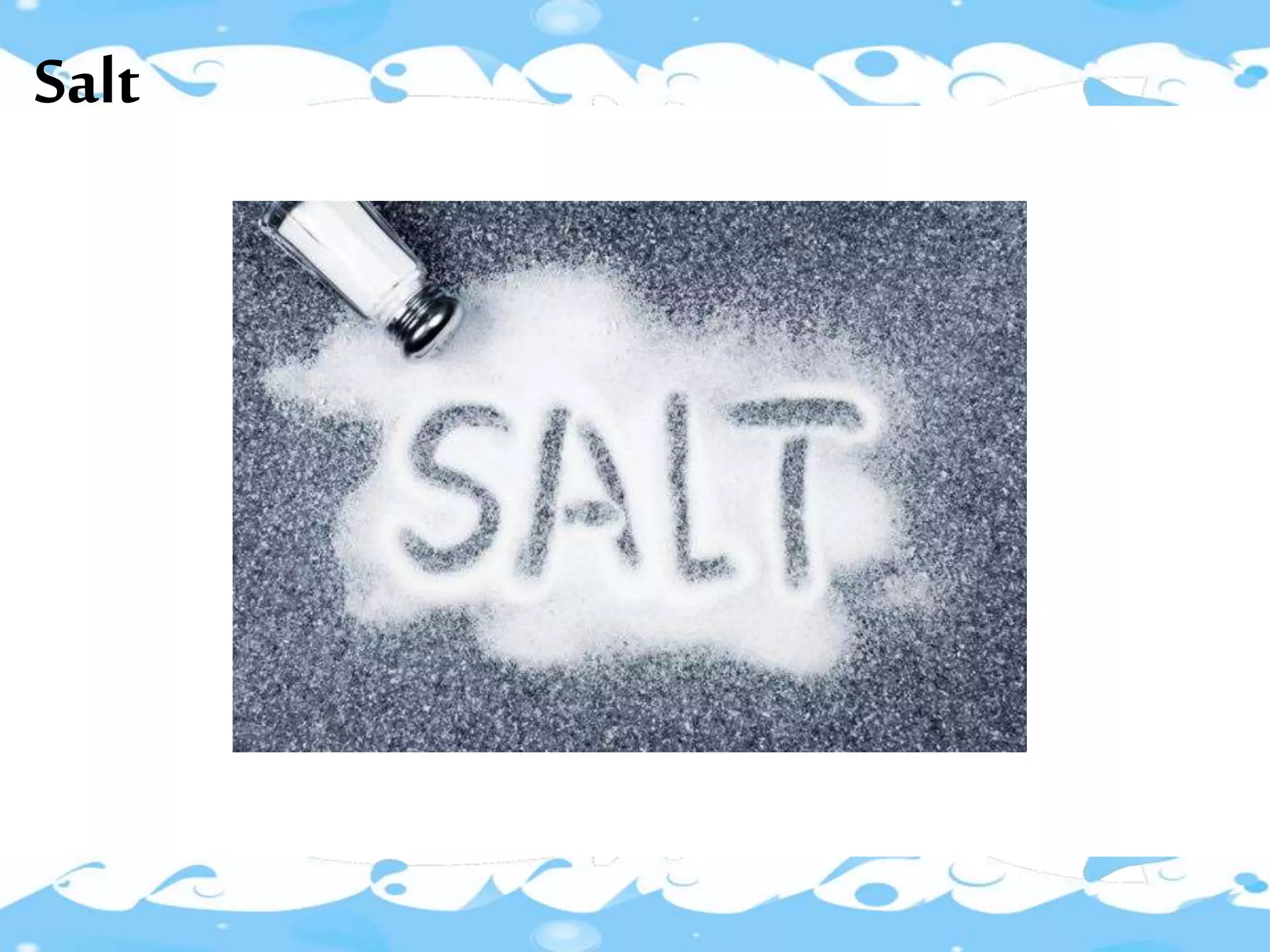
Salt
This method has these advantages:
•Dried fish requires less storage space thanother types of fish.
•Dried fish weighsmuch less thanthe equivalent amountof canned
products.
•Fish can be preserved withoutthe addition of sugar or any other
preserving agents.
Electric Dehydrator
Involves the addition of ingredients such as salt, sugar and some
preservatives oradditives.
Lengthens the shelf life and at the same time develops cured color
and flavor in fish.
Processof applying heat to food that is sealed in a jar in order to
destroymicroorganisms that can cause spoilage.
involves the addition of ingredients such as salt, sugar and some
preservatives oradditives.
Lengthens the shelf life and at the same time develops cured color
and flavor in fish.
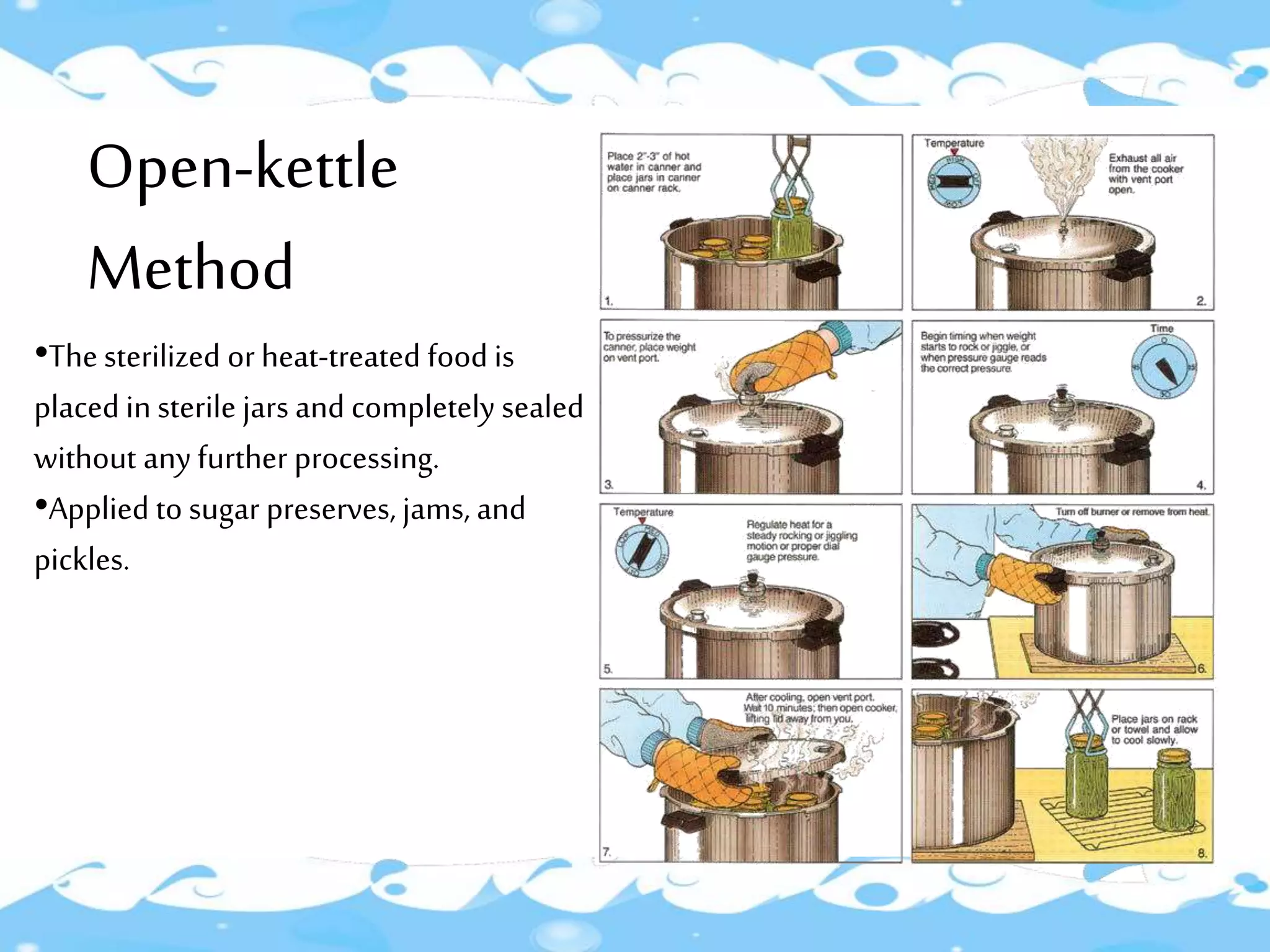
Open-kettle
Method
•Thesterilized orheat-treated food is
placed in sterile jars and completely sealed
without any further processing.
•Applied to sugar preserves, jams, and
pickles.
Can-cooked method
•Theprepared food is packedin jars or
cans.
•They are either packedcold or
thoroughly heatedto partially cook
the food before processing.
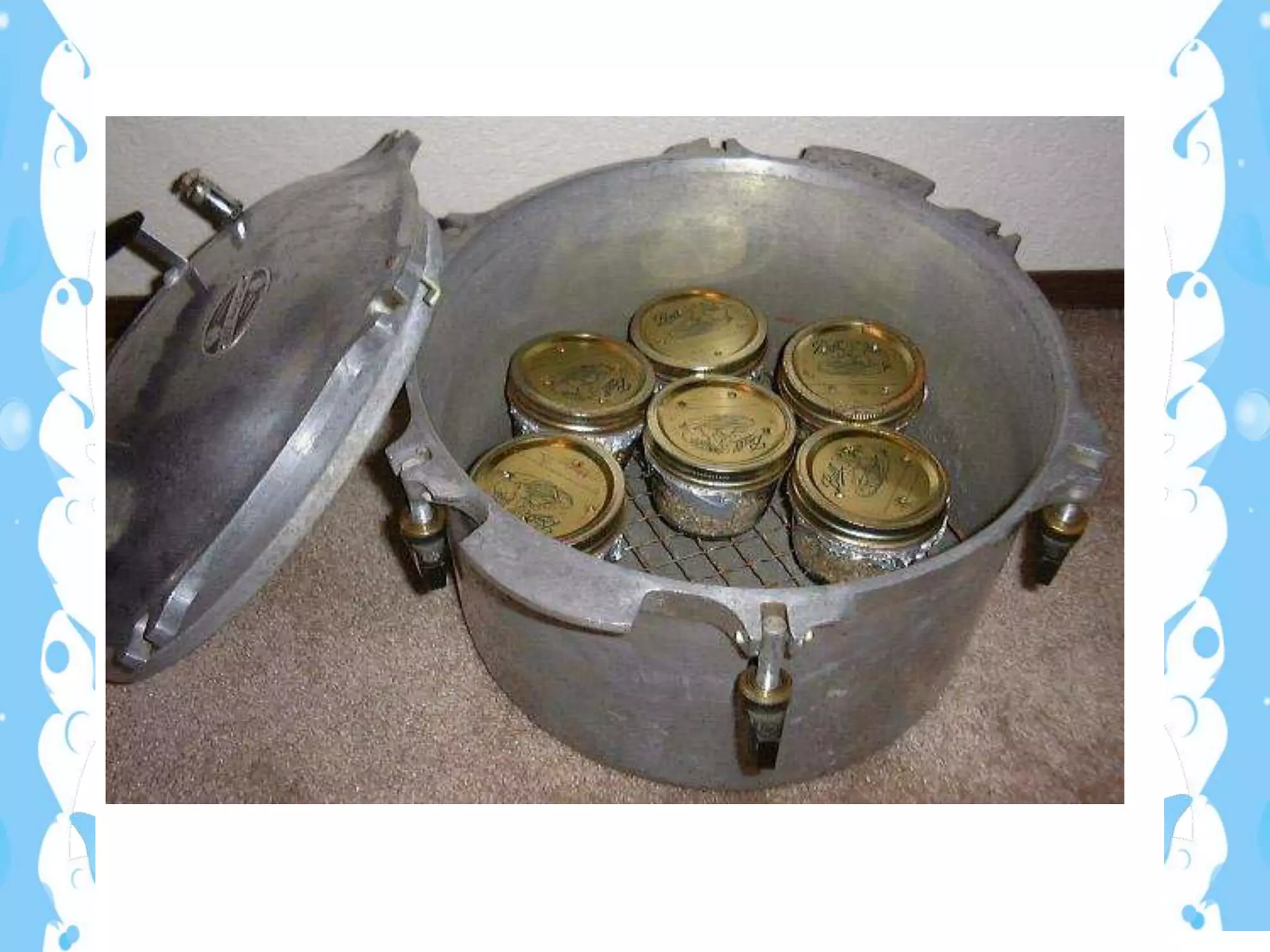
Pressure canner
•Processed fishproducts serve as alternativesto fresh fish
especiallyif the supply of fresh fish is scarce.
•Maintain,if not improve, the qualityof fish products.
Cost of ₱roduction and
Marketing of ₱rocessed
Fish
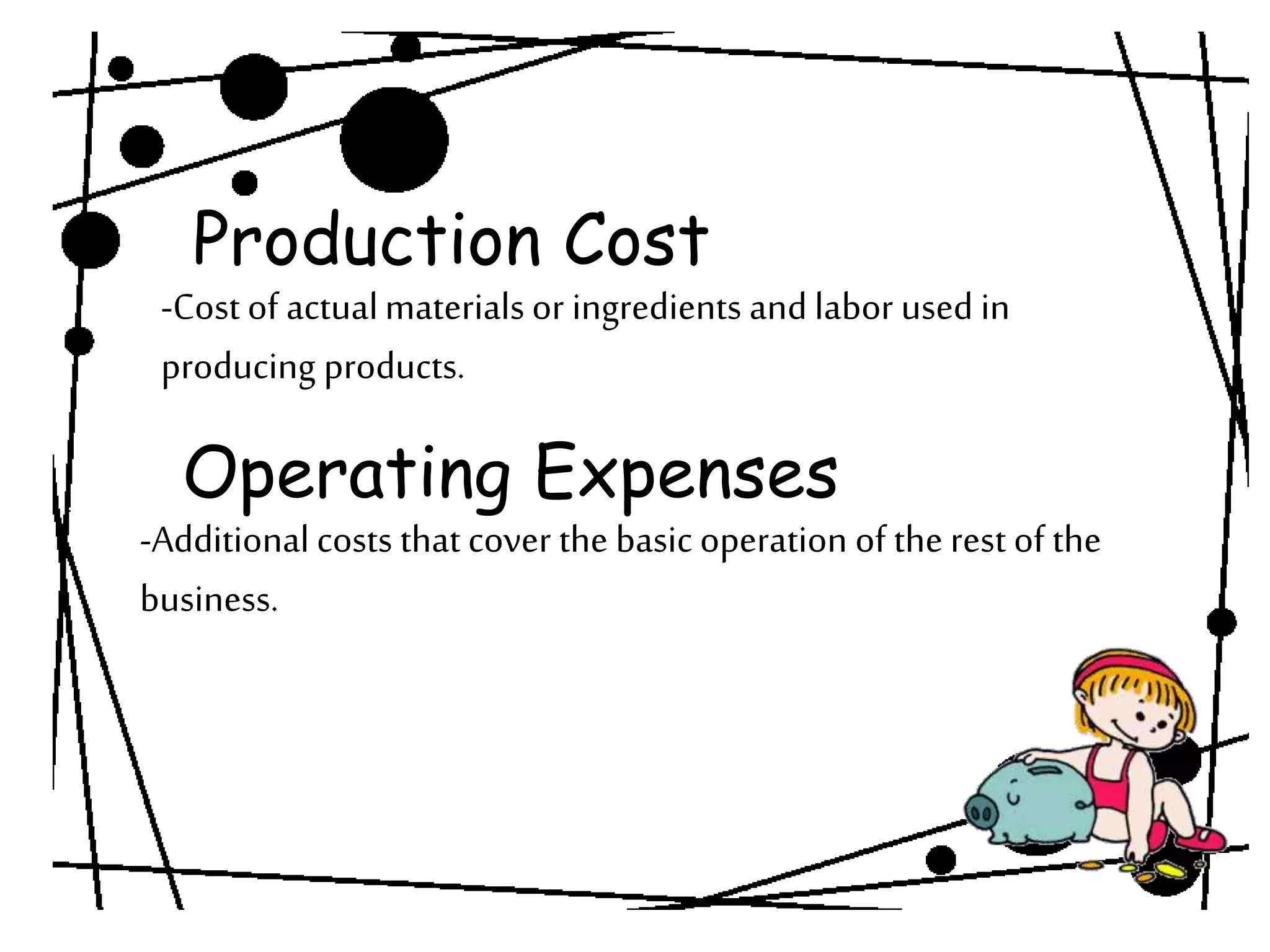
Operating Expenses
Production Cost
-Cost of actualmaterials or ingredients and labor used in
producing products.
-Additional costs that cover the basic operation of the rest of the
business.
Profit
-net income thatthe business earns..
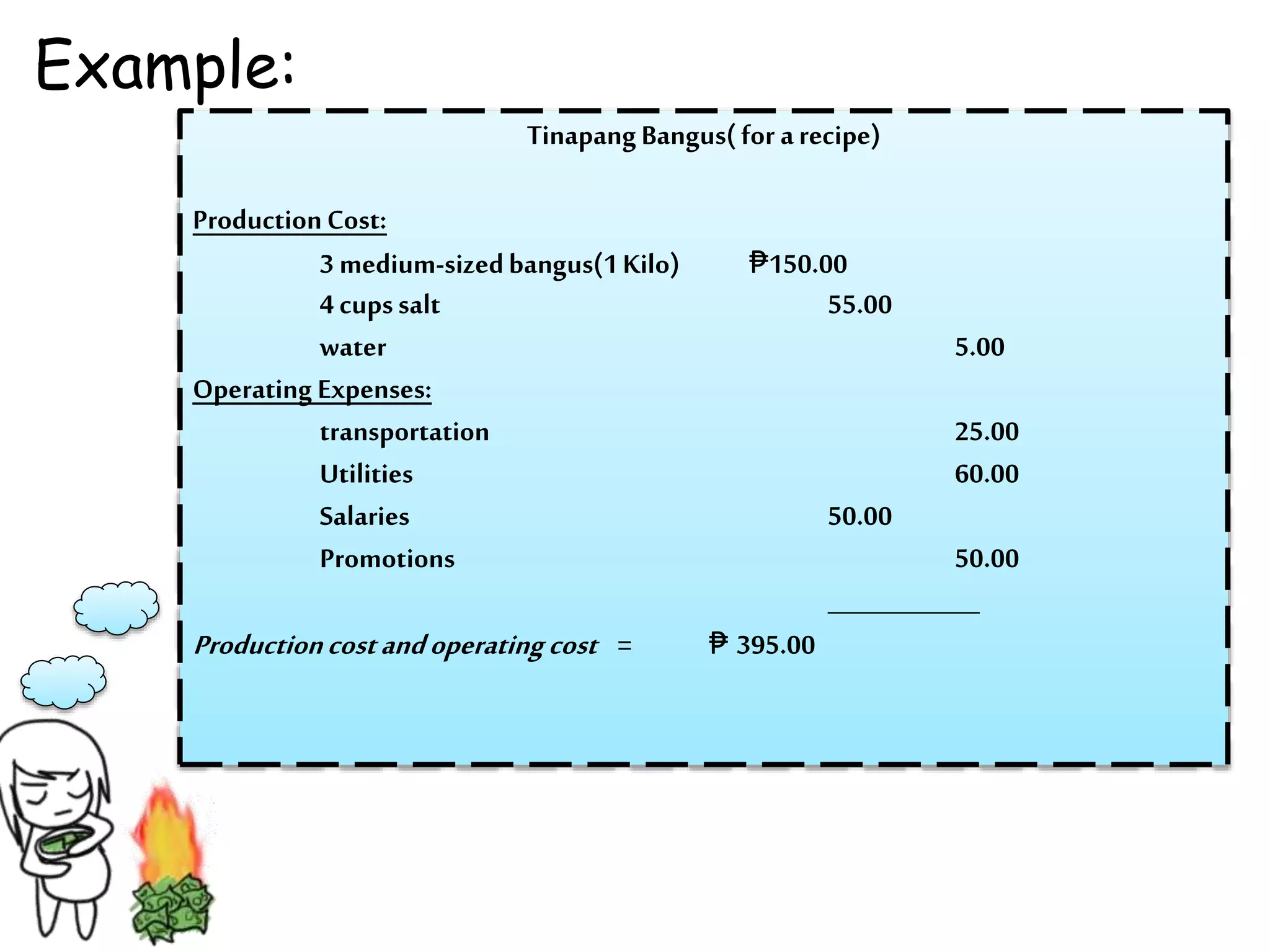
TinapangBangus(for arecipe)
ProductionCost:
3 medium-sizedbangus(1Kilo) ₱150.00
4 cupssalt 55.00
water 5.00
Operating Expenses:
transportation 25.00
Utilities 60.00
Salaries 50.00
Promotions 50.00
_____________
Productioncostandoperatingcost = ₱ 395.00
Example:
Pricing the Product
- The entrepreneur should see to it thatthe profit desired is
realisticand reasonable.
Here is another way to price a product.
Formula:
*Total Sale
------------------------------ = Selling price per item
number of items or pieces(product)
*Production Cost + operating expenses + profit forecast = Total sales
₱80.00 + ₱50.00 + ₱30.00 = ₱160.00(Total Sales)
₱ 160.00
------------- = ₱20.00 selling price per item
8
Marketing the Product
- Understand the needs of the target customers or the target
market
Marketing Techniques
- If the target market has been identified, the major goal is to
motivate and persuade the customers to buy the product.
The ff. techniques will help market the product:
1.Offering a good quality product.
2.Packaging the product
attractively.
3.Selling the product at an
affordable price
4.Ensuring that a food product has
a satisfying taste- delicious and
well-blended.
Marketing Tools
An entrepreneur should try to differentiate his product from
other competitors to attract customers.
The marketing tools that will help him include:
1. Posters, flyers and brochures
2. Callingor business cards
3. Sponsoring events
4. Word of Mouth
5. Media
6. Telephone Sales
Sponsoringevents
Hele
Hele
Hele
Hele
Hele
Hele
Hele
Hele
Hele

Hele

  • 3.
    plays an important rolein our livelihood.
  • 4.
  • 6.
    Methods ofProcessing fishand shellfish: Freezing Smoking Drying or dehydration Fish Curing Canning
  • 8.
    Simplest and mostnatural wayof preserving fish. Maintain the flavor and quality of fresh fish. Reducesor halt the biochemical reactions in fish flesh.
  • 10.
  • 11.
  • 17.
  • 18.
  • 20.
    Little preservativeaction Unique tasteand flavor imported by the smoking process. The fish is placed near a fire where it is cooked and saturated with smoke.
  • 23.
  • 24.
  • 26.
  • 28.
    •Keep the fishawayfrom the heat asmuch possible. •Cover the smoker and let the smoke for 1 ½ hour. •You’ll need to add wood every 20 minutes to keep the smoke.
  • 30.
  • 40.
    One of themost popular method of processing fish. You expose the fish products to a temperature that’s high enough to removethemoisture but low that it doesn’t cook.
  • 42.
  • 43.
  • 45.
    This method hasthese advantages: •Dried fish requires less storage space thanother types of fish. •Dried fish weighsmuch less thanthe equivalent amountof canned products. •Fish can be preserved withoutthe addition of sugar or any other preserving agents.
  • 62.
  • 66.
    Involves the additionof ingredients such as salt, sugar and some preservatives oradditives. Lengthens the shelf life and at the same time develops cured color and flavor in fish.
  • 69.
    Processof applying heatto food that is sealed in a jar in order to destroymicroorganisms that can cause spoilage. involves the addition of ingredients such as salt, sugar and some preservatives oradditives. Lengthens the shelf life and at the same time develops cured color and flavor in fish.
  • 70.
    Open-kettle Method •Thesterilized orheat-treated foodis placed in sterile jars and completely sealed without any further processing. •Applied to sugar preserves, jams, and pickles.
  • 72.
    Can-cooked method •Theprepared foodis packedin jars or cans. •They are either packedcold or thoroughly heatedto partially cook the food before processing.
  • 74.
  • 77.
    •Processed fishproducts serveas alternativesto fresh fish especiallyif the supply of fresh fish is scarce. •Maintain,if not improve, the qualityof fish products.
  • 78.
    Cost of ₱roductionand Marketing of ₱rocessed Fish
  • 79.
    Operating Expenses Production Cost -Costof actualmaterials or ingredients and labor used in producing products. -Additional costs that cover the basic operation of the rest of the business.
  • 80.
  • 81.
    TinapangBangus(for arecipe) ProductionCost: 3 medium-sizedbangus(1Kilo)₱150.00 4 cupssalt 55.00 water 5.00 Operating Expenses: transportation 25.00 Utilities 60.00 Salaries 50.00 Promotions 50.00 _____________ Productioncostandoperatingcost = ₱ 395.00 Example:
  • 82.
    Pricing the Product -The entrepreneur should see to it thatthe profit desired is realisticand reasonable.
  • 83.
    Here is anotherway to price a product. Formula: *Total Sale ------------------------------ = Selling price per item number of items or pieces(product) *Production Cost + operating expenses + profit forecast = Total sales ₱80.00 + ₱50.00 + ₱30.00 = ₱160.00(Total Sales) ₱ 160.00 ------------- = ₱20.00 selling price per item 8
  • 84.
    Marketing the Product -Understand the needs of the target customers or the target market
  • 85.
    Marketing Techniques - Ifthe target market has been identified, the major goal is to motivate and persuade the customers to buy the product.
  • 86.
    The ff. techniqueswill help market the product: 1.Offering a good quality product. 2.Packaging the product attractively. 3.Selling the product at an affordable price 4.Ensuring that a food product has a satisfying taste- delicious and well-blended.
  • 87.
    Marketing Tools An entrepreneurshould try to differentiate his product from other competitors to attract customers.
  • 88.
    The marketing toolsthat will help him include: 1. Posters, flyers and brochures 2. Callingor business cards 3. Sponsoring events 4. Word of Mouth 5. Media 6. Telephone Sales
  • 92.