Hello,
Students!
ALMIGHTY FATHER, WE PRAISE AND THANK YOU FOR THIS
DAY. WATCH OVER US AS WE GO ABOUT OUR WORK AND
STUDIES. HELP US IN EVERY WAY SO THAT WE MAY BECOME
THE CHILDREN YOU WANT US TO BE. AMEN.
MYSTERY
BOX
CHALLENGE
MECHANICS
OF THE GAME
Pass the box: Students
pass the mystery box
around while the music is
playing. When the music
stops, the student holding
the box must draw a
mystery picture from
inside.
Answer the question:
Each mystery picture is
accompanied by a
question related to the
picture. The student who
drew the picture must
answer the question aloud
to the class.
Repeat: Once the student
has answered the
question, the box is
passed around the circle
again while the music
plays. The process
repeats until all picture in
the box are drawn.
MYSTERY
BOX
CHALLENGE
CONDUCTI
ON
H E A T T R A N S F E R
COLD
HOT
Rubric Scoring
95-100
The group was able to
demonstrates a clear and
accurate understanding of heat
transfer through conduction and
provides correct answers to all
guide questions.
Rubric Scoring
90-94
The group was able to
demonstrates a good
understanding of heat transfer
through conduction and provides
mostly correct answers to guide
questions.
Rubric Scoring
85-89
The group was able to
demonstrates a basic
understanding of heat transfer
through conduction and provides
some correct answers to guide
questions.
CAUTIO
N
BE CAREFUL WHEN
HANDLING HOT OBJECTS TO
PREVENT BURNS OR
CONDUCTI
ON
H E A T T R A N S F E R
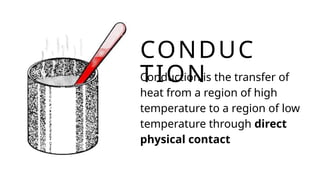
Conduction is the transfer of
heat from a region of high
temperature to a region of low
temperature through direct
physical contact
CONDUC
TION
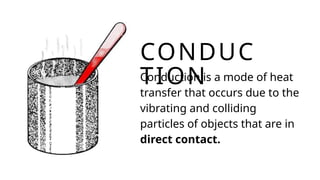
Conduction is a mode of heat
transfer that occurs due to the
vibrating and colliding
particles of objects that are in
direct contact.
CONDUC
TION
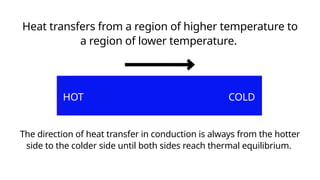
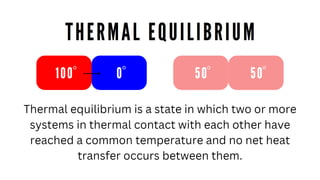
The direction of heat transfer in conduction is always from the hotter
side to the colder side until both sides reach thermal equilibrium.
Heat transfers from a region of higher temperature to
a region of lower temperature.
COLD
HOT
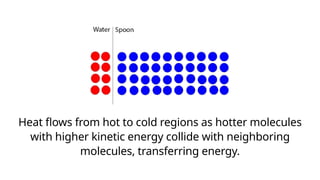
Heat flows from hot to cold regions as hotter molecules
with higher kinetic energy collide with neighboring
molecules, transferring energy.
THERMAL
CONDUC
TIVITY
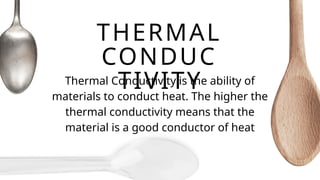
Thermal Conductivity is the ability of
materials to conduct heat. The higher the
thermal conductivity means that the
material is a good conductor of heat
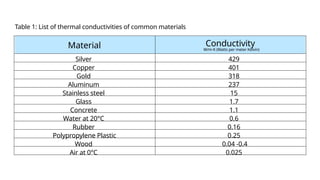
Material Conductivity
W/m·K (Watts per meter Kelvin)
Silver
Copper
Gold
Aluminum
Stainless steel
Glass
Concrete
Water at 20°C
Rubber
Polypropylene Plastic
Wood
Air at 0°C
429
401
318
237
15
1.7
1.1
0.6
0.16
0.25
0.04 -0.4
0.025
Table 1: List of thermal conductivities of common materials
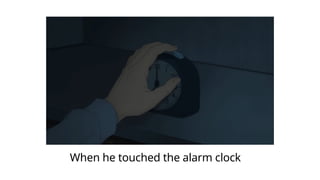
When he touched the alarm clock
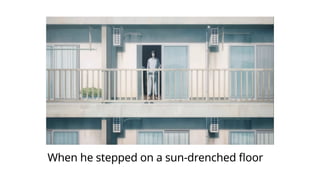
When he stepped on a sun-drenched floor
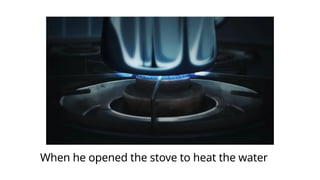
When he opened the stove to heat the water
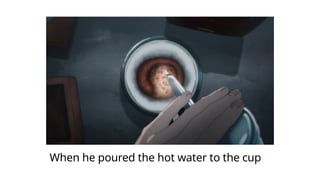
When he poured the hot water to the cup
When he touched the hot coffee cup
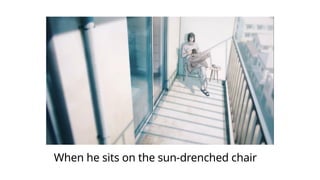
When he sits on the sun-drenched chair
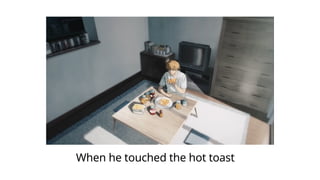
When he touched the hot toast
ASSIGNMENT
list down any experience
showing how conduction of
heat helps us in our everyday
life. Write your answers to
your notebook.

HEAT TRANSFER-CONDUCTION for grade 7 students

  • 1.
  • 2.
    ALMIGHTY FATHER, WEPRAISE AND THANK YOU FOR THIS DAY. WATCH OVER US AS WE GO ABOUT OUR WORK AND STUDIES. HELP US IN EVERY WAY SO THAT WE MAY BECOME THE CHILDREN YOU WANT US TO BE. AMEN.
  • 4.
  • 5.
  • 6.
    Pass the box:Students pass the mystery box around while the music is playing. When the music stops, the student holding the box must draw a mystery picture from inside.
  • 7.
    Answer the question: Eachmystery picture is accompanied by a question related to the picture. The student who drew the picture must answer the question aloud to the class.
  • 8.
    Repeat: Once thestudent has answered the question, the box is passed around the circle again while the music plays. The process repeats until all picture in the box are drawn.
  • 14.
  • 20.
    CONDUCTI ON H E AT T R A N S F E R
  • 23.
  • 24.
    Rubric Scoring 95-100 The groupwas able to demonstrates a clear and accurate understanding of heat transfer through conduction and provides correct answers to all guide questions.
  • 25.
    Rubric Scoring 90-94 The groupwas able to demonstrates a good understanding of heat transfer through conduction and provides mostly correct answers to guide questions.
  • 26.
    Rubric Scoring 85-89 The groupwas able to demonstrates a basic understanding of heat transfer through conduction and provides some correct answers to guide questions.
  • 27.
    CAUTIO N BE CAREFUL WHEN HANDLINGHOT OBJECTS TO PREVENT BURNS OR
  • 30.
    CONDUCTI ON H E AT T R A N S F E R
  • 31.
    Conduction is thetransfer of heat from a region of high temperature to a region of low temperature through direct physical contact CONDUC TION
  • 32.
    Conduction is amode of heat transfer that occurs due to the vibrating and colliding particles of objects that are in direct contact. CONDUC TION
  • 33.
    The direction ofheat transfer in conduction is always from the hotter side to the colder side until both sides reach thermal equilibrium. Heat transfers from a region of higher temperature to a region of lower temperature. COLD HOT
  • 35.
    Heat flows fromhot to cold regions as hotter molecules with higher kinetic energy collide with neighboring molecules, transferring energy.
  • 37.
    THERMAL CONDUC TIVITY Thermal Conductivity isthe ability of materials to conduct heat. The higher the thermal conductivity means that the material is a good conductor of heat
  • 38.
    Material Conductivity W/m·K (Wattsper meter Kelvin) Silver Copper Gold Aluminum Stainless steel Glass Concrete Water at 20°C Rubber Polypropylene Plastic Wood Air at 0°C 429 401 318 237 15 1.7 1.1 0.6 0.16 0.25 0.04 -0.4 0.025 Table 1: List of thermal conductivities of common materials

  • 45.
    When he touchedthe alarm clock
  • 46.
    When he steppedon a sun-drenched floor
  • 47.
    When he openedthe stove to heat the water
  • 48.
    When he pouredthe hot water to the cup
  • 49.
    When he touchedthe hot coffee cup
  • 50.
    When he sitson the sun-drenched chair
  • 51.
    When he touchedthe hot toast
  • 54.
    ASSIGNMENT list down anyexperience showing how conduction of heat helps us in our everyday life. Write your answers to your notebook.