



Health insurance
๏ฌ
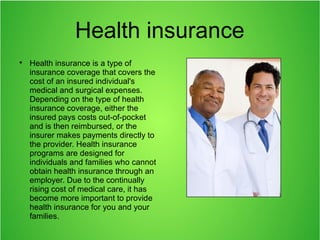
Health insurance is a type of
insurance coverage that covers the
cost of an insured individual's
medical and surgical expenses.
Depending on the type of health
insurance coverage, either the
insured pays costs out-of-pocket
and is then reimbursed, or the
insurer makes payments directly to
the provider. Health insurance
programs are designed for
individuals and families who cannot
obtain health insurance through an
employer. Due to the continually
rising cost of medical care, it has
become more important to provide
health insurance for you and your
families.
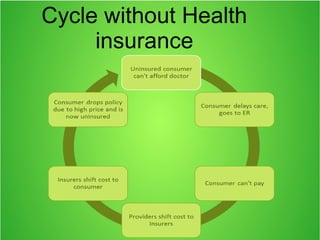
Cycle without Health
insurance
Government Health Care
Plans
Medicare
Provides health insurance to people over age 65
Part A covers inpatient care in hospitals or nursing facilities and
some home health
Part B is optional coverage
Medigap insurance: insurance provided by private insurance
companies to cover medical expenses that are not covered by
Medicare
Long-Term Care Insurance
๏ฌ
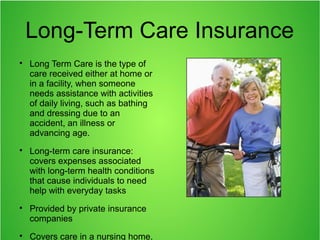
Long Term Care is the type of
care received either at home or
in a facility, when someone
needs assistance with activities
of daily living, such as bathing
and dressing due to an
accident, an illness or
advancing age.
๏ฌ
Long-term care insurance:
covers expenses associated
with long-term health conditions
that cause individuals to need
help with everyday tasks
๏ฌ
Provided by private insurance
companies
๏ฌ
Covers care in a nursing home,
Additional Types of Health
Care Plans
Dental insurance: Individual Dental Insurance is
available to individuals and families that are not
covered on group dental insurance. For people
without dental insurance, cost often stands in
the way of getting the care they need to
maintain the health of their teeth and gums.
Even for routine preventive care, a trip to the
dentistโ€™s office could mean a substantial amount
of money out of your pocket.
Vision insurance:Vision insurance provides
coverage for services relating to the care and
Disability Insurance: Individual Disability Income Protection is a must for
a business owner, and highly recommended for executives. If you are a
business owner, you should consider purchasing both group and
individual policies, if possible. As an executive, you should be sure to
obtain group coverage if it is available. Only forty three percent of large
companies provide group long term disability insurance.
Your chances are even less likely to get long term disability insurance if
you work for a small company. The cost of a plan provided by your
employer is usually less than you would pay for an individual disability
policy and often you can get coverage automatically without having to
qualify medically. If your employer doesnโ€™t provide disability insurance
then you may want to consider an individual disability policy.
Essential Health Benefits
1. Ambulatory services
2. Emergency services
3. Hospitalization
4. Maternity and newborn care
5. Mental health and substance use disorder services,
including behavioral health treatment
Health insurance
Health insurance

Health insurance

  • 2.
    Health insurance ๏ฌ Health insuranceis a type of insurance coverage that covers the cost of an insured individual's medical and surgical expenses. Depending on the type of health insurance coverage, either the insured pays costs out-of-pocket and is then reimbursed, or the insurer makes payments directly to the provider. Health insurance programs are designed for individuals and families who cannot obtain health insurance through an employer. Due to the continually rising cost of medical care, it has become more important to provide health insurance for you and your families.
  • 3.
  • 4.
    Government Health Care Plans Medicare Provideshealth insurance to people over age 65 Part A covers inpatient care in hospitals or nursing facilities and some home health Part B is optional coverage Medigap insurance: insurance provided by private insurance companies to cover medical expenses that are not covered by Medicare
  • 5.
    Long-Term Care Insurance ๏ฌ LongTerm Care is the type of care received either at home or in a facility, when someone needs assistance with activities of daily living, such as bathing and dressing due to an accident, an illness or advancing age. ๏ฌ Long-term care insurance: covers expenses associated with long-term health conditions that cause individuals to need help with everyday tasks ๏ฌ Provided by private insurance companies ๏ฌ Covers care in a nursing home,
  • 6.
    Additional Types ofHealth Care Plans Dental insurance: Individual Dental Insurance is available to individuals and families that are not covered on group dental insurance. For people without dental insurance, cost often stands in the way of getting the care they need to maintain the health of their teeth and gums. Even for routine preventive care, a trip to the dentistโ€™s office could mean a substantial amount of money out of your pocket. Vision insurance:Vision insurance provides coverage for services relating to the care and
  • 7.
    Disability Insurance: IndividualDisability Income Protection is a must for a business owner, and highly recommended for executives. If you are a business owner, you should consider purchasing both group and individual policies, if possible. As an executive, you should be sure to obtain group coverage if it is available. Only forty three percent of large companies provide group long term disability insurance. Your chances are even less likely to get long term disability insurance if you work for a small company. The cost of a plan provided by your employer is usually less than you would pay for an individual disability policy and often you can get coverage automatically without having to qualify medically. If your employer doesnโ€™t provide disability insurance then you may want to consider an individual disability policy.
  • 8.
    Essential Health Benefits 1.Ambulatory services 2. Emergency services 3. Hospitalization 4. Maternity and newborn care 5. Mental health and substance use disorder services, including behavioral health treatment