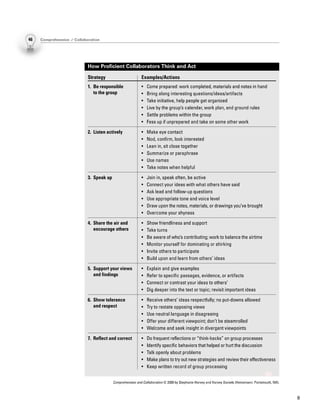
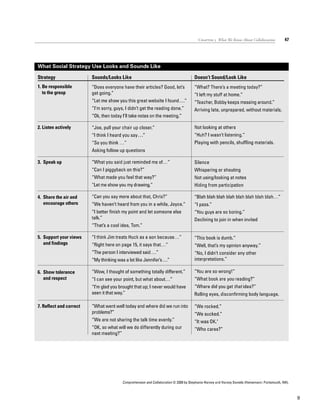
CCIRA
@StephHarvey49
www.stephanieharvey.com
Stephanie Harvey
Presented by:
Compreh
February 4, 2017
Comprehension, Curiosity & Collaboration:
The Real 21st Century Skills
Passion and
Wonder are
Contagious!
Inquiry is a way of life.
Inquiry based learning is not about a
final product at the end;
Inquiry based learning is about living
in a way that kids’ questions matter.
Harvey 2014
1
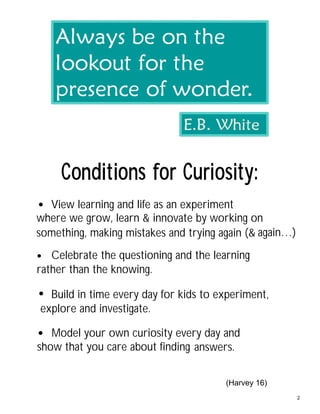
:ytisoiruCrofsnoitidnoC
again…)something, making mistakes and trying again (&
where we grow, learn & innovate by working on
View learning and life as an experiment•
rather than the knowing.
Celebrate the questioning and the learning•
explore and investigate.
Build in time every day for kids to experiment,•
answers.show that you care about finding
Model your own curiosity every day and
(Harvey 16)
•
2
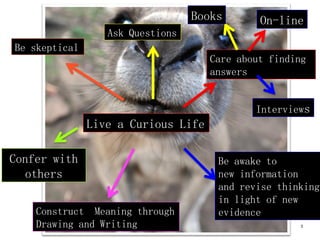
Live a Curious Life
Ask Questions
Care about finding
answers
Be awake to
new information
and revise thinking
in light of new
evidenceConstruct Meaning through
Drawing and Writing
Confer with
others
Be skeptical
Books On-line
Interviews
3
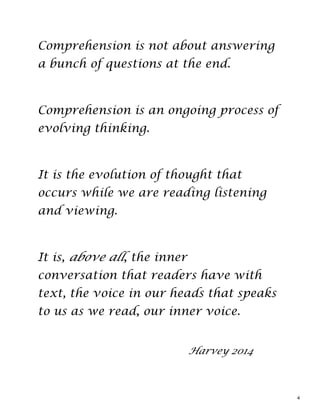
Comprehension is not about answering
a bunch of questions at the end.
Comprehension is an ongoing process of
evolving thinking.
It is the evolution of thought that
occurs while we are reading listening
and viewing.
It is, above all, the inner
conversation that readers have with
text, the voice in our heads that speaks
to us as we read, our inner voice.
Harvey 2014
4
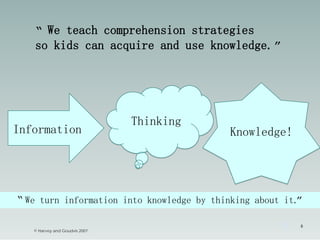
Information Knowledge!
Thinking
“ We turn information into knowledge by thinking about it.”
“ We teach comprehension strategies
so kids can acquire and use knowledge.”
© Harvey and Goudvis 2007
5
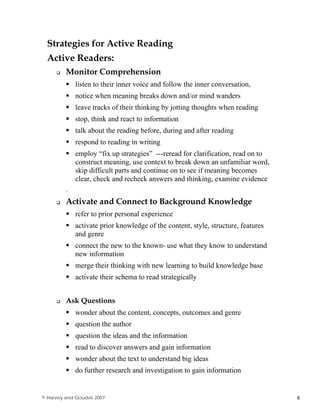
Strategies for Active Reading
Active Readers:
Monitor Comprehension
listen to their inner voice and follow the inner conversation,
notice when meaning breaks down and/or mind wanders
leave tracks of their thinking by jotting thoughts when reading
stop, think and react to information
talk about the reading before, during and after reading
respond to reading in writing
employ “fix up strategies” ---reread for clarification, read on to
construct meaning, use context to break down an unfamiliar word,
skip difficult parts and continue on to see if meaning becomes
clear, check and recheck answers and thinking, examine evidence
.
Activate and Connect to Background Knowledge
refer to prior personal experience
activate prior knowledge of the content, style, structure, features
and genre
connect the new to the known- use what they know to understand
new information
merge their thinking with new learning to build knowledge base
activate their schema to read strategically
Ask Questions
wonder about the content, concepts, outcomes and genre
question the author
question the ideas and the information
read to discover answers and gain information
wonder about the text to understand big ideas
do further research and investigation to gain information
© Harvey and Goudvis 2007 6
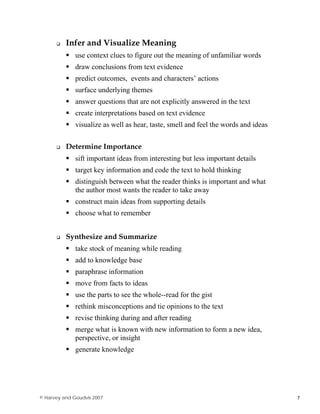
Infer and Visualize Meaning
use context clues to figure out the meaning of unfamiliar words
draw conclusions from text evidence
predict outcomes, events and characters’ actions
surface underlying themes
answer questions that are not explicitly answered in the text
create interpretations based on text evidence
visualize as well as hear, taste, smell and feel the words and ideas
Determine Importance
sift important ideas from interesting but less important details
target key information and code the text to hold thinking
distinguish between what the reader thinks is important and what
the author most wants the reader to take away
construct main ideas from supporting details
choose what to remember
Synthesize and Summarize
take stock of meaning while reading
add to knowledge base
paraphrase information
move from facts to ideas
use the parts to see the whole--read for the gist
rethink misconceptions and tie opinions to the text
revise thinking during and after reading
merge what is known with new information to form a new idea,
perspective, or insight
generate knowledge
8© Harvey and Goudvis 2007 7
8
9
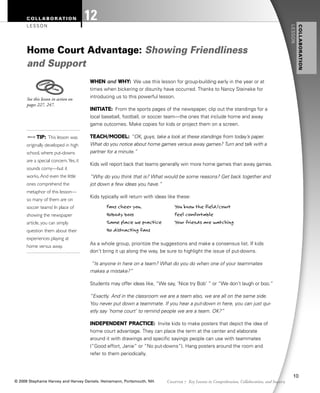
WHEN and WHY: We use this lesson for group-building early in the year or at
times when bickering or disunity have occurred. Thanks to Nancy Steineke for
introducing us to this powerful lesson.
INITIATE: From the sports pages of the newspaper, clip out the standings for a
local baseball, football, or soccer team—the ones that include home and away
game outcomes. Make copies for kids or project them on a screen.
TEACH/MODEL: “OK, guys, take a look at these standings from today’s paper.
What do you notice about home games versus away games? Turn and talk with a
partner for a minute.”
Kids will report back that teams generally win more home games than away games.
“Why do you think that is? What would be some reasons? Get back together and
jot down a few ideas you have.”
Kids typically will return with ideas like these:
Fans cheer you. You know the field/court
Nobody boos Feel comfortable
Same place we practice Your friends are watching
No distracting fans
As a whole group, prioritize the suggestions and make a consensus list. If kids
don’t bring it up along the way, be sure to highlight the issue of put-downs.
“Is anyone in here on a team? What do you do when one of your teammates
makes a mistake?”
Students may offer ideas like, “We say, ‘Nice try Bob’ ” or “We don’t laugh or boo.”
“Exactly. And in the classroom we are a team also, we are all on the same side.
You never put down a teammate. If you hear a put-down in here, you can just qui-
etly say ‘home court’ to remind people we are a team. OK?”
INDEPENDENT PRACTICE: Invite kids to make posters that depict the idea of
home court advantage. They can place the term at the center and elaborate
around it with drawings and specific sayings people can use with teammates
(“Good effort, Janie” or “No put-downs”). Hang posters around the room and
refer to them periodically.
.TIP: This lesson was
originally developed in high
school, where put-downs
are a special concern.Yes, it
sounds corny—but it
works. And even the little
ones comprehend the
metaphor of this lesson—
so many of them are on
soccer teams! In place of
showing the newspaper
article, you can simply
question them about their
experiences playing at
home versus away.
Home Court Advantage: Showing Friendliness
and Support
COLLABORATION
LESSON
12
127
See this lesson in action on
pages 227, 247.
Chapter 7 Key Lessons in Comprehension, Collaboration, and Inquiry
COLLABORATION
LESSON
Harvey_CH7.qxp 3/26/09 12:23 PM Page 127
© 2009 Stephanie Harvey and Harvey Daniels. Heinemann, Portsmouth, NH.
10

Harvey, oficinas

  • 1.
    CCIRA @StephHarvey49 www.stephanieharvey.com Stephanie Harvey Presented by: Compreh February4, 2017 Comprehension, Curiosity & Collaboration: The Real 21st Century Skills
  • 3.
    Passion and Wonder are Contagious! Inquiryis a way of life. Inquiry based learning is not about a final product at the end; Inquiry based learning is about living in a way that kids’ questions matter. Harvey 2014 1
  • 4.
    :ytisoiruCrofsnoitidnoC again…)something, making mistakesand trying again (& where we grow, learn & innovate by working on View learning and life as an experiment• rather than the knowing. Celebrate the questioning and the learning• explore and investigate. Build in time every day for kids to experiment,• answers.show that you care about finding Model your own curiosity every day and (Harvey 16) • 2
  • 5.
    Live a CuriousLife Ask Questions Care about finding answers Be awake to new information and revise thinking in light of new evidenceConstruct Meaning through Drawing and Writing Confer with others Be skeptical Books On-line Interviews 3
  • 6.
    Comprehension is notabout answering a bunch of questions at the end. Comprehension is an ongoing process of evolving thinking. It is the evolution of thought that occurs while we are reading listening and viewing. It is, above all, the inner conversation that readers have with text, the voice in our heads that speaks to us as we read, our inner voice. Harvey 2014 4
  • 7.
    Information Knowledge! Thinking “ Weturn information into knowledge by thinking about it.” “ We teach comprehension strategies so kids can acquire and use knowledge.” © Harvey and Goudvis 2007 5
  • 8.
    Strategies for ActiveReading Active Readers: Monitor Comprehension listen to their inner voice and follow the inner conversation, notice when meaning breaks down and/or mind wanders leave tracks of their thinking by jotting thoughts when reading stop, think and react to information talk about the reading before, during and after reading respond to reading in writing employ “fix up strategies” ---reread for clarification, read on to construct meaning, use context to break down an unfamiliar word, skip difficult parts and continue on to see if meaning becomes clear, check and recheck answers and thinking, examine evidence . Activate and Connect to Background Knowledge refer to prior personal experience activate prior knowledge of the content, style, structure, features and genre connect the new to the known- use what they know to understand new information merge their thinking with new learning to build knowledge base activate their schema to read strategically Ask Questions wonder about the content, concepts, outcomes and genre question the author question the ideas and the information read to discover answers and gain information wonder about the text to understand big ideas do further research and investigation to gain information © Harvey and Goudvis 2007 6
  • 9.
    Infer and VisualizeMeaning use context clues to figure out the meaning of unfamiliar words draw conclusions from text evidence predict outcomes, events and characters’ actions surface underlying themes answer questions that are not explicitly answered in the text create interpretations based on text evidence visualize as well as hear, taste, smell and feel the words and ideas Determine Importance sift important ideas from interesting but less important details target key information and code the text to hold thinking distinguish between what the reader thinks is important and what the author most wants the reader to take away construct main ideas from supporting details choose what to remember Synthesize and Summarize take stock of meaning while reading add to knowledge base paraphrase information move from facts to ideas use the parts to see the whole--read for the gist rethink misconceptions and tie opinions to the text revise thinking during and after reading merge what is known with new information to form a new idea, perspective, or insight generate knowledge 8© Harvey and Goudvis 2007 7
  • 10.
  • 11.
  • 12.
    WHEN and WHY:We use this lesson for group-building early in the year or at times when bickering or disunity have occurred. Thanks to Nancy Steineke for introducing us to this powerful lesson. INITIATE: From the sports pages of the newspaper, clip out the standings for a local baseball, football, or soccer team—the ones that include home and away game outcomes. Make copies for kids or project them on a screen. TEACH/MODEL: “OK, guys, take a look at these standings from today’s paper. What do you notice about home games versus away games? Turn and talk with a partner for a minute.” Kids will report back that teams generally win more home games than away games. “Why do you think that is? What would be some reasons? Get back together and jot down a few ideas you have.” Kids typically will return with ideas like these: Fans cheer you. You know the field/court Nobody boos Feel comfortable Same place we practice Your friends are watching No distracting fans As a whole group, prioritize the suggestions and make a consensus list. If kids don’t bring it up along the way, be sure to highlight the issue of put-downs. “Is anyone in here on a team? What do you do when one of your teammates makes a mistake?” Students may offer ideas like, “We say, ‘Nice try Bob’ ” or “We don’t laugh or boo.” “Exactly. And in the classroom we are a team also, we are all on the same side. You never put down a teammate. If you hear a put-down in here, you can just qui- etly say ‘home court’ to remind people we are a team. OK?” INDEPENDENT PRACTICE: Invite kids to make posters that depict the idea of home court advantage. They can place the term at the center and elaborate around it with drawings and specific sayings people can use with teammates (“Good effort, Janie” or “No put-downs”). Hang posters around the room and refer to them periodically. .TIP: This lesson was originally developed in high school, where put-downs are a special concern.Yes, it sounds corny—but it works. And even the little ones comprehend the metaphor of this lesson— so many of them are on soccer teams! In place of showing the newspaper article, you can simply question them about their experiences playing at home versus away. Home Court Advantage: Showing Friendliness and Support COLLABORATION LESSON 12 127 See this lesson in action on pages 227, 247. Chapter 7 Key Lessons in Comprehension, Collaboration, and Inquiry COLLABORATION LESSON Harvey_CH7.qxp 3/26/09 12:23 PM Page 127 © 2009 Stephanie Harvey and Harvey Daniels. Heinemann, Portsmouth, NH. 10