Dental Anatomy
Lecture 14
Permanent Molars
Permanent Molars are
12 in number,
6 on the right side and 6 on the left side.
PERMANENT MOLARS 1
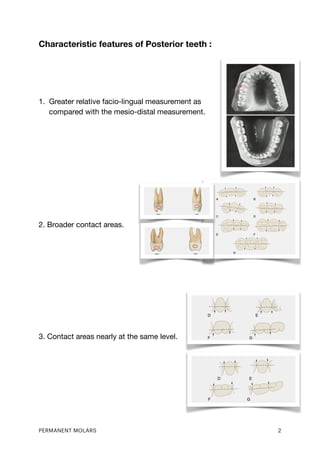
Characteristic features of Posterior teeth :
1. Greater relative facio-lingual measurement as
compared with the mesio-distal measurement.
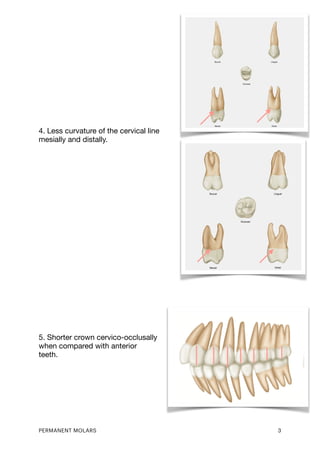
2. Broader contact areas.
3. Contact areas nearly at the same level.
PERMANENT MOLARS 2
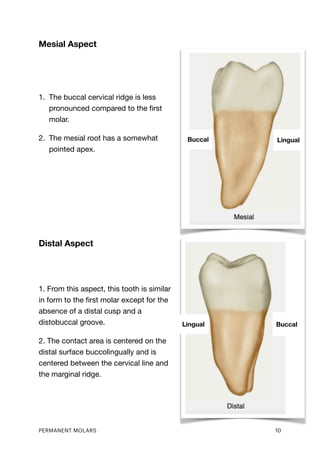
4. Less curvature of the cervical line
mesially and distally.
5. Shorter crown cervico-occlusally
when compared with anterior
teeth.
PERMANENT MOLARS 3
Permanent Mandibular Molars
Permanent mandibular molars are larger than any other mandibular
teeth.
They are three in number on each side of the mandible: the
fi
rst,
second, and third mandibular molars.
They are not succedaneous teeth as they erupt behind the deciduous
molars.
Their main function is grinding the food and supporting the muscles of
mastication and vertical dimension.
PERMANENT MOLARS 4
Permanent Mandibular Second Molar
PERMANENT MOLARS 5
Principal Identifying features
1. It is smaller than the
fi
rst molar in
all dimensions.
2. It has four well-developed
cusps; two buccal and two
lingual of nearly equal size.
PERMANENT MOLARS 6
3. There is no distal cusp but the distobuccal cusp is larger than that of
the
fi
rst molar.
4. It has two roots; one mesial and one distal.
They are broad buccolingually but they are not as broad as those of the
fi
rst molar nor are they as widely separated.
PERMANENT MOLARS 7
Mandibular First Molar Mandibular Second Molar
Buccal Aspect
1. The crown is shorter cervico-
occlusally and narrower
mesiodistally than that of the
fi
rst
molar.
2. There is only one developmental
groove, the buccal developmental
groove, which separates
between the mesiobuccal and
distobuccal cusps.
3. Both mesiobuccal and
distobuccal cusps are nearly equal
in their mesiodistal measurements.
4. The cervical line in many
instances points sharply to the root
bifurcation.
5. The roots are shorter than those of the
fi
rst molar. They are usually
closer together and are parallel to each other. They are inclined distally
forming an acute angle with the occlusal plane than is found on the
fi
rst
molar.
PERMANENT MOLARS 8
Mesial
Distal
Lingual Aspect
1. The crown and the roots
converge lingually but to a slight
degree, therefore:
a. Little of the mesial and
distal surfaces may be seen
from this aspect.
b. The mesiodistal
dimension cervically is
greater than that of the
fi
rst
molar.
2. The contact areas are more
noticeable from this
aspect, and they are slightly more
cervically positioned than those
of the
fi
rst molar.
PERMANENT MOLARS 9
Mesial Distal
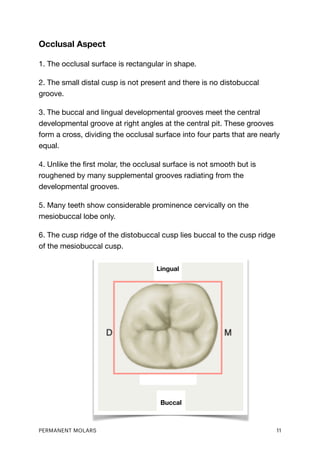
Mesial Aspect
1. The buccal cervical ridge is less
pronounced compared to the
fi
rst
molar.
2. The mesial root has a somewhat
pointed apex.
Distal Aspect
1. From this aspect, this tooth is similar
in form to the
fi
rst molar except for the
absence of a distal cusp and a
distobuccal groove.
2. The contact area is centered on the
distal surface buccolingually and is
centered between the cervical line and
the marginal ridge.
PERMANENT MOLARS 10
Lingual
Buccal
Buccal
Lingual
Occlusal Aspect
1. The occlusal surface is rectangular in shape.
2. The small distal cusp is not present and there is no distobuccal
groove.
3. The buccal and lingual developmental grooves meet the central
developmental groove at right angles at the central pit. These grooves
form a cross, dividing the occlusal surface into four parts that are nearly
equal.
4. Unlike the
fi
rst molar, the occlusal surface is not smooth but is
roughened by many supplemental grooves radiating from the
developmental grooves.
5. Many teeth show considerable prominence cervically on the
mesiobuccal lobe only.
6. The cusp ridge of the distobuccal cusp lies buccal to the cusp ridge
of the mesiobuccal cusp.
PERMANENT MOLARS 11
Lingual
Buccal
Permanent Mandibular Third Molar
PERMANENT MOLARS 12
D M
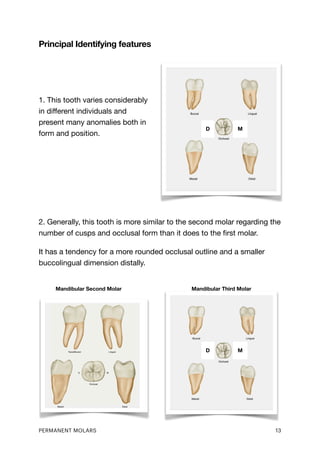
Principal Identifying features
1. This tooth varies considerably
in di
ff
erent individuals and
present many anomalies both in
form and position.
2. Generally, this tooth is more similar to the second molar regarding the
number of cusps and occlusal form than it does to the
fi
rst molar.
It has a tendency for a more rounded occlusal outline and a smaller
buccolingual dimension distally.
PERMANENT MOLARS 13
D M
D M
Mandibular Second Molar Mandibular Third Molar
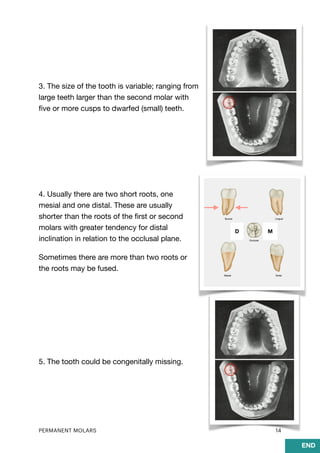
3. The size of the tooth is variable; ranging from
large teeth larger than the second molar with
fi
ve or more cusps to dwarfed (small) teeth.
4. Usually there are two short roots, one
mesial and one distal. These are usually
shorter than the roots of the
fi
rst or second
molars with greater tendency for distal
inclination in relation to the occlusal plane.
Sometimes there are more than two roots or
the roots may be fused.
5. The tooth could be congenitally missing.
PERMANENT MOLARS 14
END
D M

Handout, Lecture 14.pdf

  • 1.
    Dental Anatomy Lecture 14 PermanentMolars Permanent Molars are 12 in number, 6 on the right side and 6 on the left side. PERMANENT MOLARS 1
  • 2.
    Characteristic features ofPosterior teeth : 1. Greater relative facio-lingual measurement as compared with the mesio-distal measurement. 2. Broader contact areas. 3. Contact areas nearly at the same level. PERMANENT MOLARS 2
  • 3.
    4. Less curvatureof the cervical line mesially and distally. 5. Shorter crown cervico-occlusally when compared with anterior teeth. PERMANENT MOLARS 3
  • 4.
    Permanent Mandibular Molars Permanentmandibular molars are larger than any other mandibular teeth. They are three in number on each side of the mandible: the fi rst, second, and third mandibular molars. They are not succedaneous teeth as they erupt behind the deciduous molars. Their main function is grinding the food and supporting the muscles of mastication and vertical dimension. PERMANENT MOLARS 4
  • 5.
    Permanent Mandibular SecondMolar PERMANENT MOLARS 5
  • 6.
    Principal Identifying features 1.It is smaller than the fi rst molar in all dimensions. 2. It has four well-developed cusps; two buccal and two lingual of nearly equal size. PERMANENT MOLARS 6
  • 7.
    3. There isno distal cusp but the distobuccal cusp is larger than that of the fi rst molar. 4. It has two roots; one mesial and one distal. They are broad buccolingually but they are not as broad as those of the fi rst molar nor are they as widely separated. PERMANENT MOLARS 7 Mandibular First Molar Mandibular Second Molar Mandibular First Molar Mandibular Second Molar
  • 8.
    Buccal Aspect 1. Thecrown is shorter cervico- occlusally and narrower mesiodistally than that of the fi rst molar. 2. There is only one developmental groove, the buccal developmental groove, which separates between the mesiobuccal and distobuccal cusps. 3. Both mesiobuccal and distobuccal cusps are nearly equal in their mesiodistal measurements. 4. The cervical line in many instances points sharply to the root bifurcation. 5. The roots are shorter than those of the fi rst molar. They are usually closer together and are parallel to each other. They are inclined distally forming an acute angle with the occlusal plane than is found on the fi rst molar. PERMANENT MOLARS 8 Mesial Distal
  • 9.
    Lingual Aspect 1. Thecrown and the roots converge lingually but to a slight degree, therefore: a. Little of the mesial and distal surfaces may be seen from this aspect. b. The mesiodistal dimension cervically is greater than that of the fi rst molar. 2. The contact areas are more noticeable from this aspect, and they are slightly more cervically positioned than those of the fi rst molar. PERMANENT MOLARS 9 Mesial Distal
  • 10.
    Mesial Aspect 1. Thebuccal cervical ridge is less pronounced compared to the fi rst molar. 2. The mesial root has a somewhat pointed apex. Distal Aspect 1. From this aspect, this tooth is similar in form to the fi rst molar except for the absence of a distal cusp and a distobuccal groove. 2. The contact area is centered on the distal surface buccolingually and is centered between the cervical line and the marginal ridge. PERMANENT MOLARS 10 Lingual Buccal Buccal Lingual
  • 11.
    Occlusal Aspect 1. Theocclusal surface is rectangular in shape. 2. The small distal cusp is not present and there is no distobuccal groove. 3. The buccal and lingual developmental grooves meet the central developmental groove at right angles at the central pit. These grooves form a cross, dividing the occlusal surface into four parts that are nearly equal. 4. Unlike the fi rst molar, the occlusal surface is not smooth but is roughened by many supplemental grooves radiating from the developmental grooves. 5. Many teeth show considerable prominence cervically on the mesiobuccal lobe only. 6. The cusp ridge of the distobuccal cusp lies buccal to the cusp ridge of the mesiobuccal cusp. PERMANENT MOLARS 11 Lingual Buccal
  • 12.
    Permanent Mandibular ThirdMolar PERMANENT MOLARS 12 D M
  • 13.
    Principal Identifying features 1.This tooth varies considerably in di ff erent individuals and present many anomalies both in form and position. 2. Generally, this tooth is more similar to the second molar regarding the number of cusps and occlusal form than it does to the fi rst molar. It has a tendency for a more rounded occlusal outline and a smaller buccolingual dimension distally. PERMANENT MOLARS 13 D M D M Mandibular Second Molar Mandibular Third Molar
  • 14.
    3. The sizeof the tooth is variable; ranging from large teeth larger than the second molar with fi ve or more cusps to dwarfed (small) teeth. 4. Usually there are two short roots, one mesial and one distal. These are usually shorter than the roots of the fi rst or second molars with greater tendency for distal inclination in relation to the occlusal plane. Sometimes there are more than two roots or the roots may be fused. 5. The tooth could be congenitally missing. PERMANENT MOLARS 14 END D M